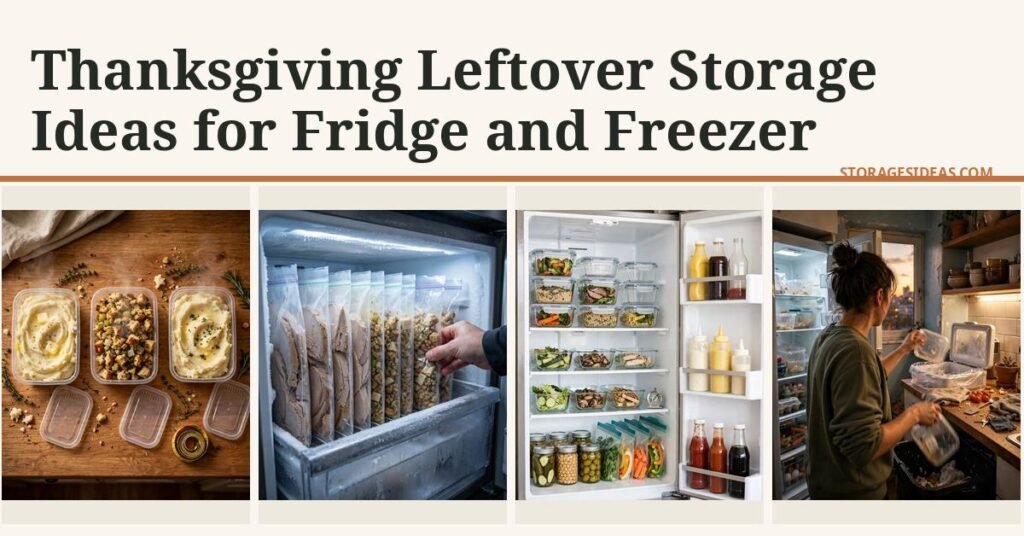
It happens every year: Thanksgiving night, the fridge door won’t close. The turkey carcass is wedged on top of the pie, gravy is sloshing in a cereal bowl covered with foil, and by Monday half of it smells questionable.
That November 27 fridge Tetris is a food-safety problem, not just a space problem, leftovers sitting too long in a too-warm fridge land in the USDA danger zone (40°F–140°F), where bacteria double as fast as every 20 minutes.
This guide fixes thanksgiving leftovers storage with 10 practical ideas for your fridge and freezer: exact container sizes, the 2-2-4 cooling rule the FDA Food Code is built on, and a freeze-or-toss system that gets everything safely stored within two hours of dinner.
You’ll know what goes where, how long each dish keeps (turkey: 3–4 days refrigerated, 3–4 months frozen), and which containers are worth the cabinet space in a small kitchen. Everything here works in a standard apartment fridge and freezer, no second fridge, no garage chest freezer required.
Why Leftover Volume Breaks a Normal Fridge
A Thanksgiving dinner produces roughly three times the food a standard apartment fridge is organized to hold. A whole roast turkey alone can take up a full shelf, and the sides, stuffing, mashed potatoes, gravy, cranberry sauce, green bean casserole, arrive in serving bowls that are the wrong shape for storage. The failure isn’t willpower; it’s geometry.
Deep bowls and foil-covered platters stack badly, trap heat, and hide food where you’ll forget it until it’s past the 3–4 day window.
Leftover containers and fridge organization are the same problem here. The fix is a system with three rules: cool fast (shallow containers, no deeper than 2 inches), store shallow and stackable, and label everything with the date.
When every container is the same footprint and the date is on the lid, you can see your entire leftover inventory at a glance, and you actually use it before Monday.
Leftover timeline cheat sheet (save this):
- Refrigerate within 2 hours of cooking (1 hour if the kitchen is above 90°F)
- Fridge at or below 40°F: turkey and most sides keep 3–4 days; gravy and broth keep 1–2 days
- Freezer at 0°F: turkey keeps 3–4 months, sides 2–3 months at best quality (safe indefinitely while frozen)
- Reheat everything to 165°F before serving
That timeline is the backbone of all 10 ideas below, every container choice and shelf decision serves it.
1. Cool in Shallow Containers, Never Deep Bowls: the fastest path through the danger zone
Hot food has to move through the danger zone, 40°F to 140°F, as fast as possible.
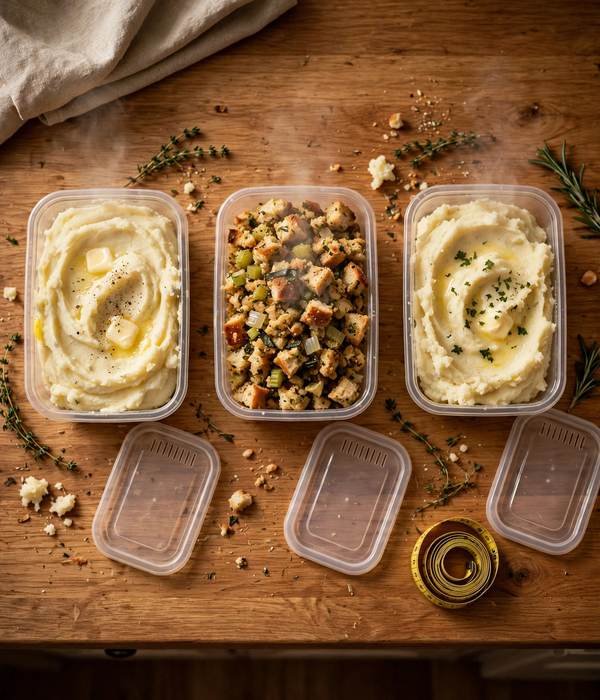
The FDA Food Code requires commercial kitchens to drop food from 135°F to 70°F within 2 hours and to 41°F within 6 hours total, and the method is the same one that works in your apartment: spread food no deeper than 2 inches in shallow containers so cold air reaches the center.
A 6-inch-deep stockpot of mashed potatoes can sit lukewarm in the middle for hours; the same potatoes in two shallow containers are fridge-safe in under an hour. This single habit does more for leftover safety than any container you can buy.
What you can do with it:
- Split every large dish into containers 2 inches deep or less before refrigerating, divide, don’t pile.
- Vent the lids for the first 30–45 minutes (lid cracked, not sealed), then seal, trapped steam slows cooling and condenses into soggy tops.
- Put containers on a wire rack or leave finger-width gaps between them so cold air circulates on all sides.
- For gravy and soups, set the container in an ice-water bath in the sink for 20 minutes before it goes in the fridge.
- Carve turkey meat off the bone into flat layers, a whole leg cools far slower than sliced meat spread in a single layer.
Watch the depth, and the 2-hour rule takes care of itself.
2. Carve the Turkey Off the Bone First: halve the cooling time and double the usable meat
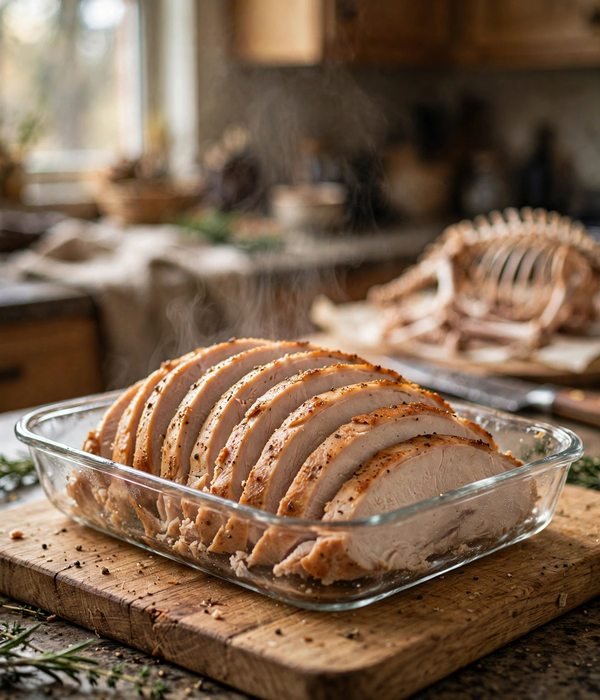
A whole turkey carcass is the worst shape for a refrigerator: bulky, air-trapping, and slow to cool at the bone joints, where heat lingers longest.
Slicing the breast and pulling the dark meat off the bone does two things at once, it lays the meat flat in thin layers that cool in minutes instead of hours, and it frees a full shelf that the carcass would have swallowed.
A carved bird also means you actually eat the leftovers: visible sliced turkey in a clear container gets made into sandwiches; a foil-wrapped carcass gets forgotten until Monday.
Tips for best results: carve within the 2-hour window while the bird is still warm, cold turkey tears instead of slicing. Pack sliced meat in single layers with just enough broth or gravy to keep it moist (about 2 tablespoons per quart container).
Use the bones and scraps for stock the same night or freeze them in a gallon bag, turkey stock is one of the best freezer payoffs of the holiday.
Watch out: don’t stack carved meat more than 2 inches deep in the container, or you’ve recreated the cooling problem in a smaller box. And refrigerate the sliced meat uncovered for 20 minutes if it’s still steaming, then seal, this is the one time “cool before you cover” is correct.
3. Standardize on 16 oz and 32 oz Deli Containers: the stackable system that ends lid chaos
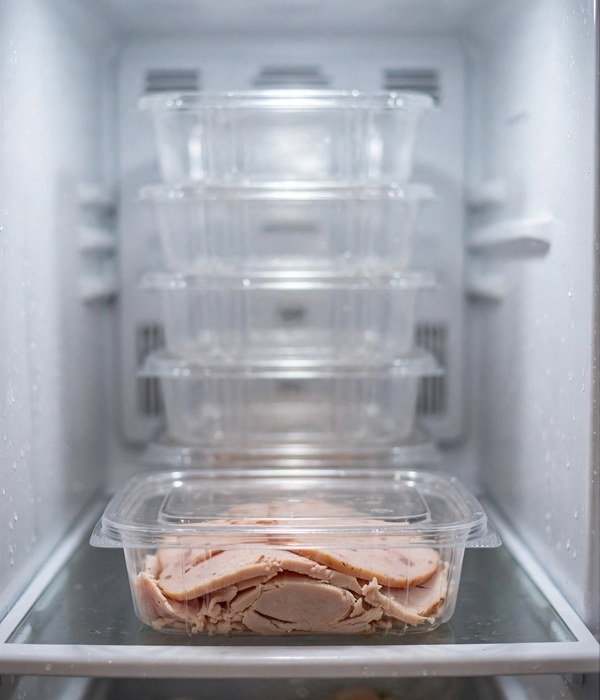
Restaurant delis solved leftover storage decades ago: one lid size that fits two container heights. Standard 16 oz and 32 oz polypropylene deli containers share the same lid, so you buy one set of lids and never hunt for a match again.
They’re shallow enough to cool fast, clear enough to see contents at a glance, and cheap enough (typically under $15 for a 24-pack with lids) that you can keep a full Thanksgiving’s worth on hand without a storage-unit commitment.
In a small kitchen, the uniformity is the feature, identical footprints stack into a stable tower instead of a wobbling Jenga pile.
Where it works best:
- 32 oz containers for sliced turkey, stuffing, and mashed potatoes, holds about 4 cups, feeds two as a meal.
- 16 oz containers for cranberry sauce, gravy portions, and single-serve sides, the right size for lunch portions.
- Stack towers of matching containers against the back wall of a shelf, labels facing out, heaviest on the bottom.
- Nest empty containers inside each other when not in use, 24 containers collapse to the footprint of about 4.
- They’re freezer-safe, microwave-safe, and dishwasher-safe, so one container covers the whole leftover lifecycle.
If your current container collection is a mismatched thrift-store pile, this is the upgrade that pays for itself in one holiday.
4. Flat-Freeze in Gallon Freezer Bags: turn the freezer into a filing cabinet
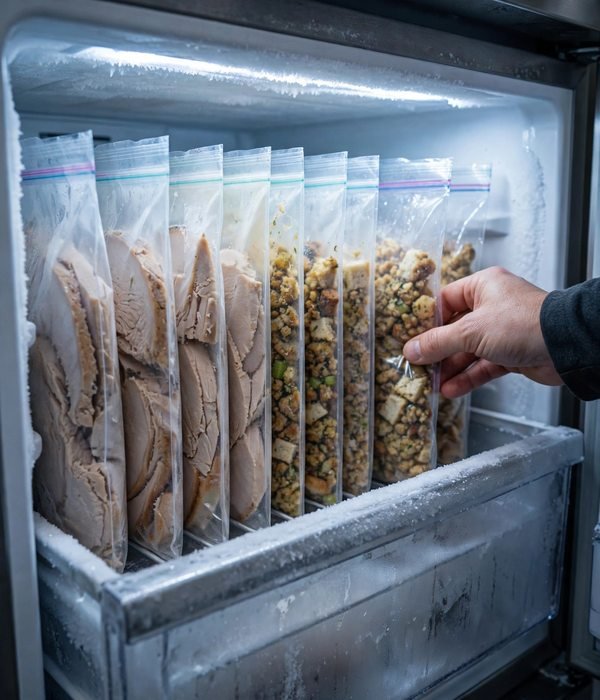
A gallon freezer bag laid flat holds about 4 cups of turkey, stuffing, or mashed potatoes in a slab roughly 3/4 inch thick, and that thin slab freezes solid in 2–3 hours and thaws in the fridge overnight, versus a full day for a dense quart container.
Pressed flat and stacked upright like file folders, a dozen bags fit in the freezer space of three bulky containers. For small apartment freezers, this is the single highest-density leftover storage method there is. Squeeze out the air before sealing (air is what causes freezer burn), and double-bag anything with sharp bone edges.
Tips for best results: fill bags only 3/4 full, food expands as it freezes, and an overfilled bag won’t lie flat. Lay filled bags on a rimmed sheet pan to freeze for the first 4 hours so they freeze perfectly flat, then stand them upright in a row; pull the pan out and reuse it.
Write the contents and date on the bag with a permanent marker before filling, wet bags won’t take ink.
Watch out: thin bags from the dollar store puncture easily; look for bags labeled “freezer” (thicker polyethylene, typically 1.5 mil or more). And never refreeze thawed leftovers, thaw in the fridge, reheat to 165°F, and eat or discard within 3–4 days.
5. Freeze Single Servings in 1-Cup Soup Cubes: future lunches, portioned and ready
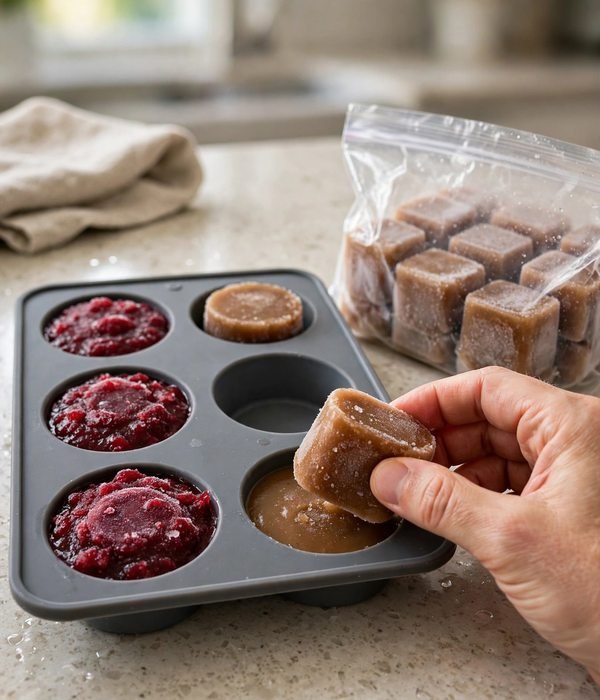
Silicone freezer trays with 1-cup wells (often sold as “soup cubes”) turn gravy, mashed sweet potatoes, cranberry sauce, and turkey stock into uniform frozen blocks that pop out, go into a labeled gallon bag, and stack like bricks.
One cup is the magic portion, it’s a side dish for one, the base of a soup, or exactly enough gravy for a weeknight dinner. Instead of thawing a quart of gravy you’ll never finish, you grab two cubes. In a small freezer, uniform blocks waste zero space between them, unlike round containers with dead air in the corners.
What you can do with it:
- Fill wells 7/8 full, liquids expand about 9% when frozen, and overfilled wells crack the tray.
- Freeze gravy, stock, cranberry sauce, and mashed sides; skip anything already frozen-and-thawed.
- Once frozen solid (4–6 hours), transfer blocks to a dated gallon bag, the tray goes back in the drawer, the bag goes in the freezer.
- Reheat cubes straight from frozen in a saucepan over medium-low heat, stirring, until they hit 165°F.
- A 2-tray set (typically under $25) handles a whole Thanksgiving’s freezable sides in one batch.
This is the “future you” move: January weeknight dinners assembled in five minutes from November’s leftovers.
6. Label and Date Every Container: the 10-second habit that prevents the Monday smell test
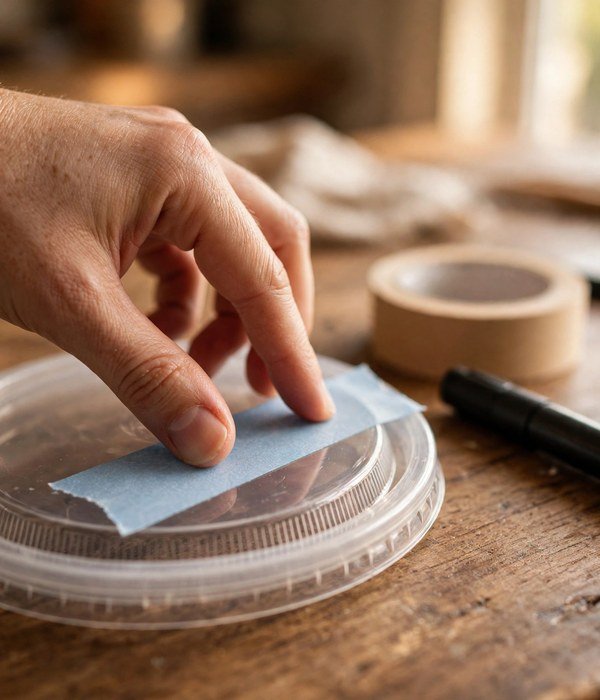
The number-one reason leftovers get thrown out isn’t spoilage, it’s uncertainty. An unlabeled container of brownish-gray something on day 4 gets tossed because nobody can prove it’s safe. A strip of painter’s tape with “Turkey, Thu 11/26” costs ten seconds and answers the only question that matters: is this inside the 3–4 day window?
USDA guidance is a clock, and the clock starts when the food goes in the fridge, without a date, you’re guessing, and guessing loses.
Tips for best results: painter’s tape and a permanent marker is the cheapest reliable system, the tape peels off cleanly in the dishwasher, unlike sticky labels. Write contents + the date it went in (not the date it expires, you’ll do the math wrong).
Put the tape on the lid, not the side, so it’s visible when containers are stacked. For freezer bags, write on the bag before filling, while it’s dry and flat.
Watch out: “I’ll remember” is the lie every holiday tells. After a day of cooking, you will not remember which container holds Thursday’s gravy and which holds Sunday’s soup. Also, don’t trust the smell test alone, pathogenic bacteria don’t always change how food smells or looks, which is exactly why the date matters more than your nose.
7. Map Your Fridge Into Leftover Zones: stop the door-shelf graveyard
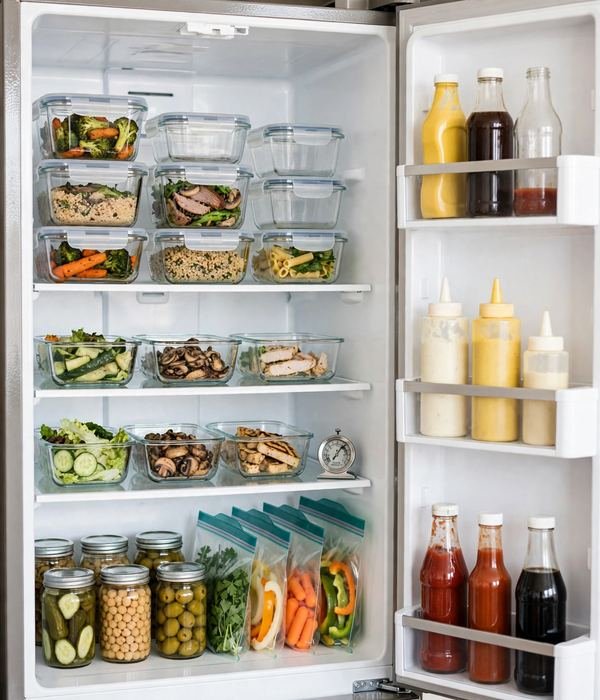
Not every shelf in your fridge is the same temperature. The door is the warmest spot (temperature swings every time it opens), it’s fine for condiments, terrible for turkey. The top shelf runs a steady cold, the middle shelves are the most consistent, and the bottom shelf is the coldest (and the right place for anything that might drip).
Assigning every leftover a zone on Thanksgiving night means nothing ends up in the warm door out of desperation, and you can find everything without moving six containers.
Where it works best:
- Top shelf: sliced turkey and deli containers of sides, steady cold, easy to see and grab.
- Middle shelves: stacked 32 oz containers, labels facing out, grouped by day you’ll eat them.
- Bottom shelf: gravy, stock, and anything in bags that could leak, coldest spot, and drips can’t contaminate food below.
- Door: cranberry sauce and pickles only, high-acid, high-sugar foods tolerate the temperature swings; meat and dairy do not.
- Keep a fridge thermometer visible (aim for 37–38°F, giving you a buffer under the 40°F limit).
If your fridge is packed wall-to-wall, pull everything out, wipe the shelves, and reload by zone, the 15-minute reset beats three days of digging. How to Clean Out Your Fridge Before Thanksgiving
8. Freeze Gravy in Ice-Cube Trays, Jar the Rest With Headspace: liquids need their own rules
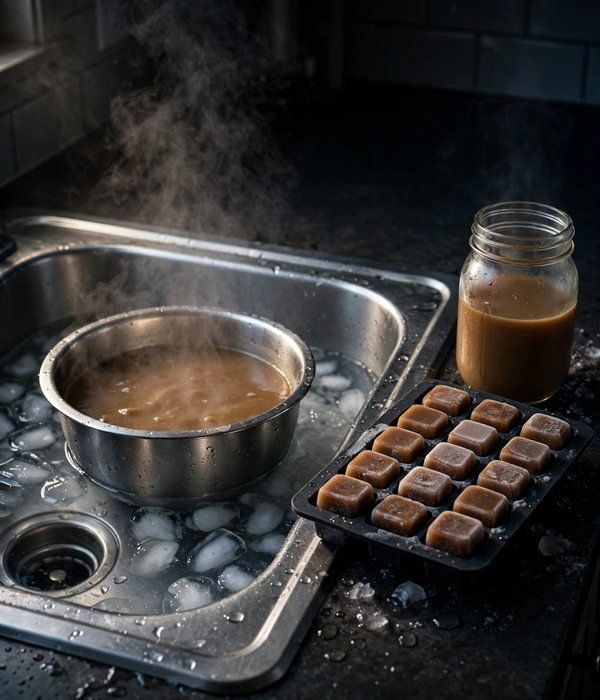
Gravy is the most perishable thing on the Thanksgiving table, plan on 1–2 days refrigerated, not 3–4. Its high moisture and protein content make it a fast grower in the danger zone, so it deserves the fastest cooling and the quickest path to the freezer of any leftover.
Ice-cube trays turn a quart of gravy into 2-tablespoon portions that freeze in an hour and melt into a pan in minutes; for larger amounts, wide-mouth pint jars work, with a full inch of headspace, because liquid expands roughly 9% as it freezes and a filled-to-the-brim jar will crack or pop its lid.
Tips for best results: cool gravy in an ice-water bath first, pour it into a metal bowl set over ice and stir for 15 minutes before it goes anywhere near the fridge. Freeze cubes, then bag them with the date; a standard tray yields about 2 cups.
For jars, use straight-sided wide-mouth pints (no shoulders to crack), leave 1 inch of headspace, and cool completely before adding the lid.
Watch out: never put a sealed hot jar of gravy straight into the fridge, the center stays warm for hours. And don’t freeze gravy in thin glass jars not rated for freezer use; thermal shock shatters them.
When reheating, whisk constantly and bring to a full boil (212°F), that both kills bacteria and fixes the texture separation that freezing causes.
9. Split Sides by Their Real Shelf Life: not everything gets 4 days
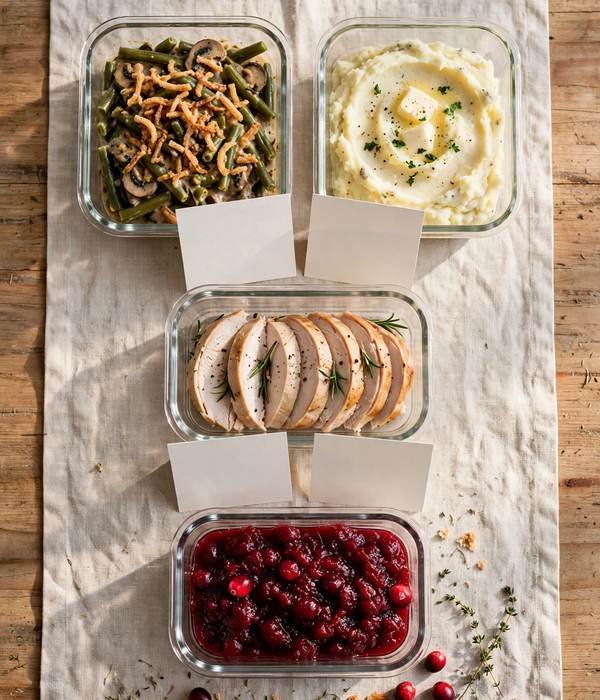
“Leftovers keep 3–4 days” is the headline, but the fine print matters. Plain roasted vegetables, mashed potatoes, stuffing, and cranberry sauce genuinely hold 3–4 days refrigerated. Gravy and turkey stock get 1–2 days, freeze what you won’t use by Friday night.
Anything with dairy-heavy casseroles (green bean casserole, creamed onions) sits in the middle: 3 days, and they reheat worse than everything else, so eat those first. Knowing the order turns your fridge into a queue instead of a lottery.
What you can do with it:
- Eat first (days 1–2): green bean casserole, creamed sides, gravy, texture degrades fastest here.
- Days 2–3: mashed potatoes, stuffing, sweet potato casserole, reheat with a splash of broth or milk to restore moisture.
- Days 3–4: sliced turkey, roasted vegetables, cranberry sauce, the sturdiest keepers.
- Freeze on day 1–2, not day 4: freezing pauses the clock but doesn’t rewind it, food frozen on day 4 is still day-4 food when thawed.
- Cranberry sauce is the outlier in the other direction: high sugar and acid keep it good up to 10–14 days refrigerated.
Plan the week’s meals around this order and nothing reaches the danger zone of guesswork. fridge storage hacks
10. Run a Sunday Freeze-or-Toss Audit: the 10-minute ritual that ends waste
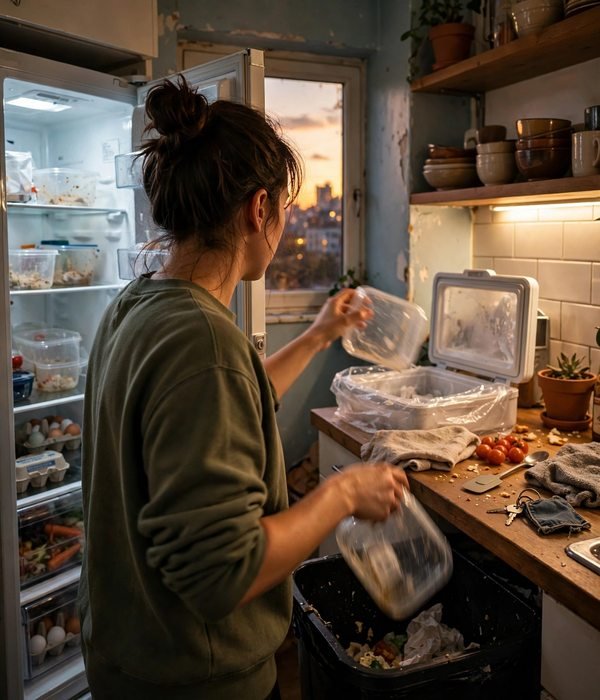
Thanksgiving is Thursday; Sunday is day 4, the end of the USDA window for refrigerated leftovers. A 10-minute audit on Sunday evening closes the loop: pull every leftover container out, check the dates on the labels, and make a binary decision per container, freeze it now or toss it now.
No “maybe tomorrow,” because tomorrow is day 5 and the decision is made for you. This ritual is what separates people who actually eat their leftovers from people who perform an annual refrigerator funeral.
Tips for best results: do the audit before dinner, not after, you’ll be motivated and the freezer has overnight to work. Anything you’re freezing goes into flat bags or cubes tonight, dated. Wipe down the shelf while it’s empty, four days of drips and condensation need it.
Keep a running “eat me first” shelf at eye level for the containers staying in the fridge.
Watch out: the audit only works if everything was labeled on Thursday (see point 6), unlabeled containers on Sunday are automatic tosses, no exceptions. That’s harsh, but it’s the rule that makes the system trustworthy.
And remember: freezing on Sunday preserves food at day-4 quality, so freeze with a plan to use it, don’t just move the funeral to February.
Conclusion
Ten ideas, one system: cool fast in shallow containers, standardize on stackable sizes, flat-freeze what you won’t eat in 4 days, label everything, and audit on Sunday. The whole thing runs on about $20 of deli containers, a roll of painter’s tape, and freezer bags you probably already own, no specialty gadgets, no second fridge.
Do this one tonight: before the pie is even served, set out your shallow containers, tear off ten strips of painter’s tape, and clear one full fridge shelf. When dinner ends, you’ll carve, portion, label, and refrigerate inside the 2-hour window without thinking, and next week you’ll be eating planned leftovers instead of throwing out mysteries.
For the full holiday picture, small-space Thanksgiving hosting and where everything lived before the leftovers arrived, see Thanksgiving decor ideas for small spaces.
Frequently Asked Questions (FAQ)
How long does Thanksgiving turkey last in the fridge?
If refrigerated within 2 hours of cooking and stored at or below 40°F in airtight containers, sliced turkey keeps 3–4 days, so Thursday’s bird is good through Sunday. If your fridge runs warm or the turkey sat out longer than 2 hours, shorten that to 2–3 days.
When in doubt, freeze it: turkey holds 3–4 months in the freezer at 0°F.
Can I freeze mashed potatoes and stuffing?
Yes, both freeze well for 2–3 months at best quality. Pack them in flat freezer bags (3/4 inch thick) or 1-cup portions so they freeze fast and thaw evenly. The catch is texture: thawed mashed potatoes can turn grainy, so reheat them gently with a splash of milk or broth and whisk well.
Stuffing reheats best covered in the oven at 350°F until it hits 165°F.
How do I know if Thanksgiving leftovers are still safe to eat?
Check the date on the label first, that’s your primary evidence. Within the 3–4 day window (1–2 for gravy) and properly refrigerated, they’re fine. Discard anything past the window, anything that smells sour or off, or anything slimy or moldy.
Note that harmful bacteria don’t always change smell or appearance, so the date matters more than the sniff test.
Do I have to let leftovers cool before refrigerating them?
No, this is one of the most persistent food myths. The USDA says to refrigerate leftovers as soon as possible, even if they’re still steaming; modern fridges handle it. What actually matters is container depth: spread food no deeper than 2 inches so the center cools quickly, and leave lids vented for the first 30–45 minutes.
Waiting on the counter just extends time in the danger zone.
What’s the best way to reheat frozen Thanksgiving leftovers?
Thaw in the refrigerator overnight, never on the counter. Reheat everything to an internal temperature of 165°F: soups and gravy in a saucepan over medium heat, turkey and sides covered in a 350°F oven, single portions in the microwave with stirring halfway. Eat thawed leftovers within 3–4 days, and don’t refreeze what you’ve already thawed.