Thanksgiving is 7 days away and your apartment is not. I get it, you said yes to hosting, your place is maybe 700 square feet, and the turkey alone feels bigger than your fridge.
Here is the good news: a small apartment is actually one of the best places to host Thanksgiving, because a tight space forces you to plan the two things that ruin big-house Thanksgivings too, seating math and food storage.
This is a day-by-day plan for the 7 days before Thursday, November 26: what to measure, what to borrow versus buy, how to fit every guest at a table, where the turkey thaws when your fridge is already full, and how to serve a full dinner without a single person standing around with nowhere to sit.
Follow it in order and you will seat 8 to 12 guests, store a 15 to 20-pound turkey, and still have room to walk between the rooms. Thanksgiving decor ideas for small spaces
Why Thanksgiving in a Small Apartment Hosts Better
Nobody believes this until they have lived it, but the physics of a small space thanksgiving are on your side. In a big house, guests scatter across three rooms, the food ends up a 40-foot walk from the table, and the host sprints.
In a small apartment, everything is one sight line away: you can see the serving station, the table, and the coat pile from a single spot by the kitchen, which means you actually spend the evening with your guests instead of managing a floor plan.
The mechanism that makes it work is zone compression. When seating, serving, and storage each get one defined zone, even a zone as small as a 30-by-72-inch rectangle, guests self-direct. Nobody asks where to put their bag because the drop zone is the first thing they see.
Nobody hovers in the kitchen because the food is laid out in a one-direction serving line. And because a small apartment has nowhere to hide clutter, you are forced to clear the counters and empty the fridge on a schedule, which is exactly what a fridge already bursting with pies and sides needs.
The storage plan is the hosting plan: every square inch you free up this week becomes part of the meal. For a friendsgiving apartment crew or a full family table, the same math applies, you just scale the guest count.
1. Day 7 Out (Nov 19): Count Guests, Measure the Room, Draw the Map
Everything this week runs on two numbers: how many guests, and how many feet of table edge you have.
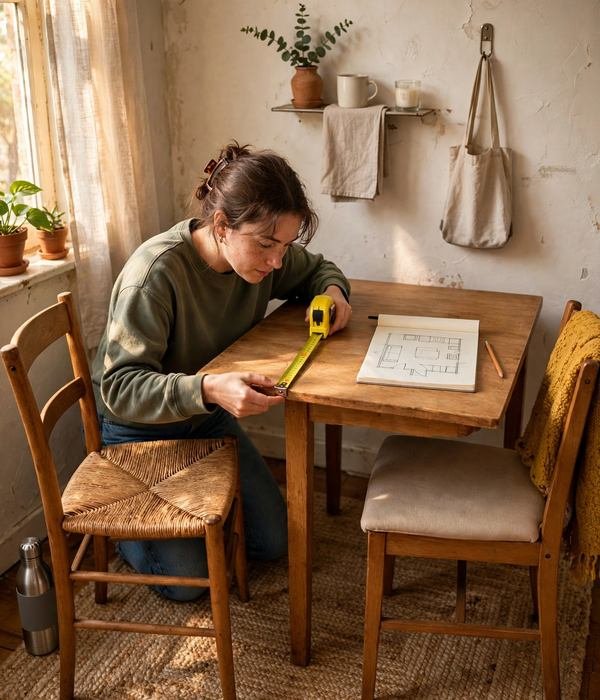
Get the guest list final tonight, text everyone and ask for a yes or no, because your seating math changes by about 24 inches of table edge per person, and one extra guest is one extra chair you have to find, store, and fit.
Measure the room where the table will go. You need three measurements: the longest straight wall run for the table, the width of the room for chair pull-out, and the doorway widths for getting a folding table in. The comfort baseline is 24 inches of table edge per guest.
Dinner-party comfort is 26 to 28 inches; 20 to 22 inches is the holiday squeeze, fine for a friendsgiving crowd that will forgive elbows for two hours.
Chairs need 32 to 36 inches behind the table edge to pull out and sit down, and you need a 36-inch walkway wherever people pass with plates, 48 inches on the one main route, like kitchen to table.
Now draw the map on paper. Mark three zones: the table zone, the serving zone (counter, island, or a second folding table), and the drop zone for coats and bags (a bedroom, a closet, or a hallway corner). Everything you do for the next six days is about defending those three rectangles.
Your seating-space cheat sheet:
- Per guest: 24 inches of edge, 15 inches of table depth for a place setting
- Per chair: 32–36 inches of pull-out room behind the table edge
- Walkways: 36 inches minimum, 48 inches on the kitchen-to-table route
- A 72-by-30-inch folding table seats 6 comfortably, 8 in a squeeze (3 per long side, 1 at each end)
- A 48-inch round table seats 4 comfortably, 6 tight (151 inches of circumference ÷ 24)
Tips for best results: measure with the door swing open, since a door eating 30 inches of your walkway is the classic small-apartment surprise. Watch out: count the guests who actually RSVP yes, not the invites, borrowing chairs for maybes means storing chairs for maybes.
2. Day 7 Out (Nov 19): Plan the Tables, What to Borrow, What to Buy
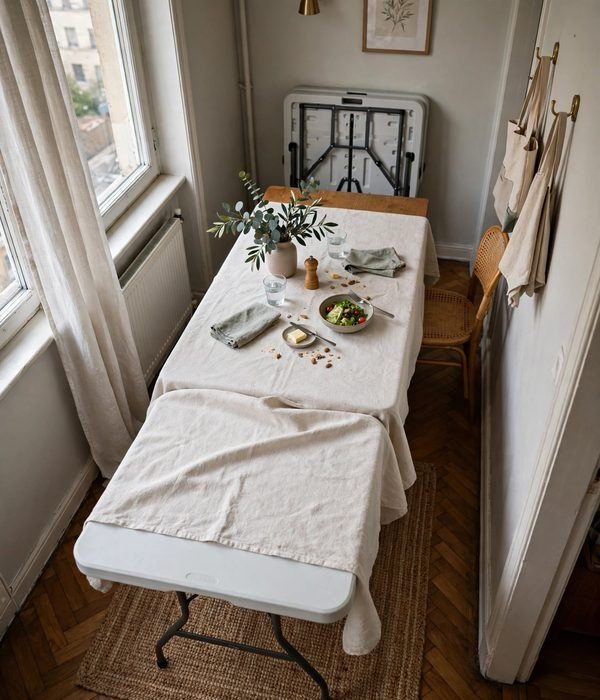
One six-foot folding table solves most small-apartment Thanksgiving problems, and here is why: at 72 by 30 inches, it seats 6 to 8 people, folds flat to about 36 by 30 by 3 inches for storage, and weighs 20 to 35 pounds, so one person can haul it.
The standard folding table lineup is simple, 4-foot (48 by 30, seats 4), 6-foot (72 by 30, seats 6 to 8), 8-foot (96 by 30, seats 8 to 10), all at standard 29 to 30-inch dining height, all collapsing to 2 to 4 inches thick.
If your everyday table seats 4 and you have 9 guests, one 6-foot folding table end-to-end with your dining table gives you roughly 12 feet of combined edge, which at 24 inches per guest covers 10 to 12 people with one end position left over.
Do this first: before you buy anything, text your borrow list. Folding tables and chairs are the most-borrowed party items in existence, someone in your building or friend group owns them. What to borrow: folding tables, folding chairs, a second roasting pan, a cooler.
What to buy: full-size disposable steam pans (20.75 by 12.75 inches, a few dollars for a multi-pack, these are your serving vessels and they stack inside each other for storage), a folding table cart or straps if you plan to store tables upright, and anything you will use at least twice a year, like a 48-quart cooler.
Anything used once a year or less should be borrowed, not bought and stored.
Where it works best: slide the folding table tight against one long side of your dining table and put the short ends on the outer sides only, which saves the 32-inch pull-out you would need at the wall side.
3. Day 6 Out (Nov 20): Solve the Chairs and the Coat Pile
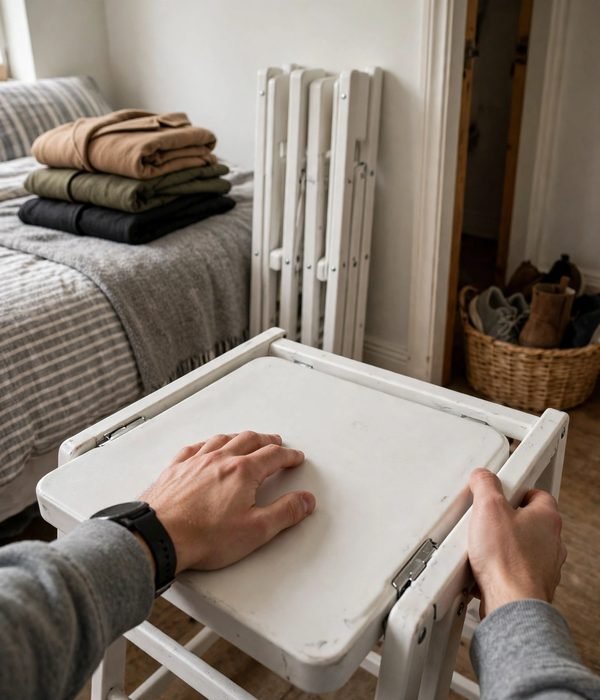
Chairs are the storage problem nobody plans for. A standard folding chair is about 18 inches wide, 19 inches deep, and 31 inches tall in use, and folds to roughly 2 to 3 inches thick, 18 inches wide, and 38 inches tall.
That means 6 borrowed folding chairs store flat against a bedroom wall in about 18 inches of total depth, or hung in a closet on two heavy-duty hooks rated for 10 pounds each.
Decide your chair count today using the 24-inch rule from Day 7, then confirm the borrow list, you need confirmed chairs for confirmed guests, plus one spare.
What you can do with it:
- Borrow a matching set of 4 to 6 folding chairs from one person, mismatched chairs photograph fine, but identical chairs stack and store as one unit
- Store flat chairs behind a sofa, under a bed (most need 4 inches of clearance), or stood upright in a closet
- Use a piano bench, storage ottoman, or sturdy storage cubes as bonus seating, they are already in the apartment and they swallow clutter
- Keep the everyday dining chairs at the table and give guests the folding ones, nobody remembers which chair they sat in
Now the coat and bag drop zone, because 10 guests arrive with 10 coats, 10 bags, and possibly wet boots. Assign a bedroom, strip the bed to a fitted sheet, put a washable throw over it, and that bed becomes the coat pile.
Add a large tote or laundry basket by the door for shoes, and a small tray or basket on the entry console for keys and phones. This one decision prevents the evening’s biggest small-space failure: outerwear exploding across every chair, which eats the seating you just solved.
Tips for best results: test-fold one chair now and measure its folded thickness, so the storage spot you picked is real, not imagined. Watch out: do not borrow padded folding chairs if you can avoid them, they fold to nearly twice the thickness of flat plastic or resin ones.
4. Day 5 Out (Nov 21): Design the One-Direction Serving Line
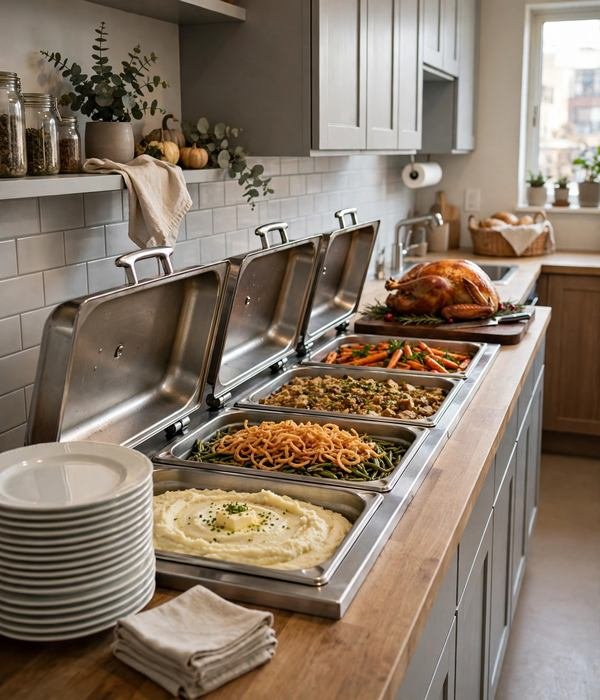
Do not serve Thanksgiving family-style at the table in a small apartment. The math kills it: a 72-inch table seats 8 with 24 inches each and zero inches left for shared dishes.
The fix is a one-direction buffet line, and the serving zone you mapped on Day 7 is where it lives, a kitchen counter, a console, or a 4-foot folding table (48 by 30 inches) against the clearest wall.
Lay it out in traffic order: plates first, then sides in the order people serve them, the turkey last (it anchors the line and carves at the end of the table so the line does not stall), then cutlery and napkins. The mechanism here is flow control, one direction, no backtracking, no one reaching across anyone.
Full-size steam pans (20.75 by 12.75 inches) are the secret weapon: three of them fit end to end along a 6-foot table with room to spare, they keep sides hot in a low oven stacked two high, and they go from oven to line to trash with no dishes to wash or store.
Where it works best:
- Kitchen island or peninsula as the line, guests circle it and return to the table
- A counter cleared to the backsplash, appliances temporarily relocated to the bedroom closet
- Drinks station separate from food, a bathtub with ice, a balcony cooler, or a corner of the counter, because drinks are where lines jam
Tips for best results: label each dish with a folded index card, which stops the “what is this?” bottleneck. small dining room Thanksgiving decor ideas Watch out: keep the turkey carving off the line’s main path, a cutting board at the line’s end with its own trash bowl for skin and bones.
5. Day 4 Out (Nov 22): Build the Fridge Overflow System
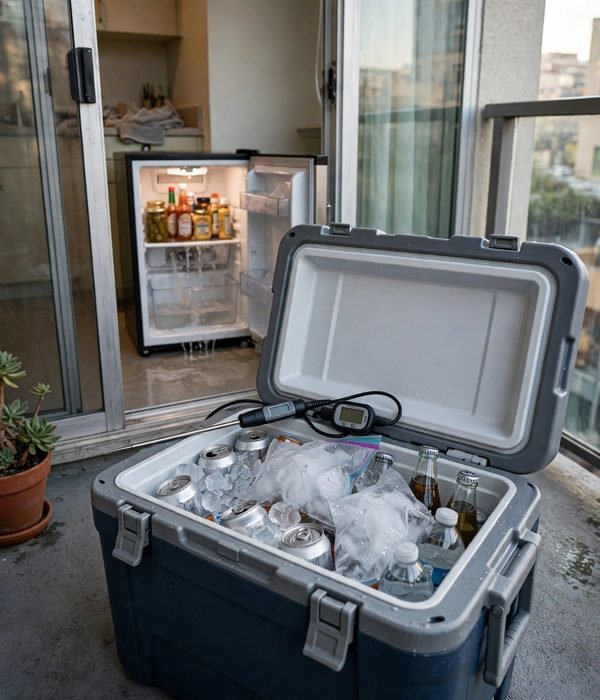
Your fridge is about to hold a turkey, pies, sides, and drinks at the same time, and it cannot. Today you build the overflow system, starting with an honest audit: pull everything out of the fridge, toss what is expired, and move condiments and jars you will not touch into a box on the counter.
You just reclaimed roughly a full shelf, about 1.5 cubic feet, without buying anything.
The cooler is your second fridge. A 48-quart cooler holds a 10 to 18-pound turkey with ice; a 70-quart handles a bird up to 20 pounds.
For drinks and cold sides, the same 48-quart cooler with two 10-pound bags of ice holds a case of drinks plus condiments for 24 hours easily, stash it on a balcony, by the front door, or in the bathtub.
Fifteen pounds of ice keeps a cooler under 40°F for more than 12 hours, which is the food-safety line for everything in it. Buy the ice on Day 2, not today, it melts.
Borrow-versus-buy on coolers: if you already own one cooler, borrow a second rather than buying. Coolers are bulky, a 48-quart is roughly 26 by 15 by 15 inches, and storing an empty cooler for 364 days in a small apartment is a real cost.
If you do buy, get one with wheels; you will move it full of ice at least twice.
Tips for best results: pre-chill the cooler tonight with a bag of ice or cold water for an hour before you load it, a warm cooler melts your first ice load in hours. Watch out: keep the cooler out of direct sun and away from the radiator; every 10 degrees of ambient warmth roughly halves your ice life.
6. Day 3 Out (Nov 23): Start the Turkey Thaw, the Timeline That Cannot Slip
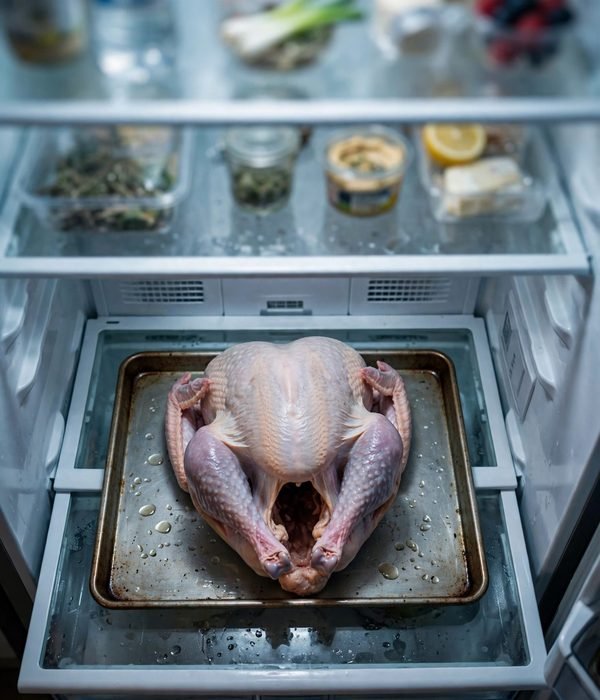
This step has the least forgiveness in the whole plan, so read the numbers twice. A frozen turkey thaws in the refrigerator at 24 hours per 4 to 5 pounds, a 15-pound bird needs 3 to 4 full days, a 20-pound bird needs 4 to 5.
Count backward from Thursday morning: a 15-pounder goes into the fridge today; a 20-pounder should already be in since yesterday. Set it on the bottom shelf on a rimmed sheet pan or in a roasting pan to catch drips, never on a shelf above ready-to-eat food.
No fridge space? Thaw in the cooler with the cold-water method: keep the wrapped turkey submerged in cold water, and it thaws at about 30 minutes per pound, a 15-pound turkey in roughly 7 to 8 hours.
In an insulated cooler the water stays cold enough that you do not need to change it every 30 minutes the way a sink requires, but the rule is absolute: the water and the bird must stay under 40°F, checked with a probe thermometer, and the turkey cooks the moment it finishes thawing.
Brining in a small apartment also runs through the cooler: bag the thawed turkey with 2 to 3 gallons of brine in a turkey-size oven bag, set the sealed bag in the cooler with 15 pounds of ice, and do not open it until cooking time.
The bag means any cooler that fits the bird works, and you never have to scrub poultry water out of the cooler.
What you can do with it:
- 12–15 lb turkey: fridge thaw starting Day 3, or cooler water-thaw on Day 1
- 16–20 lb turkey: fridge thaw starting Day 4, or cooler water-thaw on Day 1 morning
- Dry brine instead of wet: salt the bird, rest uncovered on a rack in the fridge, zero cooler or bucket needed, crisper skin
- Skip the brine entirely for kosher, enhanced, or self-basting birds, they are already salted
Watch out: never thaw on the counter, the outside of the bird sits in the danger zone for hours while the center stays frozen. This is the one food-safety rule with no exceptions.
7. Day 2 Out (Nov 24): Set the Stage, Tables Up, Zones Locked
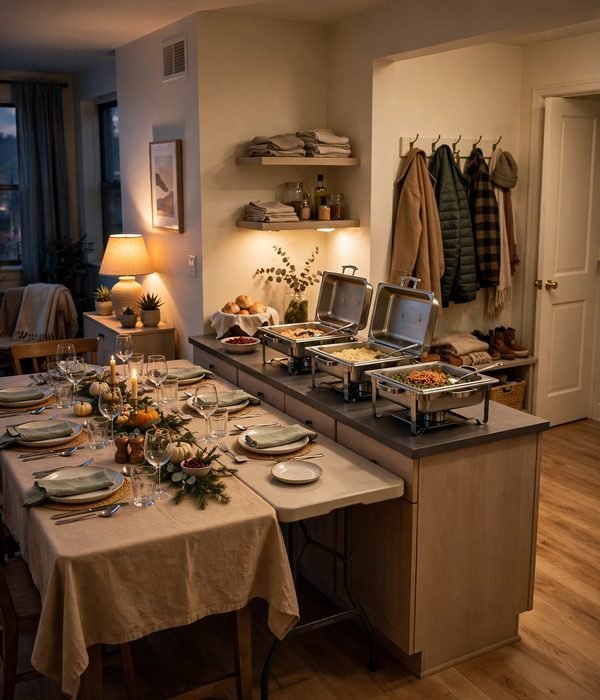
Today the apartment transforms, and the rule is simple: every zone gets built now so tomorrow you only cook.
Pull out the folding table and chairs, set them in the exact positions from your Day 7 map, and sit in every seat, if your knees hit a wall or a chair blocks the walkway, you find out today, not with guests arriving. Put the tablecloths or runners on now; they hide the folding table’s plastic look completely.
Run the day-before setup checklist:
- Tables and chairs placed, every seat sit-tested, walkways clear at 36 inches
- Serving line zone cleared, counters empty, appliances parked in the bedroom closet
- Steam pans, serving spoons, and the carving board staged at the serving zone
- Drop zone ready, bedroom bed stripped, shoe basket and key tray at the door
- Cooler bought or borrowed, pre-chilled; ice purchase scheduled for tomorrow morning
- Trash and recycling bags staged where guests can see them, a small lidded bin in the kitchen and one by the serving line
- Leftover containers bought: quart-size containers and zip bags, roughly one per guest plus four extra
Do a 15-minute declutter sweep of every surface guests will see, and move the displaced clutter into the closed bedroom or closet, not the drop-zone bedroom.
Charge your phone, lay out your own outfit, and set the table for the guest count tonight: plates, glasses, and cutlery placed now means one less job on a day you will be cooking for six hours.
Tips for best results: photograph the setup once it is done, if you host again, the photo is your blueprint and you skip Day 7 measuring forever.
A simple centerpiece keeps the table festive without eating place-setting space. DIY Thanksgiving centerpieces Watch out: keep one chair’s worth of space clear near the kitchen for yourself; the cook needs a perch during the long roast.
8. Thanksgiving Day (Nov 26): Serve, Clear, and Store Leftovers Fast
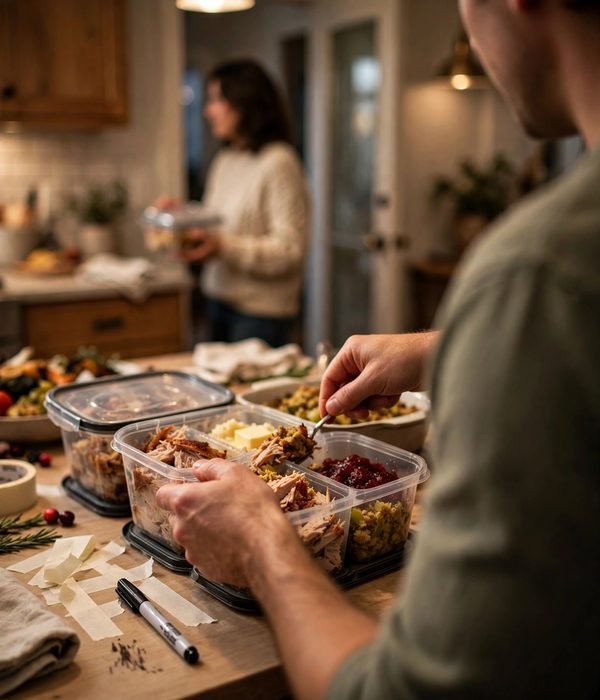
Day-of is execution, not decisions, every decision was made this week.
Morning sequence: ice into the cooler and drinks loaded, turkey in the oven on schedule (a stuffed 15-pound bird at 325°F runs roughly 4 to 4.5 hours; start the clock from your serving time and work backward), sides staged in steam pans, serving line built exactly as planned on Day 5.
When guests arrive, take coats straight to the drop zone yourself, do not let the pile form by the door.
During dinner, clear in waves, not at the end. When the main plates go down, bus the serving line into the kitchen, consolidate sides into fewer pans, and get the dessert zone ready on the cleared serving table.
Leftovers are the storage finale this whole plan was building toward: pack them within 2 hours of serving, that is the food-safety window, in the quart containers from yesterday’s checklist.
A 15-pound turkey yields roughly 6 to 8 quarts of leftover meat plus sides; label everything with masking tape and the date, and send guests home with packed containers, which is both generous and the fastest way to reclaim your fridge.
Evening reset: folding tables wipe down and fold flat (back to their 3-inch profile), chairs fold and lean against the bedroom wall, the cooler drains in the bathtub. By Friday morning your apartment is an apartment again, which is the real reason the folding, borrowable, flat-storing setup beats permanent extra furniture every time.
Do this first: if you take one thing from this plan, take the 24-inch rule, count your yes-RSVPs, multiply by 24 inches of table edge, and let that number decide your table setup before you buy, borrow, or move a single thing. Every other decision this week flows from it.
Conclusion
A small apartment Thanksgiving is not a compromised Thanksgiving, it is a better-planned one. Seven days, eight steps: measure and map on Day 7, lock the tables, solve chairs and coats, design the serving line, build the cooler overflow, start the thaw on time, stage everything the day before, and execute on the day.
The through-line is storage thinking applied to hosting, every flat-folding, stackable, borrowed-not-bought choice this week is what lets a 700-square-foot apartment seat 10, serve a 15-pound turkey, and return to normal by Friday.
Do this first: count your yeses tonight and multiply by 24 inches. If the number fits your table plus one borrowed 6-foot folding table, you are hosting Thanksgiving, everything else is details.
Frequently Asked Questions (FAQ)
How many people can I realistically host for Thanksgiving in a small apartment?
If you can borrow one 6-foot folding table (72 by 30 inches) and pair it with your dining table, 8 to 10 guests is realistic in most one-bedroom apartments, you need roughly 24 inches of table edge per person and 36 inches of walkway.
Beyond 12, the chair pull-out and kitchen access start to fail, and that is your signal to split into two seatings or move the party to a friend’s larger space.
Can I fit a Thanksgiving turkey in a small apartment fridge?
A 12 to 15-pound turkey needs about a full cubic foot of fridge space on the bottom shelf, which most apartment fridges can give up if you clear condiments and pre-stage sides elsewhere.
For a 16 to 20-pound bird, plan on the cooler method from the start, a 48-quart cooler with ice handles thawing and brining without touching your fridge at all.
What size folding table should I buy for holiday hosting?
The 6-foot (72-by-30-inch) table is the one to own: it seats 6 to 8, folds to about 36 by 30 by 3 inches, and handles everything from Thanksgiving to game night.
If you genuinely host twice a year or less, borrow instead, a folding table stored 364 days a year costs you roughly 7.5 square feet of closet or wall space.
How do I keep Thanksgiving food hot without a big kitchen?
Stage sides in full-size steam pans (20.75 by 12.75 inches) and hold them in the oven at 200°F, stacked two high, the oven becomes a warming cabinet. Serve in waves rather than all at once: sides first while the turkey rests 30 minutes, then carve.
The rest period is built into the plan and keeps the kitchen workflow to one dish at a time.
Where do guests put coats and bags in a tiny apartment?
Give them a bedroom, not a closet, strip one bed to a fitted sheet and it becomes the coat pile for 10 to 15 guests, with a laundry basket by the door for shoes.
If you have no spare bedroom, clear half a closet and add an over-the-door hook rack (6 to 8 hooks, no screws, renter-safe) as the designated drop zone.
How long can Thanksgiving leftovers stay out during the party?
Two hours at room temperature is the limit, after that, pack everything into quart containers and refrigerate or cooler them. Send guests home with packed leftovers; a 15-pound turkey produces 6 to 8 quarts of leftover meat, and every container that leaves with a guest is fridge space you get back tonight.