
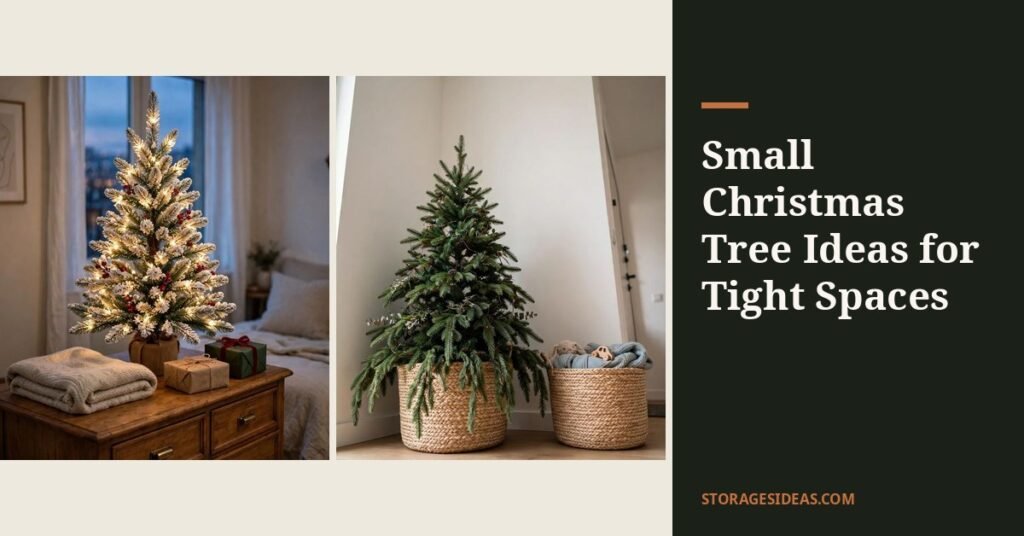
Before you look at a single tree, grab your tape measure. That is the whole trick to getting Christmas in a tight space: measure the floor rectangle where the tree will stand, measure your ceiling height, and then, this is the part nobody mentions in November, measure where the tree will live in January. The small christmas tree ideas below are all sized for a footprint like yours.
A tree you love is still a failed purchase if its box eats half your closet for 11 months.
Here is the good news: you do not need 16 square feet of living room to have a real Christmas tree. What you need is the right format, and this is the storage angle most “small tree” roundups miss.
A 4-foot pencil tree, a flat-back half tree, and a tabletop tree can all give you a fully decorated look, but one of them takes zero floor space and another one stores flat like a pizza box under your bed.
Below are 12 genuinely different small Christmas tree formats, each with exact sizes, real price bands, and, our site’s promise, the January storage footprint spelled out before you buy. our seasonal decor storage guide will help you stash the rest of your holiday gear alongside whichever tree you pick.
Why floor space (and January storage space) decides your tree
Most small-space Christmas advice stops at “buy a smaller tree.” That fails because a smaller tree bought blind still collides with three things: the walking path (a 24-inch tree diameter in a 30-inch doorway lane means bruised ornaments by New Year’s), the ceiling (low 7-foot apartment ceilings vs. a tree plus a star topper), and the storage math.
Storage math is the hidden cost. A standard 7.5-foot artificial tree ships in a box roughly 48 by 16 by 14 inches, call it 6+ cubic feet of dead closet. For an apartment renter, that is the difference between having a coat closet and having a tree closet.
So every format below is judged on two numbers: the December footprint and the January footprint. The winner for most renters is the format that shrinks flat, because flat things slide under beds, behind sofas, and between the washer and the wall, places no 4-foot box will ever go.
One more measurement habit that saves returns: measure your storage slot first, not the tree. If the gap under your bed is 5 inches, you can store anything that collapses to 4 inches or less. If your closet shelf is 12 inches deep, say so out loud.
Then buy the tree that fits the slot, not the other way around.
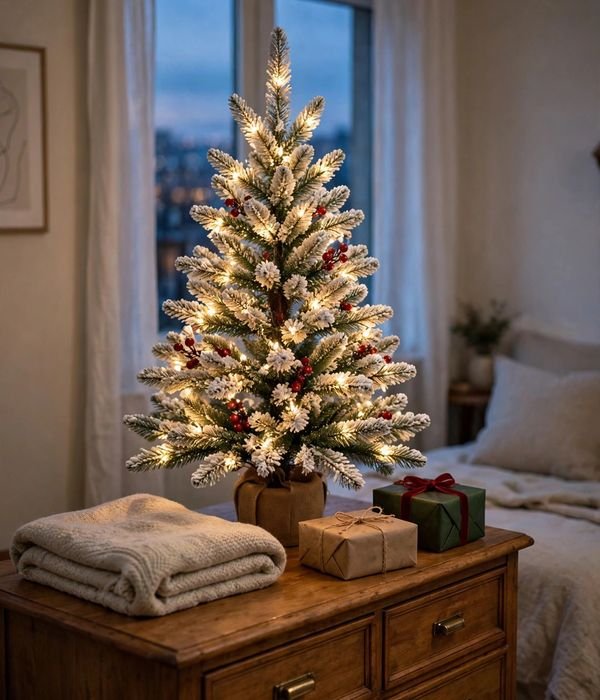
1. The 2–3 Foot Tabletop Christmas Tree: Zero Floor, Full Festive
This is the format every small space should start with, because it uses zero square feet of floor. A 2-foot tabletop tree runs about 24 inches tall with a branch spread of 16–20 inches; a 3-foot version hits 36 inches with a 20–23 inch diameter (a 3-foot frosted pre-lit set, for example, measures 23 inches across on a 6.3-inch stand).
The mechanism is simple: the tree borrows surface you already own, a dresser, a bookcase top, a kitchen counter, and turns it into the display zone.
Tips for best results: Go pre-lit and battery-operated if you can. A 2-foot pre-lit tree typically carries 50 warm-white LEDs on a 6-hour timer (3 AA batteries), which means no cord to the wall and no fighting for outlets in a crowded corner.
Anchor the base on anything above waist height so the tree reads “real tree” at eye level; on a low credenza it can look like a desk accessory.
Watch out: Flocking sheds. Flocked mini trees drop white dust for the first season, fluff them over a trash can on day one, and keep them away from dark upholstery.
After Christmas, the tree goes back in its retail box (about 26 by 12 by 12 inches) on a closet shelf; never toss it loose in a tote or the branches crush permanently.
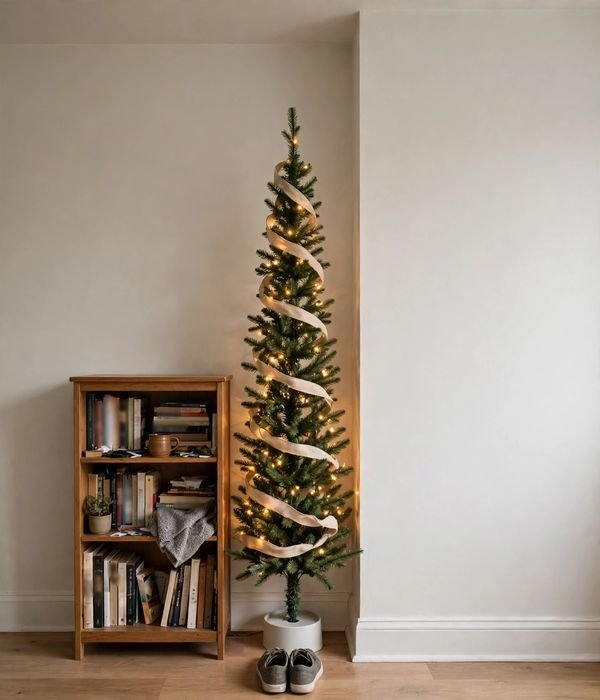
2. The 4-Foot Slim/Pencil Floor Tree: Full Height, 18-Inch Waist
This is the closest thing to a “real tree” a tight living room can hold. A 4-foot pencil tree stands a full 48 inches tall but spreads only 17–22 inches across, one real product example measures exactly 17 inches in diameter on a 9.8-inch stand.
That is the silhouette of a full-size tree in roughly 2 square feet of floor, about the footprint of a small side table. A 5-foot slim steps up to 17–25 inches wide, so measure before assuming “slim” fits your gap.
What you can do with it:
- Slide it into the 20–24 inch gap beside a bookcase, between the TV console and the wall, or in that dead corner by the balcony door.
- Decorate vertically: long ribbon garlands and icicle picks flatter a pencil profile better than round baubles, which make it look lumpy.
- Use a tree collar or a 12-inch woven basket instead of a skirt; it tightens the visual footprint and hides the stand.
Tips for best results: Go pre-lit to skip the cord mess, 100 LEDs with a 6-hour timer is typical for a 4-footer, so you never reach behind the tree at night. Fluff from the inside out, bending the innermost tips first so no bare pole shows through the sparse middle.
That 10–20 minute fluff on a 225-tip tree is the entire difference between “sad stick” and “real pine.”
Watch out: Pencil trees are top-heavy once decorated. Hang your heaviest ornaments on the bottom third and keep glass off the outer tips.
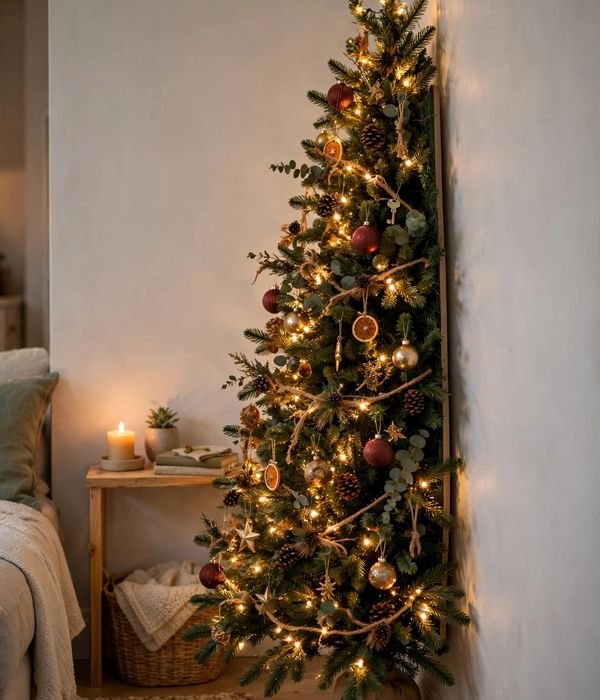
3. The Half Tree (Flat-Back): Full Face, Half the Floor
A half tree is cut straight down the middle, full, decorated face on the front, nothing but trunk and folded-back branches on the wall side.
The numbers are the selling point: a 5-foot half tree is about 95 cm at its widest but only ~20 inches from wall to tip; a 4-foot half runs 70 cm wide with just ~16.5 inches of depth. One popular 6.5-foot model measures 78 inches tall by 43 inches wide by 22 inches deep.
Floor footprint: roughly 2.5–3 square feet, and all of it hugging the wall where nobody walks.
How to set one up without fighting it:
- Place the stand against the wall first, then slide the tree sections down the pole, gravity does the shaping.
- Bend every back-side branch forward before fluffing; that is free fullness you would otherwise waste on the wall.
- Fluff from the bottom up so falling needles (or flock) land on sections you have not shaped yet, and leave 2 inches of air behind the tree, branches need the clearance, and your paint thanks you.
Tips for best results: This is the format for ornament collectors. A half tree faces you with the ornament capacity of a full tree, hang your favorites front and center instead of rationing them around a 360-degree tree.
Watch out: It only looks right against a wall. Floating it mid-room exposes the flat back and ruins the illusion, so commit to the wall spot before you buy.
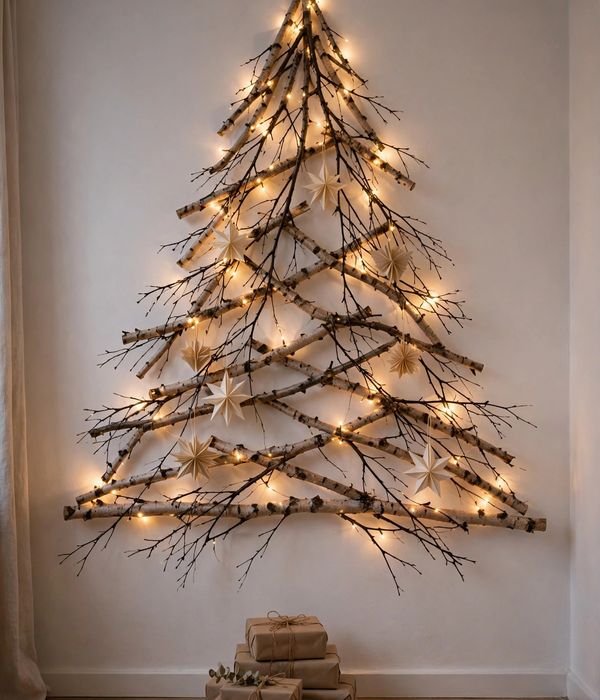
4. The Wall-Mounted Branch Tree: Literally Zero Footprint
No stand, no base, no floor touched. A wall tree is built from 3–6 real or faux birch branches (or a pine garland) mounted in a triangle on the wall, wired with a 50–100 LED string. Typical size: 3–5 feet wide, 3–6 feet tall, you set it.
It stores as a coil of lights plus a bundle of rods about 36 by 4 by 4 inches, which slips into the gap beside a bookcase or a tall gift-wrap tube in January.
Tips for best results: Use removable adhesive strips rated for at least 2 pounds per mounting point, and keep total hanging weight under 5 pounds, lights plus paper or felt ornaments, no glass.
Clean the wall with rubbing alcohol first and let the strips cure a full hour before hanging (the “it fell at 2 a.m.” stories are always the ones that skipped the cure). For the triangle shape, tape a paper outline on the wall first, it takes 2 minutes and saves you re-hanging crooked branches.
Watch out: This is decor, not a display tree, heavy heirloom ornaments will tear it off the wall. Keep your glass baubles for the mantel instead.
5. The Corner (Quarter) Tree: Steals Dead Space
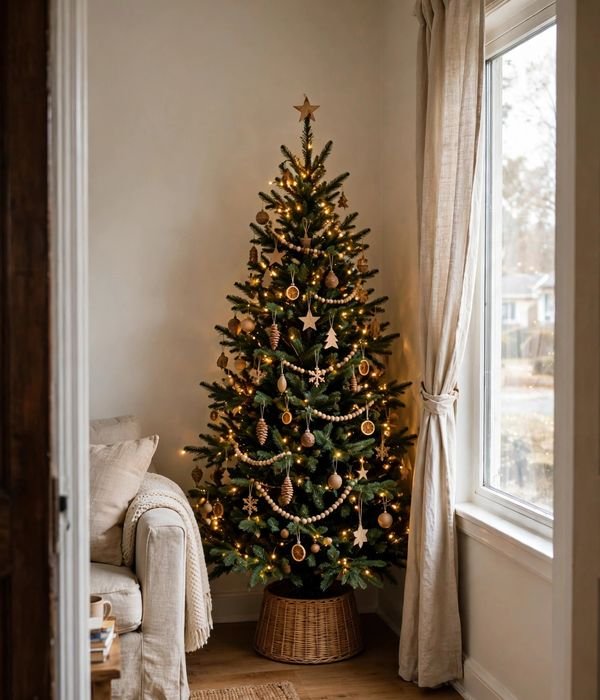
Corners are the only floor space in a small home nobody walks through, and the quarter tree was built for them. It is a tree cut to a quarter section, it sits into the corner, touching two walls, with its full face aimed at the room.
A 5-foot corner tree needs roughly a 26-by-26-inch triangle of floor (under 5 square feet, all of it dead corner); 6–7-foot versions run about 30 by 30 inches. You get the presence of a full tree in space that was holding nothing but a dust bunny.
What you can do with it:
- Use it to anchor the dead corner between the sofa and the window, the one spot a full tree can never go.
- Decorate only the front 180 degrees; save half your ornaments (or your ornament budget) for the mantel.
- Pair it with a tree collar in the corner; a skirt’s fabric always bunches weirdly against two walls.
- Buy the corner sized to your corner, not your ceiling: a 6-footer crammed into a 24-inch corner looks stuffed; a 5-footer in a 28-inch corner looks intentional.
Tips for best results: String the lights on before you wedge it into the corner. Once it is in, the back half is unreachable and you will hate your life.
Watch out: Two walls means twice the fluffing angles, check it from the doorway, not standing right over it.
6. The Pre-Lit Pop-Up Tree: Six Feet Up in Five Minutes, Flat as a Pizza Box After
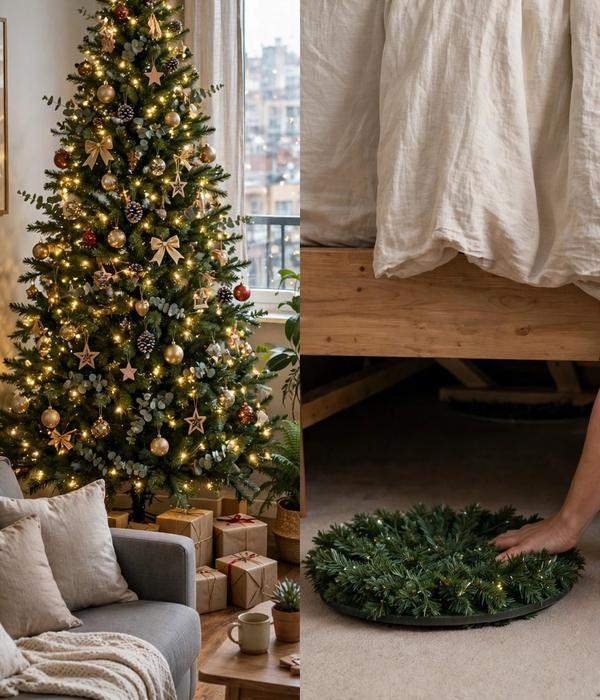
This is the storage-format champion and the format I would hand every renter first. A pop-up tree collapses on a wire frame: setup is stand, pole, lift the collapsed ring up and hook it on, done in under five minutes, branches fall into place already fluffed.
A 6-foot pop-up collapses into a ring roughly 24–30 inches across and only 3–6 inches thick; a 4-footer shrinks to about a 20–24-inch disk, 3–5 inches thick. January footprint: slide it under the bed (about 5 inches of clearance needed), behind the sofa, or flat against a closet wall.
How to buy one that does not look cheap:
- Choose pre-lit with warm-white LEDs and buy one size shorter than you think, pop-ups read bigger than sectionals once lit.
- Check the frame: memory-wire or hinged models hold shape for years; thin-nylon-string frames sag after 2–3 seasons.
- Buy unlit if you want it to last a decade, integrated lights are the first thing to fail, and re-stringing a collapsible frame is a special kind of misery.
- Weigh it: a real one is 6–10 pounds; if the listing won’t say, assume tinsel-grade and keep shopping.
Tips for best results: Keep the collapsed ring in its original sleeve, one bent frame wire and the tree leans forever.
Watch out: Classic PVC needles only. From across the room with the lights on it looks great; up close it will never pass for a premium tree. Buy the look, not the fantasy.
7. The Ceramic Light-Up Tree: Vintage Glow on One Placemat
The mid-century ceramic tree, the one with the little plastic peg lights, is back, and it is arguably the highest charm-per-square-inch format on this list. Standard sizes run 12–18 inches tall on an 8–10 inch base; big ones hit 18–20 inches. Footprint: one placemat.
Display it on a side table, a kitchen counter, or the entryway shelf and the whole room reads “Christmas” from the hallway.
Tips for best results: Vintage ones go for $30–$120 at thrift and resale shops; good new replicas run $20–$60 and come with LED pegs that won’t melt the ceramic. Use it as your secondary tree, one ceramic tree on the mantel plus a 3-foot tabletop elsewhere gives you layered depth cheap.
Test every peg light before December; replacements are sold in mixed-color packs for a few dollars and take seconds to swap. A small mirror tile under the base doubles the glow for zero extra cost.
Watch out: Storage is the fragile part. Keep the original box (or a 14-by-12-by-12-inch cube with bubble wrap around the peg lights); the pegs snap off if this tree rattles around a tote. It belongs on a closet shelf, not the garage floor.

8. The Rosemary Tree: The Tree You Can Eat
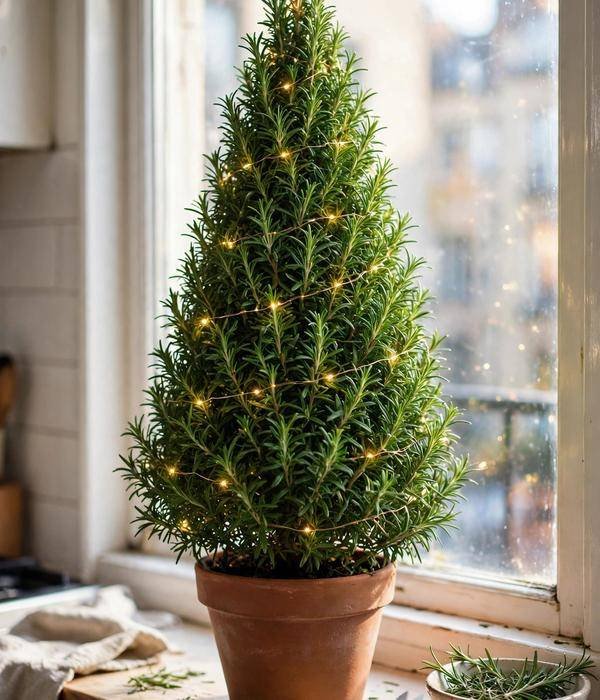
A cone-shaped rosemary topiary is a 12–24 inch live “tree” in a 6–8 inch pot, usually sold in December at grocery stores and garden centers for $15–$30. It sits on a windowsill or table, smells like Christmas, and then in January it becomes a kitchen herb plant instead of a storage problem. Footprint: one trivet.
Storage footprint: zero, it is alive, and the backup plan is freezing clipped sprigs in zip bags for winter cooking.
What you can do with it:
- Water when the top inch of soil is dry, and give it your brightest window, under 4 hours of sun and it starts dropping needles by week three.
- String 20 battery fairy lights through it for a living, glowing tree that costs pennies to run.
- Snip the top into roast potatoes and stuffing through December; a healthy plant regrows.
- In January, repot it up one pot size (8–10 inches) and keep it as a kitchen herb, it outlives every other tree on this list by years.
Tips for best results: Mist the foliage every few days, indoor heating is the killer, not the darkness. It wants humidity more than it wants sun.
Watch out: If your December window is north-facing and weak, treat this as a 3–4 week guest, not a permanent plant, and harvest aggressively before it declines.
9. The Book-Stack Tree: Costs Nothing, Stores Itself
No purchase, no storage, no waste: stack 8–12 hardcover books largest to smallest and you have an 18–30 inch “tree” with a footprint equal to your biggest coffee-table book (about 10 by 12 inches). It is the format for people who own more books than closet space.
When January comes, the books just go back on the shelf, the only format on this list with a literal zero storage footprint.
How to stack one that does not slide:
- Use the biggest, flattest hardcovers as the base, textbooks and art books, not wobbly paperbacks.
- Rotate each book 30–45 degrees off the one below; the zigzag is what reads “tree” from across the room.
- Cap it with a star, a sprig of pine, or one candle-style LED, the topper sells the whole thing.
- Coil a 20-light battery string around the stack; glass ornaments are overkill, but two or three paper ones add color.
Tips for best results: Color-coordinate the spines (all reds and greens, or all cream) for a styled look, a random stack reads “dorm room,” a curated stack reads “bookshop window.”
Watch out: Keep it out of reach of toddlers and cats; a 12-book tower is a domino waiting for a reason. A low dresser corner beats a hallway table.

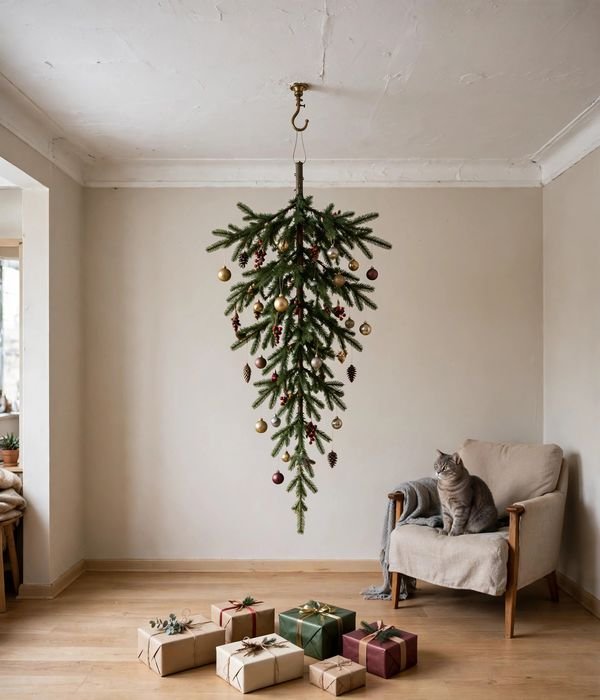
10. The Upside-Down Ceiling Tree: Floor Space, Reclaimed
Upside-down trees hang inverted from a ceiling hook, and the whole point is the floor: it is 100 percent free. A 5–6 foot inverted tree needs a 7-foot-plus ceiling with at least 6 inches of clearance above the tree tip (which now points down).
This is the format for homes where the floor plan lost the tree fight entirely, and for pet owners whose cats treat every floor tree as a climbing gym.
Tips for best results: Anchor into a ceiling joist with a hook rated for at least 15 pounds, and keep the whole tree (tree plus ornaments) under 8 pounds, slim and pencil trees work best here, full trees do not. Pre-lit, battery, timer: you do not want to climb to plug it in.
A stud finder costs under $15 and takes 30 seconds to confirm your anchor point.
Watch out: This is not renter-casual. If you cannot put a screw in the ceiling, the honest alternative is point 4 (the wall tree), do not hang 8 pounds from a drywall-only hook. Check with your landlord before you drill, and water nothing: use artificial only, since no live tree belongs upside-down.
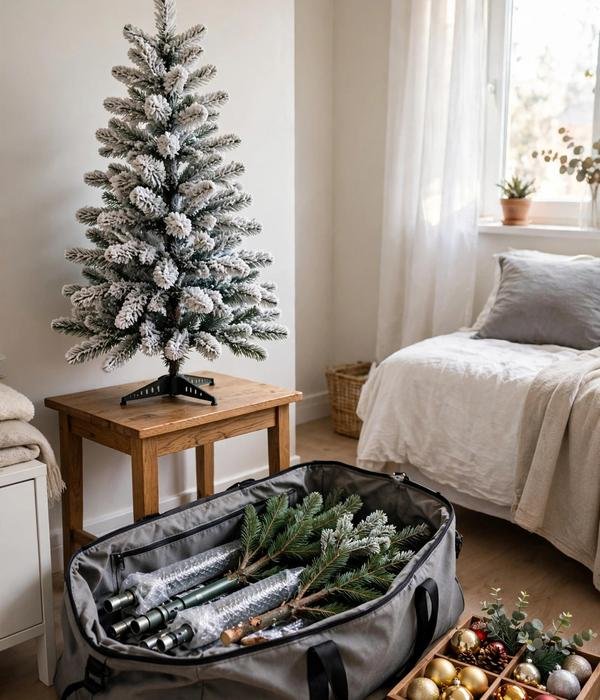
11. The Flocked Mini With a Storage Plan: Snow Without the Shed
A 3-foot flocked mini, about 36 inches tall, 20–23 inches across on a 6.3-inch stand, gives you the snow-dusted look of a mountain tree for $25–$50, and it is the format where storage planning pays off most. Flocking crushes permanently if the tree rattles loose in a tote, so the purchase and the storage plan are one decision.
What you can do with it:
- Buy the tree and its storage bag the same day: a 42-by-15-by-15-inch tree duffel fits a disassembled 3-footer with the sections nested; budget about $15–$25 for the bag.
- Bag the ornaments separately in a $10 ornament tray, glass on flocking is how you get bald patches.
- Keep the retail box as backup: a typical 3-foot mini box runs about 28 by 8 by 8 inches and slides onto any closet shelf.
- Store the whole thing flat on the shelf, not standing on end, vertical storage crushes the bottom branches under the tree’s own weight.
Tips for best results: Fluff flocked branches gently, half the flock falls off on aggressive first fluffs. Over a trash can, once, and then hands off.
Watch out: Flocked trees are one-season-ish prettiness on a multi-year frame. Year two always looks thinner; buy knowing the snow fades.
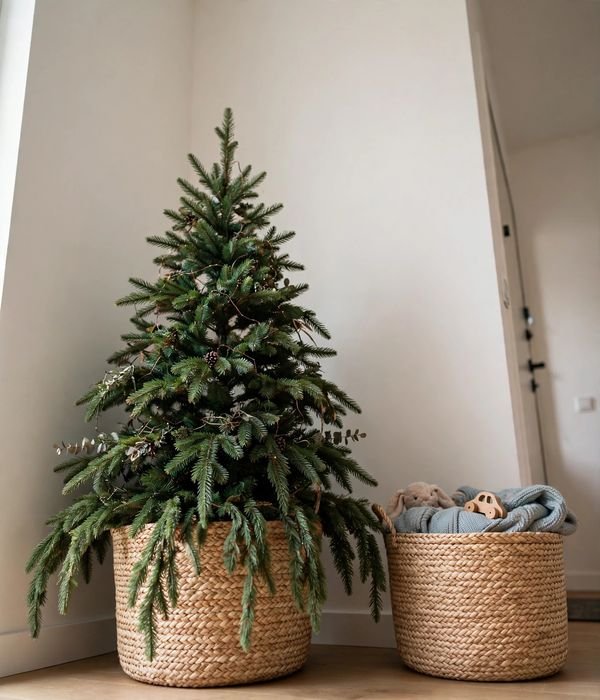
12. The Tree in a Basket Base: The Base That Stores Itself
Swap the tree skirt for a 12–14 inch woven seagrass basket (or a 10–12 inch galvanized bucket): the stand sits inside, the branches drape over the rim, and you get a farmhouse look for $15–$30 on top of the tree. Total footprint: about 16 inches across.
If you are styling the whole entryway for the holidays, pair it with Christmas entryway decor for small spaces.
The storage trick is that the basket is not single-purpose, in January the tree goes back in its retail box (about 28–38 inches long, depending on height) and the basket holds throws, toys, or gift wrap all year: pair it with our wrapping paper storage ideas to keep the holiday clutter in one place. Zero wasted storage.
Tips for best results: Put a 2-inch foam block or crumpled packing paper under the stand inside the basket so the tree sits 2–3 inches higher, it makes a 3-foot tree read a foot taller and stops the whole thing listing sideways.
Watch out: Baskets tip easier than wide cross-stands on carpet. Keep it on hard floor or against a wall, and hang heavy ornaments on the lowest third only.
Conclusion
Twelve formats, one rule: measure the January slot before you buy the December tree. If you only take one thing from this guide, take the tape-measure habit, floor rectangle, ceiling height, storage slot, because it kills more bad purchases than any review ever will.
My top pick for renters: the pre-lit pop-up tree (point 6). It gives you a 4–6 foot decorated tree with a five-minute setup, no screws, no wall damage, and it collapses into a pizza-box-flat ring that slides under the bed.
Full tree look, zero storage footprint, that is the combination every other format is chasing. more Christmas storage ideas for small homes pairs well if you are building the full holiday setup around it.
Frequently Asked Questions (FAQ)
What is the best small Christmas tree for a studio apartment?
If you mean floor space, the pre-lit pop-up tree, it collapses to a 3–6-inch-thick ring that slides under the bed. If you mean zero floor space, go with the wall-mounted branch tree or a 2-foot tabletop tree on existing furniture.
In a true studio, avoid anything wider than 24 inches in diameter; the walking lanes are too narrow for a full-width tree once ornaments stick out.
Can I put up a Christmas tree if my ceiling is only 7 feet?
Yes, buy for 5 feet of tree max and skip the tall topper. A 4-foot pencil tree plus a 4-inch star fits comfortably, and tabletop formats (2–3 feet) never have ceiling problems. The upside-down tree is the one format to avoid with low ceilings: it needs 7 feet plus at least 6 inches of clearance below the hanging tip.
How do I store a small artificial tree in an apartment with no storage?
Pick a format that collapses flat: the pop-up tree (stores under the bed), the wall tree (coils into a 36-inch bundle), or the book-stack tree (zero storage, the books go back).
If you already own a sectional tree, skip its giant retail box and compress the sections into a 42-inch tree duffel bag; it fits in half the space of the box it came in.
Are pre-lit trees worth it for small spaces?
If the tree lives in a tight corner, yes, you avoid a separate light string fighting for one outlet and the cord mess behind furniture. Buy pre-lit with a built-in timer (usually 6 hours on, 18 off) so you never reach behind the tree at night.
The honest downside: on budget trees the lights fail first, so if you plan to keep the tree five years or more, buy it unlit.
What small tree works best for renters?
The pop-up tree wins for renters: no wall damage, no screws, five-minute setup, and flat storage. Runner-up is the tabletop tree, zero floor space and it goes back in its retail box on a closet shelf.
Skip the upside-down tree unless your landlord allows a ceiling hook, and skip the wall tree if your lease bans adhesive damage (most are fine, but check).
How early should I buy a small Christmas tree?
For the best selection, shop in October, slim and specialty formats like half trees and pop-ups sell out by late November, and seasonal prices creep up after Thanksgiving.
If you are shopping sales instead, buy in January: last year’s 4-foot pencil trees routinely drop 40–50 percent, and you can store the box in the slot you measured for it before next December.