
The mistakes that cost renters their deposit every December are always the same: nail holes in the drywall, tape that ripped the paint off, and adhesive hooks that dropped a garland at 2 a.m. Every one of these is avoidable. You can have a glowing, fully decorated Christmas home without a single hole or mark on any wall.
What follows is an 8-step renter friendly Christmas decor plan with the exact weight ratings, cure times, and surface rules that make damage-free decorating actually hold up through January. No nails, no screws, no crossed fingers.
Why Landlord Paint Fails Before Your Decor Does
Most rental walls are painted with cheap flat latex paint, and that is the root of almost every deposit disaster. Flat paint is porous, so adhesive soaks into its microscopic texture and locks on mechanically. It also bonds weakly to the drywall under it, often because the wall was dusty or never primed right.
When you pull tape or a hook off, the adhesive does not fail. The paint does, and it comes off in a patch that shows bare drywall underneath.
Paint that feels dry is not the same as paint that is cured. Latex paint can take up to 30 days to fully harden, and tape on soft, fresh paint lifts it like a sticker.
Time makes every adhesive stronger too. Acrylic adhesives keep curing on the wall, so a strip that would peel off cleanly after a week can tear paint after six weeks of a holiday season.
This is why the order of operations matters most. Test the surface first, clean it right, respect the weight rating and the one-hour cure, and take everything down with heat and patience. Do that and your Christmas decor ideas look expensive while your walls stay boring, which is exactly what a landlord wants to see.
1. Plan the Damage-Free Layout: Map Where Everything Hangs First
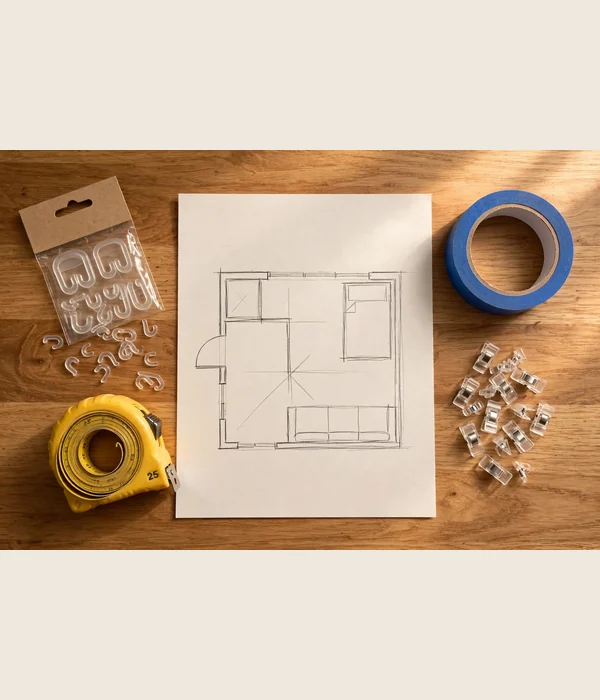
Every nail hole starts as a decoration with no plan. When you buy a wreath before knowing where it will hang, the wall becomes the default, and the wall always collects in the form of spackle.
Planning flips the job: you decide the mount first, then buy decor that fits it. A layout map takes twenty minutes and prevents the two most expensive mistakes, which are overloading one adhesive hook and drilling a hole at 11 p.m. on December 23.
- Walk every room and note your mount points: doors, windows, the mantel, shelves, and sturdy furniture. Leave walls off this list on purpose.
- Write down what you actually want: wreath, garland, lights, stockings, and tree. If it is not on the list, it does not get bought.
- Assign each item a damage-free mount. The wreath goes on an over-door hanger, lights go on glass with suction cups or clips, stockings go on weighted mantel holders.
- Count hooks before you shop. Plan one medium hook rated at 3 lb for every 3 to 4 feet of garland, and one light clip rated at 0.3 lb every 12 to 18 inches of string lights.
- Mark your no-stick zones: textured walls, wallpaper, brick, and any paint less than 7 days old. Adhesive products fail on all of these.
Watch out: the plan only works if you follow it. An unplanned decoration bought on impulse is exactly how the drill comes out of the drawer.
2. Prep and Test Your Surfaces: The Closet Test That Saves Your Deposit
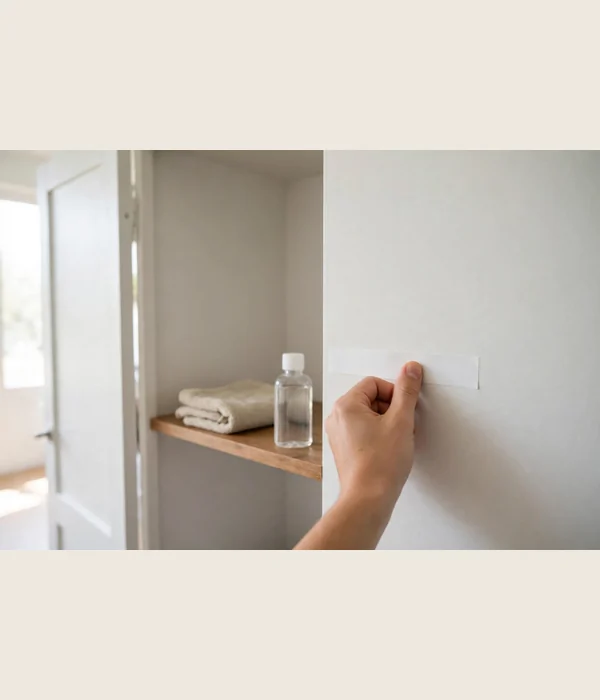
Adhesive hooks work perfectly in the store demo because the demo board is semi-gloss. Your apartment is probably flat paint, and flat paint is the finish most likely to peel.
The fix is a test that takes five minutes now and can save a $150 repaint deduction later. You are not testing whether the hook holds. You are testing whether the paint holds.
- Pick an inconspicuous spot inside a closet or behind a door, clean it with rubbing alcohol, and let it dry completely.
- Press on the exact strip or hook you plan to use, following the full routine: firm pressure for 30 seconds, then the full one-hour wait.
- Leave it alone for 3 days. A strip that survives 3 days tells you what January will look like.
- Remove it the right way: pull the tab straight down along the wall, slowly, stretching it at least 12 inches. Never pull it toward you.
- If paint came off, that wall is an adhesive-free zone for the whole season. Use doors, glass, and furniture there instead.
Watch out: bathrooms and humid rooms weaken adhesive bonds, so even a passing closet test does not guarantee a steamy bathroom wall. Keep heavy decor out of humid rooms entirely.
3. Hang Garlands and Lights Without a Single Hole: Adhesive Hooks Done Right
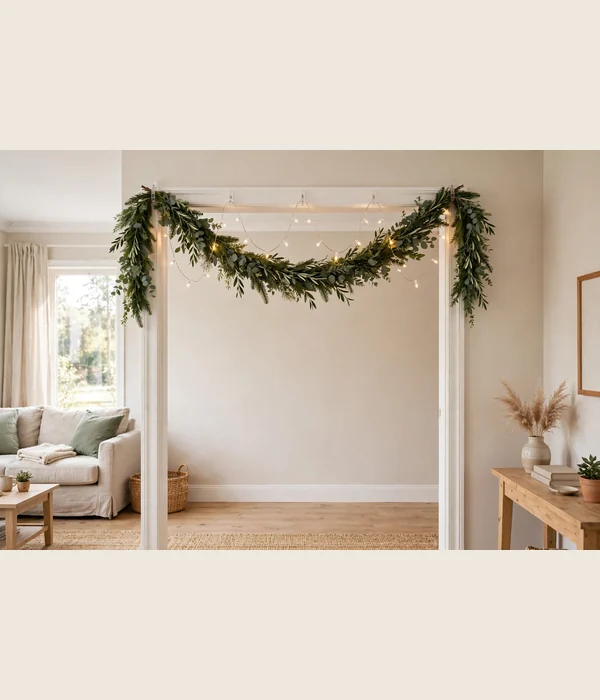
Adhesive hooks fail for exactly three reasons: the surface was dirty, the weight beat the rating, or the strip never got its one-hour cure. Get those three right and a medium hook will hold a garland strand all season.
The ratings are real numbers. A large utility hook holds 5 lb, a medium wire hook holds 3 lb, and the tiny clear light clips hold 0.3 lb each, which is why lights need a clip every foot or so.
- Wipe each spot with rubbing alcohol and let it dry. Household cleaners leave a slick film that kills the bond.
- Match the rating to the job: 3-lb hooks for garland, 5-lb hooks for a wreath or heavy swag, and 0.3-lb clips spaced 12 to 18 inches apart for string lights.
- Press the strip to the wall, slide the hook off, press the base hard for 30 seconds, then slide the hook back on.
- Wait one full hour before hanging anything. This is the step everyone skips, and it is the reason most hooks end up on the floor.
- Hang lights with a little slack between clips so the wire never pulls sideways on any single clip. Adhesive strips only work between 50 and 105 degrees F, so avoid cold exterior walls.
Watch out: never hang decor over a bed, a crib, or anything irreplaceable, and never pull a strip outward at takedown. Straight down, slow, or the paint comes with it.
4. Dress Windows and Glass: Suction Cups and Static Cling
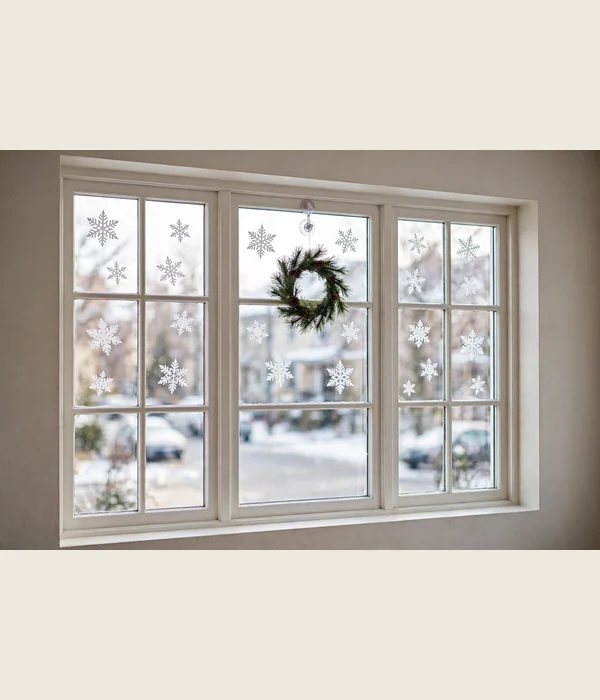
Glass is a renter’s best friend because it gives adhesives nothing to tear. Suction cups and static cling film hold by vacuum and static, not glue, so removal leaves literally nothing behind.
The trade is that suction is weaker than a good adhesive strip. Standard cups hold 0.5 to 3 lb, while twist-lock heavy-duty cups can hold up to 7 lb on clean glass, which is enough for a modest wreath.
- Clean the glass with rubbing alcohol and dry it fully. Dust is the number one killer of suction seals.
- Dampen the rim of the cup slightly, press it straight onto the glass with firm pressure, and do not twist it.
- Tug the hook gently after 30 seconds. If it slips now, it will slip in January.
- For window film, mist the pane with soapy water, lay the static cling film on, and squeegee out the bubbles. Typical rolls measure 17.5 by 78.7 inches and trim easily with scissors. A roll usually costs under $15.
- Recheck suction cups every week through the season and re-press any that feel loose.
Watch out: suction cups fail on textured or frosted glass and weaken in cold snaps. Tie a safety line from any heavy window wreath to the frame so a failed seal does not mean broken ornaments.
5. Style the Mantel and Shelves: Let Gravity Do the Work
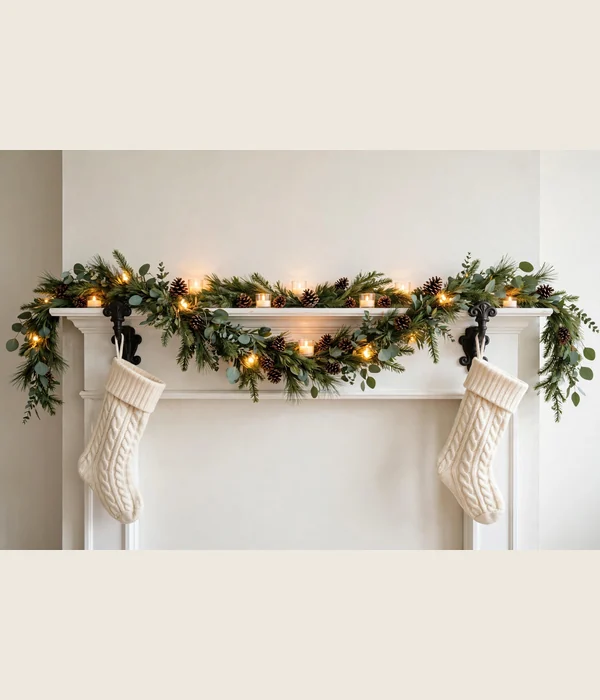
A mantel is the easiest Christmas real estate in a rental because nothing needs to stick to anything. Garland drapes, stockings hang from weight, and candles sit.
The physics is simple: a cast-iron stocking holder weighing 3 to 5 lb on the mantel top counterbalances a filled stocking hanging off the front. No screws, no strips, no risk at all. Shelves work the same way with small risers and battery candles.
- Measure your mantel’s depth so the garland drapes instead of sliding. Six inches of depth is plenty for a standard 6-foot garland, typically under $40.
- Place one weighted stocking holder per stocking, set back at least 4 inches from the edge. A pair of holders usually costs under $25.
- Anchor garland ends with something heavy and invisible: a stack of books or a vase tucked behind the drape.
- Use battery-operated string lights and tea lights on the mantel so no cord needs routing or taping anywhere.
- Hang stockings empty or cap the contents at a few ounces. A loaded stocking can topple a light holder straight onto the hearth.
Watch out: real candles on a wooden mantel under a lease with a fire clause are a deposit risk of a different kind. Check your lease first, and default to LED candles.
6. Pick a Rental-Friendly Tree: Go Slim, Small, or Flat-Backed
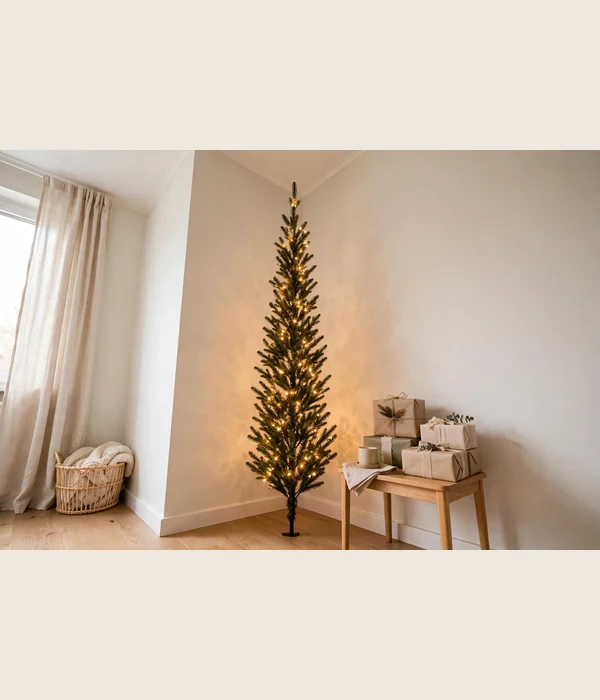
A full 7.5-foot tree with a 5-foot base eats a rental living room alive, and its water bowl will find your hardwood floor. Slim formats solve both problems.
A pencil tree runs 4 to 7 feet tall on a base only about 24 inches wide, so it fits a corner a standard tree never could. Tabletop trees at 2 to 3 feet turn a side table or sturdy shelf into the Christmas corner with zero floor footprint.
- Measure your ceiling height and tape the footprint on the floor before you buy. Guessing is how trees end up bent against the ceiling.
- For ceilings under 8 feet or very tight rooms, pick a tabletop tree at 2 to 3 feet on a table that can take the weight.
- For corners, pick a pencil tree at 4 to 7 feet with a base around 24 inches wide.
- For the slimmest option, a flat-backed half tree sits 4 to 6 inches from the wall with no contact at all.
- Anchor any top-heavy tree with clear fishing line tied to a heavy piece of furniture, never to the wall itself.
Watch out: set the water bowl on a waterproof tray, not straight on wood or a rug. Sap and needle stains come out of deposits, not out of carpet. For more formats, see Christmas tree alternatives for small spaces.
7. Swap Textiles and Table Decor: The Layer That Mounts Nothing
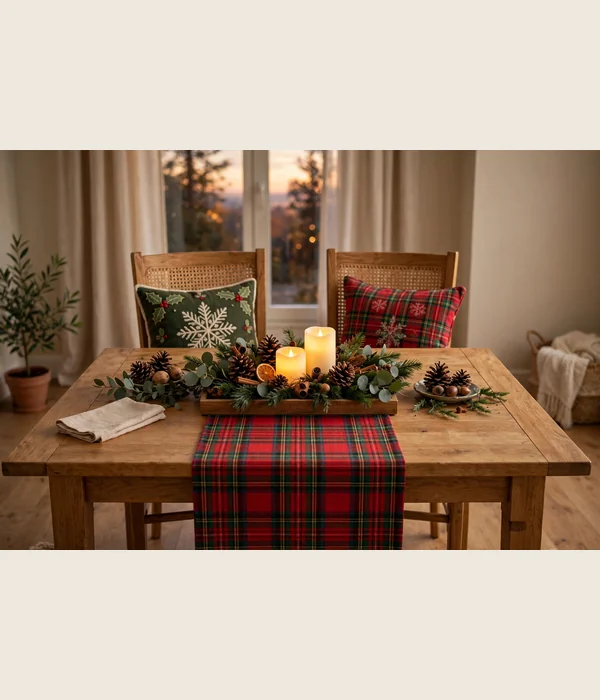
The biggest visual change per dollar in a rental comes from things you never mount at all. Swapping pillow covers, throwing a plaid blanket over the sofa arm, and laying a runner down the table reads as fully decorated from across the room. Textiles also pack flat in January, which matters when your storage is a single closet.
- Swap your everyday pillow covers for holiday ones and bag the originals in a vacuum bag under the bed. Our storage ideas for renters guide covers where all the off-season stuff should live.
- Lay a table runner and build the centerpiece on it: a tray, pinecones, and battery candles contained in one movable unit.
- Drape one throw over the sofa arm and fold a second at the foot of the bed. Two is plenty; more looks cluttered.
- Add cloth napkins and placemats in your palette for the dining table. A set usually costs under $20 and photographs beautifully.
- Check your lease on open flames before buying real candles. Many rentals ban them outright, and LED pillars have gotten convincing.
Watch out: keep textiles away from real candles and heating vents. A throw draped over a hot vent is a fire hazard and a scorch mark you will pay for.
8. Take Down and Restore the Walls: Leave No Trace in January
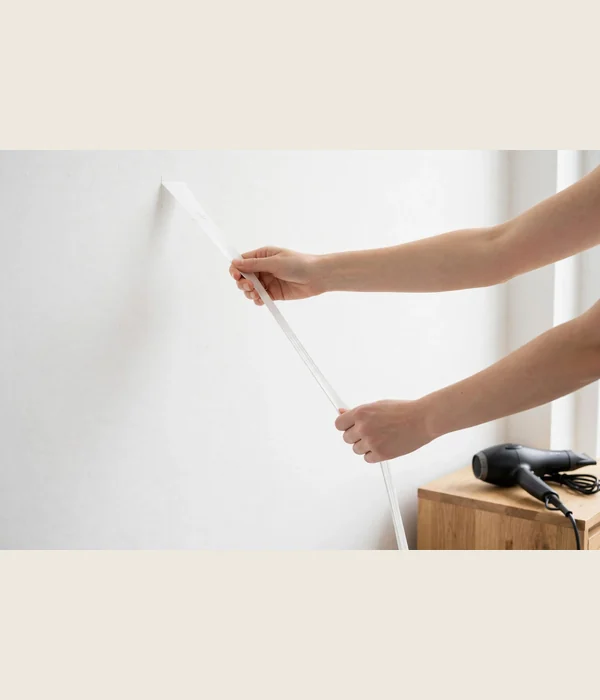
Takedown is where deposits are actually lost, usually at 11 p.m. on a Sunday when patience is gone. The strips that held your garland for six weeks have bonded harder than they did in December.
That is exactly why you slow down instead of speeding up. Thirty extra minutes here is the difference between a full deposit refund and a repaint charge.
- Warm each adhesive strip with a hair dryer on low for about 30 seconds to soften the glue before you touch the tab.
- Slide the hook off its base and hold the base steady against the wall with your other hand.
- Stretch the tab straight down along the wall, slowly, for at least 12 to 15 inches until it releases. Never pull outward toward you.
- Dab any leftover residue with rubbing alcohol on a soft cloth, never a scrub pad, which can dull the paint sheen.
- Photograph every wall you decorated and compare with your move-in photos while the daylight is still good.
Watch out: a yanked strip that takes paint needs spackle, sanding, and a full wall repaint to blend, and a handyman charges $80 to $150 for that. Your landlord will simply take it from the deposit.
Conclusion
If you buy one thing this season, make it a variety pack of adhesive hooks plus a closet test you actually do. That combination covers nearly every decoration in this plan, and the test is the only part that protects you on flat paint.
Renter’s top pick: the medium 3-lb hooks, because garland and light strands are the backbone of Christmas decor and that rating carries both. Do the prep, respect the ratings, take it all down slowly, and January-you keeps the whole deposit.
Frequently Asked Questions (FAQ)
Will adhesive hooks damage my apartment walls?
If your walls are eggshell, satin, or semi-gloss, quality strips usually remove cleanly when you follow the cure and removal steps. If your walls are flat or matte paint, which most rentals use, assume the risk is real and run the closet test first. When the test peels paint, skip adhesive entirely and use doors, glass, and furniture instead.
How long can I leave the strips up over the holidays?
Six to eight weeks is the typical Christmas season, and that is right when acrylic adhesives bond hardest. If you can, take decor down in the first week of January rather than leaving it into February. When you remove them, warm each strip with a hair dryer for 30 seconds first, then stretch the tab straight down slowly.
Can I hang Christmas lights on textured walls?
No, adhesive strips and clips do not bond to textured walls, and they will fall. Run your lights along window glass with suction cup clips, drape them over a tension rod inside the window frame, or swag them across furniture instead. Battery-operated strands remove the cord problem entirely, so you are not hunting for outlets.
What is the best renter friendly Christmas decor for heavy items when my lease bans nails?
A tension rod wedged in a window frame or alcove typically holds 10 to 20 lb, which covers heavy garland swags. Weighted mantel holders at 3 to 5 lb each handle stockings, and floor-standing pieces like a slim tree carry the rest. Spread weight across several mounts instead of loading one hook past its rating.
Do suction cups really hold on windows in winter?
They can, but cold weakens the rubber seal, so check them weekly from December on. Press any loose cup back on after wiping the glass clean, and keep heavy wreaths tethered to the window frame with a safety line. If your windows are old single-pane glass that gets very cold, favor lighter decor on the cups.
How do I take down window clings and film without residue?
Static cling products use no adhesive at all, so you just peel them off the glass. Wipe the pane with glass cleaner afterward to remove any dust outline, then roll the film back onto its backing sheet so it stays flat for next year. Suction cups twist off and rinse clean under running water.
What should I photograph to protect my deposit?
Photograph every wall, window, and mantel you decorated, once before you hang anything and once after takedown. Keep the before and after shots side by side with their dates. If a strip does take paint, those photos plus your test notes are what you show the landlord before move-out, not after.
What if a hook already ripped paint off my wall?
Do not touch it up with a random paint sample, since the color match will be visibly off. The real fix is spackle, a light sanding, and repainting the entire wall so the sheen matches. If that sounds like too much, get a handyman quote now, because it is usually cheaper than whatever the landlord deducts later.