
Christmas morning is three weeks out and new toys are about to land on your living room floor. If you want to declutter toys before Christmas, this is the window: not the day after, when wrapping paper and new boxes are already stacked to the ceiling. Do it now and the new gifts actually have somewhere to live.
A pre-holiday toy purge works because you are clearing space for a known, incoming volume of stuff. This is not vague “get organized” energy. It is 8 concrete steps, each with exact bin sizes, bag volumes and sorting rules, built to fit inside two weekends before the wrapping comes off.
Why a Pre-Christmas Toy Purge Works
Every toy you keep occupies floor, shelf or bin volume, and that volume is fixed. A new haul on Christmas morning does not shrink to fit the space you have. Wrapping paper, gift boxes and packaging alone can fill one or two 33-gallon bags, and the toys themselves need homes that same day.
Decluttering before the deadline flips the order of operations. Instead of stuffing new toys into an already full playroom, you empty first and let the new things take the good spots. Kids play more with less, too: fewer choices means the favorite toys get found and used instead of buried.
The timing matters for donations as well. Local Toys for Tots chapters typically set drop-off deadlines around mid-December, and thrift stores cut back toy intake as their shelves fill. Purge in November and your donate pile reaches families before Christmas, but purge on December 23 and it sits in your garage until January.
One honest caveat: this process does not work on a single stolen afternoon. Plan two sessions, a week apart, so the keep pile has a trial period and the donate bags actually leave the house.
1. Pick a Declutter Deadline and Pull Your Sorting Supplies: set the clock first
Decluttering stalls when the session has no end time, so give it one. Pick two dates, a sorting day at least two weeks before Christmas and a drop-off day three to five days later, then write both on the family calendar where everyone can see them. A deadline you can see beats a deadline in your head.
The second reason supplies matter: stopping mid-sort to hunt for bags kills momentum, so buy everything in one shopping trip and grab more bags than you think you will use. Running out at the halfway point is how half the toys sneak back onto shelves.
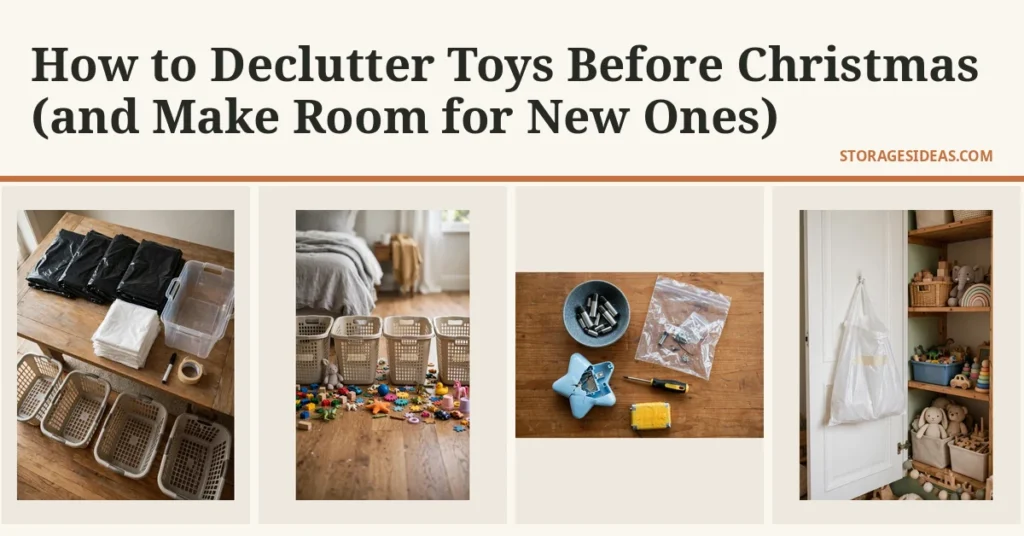
- Grab 4 to 6 black 33-gallon lawn bags for bulky items like plush toys and ride-ons. A 33-gallon bag holds roughly 4 cubic feet, about twice a kitchen bag.
- Get 10 white 13-gallon kitchen bags for small pieces, puzzles and action figures. White bags make it easy to spot which ones are trash at a glance.
- Buy one 18-gallon tote, roughly 24 by 16 by 12 inches, as your “undecided” holding box. It costs under $12 at most big-box stores.
- Add a roll of packing tape, a thick marker and painter’s tape for labels. Skip sticky labels; they fall off tote lids by January.
- Set out four empty laundry baskets or boxes as your sorting stations before a single toy moves.
2. Gather Every Toy Into One Room Before You Sort Anything: see the real volume
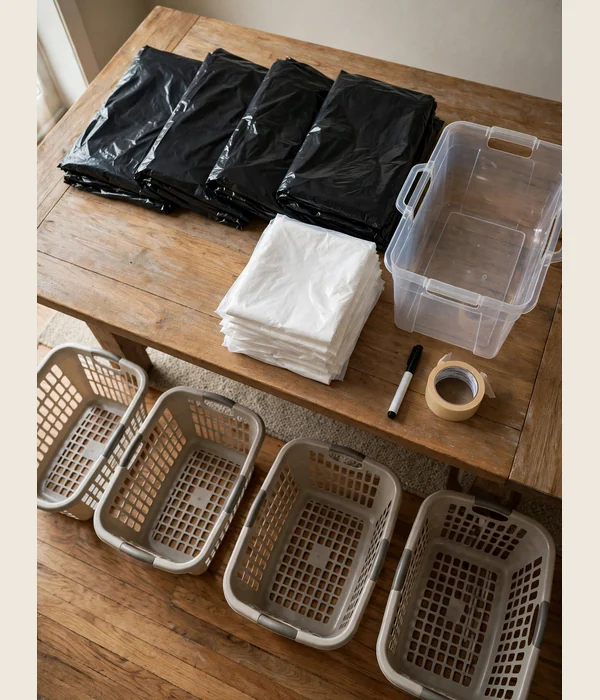
You cannot judge how much you own while the toys are scattered across six rooms, so haul every toy into one space, the living room floor or the dining table if the kids are small, and look at the pile. The shock is the point. Most families underestimate their toy volume by about half because the clutter is distributed.
This is also where you find the lost pieces. Pull under beds, behind the couch, out of the car and from grandparents’ houses. Sorting a puzzle that is missing four pieces is pointless, and donate piles with half-complete games end up in the trash.
Where it works best:
- Small apartments: use the bed as the sorting table; the pile has nowhere to hide.
- Homes with a dedicated playroom: clear the playroom floor itself, so the empty room becomes your visual “after” photo.
- Multi-kid households: one pile per child, spaced a few feet apart, so nobody’s sorting decisions tangle with anyone else’s.
- Renters: do it on the rug, not the hardwood, so dragging totes across the room does not scuff floors you will owe for at move-out.
- Garages in cold climates: sort indoors; numb fingers make bad keep-or-donate decisions.
3. Sort With the Four-Box Method: keep, donate, toss, relocate
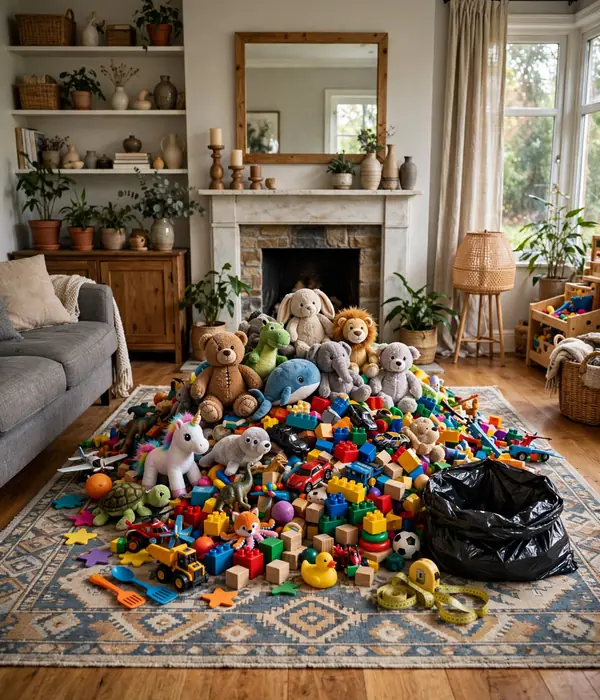
Every toy gets touched exactly once and lands in one of four stations. No “maybe” pile on the floor, no second round of looking. One touch forces a decision, and fast decisions keep a big pile from eating the whole afternoon.
If you pick up a toy and cannot decide in ten seconds, it goes in the undecided tote from Step 1.
The four categories keep you honest. Donate means a stranger’s child would genuinely want it, clean, complete and working, while toss means broken, missing parts or stained past saving. Relocate means it belongs somewhere else entirely, like craft supplies in the office or outdoor toys in the garage.
Tips for best results: Work in 45-minute rounds with a 15-minute break. Decision fatigue is real, and it shows up as “keep everything.” Let each child veto up to three items from their own donate pile; the veto power makes them cooperate on the rest.
Bag the trash station first, tie it and take it to the bin immediately so nothing migrates back.
Watch out: Do not donate to Toys for Tots unless toys are new and unwrapped; that program does not take used toys at all. Used toys go to thrift stores, shelters, daycares or buy-nothing groups. Check each toy’s battery compartment before boxing it; corroded batteries leak and ruin the box.
4. Run the One-Year Test and Break Up Duplicate Sets: cut the keep pile in half
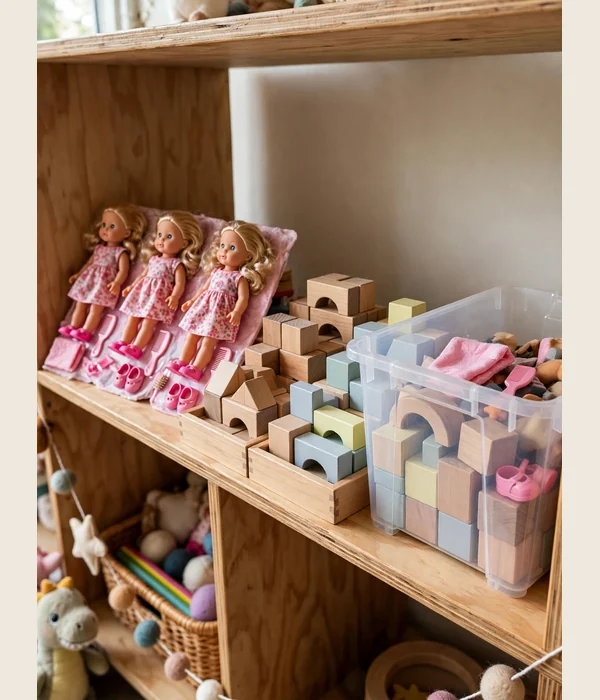
Now attack the keep pile, which is always bigger than it should be, and for each toy ask: has my child played with this in the last year? If the answer is no or “only at Grandma’s,” it goes. A toy unused for twelve months is decoration, and decoration does not need a home in the playroom.
Then hunt duplicates: kids accumulate three sets of wooden blocks, two doctor kits and five baby dolls, so keep the best set of each and let the rest go. For collections like building bricks, one combined bin replaces three half-empty ones. You are not losing variety; you are removing the copies nobody noticed.
- Pull everything the child has not touched in 12 months. Put these in the donate bags first while resolve is high.
- Group look-alikes together: dolls, ball sets, vehicle collections. Keep the favorite of each group.
- Merge partial sets into single bins. One 16-quart bin, about 17 by 12 by 6 inches, holds a generous merged brick collection.
- Set aside outgrown baby toys separately. These donate well to shelters and daycares, which always need them.
- Re-count the keep pile. If it still fills more than your bins will hold, repeat this step. The bins are the limit, not your guilt.
One conditional note: the one-year test is too blunt for toddlers under 3, whose play cycles rotate every few months. For little ones, use a trial box instead: pack questionable toys away for 30 days. If nobody asks for them, donate without drama.
5. Pack Donations So They Actually Leave the House This Week: beat the holiday cutoff
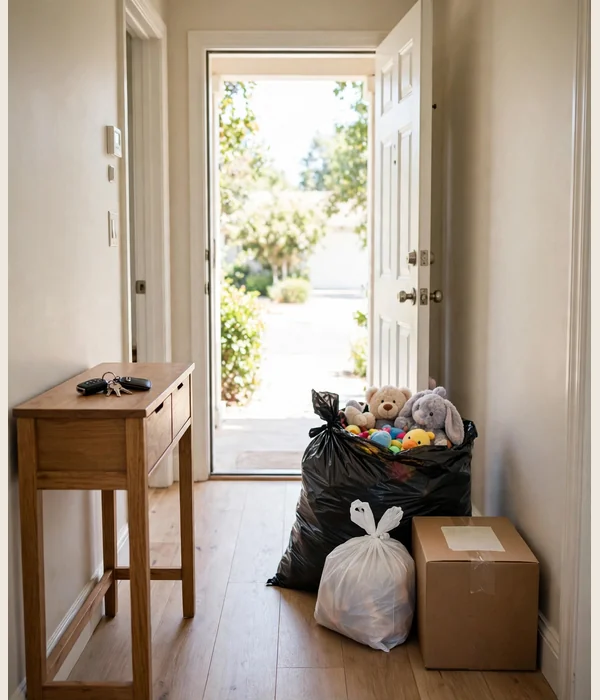
A donate bag sitting in your hallway for a month is not a donation; it is clutter with good intentions. Pack the bags now, label them by destination, and get them out on your drop-off day from Step 1. Momentum dies fast, and once the bags blend into the scenery, they stay until spring.
Packing right matters because charities sort fast, so clean the toys, include batteries and group by type in separate bags: one for plush, one for games and puzzles with all pieces, one for outdoor toys. Tape boxes shut. A tidy bag gets accepted without a second look; a tangled mess gets side-eyed or rejected.
Where it works best:
- Toys for Tots: new, unwrapped toys only, dropped at local collection boxes. Most chapters close intake around mid-December, so check your local chapter’s deadline before you drive over.
- Thrift stores like Goodwill and Salvation Army: accept used toys year-round, but holiday intake lines get long. Go on a weekday morning.
- Women’s shelters and family shelters: often take gently used toys directly and need them most in December. Call ahead; some accept by appointment only.
- Daycares and preschools: happy to take durable toys, especially outgrown infant and toddler items.
- Buy-nothing groups and neighborhood apps: fastest option for bulky items like play kitchens. Porch pickup means the item leaves today.
- Consignment stores: worth it for big-ticket items in good condition, but most stop taking holiday inventory by early December.
6. Strip Batteries and Recycle the Broken Toys Properly: the safety step most people skip
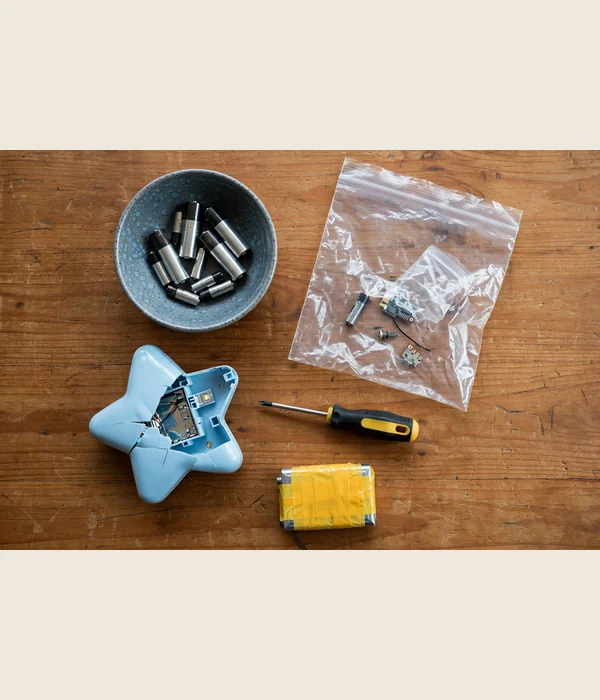
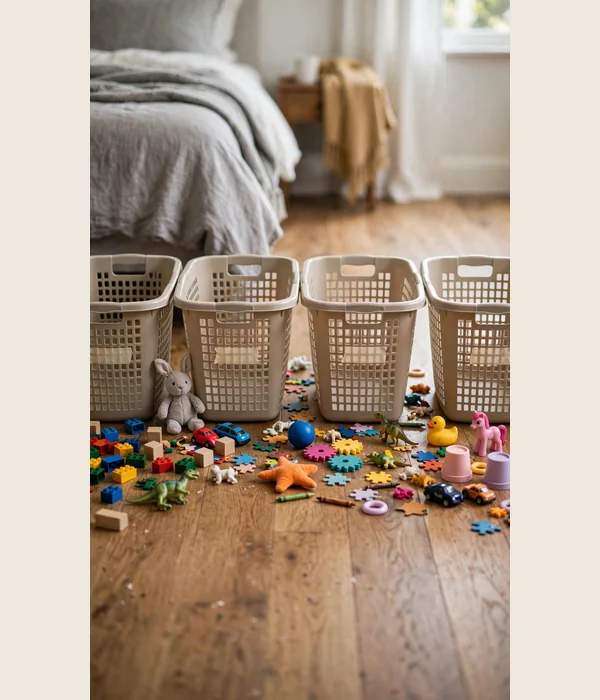
Broken toys with batteries inside are the one category you cannot just toss. Batteries corrode, leak and in the case of lithium-ion cells can swell or catch fire in a trash bag. Every toy heading to the trash gets its battery compartment opened first, which takes thirty seconds per toy and prevents the one household fire nobody plans for.
Most plastic toys are not curbside-recyclable, so the toss pile splits three ways: batteries out to recycling, electronics to e-waste, plain plastic to the trash. Do not overthink it. The goal is safe disposal, not a perfect recycling score.
Tips for best results: Keep a small bowl on the sorting table for loose batteries as you work. Tape the terminals of lithium-ion batteries with electrical tape before bagging them; this is what recycling programs ask for. Remote controls, singing toys and light-up items all count as e-waste at most municipal drop-offs.
Watch out: Never put lithium-ion batteries in household trash or recycling bins; they cause fires in garbage trucks. Drop them at Call2Recycle collection boxes, found at Best Buy, Lowe’s, Home Depot and Staples stores nationwide. Alkaline batteries (AA, AAA) are accepted at many of the same boxes.
If a toy is broken but battery-free and mostly plastic, it goes in the regular trash. Do not put it in the recycling bin hoping for the best.
7. Rehome the Keepers With Bins That Fit Your Shelves: measure first, buy second
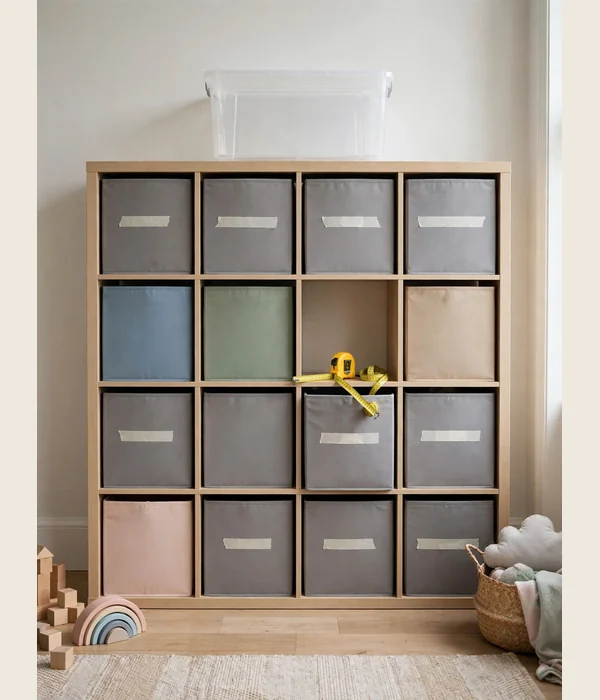
An empty playroom is a trap. Without designated homes, the kept toys drift back into piles within a week, and Christmas morning adds a fresh layer. Measure your shelves before buying a single bin, because a bin that is half an inch too tall for a cube shelf is a bin you will return.
Every toy gets a container, and every container gets a fixed spot. When the bin is full, something leaves before something new enters.
- Measure each shelf opening to the nearest half inch and jot the numbers on your phone.
- For IKEA Kallax-style cubes (about 13 1/4 inches square inside), buy fabric cube bins around 11 inches square so they slide in with clearance.
- 16-quart bins (about 17 by 12 by 6 inches) stack two-high on standard 12-inch closet shelves and hold a full play category each.
- For under-bed storage, buy bins under 7 inches tall; most frames clear 7 to 8 inches.
- Label every bin with painter’s tape and a marker. Kids put things back when the label tells them where.
Once your keepers have homes, think about where the Christmas gifts will go too. New toys need a storage home of their own, so browse toy storage ideas for systems that grow with the next haul.
Split the keepers by zone as well. Everyday playroom toys go in playroom organization ideas and the quiet-play toys in toy storage ideas for the bedroom, so nothing lands back in one giant pile.
8. Set the One-In-One-Out Rule Before Christmas Morning: make the purge permanent
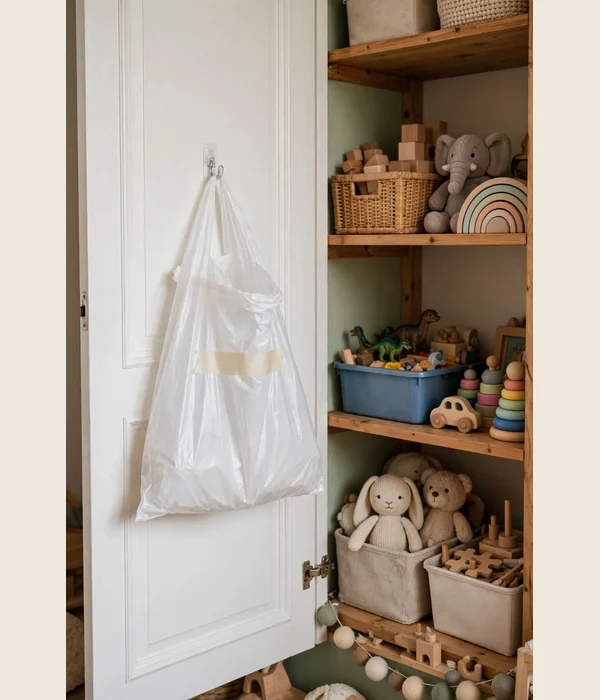
A one-time purge buys you one clean Christmas, but the one-in-one-out rule buys you every Christmas after that: for every new toy that enters the house, one old toy leaves. No exceptions for birthday parties, grandparents or sale racks. Kids learn the rule fast when it is consistent.
Announce it before the gifts arrive, not after. Christmas Eve is the moment: tell the kids that Santa brings new toys and the old favorites make room by going to other kids. Framing it as generosity works far better than framing it as rules, especially for kids under 8.
What you can do with it:
- Keep one empty 13-gallon bag in the playroom closet as the permanent “out” bag. When it fills, the contents get donated.
- After birthdays, run a 20-minute version of the four-box sort. Small, regular purges beat annual marathons.
- Let kids choose which toy leaves when a new one arrives. The choice keeps them invested instead of resentful.
- Put a labeled donation box by the front door in January. Holiday gifts that miss the mark can leave within days, not months.
- For grandparents who over-give, suggest experience gifts or contributions to a savings account. One honest conversation prevents ten future purges.
Conclusion
Two weekends, a stack of bags and one honest sort: that is all it takes to walk into Christmas with space instead of dread. The donate pile is the whole game. Sort perfectly and never drop the bags off, and you have just reorganized your clutter.
Start with this: do the four-box sort from Step 3 this weekend, before you buy a single bin or read another organizing article. Most families find that half the “storage problem” was really a “too much stuff” problem, and the sort alone clears it.
Buy bins only for what survives the sort, drop the donations before your local mid-December cutoff, and let Christmas morning fill empty shelves instead of overflowing full ones.
Frequently Asked Questions (FAQ)
When should I start to declutter toys before Christmas?
If you are doing a single-room purge, the first week of December is fine. If toys are spread across the whole house or you have three or more kids, start mid-November.
The real constraint is the donation cutoff: if you want used toys to reach families before Christmas, the bags need to leave your house by early to mid-December, not the week of.
How do I declutter toys without my kids getting upset?
If your kids are under 6, sort while they are at school or asleep and remove bags immediately. Out of sight stays out of mind.
If they are 6 or older, involve them with the three-veto rule from Step 3, since kids who choose cooperate far more than kids who discover. For teens, hand them the four-box method and let them run it alone.
Where can I donate toys before Christmas?
Thrift stores like Goodwill accept used toys year-round, and shelters or daycares often take them directly in December when need peaks. If you bought new, unwrapped toys specifically to give, Toys for Tots collection boxes take those, usually through mid-December.
Always call or check the local chapter’s deadline first. Cutoff dates vary by town, and missing one means storing bags until January.
What if my child refuses to give up anything?
Do not force a purge on a resistant child; it backfires and they will guard everything harder. Instead, use the trial box from Step 4: pack questionable toys away for 30 days, and donate whatever goes unasked-for.
If the resistance is about one beloved category, like stuffed animals, cap the count (say, the bed plus one bin) and let them choose which ones make the cut.
Should I wrap donated toys?
No: charities and programs like Toys for Tots require new donations to be unwrapped so they can sort by age and check for recalls. For used toys going to thrift stores or shelters, pack them clean and complete but unwrapped, with batteries included where needed. If you want the gift feel, tuck a holiday card into the bag instead.
How many toys should each child keep?
Let the storage set the number, not a rule. If a child has three 16-quart bins of shelf space, their collection needs to fit in three bins. Whatever overflows leaves.
As a rough guide, most kids actively play with a rotating fraction of what they own, so a keep pile that fills the bins you measured in Step 7 is usually the right size. If the bins overflow after Christmas, run the one-in-one-out rule from Step 8.
Can I do this in a rental without damaging anything?
Yes, and renters should skip anything that needs screws. Use freestanding cube shelves and stackable bins instead of wall-mounted units.
Hang dress-up clothes or costume storage on large adhesive hooks, which hold up to 4 pounds each and remove cleanly. Measure doorways before buying any shelf unit, since a 16-inch-deep bookcase has to fit through a 30-inch door on moving day.