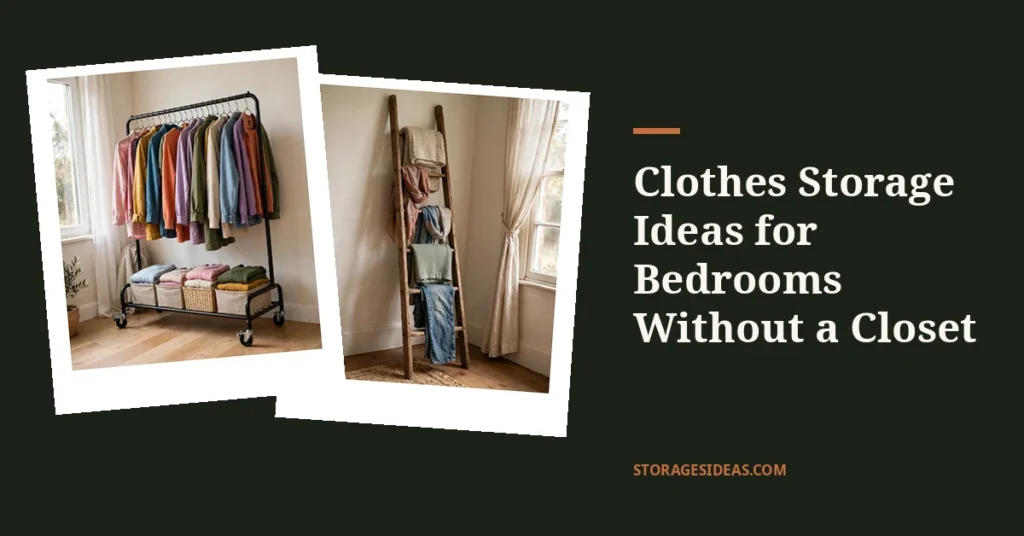
Grab a tape measure before you buy anything. That is the whole trick to bedroom storage ideas for clothes in a room with no closet: every rack, rail and bin has to fit the inches you actually have, not the ones you hope for.
Two numbers run this article. Wall space you can spare (most garment racks need 3 to 4 feet of it) and the gap under your bed (measure floor to bed frame, because 6.5 inches of clearance decides whether rolling bins will slide in).
Below are 14 ideas grouped by where they live in your room, freestanding first, then wall-mounted, then under the bed, then the door and dead corners. Most cost under 50 dollars, none need a renovation, and renters are safe through most of the list.
Tape-measure cheat sheet (keep this on your phone):
- Garment rack footprint: about 46 inches wide, 18 inches deep, 68 inches tall. Leave 12 inches of clear space in front so hangers do not snag.
- Under-bed clearance: measure floor to frame. Rolling bins need 6.5 to 7 inches. Under 5 inches means risers or flat bags only.
- Wall rails: mount the bar 65 to 72 inches high so shirts and trousers clear the floor by 2 inches.
- Over-door hooks: most doors are 1.375 to 1.75 inches thick, and most over-door hooks fit that range. Check yours.
- Hanger math: each hanger takes about 2 inches of bar. 30 hangers need 60 inches, so a 4-foot rack fits roughly 24.
Why a Bedroom Without a Closet Needs a System, Not Just a Rack
A single rack holds about 30 shirts if you are lucky. A no-closet bedroom holds a full wardrobe, shoes, and seasonal overflow. The gap between those two facts is why most no-closet setups fail: the rack is overloaded, the floor collects the rest, and the room slowly becomes a laundry pile with a bed in it.
The fix is not one hero product. It is zones: hanging space for what wrinkles, drawers or cubes for what folds, under-bed for the off-season, and the door for tomorrow’s grab. When each garment type has a home, putting things away takes seconds, and this article is the clothes half of the full bedroom storage guide.
One more rule before the list: renters should favor freestanding and door-hung ideas plus tension or adhesive wall options, while owners can mount wall rails that will outlive three cheap rolling racks. Measure first, buy once, and never hang more than the hardware rating allows.
1. Heavy-Duty Rolling Garment Rack: Your New Closet Rail
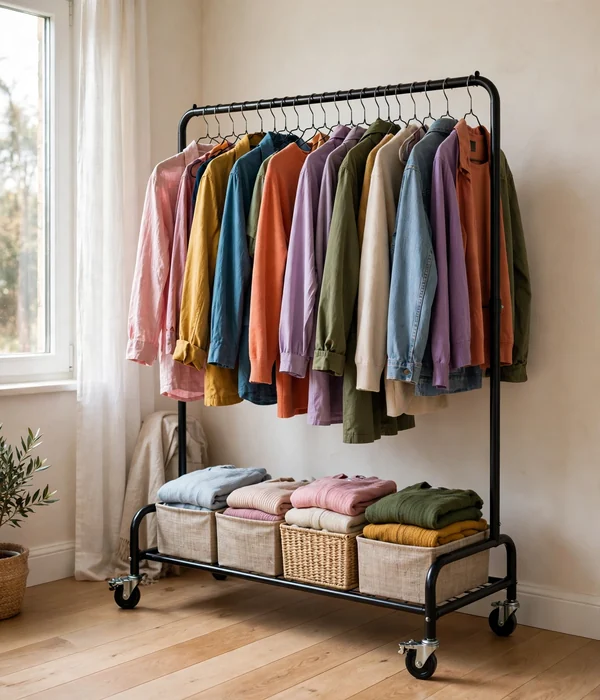
This is the closest thing to a closet you can buy. A heavy-duty rolling rack gives you a hanging rail and a lower shelf, which is exactly the anatomy of a closet section minus the doors. Buy the right one and it holds a full working wardrobe; buy the wrong one and it bends in a month.
The spec that matters is load rating, not price. A solid steel rack (32 mm tubing) rated around 330 pounds will carry jeans, coats, and a packed week without flexing, while the thin-tube racks sold for party clothes bend under a dozen sweaters. Expect to pay 40 to 70 dollars for the real thing.
One more habit that makes it last. Pull the rack a few inches off the wall so clothes do not rub paint, and do a weekly 60-second reset, rehanging anything that drifted to the floor pile. A rack with no system becomes a second laundry pile; a rack with a reset stays a closet.
Tips for best results: lock the casters once it is parked, load jeans and coats low and centered, and keep 12 inches of clear space in front so hangers swing freely. Watch out: top-heavy racks taller than 68 inches can tip, so keep the lower shelf weighted, and never buy a rack whose listing skips the weight rating.
2. Portable Fabric Wardrobe: Hang and Fold in One Box
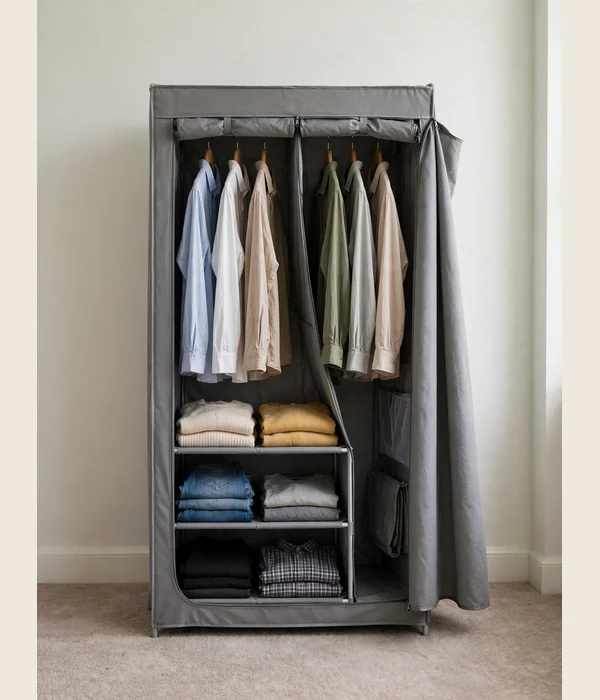
If you need hanging space plus shelves in one box, a portable fabric wardrobe is the closet-shaped answer. The popular size is about 65 inches wide and 75 tall, with two hanging sections and three to six fabric shelves behind a zippered dust cover. It is freestanding, needs no tools, and costs 30 to 60 dollars.
The mechanism is simple: it puts hanging and folding in the same footprint, exactly what a built-in closet does. The catch is the ratings: each rail holds 25 to 55 pounds and each shelf 5 to 15, so heavy denim and wool coats belong on the stronger rack instead. Treat this as medium-weight storage and it lasts for years.
What you can do with it:
- Hang two rows of shirts and blouses on the rails, keeping each row under 40 hangers so the poles do not bow.
- Stack folded jeans, sweaters, and tees on the fabric shelves in file-fold order so you can see every item from the zipper opening.
- Stash bags, belts, and swimwear in the side pockets most models include.
- Dedicate the tallest section to dresses and long coats, then keep the cover’s zippered panels rolled up for daily access.
- Park it against a wall you rarely touch, because the fabric cover is dust protection, not a crush guard.
- Tuck shoes on the bottom shelf in a row, since the cover keeps the dust off them.
3. Tall 6-Drawer Dresser: The Folded-Clothes Workhorse
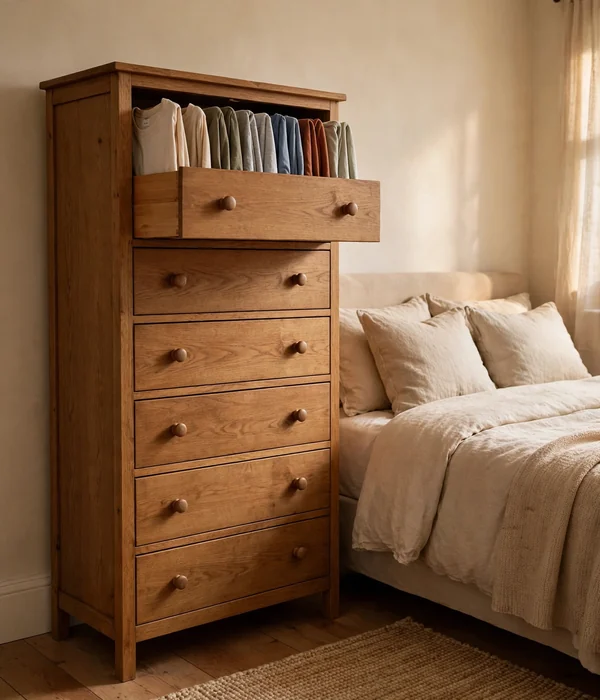
Clothes that wrinkle on a rack are only half the wardrobe. Tees, jeans, underwear, socks, and knitwear all live better folded, and a tall 6-drawer dresser is the workhorse that holds them. A standard unit runs about 58 to 60 inches wide, 30 tall, and 18 deep, which fits a wall a rolling rack cannot reach.
The mechanism is file folding. Folded items stand on edge in the drawer so you see everything at a glance, which is how one dresser can replace a dresser and a half of stacked folding. It also takes the load off your rack: every tee that goes in a drawer is a hanger freed for something that actually needs one.
Shop with a tape measure. Drawers shorter than 4 inches will not take folded jeans, and dressers under 16 inches deep waste the file-fold trick because items tip forward. Expect 150 to 300 dollars for a solid wood or plywood dresser; particleboard boxes under 80 dollars often have drawers that sag within a year under clothing weight.
Tips for best results: line drawers with non-slip liner so folded stacks stay put, and sort by category per drawer (tees, bottoms, underwear) so getting dressed is a one-drawer job. Watch out: a dresser over 30 inches tall tips if a child climbs it, so anchor it to the wall, and measure drawer interiors before buying drawer dividers.
4. Cube Shelf Unit With Fabric Bins: Sort by Category
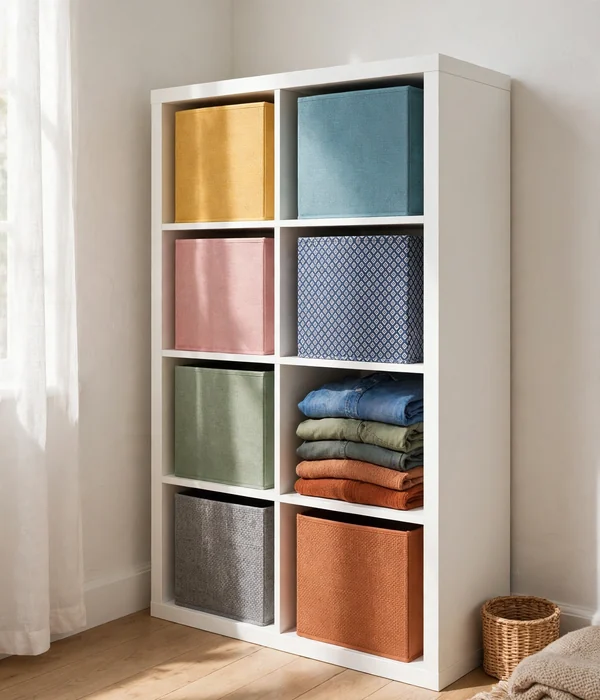
If a dresser feels too permanent, a cube shelf unit does the same job in open form. The classic 2-by-4 unit is about 30 inches wide and 58 tall, with eight cubes that each hold about 28 pounds of folded clothes in a fabric bin. It is lighter than a dresser and reads airier in a small room.
The mechanism is sortability. Each cube becomes a category: gym clothes, pajamas, scarves, underwear, one cube per shelf, and the fabric bins keep the stacks from avalanching when you pull one item. Because every cube is visible, the unit doubles as its own inventory list, which is something a closed dresser never gives you.
Where it works best:
- File-folded tee and knit collections, one category per cube, so you can see every color at once.
- Sock and underwear chaos: give each its own bin and the morning grab becomes automatic.
- Seasonal swap station: one cube for the current season’s accessories, one for off-season, rotated twice a year.
- Shared rooms: each person gets a column of two cubes, no mixing, no arguments.
- Guest overflow: a cube of spare pajamas and a towel so guests never need to ask.
- Scarves, belts, and bags stand on edge in shallow bins so nothing tangles at the bottom.
5. Storage Ottoman at the Foot of the Bed: Seat Plus Stash
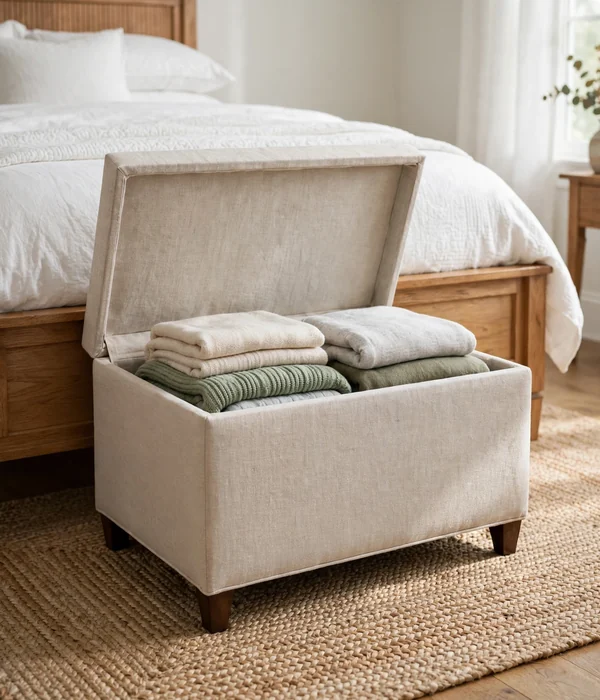
The foot of the bed is dead space with a view. A 30-inch storage ottoman, 15 deep and 15 tall, turns it into a seat plus a 21 to 24-gallon stash for bedding, out-of-season clothes, or the blanket collection with nowhere else to go. Most are rated for 660 pounds of seated weight, so it works as a real bench.
The mechanism is hidden volume. A mattress-length ottoman (43 inches for a queen bed’s foot) hides a full duvet set plus two throw blankets in space that was holding nothing, and the flat top stays useful as a landing spot for tomorrow’s outfit. Expect 35 to 45 dollars for the 30-inch size and 50 to 70 for the 43-inch.
Size it to your bed. The 30-inch ottoman suits a twin or a narrow foot-of-bed gap, while the 43-inch spans a queen’s foot and doubles as a real dressing bench. Either way, measure the gap first: you want at least an inch of clearance on each end so the lid opens without scraping the wall.
Tips for best results: vacuum-bag the contents you only touch seasonally so the ottoman holds twice as much, and pick a lid that stays open on its own for one-handed loading. Watch out: cheap models have lids that slam on fingers, and fabric ottomans absorb bedroom humidity, so add cedar rings or lavender sachets if you store wool.
6. Wall-Mounted Clothes Rail: Zero Floor Footprint
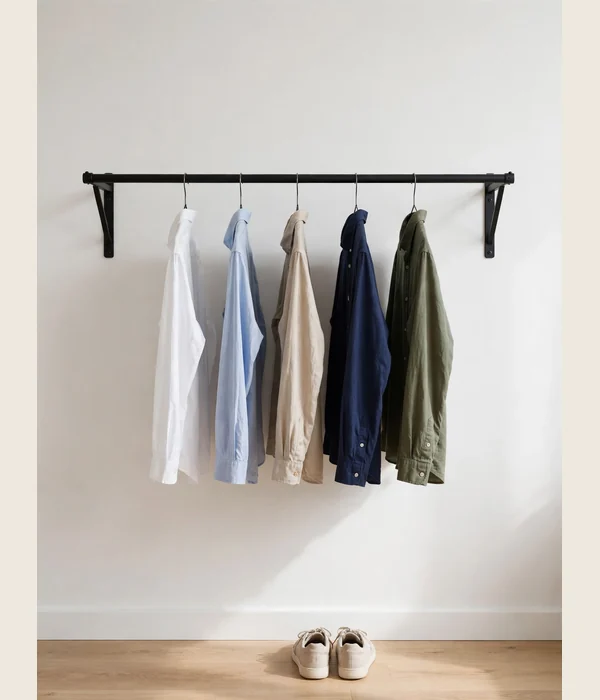
When floor space is the enemy, the wall becomes the closet. A wall-mounted rail holds 15 to 25 garments on about 3 feet of wall with zero floor footprint, the arms projecting about 12 inches while everything hangs above open floor. It is the only hanging option on this list that takes no walking space at all.
The mechanism is stud power: screwed into studs or solid masonry, a steel rail is rated around 44 pounds, a full section of shirts and light jackets. Mount the bar 65 to 72 inches high so hems clear the floor. In a tight room, pair it with the small-bedroom storage ideas for the full compact setup.
What you can do with it:
- Hang the week’s rotation: five days of outfits on slim velvet hangers so each one slides off in the morning without a hunt.
- Stack shoes or lidded boxes on the floor beneath, since the rail leaves the full floor area open.
- Add a second rail 36 inches below the first for double hanging shirts above and folded pants below.
- Mount one rail low (40 inches) and one high (70 inches) to separate long coats from everyday tops.
- Pair with an over-door mirror beside it and the wall corner becomes a dressing station.
7. Sturdy Wall Peg Rail: Hooks That Hold Real Weight
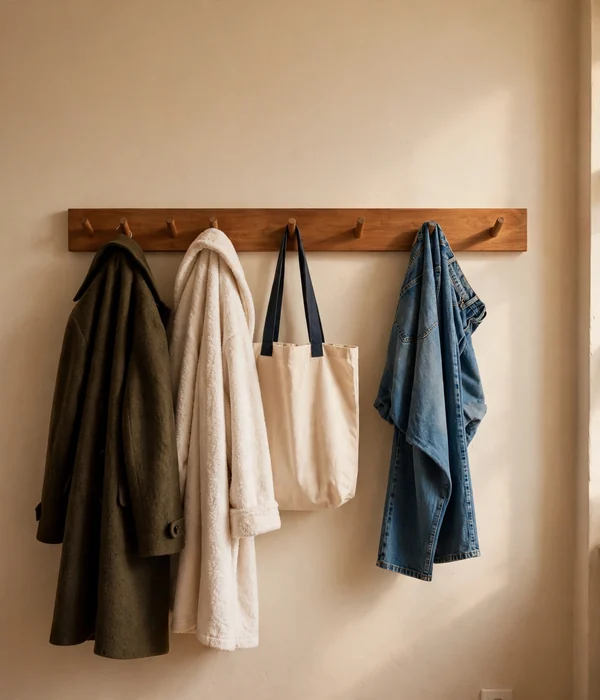
Hooks are the fastest storage you will ever install, and a wood peg rail is the grown-up version. A 6-hook rail runs about 30 inches long, each peg holds 5 to 10 pounds in a stud, and costs under 22 dollars. Coats, robes, bags, tomorrow’s jeans, and the pajamas you are not ready to wash all get a home.
The mechanism is single-grab access. Unlike a hanger, a hook takes the garment as it is, so the thing you actually reach for daily (the hoodie, the robe, the tote) lives one grab away instead of buried. Mount the rail 60 to 66 inches high so coats hang clear of the floor and bags do not drag.
Renters, this is your friend. A peg rail screws into studs with four holes that spackle fills in ten minutes at move-out, and adhesive hook strips (clean the wall with rubbing alcohol, wait an hour before loading) handle 3 to 5 pounds each with zero holes. Either way, spread the load: a winter coat collection should never share one peg.
Tips for best results: dedicate one hook per garment category so the rail stays readable, and mount a second low rail (36 inches) for kids’ or short items. Watch out: adhesive hooks fail on textured or dusty walls, and overloading one peg bends even a solid wood rail over time, so keep heavy coats on studs.
8. Floating Shelves for Folded Clothes: Wardrobe on the Wall
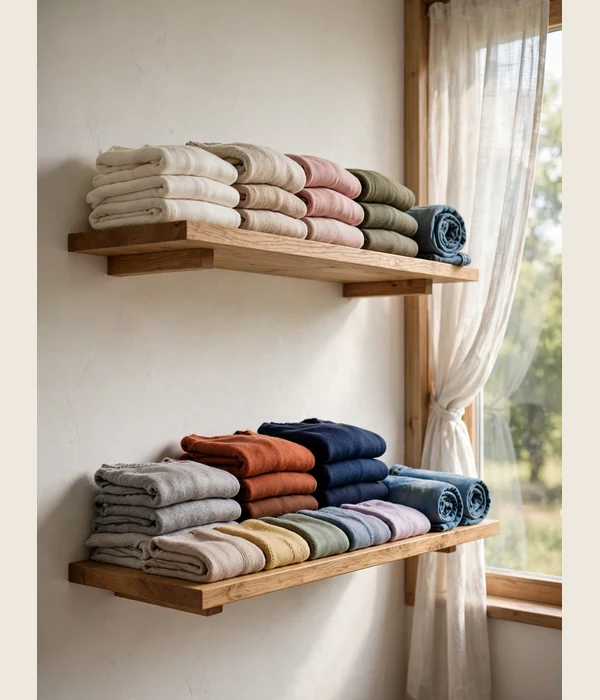
Folded clothes do not need a cabinet. They need a flat surface with a backstop, and floating shelves give you exactly that on any empty wall. A 36-by-10-inch shelf holds a stack of eight folded tees, two shelves hold a week’s worth of knits, and three staggered shelves turn a blank wall into a visible wardrobe.
The mechanism is vertical dead space. The wall above a dresser, beside a window, or over the bed holds nothing, and shelves convert it at 15 to 30 dollars per shelf. Use brackets rated 20 pounds or more per pair, screw into studs or use toggle bolts in drywall, and keep stacks under 8 inches tall so nothing topples.
Where it works best:
- Folded tee and sweater libraries: sort by color so the wall looks curated instead of cluttered.
- Jeans stacks: two columns of four pairs per shelf, rolled instead of folded to save 2 inches of height each.
- Accessory shelf: scarves, belts, and clutches lined up so you can see everything without digging.
- Above the dresser: two short shelves turn 24 inches of empty wall into a second drawer of capacity.
- Seasonal rotation shelf: the highest shelf holds vacuum bags of off-season clothes you touch twice a year.
9. Tension Rod in an Alcove: The No-Drill Closet
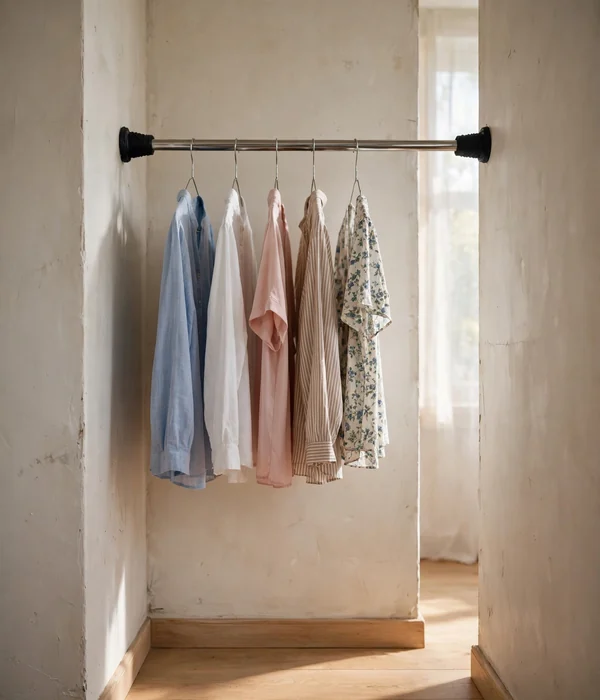
Some bedrooms come with an alcove or two facing walls that are begging to be a closet. A heavy-duty tension rod twists into that gap with zero tools and zero holes, and the good ones hold 25 to 30 pounds, about 15 shirts or a week’s worth of blouses. It is the fastest closet on this list.
The mechanism is friction. The internal spring presses rubberized end caps against the walls, and downward load tightens the grip as long as the rod sits level. Measure the gap first: rods come in ranges like 24 to 40 inches or 42 to 72, and a rod at maximum extension holds far less than one near minimum.
This is the classic teen-room move: no tools, no landlord conversation, and it comes down in 90 seconds at move-out. See the teen bedroom storage ideas for how this pairs with the other renter-safe wins in a teenager’s room.
Tips for best results: twist the rod one to two inches past the gap width before seating it, and load weight evenly from the center outward. Watch out: skip plaster or textured walls (the caps cannot grip), and keep coats off tension rods, since 30 pounds of wool will defeat the friction overnight.
10. Rolling Under-Bed Drawers: Two Extra Dresser Drawers
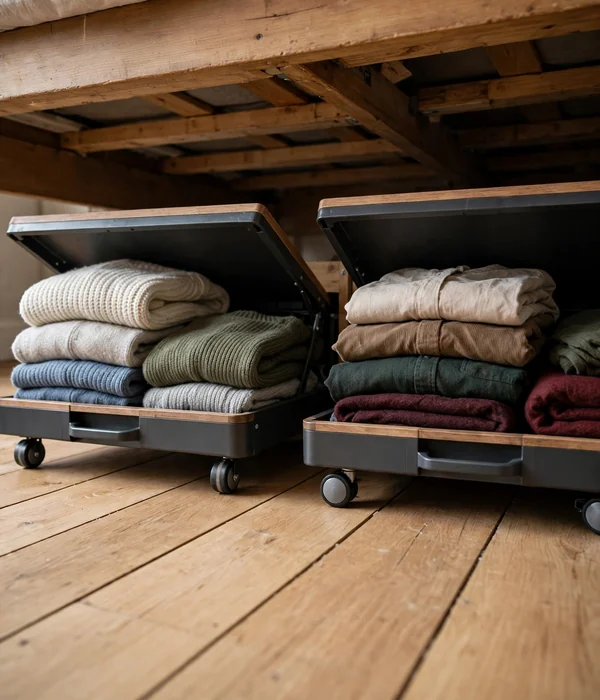
The bed you sleep on sits on top of 20 to 30 cubic feet of storage you are probably ignoring. Rolling under-bed drawers turn that dead zone into the equivalent of two dresser drawers, with lids keeping dust out. This is where clothes you do not touch daily go: off-season, spares, and extras.
The mechanism is clearance math. Most rolling bins are 6.5 to 7.5 inches tall and hold 50 to 80 quarts, so they need at least 7 inches of gap, and most platform beds give 6 to 8.
Measure floor to frame before buying. Check which way the wheels face: wheels on the short end roll out toward you, while wheels on the long side roll along the bed, which is useless against a wall.
What you can do with it:
- Store off-season sweaters and jeans in two 80-quart rolling drawers, one per side of the bed.
- Keep a guest bin ready: spare pajamas, a towel, and toiletries for visitors, no closet needed.
- Rotate workout clothes: one bin for clean sets, so the gym bag never lives on the floor.
- Use shallow 27-quart bins for shoes and handbags when the drawers would sit too tall.
- Label the lid ends with a marker so you know which bin holds what without pulling them out.
11. Bed Risers Plus Flat Vacuum Bags: Bigger Clearance, Thinner Clothes
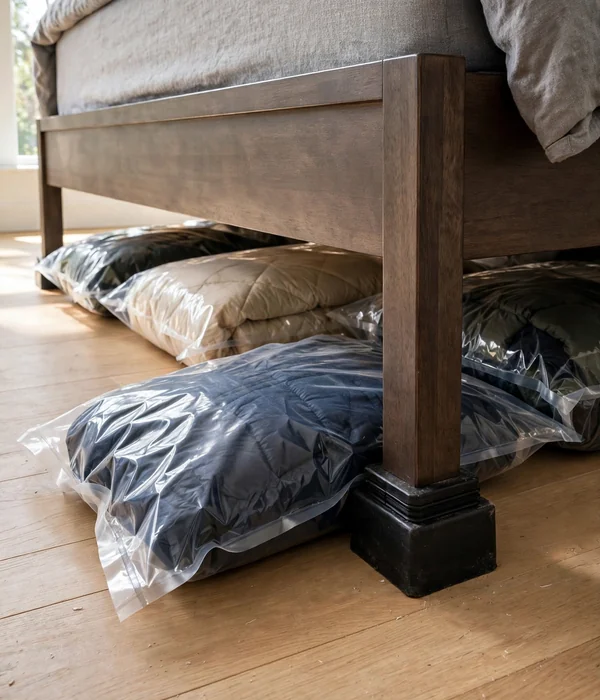
If your bed sits too low for rolling bins, do not buy new bins. Lift the bed: a set of four 3-inch risers turns a 5-inch gap into an 8-inch one for about 15 to 25 dollars, and most sets are rated around 1,300 pounds. It is the cheapest square footage you will ever add to a bedroom.
The mechanism is stacking gains. Three extra inches of clearance means taller bins, and pairing the lift with flat vacuum bags compresses bulky winter coats and duvets to a third of their volume, so the same gap holds a whole season. Bags cost 10 to 20 dollars for a multi-pack and need no pump, just a standard vacuum hose.
Do the math before you shop. Measure the current gap, add the riser height, then buy bins half an inch shorter than the new total so they glide instead of jam. A 5-inch gap plus 3-inch risers takes a 7.5-inch bin with room to spare.
Tips for best results: fold bagged items flat before sealing so the bags slide like drawers, and press the frame firmly onto each riser so the legs seat fully. Watch out: risers make the bed harder to climb for kids and shorter adults, and vacuum bags lose their seal when the valve gets linty, so wipe valves before sealing.
12. Over-Door Pocket Organizer: A Closet on the Back of the Door
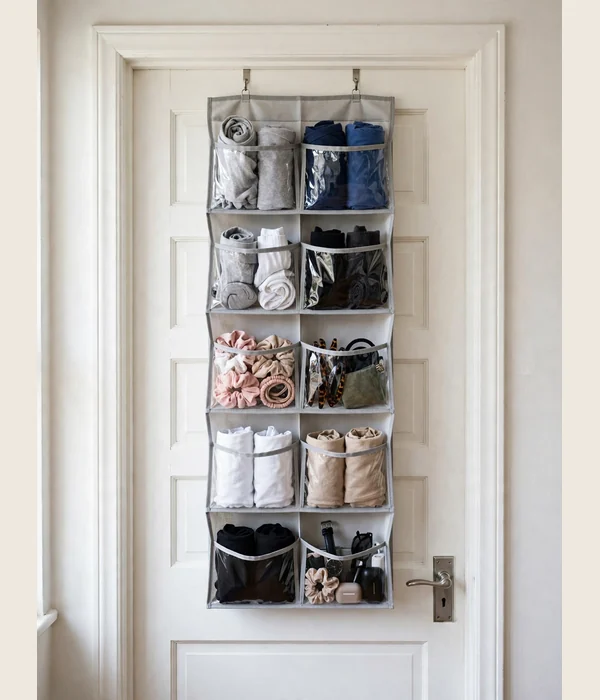
The back of the bedroom door is a closet nobody uses. A five-tier over-door pocket organizer hangs on three metal hooks with zero tools, gives you five deep pockets plus side mesh pockets, and is rated around 44 pounds without sagging. It costs 15 to 25 dollars and takes two minutes to hang.
The mechanism is pocket zoning: rolled tees, underwear, socks, and accessories each get a pocket, which turns the morning dig into a grab-and-go. Clear front windows show contents at a glance, so the organizer does the sorting your memory used to do. Measure your door first, since most hooks fit doors under 1.85 inches thick.
What you can do with it:
- Roll a week’s worth of tees and underwear into the deep pockets, one outfit category per tier.
- Use the clear-window pockets for belts, scarves, and swimwear you need to see to remember.
- Stash the mesh side pockets with chargers, sunglasses, and the small stuff that clutters nightstands.
- Hang one on the inside of the bedroom door for daily wear and one on a closet-less hallway door for overflow.
- Dedicate the bottom tier to tomorrow’s full outfit, laid out the night before for a faster morning.
13. Behind-Door Hook Rail: Tomorrow’s Outfit, Off the Floor
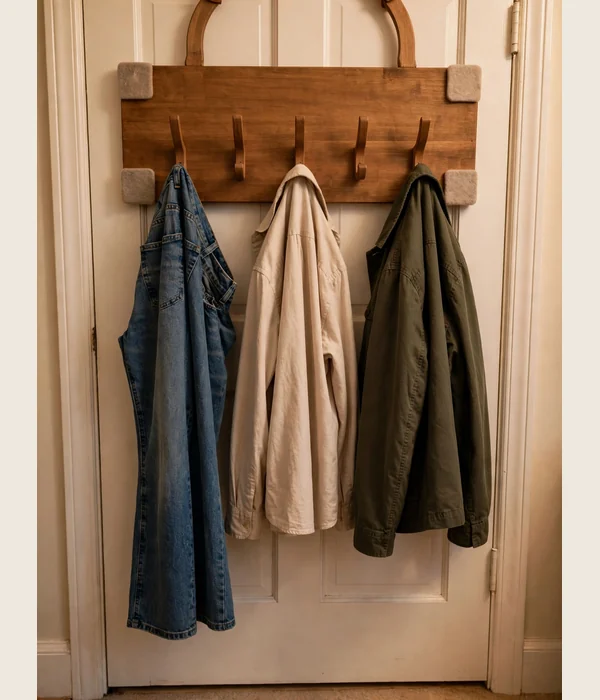
Tomorrow’s outfit needs a place that is not the floor and not a chair. An over-door hook board gives coats, tomorrow’s jeans, and the robe a one-second home for under 20 dollars. The board spreads five hooks across the door’s width so one hook never carries the whole load.
The mechanism is the landing zone. Clothes that are worn once and not yet dirty (jeans, the blazer, the cardigan) die on chairs because they have no official spot; a hook rail makes the spot official. Hang the next day’s full outfit there at night and the morning starts without a single decision.
Renters should pick the over-door version: it lifts off at move-out with zero patching. Owners can screw a short rail into the wall behind the door instead, which holds more weight and never rattles. Either way, this is the cheapest habit upgrade on the list.
Tips for best results: felt pads behind an over-door board stop it rattling when the door moves, and hanging tomorrow’s outfit the night before cuts morning decisions to zero. Watch out: over-door boards can keep lightweight doors from latching, so test the close before loading, and keep total weight under 20 pounds on hollow doors.
14. Leaning Ladder Rack in a Dead Corner: Display Plus Overflow
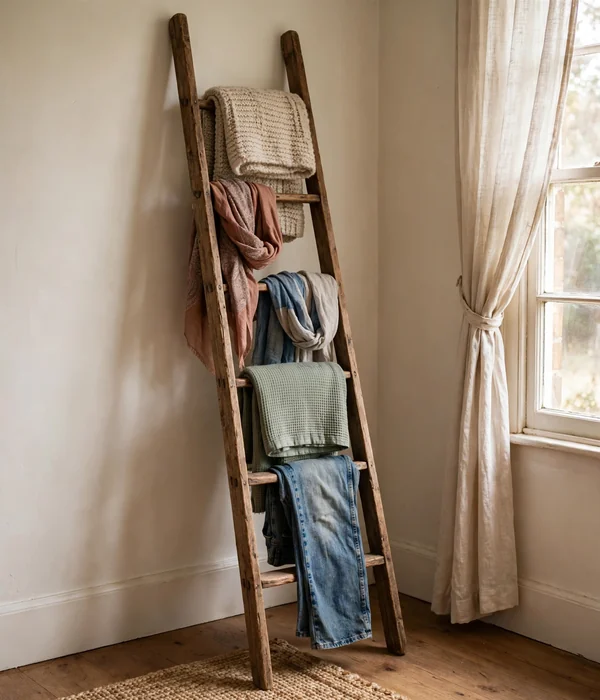
Every bedroom has a corner that collects dust and nothing else. A leaning ladder rack, about 19 inches wide and 60 tall, tips against the wall with no screws and gives you four to five rungs for folded throws, tomorrow’s layers, and the jeans you are rewearing. It costs 25 to 45 dollars and installs by simply leaning.
The mechanism is display pressure. Because the ladder shows your clothes, you naturally keep it to the good stuff: the five best sweaters, the scarves you actually wear, the denim rotation. That visibility is also the trap, so cap it at one ladder per room or the display becomes a second closet’s worth of clutter in disguise.
Where it works best:
- The dead corner by the window: folded throws on top rungs, reworn jeans on the bottom.
- Scarf and shawl display: draped over rungs so you actually wear the collection instead of forgetting it.
- Guest-room ladder: a spare towel, a robe, and pajamas ready for visitors without a drawer.
- Seasonal edit: rotate the ladder’s contents with the weather so it never becomes permanent clutter.
- Tomorrow’s layers staged the night before: the ladder doubles as a visible outfit planner.
Conclusion
Do this first: a heavy-duty rolling garment rack. It replaces the missing closet rail for 40 to 70 dollars, holds a full working wardrobe at 330 pounds rated capacity, and everything else on this list organizes around it. Buy the rack, then add drawers, door storage, and under-bed bins as the budget allows.
A bedroom without a closet is not a smaller wardrobe. It is the same wardrobe distributed across zones, and the zones in this article cover every position a room offers. Start with the rack, measure everything twice, and buy hardware ratings, not hope.
The no-closet starter kit (screenshot this):
- Tape measure (you own one, use it first).
- Heavy-duty rolling rack: 45 to 72 inches wide, 25 pounds or more per-rail rating.
- Slim velvet hangers: six per foot of rail, so 30 hangers need 60 inches.
- Two 50 to 80-quart rolling under-bed bins, if clearance allows.
- One over-door pocket organizer for the daily small stuff.
- Four hooks minimum for tomorrow’s outfit: door board or peg rail.
Frequently Asked Questions (FAQ)
How do I handle bedroom storage ideas for clothes when there is no closet at all?
Yes, if you build zones instead of buying one product. A heavy-duty rack covers hanging, a dresser or cube unit covers folding, under-bed bins take the off-season, and the door handles daily grab items. If your room is truly tiny, start with the rack plus the over-door organizer, then add the dresser when the budget allows.
How much weight can a garment rack really hold?
If you buy a steel-tube rack rated around 330 pounds total with 25 pounds per rail, it holds a full wardrobe including coats without flexing. If you buy a thin party-style rack with no listed rating, expect it to bend under a dozen sweaters. Always check the listing’s weight rating before you check the price.
Will my landlord mind if I mount rails and hooks on the walls?
If you stick to freestanding racks, over-door organizers, and tension rods, there is nothing to discuss, since nothing touches the walls. If you want a peg rail or wall-mounted rail, ask first: four small screw holes fill with spackle in ten minutes, and many landlords approve storage that keeps the unit tidy.
What under-bed clearance do I need for rolling storage bins?
If your gap measures 7 inches or more, standard 6.5 to 7.5-inch rolling bins slide in easily. If you measure 5 to 6 inches, add 3-inch bed risers first, then buy bins a half inch shorter than the new total. If the gap is under 5 inches even with risers, switch to flat vacuum bags instead of bins.
How do I keep an open garment rack from looking messy?
If every hanger matches and clothes face the same direction, even a full rack reads as intentional. If colors are grouped light to dark and the lower shelf holds only folded items in bins, the rack looks curated instead of chaotic. If clutter still creeps in, a fabric rack cover for 15 to 25 dollars hides everything.
Are tension rods strong enough to hold clothes?
If you buy a heavy-duty rod rated 25 to 30 pounds and seat it between solid walls, it holds about 15 shirts reliably. If you overload it with coats or seat it on plaster, it will fail, usually overnight. If you need coat weight, mount a real wall rail into studs instead.
Where do shoes go when there is no closet?
If you mounted a wall rail, the open floor beneath it is prime shoe real estate for two rows of pairs. If you went freestanding, slide a low shoe rack under the garment rack or dedicate the bottom cube of your shelf unit. If shoes overflow anyway, one 27-quart rolling bin under the bed holds about six pairs.