Twelve guests, twelve coats, and one sofa. That is the guest coat storage party math that ruins entryways every Thanksgiving, coats piled on the bed (if anyone’s lucky) or, worse, draped over the back of the couch in a damp heap.
In a small home with no foyer, no coat closet, and nowhere to hide the bulk of winter layers, you need a guest coat storage party plan that sets up in minutes, disappears when the party ends, and never damages your walls.
This guide gives you 8 renter-friendly, budget-conscious coat and bag storage ideas sized for real apartments, with exact dimensions, load ratings, and a 5-minute setup order, so the coats get a home and the guests get a welcome.
Why Your Entryway Fails at Party Time
A small-home entryway is engineered for two people, not twelve. The mechanism behind the pile-up is simple arithmetic: a standard guest coat on a hanger occupies 2 to 2.5 inches of rod width and adds 3 to 5 pounds, and most small apartments have zero dedicated square footage for either.
What happens instead is that coats colonize the three nearest flat surfaces, the couch back, a dining chair, the bed, which creates a second problem: bags slide, damp wool touches upholstery, and someone always has to excavate the heap at midnight to find their keys.
The fix is vertical and temporary. Guests arrive in a wave, roughly 80 percent within the first 45 minutes, so your storage needs to be deployed, not permanent. A rolling rack or over-door hooks set up once before guests arrive handle the surge, then fold away flat the next morning.
Everything below follows one principle: keep coats off furniture and bags off floors, using airspace and door backs that were doing nothing before. A set up your everyday entryway the same way works on the same principle year-round, and your party plan is just its temporary, scaled-up version.
1. Roll in a Temporary Guest Coat Rack
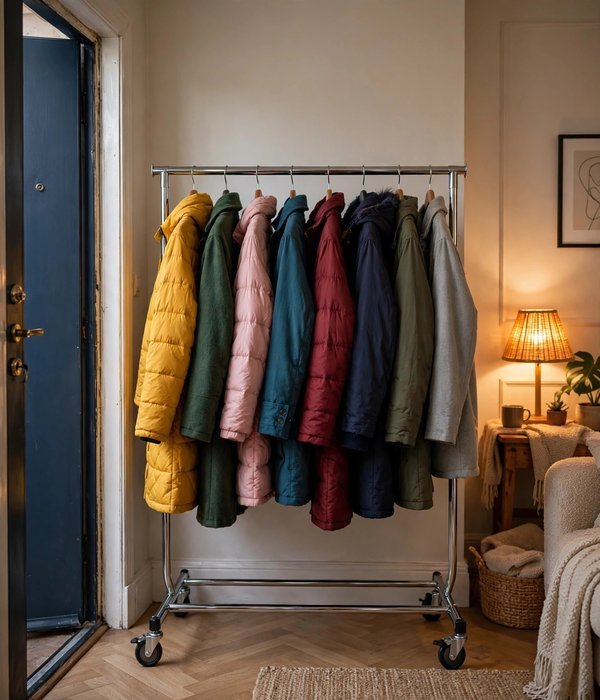
Nothing absorbs a party’s coat surge like a dedicated rod. A 48-inch-wide rolling garment rack holds roughly 20–25 winter coats, the math: coats on hangers sit about 2 inches apart, so 48 inches of rod gives you 24 slots, and a standard rack’s 50-pound rating covers 20 coats at ~2.5 pounds each with margin to spare.
Set it in a corner of the living room or hallway where coats won’t block the front-door swing. Choose a model with lockable casters (locks matter, a rack that rolls when a guest yanks a coat is a rack that falls), and look for a lower shelf for bags. Under $25 to $40 at most big-box and hardware stores.
The mechanism is self-service: guests hang their own coat in seconds instead of the host playing middleman, which ends the entryway bottleneck during that 45-minute arrival wave. Keep the top bar at 65 to 68 inches high, low enough that shorter guests reach it easily, high enough that long coats clear the floor.
- Extend the rack to its full 48-inch width and lock both caster brakes before loading.
- Hang 24 sturdy hangers on it (skip flimsy wire ones, heavy wool coats slip).
- Position it 3 feet from the front door so guests can see it the moment they walk in.
- Leave 6 inches clear above the rod for hood bulk, winter coats are wider than they look.
- Keep a labeled basket of spare hangers beside it; the coat rack for your guests is only as good as its hanger supply.
2. Claim the Back of the Front Door
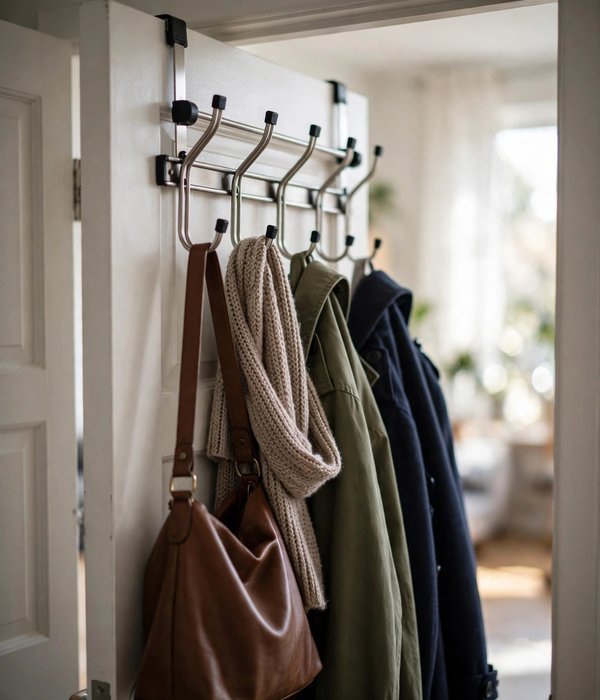
- What you can do with it: Hang a multi-hook over-door rack on the front door the moment party day arrives, it turns dead space behind the door swing into 4 to 12 coat hooks for latecomers and overflow bags.
- Where it works best: Standard interior doors 1.25 to 2.25 inches thick, measure yours first, since a hook sized for a 1.75-inch door will rock on a thinner one. Not for metal security doors with tight frames.
- Load reality: Typical steel multi-hook racks hold 20 to 45 pounds total, that’s 6 to 8 winter coats, roughly. Read the rating and don’t double-load a single hook.
- Fit check: Close the door after hanging it. If the hook grazes the frame, slide on the rubber bumpers most racks include, or the door won’t latch.
- Distribute the load: Hang the two heaviest coats on the middle hooks. End hooks flex more and the door closes smoother when the weight sits centered, not swinging from the outer edges.
- Party bonus: Assign the door hooks to bags, not coats. Bags are lighter, and guests spot their purse on the way out faster than digging through a rack of coats.
- Protect the finish: Slide the included felt or rubber pads under the metal where it touches the door, and lift, don’t drag, the rack when removing it. Painted doors mark fast when a loaded hook grinds across them.
3. Turn a Spare Bed Into the Coat Room
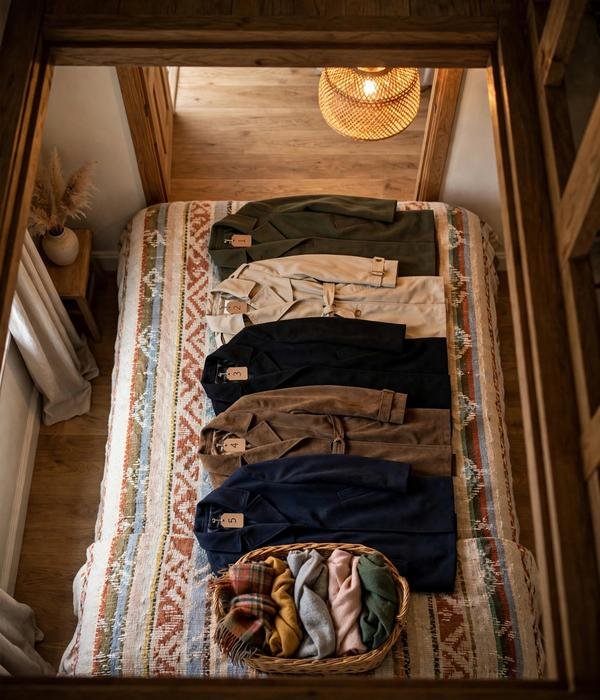
No rolling rack? A bed is the traditional coat depository, but done right, it stops being a pile and becomes a system. A queen bed holds 15 to 20 coats in a single layer without stacking, which covers most apartment-size parties if you lay, not toss.
The protective throw is non-negotiable: damp wool and wet boots transfer moisture and road salt straight into bedding. Lay a washable furniture throw or an old duvet cover over the whole bed first, it takes 60 seconds and saves a wash cycle.
The deeper win is sight lines: coats behind a closed bedroom door are invisible to the party, so the living room reads tidy even while the coat census is at its peak. The trade-off is that guests can’t browse for their own coat at night’s end, which is exactly why the numbered tag system below exists.
- Cover the bed completely with the protective throw, tucking it under pillows and over the edges.
- Lay coats in rows, collar-to-hem, with bags in a single line along the foot of the bed.
- Clip a numbered luggage tag or folded sticky note to each coat’s collar, index cards and safety pins cost under $5 and end the midnight digging.
- Keep a small basket by the bed for scarves, gloves, and hats so small items don’t vanish between coat layers.
- Assign the bedroom door: cracked open for guests, closed to pets, one cat on a coat pile ruins the system.
4. Spare Wall? Mount Hooks at 6–8 Inches
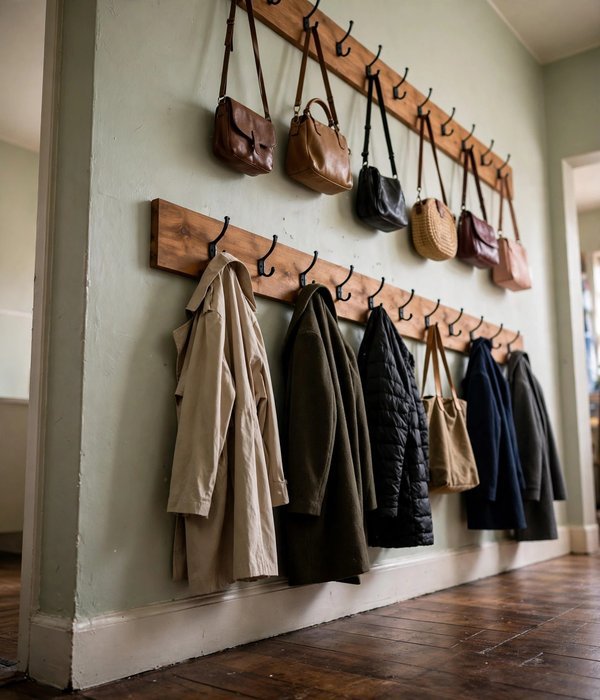
- What you can do with it: A simple board-mounted row of hooks at 6 to 8 inches apart holds 5 to 7 coats per 48-inch board. Six-inch spacing fits light jackets and purses; eight inches gives heavy winter coats room to breathe without overlapping.
- Where it works best: Any 36- to 48-inch run of bare hallway or living-room wall, even behind a door. For renters, adhesive-backed hook rows avoid screws entirely.
- Adhesive technique that actually holds: Clean the wall with rubbing alcohol (not household cleaner, residue kills adhesion), press each hook for 30 seconds, then wait 1 hour before loading. That one-hour cure is the difference between a coat rail and a coat avalanche.
- Weight honesty: Adhesive hooks hold 1 to 5 pounds each depending on size; screw-in hooks hold 10 to 25 pounds. Match the hook to the coat, wool coats on tiny adhesive hooks will fail mid-party.
- Party trick: Hang a row of hooks 48 inches off the floor and bags go above the coats, two tiers, zero extra footprint.
- When screws are fine: If you own the place, drive one hook per 16-inch stud into the wall stud itself, studs are typically 16 inches apart center-to-center, and a screw-in hook anchored in a stud holds a heavy wool coat with zero wobble. Skip hollow-wall anchors for party loads; they’re the weak link.
5. Unfold the Garage-Style Folding Rack
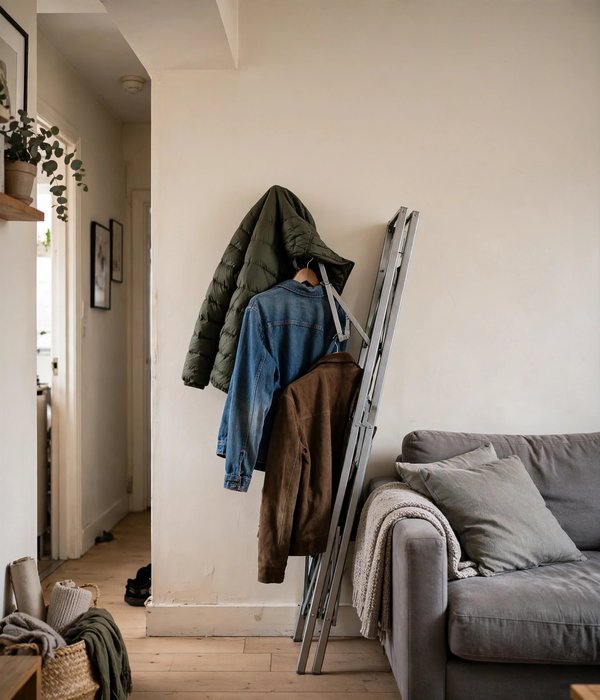
If the full rolling rack is overkill, a folding garment rack is the Goldilocks option: typically 36 to 48 inches wide, it unfolds in about a minute and folds flat to roughly 4 inches deep, slim enough to slide behind a sofa, between the fridge and the wall, or under the bed when the party ends.
This is the party coat storage piece that makes sense even for studios, because its stored footprint is nearly zero. Look for a welded-steel frame rated 35 to 50 pounds; the cheaper snap-tube versions wobble under winter coats. Typical price band: $15 to $30.
Stage it near the entry rather than the living room, guests decide where to put a coat in the first five seconds after crossing the threshold, and a rack they pass on the way in gets used while a rack tucked in the corner gets missed.
- Unfold it in the room where it will stand, the legs open wider than doorways.
- Stand it against a wall or in a corner, 2 feet minimum from foot traffic.
- Set the width to 48 inches for a full party, 36 for a quiet dinner of six.
- Cap it at 15 to 18 coats, the lighter frame earns a lighter load than the rolling rack.
- Collapse it back to 4 inches flat the morning after and slide it out of sight until New Year’s.
6. Park the Bags Separately
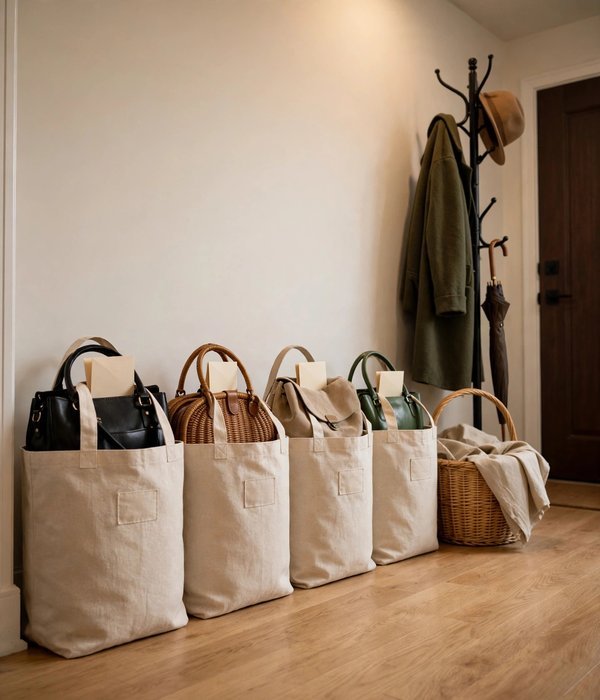
- What you can do with it: Coats on the rack, bags in a “bag parking” zone, a row of fabric totes or a handled basket 12 to 16 inches wide, one container per guest. Bags on hooks tangle with coats; bags in a zone stay findable.
- Where it works best: Next to the coat rack, on the floor or a bench. Size the containers by bag type: a 10-inch tote fits clutches and evening bags; a 14-inch bin fits day purses and camera bags.
- The small-space math: A single 14-inch handled basket (about $8–$12) replaces the arm of your couch as purse storage and keeps exits clear, a real consideration when 12 people and one doorway mix.
- Label hack: Tuck a folded name card into each tote’s handle. Guests retrieve their own bag in seconds, and nobody rifles through someone else’s purse.
- Renter note: Everything here is free-standing, no walls touched, no marks left, no deposit risk.
- Why separation beats hooks: A handbag dangling from the same hook as a heavy coat gets its strap stretched and its contents raided by accident every time someone grabs their jacket. Floor-level totes keep bags upright, visible, and strap-safe for the whole evening.
7. Plan for Wet Coats (They Will Come)
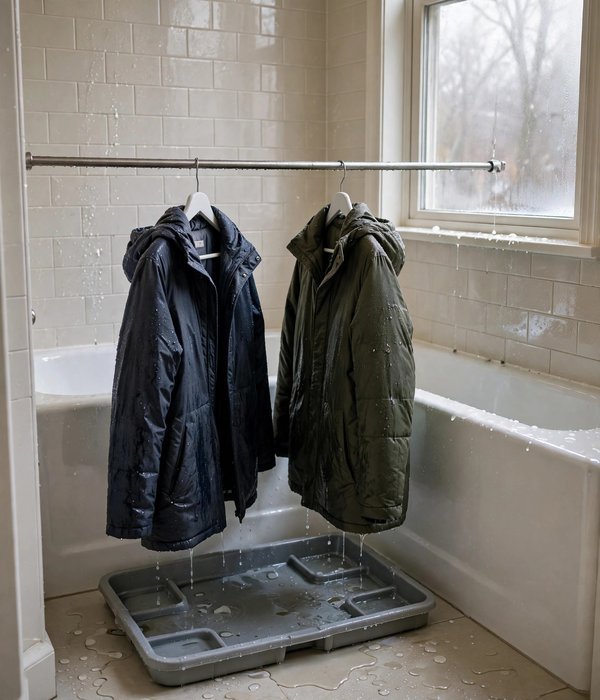
Every host’s blind spot: half the coats arrive damp. Wet wool on dry coats transfers moisture, and a puddle spreading from a coat pile warps floors. The wet-coat plan has two parts, a drip tray under the wet arrivals, and a drying position for the worst offenders.
A plastic boot tray 30 by 15 inches (under $10) catches everything a coat can shed, and a bathroom tension rod over the bathtub gives you a drip-dry spot that drains itself.
Coats hung with airflow in a ventilated bathroom dry noticeably overnight, by the time guests leave, their coats feel fresher than they arrived, which is the kind of detail guests remember and mention.
- Lay the boot tray under or beside the coat rack, place the wettest coats closest to it.
- Slide a tension rod across the bathtub, 60 to 70 inches long for a standard tub, it spans without tools and holds 15 to 20 pounds.
- Hang the two or three dampest coats on it with wide hangers, shoulders squared, 4 inches apart for airflow.
- Crack the bathroom door so air circulates, a closed wet bathroom fogs the mirror and slows drying.
- After the last guest leaves, wipe the tray dry and pull the rod down. The whole wet-coat station stores in the tub in under a minute.
8. Keep Valuables in the Bedroom, Not the Entry
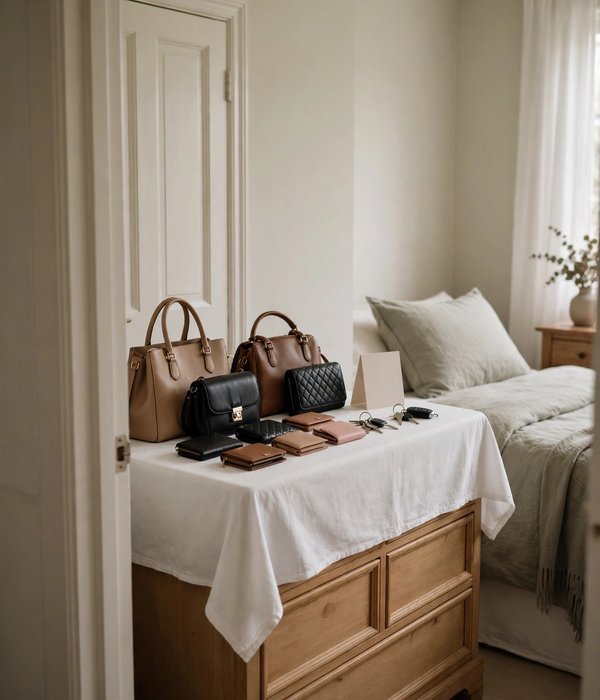
- What you can do with it: Declare one rule at the door: coats to the rack, bags and valuables to the bedroom. A guest’s wallet, keys, and phone sit safer behind a closed bedroom door than on an entryway table anyone can reach.
- Where it works best: The spare bedroom doubles as the valuables room, lay a clean sheet on the bed or dresser top and guests line up bags there instead of the coat zone.
- Why it matters: Twelve coats on one rack mean twelve people reaching into one area all night. Separating bags from coats cuts accidental pickups to near zero.
- The announcement: Put a small tent card by the door: “Coats on the rack, bags in the bedroom, please.” Nobody questions a printed sign; everyone questions a pile.
- Watch out: Don’t lock the valuables room, guests need in and out. Just close the door and mention it once as people arrive.
- The car keys question: If someone insists on keeping keys with them, the tote system still works, their tote is their private cubby, and the name card means nobody else reaches into it. The rule is bags in the bedroom zone, not bags confiscated.
Party-Day Cheat-Sheet (Pin This)
- 48-inch rolling rack = 20–25 coats (50-lb rating, lock the casters)
- Over-door hooks fit doors 1.25–2.25 in; 20–45 lb total
- Wall hooks spaced 6–8 in; adhesive hooks need rubbing-alcohol prep + 1-hour cure
- Folding rack: 36–48 in wide open, ~4 in flat for storage
- Bed coat-room: one layer only (15–20 coats), protective throw, numbered tags
- Wet coats: 30×15-in boot tray + tension rod over the tub
- Bags: 10-in totes for clutches, 14-in bins for day purses, in the bedroom, not the entry
Conclusion
If I had to pick one move for a small home with a party coming, it’s the rolling rack, it’s the only solution that scales from 6 guests to 20 without asking your walls for permission.
But the real win here is the system: coats on the rack, bags in the bedroom zone, wet coats over the tub, and a tag on every collar. 5-minute fix: start with the over-door hook row and the boot tray, those two take five minutes, cost under $30 combined, and they alone turn “coats on the sofa” into something that looks intentional.
For more everyday ideas, the everyday drop-zone setup keeps the same zones working between parties, and the entryway pillar guide shows how to make the everyday version permanent. Hosting should be about the guests, not the geography of their jackets, now the jackets have an address.
Frequently Asked Questions (FAQ)
What’s the ideal guest coat storage party setup for 12 coats?
About 20 to 25 winter coats. Coats on hangers take roughly 2 inches of rod width each, so 48 inches gives you 24 slots, and most racks are rated for 50 pounds, enough for 20 coats at 2.5 pounds each with margin.
If your guest list is bigger, add over-door hooks as overflow rather than squeezing coats shoulder-to-shoulder, which creases fabric and invites falling coats.
What’s the best renter-safe party coat storage option?
A rolling garment rack is the best renter-safe option: it needs zero screws, zero wall contact, and folds flat when the party ends. Over-door hooks are second best, they touch no wall surface at all.
If you use adhesive wall hooks instead, clean the wall with rubbing alcohol first and wait the full 1-hour cure time before loading; premature loading is the number-one reason adhesive hooks fail.
How do I keep track of coats at a party?
Use the ticket/tag system: clip a numbered tag to each coat’s collar and keep a matching card on a tray by the door. It costs under $5 in index cards and safety pins, takes two minutes, and ends the end-of-night digging entirely.
For bags, the numbered-tote row works the same way, one tote per guest, name card tucked in the handle.
Where should guests put their bags at a party?
Put bags in a separate zone from coats, ideally the bedroom on a sheet-covered bed or dresser, in a row of labeled totes or baskets. Coats on the rack plus twelve people reaching in means accidental pickups; a closed-door bedroom bag zone keeps wallets, keys, and phones safer and findable.
Announce it with a small sign by the door so guests don’t have to guess.
Can I use my bedroom as party coat storage without ruining the bedding?
Yes, if you cover the bed first. Lay a washable throw or old duvet cover over the whole bed, tuck it around pillows and over the edges, then lay coats in a single layer, not a pile. A queen bed holds 15 to 20 coats flat.
Add the drip tray or boot tray alongside for wet coats, and the bedding never touches a damp coat.