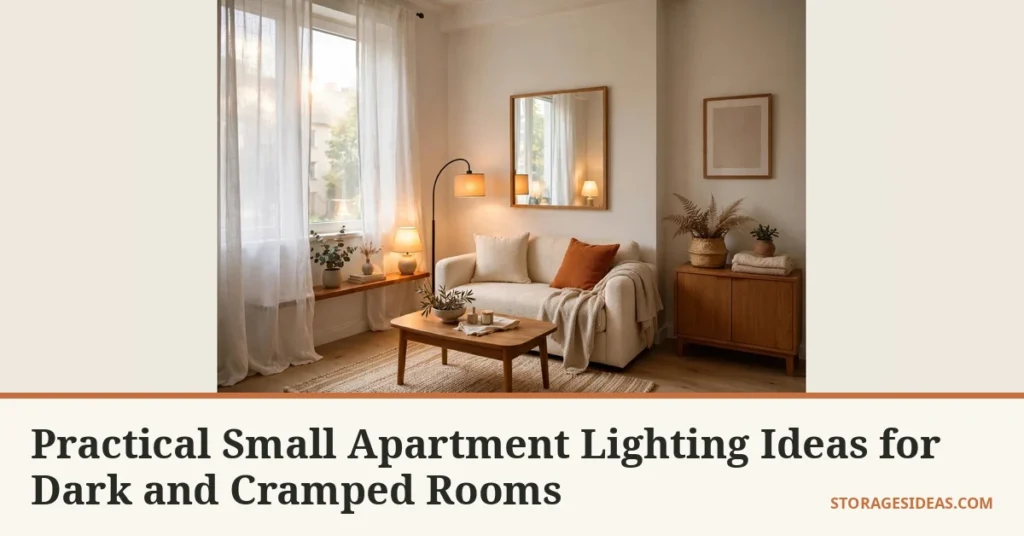
Introduction
There’s a particular kind of frustration that comes with living in a dark apartment. You open the curtains in the morning, and the room still feels dim. You turn on the overhead light, and it’s either too harsh or too weak. You’ve tried a lamp or two, but somehow the space still feels small, flat, and a little bit gloomy.
Here’s the thing: it’s rarely about the apartment itself. It’s about the lighting.
Lighting is the single most underestimated tool in interior design. The right lighting setup can make a low-ceilinged room feel taller, a narrow hallway feel wider, and a cramped studio feel like a genuinely comfortable place to live, much like small space transformation ideas that focus on making compact homes feel bigger without structural changes.
The wrong setup, usually a single overhead bulb doing all the work, makes even a nice apartment feel depressing.
The good news is that transforming your apartment’s lighting doesn’t require rewiring, a big budget, or a landlord’s permission. Most of the best small apartment lighting ideas involve plug-in fixtures, battery-operated lights, and smart bulb swaps that take minutes to install and make an immediate, visible difference.
This guide covers twelve of the most effective lighting ideas for small, dark apartments, practical, renter-friendly, and genuinely transformative. Whether your apartment suffers from poor natural light, awkward shadows, or just that flat, lifeless quality that single ceiling fixtures create, there’s a solution here that will work for your space.
Why Lighting Transforms Small Spaces More Than Any Other Change
Before getting into the ideas, it’s worth understanding why lighting has such an outsized effect on how a small space looks and feels, because once you understand the principle, every decision becomes clearer.
Small, dark rooms suffer from two related problems. The first is obvious: not enough light. The second is less obvious but equally important: uneven light. A single overhead light source casts one pool of illumination and leaves everything else in relative shadow. The contrast between the bright center and the darker edges actually makes the room feel smaller; your eye reads the shadows as walls closing in.
The solution is layered lighting. Lighting designers talk about three layers: ambient light (the general background illumination), task light (focused light for specific activities), and accent light (decorative light that adds depth and warmth). A well-lit small room uses all three. The result is a space that feels balanced, warm, and visually larger than it is because when the corners are lit, the room’s full dimensions become visible.
This is the principle behind almost all the small apartment lighting ideas in this guide. Not just more light, better light, placed more thoughtfully.
1. Layer Your Lighting: The Foundation of Smart Small Apartment Lighting Ideas
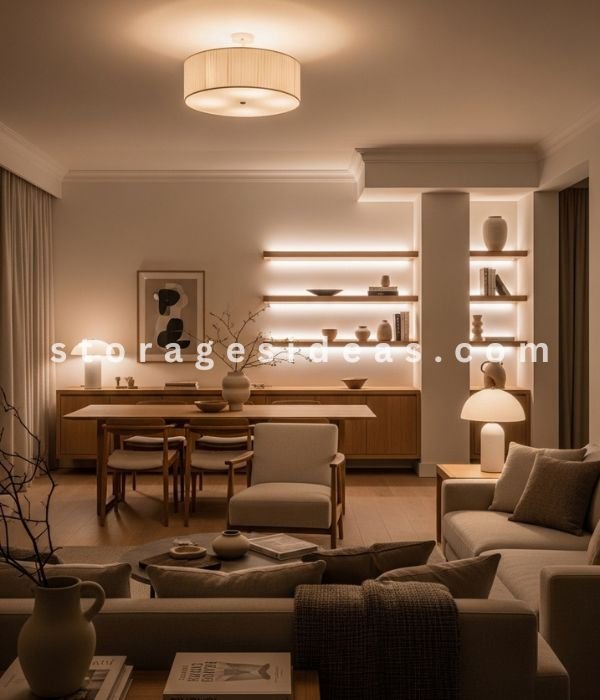
If there’s one idea that underpins everything else in this guide, it’s this: stop relying on a single overhead light and start layering.
Most apartments come with one ceiling fixture per room. Switched on alone, it flattens the space, creates unflattering shadows, and makes the room feel institutional rather than homely. The fix isn’t to replace it, it’s to supplement it with multiple lower light sources so the room is lit from several directions and heights at once.
A simple layered lighting setup for a small apartment room:
- The overhead light provides ambient background illumination, ideally on a dimmer switch
- A floor lamp in a corner adds warmth and fills the shadow that the overhead light misses
- A table lamp on a side table or shelf brings light down to eye level and creates a cozy, intimate atmosphere
- An LED strip or accent light behind a TV, under a shelf, or along a skirting board adds depth and dimension
When all three layers work together, the room stops feeling like a box and starts feeling like a space. This single shift from one overhead light to a layered setup is the most impactful lighting change you can make in a dark apartment.
2. Swap the Bulbs Before Buying New Fixtures
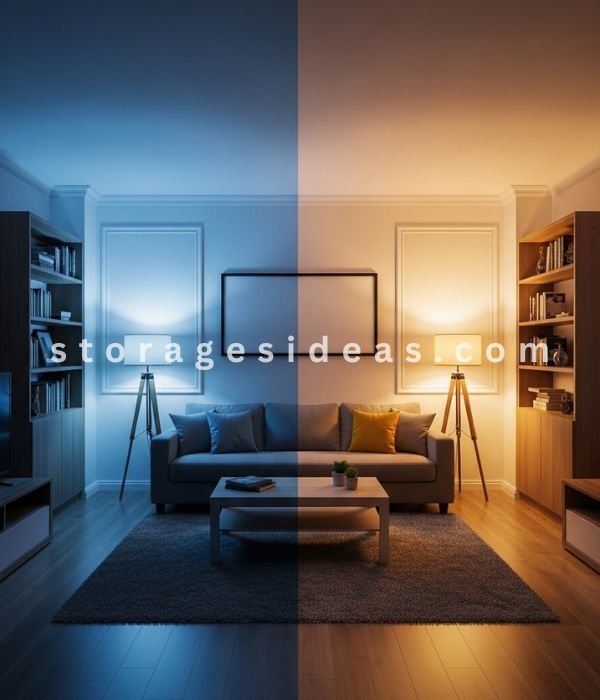
Before spending money on new lamps and fixtures, spend five minutes changing the bulbs already in your apartment. It costs almost nothing and can make a dramatic difference immediately.
Most apartments come fitted with cool white or daylight bulbs, typically around 4000K to 6500K on the color temperature scale. These bulbs produce a bluish, clinical light that feels bright but harsh, and tends to flatten a room rather than warm it. Swapping them for warm white bulbs (2700K to 3000K) instantly shifts the atmosphere of the whole apartment. The light feels softer, the room looks warmer, and the space immediately feels more livable.
What to look for when buying bulbs:
- Color temperature of 2700K–3000K for warm, cozy light in living rooms and bedrooms
- 3000K–3500K for kitchens and bathrooms, where you need slightly clearer light
- High CRI (Color Rendering Index) of 90+ for the most natural, flattering light quality
- Smart bulbs with adjustable color temperature, if you want flexibility, warm in the evenings, cooler during the day
This is genuinely the cheapest and fastest small apartment lighting upgrade available. Do it first, before anything else.
3. Floor Lamps for Dark Corners: Instant Warmth and Depth
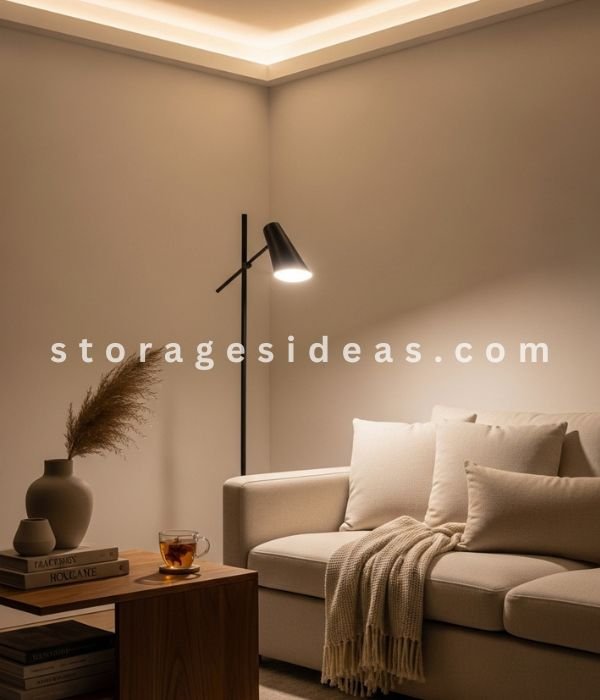
A dark corner is one of the biggest contributors to a cramped, uncomfortable feeling in a small room. When the edges of a room are in shadow, the eye reads the space as smaller than it is. A floor lamp placed in a corner solves this problem immediately, and it does something else too. It draws the eye toward the edge of the room, which actually makes the space feel bigger.
Floor lamp styles that work particularly well in small apartments:
- Arc floor lamps are the tall, curved style that arches over a sofa or chair. They provide overhead-style light without a ceiling fixture and look effortlessly stylish.
- Torchière floor lamps uplighters that direct light toward the ceiling, creating a soft ambient glow that makes low ceilings feel higher.
- Tripod floor lamps are a classic design with a smaller footprint than they look. Good for corners where a chunky base would be impractical
- Slim column floor lamps, minimal profile, maximum light. Good for very tight spaces where even a tripod feels too much
One well-placed floor lamp can transform the mood of an entire room. Two, in opposite corners, creates a warm and balanced atmosphere that no overhead fixture can replicate.
4. Use Mirrors to Multiply Light
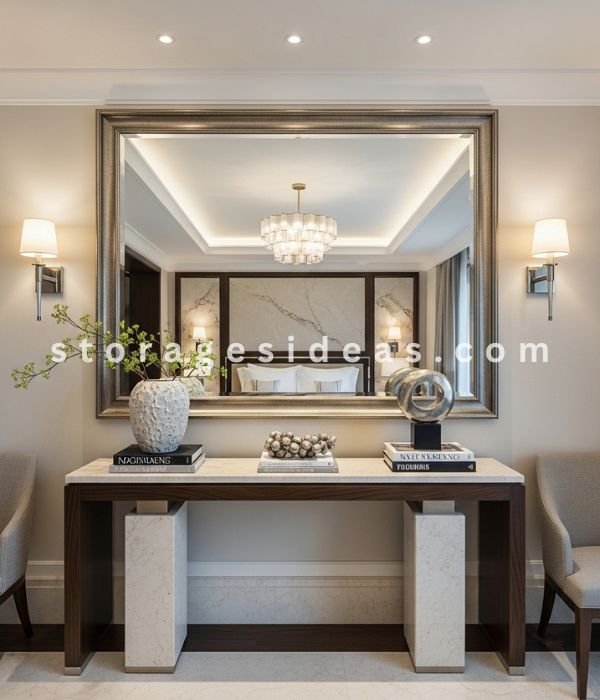
This isn’t strictly a lighting idea, but it belongs in any guide to brightening a dark apartment because it works so well in conjunction with good lighting. Mirrors reflect both natural and artificial light, effectively doubling the luminosity of a room without adding a single extra bulb.
A large mirror on a wall opposite a window bounces daylight deep into the room. A mirror placed near a lamp reflects the lamp’s light into the space. A mirrored surface on a wardrobe or cabinet does the same thing passively, all day long.
Where mirrors make the biggest difference:
- Opposite or adjacent to the only window in a dark room
- Behind a lamp or candles on a console table or sideboard
- On a wall at the end of a narrow hallway, it visually doubles the length of the space
- As a full-length mirror on the back of a door, practical, space-saving, and light-enhancing
In a small apartment with limited natural light, mirrors are as valuable as any light fitting. Use them generously.
5. Under-Cabinet and Shelf Lighting: The Practical Glow That Changes Everything
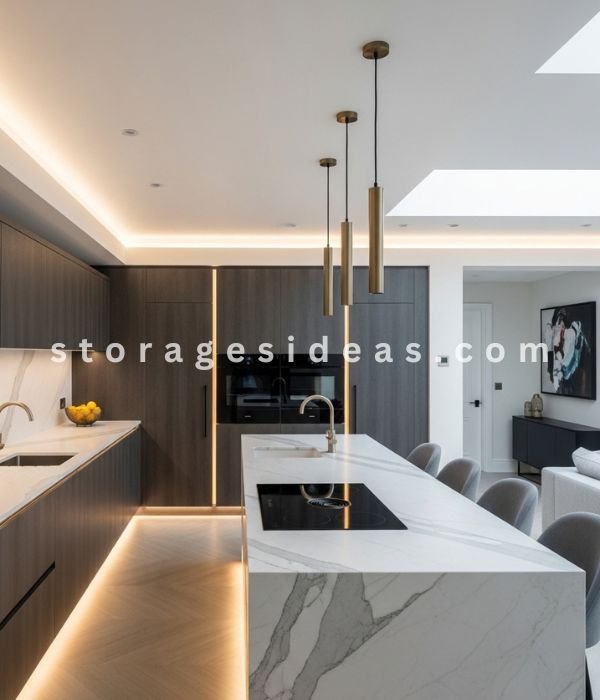
One of the most underrated small apartment lighting ideas is also one of the easiest to install: LED strip lights or puck lights under kitchen cabinets and shelves. These small, inexpensive, often battery-powered lights do something that ceiling fixtures can never do: they put light exactly where you need it, close to the work surface, without any shadows.
In a small kitchen, under-cabinet lighting makes the worktop genuinely usable in the evening, a strategy often paired with kitchen counter storage ideas to improve both visibility and functionality in tight spaces. In a living room, LED strips behind a TV unit or under a floating shelf add a warm glow that makes the whole room feel intentional and designed.
Options that require no wiring:
- Plug-in LED strip lights with adhesive backing peel, stick, and plug in
- Battery-operated puck lights inside dark cabinets and cupboards
- Rechargeable LED bars that attach magnetically under shelves
- Motion-sensor cabinet lights that activate when a door is opened
These small, inexpensive additions are consistently among the highest-impact lighting changes in a small apartment, and they’re completely renter-friendly.
6. Pendant Lights Over Dining and Work Areas
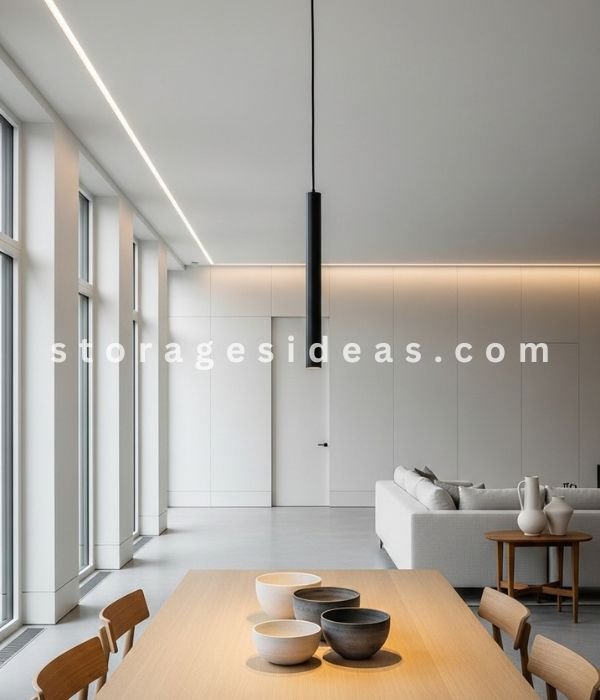
In a small apartment, a pendant light hung low over a dining table or work desk does something clever. It defines a zone within an open-plan or multipurpose room, a concept closely related to living room partitions with storage that help separate spaces without adding walls. This makes the apartment feel more structured and more spacious, even though no walls have moved.
A pendant over the dining table is particularly effective. It creates an intimate, restaurant-like atmosphere, makes mealtimes feel more intentional, and draws the eye upward, which makes the ceiling feel higher.
Pendant styles that suit small apartments:
- Slim, minimal pendants that don’t crowd the visual space
- Industrial-style bare bulb pendants for a casual, airy feel
- Paper or fabric drum pendants for a softer, diffused glow
- Adjustable-height pendants so you can find the exact position that works
For renters, plug-in pendant lights are widely available and require no electrician. They hang from a hook on the ceiling and plug into a standard socket, sometimes with the cord draped along the wall for a tidier look.
7. Renter-Friendly Small Apartment Lighting Ideas Battery and Plug-In Solutions
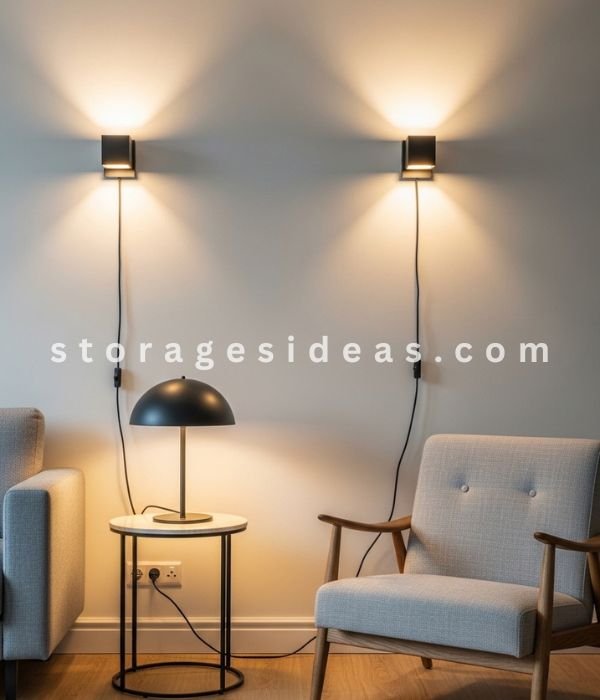
One of the biggest frustrations for apartment renters is the inability to install hardwired lighting, no ceiling roses, no new circuits, and no drilling into rented walls. The good news is that the range of renter-friendly lighting options has expanded dramatically in recent years, and some of the best small apartment lighting ideas require no installation whatsoever.
Renter-friendly lighting that genuinely works:
- Plug-in wall sconces look like hardwired wall lights, but plug into a socket. Dress the cord along the skirting board or behind furniture for a cleaner finish.
- Battery-operated LED spotlights are wireless, adhesive-mounted, and surprisingly powerful. Good for alcoves, artwork, and dark corners
- Rechargeable table lamps, no cord, no socket needed. Place anywhere, charge when needed
- Smart bulbs in existing fixtures transform the ceiling light you already have into a dimmable, color-adjustable, app-controlled light source without touching the wiring.
- LED fairy lights and string lights are not just for Christmas. Draped along a shelf, around a mirror, or behind a headboard, they add a layer of warm ambient light that costs almost nothing
The renter’s lighting toolkit is better than it’s ever been. Almost any lighting effect you want can now be achieved without a single screw in the wall.
8. Maximize Natural Light Before Adding Artificial Light
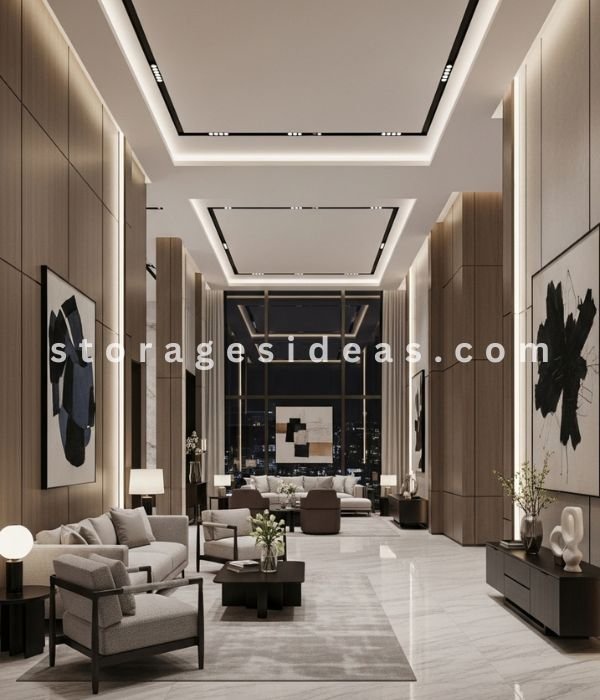
All the best artificial lighting in the world can’t replicate the quality of natural daylight — and in a small apartment, maximizing whatever natural light exists is one of the most impactful things you can do before touching a single lamp.
Most apartments leak natural light through the choices made in front of the windows. Heavy curtains that hang inside the window frame rather than outside it block a significant portion of the incoming light. Furniture placed directly in front of windows shadows the room. Dark window sills absorb rather than reflect the light that does come in.
Simple ways to maximize natural light:
- Hang curtains above the window frame and wider than the window — when open, they expose the full glass and let maximum light in
- Choose sheer or light-filtering curtains rather than blackout fabric in rooms where you want daytime light
- Paint window sills and reveals white or light gray; they act as natural light reflectors
- Move furniture away from windows so the light has a clear path into the room
- Keep windows clean. It sounds obvious, but it makes a real, measurable difference to light levels.
These changes cost little to nothing and can make a dark apartment noticeably brighter before a single lamp is switched on.
9. Use Dimmer Switches to Control the Mood
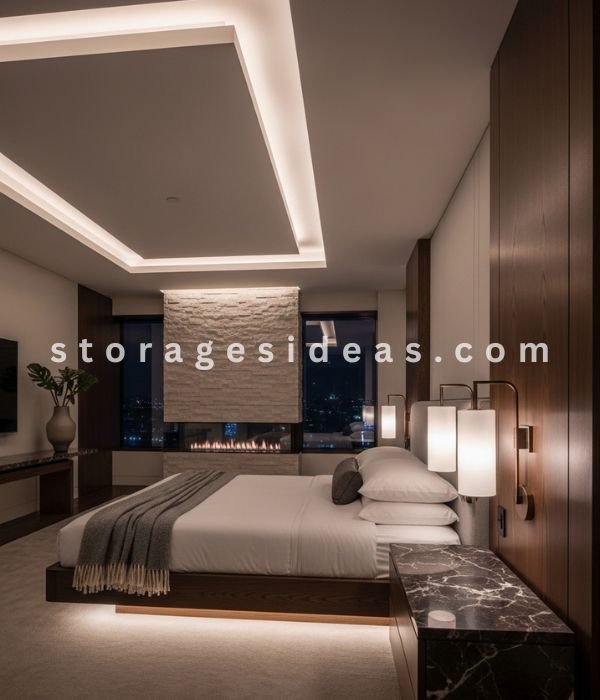
A room that’s lit the same way at 9 am and 9 pm is a room that’s never quite right. One of the simplest and most effective upgrades in any small apartment is adding dimmer switches or using smart bulbs with dimming capability so the lighting level can be adjusted to suit the time of day and the activity.
Bright light in the morning and early afternoon keeps energy levels up and the space feeling fresh. Dimmed, warm light in the evening creates a relaxed, comfortable atmosphere that no full-brightness overhead light can achieve. In a small apartment where the same room serves as living space, dining room, and workspace, the ability to shift the lighting mood is genuinely valuable.
How to add dimming without rewiring:
- Smart bulbs with app or voice control can be installed in any existing socket
- Plug-in dimmer adapters sit between the plug and the socket, adding dimming control to any lamp
- Smart plugs with dimming capability for floor and table lamps
This is a small change with a disproportionately large effect on how comfortable a small apartment feels throughout the day.
10. Vertical Lighting to Make Low Ceilings Feel Taller
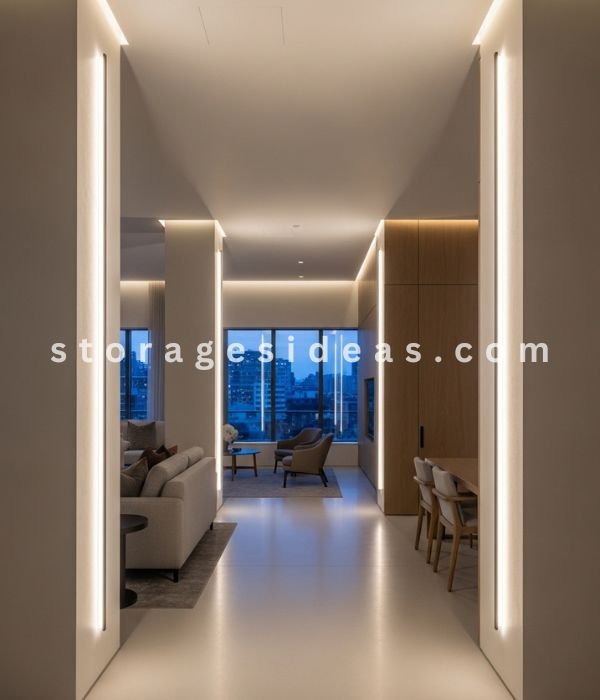
Low ceilings are one of the most common complaints in small apartments, and lighting is one of the most effective tools for countering the effect. The trick is to direct light upward, drawing the eye toward the ceiling and creating the impression of height that the room physically lacks.
Lighting techniques that make ceilings feel higher:
- Uplighters and torchière floor lamps point light directly at the ceiling, washing it with a soft glow that makes it feel more distant
- Wall sconces that direct light upward similar effect, mounted at mid-wall height
- Tall, slim floor lamps; the height of the lamp itself draws the eye upward
- Avoiding downlights and low-hanging pendants in rooms where ceiling height is the issue, these emphasize the ceiling’s closeness rather than minimizing it.
- Painting the ceiling white or very light in combination with uplighting the reflected light maximizes the effect.
In a room where the ceiling feels oppressively close, two or three well-placed uplighters can make the space feel entirely different and significantly more comfortable to spend time in.
11. Accent Lighting for Depth and Visual Interest
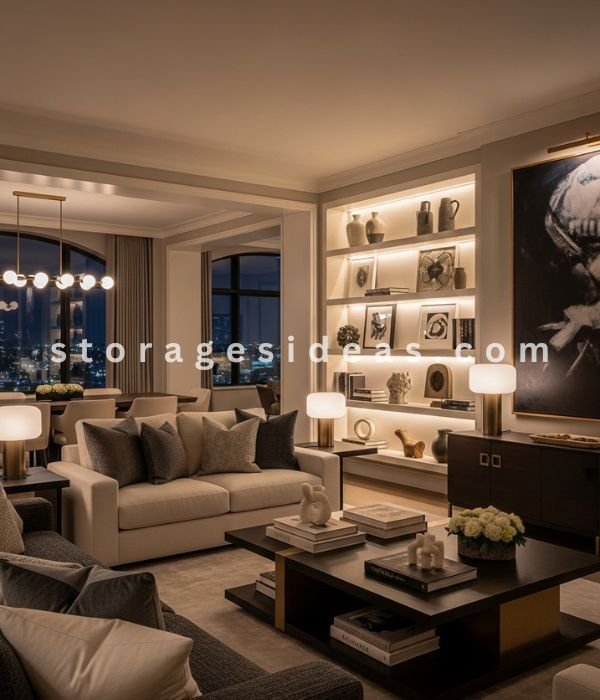
A flat, evenly lit room feels smaller than a room with light and shadow working together. Accent lighting, small, directed light sources that highlight specific objects, areas, or architectural features, adds the visual depth and interest that makes a small apartment feel designed rather than just furnished, similar to how clutter-free living room ideas enhance visual clarity and overall atmosphere.
Think of accent lighting as the layer that makes everything else look better. A picture light above a piece of art makes the wall feel intentional. A small spotlight inside a bookcase makes the books and objects inside it glow. A strip light inside a wardrobe is practical, yes, but it also adds a moment of surprise and warmth every time the door opens.
Easy accent lighting ideas for small apartments:
- Battery-powered picture lights above wall art, no wiring, immediate impact
- LED strip lights inside open shelving or bookcases
- Small directional spotlights on a track (plug-in versions available) for flexible accent lighting
- Candles and candlelight, the original accent lighting, are still unbeatable for warmth and atmosphere in the evening
- A small table lamp is placed behind a plant, and the light filters through the leaves and creates beautiful, dappled shadows on the wall.
These finishing touches take a small apartment from functional to genuinely atmospheric.
12. Choose the Right Light Fittings for the Scale of the Room
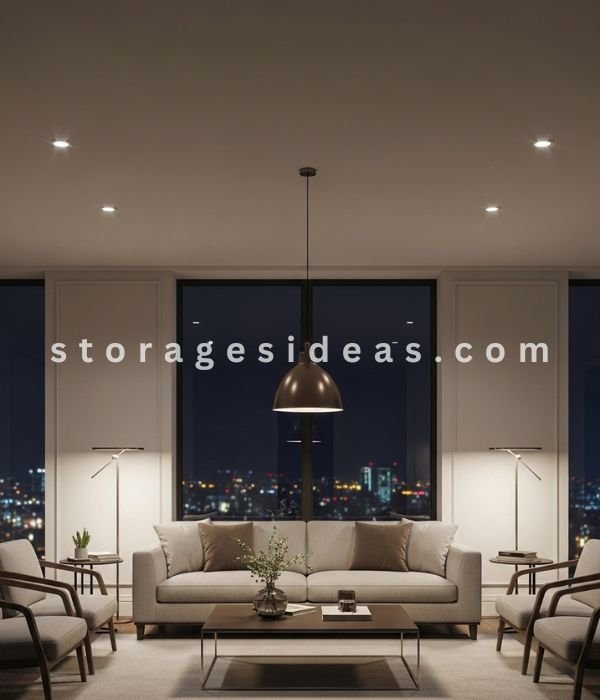
The final idea sounds obvious but is consistently overlooked: the scale of your light fittings matters enormously in a small space. An oversized pendant in a low-ceilinged room looks oppressive and makes the space feel smaller. A tiny table lamp in a large dark corner makes no visual impact at all.
Scale guidelines for small apartment lighting:
- Pendant lights should hang high enough to clear head height, at least 200cm from the floor in a living space, and lower over a dining table where you’re seated
- Table lamps should be tall enough that the shade sits at eye level when you’re seated too low and the light doesn’t spread, too high, and the bulb is visible and glaring.
- Floor lamps in small rooms should be slim-profile; a large, wide lampshade competes with the furniture and crowds the space visually.
- Wall sconces should be proportionate to the wall they’re on. A single small sconce on a large wall looks lost; a pair creates balance.
The right scale makes lighting feel like it belongs in the room. The wrong scale in either direction makes it feel like an afterthought, regardless of how good the light quality is.
Conclusion
A dark, cramped apartment isn’t a lost cause; it’s a lighting problem in disguise. And lighting problems, unlike structural ones, are almost always fixable without a landlord’s permission, a large budget, or a team of electricians.
The small apartment lighting ideas in this guide all work toward the same outcome: a space that feels bigger, warmer, and more comfortable to live in because the light is doing its job properly. Layered sources replace flat overhead lighting. Warm bulbs replace cold, clinical ones. Mirrors multiply what light exists. Dimmers give you control over the mood at every hour of the day.
You don’t need to implement all twelve ideas at once. Start with the changes that will make the biggest difference to your specific apartment, probably the bulb swap, the floor lamp in the darkest corner, and a dimmer on the overhead light. Build from there. Small, well-considered changes in lighting compound quickly into a home that genuinely feels transformed.
The apartment hasn’t changed. But the way it feels to live in it will.
Creating a well-lit small apartment is all about layering and balance, a concept widely covered in lighting design and home lighting basics from the U.S. Department of Energy.
Frequently Asked Questions (FAQ)
What are the best lighting ideas for a small apartment with no natural light?
When natural light is minimal, the priority is layered artificial lighting that mimics the warmth and variety of daylight. Use warm white bulbs (2700K–3000K), add floor and table lamps to create multiple light sources at different heights, and use mirrors to reflect and multiply what light you do have. LED daylight therapy lamps near the main seating area can also help replicate the energizing quality of natural light during the day.
How can I brighten a small apartment without changing the wiring?
Almost all the best small apartment lighting ideas are renter-friendly and require no wiring. Plug-in wall sconces, battery-operated LED spotlights, smart bulbs in existing fixtures, rechargeable table lamps, and LED strip lights with adhesive backing all transform the lighting in a small apartment without a single change to the electrics.
Does lighting really make a room look bigger?
Yes, significantly. Layered lighting that illuminates the corners and edges of a room makes the full dimensions visible, which makes the space feel larger. Uplighters that wash the ceiling with light make low ceilings feel higher. Mirrors used in combination with light sources effectively double the perceived brightness of a room, which also increases the sense of space.
What color temperature bulbs are best for a small apartment?
Warm white bulbs at 2700K–3000K are the best choice for living rooms and bedrooms, they create a soft, inviting atmosphere that makes small spaces feel cozy rather than cramped. Slightly cooler bulbs at 3000K–3500K work well in kitchens and bathrooms where clearer, more functional light is needed. Avoid anything above 4000K in living spaces, as it creates a harsh, clinical atmosphere.
Where should I place lamps in a small apartment?
Focus on the dark corners first. A floor lamp in a shadowy corner immediately makes the room feel larger and more balanced. Then add light at eye level with table lamps on side tables, shelves, or consoles. Finally, consider accent lighting, such as a small spotlight on a bookcase, a strip light under kitchen cabinets, to add depth and dimension. The goal is multiple light sources at different heights, not a single bright overhead.
Found these ideas helpful? Explore our other articles on small space decorating, budget home upgrades, and practical apartment living tips.