In my kitchen, the pet food lived in three different cupboards until I got tired of opening the wrong one every morning. The leash hung on a chair, the toys spread across the floor, and the litter box sat in plain sight because I had nowhere else to put it. I had no spare room and no spare closet — just a small home and a pet who came with a surprising amount of stuff.
These pet supplies storage ideas for small homes are the ones that finally worked for me, because every idea uses space I already had: a door, a wall, a gap beside the washer, the top of a crate. I rent, so nothing here needs drilling or a renovation, and most of these ideas take under an hour to set up. When pet things have a home, you stop tripping over them, and you stop buying a second leash because you cannot find the first one. If you are starting from a pile by the door, work through this list in order, or jump to the zone that bothers you most. For the bigger picture, these ideas sit alongside my guide to storage ideas for small spaces, which covers the same small-home rules for everything else you own.
Key takeaways
- Every pet item gets one home — food in the kitchen, leashes by the door, litter supplies near the box, grooming in the bathroom.
- An airtight bin on wheels keeps kibble fresh and stops you dragging a heavy bag out of the pantry.
- One toy basket out and the rest rotated weekly keeps old toys interesting without buying more.
- A litter box cabinet and a feeding station mat hide the two messiest zones without a renovation.
- Nothing here needs drilling — damage-free hooks and over-the-door organizers work in a rental.
In this guide, I’ll cover
- Airtight Food Bin on Wheels
- Wall-Mounted Leash and Harness Hooks by the Door
- Under-Bench Toy Basket Rotation
- Over-the-Door Treat and Medication Organizer
- Litter Box Cabinet That Hides the Box
- Feeding Station Mat with Raised Bowls
- Grooming Caddy Under the Bathroom Sink
- Slim Rolling Cart for the Laundry-Room Pet Zone
- Crate Cover That Doubles as a Side Table
- Labeled Bins for Each Pet
- Entryway Mud Tray for Paws
- Travel Go-Bag Hung by the Door
Feeding
Feeding is where I started, because it happens twice a day and the mess shows up twice a day too.
1. Airtight Food Bin on Wheels: Pet Supplies Storage That Keeps Kibble Fresh
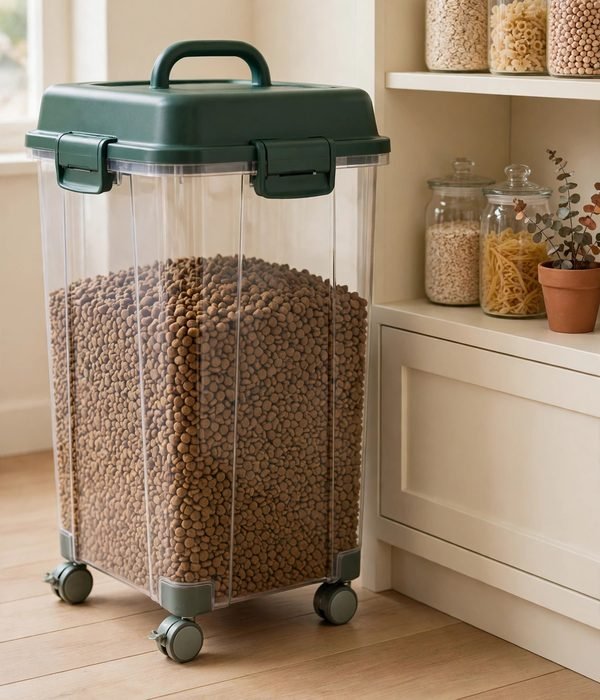
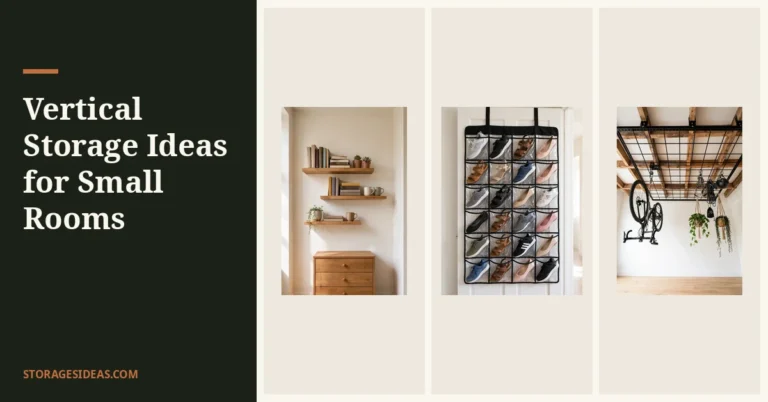
An airtight food bin on wheels solves two problems at once: kibble goes stale and attracts pests when it sits open, and a heavy bag of food is awkward to lift out of a pantry every day. Kibble bins commonly hold 25 to 50 lb, so pick a size that matches the bag you actually buy, not the biggest one you can find. The airtight gasket is the mechanism that matters. It seals out air and moisture, so the food stays fresh longer, and it keeps smells in, which keeps insects and mice from noticing the food. The wheels are the second half of the idea. Roll the bin out of the pantry to scoop, then roll it back, instead of dragging a bag across the floor. To set it up, measure the pantry shelf or floor space first, choose a bin that fits with room for the lid to open, and fill it straight from the bag. Label the bin with the food name and the date you opened it. Best for: dog and cat owners who buy food by the bag and have a pantry or a kitchen corner. Skip it if: you buy food in small bags that fit in a cupboard, or your pet eats a prescription diet that must stay in its original packaging.
By the Door — Pet Supplies Storage Ideas for Small Homes
The door is where my walks begin, so this is the zone I notice most when it goes wrong.
2. Wall-Mounted Leash and Harness Hooks by the Door: Grab and Go in Ten Seconds
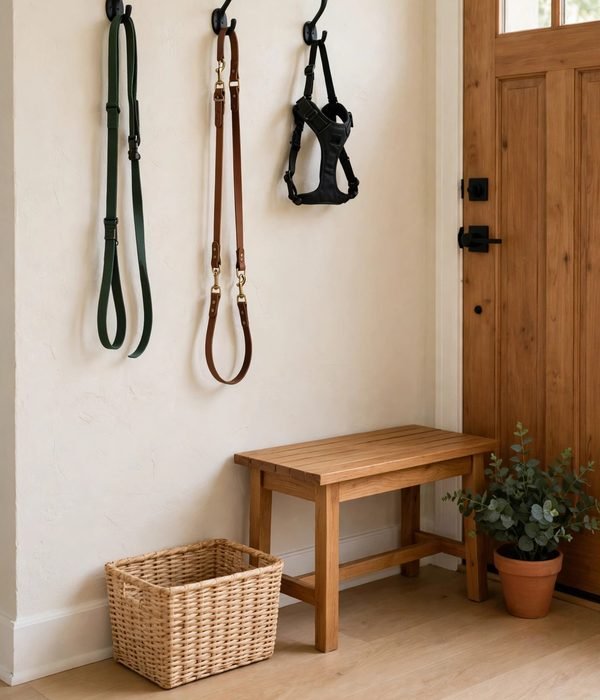
Leashes end up on the floor, on a chair, or in a coat pocket because they have no hook waiting for them. Wall-mounted hooks by the entry door fix that by putting the leash at grab height, right where you put your shoes on. The mechanism is simple: a hook at hand height turns a two-minute search into a ten-second grab, and because the leash is always in the same place, everyone in the house learns the habit. Damage-free hooks that stick to the wall hold about 3 to 7 lb, which is plenty for a leash, a harness, and a bag of treats. To set it up, stand at the door with your shoes on and reach for the wall at a height that feels natural, usually around shoulder height. Stick or screw one hook per pet, plus one spare for a spare leash. Hang the harness on its own hook so it does not tangle with the leash. Best for: renters and anyone whose door area is the main exit for walks. Skip it if: your door opens onto a shared hallway where wall hooks are not allowed, or your dog’s gear lives in a car instead.
Toys and Gear
Toys and the small things were the ones that spread fastest in my home, so I gave them a strict system.
3. Under-Bench Toy Basket Rotation: Fewer Toys Out, Happier Pets
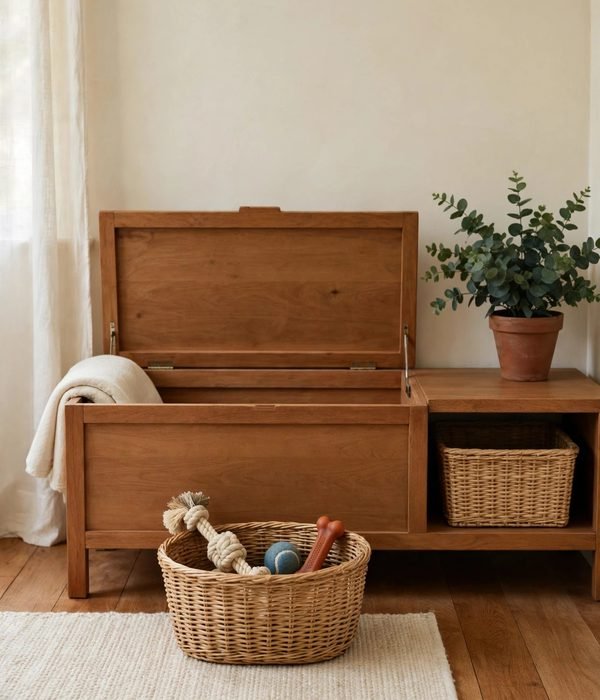
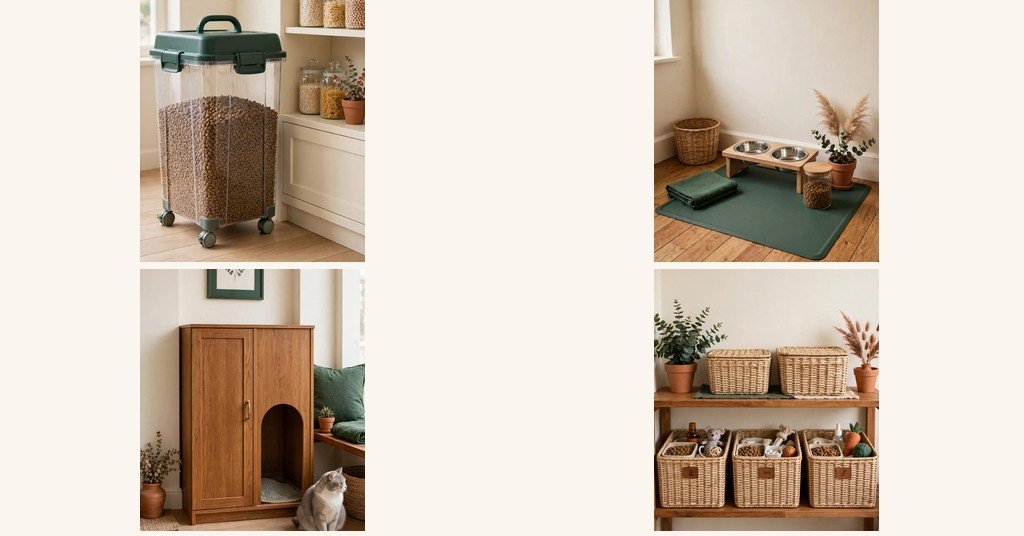
A basket of toys under a bench works because pets, like children, get bored of a toy they see every day. Rotation fixes that without buying anything new. Keep one basket out and store the rest, then swap the basket weekly, so a toy that has been away for a week feels new again. The mechanism is novelty, not quantity. A dog with three toys in rotation plays with them more than a dog with fifteen toys scattered across the floor. To set it up, gather every toy, sort them into two or three groups, and put each group in its own basket. Keep one basket under a bench, a low shelf, or the sofa, and store the other baskets in a closet or on top of a wardrobe. Once a week, swap the basket that is out for one that has been stored, and throw out anything torn or chewed through as you swap. This is one of the best small apartment storage tricks for pet owners, because it uses a single basket instead of a whole toy box. I keep the spare baskets on top of the wardrobe, out of sight but easy to grab on swap day. Best for: homes where toys spread across the floor every day. Skip it if: your pet only plays with one or two favourite toys and ignores the rest.
4. Over-the-Door Treat and Medication Organizer: Small Things, One Clear Door
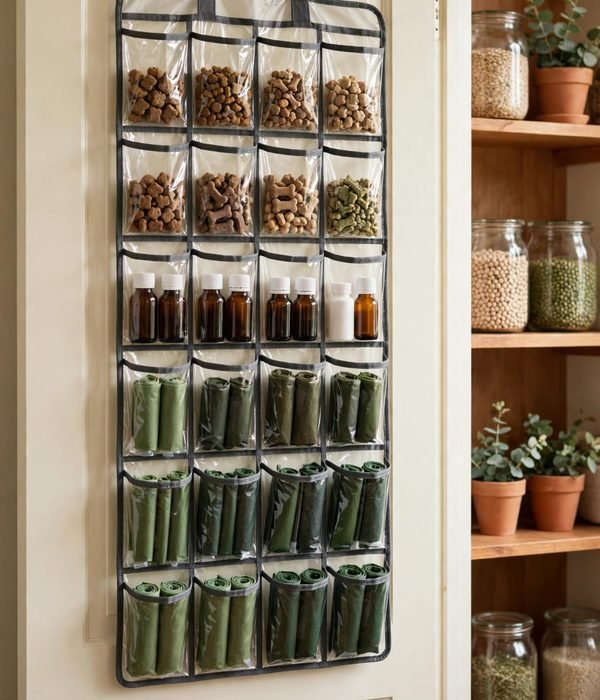
Treats, medication, and poop bags are small, and small things are the first things to disappear into a drawer. A clear-pocket shoe organizer hung over a pantry or closet door gives every one of them a visible pocket, so you can see what you have without opening anything. The mechanism is visibility. When you can see the treat bag, the flea medication, and the poop bags at a glance, you stop buying duplicates and you notice when something is running low. To set it up, hang the organizer over a door you open every day, such as the pantry door. Put treats in the top pockets where you can reach them, medication in a middle pocket with the instructions tucked behind it, and poop bags in the bottom pockets near the door. Keep anything your pet should not reach, such as medication, in a pocket above your pet’s head height. Best for: owners who juggle treats, daily medication, and walk supplies in a small kitchen. Skip it if: your door is too thin for an over-the-door hook, or you keep pet supplies in a room with a door your pet can push open.
Litter and Clean-Up
The litter box was the one thing I most wanted to hide, and the one I worried about most.
5. Litter Box Cabinet That Hides the Box: A Litter Box That Looks Like Furniture
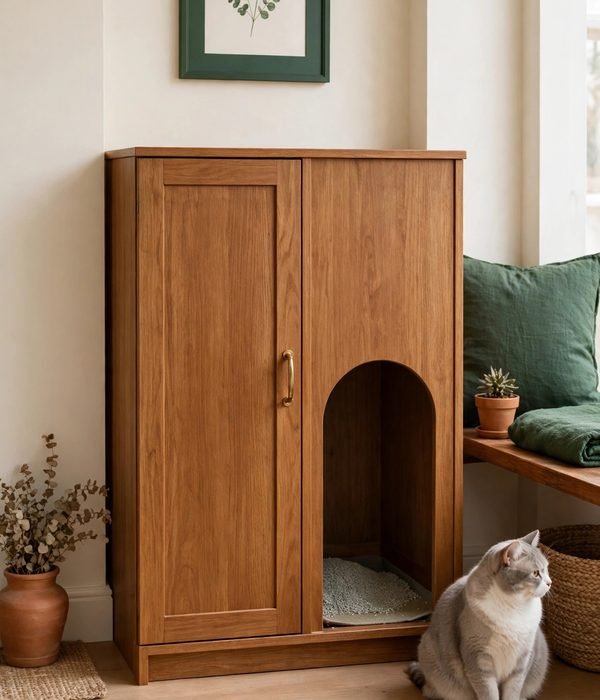
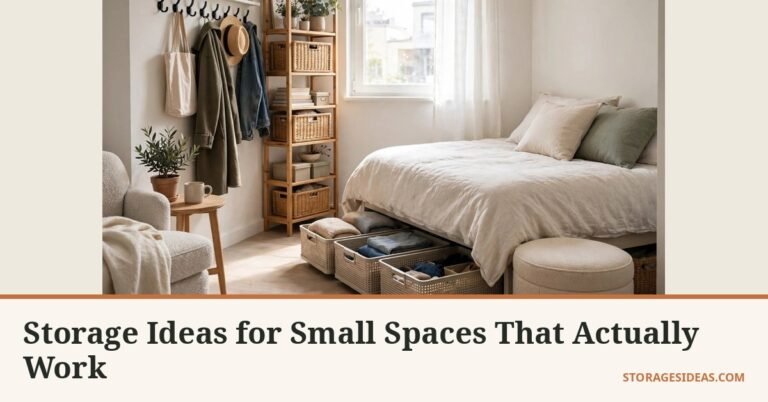
A litter box cabinet hides the box inside a piece of furniture, with a cat-sized entry cutout in the side or front. The mechanism is containment. The cabinet walls block the sight of the box, catch most of the litter your cat kicks out, and keep the smell inside the cabinet instead of spreading across the room. A litter mat just inside the door catches litter off your cat’s paws before it reaches the floor. To set it up, choose a cabinet that fits your cat’s litter box with room to spare on all sides, and cut or buy an entry opening big enough for your cat to walk through comfortably. Put the litter mat inside the door, facing the entry, and keep the scoop in a small hook or pocket inside the cabinet. Scoop daily, because a hidden box is easy to forget, and a cat that finds a dirty box will find somewhere else to go. Best for: cat owners in small apartments where the litter box sits in the living area. Skip it if: your cat refuses enclosed boxes, or the cabinet would block the only route to the room.
Feeding
The feeding station is the zone I use most, so I keep coming back to make it tidier.
6. Feeding Station Mat with Raised Bowls: Pet Supplies Storage That Means Fewer Spills
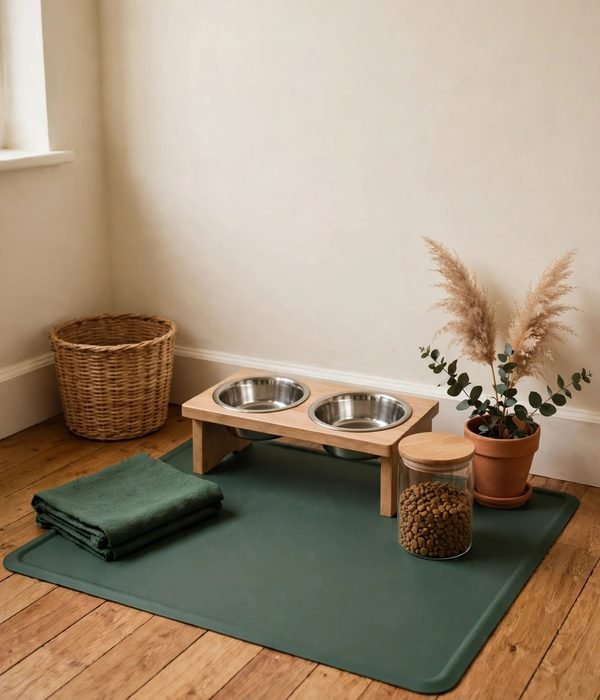
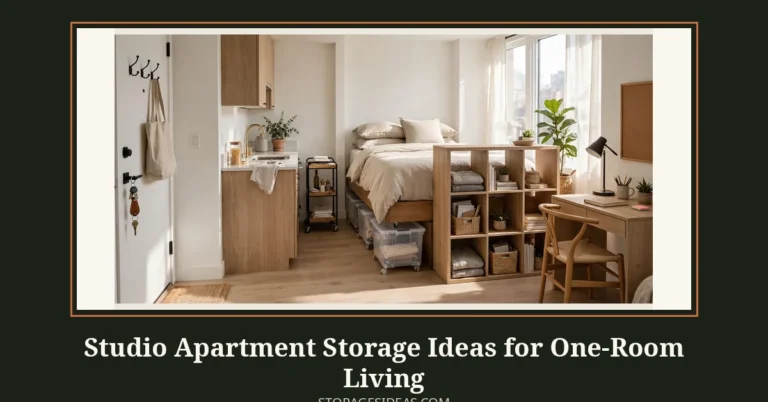
A feeding station mat with raised bowls works because it controls the mess at the source. A silicone mat catches water and kibble that miss the bowl, so spills stay on the mat instead of soaking into the floor. Raised bowls suit larger dogs in particular, because they do not have to bend as far down to eat and drink. A mat around 19 by 12 inches fits a pair of bowls with a rim of mat around them, which is what catches the drips. To set it up, pick a flat spot against a wall where the bowls will not be kicked over, lay the mat down first, then set the bowls on it. Feed your pet in the same spot every day so the mat becomes the feeding station and the floor around it stays clean. Rinse or wipe the mat after meals, and wash it fully once a week. The mat is the one I reach for most — it is the smallest change here, and it made the biggest difference to how clean the kitchen floor stays. Best for: larger dogs, messy drinkers, and kitchens with hard floors. Skip it if: your pet eats from a puzzle feeder or a lick mat that needs to sit flat on the floor, or a raised bowl has been ruled out by your vet.
Litter and Clean-Up
Clean-up supplies used to live wherever I last put them down. Now they live in two tight spots.
7. Grooming Caddy Under the Bathroom Sink: Brush, Shampoo, Clippers in One Grab
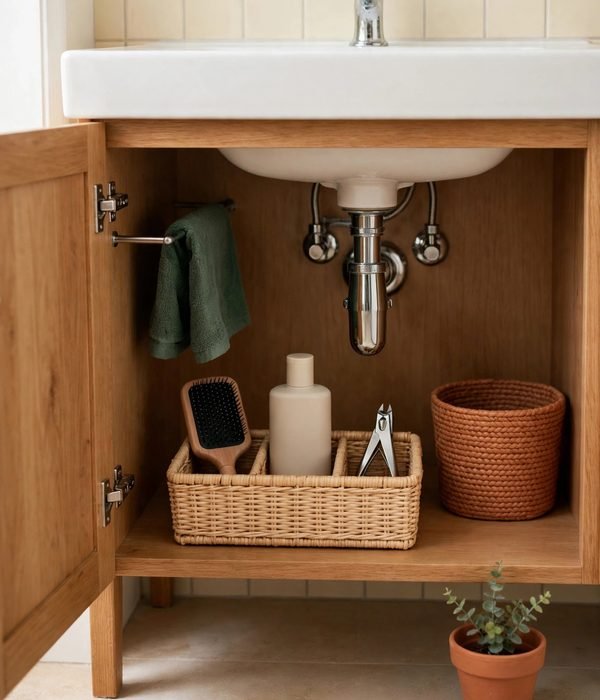
A grooming caddy under the bathroom sink works because grooming supplies are used together, in the same room, and they get lost when they are stored in three different places. One caddy holding the brush, the shampoo, and the nail clippers means you grab one thing and you have everything. The mechanism is grouping by task. When the supplies live together, grooming takes less time to start, so it actually happens. To set it up, choose a caddy or small bin that fits under your sink, and put the brush, shampoo, clippers, and a towel in it. If the space under the sink is tight, a tension rod across the cabinet can hold spray bottles by their triggers, and a small bin can hold the rest. Keep the caddy in the same spot after every use, and restock it when a bottle runs low so you are not hunting for shampoo mid-bath. Best for: owners who groom at home, especially with a dog that sheds. Skip it if: a groomer handles all of your pet’s grooming and you only keep a brush at home.
8. Slim Rolling Cart for the Laundry-Room Pet Zone: Five Inches of Gap, Fully Used
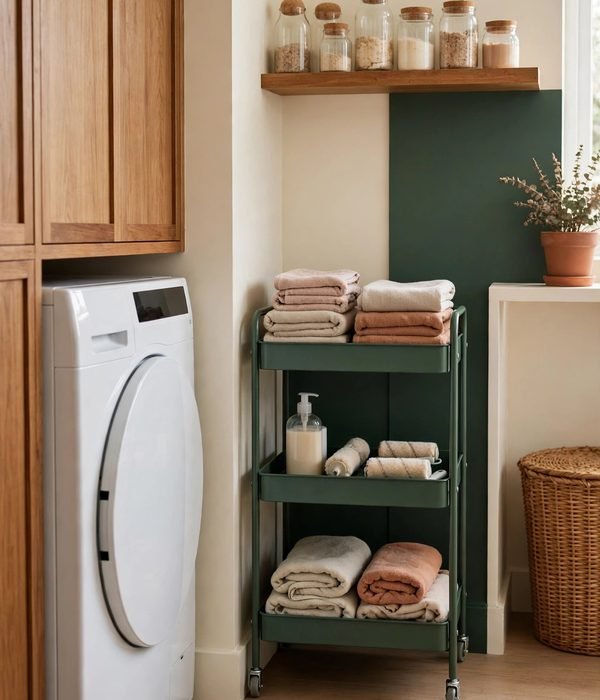
A slim rolling cart turns the narrow gap beside the washer or dryer into a pet zone. A three-tier cart about five inches wide slides into a gap that would otherwise hold nothing, and it holds towels, shampoo, and lint rollers in plain sight. The mechanism is using dead space. Laundry rooms have gaps between machines and walls that are too narrow for a shelf, but a rolling cart fits them exactly, and it rolls out when you need something from the back tier. To set it up, measure the gap first, then choose a cart that is narrower than the gap by a small margin so it rolls freely. Put towels on the bottom tier where they are heaviest, shampoo and grooming supplies in the middle, and lint rollers and small items on top. Roll the cart out after baths to grab a towel, then roll it back. Best for: homes with a laundry room and a gap beside the machines. Skip it if: your laundry area has no gap wider than the cart, or your pet supplies already live in the bathroom.
Toys and Gear
This is the part of the house I see from the sofa, so I wanted it to look like a home, not a pet store.
9. Crate Cover That Doubles as a Side Table: A Dog Crate That Earns Its Floor Space
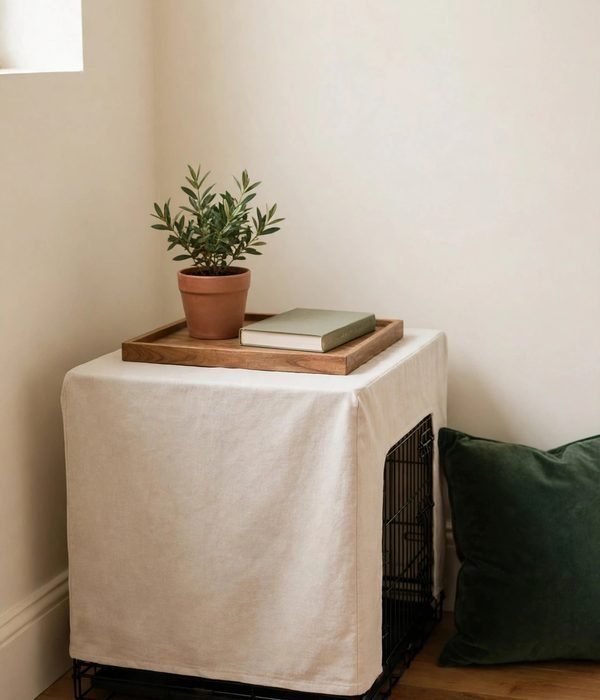
A dog crate takes up a lot of floor space and gives nothing back, unless the top of it works as a table. A fitted crate cover with a tray on top turns the crate into a side table, so the same square of floor holds a crate and a lamp, a book, or a cup of tea. The mechanism is doubling the use of one footprint. The cover also makes the crate feel darker and more den-like inside, which many dogs prefer for resting. To set it up, measure the crate and choose a cover that fits snugly without hanging over the door. Put a flat, sturdy tray on top so cups and books sit level, and keep it light so it lifts off easily when you need to open the crate. Never put anything heavy or hot on top, and never block the crate door. I keep a book and a cup of tea on ours, and guests never guess there is a crate underneath. This is a classic piece of hidden storage thinking: the crate is still a crate, it just stops looking like one. Best for: owners whose dog uses a crate daily and whose living room is short on table space. Skip it if: your dog chews fabric covers, or the crate sits in a room where a side table is not needed.
10. Labeled Bins for Each Pet: One Bin Per Pet, Nothing Mixed Up
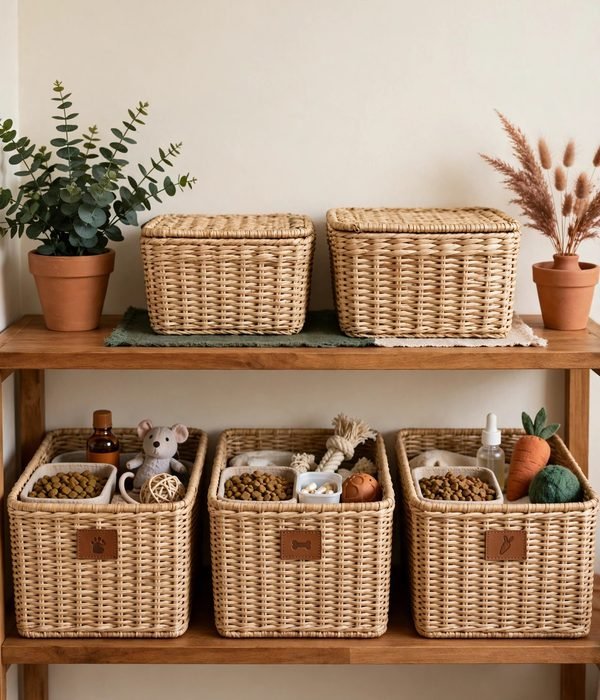
Labeled bins for each pet work because multi-pet homes mix things up. One dog’s food, another cat’s medication, and a shared pile of toys become a mess when they all live in one box. One labeled bin per pet, holding that pet’s food, medication, and toys, stops the mix-ups. The mechanism is separation by owner. When each pet has a bin, you reach for the right food without reading three labels, and a pet sitter can find everything without asking. To set it up, choose one bin per pet in the same size, so they stack or line up neatly. Label each bin with the pet’s name and what is inside, using a label maker or a piece of tape and a marker. Put food in the bottom of the bin, medication in a small bag on top, and toys on the side. Store the bins together on a shelf or in a closet. Best for: homes with two or more pets, or one pet with a special diet. Skip it if: you have one pet and a single bin already holds everything.
By the Door
The door is the last thing I touch before a walk and the first thing I deal with after one, so it earns two of my favourite ideas.
11. Entryway Mud Tray for Paws: Wipe Paws Before the Floor Gets It
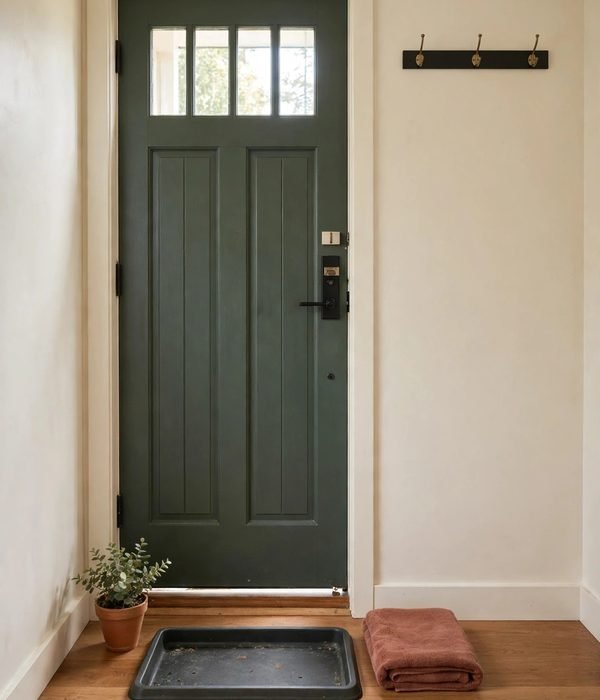
An entryway mud tray for paws works because the mess happens at the door, not in the middle of the room. A boot tray by the door with a towel on it gives you a place to wipe paws the moment you come in from a walk. The mechanism is catching dirt at the threshold. Paws wiped at the door leave mud on the towel, not on the rug, and the tray contains any water that drips off. To set it up, put a boot tray just inside the door where you take your own shoes off. Lay a towel in the tray, and keep a second towel folded nearby. After each walk, wipe each paw before your pet steps off the tray. Shake the towel out after walks and wash both towels once a week. Best for: dog owners in rainy or muddy areas, and homes with light-coloured floors. Skip it if: your pet comes in through a back door with a paved area and rarely brings mud inside.
12. Travel Go-Bag Hung by the Door: Vet Trips Without the Last-Minute Hunt
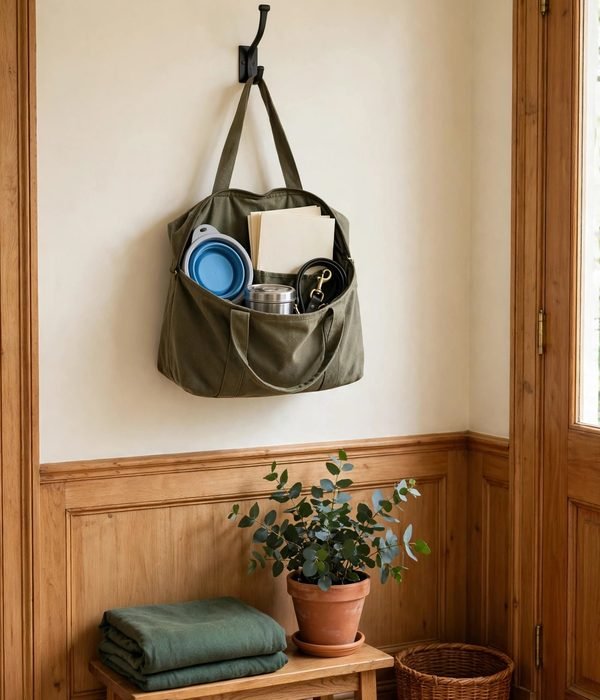
A travel go-bag hung by the door works because vet trips and emergencies are stressful enough without hunting for supplies. A pre-packed bag holding a leash, a water bowl, food, and a copy of your vet records means you grab one bag and go. The mechanism is pre-packing under calm conditions. When you pack the bag on a quiet day, you remember the vet records copy and the food. When you pack it in a rush, you forget both. To set it up, choose a small bag with a handle and hang it on a hook by the door, next to the leash hooks. Pack a spare leash, a collapsible water bowl, a small bag of food, any daily medication, and a copy of the vet records. Check the bag once a month, replace the food, and update the records copy after any vet visit. What finally worked for me was packing it on a calm Sunday, when I could think straight and remember the vet records copy. Best for: every pet owner, and especially owners whose pet has a medical condition or a vet who is not nearby. Skip it if: your vet is next door and your pet’s records live on your phone, though a spare leash in the bag is still worth having.
Frequently Asked Questions (FAQ)
Where should I store pet supplies in a small home?
Store pet supplies where they are used: food and bowls in the kitchen, leashes and paw towels by the door, litter supplies near the litter box, and grooming supplies in the bathroom. These pet supplies storage ideas for small homes all follow that rule, which is why they work in a small space. One small home for each item beats one big box for everything.
How do I hide a litter box in a small apartment?
Use a litter box cabinet with a cat-sized entry cutout and a litter mat just inside the door. The cabinet hides the box, catches kicked-out litter, and keeps smells contained. Scoop it daily, because a hidden box is easy to forget.
How can I store pet food without it going stale?
Keep kibble in an airtight bin with a gasket seal, sized to the bag you buy, and fill it straight from the bag. The seal keeps air and moisture out, so the food stays fresh, and it keeps smells in, which keeps pests from noticing it.
What is the best way to store dog toys in a small space?
Use one basket out and rotate the rest weekly. Keep the basket under a bench or a low shelf, and store the other baskets in a closet. Rotation keeps old toys interesting, and one basket takes up far less room than a toy box.
Do I need to drill holes to hang leash hooks in a rental?
No. Damage-free adhesive hooks that hold about 3 to 7 lb are strong enough for a leash, a harness, and a treat bag. Put one hook per pet at grab height by the door, and check the weight rating before you hang anything heavier.
Start With the Feeding Station
The feeding station was the first thing I fixed in my own home, and I would do it again exactly the same way. It is the one zone I use twice a day, every day, and once the airtight bin and the mat had a home against the wall, the kitchen finally felt like mine again instead of the pet’s. That one small win is what made the rest of the list feel doable, not overwhelming.
After that, I added the leash hooks, then the toy basket, then whichever zone bothered me most that week. I did not do it all in one weekend, and you do not need to either. A small home with a pet does not need more storage. It needs a feeding station, a hook by the door, and a basket that stays in one place — and once those three are set, the rest follows.
Save this for the next time the leashes, toys, and food bags take over — and share it with a fellow pet owner in a small space.