
- First-Week Survival (gifts 1–5)
- Kitchen & Entryway Systems (gifts 6–10)
- Garage & Closet Starters (gifts 11–15)
- What to give: most-given pick
- Frequently Asked Questions (FAQ)
The best gifts for new homeowners aren’t decor, they’re the storage systems the first 30 days demand. A new home reveals every missing piece of organization fast: the junk drawer that fills in a week, the fridge gap nobody measured, the closet rods that double nothing because the movers’ hangers are all wrong.
Most gifts on this list sit in the under-$25 to $50 range, with a few up to around $75, and every one earns its place by solving a real first-month problem. see the full organization gift guide for the complete gift library this one sits in.
Why Gifts for New Homeowners Should Be Storage First
A housewarming gift that looks pretty on a mantel is forgotten by February. A storage gift gets used every single day, and that is why it makes such a good housewarming gift in the first place.
Moving into a new home means starting every organizational system from zero: no spice system, no entryway rhythm, no garage zones, drawers full of random screws and takeout menus by week two. New home gifts that add storage don’t just declutter, they quietly decide how the house will run for years.
The trick to giving a great one: buy to a measurement, not a guess. Drawer width and depth, the gap beside the fridge, the closet rod’s usable length, those three numbers tell you exactly which gift fits.
This list keeps every gift to a standard size that works in most homes, flags the few that need a measurement first, and skips anything that requires drilling unless it’s the kind of thing most homeowners do in week one anyway. Give any of these before the housewarming party and you’re giving a system, not a thing.
First-Week Survival
The gifts that keep week one from becoming a box pile. Every one of these organizes something that breaks within the first seven days of moving in.
1. Bamboo Drawer Organizer Set: the junk drawer fix
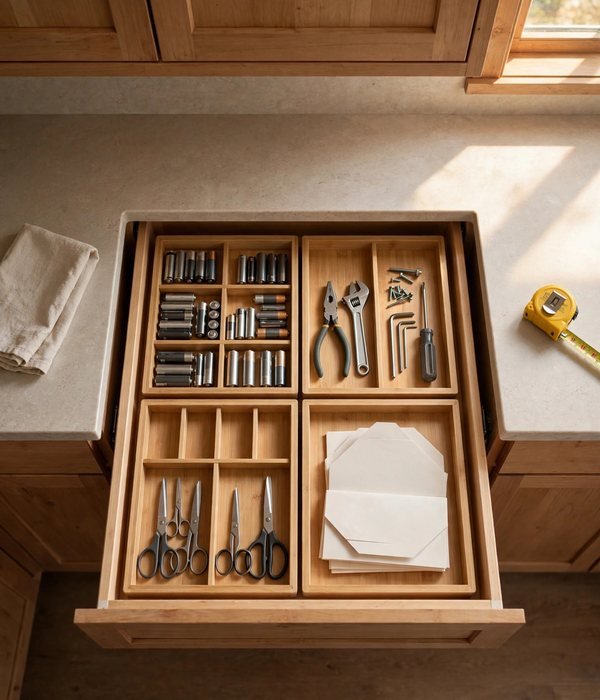
By day three in a new home, the junk drawer has a screwdriver, three batteries, takeout menus, and a mystery key in it, and it’s the drawer everyone opens daily.
A bamboo organizer set of 5 to 8 spring-loaded trays, each expanding roughly 11 to 17 inches wide and 2 to 3 inches deep, partitions a standard kitchen drawer into labeled-ish zones before chaos sets in. Look for trays with silicone base grips so they don’t slide when the drawer opens.
It organizes the catch-all drawer into battery, tool, paper, and fastener zones. Why new homeowners: their drawers are literally empty and filling fast, this is the only moment to set the zones before habits calcify.
2. Slim Gap Storage Cart
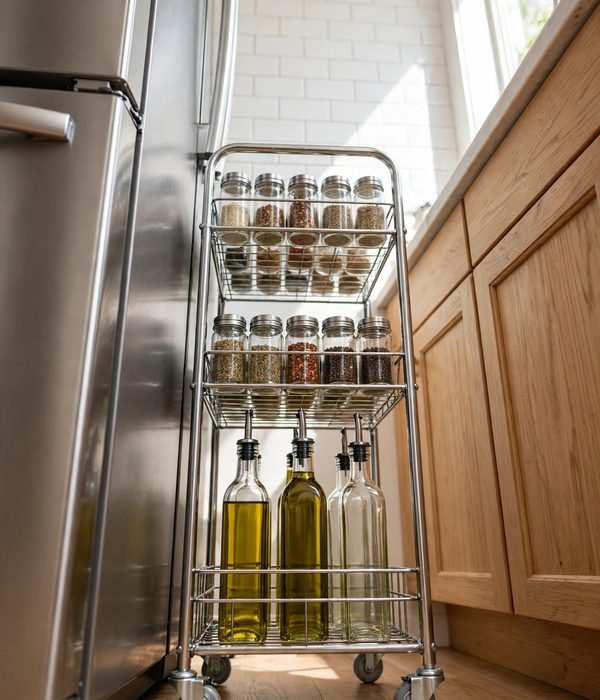
Every new kitchen has one: the 5-to-6-inch slot between the fridge and the counter, or beside the washer, holding nothing but dust. A slim rolling cart in exactly that width, typically 5.5 inches wide, 15 inches deep, 27 to 30 inches tall with 3 to 4 tiers, turns dead space into a spice, can, or laundry supply station.
Measure the gap first: carts come in 5, 6, and 7-inch widths and a 1-inch miss means it doesn’t roll. Choose ball-bearing casters rated for at least 20 pounds total. It organizes spices, oils, canned goods, or detergent bottles within arm’s reach of the stove or machines.
New homeowners discover this gap on day one and have nothing that fits it, gift the fit.
3. Over-Door Multi-Hook Rack: no-drill coat control

New closets are a mess of half-unpacked boxes for weeks, and guests arrive before the coat closet is usable.
An over-door rack with 5 to 9 hooks, padded back plate, fits standard interior doors 1.5 to 1.75 inches thick, with each hook rated for 5 to 25 pounds, gives instant coat, bag, and robe storage with zero drilling, renter-safe and damage-free. Look for hooks that fold flat when not needed.
It organizes coats, work bags, guest jackets, and dog leashes at the exact door where piles form. Why new homeowners specifically: their permanent coat storage is buried behind boxes, but visitors show up anyway, this buys the room time.
4. Collapsible Fabric Bin Set: unpacking chaos containment

Unpacking is organized dumping, and without bins, everything lands in piles that become permanent. A set of 6 collapsible fabric bins in the standard 11-by-11-by-11-inch cube size (or 13-by-13-by-15 for bigger closets) corrals the interim mess by category while rooms get finished: cables here, linens there, kids’ stuff here.
Sturdy sewn handles and reinforced side panels matter; cheap ones collapse under 10 pounds. They organize the “not yet” items in every room and fold flat to nothing once the house is settled. New homeowners get buried in half-unpacked boxes for a month, bins turn the pile into sortable stations.
One bin per category (cables, linens, kids, paperwork) is all it takes to make unpacking feel like progress instead of noise.
5. Cable Management Box
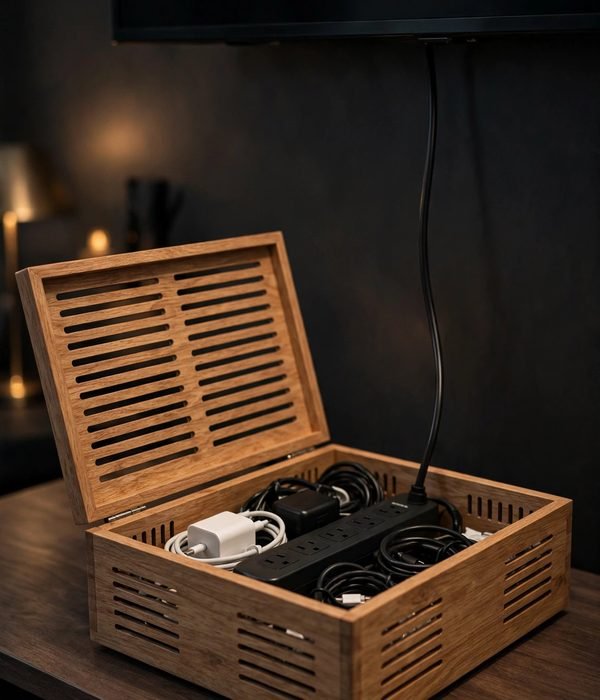
The router, TV, and charging station all plug in on day one, and by day two there’s a dust-covered tangle behind the console. A large cable management box, roughly 16 by 6 by 5 inches, ventilated, holds a full power strip plus 6 to 10 adapter plugs, swallows the whole mess into one tidy lid.
Ventilation slots are non-negotiable: sealed boxes overheat strips. It organizes the entertainment and desk charging zones that are the first things set up in a new living room or home office. Why it matters early: new homeowners route cables once and never touch them again, a tidy box now means five clean years behind the TV.
Kitchen & Entryway Systems
The kitchen and entryway are the two rooms that must work by the end of month one. These gifts install the systems directly. the full kitchen storage guide has the deep version of every kitchen idea below.
6. Airtight Spice Jar Set: the pantry baseline

A new kitchen inherits the old one’s spice chaos: bags folded with clips, jars from three houses ago, labels unreadable. A set of 24 airtight 4-ounce glass jars with bamboo lids and preprinted labels sets the pantry baseline in one gift. Four-ounce jars fit standard 6-inch shelf spacing and hold a full grocery-store spice bottle with room to shake.
Airtight matters for humidity-prone kitchens. It organizes every seasoning into one uniform, labeled row that survives years of daily cooking. New homeowners stock a pantry from zero, this is the container system that decides how the next hundred spices get stored.
7. Adjustable Under-Sink Organizer: around the P-trap

New under-sink cabinets are a black hole until someone builds around the P-trap. An adjustable under-sink organizer, expanding 14 to 24 inches wide, two tiers, with a raised bottom shelf that clears the trap and supply lines, converts that dead zone into a cleaning-supply station. Look for steel frames with rust-proof coating; bathrooms and kitchens both run humid.
It organizes cleaners, sponges, bags, and dish soap into pull-out zones instead of a pile behind the doors. Why new homeowners: every house has a different trap geometry, so they discover this problem only after moving, an adjustable frame fits whatever they find.
8. Tiered Shelf Risers
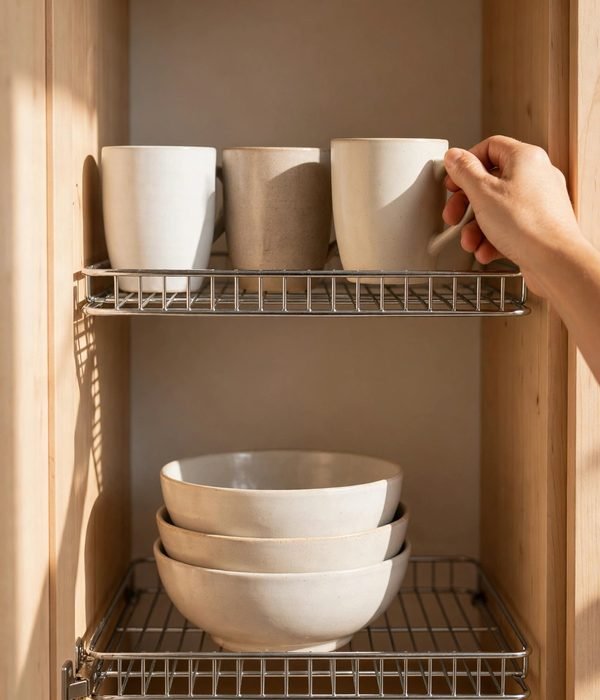
Standard cabinet shelves waste the top 6 inches of every shelf, a full third of the cabinet. A set of two metal shelf risers, roughly 9 to 15 inches wide and 6 to 8 inches tall, instantly doubles the usable surface for mugs, cans, and bowls without a single screw.
Steel risers hold 30-plus pounds per shelf; bamboo versions hold less but look warmer on open shelves. They organize cabinets and pantries into two levels so nothing hides behind nothing. New homeowners face bare cabinets with no plan, risers are the fastest capacity gain per dollar in the entire kitchen, and they work in bathrooms and closets too.
9. Entryway Hook Rail with Shelf: the landing zone
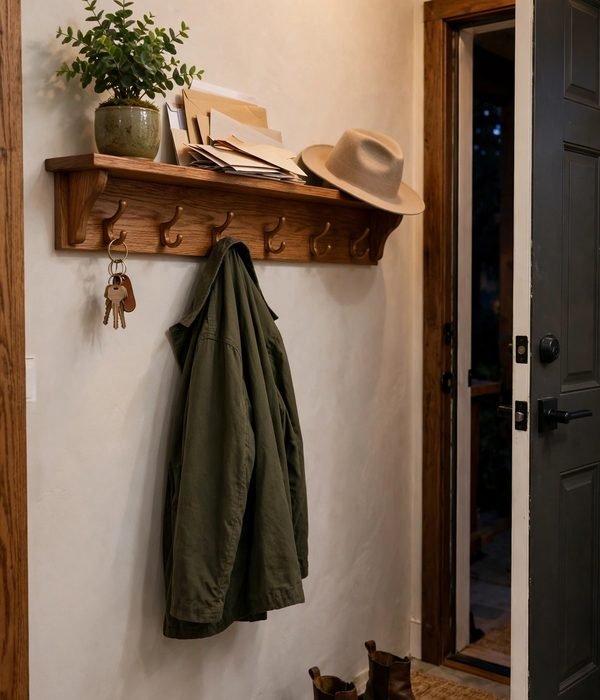
A new home has no entryway rhythm yet, keys on counters, bags on chairs, coats over the railing. A wall-mounted rail, typically 36 inches long with 5 hooks and a top shelf, rated for 25-plus pounds, creates the landing zone in one afternoon.
Mounting needs two studs or heavy-duty drywall anchors (60-pound rated); renters should pair it with a freestanding coat rack instead. It organizes keys, mail, sunglasses, hats, and coats at the door they actually use.
Why it lands in week one: the entryway habit forms in the first two weeks and never changes, give the hardware that makes the good habit easy.
10. Boot and Shoe Tray: new-floor insurance
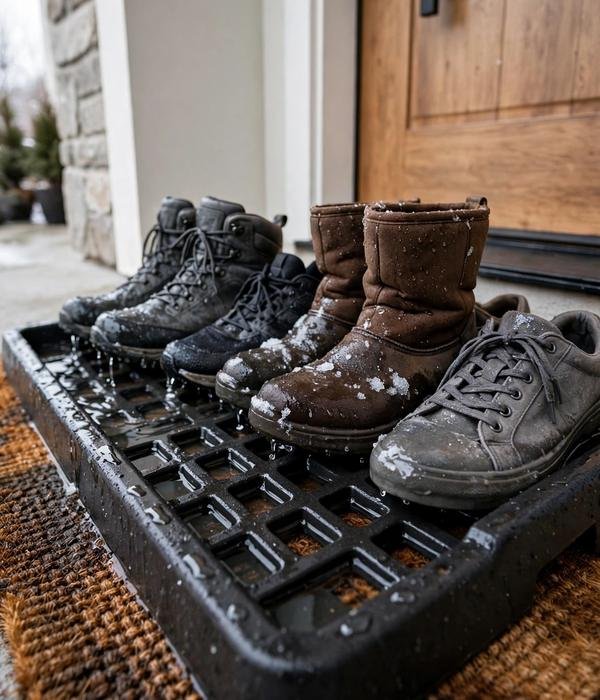
New homeowners are at peak floor anxiety, and winter boots plus wet shoes at the front door are the fastest way to ruin that mood. A 30-by-15-inch tray with raised edges and a slotted top contains meltwater and dirt from 3 to 4 pairs, wipes clean, and costs less than one hardwood refinish.
Recycled rubber trays flex instead of cracking and grip the floor. It organizes the shoe pile into a contained zone and keeps entry floors dry. New homeowners obsess over their floors from day one, this is the small, practical gift that protects the biggest investment in the house.
Garage & Closet Starters
Closets and garages start as empty rectangles with enormous potential and zero systems. These gifts are the starter kits. the full garage organization guide expands every garage idea below.
11. Velvet Slim Hangers

Movers hand you a box of wire and bulky plastic hangers, and the closet rod instantly holds half what it should. A 50-pack of velvet slim hangers, each 0.25 inch thick, holds up to 10 pounds, non-slip velvet grip, doubles the rod’s capacity versus standard hangers and keeps silk and knits from sliding off.
Fifty covers one person’s wardrobe; a couple needs two packs. They organize every closet in the house in a single swap. New homeowners always underestimate hanger math, the rods are longer than the old place’s, the hanger box is smaller.
This is the most quietly transformative gift on the list.
12. Stackable Utility Bins with Handles: garage shelf seed
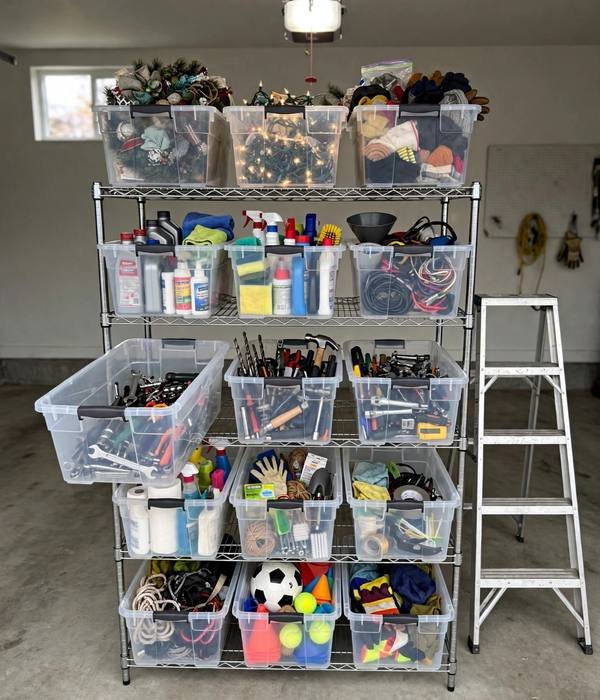
Garage shelves start bare and fill with stacked cardboard that collapses by spring. Six stackable bins at the 16-quart size (roughly 16 by 10 by 9 inches) with built-in handles seed a proper system: car supplies, tools, seasonal gear, each in its own labeled box. Handles matter for high shelves; latch lids matter for humidity.
They organize garage, basement, and laundry overflow into stackable, grab-able units, one bin per zone keeps tools, car supplies, and seasonal gear from merging into a single junk pile.
Why new homeowners: the garage is the last room anyone plans, so it becomes the junk room by default, bins given early set the zone system before the dump begins.
13. Wall-Mounted Pegboard Kit: the tool wall
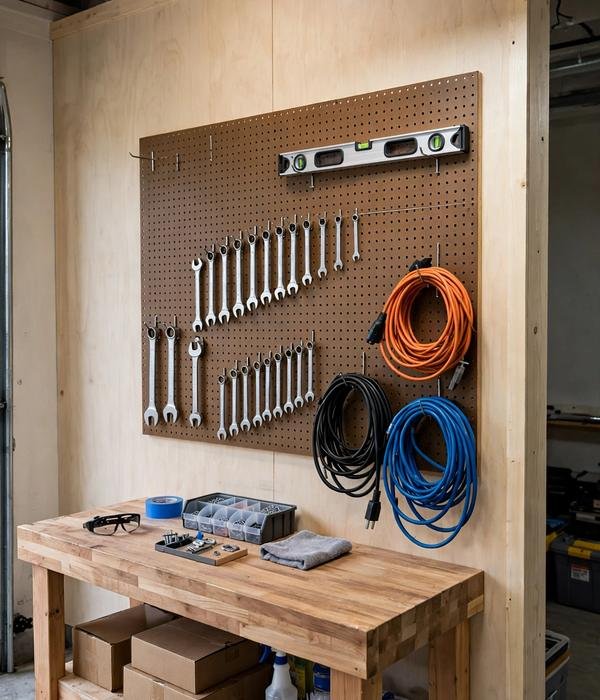
New garages have tools in a bucket, which means every small job starts with a treasure hunt. A 2-by-4-foot pegboard kit with a full hook assortment mounts in a single afternoon and hangs drills, levels, wrenches, and cords in visible zones. Steel pegboards hold heavier tools than hardboard; either way, mount into studs for anything over 30 pounds.
It organizes the entire hand-tool collection onto one wall that takes up zero floor space. New homeowners buy tools faster than they organize them, a pegboard given in month one captures the collection before it spreads across three shelves and a floor pile.
14. Vacuum Storage Bags
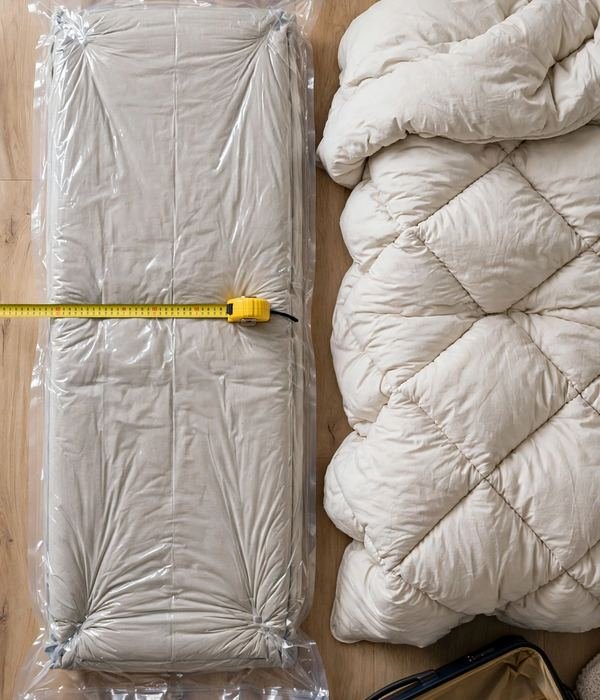
New linen closets are smaller than the old ones and the guest bedding has to go somewhere. A 6-pack of vacuum bags, including 2 jumbo bags at 32 by 40 inches, compresses comforters, off-season bedding, and spare pillows to a third of their volume. Double-zip seals and the turbo valve hold vacuum for months; single-seal bags slowly reinflate.
They organize bulky soft goods into flat, stackable slabs that slide under beds or onto high shelves. New homeowners always discover the closet is smaller than the stuff, this buys them the volume back without buying furniture. The bags themselves pack down to a small pouch when empty, so they never become clutter while waiting for next season’s swap.
15. Handheld Label Maker: the multiplier gift
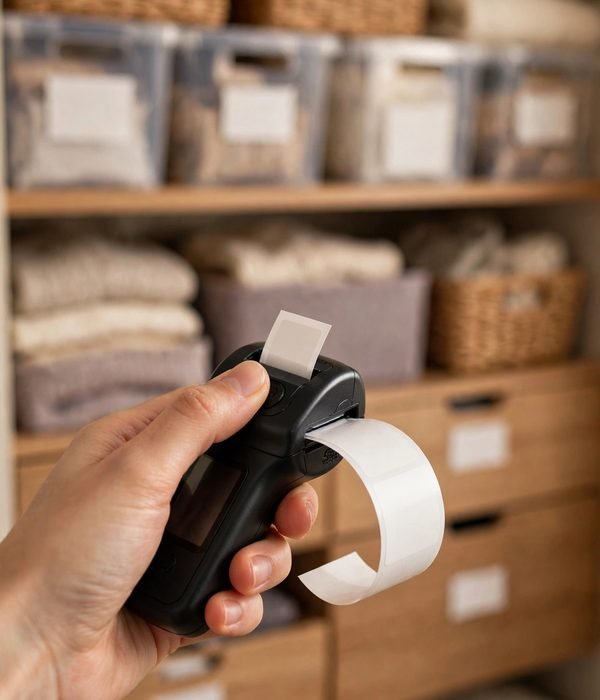
Fourteen storage gifts and no labels means fourteen mystery bins. A handheld label maker printing on half-inch tape turns every bin, shelf, and drawer from the other gifts into a named system in an afternoon. Look for one with a QWERTY keyboard and rechargeable battery; tape refills are the only ongoing cost.
It organizes everything else on this list, and the whole house after. Why it’s the closer: new homeowners are building systems from scratch, and a labeled system is a system that survives. Give this one with any other gift on the list and the pair becomes a complete starter kit.
Conclusion
Every gift here solves a genuine first-month problem, which is why storage gifts beat decor for new homeowners, they’re used daily, not admired occasionally.
But if I’m picking the one that gets given, used, and appreciated most, my Most-given pick is the velvet slim hangers 50-pack: it fits every closet in the house, doubles rod capacity the day it arrives, and it’s the upgrade new homeowners never buy themselves because hangers feel too boring to spend on, which is exactly why receiving them feels so good.
Frequently Asked Questions (FAQ)
Are storage gifts rude, or do new homeowners actually like them?
If they’re practical, they love them. A gift that solves a real problem in the new house reads as thoughtful, not cheap, especially in the first 30 days when every missing system is obvious.
Pair any storage gift with a small personal touch, like a handwritten note naming the room it goes in, and it lands warmer than a generic candle set.
What size gift fits every new home?
Stick to standard sizes unless you know a measurement: 11-inch cubes, 5-to-6-inch gap carts, 36-inch rails, 16-quart bins. If a gift only works at one exact dimension, like the gap cart or the under-sink frame, buy the adjustable version or gift a store card earmarked for it.
Should I give storage gifts before or after the move?
Before the party is best, but after the move-in date. Gifts like the drawer organizers and bins help most in the unpacking weeks, so timing them for the first month maximizes use. If you’re early, the hangers and label maker are perfect “day one” boxes they can open before anything else arrives.
Do these gifts work for small apartments too?
Most do, slim carts, drawer organizers, spice jars, and shoe trays are all sized for small spaces first. The pegboard and garage bins assume a garage or storage closet exists. If the new home is a small apartment, lean on the First-Week Survival and Kitchen groups and skip the garage pieces.
What is the single most useful gift for new homeowners overall?
A system, not an item. The label maker plus any storage container from this list is the closest thing to a universal answer, containers without labels become mystery boxes, and labels without containers have nothing to name. Together they give new homeowners the one thing moving takes away: a place for everything.