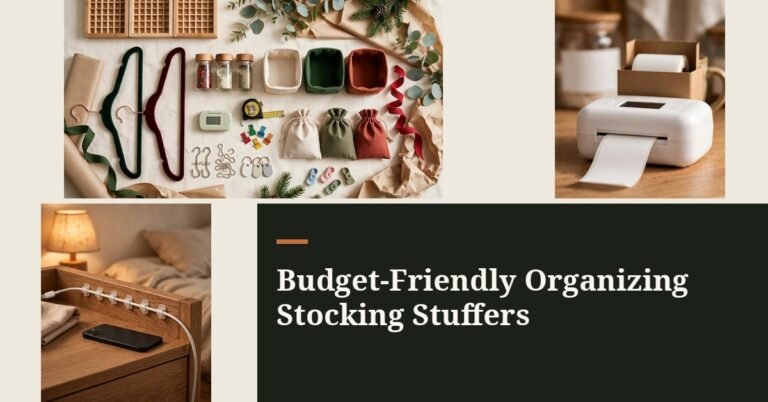

The holiday gifting window is open, and if there’s a home cook on your list, your job just got easy. The best kitchen organization gifts aren’t clever single-use gadgets, they’re the storage upgrades a cook wishes they had but never buys for themselves.
Everything on this list falls in a typical range of under $15 to $75, with most gifts landing in the $20–$40 band, so you can cover a stocking add-on and a centerpiece present from the same guide.
Twelve gifts, three kitchen zones, zero filler. 25 organization gifts for tidy-home lovers rounds out the full gift library if you need more ideas.
Here’s why organization speaks to cooks better than gadgets: a cook’s kitchen fails at storage long before it fails at tools. Spices in three mismatched jars, pot lids stacked sideways, produce rotting in the crisper, a knife block eating half the counter, these are daily friction points, and removing even one feels better than unwrapping a novelty peeler.
This list targets those exact pain points: pantry and prep zones, counters and cabinets, then the fridge and sink. Measure-first notes are included wherever a gift has to fit, and renter flags mark anything that asks for screws.
Why Kitchen Organization Gifts Beat Gadgets for Home Cooks
A gadget promises a new skill; an organizer removes a daily annoyance. That distinction is why home cooks consistently say the storage gifts are the ones still in use a year later. The cook on your list already owns a garlic press.
What they don’t own is a spice row they can read at a glance, a drawer that opens without a clatter, or a crisper where lettuce survives the week. Organization gifts attack the part of cooking that happens before the burner turns on, the finding, the reaching, the stacking, the digging.
There’s also a practical reason: sizes are forgiving. Most kitchen organizers come in standard sizes that fit standard cabinets, drawers, and shelves, so you rarely need the recipient’s exact kitchen dimensions. Where a gift does need a number, it’s spelled out below.
Save-worthy: the 5-number gift cheat sheet. Learn these five standard sizes and you can buy any gift below with confidence: kitchen drawers run 13–22 inches wide (organizers expand to fit); standard shelf spacing is about 6 inches; a full spice jar is 4 inches tall; cabinet doors are 1.5–1.75 inches thick at the edge; under-sink P-traps sit 6–9 inches off the cabinet floor.
Pin this list to your shopping phone and shop fearless.
Pantry & Prep Zone Gifts
The pantry and prep zone is where a cook’s chaos is most visible: mismatched canisters, spice bags clipped shut, dead shelf space above every can. These four gifts rebuild that zone from scratch.
1. Airtight Pantry Container Set: the square-canister upgrade
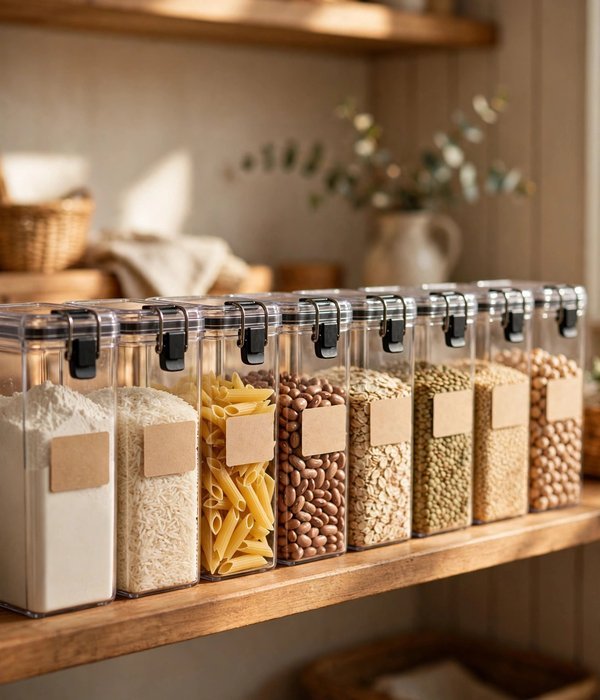
A cook’s pantry fails at the container level: flour in one brand’s canister, sugar in another, rice still in its bag. A set of 8 to 12 square airtight canisters, 0.8 to 1.5 quarts each, BPA-free, silicone gaskets with snap-lock lids, replaces the whole mismatched collection in one gift.
The key mechanism: square containers fill about 25% more shelf volume than round ones, eliminating the dead air between circles. That reclaimed quarter-shelf is free storage.
What it organizes:
- Flours, sugars, rice, pasta, and beans go airtight, freshness plus a pantry that finally looks uniform
- The 0.8-quart size suits baking powder and cocoa; 1.5-quart holds a full 5-pound bag of flour (needs 6 inches of shelf depth)
- Stackable square bases grow upward on deep shelves instead of outward
Why a home cook wants it: they buy dry goods in bulk, where stale flour is a real baking risk, airtight gaskets plus 25% more space solve both.
2. Bamboo Turntable: the corner-cabinet rescue
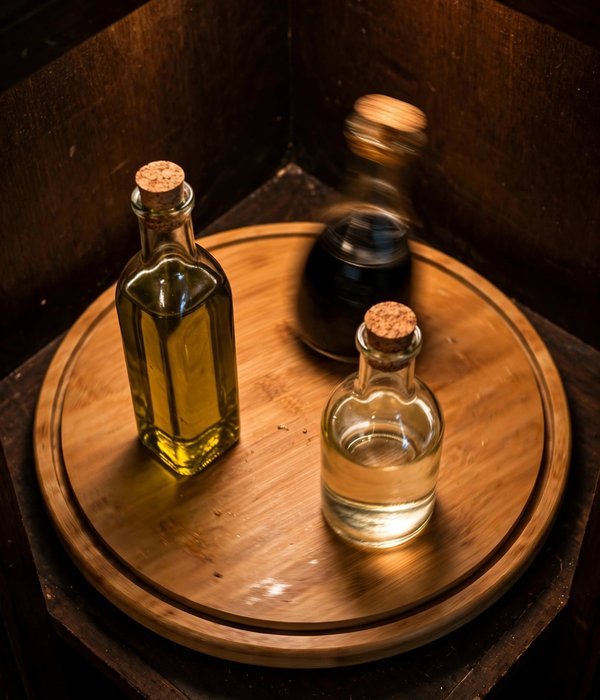
Every cook has a corner cabinet or deep shelf where oils, vinegars, and sauces vanish into the back row. A bamboo turntable, 10 to 12 inches in diameter, riding on a steel ball-bearing ring, with a low lip edge that stops bottles from sliding, turns that dead zone into a spin-to-see station.
The 10-inch size clears 12-inch-deep shelves with room to turn; the 12-inch version fits 15-inch-deep corners and holds 8 to 10 standard bottles. Check the lip: lipped turntables keep bottles standing when spun, flat ones don’t.
What it organizes:
- Oils, vinegars, and soy sauces in one spin-to-grab station by the stove
- Canned goods, baking extracts, and spice refills on pantry shelves
- Two turntables in a 24-inch corner cabinet reclaim the entire blind-corner zone
Why a home cook wants it: cooks reach for condiments mid-recipe with one hand, a spin beats leaning into a dark cabinet, and bamboo holds up to a working kitchen’s heat and humidity.
3. Spice Jar Set with Labels: the uniform spice wall
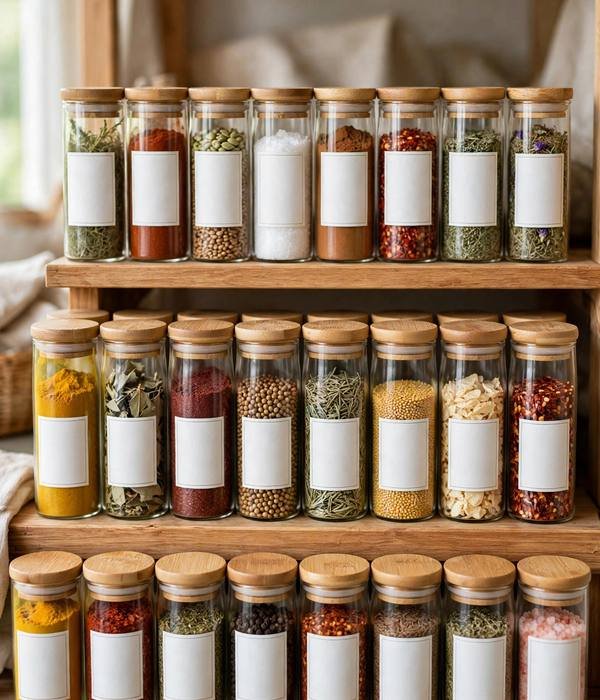
The gift every home cook has pinned to a mental wish list and never bought: 24 to 30 glass spice jars, 4 ounces each, airtight bamboo or metal lids, and a label pack of 350-plus preprinted names plus blanks.
Four-ounce jars are standard: they hold a full grocery-store spice bottle with shaking room and stand exactly 4 inches tall, fitting the standard pantry shelf depth so the door closes cleanly. Preprinted labels matter: hand-writing 24 labels is why this gift dies as a good intention.
What it organizes:
- A full spice reset, one uniform, readable row instead of a bag-and-jar dig
- The 24-jar count covers most collections; 30 jars fits cooks who separate blends, salts, and baking spices
- Blank labels handle the odd ones: za’atar, ras el hanout, the spice only their family uses
Why a home cook wants it: cooks season by instinct and reach mid-cook, identical labeled jars turn a 20-second hunt into a one-second grab.
4. Stackable Shelf Risers: double the cabinet, no tools
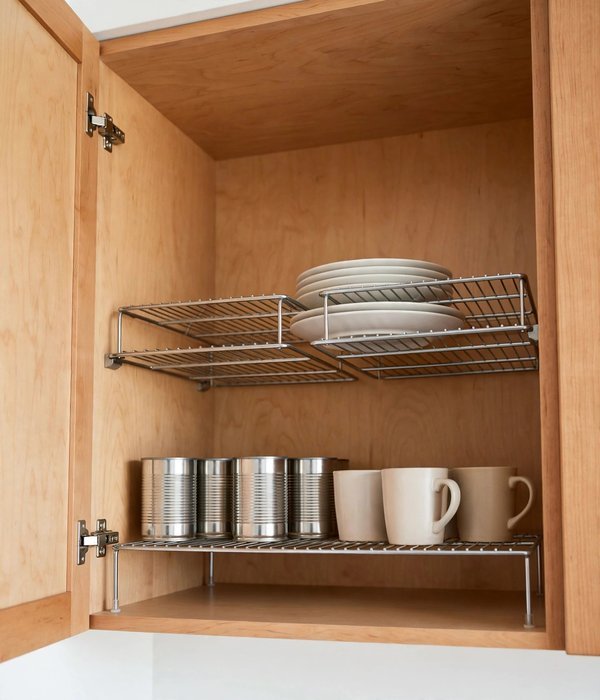
Standard cabinet shelves waste the top 6 inches of every shelf, dead air above the mugs and cans. A pair of stackable steel shelf risers, 10 by 10 inches or 16 by 9 inches, rated 10 to 15 pounds per tier, doubles that shelf’s usable surface with zero tools and zero screws, fully renter-safe.
The 10-by-10 size fits standard uppers; the 16-by-9 spans wider pantry shelves. Steel holds heavier stacks than bamboo, which trades load for looks on open shelving.
What it organizes:
- Canned goods and jars in two levels instead of one hidden row
- Mugs above, plates below, the riser builds a second deck
- Over the spice jars from gift 3 to triple that shelf’s capacity
Why a home cook wants it: cooks own more equipment per square foot than anyone, risers are the fastest capacity gain per dollar in the kitchen, and they relocate to closets if the kitchen ever fills.
Counter & Cabinet Gifts
Counters and cabinets are the cook’s daily battlefield: the knife block eating prep space, the utensil junk drawer, the dish rack parked permanently by the sink. These four gifts hand that space back. our full kitchen storage system goes deeper on every cabinet idea below.
5. Magnetic Knife Strip: free the counter
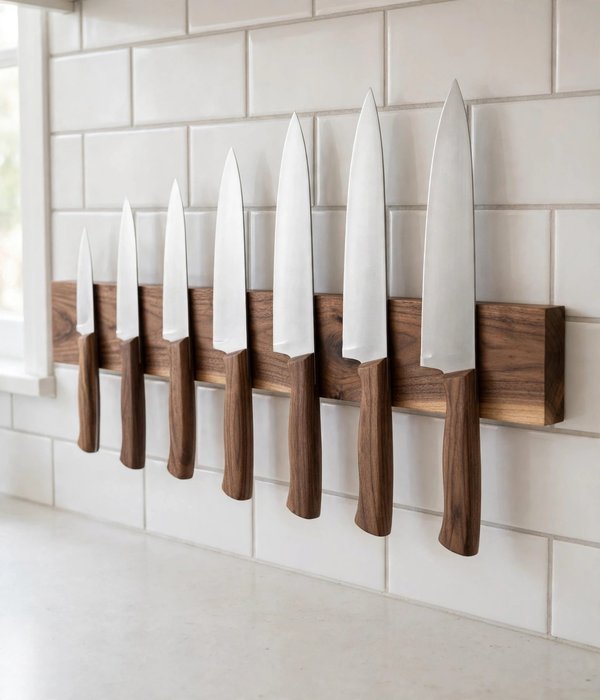
A knife block claims 6 by 10 inches of prime counter and hides blade condition. An 18-inch hardwood magnetic strip mounts on wall or cabinet side, holding 6 to 8 knives on concealed rare-earth magnets, blades visible, edges never touching.
Eighteen inches is the sweet spot: long enough for a chef’s knife, bread knife, and 4 to 6 daily drivers, short enough for most backsplashes. Look for fully concealed magnets and hardware rated for 15-plus pounds.
How to make it land:
- Scout the spot, a 20-inch backsplash run beside the stove or a cabinet side panel near the prep zone
- Check the wall, tile and drywall both take screws; on tile, a carbide bit plus painter’s tape prevents cracking
- Renter flag: this needs screws, use a pantry-door inside or cabinet side panel, or pick the adhesive version at half the load rating
Why a home cook wants it: cooks who own real knives hate blocks, slots dull edges and trap moisture.
6. Bamboo Drawer Organizer: cure the utensil chaos
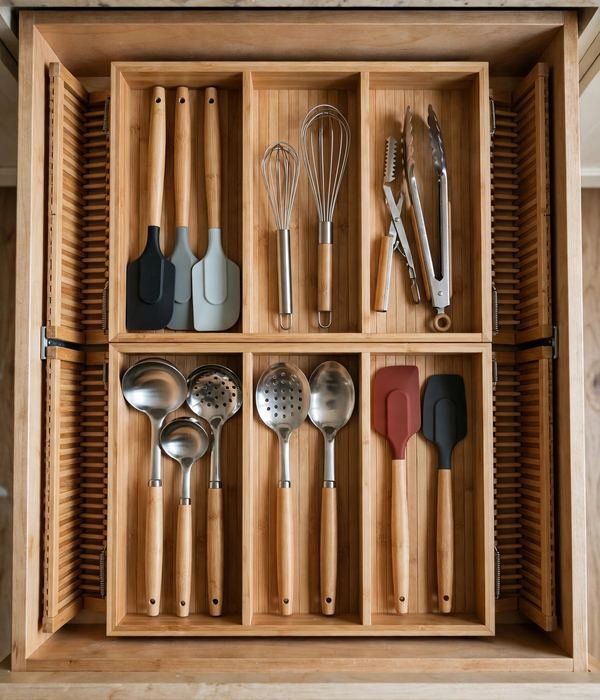
The utensil drawer is where kitchen order dies: spatulas wedged over whisks, tongs buried under ladles. An expandable bamboo organizer, 13 to 22 inches wide, 5 to 8 compartments, spring-loaded side panels, partitions the chaos into zones before it reforms. The 13-to-22-inch expansion covers apartment drawers up to suburban cabinetry, gift it without knowing their drawer size.
Five to eight compartments is the right count, fewer and tools still pile, more and slots run too narrow.
How to make it land:
- Confirm depth, most drawers run 18-plus inches deep; shallow 14-inch drawers need the compact version
- Pick bamboo over pine, it resists humidity and knife nicks better and matches most drawer interiors
- Pair it with a purge, five minutes of decluttering: keep the daily ten tools, rehome the unitaskers
Why a home cook wants it: cooks own more utensils than any drawer handles gracefully, compartment zones turn the rummage into a reach.
7. Over-Sink Roll-Up Dish Rack: the rack that disappears
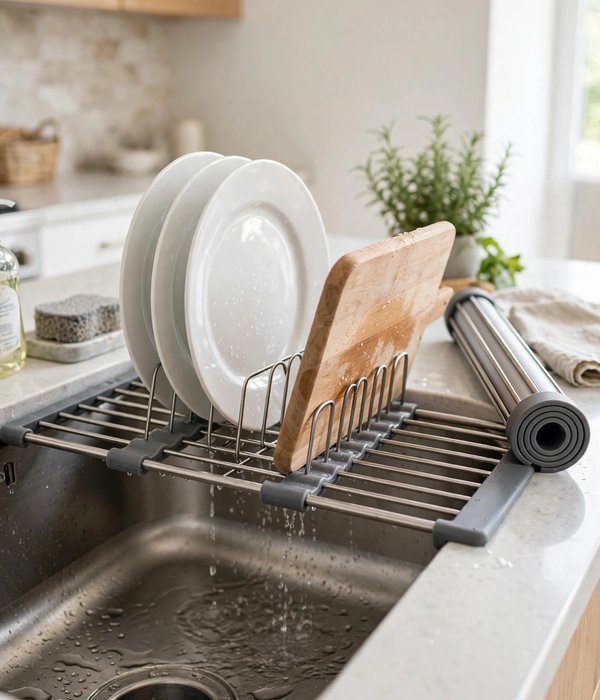
A full-size dish rack claims 18 inches of counter beside the sink, permanently. A roll-up over-sink rack, 17 to 20 inches of stainless-steel slats wrapped in heat-resistant silicone, lays across the sink, drains straight down, then rolls into a 3-inch tube that slides into a drawer.
Seventeen inches spans standard single-bowl sinks; 20 inches covers double bowls and farmhouse sinks. Half-inch slat spacing fits plates with airflow, and the silicone handles 400°F heat, so it doubles as a trivet.
How to make it land:
- Measure the sink, interior width between rim edges; a 1-inch miss means it won’t sit flat
- Check clearance, about an inch of rim per side; thin-rim undermounts need the rubber-end-cap version
- Sell the double duty, as trivet and colander rest it earns its drawer space
Why a home cook wants it: cooks hand-wash what the dishwasher can’t, boards, cast iron, sharp knives, and this gives that workflow a home that vanishes after dinner.
8. Pot and Pan Lid Organizer: end the lid avalanche
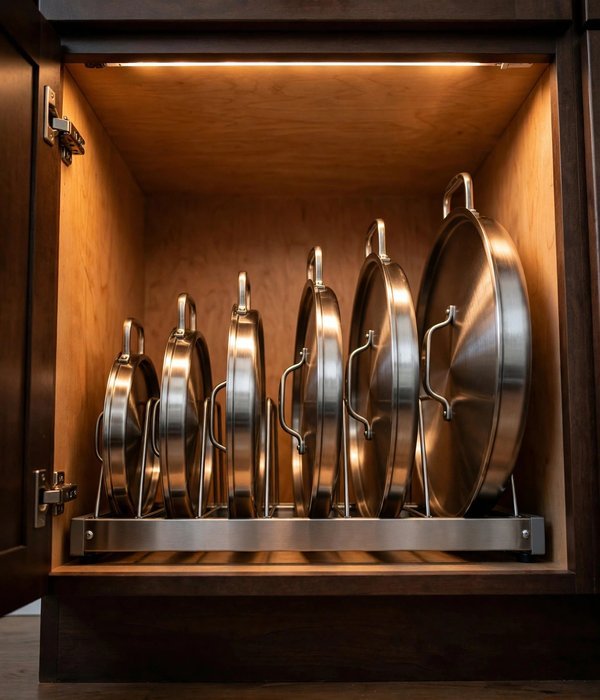
Every cook knows the sound: open the cabinet, lids slide, the whole stack avalanches. An adjustable lid organizer, 5 to 6 dividers fitting lids from 6 to 12 inches in diameter, files lids vertically, halving cabinet stack height and ending the slide. That range covers saucepan lids up to 12-inch skillet and Dutch-oven lids.
Divider tension matters most: notched steel rails lock each divider, loose ones drift and the lids follow.
How to make it land:
- Count the lids, most cooks own 5 to 8; over 8, gift the 6-divider version or two organizers
- Place it right, vertical in a deep base cabinet by the stove, or flat in a drawer
- Pair lids with pots, slot each lid by its pot’s spot so the cook grabs both in one motion
Why a home cook wants it: cooks stack lids because cabinets punish round things, vertical filing respects a lid’s shape, and the freed half-cabinet above is bonus storage.
Fridge & Sink Gifts
The fridge and sink zone is where food dies quietly: slimy greens, a drawer of half-used cling wrap, the under-sink pit of cleaners. These four gifts are the unglamorous fixes cooks use daily.
9. Produce Saver Containers: the crisper upgrade
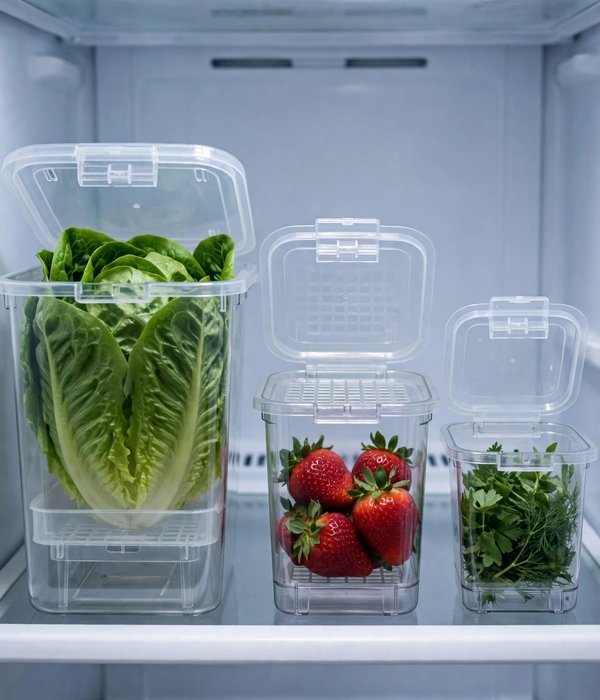
Lettuce slimes in four days, berries mold in three, and most of it is a humidity problem, not a freshness one.
A set of produce savers, 2 to 5 quarts across 3 to 4 containers, with vented lids, elevated bases that lift produce off condensation, and carbon filters trapping ethylene gas, keeps greens and fruit at peak longer.
The lid vent tunes humidity by produce type, closed for leafy greens and herbs, open for mushrooms and peppers, while the filter slows the ripening gas fruit emits.
Tips for best results: 5-quart swallows a full head of lettuce; 3-quart fits berries and tomatoes; one produce type per container. Watch out: carbon filters last about 90 days, the container still works past that, just not as hard. Dishwasher-safe and BPA-free is standard.
Why a home cook wants it: cooks buy produce in volume and prep weekly, fewer slimy losses means fewer emergency runs, compounding every week.
10. Silicone Stretch Lids: replace the cling-wrap drawer
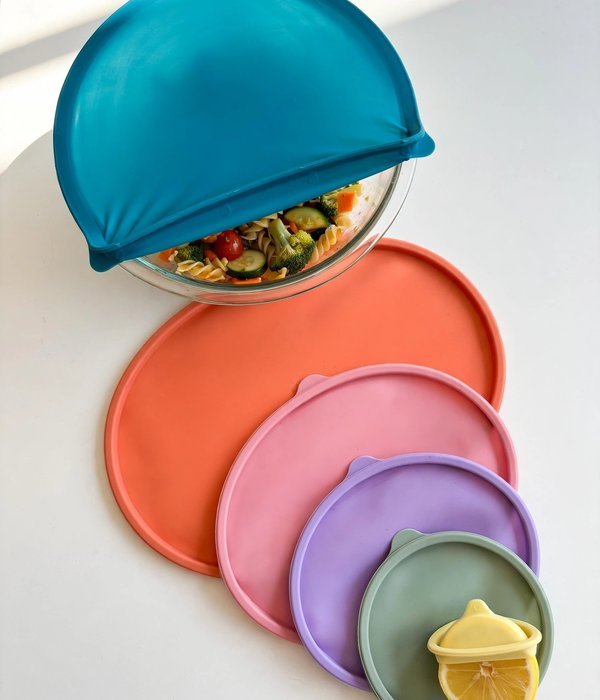
The cling-wrap drawer is a tangle of half-used boxes that never seal well and go straight to trash. A 6-pack of food-grade silicone stretch lids, 2.5 to 7 inches, each stretching to about twice its resting size, replaces that drawer with a washable, reusable set.
Stretched over a rim, silicone forms an airtight, leak-proof grip that survives the freezer (down to −40°F) and the microwave (up to 450°F) without melting or staining.
Tips for best results: the 2.5-inch lid caps lemons, onions, and open cans; the 7-inch stretches over mixing bowls and half melons; dry lid and rim first for the tightest seal. Watch out: silicone grips smooth glass, ceramic, and metal, textured rims won’t hold the vacuum seal. They stack flat into almost no drawer space.
Why a home cook wants it: cooks generate half-covered bowls constantly, prepped veg, marinating meat, leftover stock, and these turn every one into a sealed, stackable, reheat-ready unit.
11. Under-Sink Two-Tier Organizer: tame the trap zone
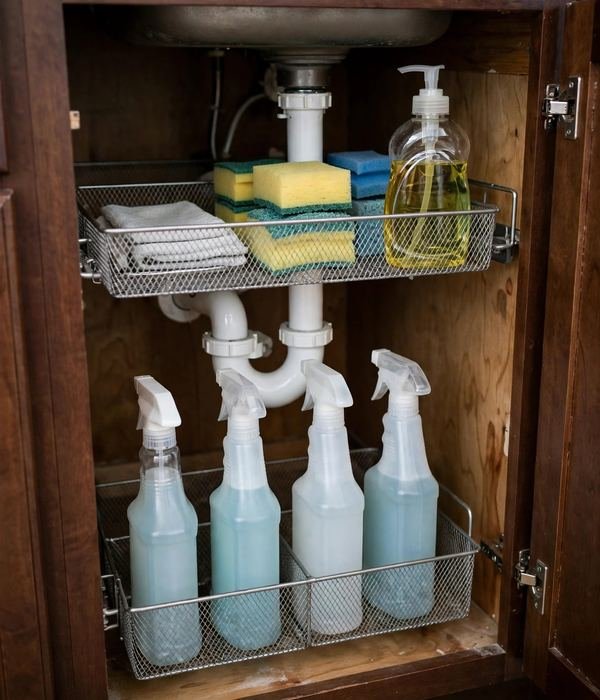
The cabinet under the kitchen sink is the most wasted space in the house: the P-trap and supply lines carve it into an unusable pit, so cleaners pile in a leaning tower. A two-tier organizer, about 15 inches long, steel mesh shelves, adjustable-height lower tier that clears the trap, converts that dead zone into pull-accessible storage.
The adjustable height is the feature: P-traps sit 6 to 9 inches off the cabinet floor, and a fixed shelf either collides with the pipes or wastes the space above.
Tips for best results: measure from the cabinet floor to the trap’s bottom, then set the lower tier an inch below it; the top tier holds sponges and soap at door height. Watch out: under-sink cabinets run humid, bare steel spots in a season, so look for powder-coated or chrome-plated frames. Fully renter-safe: freestanding, zero mounting.
Why a home cook wants it: cooks burn through sponges, brushes, and soap faster than anyone, two reachable tiers beat a daily blind dig.
12. Cabinet-Door-Mounted Wrap Dispenser: foil at your fingertips
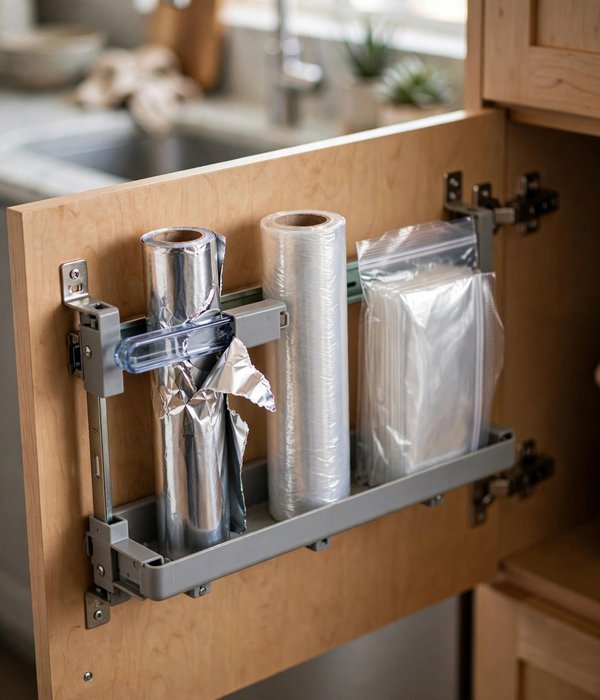
Foil, cling wrap, and zip bags live in a drawer that jams and swallows the roll you need mid-cook. A cabinet-door-mounted dispenser, 2 to 3 rolls side by side with a sliding cutter bar, mounts inside a cabinet door, putting all three within one reach of the counter.
Screw-mount suits owners; adhesive-mount suits renters, holding 10-plus pounds, three full rolls with margin.
Tips for best results: mount on the door nearest the prep counter; the cutter needs a firm downward slide, press, don’t saw. Watch out: adhesive needs a flat landing zone, raised-panel doors need the screw version; allow 4 inches below the rolls so they pull freely. narrow pantry fixes covers the same inside-door trick for tight pantries.
Why a home cook wants it: cooks wrap constantly, resting meat, rising dough, prepped veg, and a door-mounted dispenser turns a two-handed drawer wrestling match into a one-hand tear.
Save-worthy: the before-you-buy gift checklist. Run any gift here through four questions and it lands every time: (1) Does it fit a standard size, drawer width, shelf depth, lid diameter, trap clearance? (2) Does it need screws, and is the cook an owner or does it need the renter-safe version? (3) Does it solve a daily friction or a once-a-year one?
Daily wins. (4) Can they use it the day it arrives, no assembly saga, no missing part? Four yeses, wrap it.
Conclusion
Twelve gifts, three zones, and every one earns its keep on ordinary Tuesdays, not just the day it’s unwrapped.
That’s the test separating a great kitchen gift from a gadget that joins the donation box by spring: does it remove a daily annoyance the cook already feels? small add-ons under stocking size covers the little extras if you want to round out a gift with something small.
But if I’m naming the one that gets the most delighted reaction, my The most-wanted gift pick is the spice jar set with labels. It’s the gift every home cook has imagined and nobody buys for themselves: 24 to 30 uniform glass jars turning the chaotic spice shelf into the prettiest, most functional corner of the kitchen.
It fits every kitchen regardless of size, needs zero measurements, is fully renter-safe, and the first time they reach for paprika and find it in one second, they’ll think of you. Give the spices order, and you give the cook back their instincts.
Frequently Asked Questions (FAQ)
What are the best kitchen organization gifts for small kitchens?
The space-giving ones: the over-sink roll-up dish rack (reclaims 18 inches of counter), stackable shelf risers (double every shelf), the magnetic knife strip (frees the knife block’s footprint), and the under-sink organizer (builds storage around the P-trap). Small kitchens punish anything that only sits pretty, give gifts that return square inches.
How much should I spend on a kitchen organization gift?
Stick to the typical bands from the introduction: single-purpose organizers (dish racks, drawer organizers, lid holders, wrap dispensers) sit at the low end, while full sets (pantry canisters, produce savers, spice jars) sit at the higher end. Mid-range buys perform as well as premium ones here, because the value is in the geometry and fit, not the badge.
Are kitchen organization gifts actually appreciated, or do they feel boring?
They’re among the most-used gifts a cook receives, because they attack daily friction, not fantasy. Pair the gift with a note naming the exact problem it solves (“for the spice shelf that eats your paprika”) and it reads as thoughtful. Frame it as an upgrade, never as a fix for their mess.
Which of these gifts work for renters?
Most of them. The risers, turntable, drawer organizer, dish rack, lid holder, produce savers, stretch lids, and under-sink organizer are freestanding or friction-fit, zero damage. Check two: the magnetic knife strip needs screws (pick the adhesive version for renters), and the wrap dispenser comes in screw and adhesive versions, choose adhesive for rentals.
Can I give these kitchen organization gifts outside the holidays?
Absolutely, they’re great year-round because they’re useful the day they arrive. Housewarmings, birthdays, and bridal showers all fit, and the smaller items (stretch lids, wrap dispenser, dish rack) make excellent host gifts. Keep the wrapping simple and add a note about what it fixes, that lands better than elaborate presentation.