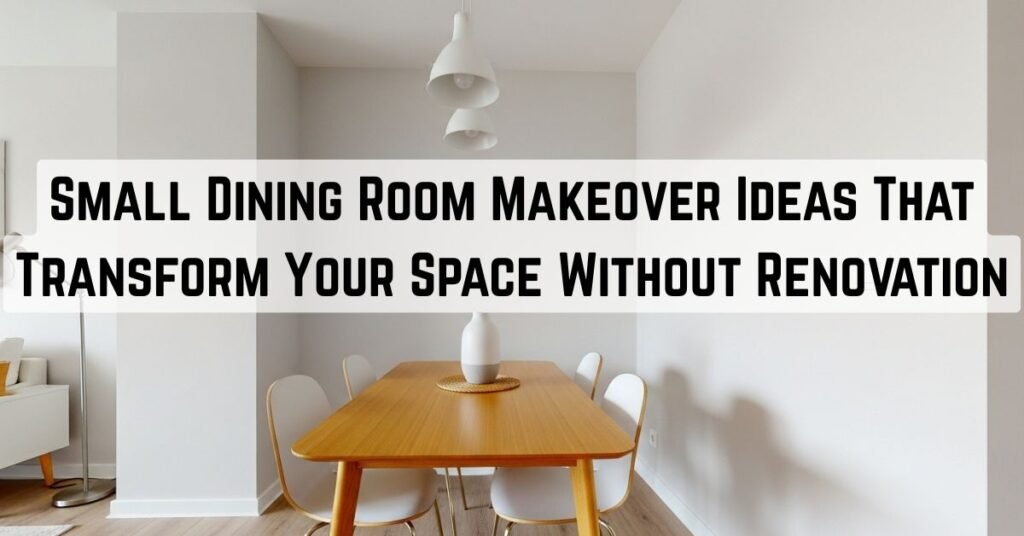
A small dining room can feel limiting very quickly.
What starts as a simple space for meals often turns into a tight, cluttered area where chairs bump into walls, storage feels impossible, and the room never quite looks the way you want it to. Many people assume the only way to fix it is through renovation.
But that’s not usually the real problem.
Most small dining room issues come down to layout, furniture choices, and how the space is used on a daily basis. With the right small dining room makeover ideas, you can completely change how the room feels without knocking down walls or spending a fortune.
The goal isn’t to make the room bigger.
It’s to make it work better.
This is the same approach used in small space transformation ideas, where improving function matters more than increasing size.
In this guide, you’ll find 9 practical and realistic small dining room makeover ideas that improve space, flow, and style all without renovation.
9 Small Dining Room Makeover Ideas–
1. Switch to a Space-Saving Dining Table
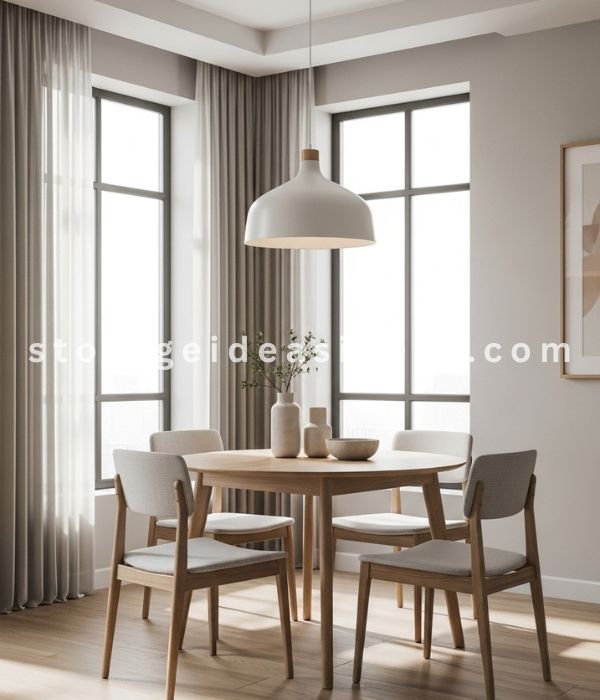
One of the most impactful small dining room makeover ideas is rethinking the table itself. In many cases, the table is simply too large or too bulky for the space, even if it technically fits.
The problem isn’t just size, it’s movement. When a table takes up too much room, it restricts how easily you can walk around, pull out chairs, or use the space comfortably. Over time, this makes the entire room feel tighter than it actually is.
Choosing a more space-efficient table can completely change that experience.
Best table options for small dining rooms:
- Round tables → improve flow and eliminate sharp corners, making movement easier
- Drop-leaf tables → expand when needed and fold down to save space daily
- Slim rectangular tables → ideal for narrow rooms where space needs to be used efficiently
What to avoid:
- Thick, heavy table bases that visually crowd the room
- Oversized tables designed for larger dining areas
- Fixed large tables that limit flexibility
The right table doesn’t just fit the room; it improves how the room functions.
This is why furniture scale and proportion are considered essential in small-space interior design.
Once movement becomes easier, the entire space feels more open and usable.
2. Use Light Colors to Visually Expand the Room
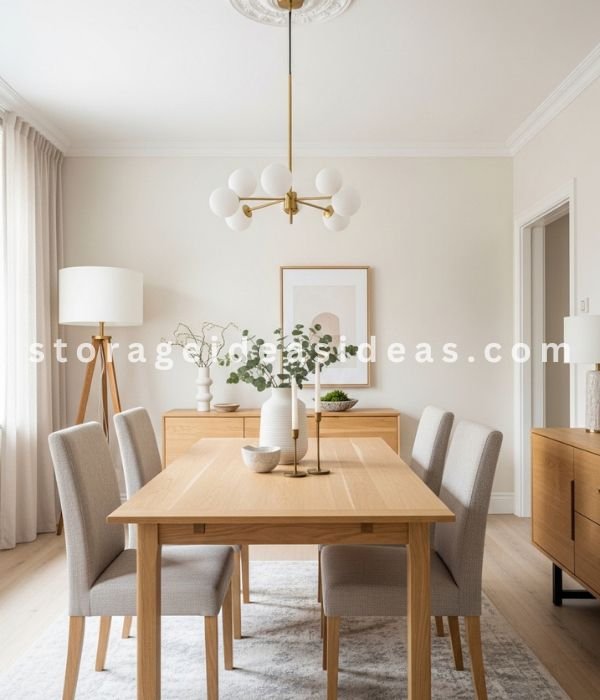
Color has a direct impact on how large or small a space feels.
In small dining rooms, darker shades tend to absorb light, which can make walls feel closer and the space more enclosed. Lighter tones reflect light instead, creating a softer and more open appearance.
This doesn’t mean everything has to be white.
The goal is to create visual continuity and avoid heavy contrast that breaks up the space.
Where to use light tones effectively:
- Walls → soft whites, warm neutrals, or light grays help expand the room visually
- Furniture finishes → lighter wood tones or painted finishes keep the space from feeling heavy
- Textiles → curtains, seat cushions, and table linens can reinforce the lighter palette
What to avoid:
- Dark walls paired with bulky furniture
- Strong color contrasts that divide the room visually
- Overly busy patterns that make the space feel crowded
When light colors are used consistently, the room feels more open without changing its actual size. This is one of the simplest small dining room makeover ideas, but it has one of the biggest visual impacts.
3. Add Vertical Storage Instead of Floor Units
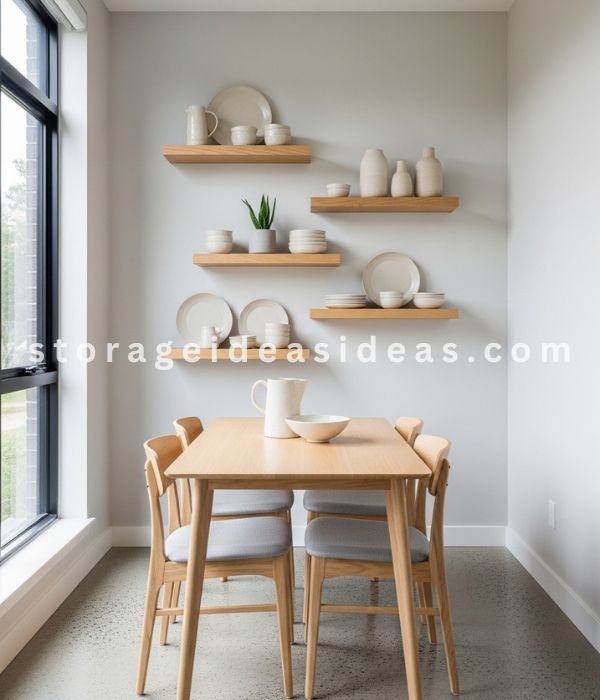
One of the most common mistakes in small dining rooms is relying on bulky floor storage.
Sideboards, cabinets, and large storage units take up valuable floor space and quickly make the room feel crowded. Even when they provide storage, they reduce how open the space feels.
Vertical storage solves this by shifting storage upward instead of outward.
You’ll see a similar setup in narrow wall storage ideas, where vertical space is used to keep smaller rooms open and uncluttered.
Smart vertical storage options:
- Floating shelves → ideal for dishes, decor, or everyday items without blocking floor space
- Narrow wall cabinets → provide closed storage while maintaining a slim profile
- Wall-mounted racks → great for plates, mugs, or even small baskets
This approach keeps the lower part of the room open, which improves both movement and visual space.
Placement tips:
- Keep frequently used items within easy reach
- Place less-used items higher up
- Avoid overcrowding shelves to maintain a clean look
When storage moves to the wall, the room instantly feels less cluttered. This shift alone can make a small dining room feel significantly larger and more functional.
4. Use Mirrors to Create Depth and Light
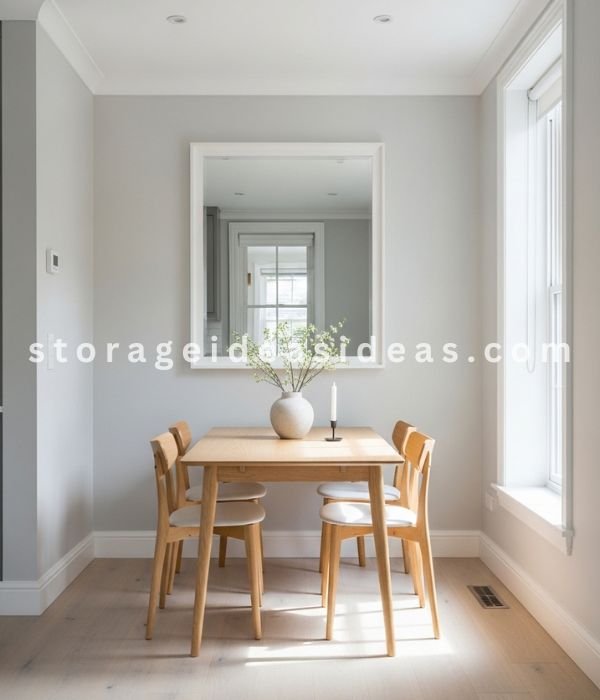
Mirrors are one of the simplest tools for transforming a small dining room, yet they’re often underused.
They don’t add space physically, but they change how the space is perceived.
By reflecting light and surrounding elements, mirrors create the illusion of depth, making the room feel larger than it is.
Best ways to use mirrors in a dining room:
- Large wall mirror → creates the strongest sense of expansion
- Opposite a window → reflects natural light and brightens the entire space
- Behind the dining table → adds depth and visual interest
Even smaller mirrored decor pieces can contribute, but larger mirrors tend to have a more noticeable effect.
What to avoid:
- Placing mirrors where they reflect clutter
- Using too many small mirrors that create visual noise
- Over-decorating around mirrors, which reduces their impact
When used correctly, mirrors can double the visual presence of the room. It’s one of the most effective small dining room makeover ideas because it delivers immediate results without requiring any major changes.
5. Upgrade Lighting to Change the Atmosphere
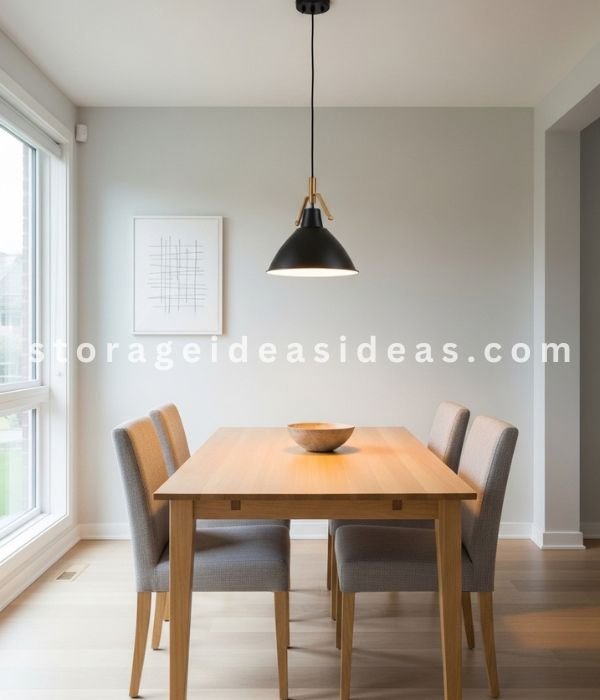
Lighting is one of the most overlooked elements in a small dining room, yet it has a direct impact on how the space feels.
Poor lighting can make the room feel smaller, dull, and less inviting. On the other hand, well-planned lighting can open up the space and create a more comfortable and visually balanced environment.
The key is to move beyond a single overhead light and think in layers.
Effective lighting options:
- Pendant lights above the table → define the dining area and draw attention upward, adding a sense of height
- Wall sconces or accent lights → create depth and soften shadows
- Warm light bulbs → make the space feel more welcoming and less harsh
Lighting placement matters just as much as the fixture itself.
What to avoid:
- Single harsh ceiling lights that create strong shadows
- Overly dim lighting that makes the room feel smaller
- Fixtures that are too large for the scale of the room
When lighting is balanced and intentional, it changes the entire atmosphere. This is one of those small dining room makeover ideas that delivers immediate visual improvement without requiring major changes.
6. Define the Dining Area with a Rug
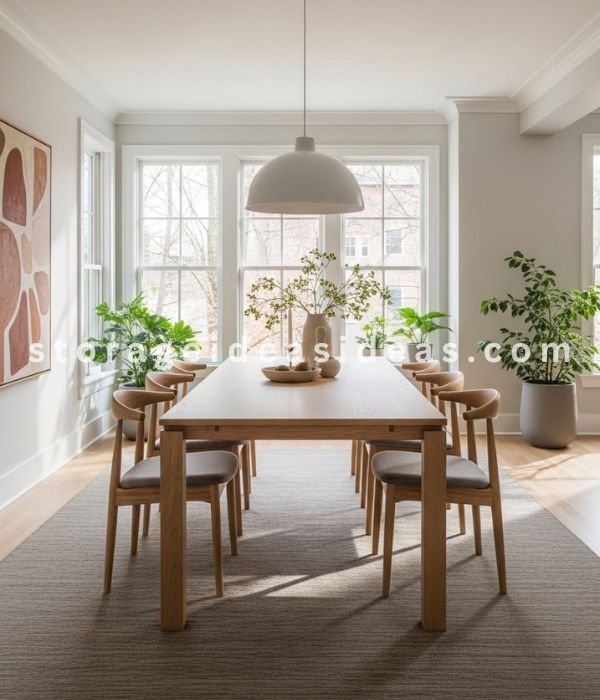
In many homes, especially open layouts, the dining space blends into surrounding areas.
Without a clear boundary, the room can feel undefined and slightly disorganized.
A rug helps solve this by visually anchoring the dining area and giving it structure.
How to choose the right rug:
- Size matters most → the rug should be large enough so chairs remain on it even when pulled out
- Shape should match the table → round rug for round table, rectangular for rectangular layouts
- Low-pile or flat weave → easier to clean and more practical for dining use
A rug doesn’t just add comfort. It creates a clear visual zone, which makes the space feel more intentional and complete.
What to avoid:
- Rugs that are too small make the setup feel disconnected
- Thick, high-pile rugs that trap crumbs and are hard to clean
- Busy patterns that overwhelm a small space
Defining the space with a rug is a subtle change, but it significantly improves how the dining area is perceived and used.
7. Choose Multi-Functional Furniture
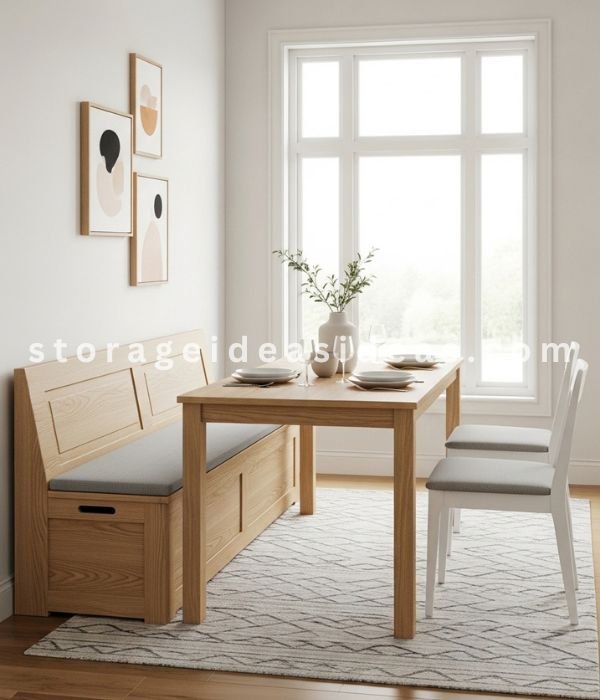
In a small dining room, every piece of furniture should justify its presence.
If something only serves one purpose, it takes up space without offering enough value.
Multi-functional furniture helps solve this by combining use and storage into a single piece.
Smart multi-functional options:
- Bench seating with storage → provides seating while hiding items like linens, utensils, or seasonal decor
- Extendable tables → adjust based on daily use versus gatherings
- Foldable or stackable chairs → easy to store when not needed
This approach reduces the total number of items in the room, which keeps the layout simpler and more open.
What to avoid:
- Furniture that is too bulky or visually heavy
- Items that don’t adapt to different needs
- Overfilling the room with single-purpose pieces
When furniture works harder, the room works better. This is one of the most practical small dining room makeover ideas because it improves both storage and usability at the same time.
This is a key principle behind smart storage systems, where every piece is designed to serve more than one purpose.
8. Simplify the Layout and Remove Excess
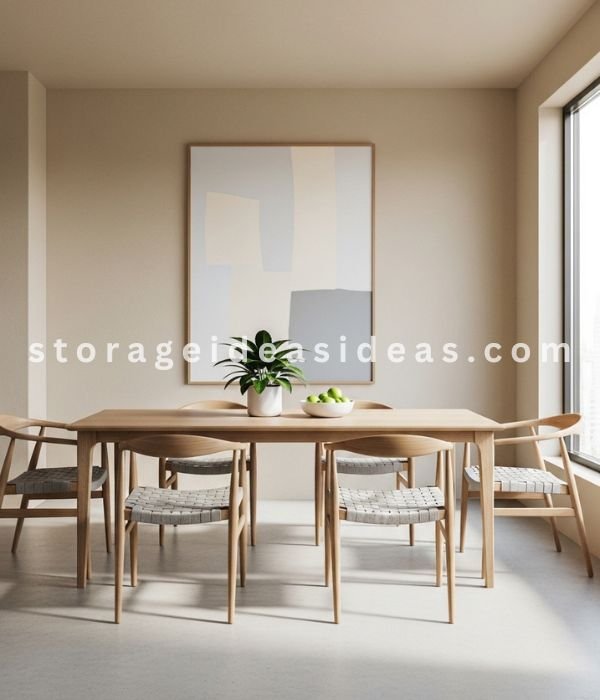
Sometimes, the biggest transformation doesn’t come from adding new elements.
It comes from removing what’s already there.
Small dining rooms can quickly feel overcrowded when too many items compete for space. Extra chairs, decorative pieces, or unused furniture can make movement difficult and create visual stress.
Simplifying the layout is about focusing on what the room actually needs.
Where to start:
- Remove furniture that isn’t used regularly
- Keep only essential seating based on daily use
- Ensure clear pathways around the table
This process isn’t about making the room empty.
It’s about making it functional.
What to avoid:
- Keeping items “just in case” that rarely get used
- Blocking movement paths with unnecessary furniture
- Over-decorating surfaces
When excess is removed, the room immediately feels larger and easier to use. This is one of the most effective small dining room makeover ideas because it delivers instant results without any cost.
9. Keep Decor Minimal but Intentional
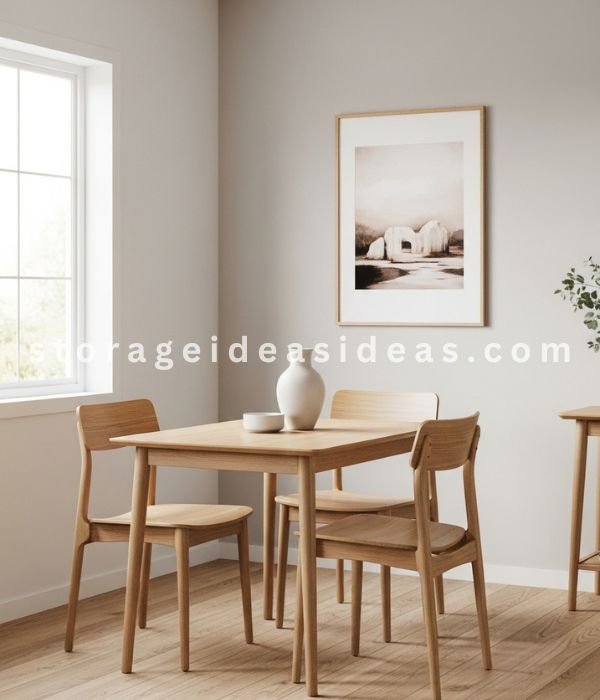
Decor plays an important role in how a dining room looks, but in small spaces, too much decor can quickly become overwhelming.
Instead of filling every surface, the focus should be on a few carefully chosen elements.
This creates a cleaner, more balanced look while still adding personality.
Simple decor ideas that work well:
- A single centerpiece → such as a vase, bowl, or candle arrangement
- One statement wall piece → artwork or a framed print
- Subtle accents → like a small plant or decorative tray
The goal is to enhance the space without crowding it.
What to avoid:
- Multiple small decor items that create visual clutter
- Overloaded tabletops that reduce usable space
- Mixing too many styles or colors
When decor is intentional, each piece has a purpose. This keeps the room visually clean while still feeling styled and complete.
What Actually Makes Small Dining Room Makeover Ideas Work
What makes small dining room makeover ideas effective isn’t how much you change.
It’s how well those changes improve the way the space functions.
A small room doesn’t need more things. It needs better use of what’s already there.
When the layout improves, movement becomes easier. When clutter is reduced, the room feels larger. When furniture fits the space properly, everything works more smoothly.
These changes don’t require renovation.
They require better decisions.
That’s what makes the difference between a room that feels cramped and one that feels comfortable.
Conclusion
A small dining room doesn’t have to feel limiting.
With the right approach, even a compact space can feel open, functional, and well-designed.
You don’t need a full renovation to make that happen.
Start with one or two of these small dining room makeover ideas and build from there. Focus on improving layout, reducing clutter, and choosing furniture that fits the space.
Over time, those small changes add up.
And the result is a dining room that feels easier to use, more comfortable to spend time in, and far more enjoyable overall.
Frequently Asked Questions (FAQ)
How can I make a small dining room look bigger?
Use light colors, add mirrors, and reduce clutter. Choosing the right furniture size and keeping clear pathways also makes a big difference.
What type of dining table is best for a small space?
Round tables, drop-leaf tables, and slim rectangular tables work best because they improve movement and flexibility.
How do I decorate a small dining room without overcrowding it?
Keep decor minimal and intentional. Focus on a few key pieces instead of filling every surface.
Is it better to use benches or chairs in a small dining room?
Benches can save space and often include storage, making them a practical choice for smaller rooms. Q: Do I need storage in a small dining room?
A: Yes, but it should be efficient. Vertical storage and multi-functional furniture are better options than bulky cabinets.