Introduction
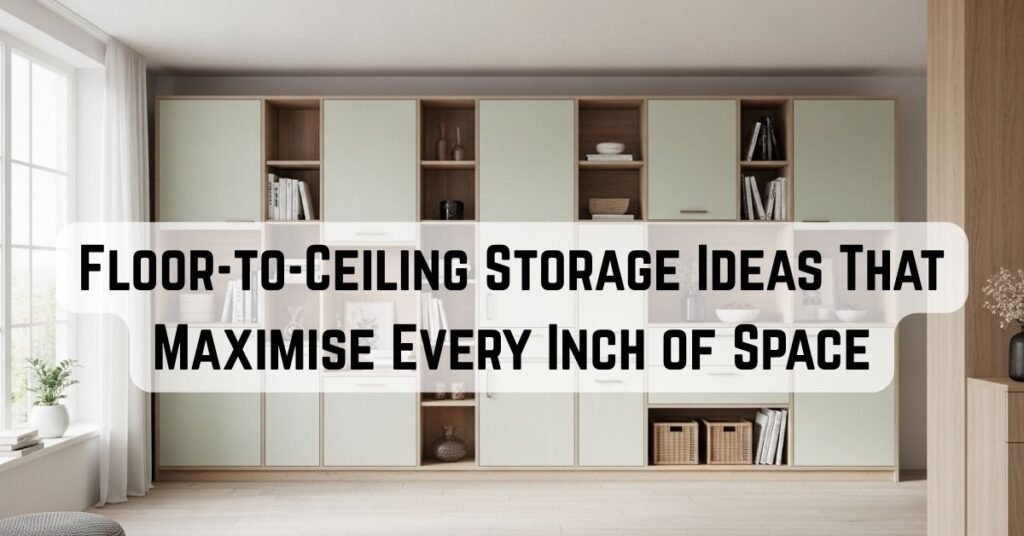
Most homeowners spend a lot of time thinking about floor space, but very few think about what’s happening above their heads. The truth is, the vertical space in your home is one of its most valuable and underused assets. From the skirting board all the way up to the ceiling, there are metres of potential storage just waiting to be used.
That’s exactly where floor-to-ceiling storage ideas come in.
Whether you’re living in a compact apartment, a family home bursting at the seams, or simply trying to create a more organized, clutter-free environment, going vertical is one of the smartest moves you can make. Floor-to-ceiling storage doesn’t just give you more room to store things; it also makes your space look taller, more intentional, and beautifully designed.
This is closely related to hidden storage ideas, where space is maximized without making the room feel cluttered.
In this guide, we’re sharing 10 of the best floor-to-ceiling storage ideas that work across every room in the home. These ideas are practical, stylish, and suitable for a range of budgets, whether you’re investing in custom-built-ins or looking for clever off-the-shelf solutions.
Let’s make every inch count.
Why Floor-to-Ceiling Storage Ideas Are Worth It
Before we dive into the ideas, it’s worth understanding why floor-to-ceiling storage is such a game-changer for home organization.
Most standard storage furniture, bookshelves, wardrobes, and kitchen cabinets stop well short of the ceiling, leaving a “dead zone” of unused space above. This gap doesn’t just waste storage potential; it also collects dust and makes a room feel less polished and cohesive.
Floor-to-ceiling storage eliminates that dead zone entirely. Here’s what you gain:
- Maximum storage capacity. Every inch of wall space becomes functional
- A taller-feeling room. Vertical lines draw the eye upward, making ceilings feel higher
- A cleaner, more built-in aesthetic, furniture that reaches the ceiling looks custom and intentional
- Better organization, more space means everything gets a proper home, reducing clutter
- Increased home value. Built-in storage is a desirable feature for buyers
Now, let’s get into the ideas.
1. Built-In Floor-to-Ceiling Bookshelves for the Living Room
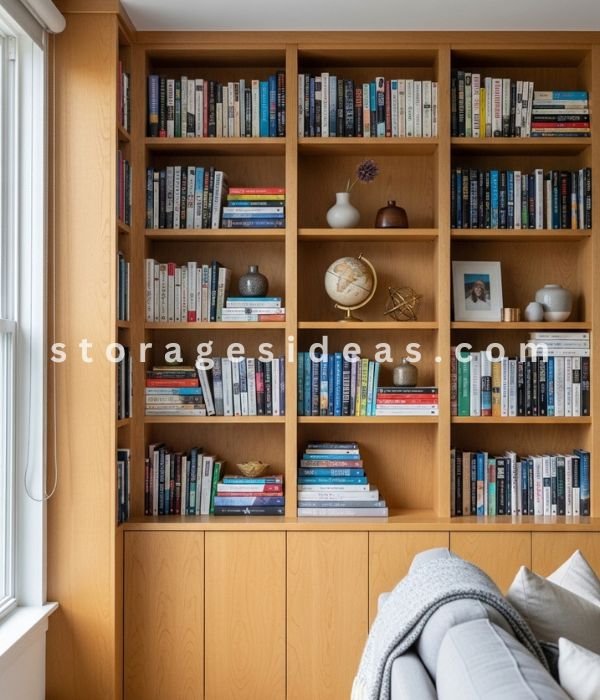
If there’s one floor-to-ceiling storage idea that has stood the test of time, it’s the built-in bookshelf. A floor-to-ceiling bookshelf running along an entire wall of your living room is one of the most dramatic and functional transformations you can make to a space, and it works in virtually any home style, from modern minimalist to traditional farmhouse.
Why it works so well: A full-height built-in bookshelf doesn’t just store books. It can hold decorative objects, framed photos, plants, board games, baskets, and all the other things that tend to pile up around the living room. By giving every item a designated spot on the shelf, the whole room feels calmer and more organized.
Creating defined storage zones is widely recommended in home organization methods to reduce clutter and improve daily usability.
Design tips:
- Use the lower shelves (within easy reach) for frequently accessed items like books, remote controls, and everyday decorative objects
- Reserve upper shelves for less frequently used items, display pieces, or seasonal décor
- Mix closed cabinets at the base of the unit with open shelving above, which hides everyday clutter while keeping the top portion light and decorative.
- Add integrated lighting along the shelves to create warmth and highlight your favorite pieces.
Budget option: If custom joinery is out of reach, modular shelving systems like IKEA BILLY or KALLAX can be stacked and combined to create a floor-to-ceiling effect at a fraction of the cost. Use crown molding at the top to give them a more built-in appearance.
2. Cabinets That Eliminate Wasted Space
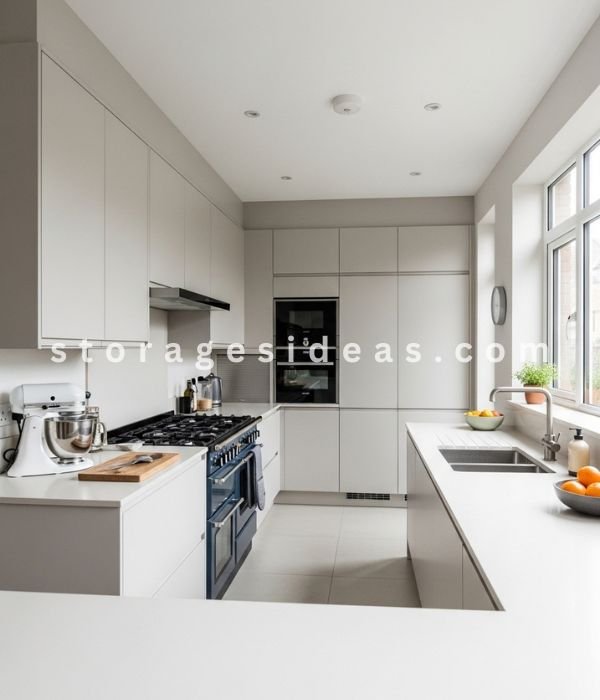
The kitchen is one of the most storage-hungry rooms in the home, and yet most standard kitchen designs leave a significant gap between the top of the wall cabinets and the ceiling. This space is typically too high to reach easily and too awkward to use, but it doesn’t have to be.
Floor-to-ceiling kitchen cabinets are one of the most impactful floor-to-ceiling storage ideas for busy households.
To make the most of this setup, kitchen cabinet organization ideas help ensure every shelf stays functional and easy to maintain.
By extending cabinetry all the way to the ceiling, you instantly gain an enormous amount of additional storage space for items you don’t use every day, such as large serving platters, seasonal cookware, extra pantry stock, and appliances you only bring out occasionally.
Design considerations:
- Use the uppermost cabinets for infrequently used items. A small step stool or library ladder keeps them accessible
- Choose glass-fronted upper cabinets to prevent the wall of cabinetry from feeling too heavy or enclosed
- Light-colored finishes work best in smaller kitchens, as they prevent the full-height cabinets from feeling overwhelming.
- In larger kitchens, bold cabinetry colors or textured finishes can make the floor-to-ceiling storage a stunning design statement.
Pro tip: A floor-to-ceiling pantry cabinet next to the fridge is one of the most practical kitchen additions you can make. It provides dedicated, organized storage for dry goods, small appliances, and everything else that currently lives on your countertops.
3. A Full-Height Wardrobe Wall in the Bedroom
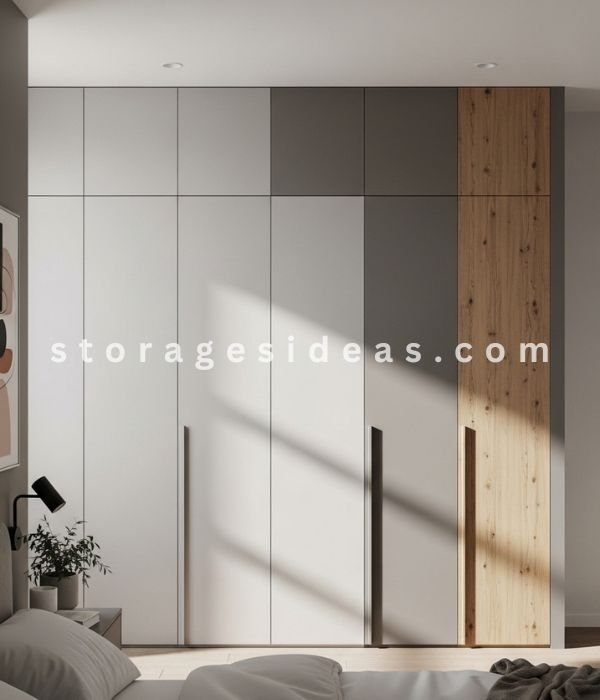
The bedroom is where clutter tends to accumulate fastest. Clothes, shoes, accessories, bedding, and more all compete for limited wardrobe space. A full-height wardrobe wall that runs from floor to ceiling is one of the most effective floor-to-ceiling storage ideas for creating a calm, hotel-like bedroom.
What makes a wardrobe wall so effective: Unlike freestanding wardrobes, a built-in floor-to-ceiling wardrobe uses every available inch, including the space above the hanging rail that’s typically wasted in a standard wardrobe. That upper section can store extra bedding, seasonal clothing in vacuum bags, or large items like luggage.
Design ideas:
- Opt for handleless doors in a finish that matches your walls for a seamless, built-in look that makes the room feel larger
- Incorporate a mix of hanging space, shelving, and deep drawers to accommodate every type of clothing and accessory
- Add a full-length mirror to one of the doors, which doubles the visual space of the room while eliminating the need for a separate mirror.
- Integrated LED lighting inside the wardrobe makes it far easier to find what you’re looking for, especially in deep sections.
For smaller bedrooms: A sliding door system takes up no additional floor space when opening, making it ideal for rooms where a swinging door would be impractical.
4. Floor-to-Ceiling Storage Ideas for the Home Office
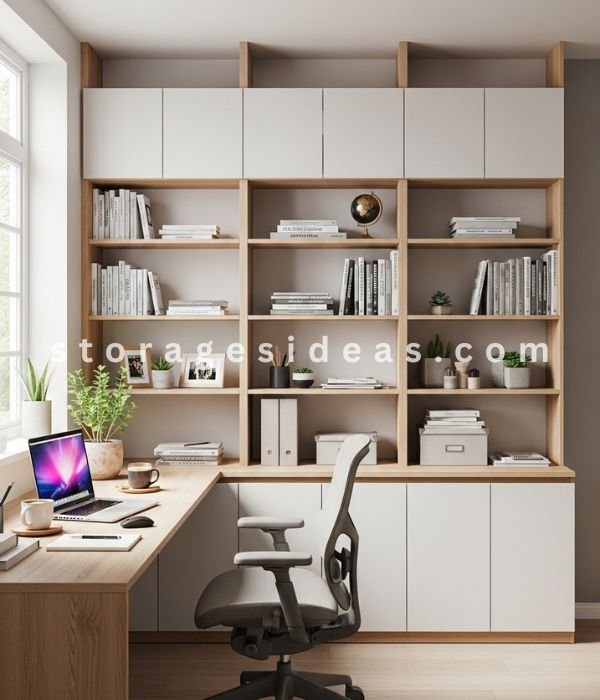
As more people work from home, the need for a well-organized home office has never been greater. Clutter in a workspace directly impacts focus and productivity, and a wall of floor-to-ceiling storage is one of the most effective ways to keep a home office functional and distraction-free.
What to store:
- Filing systems and document storage
- Books, reference materials, and manuals
- Office supplies and stationery
- Tech accessories and cables (in labeled bins)
- Personal items and décor that inspire you
Design approach: Create a combination storage wall that mixes open shelving with closed cabinet sections. Use the closed sections to hide less attractive items like printers, cables, and filing boxes. Reserve the open shelving for books, plants, and a few carefully chosen decorative objects that make the space feel personalized and welcoming.
A desk built into the base of the floor-to-ceiling storage unit with shelving wrapping around and above it creates a compact, highly functional home office nook that uses vertical space brilliantly. This setup is particularly effective in a dedicated alcove or a spare bedroom that doubles as a workspace.
5. Shelving in the Hallway
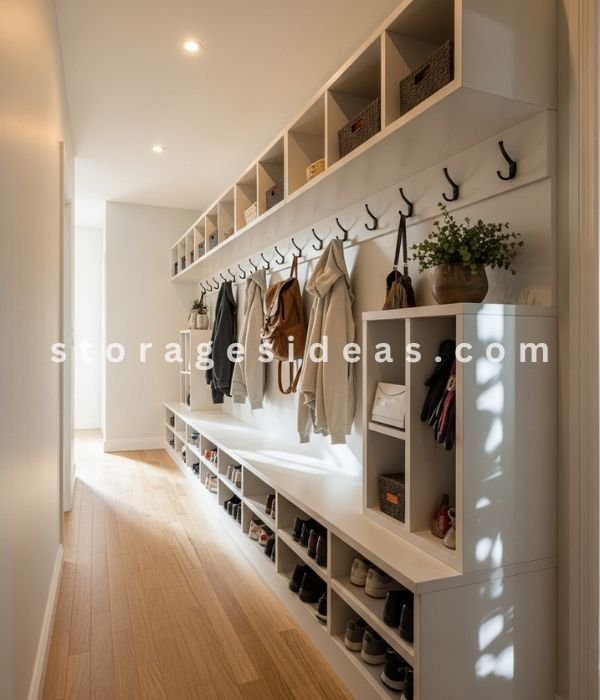
Hallways are one of the most overlooked spaces in the home when it comes to storage. They’re often narrow, awkwardly shaped, and treated as purely transitional spaces, but with the right floor-to-ceiling storage ideas, a hallway can become one of the hardest-working areas in your entire home.
What works well in hallway storage:
- Coat hooks at multiple heights (for adults and children)
- Shoe storage cubbies at the base
- Shelving for bags, hats, scarves, and accessories
- Closed cabinets for items you’d rather keep out of sight, keys, post, and everyday admin clutter
Built-in hallway storage wall: A full-height built-in unit running along one side of the hallway, even if it’s only 25–30cm deep, can provide an incredible amount of organized storage without making the space feel cramped. Use a light finish and incorporate mirrors to keep the hallway feeling open and bright.
Drop zone integration: The base of a floor-to-ceiling hallway storage unit is the perfect place to build in a dedicated drop zone, a section with hooks, a small bench or seat, and shoe cubbies directly below. This creates a system that naturally encourages everyone in the household to put things away the moment they walk through the door.
6. Floor-to-Ceiling Storage Ideas for Small Spaces and Apartments
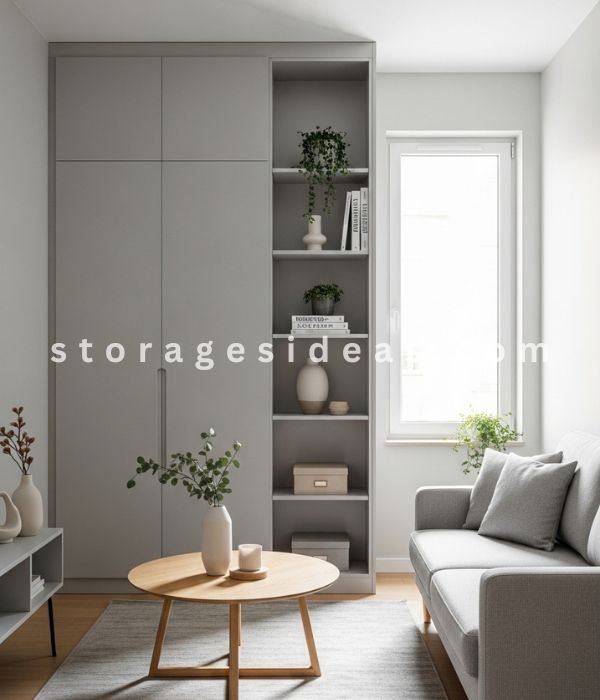
Small spaces benefit the most from floor-to-ceiling storage ideas. When floor space is genuinely limited, going vertical isn’t just a design choice; it’s a necessity. The good news is that floor-to-ceiling storage in small spaces can look just as polished and intentional as it does in larger homes.
Key strategies for small spaces:
Go built-in wherever possible: Custom or semi-custom built-ins that fit perfectly from floor to ceiling and wall to wall look seamless and don’t waste a single inch of space to gaps or awkward sizing.
Use the space above doorways: The wall above a doorway is almost always empty. Add a deep shelf that runs across the top of the door frame for storing items you access infrequently.
Alcoves are your best friend: Any alcoves or recesses in your walls are perfect candidates for floor-to-ceiling shelving. Built into an alcove, shelving doesn’t intrude on the room at all and provides beautiful, integrated storage.
Choose the right doors: In a small room, sliding or pocket doors on storage units prevent the room from feeling cluttered when the storage is open. Mirrored sliding doors are particularly effective; they add storage and make the room feel twice as large.
Color matching: Paint your floor-to-ceiling storage units the same color as your walls to create a seamless, expansive effect that prevents the storage from dominating the room visually.
7. Pantry for the Kitchen or Utility Room
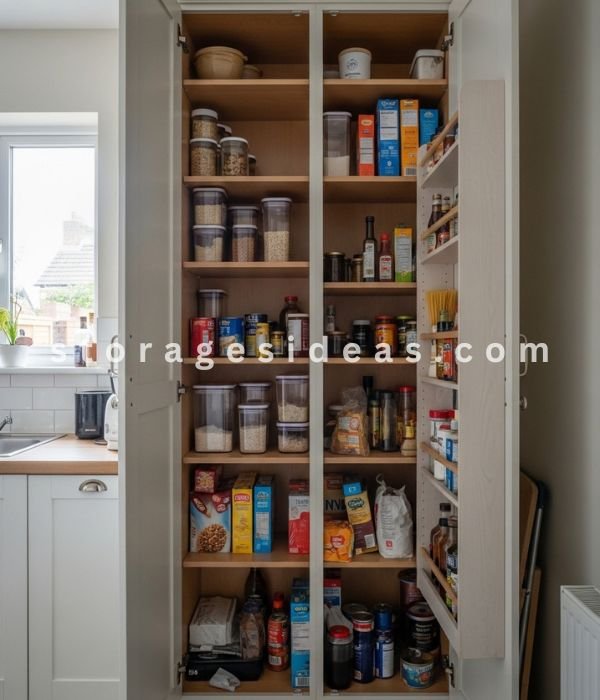
A dedicated floor-to-ceiling pantry is one of the most satisfying and practical storage investments you can make for your home. Whether it’s a full walk-in pantry or a tall, narrow cabinet fitted into a kitchen alcove, a proper pantry fundamentally changes how organized and functional your kitchen feels.
What to include in a floor-to-ceiling pantry:
- Adjustable shelving at varying depths for different product sizes
- Pull-out drawers for smaller items like spice jars, packets, and snacks
- A dedicated section for small appliances (toaster, blender, coffee machine) to clear countertop space
- Door-mounted racks for extra storage on the inside of the pantry door
- Clear bins and labels so every item has a visible, designated home
In the utility room: A floor-to-ceiling storage wall in the utility room is equally transformative. Use it to store cleaning products, laundry supplies, pet food, tools, and all the other household essentials that tend to create clutter in other parts of the home. Closed cabinets keep everything tidy and out of sight, while open shelving sections give you easy access to items you use daily. For a room dedicated to it, see these small laundry room organization ideas.
8. Staircase Floor-to-Ceiling Storage That Uses Every Nook
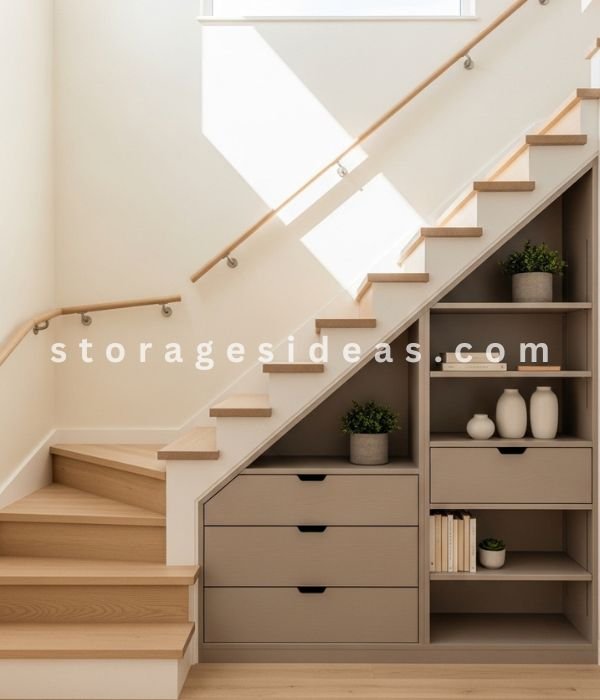
The area around a staircase is one of the most creative opportunities for floor-to-ceiling storage ideas in the home.
You’ll find similar concepts in the living room under-stairs storage ideas, where every awkward angle is turned into usable space.
The varying heights created by the staircase itself lend themselves naturally to a layered, built-in storage system that makes use of every nook and angle.
Under-stair storage: The void beneath a staircase can be transformed into a combination of pull-out drawers, open shelving, closed cabinets, or even a compact home office. When designed well, under-stair storage is completely seamless; it looks like a natural part of the architecture rather than an afterthought.
Alongside the staircase: Running floor-to-ceiling shelving alongside a staircase filling the wall that runs parallel to the stairs creates a dramatic library effect that is both stunning and highly practical. A library ladder adds both functionality and a classic design feature that makes the storage feel intentional and beautiful.
Above the staircase landing: The wall above a staircase landing is often left completely bare. Adding built-in shelving or closed cabinetry here, reaching all the way to the ceiling, takes advantage of a space that would otherwise be entirely wasted.
9. Floor-to-Ceiling Storage Ideas for the Bathroom
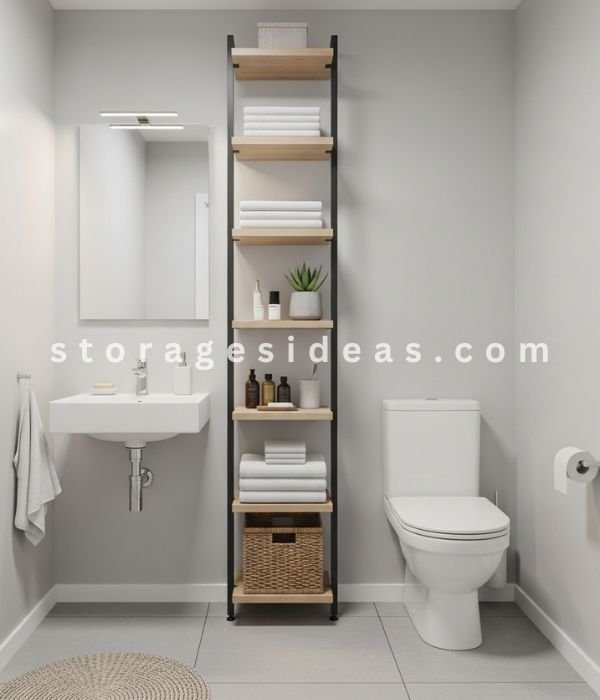
Bathrooms, particularly smaller ones, can benefit enormously from vertical storage thinking. Most bathroom storage sits at counter height or below, but the walls above offer significant untapped potential for floor-to-ceiling storage ideas that keep the bathroom tidy and spa-like.
Tall bathroom cabinets: A slim, floor-to-ceiling cabinet fitted into a corner or alongside a wall provides a surprising amount of storage in a bathroom without taking up much floor space. Use it to store towels, toiletries, cleaning products, and all the everyday bathroom clutter that tends to accumulate on countertops and windowsills.
Open shelving above the toilet: The wall above the toilet is almost always empty, and it’s one of the best spots for a vertical run of open shelving. Stack shelves from just above the toilet tank all the way to the ceiling for towels, decorative baskets, plants, and bathroom supplies.
Recessed storage: If your bathroom walls are thick enough, recessed shelving built directly into the wall from floor to ceiling provides storage without taking up any floor space at all. This is one of the most seamless and space-efficient storage solutions available for bathrooms.
10. A Floor-to-Ceiling Display and Storage Wall for the Dining Room
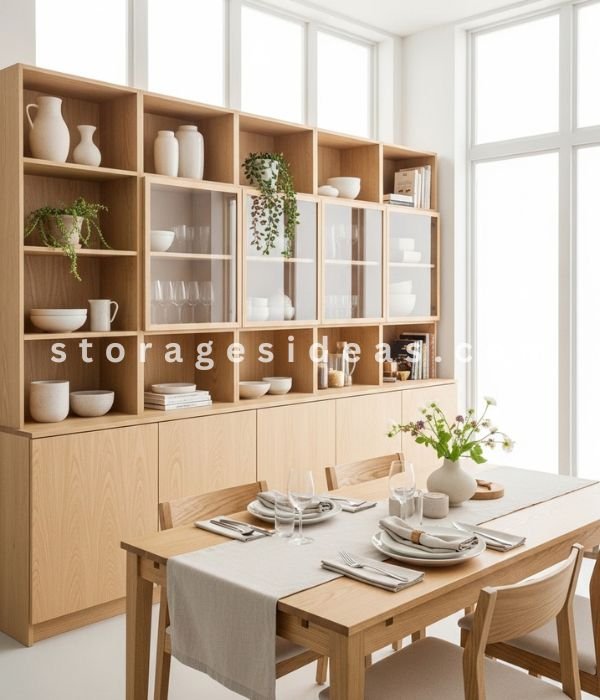
The dining room is often overlooked as a storage opportunity, but a thoughtfully designed floor-to-ceiling storage wall can transform it into one of the most organized and visually striking rooms in the home.
What to store in a dining room storage wall:
- Crockery, glassware, and serving pieces (behind glass-fronted doors for a polished look)
- Table linens, placemats, and napkins
- Candles, centerpieces, and seasonal table décor
- Extra chairs or folding furniture (in closed base cabinets)
- A drinks cabinet or bar section integrated into the unit
Design approach: A combination of glass-fronted upper cabinets and solid lower cabinets works beautifully in a dining room. The glass doors on the upper section allow you to display your best crockery and glassware while keeping everything dust-free and protected. The solid lower cabinets hide away less attractive items like extra table linen, candles in bulk, and anything else you’d rather not display.
Adding integrated lighting inside the glass-fronted cabinets creates a warm, welcoming ambience in the dining room that makes the storage wall feel like a design feature rather than purely functional furniture.
Conclusion
Whether you’re dealing with a small apartment, a growing family home, or simply a space that never seems to have enough room, floor-to-ceiling storage ideas offer one of the most effective and visually impressive solutions available. By making use of the full height of your walls — rather than stopping at shoulder height and leaving valuable space empty you dramatically increase your home’s storage capacity without sacrificing a single square foot of floor space.
Start with the room that causes you the most frustration. Whether that’s a kitchen without enough cabinet space, a bedroom wardrobe that can never hold everything, or a hallway that’s always cluttered, there’s a floor-to-ceiling storage solution that will transform it.
Think vertically, design intentionally, and make every inch count.
Frequently Asked Questions (FAQ)
Are floor-to-ceiling storage ideas suitable for homes with low ceilings?
Absolutely! In fact, floor-to-ceiling storage is one of the best things you can do in a room with low ceilings. The vertical lines of full-height storage draw the eye upward and create the illusion of a taller space. Just keep the design simple and use light colors to prevent the room from feeling heavy.
How much does built-in floor-to-ceiling storage cost?
Costs vary widely depending on whether you choose custom joinery, semi-custom options, or modular off-the-shelf systems. Custom built-ins are the most expensive but offer the best fit and finish. Modular systems like IKEA BILLY or PAX can be configured to reach the ceiling at a fraction of the cost and are an excellent budget-friendly alternative.
What’s the best material for floor-to-ceiling storage units?
For built-ins, MDF (medium-density fiberboard) is commonly used as it’s easy to paint and gives a smooth, seamless finish. Solid wood offers more durability and a premium look. For modular systems, engineered wood is standard and perfectly durable for most household storage needs.
Do floor-to-ceiling cabinets make a room feel smaller?
When designed thoughtfully, they actually make a room feel larger. The key is to use light colors or finishes that blend with the walls, incorporate glass doors or open sections to keep things feeling airy, and avoid overfilling the shelves so the unit doesn’t look visually heavy.
Can I install floor-to-ceiling shelving myself?
Modular shelving systems are designed for DIY installation and come with detailed instructions. Custom built-ins, however, are best left to a professional joiner or carpenter, particularly if you want them to look seamless and to be safely secured to the wall.
Want more clever storage solutions for your home? Browse our other articles on smart storage ideas, space-saving hacks, and home organization tips!