For a long time, I thought staying organized was about effort.
I would clean, arrange, and reset everything, hoping it would last longer this time. And for a day or two, it usually did. The space looked better. Things felt under control. But slowly, almost without noticing, everything started slipping again.
Items moved slightly out of place. Small piles began forming. And before long, I was back to fixing the same problem all over again.
It wasn’t frustrating because I didn’t try.
It was frustrating because nothing stayed.
That’s when I started looking at things differently.
Instead of asking how to organize better, I asked a simpler question.
Why doesn’t it stay organized?
The answer wasn’t about effort. It was about systems.
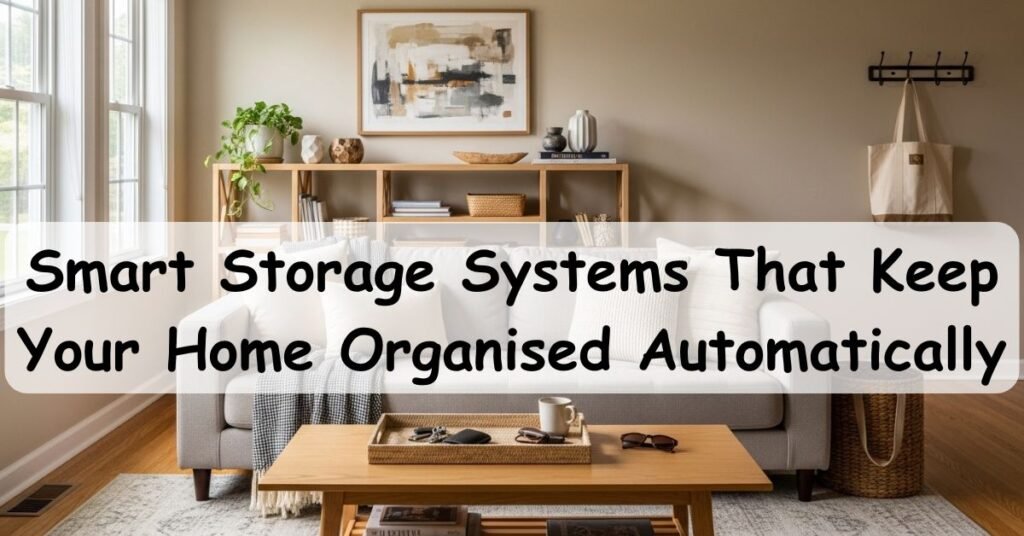
Once I shifted toward using smart storage systems, the experience changed. Not because everything became perfect, but because things started holding their place without constant attention.
Why Most Storage Systems Fail After a Few Days
Most storage setups look good at the beginning.
They’re clean, structured, and feel logical. But they often rely on something we don’t sustain consistent effort.
If a system requires you to fold perfectly, stack carefully, or return items with precision every single time, it slowly starts to break down. Not all at once, but in small ways that build over time.
The problem isn’t the idea itself. It’s the friction.
Anything that takes extra time or thought becomes something we avoid, especially during busy or tired moments. And once we start avoiding the system, it stops working.
That’s why some spaces feel like they never stay organized, no matter how often they’re reset.
What works better are systems that don’t depend on perfect behavior. Systems that match how things naturally move through your day.
That’s where the shift happens.
1. Flow-Based Storage That Follows Your Daily Movement
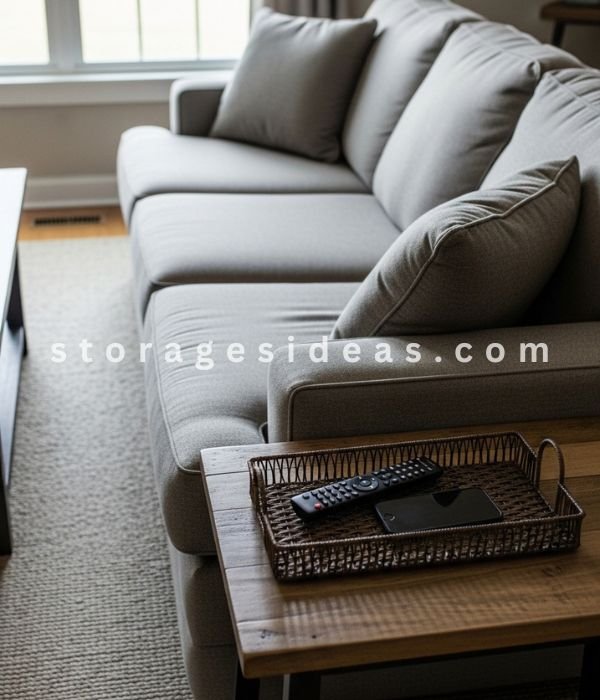
For a long time, I believed storage needed to be logical to work.
Placed where it “should” go. Organized in a way that made sense visually. Structured so everything looked neat and intentional.
But in real life, I didn’t follow that logic.
I placed things where it was easiest in the moment. Wherever I happened to be standing. Wherever my hand naturally moved without thinking. And over time, that created small inconsistencies that slowly broke the system.
What changed wasn’t the storage; it was how I understood my own movement.
I started paying attention to patterns. Where I pause during the day. Where items naturally land. What feels effortless, and what feels like a small inconvenience.
Instead of trying to correct those habits, I adjusted the storage to follow them.
Once those two aligned, everything became easier. Items returned to their place more often, not because I tried harder, but because the system no longer worked against me.
That’s what makes smart storage systems feel automatic.
They don’t require discipline; they remove the need for it.
2. Open Access Storage That Removes the Need to Organize
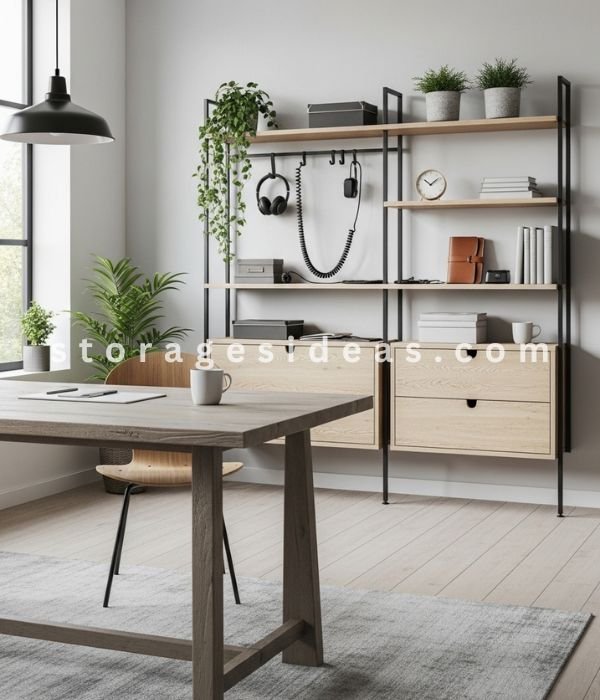
There’s a small moment that decides whether something stays organized or not.
That moment happens right after you use something.
If putting it away requires even one extra step, opening a lid, lifting something, or moving items around, it creates hesitation. And that hesitation is enough to break consistency over time.
I didn’t notice this at first. But once I did, it became clear why some storage never worked for me.
Open access changed that completely.
When something is visible and easy to reach, it naturally returns to its place more often. There’s no interruption, no extra effort, no small barrier that makes you delay the action.
But the key isn’t to make everything open.
It’s about choosing the right things.
Items used frequently benefit from visibility. Items that create visual noise don’t. Once that balance is right, the system starts maintaining itself without constant attention.
This works well alongside quick-access storage ideas that are designed to be used without extra steps.
3. One-Touch Storage Systems That Eliminate Extra Steps
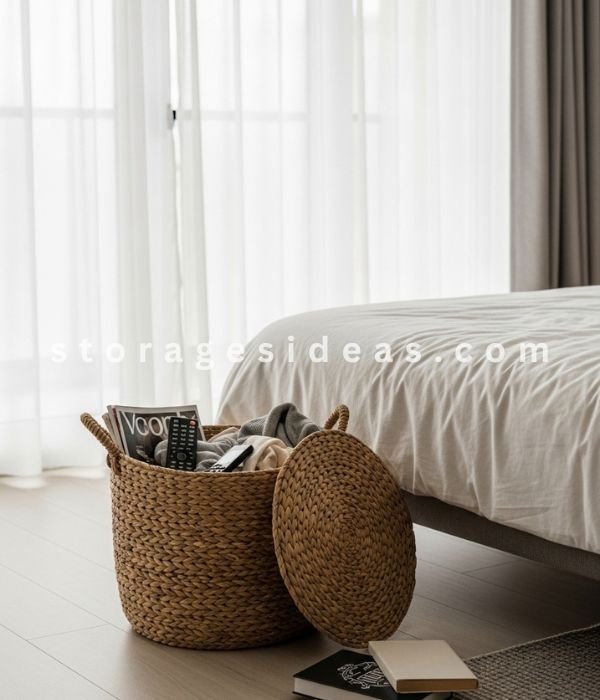
The systems that lasted the longest in my space all shared the same quality.
They didn’t ask much from me.
I didn’t have to adjust items, stack them neatly, or think about where exactly something should go. I just had to put it down, and that was enough.
That’s what defines a one-touch system.
It removes the gap between using something and putting it away. And that gap is where most systems fail.
Because when you’re tired, distracted, or in a hurry, even a small extra step becomes something you skip.
Once I removed those steps, things started staying in place naturally.
Not because I was more disciplined, but because there was nothing left to avoid.
4. Category-Based Zones That Reset Themselves

For a long time, I organized based on space.
I would place things wherever they fit best, trying to create a balanced layout. But that balance never lasted, because it depended on precision.
Every small change disrupted it.
Switching to category-based zones changed that.
Instead of focusing on exact placement, I focused on grouping. Similar items stayed together. Not perfectly aligned, not carefully arranged, just consistently placed in the same general area.
That looseness made the system stronger.
Even when things weren’t perfectly organized, they were still in the right zone. And that was enough to keep everything from falling apart.
That’s what makes it feel like the system resets itself.
Because it doesn’t rely on perfection, it relies on consistency.
A similar approach is used in kitchen cabinet organization ideas, where grouping keeps things from becoming chaotic again.
5. Hidden Storage That Absorbs Visual Clutter
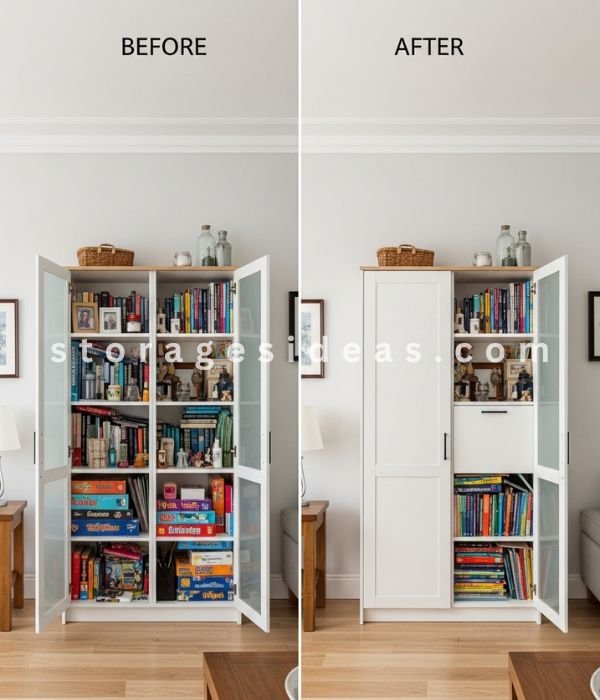
There’s a difference between physical clutter and visual clutter.
I didn’t fully understand that until I experienced it.
Even when things were technically organized, seeing too many items at once made the space feel overwhelming. It created a sense of noise that made everything feel less controlled.
That’s where hidden storage changed things.
It didn’t remove items; it removed their constant visibility.
And that created a kind of calm that open storage alone couldn’t provide.
But this only works when it’s used intentionally.
If everything is hidden, you lose awareness. If nothing is hidden, you gain visual pressure.
The balance between the two is what makes the system feel stable.
6. Vertical Storage Systems That Work Without Getting in the Way
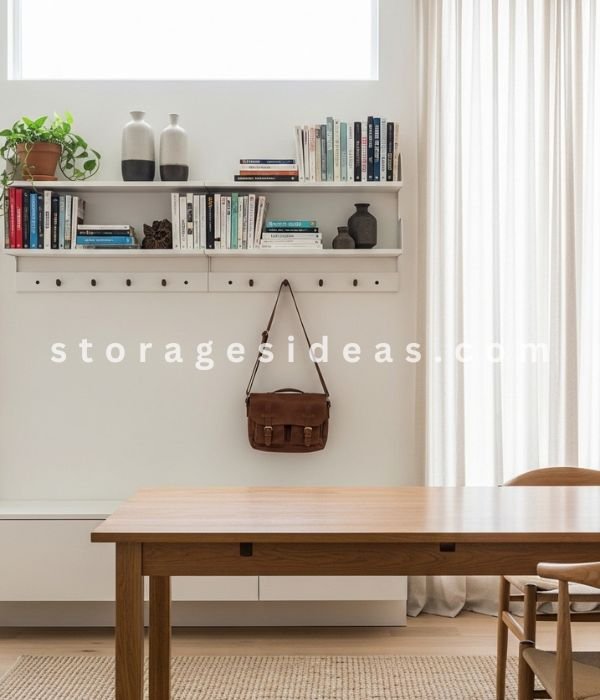
At some point, I realized that most of my storage problems were happening at eye level and below.
Surfaces filled up quickly. Floors became crowded. And no matter how much I rearranged things, those areas always felt under pressure.
Looking upward changed that.
Using vertical space didn’t just give me more room; it redistributed the load. Walls started carrying part of what surfaces used to hold.
What made this effective long-term is that it doesn’t interfere with how I move.
It doesn’t block pathways. It doesn’t compete with furniture. It exists alongside everything else without demanding attention.
And that’s what allows it to stay consistent.
7. Rotation-Based Storage That Prevents Forgotten Items
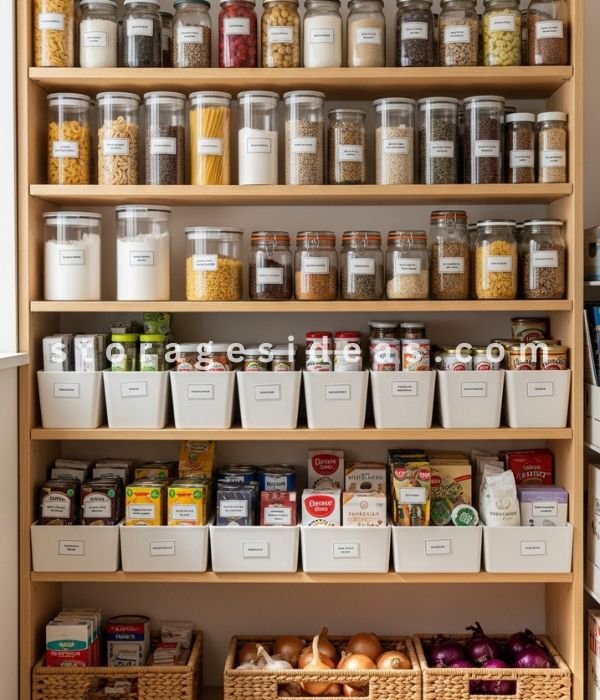
One of the quiet problems I dealt with wasn’t clutter, it was forgetting.
Items would get pushed back, replaced by newer ones, and slowly disappear from use. Not because I didn’t need them, but because they were no longer visible or part of my routine.
Trying to “remember better” didn’t work.
Changing how things moved did.
Once I introduced a simple sense of rotation where items naturally shift forward as others are used, things stopped getting lost.
Nothing stayed buried for long.
This works because it doesn’t depend on memory. It depends on movement.
And movement is something that happens naturally.
8. Low-Maintenance Systems That Don’t Require Perfection
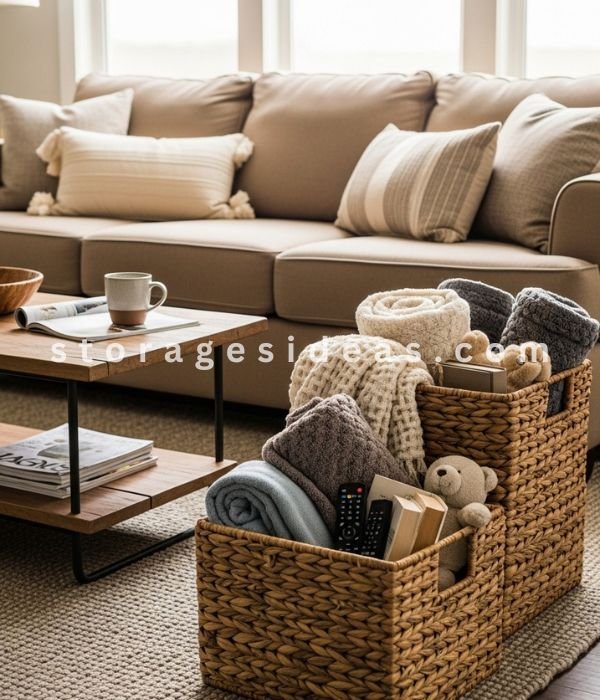
The systems that failed for me all had one thing in common.
They expected too much.
Too much precision. Too much consistency. Too much effort in small moments that add up over time.
At first, they worked. But eventually, they became something I had to maintain instead of something that supported me.
What lasted were the systems that allowed imperfection.
Even when things weren’t placed exactly right, they still worked. Even when I was in a rush, nothing broke down.
That flexibility made the difference.
Because the goal isn’t to create a perfect system, it’s to create one that holds together even when you’re not thinking about it.
What Actually Makes Smart Storage Systems Work Automatically
What took me the longest to understand wasn’t how to organize better, it was why most systems quietly stop working after a short time.
At first, everything feels right. You set things up, create structure, and for a few days, the space holds together. But then small changes begin to appear. An item gets placed slightly out of position. Something doesn’t return to its exact spot. Another thing gets added without a clear place.
Nothing breaks immediately.
But the system starts loosening.
That’s where most storage fails, not in big, obvious ways, but in small moments that repeat over time.
What I realized is that these failures aren’t random. They come from friction.
If a system requires you to pause, think, adjust, or be precise every time you use it, it slowly becomes something you avoid. Not intentionally—but naturally. And once you start avoiding it, even slightly, it stops being part of your routine.
That’s why effort-based systems never last.
What worked for me was shifting focus from structure to behavior.
I stopped asking, “Where should this go?”
And started asking, “Where would I naturally put this without thinking?”
That question changed everything.
Because once storage aligns with that instinct, it no longer needs to be maintained in the traditional sense. It maintains itself.
Another thing that made a difference was simplifying decisions.
Understanding how storage systems are designed to reduce effort also explains why simpler setups tend to work better over time.
When there are too many rules, too many categories, or too much precision required, the system becomes fragile. But when the structure is simple—broad zones, easy access, minimal steps, it becomes resilient.
It can handle small inconsistencies without falling apart.
That’s what makes smart storage systems actually work automatically.
Not because they are perfectly designed, but because they are designed to handle real behavior, not ideal behavior.
Frequently Asked Questions
What makes a storage system “smart”?
A smart storage system is one that keeps working without constant effort. It follows how you actually move through your home and makes putting things away as easy as leaving them out.
Why do most storage systems stop working after a few days?
They usually rely on extra steps and perfect habits. If putting something away means opening a lid, moving another item or walking to a different room, it tends to get left out instead.
Should everyday items be stored in the open or hidden away?
Keep everyday items in open, one-touch storage so they are easy to return. Use hidden storage for things that create visual clutter but are not needed several times a day.
How do I stop items from being forgotten at the back of cupboards?
Rotate what you store so the things in current use sit at the front, and move the rest back. Reviewing these areas now and then keeps forgotten items from piling up.
Final Thoughts
I used to think organization was something you had to keep fixing.
A cycle of cleaning, adjusting, and resetting that never really ended. It felt like something I had to stay on top of, or everything would slowly fall apart again.
But over time, I realized that constant maintenance wasn’t the solution.
It was a sign that the system wasn’t working.
Once the system started matching how I actually live—how I move, where I place things, what I avoid—everything became quieter.
The space didn’t need as much attention. It didn’t need to be corrected all the time. It just held together on its own, even when I wasn’t thinking about it.
That’s the difference between organizing and designing a system.
Organizing fixes the surface.
A system changes what happens underneath.
These smart storage systems don’t create a perfect home.
They create a stable one.
If you want to apply this beyond one area, these small space transformation ideas can help you improve your entire home step by step.
And stability is what makes a space feel truly organized, not for a moment, but over time.
If things in your home keep slipping back into clutter, it’s probably not because you’re not trying hard enough.
It’s because the system still expects too much from you.
Start with one small adjustment. One place where things naturally fall out of order.
Not to control it but to support it.
Because once even one part of your space begins to work with you instead of against you, everything else starts to follow.