
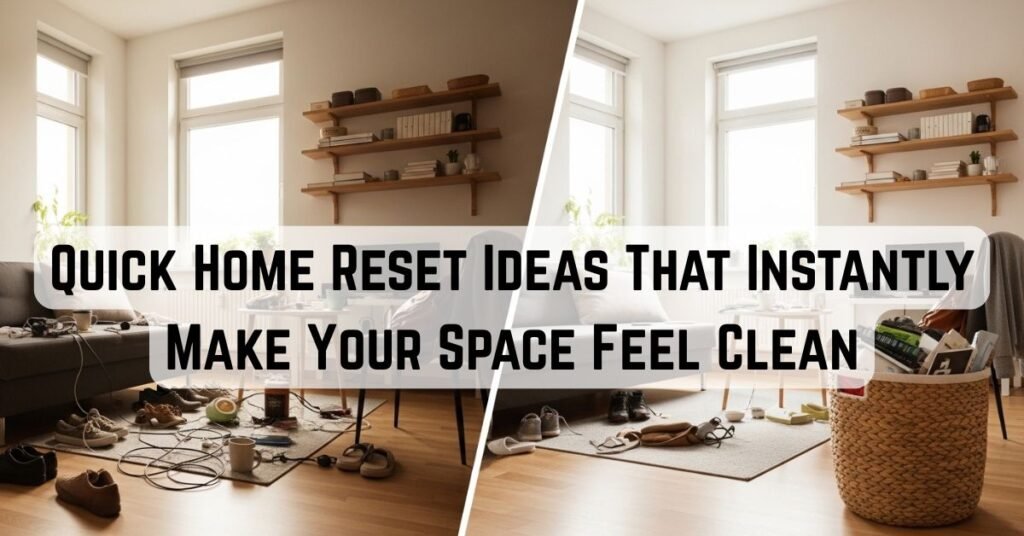
My home never became messy all at once.
It happened in small ways. A cup was left on the table. Shoes near the door. A few things were placed somewhere “just for now.” Nothing felt serious in the moment.
But those small moments didn’t stay small.
They stacked.
And before I noticed it, the space felt off. Not completely messy, but not settled either. It needed attention, even when I didn’t have time to give it.
At first, I tried cleaning more often.
Resetting everything at once. Putting things back properly. Trying to stay on top of it.
It worked for a while.
Then the same pattern came back.
That’s when I realized the problem wasn’t cleaning.
It was that I didn’t have a way to reset the space quickly when things started slipping.
Once I focused on that, these quick home reset ideas started working in a way that didn’t depend on time or effort. These storage ideas for busy people are built around the same principle.
I had seen the same pattern before in setups like small apartment storage tricks, where things only stay organized when the system supports daily use.
Why Cleaning Alone Doesn’t Fix the Mess
Cleaning feels productive.
It makes the space look better, at least for a while. But it usually requires time, energy, and a level of consistency that’s hard to maintain every day.
That’s where it breaks.
Because most days aren’t consistent.
Some days are busy. Some are unpredictable. And when there’s no time to clean properly, things start building again.
I used to think I just needed to keep up.
But the real shift came when I stopped relying on cleaning and started focusing on resets instead.
A reset doesn’t try to fix everything.
It just brings the space back under control.
And that difference is what makes it sustainable.
1. The Surface Reset That Changes How the Room Feels
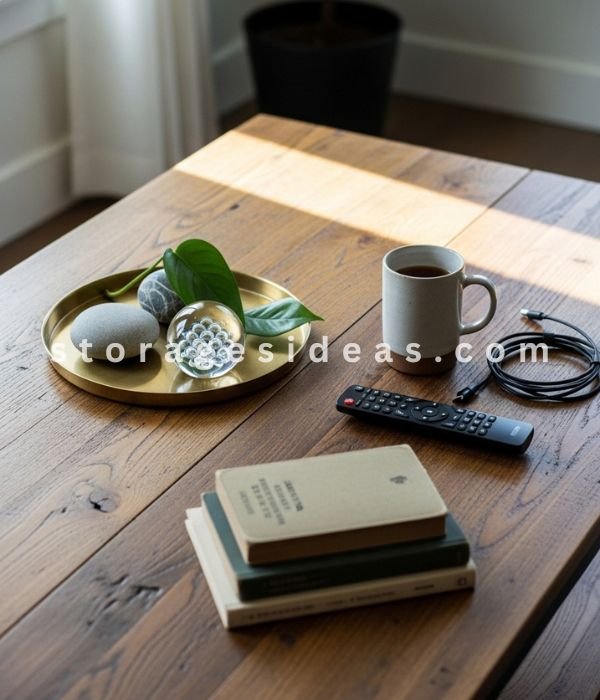
The first place things started slipping wasn’t the whole room. It was the surfaces. Tables, counters, and shelves, they quietly collected everything because they were always within reach.
I noticed the same behavior when working on wall storage ideas in the living room, where moving things off surfaces changes how the space holds.
I didn’t notice it at first.
It felt normal to leave something there for a minute. A cup, a charger, something I planned to move later. But those “later” moments stacked.
And once a surface starts holding a few things, it becomes easier to leave more.
I tried keeping them clean all the time. Wiping them down, clearing them off, trying to maintain that empty look.
It didn’t last.
Because the behavior didn’t change.
I was still using those surfaces as temporary storage.
Once I stopped trying to keep them perfect and focused on resetting them instead, the pressure dropped. I didn’t need them to stay clear all day. I just needed to bring them back when they started slipping.
That shift mattered more than I expected.
Because when the most visible areas reset quickly, the whole room feels controlled again.
2. The Entry Reset That Stops Clutter Before It Spreads

After that, I started noticing where things actually began.
Most of it came from the entry. Shoes dropped near the door. Bags were placed wherever there was space. Keys left wherever my hand stopped moving.
Nothing stayed contained.
And once those items sat there, they slowly spread further into the room.
At first, I tried organizing that space better. Rearranging it, clearing it, trying to keep it looking clean.
But it didn’t change what happened in that first moment when I walked in.
That’s what mattered.
Because that moment decides where everything goes.
Once I added a simple reset there just returned those items immediately, and the pattern changed. Not perfectly, but enough to stop the spread before it started.
And once it stayed contained at the entry, that’s when I started treating it more like a drop zone storage setup, where everything has a consistent place to land without spreading. The rest of the space didn’t have to deal with it later.
3. The Return Loop That Fixes Movement Without Effort

What I didn’t notice at first was how much things moved.
Nothing stayed where it belonged. Items followed me through the day. From one room to another, from one surface to the next.
That movement wasn’t random.
It followed my routine.
And because there was no system to bring things back, they stayed where they landed.
I tried fixing it in real time. Putting things back immediately. Staying aware of where everything should go.
That didn’t last.
Because it required attention every time I used something.
What worked instead was creating a simple return loop. Not constant correction, just a quick reset where everything went back in one pass.
That changed how far things drifted.
Because once they were returned regularly, they didn’t spread as much in between.
4. The One-Basket Reset That Clears a Room Quickly

There were moments when a room didn’t feel messy, but it didn’t feel right either.
Too many small things are out of place. Enough to make the space feel heavy, but not enough to justify a full clean.
That’s where I used to get stuck.
Because fixing each item meant deciding what to do with it.
And that’s what slowed everything down.
I would look at it, think about it, and delay it.
What worked was removing that decision completely.
I used one basket and picked everything up in one pass. No sorting, no thinking, just clearing the space.
That changed the momentum immediately.
Because once the visual clutter was gone, the space felt lighter. And once it felt lighter, finishing the reset didn’t feel like an effort anymore.
5. The Zone Reset That Keeps Things Manageable

Trying to reset everything at once always felt bigger than it actually was.
Not because it was impossible, but because it required more time and energy than I usually had.
So I would start somewhere, then stop halfway.
And that made it feel like nothing really changed.
I thought I needed to push through it. Stay consistent. Finish what I started.
But that depended on having the same level of energy every time.
What worked instead was reducing the scope.
Not thinking about the whole space. Just focusing on one part of it. One surface, one section, something that could be finished quickly.
This is why many small-space layouts focus on defining clear zones instead of managing everything at once, as seen in small-space design approaches.
That made it easier to start.
And more importantly, easier to finish.
Because once one part was reset completely, the rest didn’t feel as overwhelming anymore.
6. The Timer Reset That Removes Hesitation
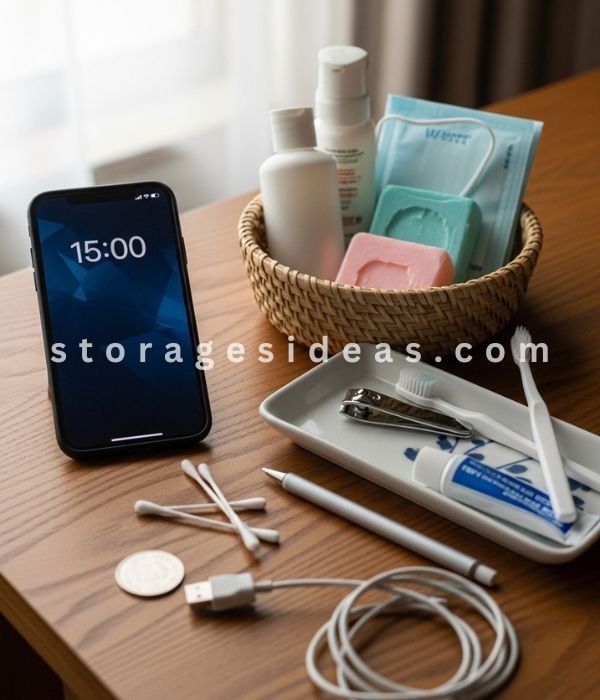
Sometimes the problem wasn’t the mess.
It was starting.
If something felt like it would take too long, I avoided it. Not consciously, just enough to delay it. And once it got delayed, it usually stayed that way.
I told myself I would do it later.
Later didn’t come.
I tried pushing myself to just start anyway. That worked occasionally, but not consistently. Because it still depended on motivation.
What changed was making the reset feel smaller than it actually was.
A short timer was enough. Five minutes didn’t feel like a commitment. It felt manageable, even on busy days.
And once I started, something shifted.
I didn’t stop at five minutes every time.
But even when I did, it was enough to bring things back under control before they built up again.
7. The Hidden Reset That Instantly Reduces Visual Clutter

There were times when the space looked messy even when it wasn’t.
Things were technically in place, but there was too much visible at once. Different shapes, colors, and small items are competing for attention.
It created a kind of visual pressure.
I tried organizing those items better. Arranging them neatly, spacing them out, trying to make everything look clean.
It didn’t change how the room felt.
Because the issue wasn’t the arrangement.
It was visibility.
Once I started moving non-essential items out of sight, the shift was immediate. It’s the same principle behind using hidden storage ideas, where less visible items reduce pressure on everyday spaces. The space felt calmer without removing anything.
And that made everything else easier to maintain.
8. The Daily Touch Reset That Prevents Build-Up
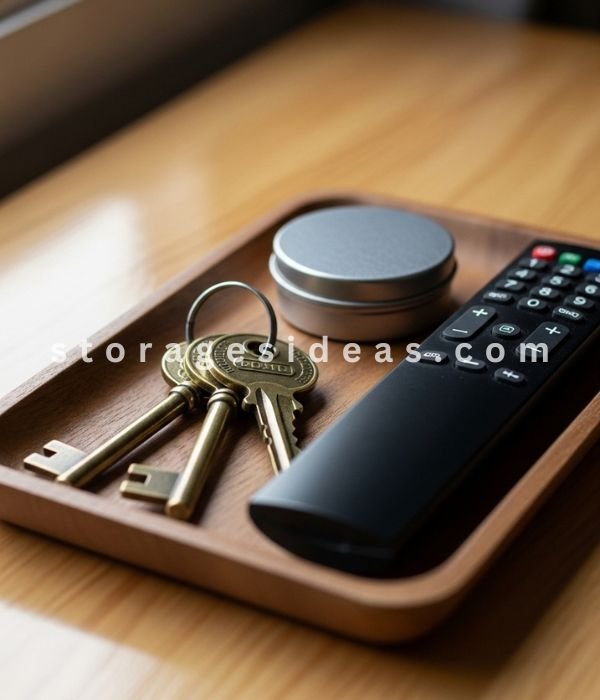
The biggest difference didn’t come from big resets.
It came from small moments I used to ignore.
A single item out of place. A surface slightly off. Something that would take a few seconds to fix, but didn’t feel important enough to stop for.
So I let it stay.
And those small moments built up.
I thought they didn’t matter because they were quick to fix later.
But later meant more work.
Once I started treating those small corrections as part of the reset, the buildup slowed down.
Not completely, but enough.
Because when small things don’t stack, the space doesn’t reach that point where it feels overwhelming.
9. The Flexible Reset That Fits Real Life

I used to think resets needed structure.
A fixed time. A routine. Something consistent I could follow every day.
That worked on some days.
But not all of them.
And when I missed that time, everything slipped.
Because the system depended on that one moment.
I tried sticking to it more strictly.
It didn’t last.
Because real days don’t follow fixed patterns.
What worked instead was letting the reset happen when it was needed, not when it was scheduled.
That made it easier to repeat.
Because it fit into the day instead of competing with it.
10. The Low-Effort Reset That Works Without Thinking
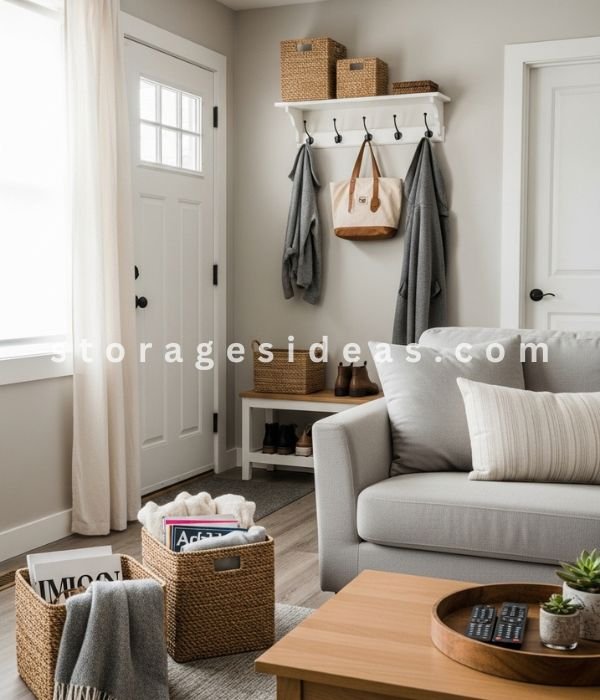
After all of this, the biggest change wasn’t how the space looked.
It was how little attention it needed.
Before, everything depended on effort. Remembering what to do. Taking the time to do it. Trying to stay consistent.
That’s what kept breaking.
Because anything that depends on effort eventually gets skipped.
I thought I needed better habits.
But what I needed was less friction.
Once the resets became simple enough, they stopped feeling like tasks. They just happened as part of using the space.
And that’s what made them last.
Not effort.
Just alignment with how things already move.
What Actually Makes Quick Home Reset Ideas Work
What took me time to understand wasn’t how to reset the space, but why it never stayed that way. Every reset worked at first. The room felt lighter, easier to move through, and more controlled.
Then, small things started slipping again. Something left out, something delayed, something skipped because it didn’t feel urgent. Nothing broke all at once, but the system slowly loosened.
At first, I thought it was a consistency problem. That I just needed to stay on top of it more and be more disciplined about putting things back. But that didn’t last, because the system depended on effort every time I used it.
That’s where it kept failing. Once I started paying attention to friction, the pattern became clear. If something takes even a small amount of effort, it gets delayed. And once it’s delayed a few times, it stops happening altogether.
What worked instead was making quick home reset ideas easy enough to repeat without thinking. Not perfect, not complete, just easy. Because when something is simple to start and simple to finish, it actually gets done.
Frequently Asked Questions
What is a home reset?
A home reset is a short routine that returns a room to its normal state. It focuses on putting things back and clearing surfaces rather than deep cleaning, so it takes minutes instead of hours.
How long should a quick home reset take?
A few minutes per zone is enough. Setting a timer helps, because a fixed end point makes it easier to start and stops the reset from turning into a full clean.
Where should I start a reset if the whole house feels messy?
Start with surfaces and the entry area. Most clutter begins there and spreads, so resetting those two spots first gives the quickest visible result.
How often should I reset my home?
Small daily resets work better than occasional big ones. Putting a few things back whenever you pass through a room prevents build-up, and a flexible routine is easier to keep than a strict schedule.
Final Thoughts
I used to think I needed more time. More time to clean, more time to organize, more time to keep everything in place.
So I kept trying to manage the space better. Cleaning more often, rearranging things, and trying to stay consistent. But it didn’t hold, because the problem wasn’t time.
It was what happened in between.
Once I stopped trying to fix everything at once and focused on small resets instead, the pressure dropped. The space didn’t need constant attention anymore, and it didn’t depend on having the energy to do everything properly.
It didn’t stay perfect, but it stayed under control. And that made it easier to live with, even on days when I didn’t think about it.
If your home keeps slipping back into clutter, the answer isn’t to do more. It’s to make the reset easier, so it happens without resistance.