

Your guests arrive in six weeks. That sounds like plenty of time until you picture the air mattress stuffed behind the coats, the spare sheets somewhere in the dryer pile, and the pillows smelling faintly of attic. Guest bedding storage is the quiet job that decides whether hosting feels relaxed or frantic.
Six weeks is exactly the right amount of runway. Buy the bags and bins this week, test the mattress and repack it next week, and by arrival week everything slides into place in under ten minutes. The nine ideas below are ordered by moment: between visits, during the stay, and after the holidays.
All of it fits a small home. No spare room required, no renovation, and nothing that damages a rental.
Why Guest Bedding Storage Is a Holiday Job
A holiday guest needs a full bedding set: mattress, sheets, two pillows, a blanket, and a comforter. Loose, that pile fills a shopping cart.
Worse, it arrives in waves. The mattress lives in a bag behind the couch, the comforter in the attic, and the sheets in a pile the dryer claimed weeks ago. A storage plan gathers every piece into one labeled system.
The math is friendly. A queen air mattress packs to roughly 17 by 7 by 13 inches, about the size of a gym bag. Two jumbo vacuum bags flatten a whole queen bedding set to a third of its volume.
That is an entire guest bed in roughly one shopping-bag footprint, hidden on a single closet shelf. It also keeps the holiday part festive, because a tidy spare room leaves space for Christmas decor ideas instead of a pile of bedding.
_Between visits: shrink the kit and stage it._
1. Vacuum-Seal the Spare Bedding: A Queen Set in Two Flat Bags
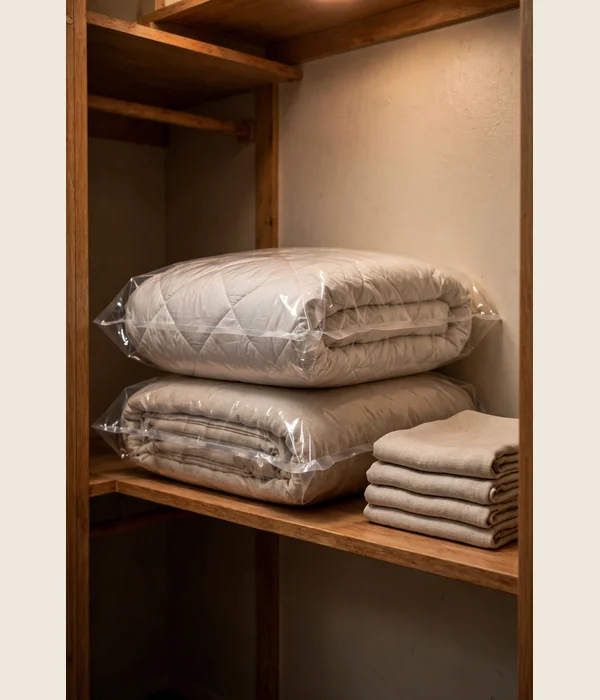
A jumbo vacuum bag holds a full queen comforter set or four pillows, then shrinks it to about a third of its volume. You are removing air, which is the only thing making bedding bulky. Two bags turn a mountain of winter bedding into two flat parcels the size of a pillow each.
Seal the double zipper, press the cap onto the valve, and hold your vacuum hose over it for about thirty seconds. The bag hisses flat and stops shrinking when the air is gone. Write the contents on the bag with a marker so you are not reopening three of them on Christmas Eve.
Buy jumbo bags, roughly 39.5 by 31.5 inches, in a multi-pack with a hand pump included. A six-pack of jumbos typically runs under $25 and covers two full guest bedding sets. Choose double-zip seals with a screw-cap valve; bags with a single zip track lose their seal in weeks.
Where it works best:
- A closet shelf: the two flat bags stack where one comforter used to slump.
- Under a bed: they slide in like envelopes and stay dust-free for months.
- The back of a hall closet: out of sight but findable, since the bags are labeled.
- A guest-room dresser drawer: one bag per drawer, pump adapter tucked in the second.
- On a high garage shelf: sealed bags shrug off dust, though skip this if the garage gets damp.
2. Slide the Mattress Under the Guest Bed: Hidden, Dust-Free, Ready
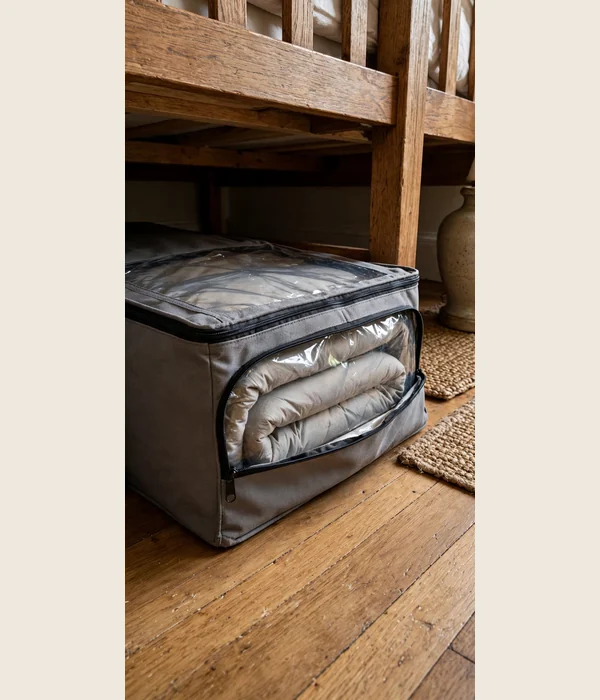
A deflated queen packs to about 17 by 7 by 13 inches, which is smaller than most people expect. That parcel slides under almost any adult bed with room to spare. The mattress lives steps from where guests sleep, sealed from dust, and invisible between visits.
Measure first. Rigid rolling bins need 7 to 10 inches of clearance to slide freely; flat soft-sided bags fit under 4 inches. If your frame is lower, a pair of 3-inch bed risers buys enough clearance for about $15 and takes five minutes to install.
This also works for the sofa sleeper in the living room. A soft-sided vacuum bag with the folded mattress and its blanket hides in the cavity under a low sofa. Guests get a real bed, and the living room keeps its daytime look.
Tips for best results: use a zippered under-bed bag so the folded mattress cannot splay open; keep the electric pump in the same bag or bin so nothing is missing at midnight; lay a folded sheet on top of the parcel so setup is one pull and one spread.
Watch out: never wedge the bag under a platform bed with zero clearance, because friction scuffs the PVC over time; in a damp room, skip fabric bags in favor of a sealed plastic bin.
3. Stand the Mattress Up Inflated: The Closet-Gap Trick
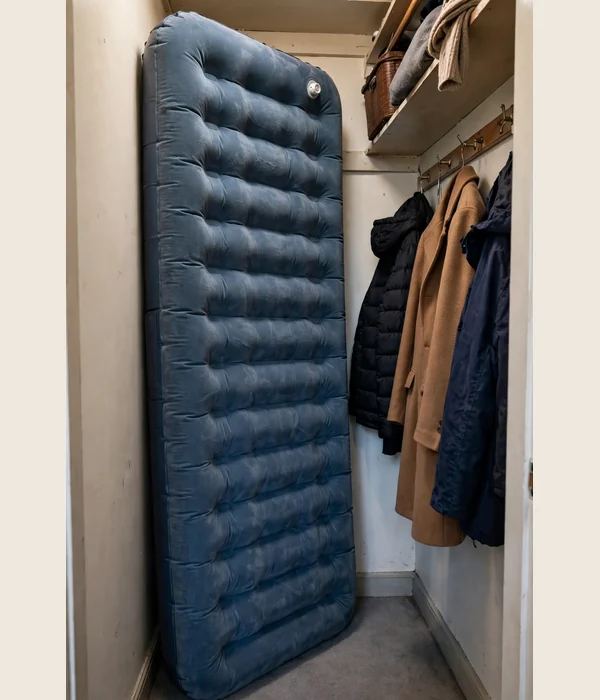
A queen mattress inflated is about 60 by 80 inches and 13 to 18 inches tall. Standing it upright on its long edge, it needs only a sliver of floor: roughly 15 inches deep and 5 feet of closet wall. You skip the whole deflate, fold, and re-inflate cycle for every visit.
This is a between-visits move for short stays, roughly under two weeks apart. The valves stay sealed, the mattress holds its air, and setup is literally unzipping the closet. Cinch it with a strap so it cannot topple when someone reaches for a coat.
Protect the surface. A moving blanket or spare sheet between the mattress and the closet wall prevents scuffs and punctures from hangers. Check the firmness a day before guests arrive and top up for one minute if needed; two weeks of standing air loss is usually under ten percent.
Where it works best:
- A coat closet by the front door: the mattress slides in behind the jackets.
- A hallway closet’s dead end: 5 feet of wall most closets waste anyway.
- A guest room with a deep wardrobe: lean it against the back wall.
- Between weekly visits: air loss is negligible over seven to ten days.
- With a battery pump stored beside it: top-ups take ninety seconds without hunting.
4. Bin the Guest Linens by Set: Grab-and-Go Closet Shelves
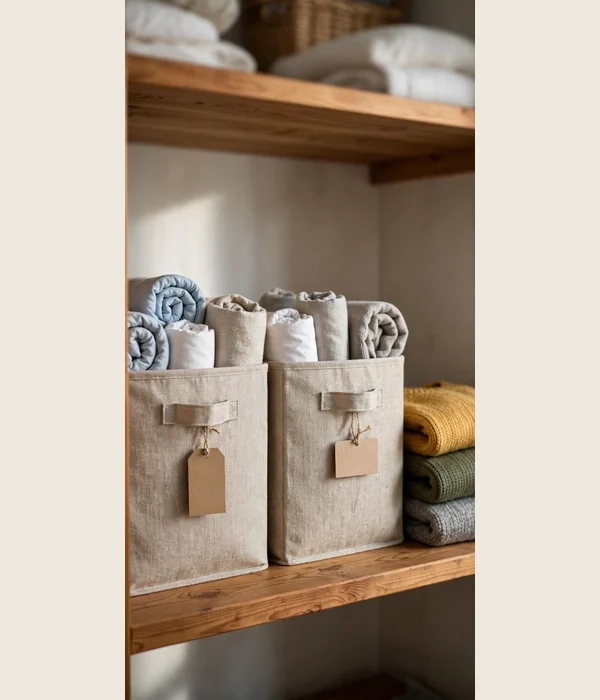
One bin holds one complete bed set: fitted sheet, flat sheet, two pillowcases, folded together. When guests arrive, you hand them one bin, not five hunting trips through the linen closet. Label each bin by size, because twin and queen sheets look identical when folded.
Standard closet shelves are about 12 to 14 inches deep, which fits a 12 by 12 by 10 inch cube bin two across. Fabric bins with handles pull out like drawers. Slip a dryer sheet into each bin and the set smells fresh even after three months on the shelf.
With linens boxed, the guest room looks calm instead of cluttered, leaving room for a couple of small Christmas bedroom decor accents on the dresser.
Tips for best results: roll the set instead of folding it, because a rolled set takes about 20 percent less space and shows fewer wrinkles; store pillowcases inside the fitted sheet’s pocket so pieces cannot separate; buy bins in one color so the shelf reads tidy.
Watch out: skip airtight plastic bins for cotton sheets in humid climates, because trapped moisture mildews; always wash everything before binning, since storage sets stains permanently.
_During the stay: make the guest’s nights easy._
5. Roll a Bedding Caddy to the Sofa Sleeper: Everything Within Arm’s Reach
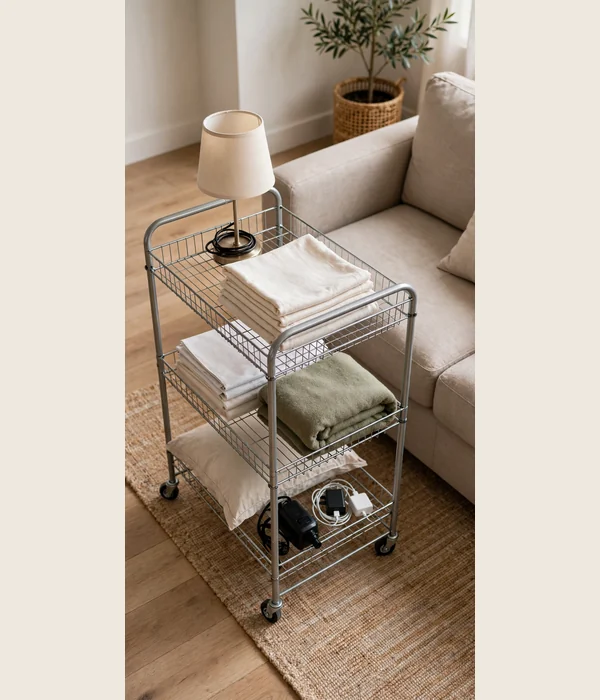
Not every holiday guest gets a bedroom. A three-tier rolling cart, roughly 17 by 28 by 38 inches, becomes a nightstand, linen shelf, and lamp stand beside the sofa bed. Load it with the sheet set, a folded blanket, the pillow, the pump, and a phone charger, and the living room guest has a real station.
Roll it in when guests arrive and park it back in the hallway when they leave. The whole kit stays packed between visits, so setup is ninety seconds of rolling, not twenty minutes of gathering. A cart with locking casters stays put on hard floors and still glides over rugs.
Expect to spend under $40 for a sturdy metal cart with three baskets. Look for one with a weight rating around 100 pounds, because bedding plus a lamp adds up. Avoid plastic carts without locking wheels; they creep across the floor overnight.
Where it works best:
- A living-room sofa sleeper: the cart sits beside the arm like a hotel nightstand.
- A den that doubles as a guest room: everything travels in, everything travels out.
- Guests with kids: the bottom tier holds toys or diapers without touching the bedding.
- Small apartments: the cart parks in an 18-inch hallway gap between visits.
- Apartments with no linen closet: the cart is the linen closet from November to January.
6. Put a Storage Ottoman at the Bed’s Foot: Seating That Swallows Blankets
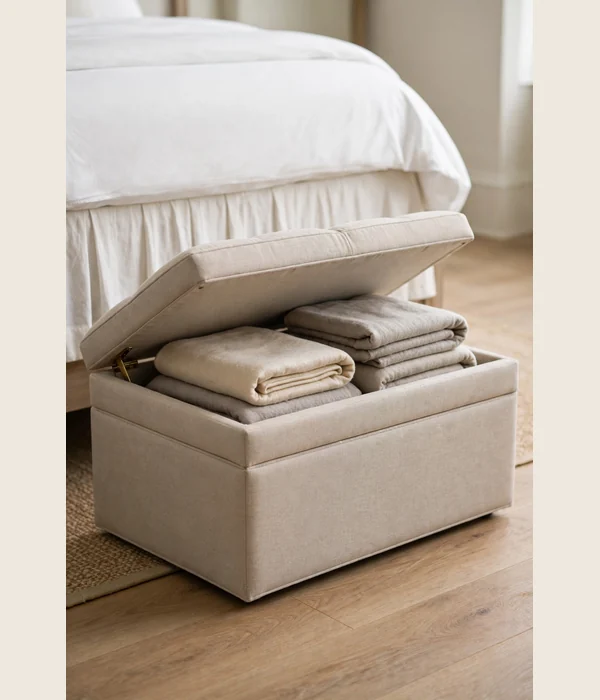
A 50-inch storage bench ottoman holds a full spare bedding load while looking like decor. The typical one is about 49 by 19 by 16 inches, with storage inside near 44 by 15 by 9 inches, enough for two folded blankets and a sheet set. Guests get a seat; you get a linen closet at the bed’s foot.
Weight capacity matters. Decent benches carry 250 to 265 pounds, which covers an adult sitting plus the bedding inside. Folding cube ottomans are cheaper and collapse flat between visits, but their 50-liter boxes swallow only one blanket and a pillow each.
The ottoman earns its floor space year-round as toy storage or an entryway bench.
Tips for best results: choose a flip-top with a soft-close lid so it never slams at midnight; match the ottoman fabric to the room so it reads as furniture; tuck the air mattress pump inside if the mattress lives under the bed nearby; lay a folded throw over the top to protect the fabric from pet claws.
Watch out: cheap particle-board ottomans bow under real weight, so check the stated capacity before anyone sits; keep the inside dry with a cedar block, because closed ottomans trap humidity.
7. Hang an Over-Door Linen Rack: Guest Room, No Dresser Required
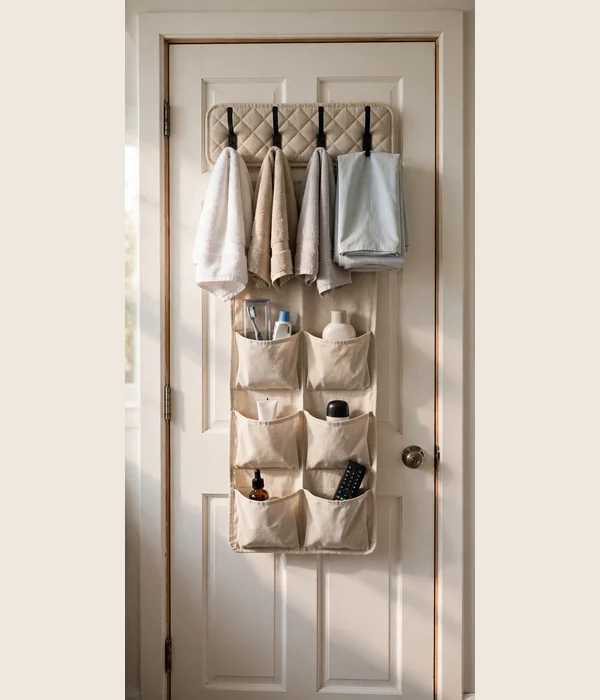
A guest room without a dresser still needs somewhere for sheets, towels, and tomorrow’s clothes. Over-door hooks and a hanging fabric organizer turn the back of the door into six pockets of storage with zero screws. That matters in a rental, where you cannot drill and do not want to explain anything to a landlord.
Hang the sheet set, a fresh towel, and the guest’s coat on the hooks; tuck toiletries and the TV remote in the pockets. Everything the guest touches lives behind the door instead of in a heap on the bed. When the visit ends, lift the rack off the door and the room is a study again.
Check the ratings before you buy. Sturdy over-door hook racks hold about 15 pounds total, which is two coats plus a towel; a six-pocket hanging organizer carries roughly 10 pounds of linens and toiletries. Spend the extra few dollars on a padded door bracket so the metal never scratches the paint.
Where it works best:
- A study that becomes a guest room: the door does the job a dresser would.
- A kid’s room hosting cousins: each kid gets a hook and two pockets.
- A rental spare room: no holes, no damage, nothing to patch in January.
- Guests staying three nights or less: the kit unpacks in two minutes.
- Beside a sofa bed: the nearest door is usually the living room’s own.
_After the holidays: pack it right for next year._
8. Deflate, Roll, and Rebag Correctly: So It Inflates Next Year
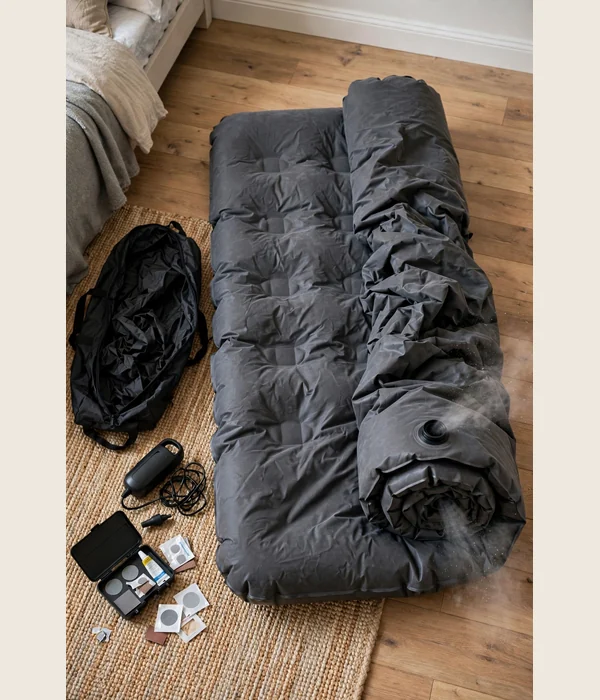
An air mattress stored wrong is the one that smells like mildew or splits at the seam in January. The right way takes six minutes and protects the PVC. Open every valve, press the air out from the far end, then fold the mattress in thirds lengthwise before rolling.
Roll toward the open valve so the last air escapes as you go. When the roll matches the original bag, roughly 17 by 7 by 13 inches for a queen, slide it in and store it flat. Fold lines left for months become weak seams; a loose roll has no hard creases.
Mark the bag with the mattress size and pump model. Future you will thank present you in November.
Tips for best results: dry the mattress fully before bagging, even if it only sat indoors; tuck the patch kit and the correct valve adapter into the bag so the kit is complete next year; store the bag flat on a shelf instead of hanging it, which stretches the seams.
Watch out: never store an air mattress in an attic that freezes or a garage that hits 100 degrees, because temperature swings weaken PVC and valves; skip vacuum-sealing the mattress itself, because over-compression stresses the welds.
9. Pack One Guest Kit Per Room: Post-Holiday Boxes With Checklists
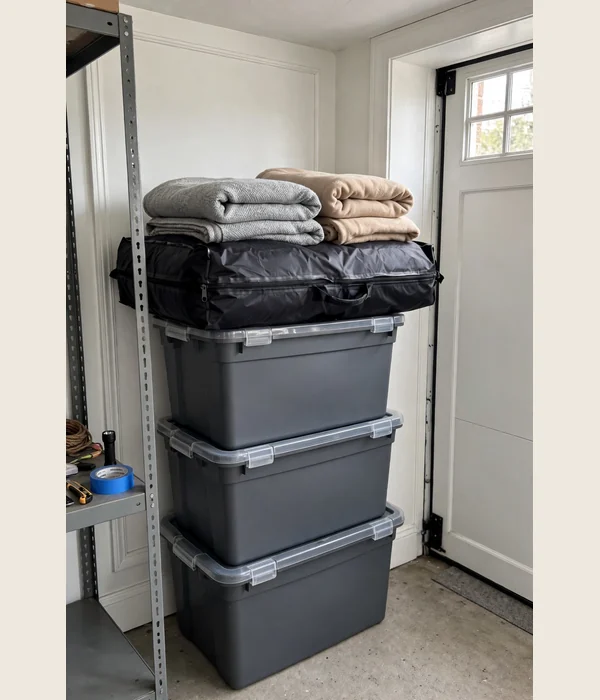
After the holidays, pack backwards from the visit. One box per sleeping spot: the mattress or bedding set, the pump, the patch kit, and a checklist card taped inside the lid listing what is in the box.
Next November, you open boxes, not the whole house. A 27-gallon bin swallows a queen kit with room for the pump.
Label each box with the room it serves: “Sofa bed,” “Guest room,” “Kids’ room.” Store the stack where you would actually go looking for it, usually the garage shelf by the door or the attic landing. If a box is hard to reach, it might as well not exist.
Before you seal the kits, air every piece out on the balcony for an afternoon; it beats storing faint kitchen smells for eleven months. And if the balcony needs its own festive moment, Christmas balcony decor has ideas that survive the season.
Where it works best:
- Homes that host once or twice a year: the kits age in place, complete.
- Garages with a dry shelf: bins stack three high and the labels face out.
- Attic landings: the kits sit by the hatch, first in and first out.
- Houses with three-plus guest spots: nobody mixes up twin and queen sets.
- After a New Year deep clean: air the bedding out, then seal the kits.
Conclusion
Start here: vacuum-seal the bedding and slide the mattress under the guest bed. Those two moves solve most of the mess in one afternoon, and cost less than a single hotel night for your guests.
Everything else on this list is a refinement. Get the kit packed before December arrives, and the six-week countdown becomes something you actually enjoy.
Frequently Asked Questions (FAQ)
How long can bedding stay in vacuum-sealed bags?
If you seal clean, fully dry bedding, six months is safe without mustiness. Past that, open the bags, air everything out for a day, and reseal. If the bag reinflated on its own, the seal failed, so reseal it rather than trusting it, because dust and moisture creep back in, and down and wool need the refresh sooner than synthetics.
Can I store an air mattress fully inflated between holiday visits?
If the visits are two weeks apart or less, yes: stand it upright in a closet and it will hold air fine. Top it up for a minute the day guests arrive. If months pass between visits, deflate and roll it instead, because valves slowly leak over a season and long-term pressure stresses the seams.
Is guest bedding storage in a garage or attic safe?
If the space is dry and the bins are sealed, yes. If the garage floods, sweats, or swings from freezing to 100 degrees, move the kits indoors, because moisture mildews fabric and heat weakens air mattress PVC. When in doubt, a hall closet beats a questionable garage every time.
My spare room has no closet. Where does the guest bedding go?
If there is no closet, an under-bed bin or a storage ottoman replaces it. A deflated queen in a zippered bag fits under almost any bed, and a 50-inch ottoman at the bed’s foot holds the sheet set and blankets. If the room has neither, a rolling cart parked in the hallway works as a portable linen closet.
What if the air mattress has a slow leak on the night guests arrive?
If it loses air overnight, check the valve first: most slow leaks are a valve that is not fully seated, not a hole. Pump it firm, then listen at the valve and seams for hissing. If you find a puncture, the patch kit in your guest box fixes it in ten minutes, while the ottoman’s spare blanket covers the guest.