
- Why this black friday storage shopping list starts with measurements, not discounts
- Kitchen storage worth buying on sale (and the exact specs to get)
- Bedroom and closet organizers with the measurements that matter
- Bathroom and laundry storage that survives humidity
- Living room and entryway storage for shared, seen-by-guests spaces
- Garage and outdoor storage built for real weight
- Small-space picks that work in any room
- What to skip on Black Friday, no matter the discount
- FAQs
Black Friday is the best week of the year to buy storage, and the easiest to waste money on it. Every year friends load carts with bin sets that look like bargains, then discover they don’t fit a single shelf in their house.
So this black friday storage shopping list works differently: no item makes the cut without a measurement attached. If you can’t measure for it, you don’t buy it, no matter what the discount says.
Here’s the plan: before November 27, walk your house with a tape measure. Measure every shelf, cabinet, gap, and doorway you want to fix, and write the numbers next to the item on this list. When the sales hit, you buy with confidence instead of guessing, which is the real secret to saving money on sales.
This guide gives you the exact spec for every item (size, material, capacity, load rating) plus the single measurement to take before buying.
Why a Pre-Black Friday Storage Plan Beats a Sale Scavenger Hunt
Sales week rewards the prepared and punishes the impulsive, and storage is the most impulse-proof category in the store, for one concrete reason: organizers are dimensional. A drawer organizer that’s half an inch too wide is trash. That’s why this black friday storage shopping list is built around measurements-first shopping, not deal-hunting.
The second reason: discounts on storage are rarely dramatic, typically 15–40% off quality bins, shelving, and organizers. Meaningful only when the item is exactly what you needed anyway; a 30%-off bin you don’t need is a 100% waste. The real winners are the expensive dimensional items: garage shelving, pantry systems, closet kits, rolling carts.
Those are the purchases where a November sale genuinely moves the needle.
So the strategy in this guide is simple. Each room section lists the items worth putting on your Black Friday radar, the exact spec to buy, and the measurement to take before the sale.
I also included a final section, What to Skip, because the sale traps are real and specific: bin multipacks sold without dimensions, one-size-fits-all organizers, and chrome in wet zones. Get your list and your tape measure ready; Black Friday (November 27) and Cyber Monday will take care of the prices.
1. Kitchen: Storage That Survives Daily Cooking
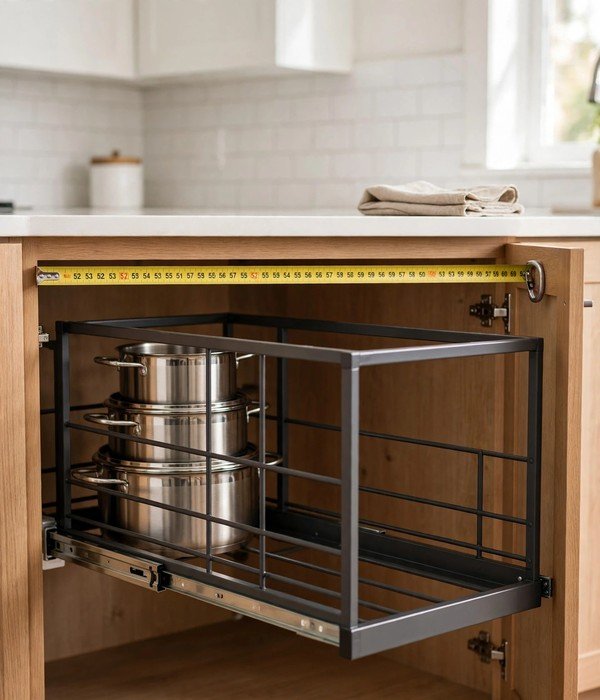
Kitchen storage earns its Black Friday dollars because this room has the tightest tolerances in the house: cabinet openings vary by half an inch, and everything you buy lives in heat, steam, and grease. Measure cabinet interiors (width, depth, and height between shelves) before the sale, most base cabinets are 22–24 inches deep, uppers 12–14 inches.
That one measurement session saves you from the classic fail: organizers that arrive 1 inch too deep and block the door.
Your Black Friday kitchen checklist:
- Pull-out under-sink organizer, spec: expandable frame, 11–14 inches wide (fits the ~17-inch clear zone beside most P-traps), rust-proof coated steel or hard plastic. Measure first: the clear width beside your P-trap and the door opening height (often just 18–20 inches).
- Stackable cabinet shelves (set of 2–4), spec: 12×12-inch or 13×13-inch freestanding risers, weight rating 20+ lb per shelf, rust-resistant coated steel. Measure first: interior cabinet height between shelves (stackers need ~10 inches of clearance to be useful) and cabinet depth.
- Drawer organizers (adjustable bamboo or plastic), spec: spring-loaded dividers or 4×6-compartment trays, bamboo for utensils, hard plastic for junk drawers. Measure first: drawer interior length × width, the most variable spot in the kitchen; “universal” trays rarely are.
- Pantry door-mounted spice rack or can rack, spec: sized to your door width (standard doors 30 inches, pantry doors 24–36), tier depth 3–4 inches so the door still closes. Measure first: door thickness + interior clearance when closed (most need 3.5 inches or less from the door face).
- Turntable/Lazy Susan (2-pack), spec: 10- or 12-inch diameter, non-slip base, 1-inch+ raised rim. Measure first: shelf depth, the turntable must spin without hitting the door (needs ~1 inch clearance all around).
- Airtight canister set (5–10 pieces), spec: BPA-free, square or rectangular footprint (round wastes ~25% of shelf space), silicone gaskets, dishwasher-safe. Measure first: shelf height where they’ll live (tallest canister + 1 inch clearance to slide it out).
Tips for best results: kitchen bundles beat buying pieces separately. Watch out: cheap painted organizers warp in stove heat, keep them 12+ inches from burners, and never trust “fits all cabinets” without checking your depth.
2. Bedroom and Closet: Double Your Storage Without New Furniture
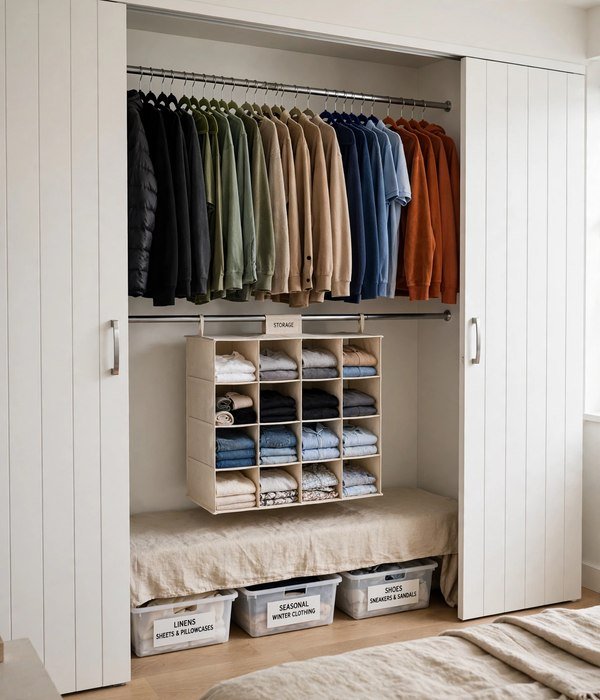
Closet storage is the Black Friday category where planning pays most: closet systems, garment racks, and shoe storage are the priciest organizers you’ll buy all year, and the discounts actually bite.
The master measurement is your closet’s interior: wall-to-wall width, floor-to-ceiling height, and rod height (a standard single rod sits at ~60 inches; double-hang needs 84 inches minimum, 40–42 inches per level). Write these three numbers on your phone now; they rule out half of what you’ll see on sale.
Your Black Friday bedroom and closet checklist:
- Modular closet system or adjustable hanging shelves, spec: hanging unit 6–8 fabric shelves (12-inch cubes standard), reinforced metal hooks rated 20+ lb, or a freestanding 4–6-shelf unit 18–24 inches wide. Measure first: rod height to the floor (hanging units need 48+ inches of rod clearance) and fixed-shelf cubby widths.
- Slim velvet or flocked hangers (50–100 pack), spec: 17-inch standard length, 360-degree swivel hooks, rated for heavy coats (check the hook thickness, cheap thin-wire ones bend under wool coats). Measure first: your current hanger count, multiply by the number of rods; most people underestimate by 30%.
- Under-bed storage boxes (2–4), spec: low-profile boxes 6–8 inches tall (standard under-bed clearance is 6–7 inches), 35–40 quart capacity, with lids and handles. Measure first: floor-to-bed-frame clearance in two spots (frames sag in the middle) and the width between legs.
- Shoe organizer: over-door or under-bed, spec: over-door canvas 24-pocket organizer (fits 30-inch doors, 3.5-inch pockets for men’s shoes), or under-bed shoe bag with 12–16 slots. Measure first: door width; pair count for sizing (24 pockets = 12 pairs).
- Dresser drawer dividers (set of 4–8), spec: spring-loaded adjustable dividers that span 12–18 inches, or bamboo grid inserts. Measure first: each drawer’s interior length and width, bedroom dressers vary wildly; measure every drawer you want to fix, not just one.
- Vacuum storage bags for seasonal bedding (set of 4–6), spec: jumbo 28×40-inch bags for comforters, valve-style (more reliable than pump-less), double-zip seal. Measure first: the folded size of your comforter, king comforters need jumbo, twins fit large.
Tips for best results: if your closet needs a full overhaul, the system is the Black Friday purchase, accessorize in the same cart. Watch out: unrated wire and fabric shelves bow within months; check for 10+ lb per shelf.
3. Bathroom and Laundry: Storage That Survives Humidity
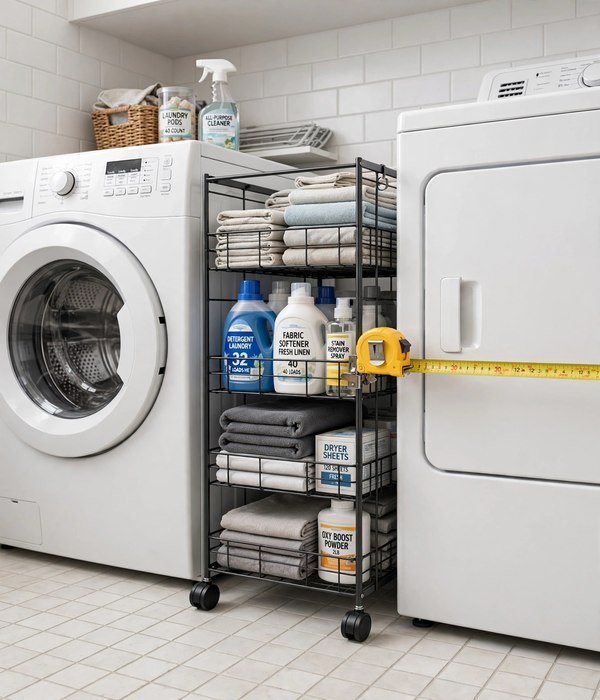
Bathroom and laundry storage fails faster than any other category because of humidity, steam, and chemicals, so material spec matters more than price here. The rule: no chrome, no bare steel, no untreated wood in the bathroom unless it’s stainless or powder-coated; cheap chrome rusts in months.
In the laundry room, the master measurements are the washer/dryer footprint (a standard top-load pair ≈ 54 inches wide × 27 inches deep) and the side gaps (usually 1–3 inches), those gaps are where the best storage lives.
Your Black Friday bathroom and laundry checklist:
- Slim rolling laundry cart (the gap cart), spec: 5–7 inches wide, 3–4 tiers, lockable wheels, 35+ lb total capacity. Measure first: the exact side gap next to your washer or dryer, carts are made in fixed widths (5.5, 6.5, 7.5 inches); too wide jams, too narrow tips.
- Over-toilet storage rack, spec: 24–30 inches wide, 3+ tiers, 50+ lb capacity, adjustable feet for uneven floors. Measure first: wall-to-front-of-tank distance (most racks need 10+ inches of depth clearance) and ceiling height.
- Shower caddy or tension-pole organizer, spec: corner tension pole extending 5–9 feet with 4+ adjustable baskets, or a hanging caddy with 2–3 deep pockets and hooks rated 3+ lb. Measure first: floor-to-ceiling height at the corner, and your actual bottle count, most people need 4+ slots, not 2.
- Under-sink bathroom organizer (pull-out), spec: expandable width 12–16 inches to clear the P-trap, 2 tiers, rust-proof plastic or coated steel (no chrome, see above). Measure first: clear width beside the P-trap and the cabinet’s interior height.
- Hamper with sorter (2–3 bags), spec: one bag per load type (lights/darks/delicates), each bag ~1.2–1.5 bushel (≈ 2 loads), removable washable bags, ventilated frame. Measure first: the floor space where it lives, sorter hampers are typically 30–36 inches wide; measure the laundry room or bedroom corner first.
Tips for best results: buy the system pieces, gap cart plus over-toilet rack together. Watch out: suction cups fail on textured tile and steamy showers; buy screw-mount or tension-mount instead.
4. Living Room and Entryway: Storage Guests Actually See
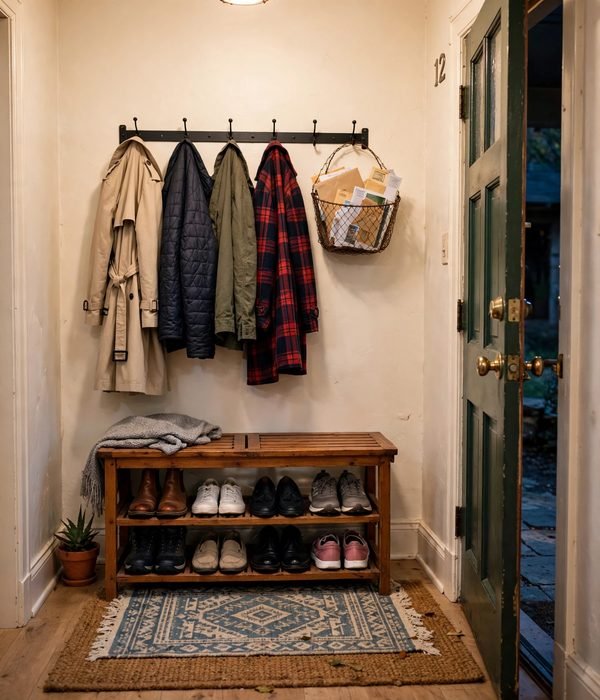
Living room and entryway storage is furniture-grade organizing: it has to look like furniture, hide real clutter, and survive daily traffic. The mechanism is concealment at the threshold, shoes, coats, remotes, throws, and the mail pile all need a home closer than the bedroom they migrate to.
The master measurements: entryway floor footprint (most small entries have 3–4 feet of usable wall) and living room “dead zones”, the 12–18 inches beside sofas and the 6–8 inches under consoles.
Your Black Friday living room and entryway checklist:
- Entryway bench with storage (shoe bench), spec: 36–48 inches wide, 2-tier shoe shelf (6–10 pairs), seat rated 250+ lb. Measure first: your wall length and the door swing arc (the bench must clear a 36-inch swing path).
- Wall-mounted entryway organizer (hooks + shelf), spec: 24–36-inch rail, 4–6 hooks rated 15–35 lb each, top shelf 6–8 inches deep for keys and mail. Measure first: stud positions (coat hooks must hit studs) and your household’s coat count (2 per person minimum).
- Storage ottoman or coffee table with hidden storage, spec: ottoman 24–36 inches long, safety-stay lid, interior 2+ cubic feet; coffee table with lift-top or drawers, 6+ inches usable depth. Measure first: sofa seat height (match within 1–2 inches) and walking clearance (18 inches minimum).
- Console or sofa table with drawers/baskets, spec: 48–60 inches long, 10–14 inches deep, 2+ drawers or cube bays sized for 11–13-inch fabric bins. Measure first: the wall or sofa-back length it sits against, and outlet positions for a lamp.
- Media and cord organizer set, spec: cable hideaway box (large: 16×6×5 inches for power strips), 10–20 reusable Velcro ties, adhesive cord clips rated 1–3 lb. Measure first: count your visible cords and the power strip’s dimensions before buying the box.
- Decorative baskets (set of 3–5, nesting), spec: mixed sizes (small ~10 qt, medium ~20 qt, large ~40 qt), woven seagrass/cotton, better in living spaces than plastic. Measure first: the shelf, nook, or console bays they’ll live in, one measurement per spot.
Tips for best results: a bench + hook rail together solve 80% of entryway clutter, and furniture discounts beat organizer discounts. Watch out: particleboard cores swell from dripping shoes, choose solid wood or sealed laminate for anything touching shoes.
5. Garage and Outdoor: Storage Built for Real Weight
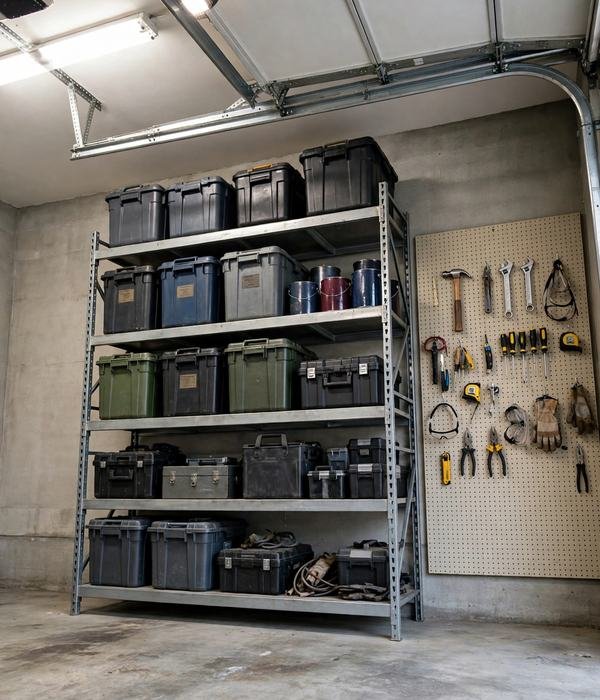
Garage and outdoor storage is where Black Friday math gets serious: shelving units, deck boxes, and tool organizers are the most expensive items on this whole list, with the biggest sale drops. The mechanism is vertical volume and weight rating, garages have 8+ feet of unused vertical space, and everything stored there is heavy.
The master measurements: ceiling height (standard garage ≈ 8–9 feet), the wall runs you can spare in feet (minus the garage door tracks and car-door swing), and your heaviest item’s weight (totes of holiday decor run 30–60 lb each).
Your Black Friday garage and outdoor checklist:
- Heavy-duty shelving unit (4–5 tier), spec: 36–48 inches wide, 18–24 inches deep, steel frame, 600–2,000 lb total capacity (check the per-shelf rating, not just the total). Measure first: your available wall run in feet and ceiling height, buy the tallest that clears by 6+ inches.
- Deck box / outdoor storage box, spec: 50–150 gallon capacity (a 100-gallon box holds a 6-cushion patio set), weatherproof resin, lockable lid, UV-resistant. Measure first: what goes inside, cushion sets need 60+ gallons, decor totes need 100+; plus the deck/patio footprint.
- Overhead garage storage racks (ceiling-mounted), spec: 4×8-foot platform standard, 600+ lb capacity, adjustable 22–40 inches below the ceiling, lag-bolted into joists. Measure first: joist direction and spacing (16 or 24 inches on center, the rack must align), and 7+ feet of clearance below.
- Pegboard or slatwall tool organizer, spec: 16–32 square feet of board, metal (not fiberboard) for garage humidity, hook assortment with 10–25 lb rated hooks. Measure first: your clear wall space (minus windows and electrical panels) and your tool inventory’s heaviest items.
- Stackable heavy-duty totes (set of 4–8), spec: 27-gallon industrial totes (the standard garage size), reinforced lids, stackable to 4+ high, 50+ lb load each. Measure first: your shelving depth, 27-gallon totes are ~17×27 inches; they must fit your shelf decks.
- Wall-mounted bike rack (2-pack), spec: folding arms rated 50+ lb per bike, padded cradles, stud-mount (not drywall anchors). Measure first: bike count and weight (e-bikes run 50–70 lb, check the rating per bike), plus stud positions.
Tips for best results: buy the shelving system first, then match totes and bins to your shelf dimensions. Watch out: resin outdoor items can crack in hard freezes, store them sheltered or confirm the cold rating.
6. Small Spaces: Storage That Works in Any Room
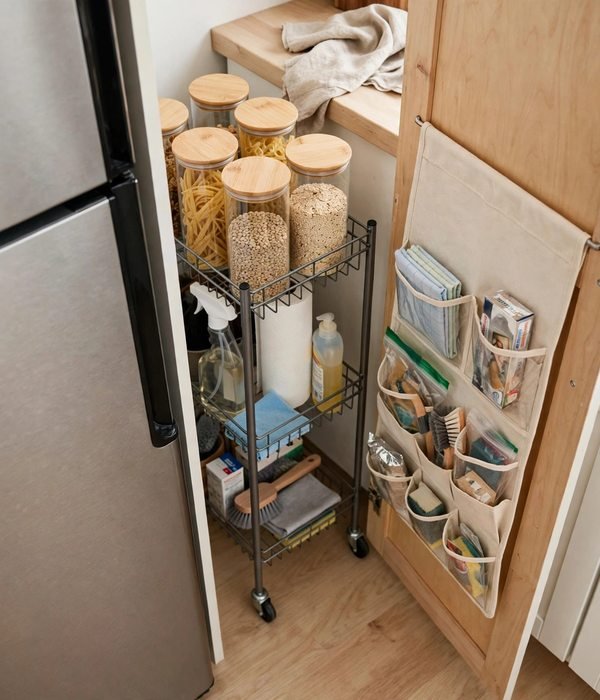
Small-space storage is the Black Friday category for renters and apartment dwellers, every item here works in any room, needs no drilling, and fits tight clearances (narrow gaps, thin doors, low ceilings). The mechanism is surface multiplication: you already have floors, doors, and walls, these picks turn them into storage.
The master measurements: narrow gaps beside appliances and furniture (often 2–6 inches), interior door widths (standard 28–32 inches), and clearance above your tallest furniture.
Your Black Friday small-space checklist:
- Slim rolling cart (3–5 tier), spec: the classic gap cart, 15×40×7 inches, 3–5 tiers, locking casters, 30+ lb capacity. Measure first: your narrowest gap (beside the fridge, washer, or between furniture), carts come in fixed widths; measure to the quarter inch.
- Over-door organizers (hooks and pocket panels), spec: padded over-door hooks fitting 1.5–1.75-inch door thickness, or 24-pocket hanging panels. Measure first: every door’s thickness (exterior and interior differ) and confirm the door still closes and latches.
- Stackable storage cubes / fabric bins (set of 4–8), spec: 11–13-inch cubes (the cube-shelf standard), reinforced sides and handles, 15+ lb rating per bin. Measure first: your cube shelf’s bay openings (not the outer frame), bins are sized by bay.
- Under-furniture storage: flat totes and slide-out drawers, spec: low-profile totes 5–7 inches tall for under-bed, slide-out drawers on casters for under-couch (couch clearance is typically 4–6 inches). Measure first: the clearance under each piece, measure twice, in the middle and at the edge.
- Wall-mounted drop-leaf table or folding desk, spec: folding table 30–40 inches wide, 200+ lb capacity when open, 4–6 inches deep when folded, locking brackets. Measure first: the wall span, stud positions (must hit studs at this load), and 30+ inches of chair clearance when open.
- Tension rods (multi-pack, spring-loaded), spec: rods extending 18–36 and 28–48 inches, 3–10 lb capacity depending on span, rubber end caps that won’t mark walls. Measure first: the inside width of each cabinet or recess, rods are sold by extended range, and a rod at max extension holds far less weight.
Tips for best results: every item here is damage-free and moves with you. Watch out: tension rods and adhesive organizers have hard weight limits, in humid bathrooms, cut adhesive ratings in half as your safety margin.
7. What to Skip: The Classic Black Friday Sale Traps

This section exists because sales week is engineered to make you buy storage that doesn’t store. Every trap below is a real pattern in Black Friday carts, and in January return lines. The rule: if the listing doesn’t give dimensions, capacities, or weight ratings, the discount is hiding the product’s weakness. A 40%-off mystery bin is still a mystery.
- Bin and basket multipacks with no dimensions listed, if the listing gives no length/width/height, walk away. Unmeasured bins fit nothing on purpose. The test: can you write the item’s footprint next to your shelf measurement? If not, skip it, no matter the price.
- “One-size-fits-all” drawer and cabinet organizers, there is no one size; your drawers and cabinets all differ. These arrive too wide, too deep, or too tall, and can’t be cut to fit. The test: does the listing give adjustable ranges, or fixed “universal” dimensions? Only adjustable earns a spot.
- Chrome or bare-steel bathroom organizers at deep discounts, they’re cheap because chrome rusts in bathroom humidity within months; retailers know it. For metal in the bathroom, it’s stainless steel or powder-coated, and those rarely go 50% off because they last. The test: read the material line, not the discount line.
- Flimsy fabric organizers with no weight rating, hanging shelves and shoe organizers that list no per-shelf capacity are telling you the capacity is embarrassing. Wire-frame and unreinforced fabric units bow within months under real clothes. The test: look for a number (10+ lb per shelf minimum); no number, no buy.
- Specialty single-use organizers, the avocado slicer of storage: the single-spice carousel, the gadget-specific dock. Each occupies a shelf slot that a turntable or bin would fill better, for more things, forever. The test: can it hold at least three different categories of items? If it only holds one, skip it.
- Oversized totes that exceed your shelf depth, the 45-gallon monster tote is a great price per gallon and a terrible fit for 18-inch-deep shelving. The test: tote footprint versus your actual shelf depth, buy the tote that fits the shelf you own.
- Matching “collection” sets sold only as full sets, the 20-piece pantry collection, the 15-piece bathroom suite. You’ll use 6 pieces and the rest become clutter, the opposite of the point. The test: can you buy just the pieces you measured for? Price the pieces you actually need separately first.
Tips for best results: apply the skip-list before you shop, write it on the same notes page as your measurements. Watch out: the biggest trap isn’t a product, it’s the cart, “frequently bought together” upsells are designed to undo your list. Buy the list. Close the tab.
Conclusion
Your Black Friday storage haul should be planned, measured, and room-by-room, and this black friday storage shopping list is the plan.
Start with the big dimensional wins (garage shelving, closet systems, entryway furniture), fill in with the gap carts and turntables that multiply small spaces, and buy only what you measured for. Buy this first: the slim rolling gap cart, the cheapest item on this list, it works in the kitchen, bathroom, laundry room, and every small-space gap in the house, and it’s the one purchase almost nobody regrets.
Measure your narrowest gap before November 27 and make that the first thing in your cart. If you want to keep the savings going into gifting season, my 25 organization gift ideas for tidy-home lovers pairs perfectly with this list.
And if you’re deciding between open and closed storage before you buy, our shelves vs cabinets guide for small spaces will settle it.
Frequently Asked Questions (FAQ)
Is Black Friday actually a good time to buy storage organizers?
Yes, for the big dimensional items. Garage shelving, closet systems, and entryway furniture see genuine 20–40% drops as retailers clear bulky inventory. Small accessories discount too, but only a few dollars, plan your list around the big pieces first, then add the small ones to the same cart.
Should I buy storage on Black Friday or wait for Cyber Monday?
Buy big-ticket pieces (shelving, closet system, entryway bench) on Black Friday, inventory on dimensional items sells through, and Cyber Monday restocks are unreliable. For small accessories and multipacks, Cyber Monday is often equal or better. Either way, buy from your measured list, the day matters less than the fit.
What measurements do I need before Black Friday storage shopping?
The five that rule out most mistakes: shelf width/depth and height between shelves for every cabinet you want to fix, drawer interior dimensions, narrow gaps beside appliances (to the quarter inch), door thicknesses for over-door items, and your closet’s wall-to-wall width and rod height.
Write them in a notes app with the item name next to each, that’s your real black friday home organization plan.
Are Black Friday storage deals better online or in-store?
Online is better for this category: more dimension listings, easier spec comparison, and wider selection of the exact sizes (gap carts, adjustable dividers, specific-width organizers) that stores don’t stock. In-store wins only for furniture-grade pieces you want to inspect for finish quality, and for avoiding shipping damage on heavy shelving.
What storage should I never buy on sale?
Anything without published dimensions, anything chrome for a humid bathroom, “universal fit” organizers, and full matching sets you’ll only half-use. The discount doesn’t fix a product that doesn’t fit your home. Run every deal through the measurement test from this list first, if it passes your numbers, it’s a genuine bargain.