
Introduction
Working from home sounds like a dream until the laundry pile creeps into your peripheral vision, the kids burst through the door mid-Zoom call, or the TV in the background slowly erodes your concentration. The reality for millions of remote workers is that the biggest challenge isn’t the work itself; it’s the space.
Not everyone has a dedicated spare room to convert into a home office. Most of us are carving out a workspace in a corner of the living room, a section of the bedroom, or a shared open-plan space that serves multiple purposes throughout the day. And that’s exactly where the right home office room divider ideas can make all the difference.
A well-chosen room divider doesn’t just create a physical boundary; it creates a psychological one, too. The moment you step into your defined workspace, your brain shifts into work mode. Distractions fade. Focus sharpens. And at the end of the day, closing off that space helps you mentally switch off and actually enjoy your home again.
In this guide, we’re sharing 11 inspiring and practical ideas that will help you carve out a productive, private workspace, whatever your layout, style, or budget.
If you’re still refining your setup, these storage-friendly home office decor ideas can help you build a workspace that feels both functional and focused.
Why a Room Divider Can Transform Your Home Office
Before we get into the specific ideas, it’s worth understanding why creating that separation matters so much for productivity and well-being.
When your home and workspace blur into one, it becomes difficult to concentrate and just as difficult to stop working. A physical boundary, even a partial one, signals a clear shift between the two. It gives your brain the visual and spatial cues it needs to focus during work hours and decompress after them.
Beyond focus, a divider also adds a layer of privacy that’s increasingly important as video calls have become a standard part of work life. Nobody wants their unmade bed or cluttered kitchen visible in the background of a client meeting. A thoughtful divider creates a clean, professional backdrop while keeping the rest of your home private and personal.
The good news is that today’s home office room divider ideas span everything from budget-friendly folding screens to stunning architectural built-ins, and there’s a perfect solution for every space, style, and situation.
1. Bookshelf Dividers: Storage and Separation in One
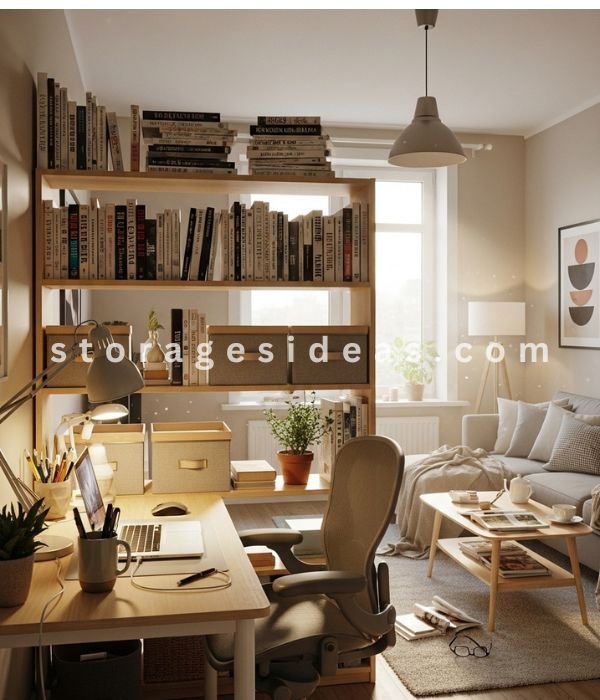
One of the most popular and practical home office room divider ideas is the humble bookshelf, and for good reason. A freestanding bookshelf placed strategically between your workspace and the rest of the room does double duty: it defines the boundary of your office while providing valuable storage on both sides.
Why it works so well: A bookshelf divider is semi-open by nature, meaning it creates visual separation without completely closing off the space. This keeps the room feeling airy and connected while still giving your work area a clear sense of identity. Fill it with books, plants, office supplies, and decorative objects to make it feel intentional and styled.
Best configurations:
- A tall, wide bookshelf running parallel to your desk creates a solid backdrop for video calls while keeping supplies within easy reach
- Open-backed shelving units work from both sides, so items are accessible whether you’re in work mode or relaxing on the other side.
- Modular shelving systems like IKEA KALLAX allow you to configure the unit to exactly the height and width you need
Pro tip: Add a few closed boxes or baskets on the lower shelves to keep less attractive office supplies out of sight during calls. The upper shelves can hold books, plants, and personal items that make for a professional yet warm video call background.
This works especially well when paired with book storage ideas, helping you keep your workspace organized while defining the area.
2. Folding Screens: The Flexible, Budget-Friendly Option
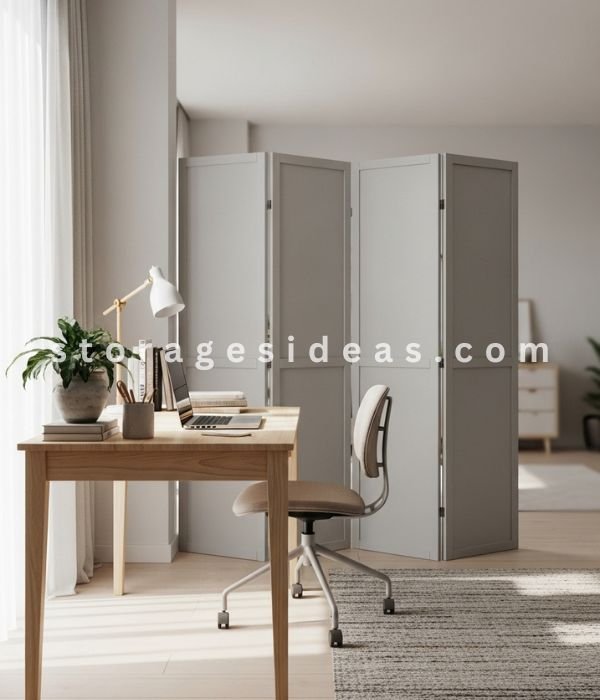
If you’re renting, working with a limited budget, or simply need a solution you can move around easily, a folding screen is one of the most versatile home office room divider ideas available. These freestanding panels have been used for centuries to divide spaces, and they remain just as effective today.
What makes folding screens great:
- No installation required, simply unfold and position where needed
- Easily moved, stored, or reconfigured as your needs change
- Available in an enormous range of styles, from rattan and bamboo to lacquered wood and fabric panels
- Excellent for renters who can’t make permanent changes to their space
Choosing the right screen: For a home office setting, look for a screen that’s tall enough to actually create a sense of enclosure, ideally at least 170cm (67 inches) or higher. Solid or densely woven panels provide better visual privacy than open lattice designs. If noise is a concern, look for fabric-covered or padded panels that absorb some ambient sound.
Style tip: Choose a folding screen that complements rather than contrasts with your existing décor. A rattan screen works beautifully in a boho or natural aesthetic, while a sleek lacquered screen suits a more contemporary, minimalist space.
Flexible layouts like this are widely recommended in small-space living strategies for adapting rooms to multiple uses.
3. Curtain Dividers for a Soft, Flexible Workspace Boundary
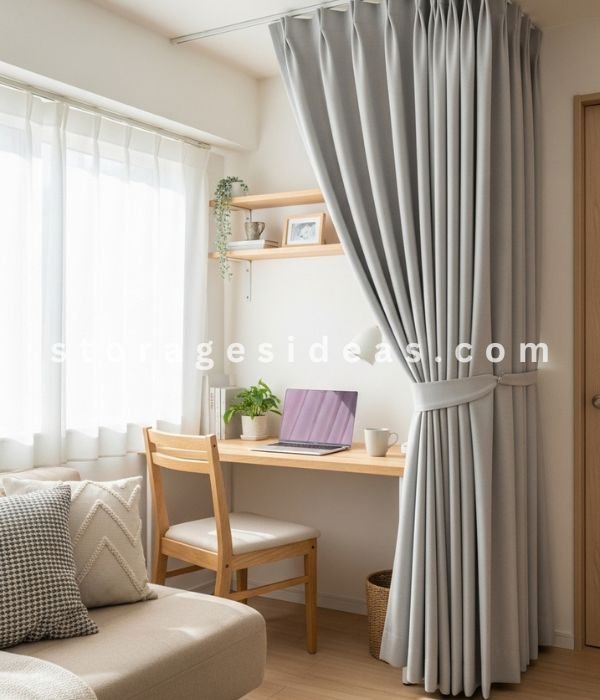
Curtains are one of the most underestimated home office room divider ideas and one of the most budget-friendly. A floor-to-ceiling curtain hung from a ceiling-mounted track or tension rod can completely transform a corner of a room into a private, enclosed workspace in a matter of minutes.
The appeal of curtain dividers:
- Incredibly cost-effective compared to furniture-based solutions
- Create a soft, cocoon-like feel around your workspace that actually aids concentration
- Can be fully closed for deep focus sessions or pulled back when you want the space to feel open
- Available in every fabric, weight, and color imaginable, from sheer linen to blackout fabric
Best applications: A curtain divider works particularly well in a bedroom where a small desk has been set up in a corner. By hanging curtains from the ceiling to enclose the desk area, you create a workspace that feels genuinely separate from your sleeping space, which is important for both productivity and sleep quality. When the workday ends, simply draw the curtain and the office disappears entirely.
Installation options: Ceiling-mounted curtain tracks offer the cleanest look and the most flexibility in terms of positioning. Tension rods work well for doorway applications or smaller alcoves. For renters, adhesive curtain rod brackets provide a no-drill alternative.
4. Glass Partitions Light, Openness, and a Professional Feel
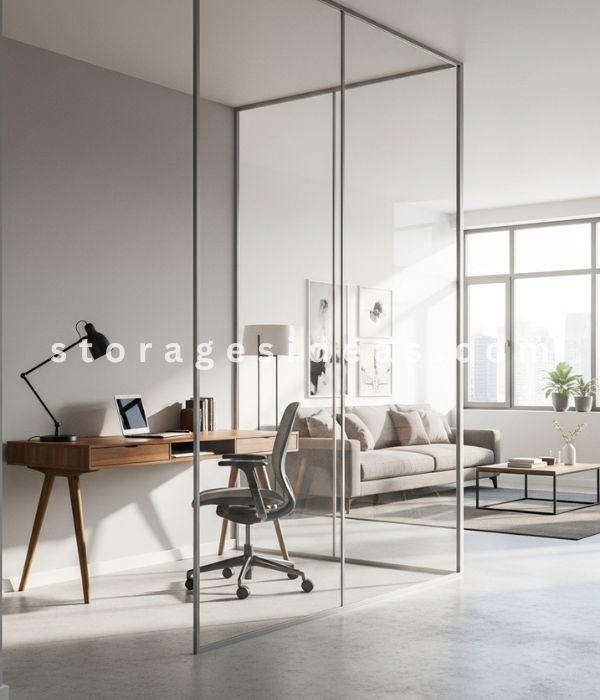
For those who want a more permanent or architectural solution, glass partitions are among the most striking home office room divider ideas you can invest in. Originally more common in commercial office spaces, glass dividers have become increasingly popular in residential home offices, and it’s easy to see why.
Why glass works so well for home offices: Glass partitions define the workspace clearly and professionally without blocking natural light, which is critical for maintaining energy and focus throughout the day. They create the look and feel of a dedicated office room while keeping the surrounding space bright and connected.
Types of glass partitions:
- Clear glass, maximum light flow, full visual connection with the rest of the space
- Frosted or ribbed glass maintains privacy while still allowing light to pass through; ideal for video calls
- Framed steel and glass. The popular black steel grid aesthetic creates a dramatic, architectural statement that works particularly well in industrial or modern interiors.
Practical considerations: Glass partitions typically require professional installation and represent a more significant investment than other divider types. However, for homeowners who work from home long-term, the improvement in workspace quality and aesthetics makes it a worthwhile one.
5. Plant Walls: A Natural, Biophilic Room Divider
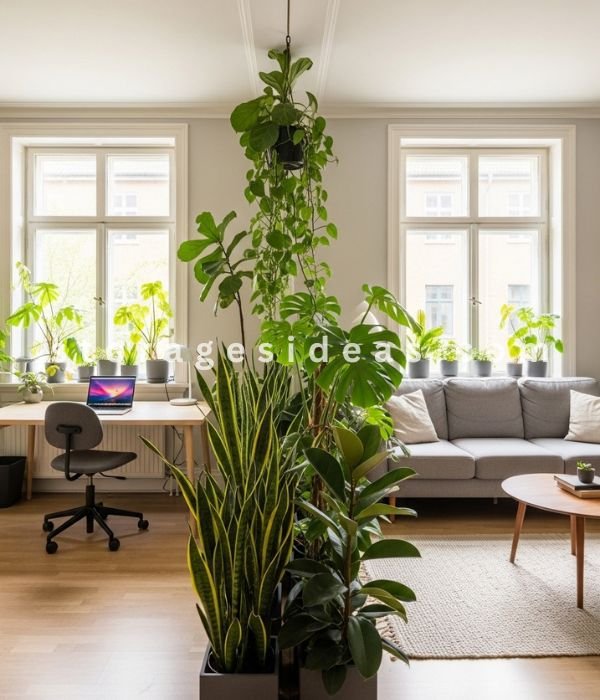
If you’d like your workspace boundary to double as a living, breathing design feature, a plant wall or row of tall plants is one of the most beautiful and mood-boosting home office room divider ideas available. Research consistently shows that having plants in a workspace reduces stress, boosts creativity, and improves air quality, all of which directly support productivity.
How to create a plant divider:
- Tall potted plants: A row of tall, statement plants, such as fiddle leaf figs, snake plants, tall bamboo, or olive trees, creates a natural, organic visual boundary between your workspace and the rest of the room
- Modular planter shelving: Freestanding planter shelving units allow you to stack plants at multiple heights, creating a denser, more enclosed green wall
- Trellis with climbing plants: A wooden or metal trellis with climbing plants like pothos or monstera creates a lush, living wall effect that’s both beautiful and functional.
What to consider: Plant walls require regular watering, adequate light, and occasional pruning. If natural light is limited in your workspace, choose low-light-tolerant species like snake plants, ZZ plants, or pothos.
6. Acoustic Panels: The Best Home Office Room Divider Ideas for Noise Reduction
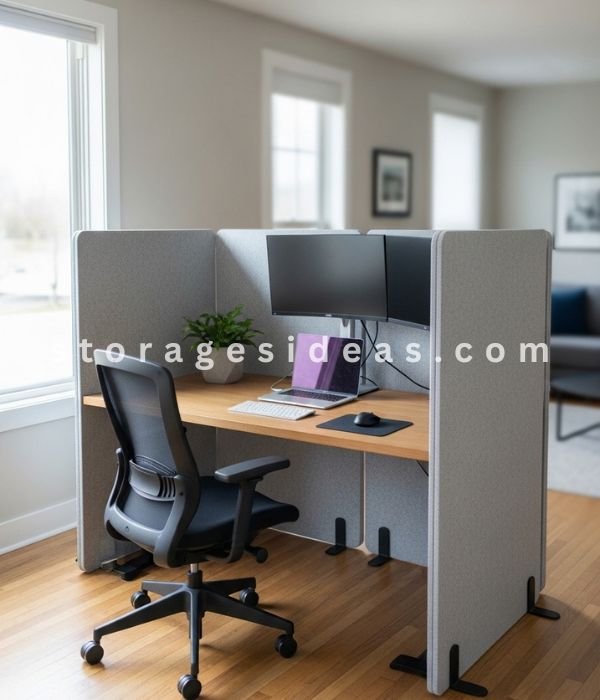
For remote workers whose biggest challenge isn’t visual distraction but noise, whether from household members, street sounds, or their own voice echoing on calls, acoustic panels are one of the most functional home office room divider ideas you can choose.
How acoustic panels work: Acoustic panels are constructed from sound-absorbing materials, typically foam, fabric-wrapped fiberglass, or dense felt, that reduce the amount of ambient noise that travels through the space. Freestanding acoustic panel dividers are positioned around or behind the desk to create a quieter, more focused work environment.
Benefits for home office use:
- Significantly improved audio quality on video and phone calls
- Reduced ambient noise from the rest of the home
- Better concentration in open-plan or shared living spaces
- Available in a wide range of colors and shapes, many look like stylish design features rather than functional panels
Best for: Remote workers who frequently take calls or video meetings, anyone sharing a space with noisy household members, or those who find background noise a significant distraction to their focus.
7. Pegboard Dividers Functional, Customizable, and Budget-Friendly
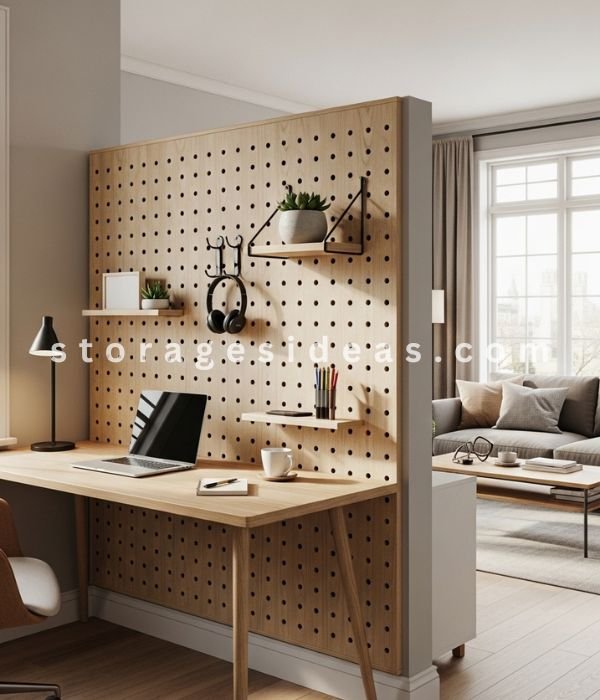
A pegboard divider is one of those clever home office ideas that solves two problems at once: it creates a visual boundary between your workspace and the rest of the room, and it provides a highly customizable vertical storage system right at your desk.
How it works: Mount a large pegboard panel on a freestanding frame to create a divider that faces your desk. On the office side, hang shelves, hooks, bins, and organizers for your most frequently used supplies, notebooks, headphones, charging cables, stationery, and more. The back of the divider faces the rest of the room and can be left plain, painted, or used for pinboards and notes.
Why remote workers love this setup: Everything you need is right in front of you, neatly organized and off the desk surface, which keeps your workspace feeling clean and clutter-free. The pegboard is also infinitely reconfigurable: as your storage needs change, simply reposition the hooks and shelves without any new drilling or installation.
This setup follows the same logic as quick access storage ideas, where everything you need stays within reach without cluttering your desk.
8. Sliding Barn Doors: A Stylish Statement Divider
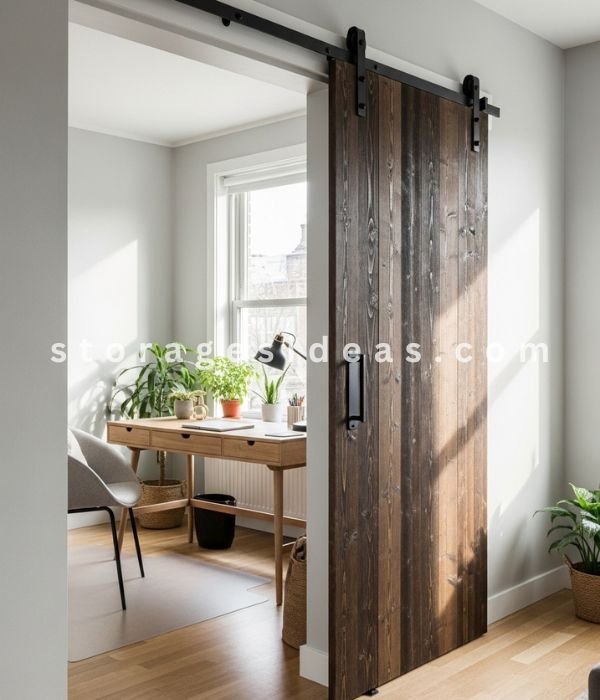
If your home office is set within a larger open-plan space and you want a solution that genuinely closes the workspace off when needed, sliding barn doors are one of the most stylish and practical home office room divider ideas for achieving that level of separation.
The appeal of barn doors: Unlike traditional hinged doors, barn doors slide along a track mounted to the ceiling or wall, meaning they require no floor space to open. This makes them ideal for tighter spaces where a swinging door would be impractical. When open, they sit flush against the wall and barely register. When closed, they completely enclose the workspace and block both noise and visual distraction.
Style options:
- Solid wood Warm, natural, and classic; works well in farmhouse or Scandinavian interiors
- Frosted glass panels maintain some light flow while providing full visual privacy
- Slatted wood: A more contemporary look that allows some air and light through while still creating a strong visual boundary
Practical note: Barn doors require a wall or ceiling track for installation, a relatively straightforward job for a handyman or confident DIYer, though professional installation is recommended for heavier doors.
9. A Built-In Desk Alcove with Surrounding Storage Walls
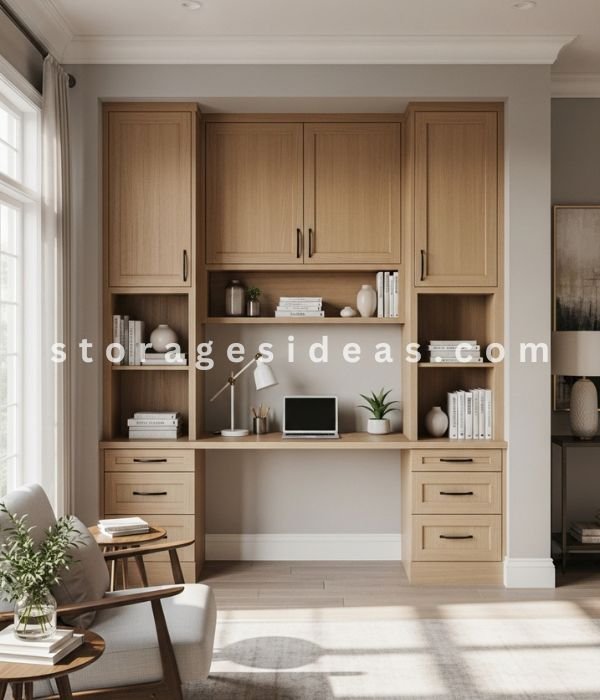
Sometimes the most effective home office divider isn’t a separate piece of furniture at all; it’s the workspace itself, designed so cleverly that it creates its own enclosed zone. A built-in desk alcove with floor-to-ceiling storage walls on either side is one of the most space-efficient and visually stunning home office configurations you can create.
How it works: By building (or purchasing) a desk unit that sits within a defined alcove with tall storage units on either side and potentially overhead shelving above, you create a workspace that feels genuinely separate from the rest of the room without needing any additional divider. The surrounding storage walls act as the boundaries of your office zone, and the whole setup looks intentional, bespoke, and beautifully organized.
Best suited for: Alcoves, recessed wall spaces, or the end of a living room or bedroom where a defined nook can be created. Even in an open-plan space, a U-shaped desk configuration with tall storage on either side creates a similar enclosed feeling.
10. Rope or Macramé Dividers Bohemian Style Meets Function
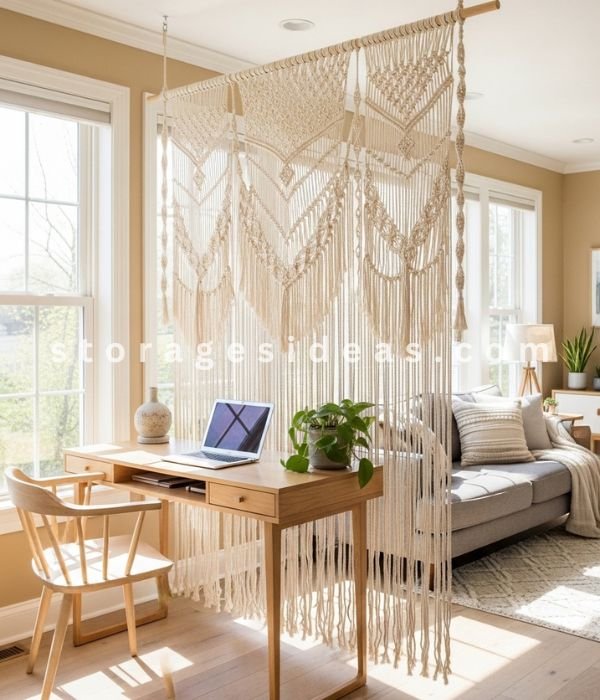
For those with a more relaxed, eclectic, or bohemian interior aesthetic, rope and macramé dividers offer a beautifully unique way to define a workspace without anything rigid or heavy. These textile-based dividers are lightweight, visually interesting, and add a warm, artisanal quality to any space.
What they offer: While rope and macramé dividers don’t provide significant noise reduction or complete visual privacy, they create a clear visual boundary that subtly separates the workspace from the rest of the room. They work particularly well in studio apartments or open-plan spaces where the goal is to define zones rather than completely enclose them.
How to style them: Hang a macramé panel from a ceiling-mounted dowel rod behind and above your desk, or suspend a series of knotted rope lengths from a horizontal rod for a more minimal, contemporary effect. Combine with warm lighting and natural materials on the desk for a cohesive, calming aesthetic that makes your workspace feel inspiring rather than sterile.
11. Modular Wall Panels Sleek, Contemporary, and Fully Customizable
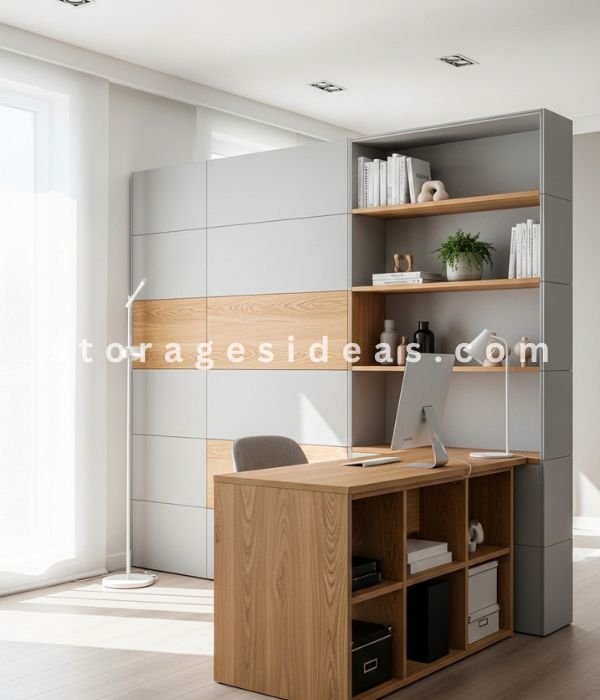
For a modern, architectural solution that can be tailored exactly to your space and storage needs, modular wall panel systems are among the most sophisticated home office room divider ideas currently available. These systems, offered by brands ranging from affordable flat-pack options to premium custom joinery providers, allow you to build a divider that is precisely configured to your height, width, and storage requirements.
What modular panels offer:
- Complete control over height, width, depth, and configuration
- Combination of open shelving, closed cabinet sections, and solid panel sections
- A built-in, architectural appearance that looks far more premium than freestanding furniture
- The ability to reconfigure or expand as your needs change over time
Design approach: Use solid panel sections to create a backdrop for your video calls and a sense of enclosure around your desk. Incorporate open shelving sections for books, plants, and decorative objects. Add closed cabinet sections to hide away less attractive office supplies, printers, and tech equipment. The result is a workspace that is both beautifully designed and superbly organized.
Conclusion
Whether you’re working in a studio apartment, a shared living space, or a home that simply never had a dedicated office room, the right divider can completely transform your working environment. The best home office room divider ideas aren’t just about blocking off space; they’re about creating a zone where you can genuinely focus, feel professional, and maintain the work-life separation that so many remote workers struggle with.
Start by thinking about what matters most to you. Is it visual privacy for video calls? Noise reduction? A stylish aesthetic? Or simply a budget-friendly solution you can set up this weekend? Once you know your priorities, the right divider becomes clear.
The investment, whether small or significant, pays back every single day in improved focus, productivity, and the simple pleasure of having a workspace that actually works for you.
Frequently Asked Questions (FAQ)
What is the best room divider for a home office in a small apartment?
For small apartments, folding screens and curtain dividers are the most practical choices. They require no installation, take up minimal space, and can be tucked away when not in use. A tall bookshelf is another excellent option as it provides both division and storage without adding significant bulk to the room.
How do I create a home office divider without drilling holes?
Several options require no drilling at all. Freestanding folding screens and bookshelf dividers simply stand in place. Tension rod curtain systems use pressure rather than screws to stay in position. Freestanding acoustic panels and plant rows also require no installation. These are particularly ideal for renters.
Can a room divider actually improve focus while working from home?
Yes, research on workspace design shows that physical boundaries create psychological ones. A room divider signals to your brain that you’re in “work mode,” reducing the mental pull of household distractions. Even a partial visual barrier like a bookshelf or plant row can measurably improve concentration during work hours.
What type of room divider is best for reducing noise in a home office?
Acoustic panel dividers are specifically designed for noise reduction and are the most effective option. Dense fabric curtains also provide reasonable sound absorption. Glass partitions are effective at containing sound while maintaining a visual connection. Folding screens and open bookshelves offer the least noise reduction.
How tall should a home office room divider be?
For effective visual privacy, a divider should be at least 150–170cm (5–5.5 feet) tall enough to block the sightline from a seated position and create a genuine sense of enclosure. For video call backdrops, taller is generally better. For partial zone definition in a large open-plan space, lower dividers can also work well.
Looking for more ways to organize and improve your home? Explore our other articles on smart storage solutions, DIY home projects, and space-saving home décor ideas!