
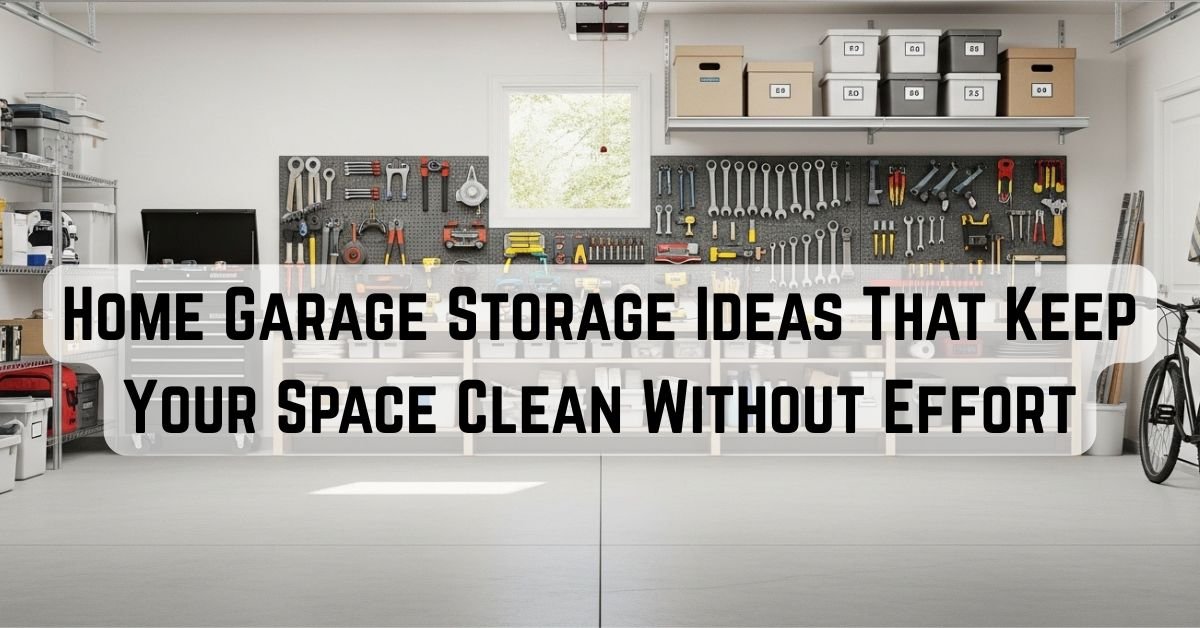
My garage didn’t become messy all at once.
It happened slowly. One item was placed temporarily. Another set down “just for now.” Something I planned to organize later, but never did. Over time, those small decisions built up into something that felt harder to control.
What made it frustrating wasn’t the clutter itself.
It was that every time I cleaned it, the result never lasted. For a few days, everything felt clear. Then things started shifting again. Items moved slightly out of place. New things came in without a clear spot. And before long, I was back where I started.
At some point, I realized the problem wasn’t how often I cleaned.
It was that I didn’t have a system that could hold itself together.
Once I started applying a few practical home garage storage ideas, the space began to feel different. Not because it stayed perfect, but because it stopped falling apart so easily.
Why Garage Organization Never Lasts Without the Right System
For a long time, I treated the garage like a space that needed occasional fixing.
Clean it. rearrange it. reset it.
But the garage doesn’t behave like a static space. It’s constantly changing. Things move in and out. Tools get used and returned. Seasonal items shift depending on the time of year.
Without a structure that supports that movement, everything slowly drifts out of place.
Most systems fail because they expect consistency.
They assume items will always be placed back perfectly. That there will always be time to organize things properly. But in real life, that rarely happens.
What works better is a system that expects small inconsistencies and still holds together anyway.
That’s the shift that made these home garage storage ideas actually work.
1. Zone-Based Garage Layout That Separates Functions Clearly
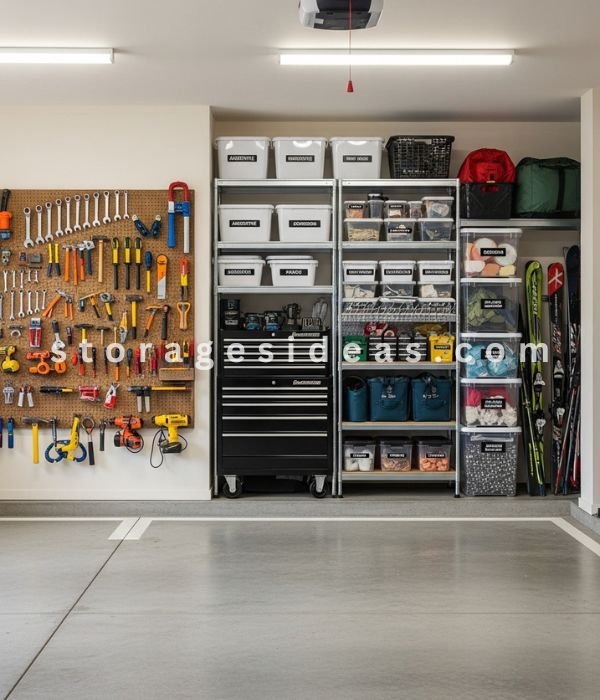
The biggest problem I had in my garage wasn’t clutter, it was overlap.
Everything shared the same space. Tools sat beside seasonal items. Things I used daily got buried under things I barely touched. And every time I needed something, I had to sort through everything else to find it.
At first, I tried organizing within that same structure. Rearranging, stacking, grouping, but the problem kept coming back.
Because nothing was truly separated.
Once I divided the garage into clear zones, the space started to behave differently.
Each area had a purpose. Not a strict rule, but a clear role. Tools stayed in one section. Frequently used items stayed within easy reach. Everything else moved further away without becoming inaccessible.
That separation removed a hidden problem: the constant decision-making.
I no longer had to ask where something should go. The space already answered that for me.
And once that friction disappeared, the system started holding itself together.
2. Vertical Wall Storage That Keeps the Floor Open
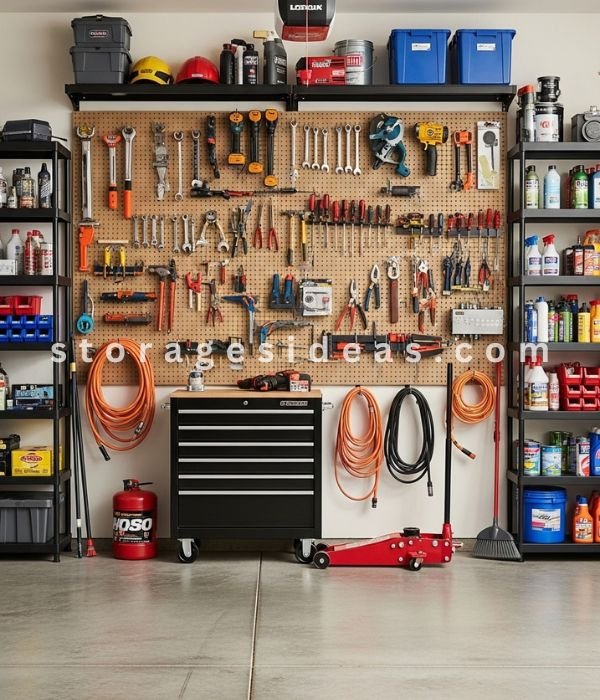
The floor was always the first place to lose control.
Not because I wanted it to, but because it was the easiest place to put things down. And once something lands on the floor, it tends to stay there longer than intended.
Over time, the floor becomes a collection point for everything that doesn’t have a clear place.
Moving storage onto the walls changed that pattern.
It didn’t just free up space; it changed how the space was used. The floor stopped being a default storage area and returned to what it was meant for: movement.
That shift had a ripple effect.
Once the floor stayed clear, everything felt more manageable. It was easier to clean, easier to navigate, and easier to maintain without constant effort.
I noticed the same shift when working on wall storage living room ideas. Once things move off the floor, the entire space starts feeling easier to control.
Because when the most visible area stays under control, the rest of the space tends to follow.
3. Open Shelf Systems That Remove the Need to Search
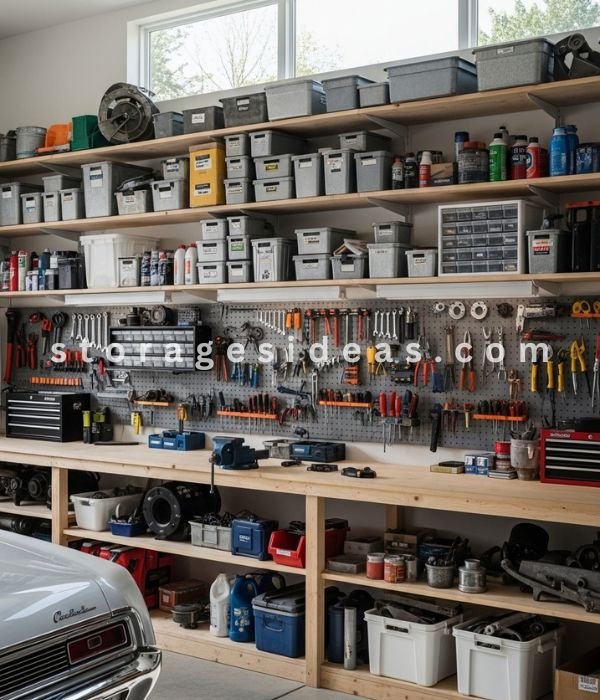
One thing I didn’t notice at first was how much time I spent searching.
Not in a dramatic way, just small moments. Looking behind things, opening boxes, and moving items aside to check what was underneath.
Those small actions added up.
And over time, they created a habit of not putting things back properly. Because if finding something is difficult, returning it becomes even less appealing.
Open shelves removed that problem completely.
Everything became visible the moment I looked at it. No guessing. No digging. No rearranging just to access one item.
But the real change wasn’t just convenience, it was consistency.
When something is easy to access, it’s also easier to return. And that’s what keeps the system from breaking down.
4. Drop-and-Go Storage for Everyday Items
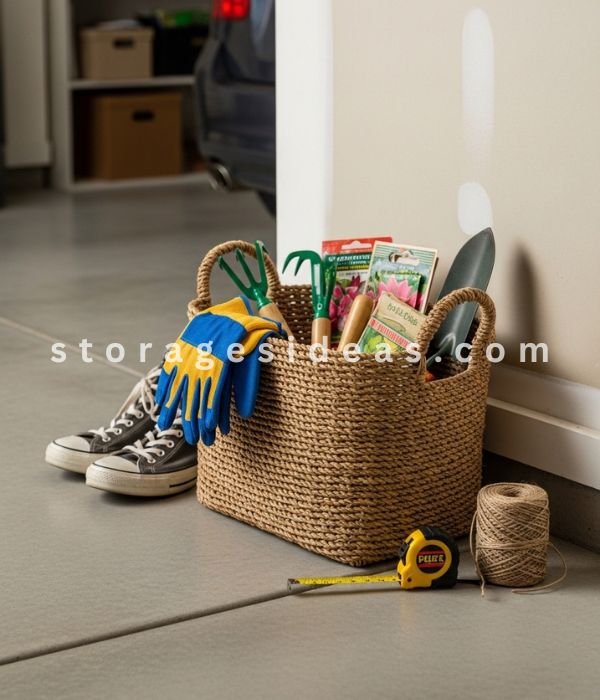
There are always a few items that don’t need precision.
They just need a place to land.
Before this, those items moved constantly. I would place them wherever I happened to be standing on a surface, near the door, beside another object. It felt temporary in the moment, but those temporary placements slowly became permanent clutter.
Trying to organize them neatly didn’t work.
What worked was removing the need to organize them at all.
Once I created a simple drop-and-go area, everything changed. I didn’t have to think about placement. I didn’t have to arrange anything carefully. I just had to use the same space consistently.
And because it required almost no effort, it became part of my routine without resistance.
That’s what stopped the spread of clutter, not structure, but ease.
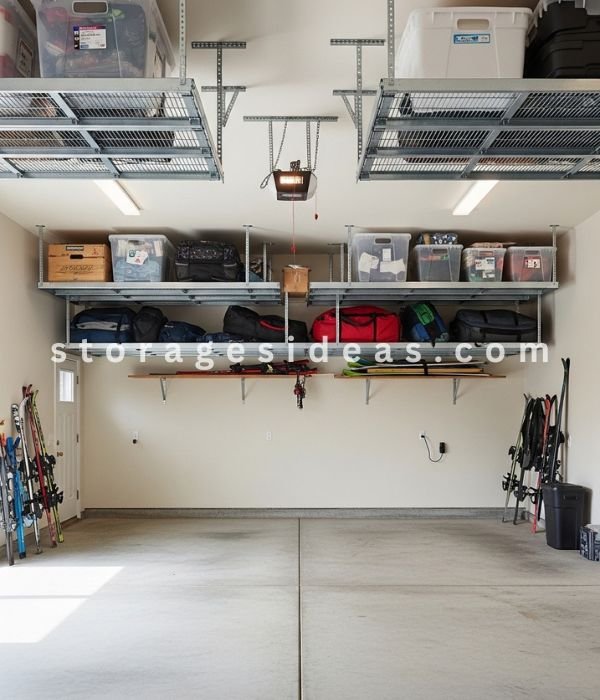
5. Ceiling Storage That Moves Rarely Used Items Out of the Way
One thing I struggled with was deciding what deserved space at eye level.
Everything felt important at the time I stored it. But in reality, I wasn’t using most of those items regularly.
They were just occupying valuable space.
Using ceiling storage helped me make that distinction clearer.
Items I didn’t need often moved upward. Not out of reach but out of the way. And once they were no longer competing with daily-use items, everything below became easier to manage.
This created a natural hierarchy.
What I use often stays accessible. What I don’t stay stored but is not forgotten.
And that separation reduced the pressure on the entire space.
6. Rolling Storage That Adapts to Changing Needs
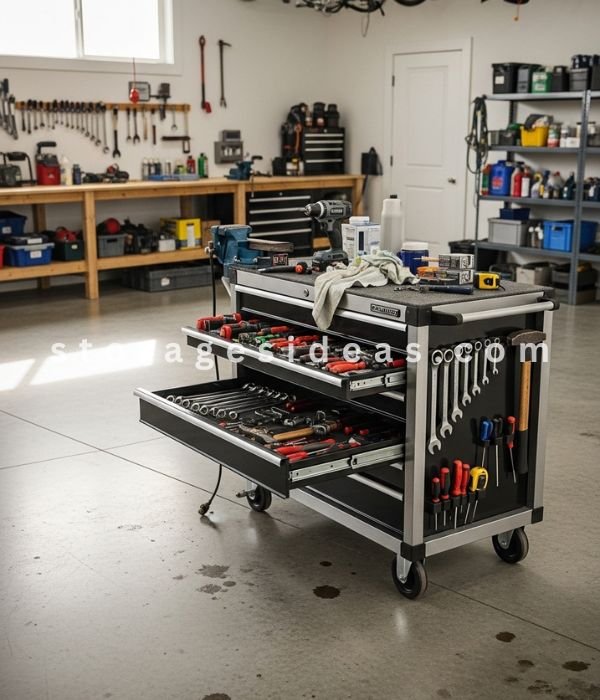
The way I use my garage isn’t fixed.
Some days I need more open space. Other days, I need quick access to tools. Sometimes I need both at the same time.
Fixed storage didn’t always support that.
It worked in one situation, but not in others. And over time, that mismatch created small inefficiencies that built into bigger problems.
Rolling storage changed that dynamic.
Instead of forcing the space to stay the same, it allowed the space to adapt. I could move storage when needed, shift layouts without breaking the system, and adjust things without starting over.
That flexibility made the system more durable.
Because it didn’t rely on everything staying the same, it worked even when things changed.
7. Tool Storage That Prevents Mess Build-Up
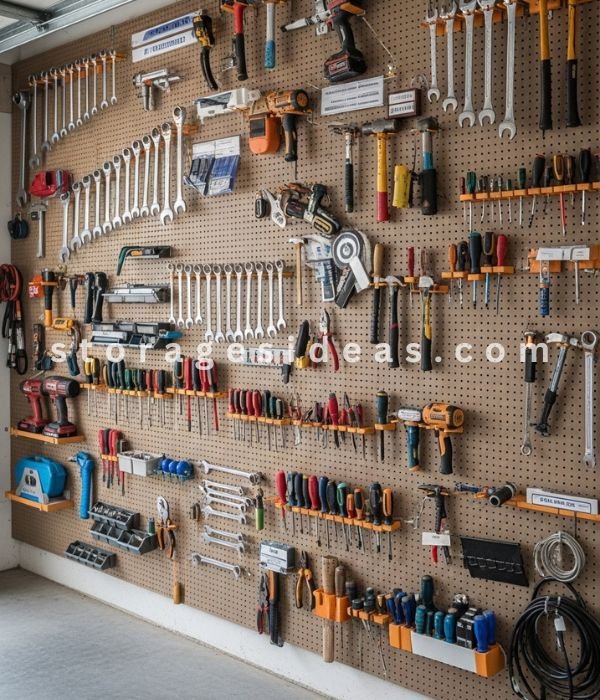
Tools were never the problem by themselves.
The problem was what happened after I used them.
I would set something down quickly, planning to put it back later. But later rarely came. And once that happened a few times, tools started spreading across surfaces, mixing with other items, and slowly creating a layer of clutter that felt harder to fix.
At first, I thought I needed better organization.
What I actually needed was better return points.
Once every tool had a clear, visible place to go back to, the pattern changed. I didn’t have to think about where it belonged. I didn’t have to rearrange anything to make space for it.
That removed hesitation.
And once hesitation was gone, returning tools became automatic instead of optional.
That’s what stopped the mess from building up, not stricter rules, but clearer placement.
8. Clear Bin Systems That Reduce Guesswork
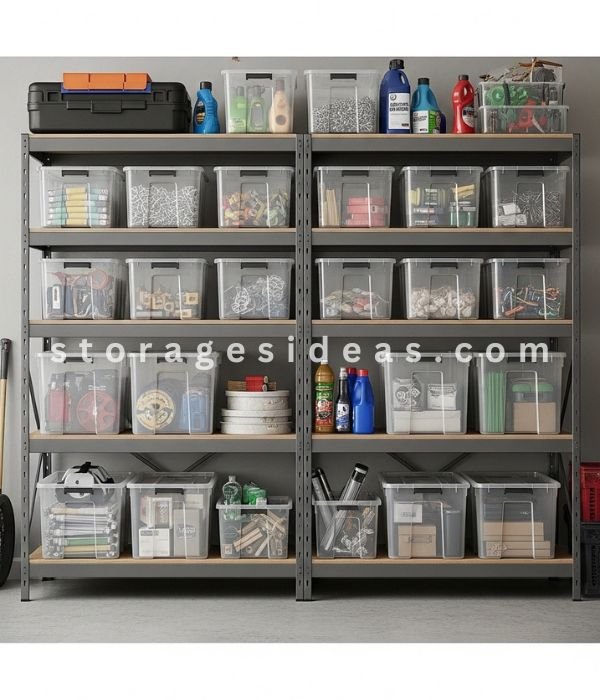
Closed storage always gave me a false sense of organization.
Everything looked tidy on the outside, but inside, things were harder to track. I knew items were there somewhere, but not exactly where. That uncertainty led to small disruptions every time I needed something.
I would open one container, then another, shifting things around until I found what I was looking for.
And each time I did that, the system lost a bit of its structure.
Switching to clear bins removed that layer of guesswork.
I could see what was inside without opening anything. That made it easier to locate items quickly, but more importantly, it made it easier to leave everything else undisturbed.
That’s what kept the system intact.
Because when you don’t have to dig through things, you don’t accidentally create new clutter in the process.
9. Corner Storage That Uses Awkward Garage Spaces
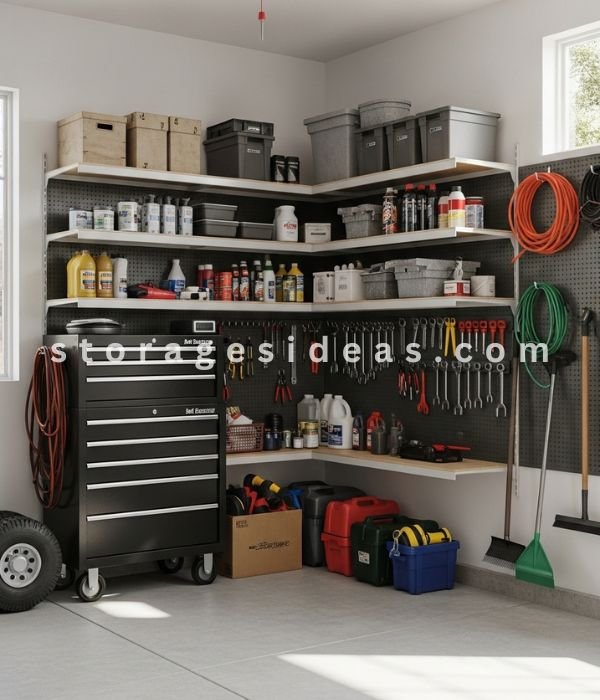
Corners always felt like spaces that didn’t belong to anything.
They weren’t part of the main layout, and they didn’t seem useful enough to prioritize. So they stayed empty, or worse, they became places where random items slowly collected.
Ignoring them didn’t solve anything. It just shifted the pressure to other areas.
Once I started using those corners intentionally, the balance of the garage changed.
They didn’t need large solutions.
Even small, focused storage in those spaces helped redistribute items that were previously crowding more active areas. And because corners are naturally out of the way, they hold items without interfering with movement.
That’s what made them valuable.
Not because they added more storage but because they reduced pressure where it mattered most.
10. Narrow Wall Storage That Uses Small Gaps
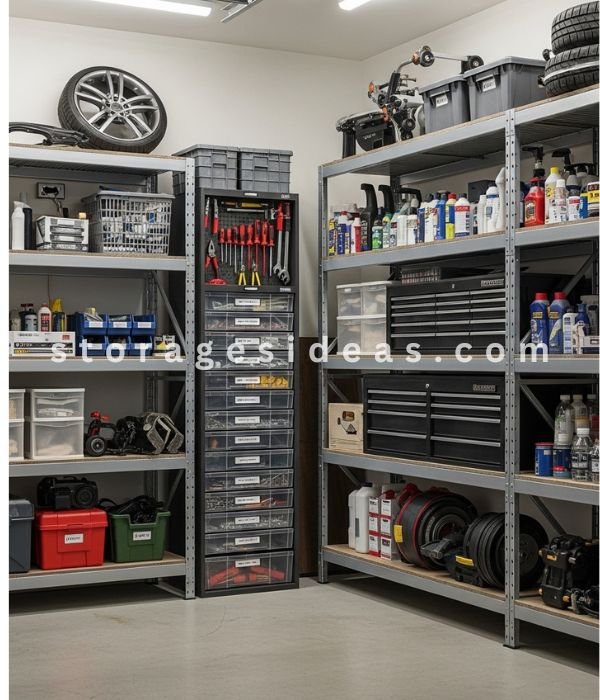
There are always narrow sections of wall that feel too small to matter.
Between cabinets, beside doors, along tight edges that don’t seem usable. For a long time, I ignored them completely.
But those small gaps add up.
Once I started using them, they became some of the most efficient parts of the garage, not for large storage, but for specific, consistent functions.
They didn’t need to hold much.
Even a small role holding a few items that would otherwise move around was enough to make a difference.
What makes this work is that these spaces don’t compete with anything else.
They don’t take away from the layout. They don’t interrupt movement. They simply add a function where there was none before.
I’ve seen this work especially well with narrow wall storage ideas, where even the smallest gaps start carrying part of the storage load.
11. Multi-Layer Storage That Uses Vertical Depth Efficiently
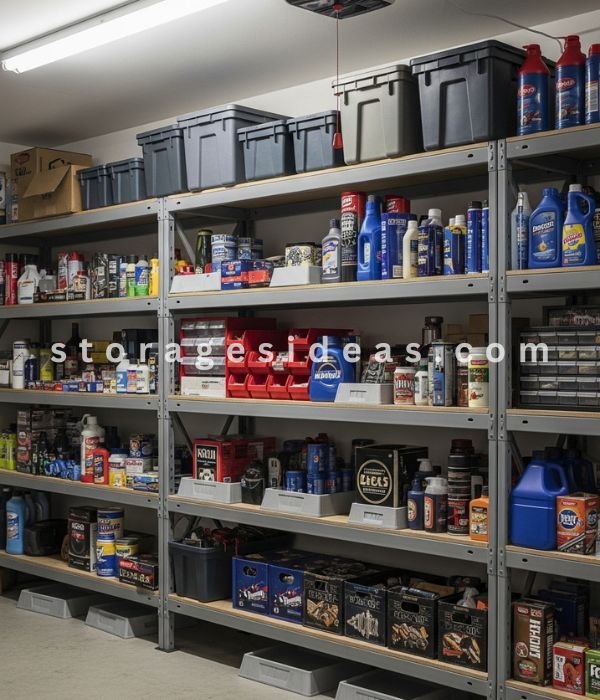
For a long time, I was only using the front layer of my storage.
Everything sat on the surface, spread out to stay visible. It felt organized, but it wasn’t efficient. I was using more space than necessary just to avoid stacking.
When I started using depth more intentionally, the space became more effective, but only after I understood how to do it properly.
Stacking without structure creates a different kind of clutter.
So instead of piling things randomly, I created layers that still allowed access. Nothing felt buried. Nothing required effort to reach.
That balance made the difference.
Because the goal isn’t to store more, it’s to store in a way that stays usable.
12. Low-Maintenance Systems That Work Without Precision
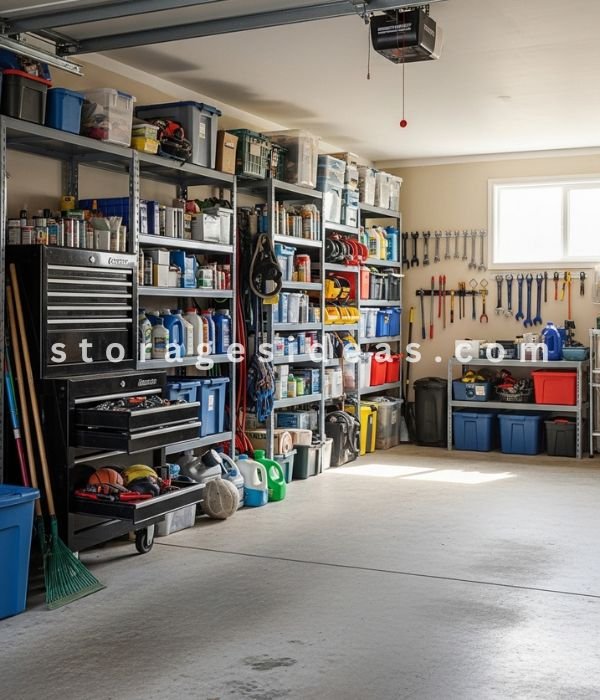
The biggest shift in my garage didn’t come from adding storage.
It came from removing expectations.
I used to think that if everything was placed perfectly, the system would last. But that kind of precision doesn’t hold up in real life. Small inconsistencies happen, and over time, they build into bigger problems.
What worked instead was allowing the system to handle those inconsistencies.
Even when something wasn’t placed exactly right, it still stayed within its area. Even when I was in a hurry, nothing broke down.
That flexibility made the system resilient.
Because it didn’t depend on perfect behavior, it worked with normal behavior.
And that’s what made it sustainable over time.
What Actually Makes Home Garage Storage Ideas Work Long-Term
What took me the longest to understand wasn’t how to organize the garage; it was why nothing stayed organized for long.
At first, every system felt like it worked.
I would clean, arrange, and assign places for everything. For a few days, it held. The space felt clear, controlled, and easy to use. But slowly, small shifts started happening. A tool didn’t go back exactly where it belonged. An item got placed “just for now.” Something new entered the space without a clear spot.
Nothing broke immediately.
But the system started loosening.
That’s how most garage setups fail, not in big, obvious ways, but in small, repeated moments that slowly pull everything out of place.
What I realized is that these breakdowns don’t come from a lack of effort.
They come from friction.
If a system requires you to pause, think, or be precise every time you use it, it creates resistance. And over time, even small resistance leads to avoidance. Not intentionally—but naturally.
Once something is avoided, it stops being part of your routine.
That’s when clutter starts spreading again.
What made the difference for me was shifting from structure to behavior.
Instead of asking, “Where should this go?”
I started asking, “Where would I naturally put this without thinking?”
That question changed everything.
Because once storage aligns with that instinct, it no longer needs to be maintained in the traditional sense. It maintains itself.
Another thing that made a difference was simplifying the system.
That idea isn’t accidental; most effective storage setups are built around reducing effort rather than adding structure.
Too many categories, too many rules, too much precision; those things make storage fragile. But when the structure is simple, it becomes resilient. It can handle small inconsistencies without breaking down.
That’s what makes home garage storage ideas actually work long-term.
Not because they are perfectly designed, but because they are designed for real use, not ideal use.
Final Thoughts
I used to think my garage needed more storage.
More shelves, more containers, more ways to fit things in.
But the real problem wasn’t capacity, it was stability.
No matter how much I added, the space kept slipping back into clutter. Not because I wasn’t trying, but because the system didn’t support how I actually used the space.
Once that changed, everything else followed.
The garage didn’t stay perfect, but it stayed consistent. It didn’t need constant fixing. It didn’t demand attention every few days. It simply held its structure, even when I wasn’t thinking about it.
That’s the difference a working system makes.
These home garage storage ideas aren’t about making your garage look clean for a moment.
They’re about making it easier to live every day.
If your garage keeps getting messy no matter how often you organize it, the solution isn’t to try harder.
It’s to adjust the system so it works with you instead of against you.
Start with one section. One small change.
Because once even a part of the system begins to hold itself together, the rest starts to follow.
FAQ
What is the best way to organize a garage long-term?
The most effective approach is to create systems that match how you actually use the space. Instead of focusing on perfect organization, focus on easy access, clear zones, and simple placement. When storage is easy to use, it naturally stays organized longer.
How do I keep my garage from getting messy again?
Garages usually become messy when storage requires too much effort. The key is to reduce friction. Use open storage, clear categories, and easy return spots so items go back naturally without needing constant attention.
What are the most practical home garage storage ideas?
The most practical ideas are the ones that work without daily maintenance. Systems like vertical wall storage, clear bins, and zone-based layouts help keep things organized because they align with real usage instead of requiring perfect habits.
What should not be stored in a garage?
Items sensitive to temperature and humidity, such as certain foods, electronics, or important documents, should not be stored in a garage. These environments can fluctuate, which may damage those items over time.
