Introduction
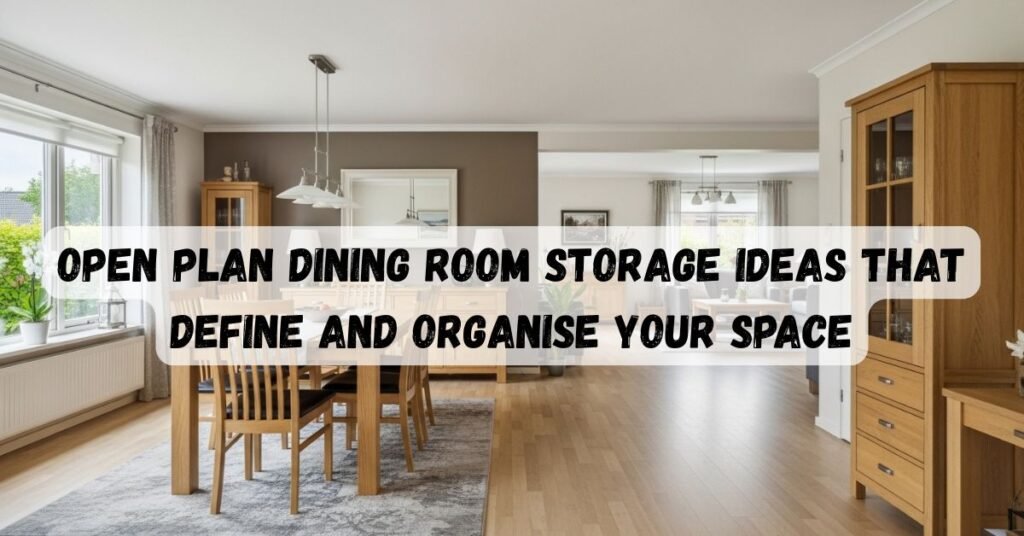
Open plan living looks effortless in photographs. One continuous space, flowing seamlessly from the kitchen to the dining area to the living room, light, airy, and beautifully uncluttered. The kind of home that makes you want to host dinner parties on a Tuesday.
In reality, open plan spaces come with a challenge that nobody mentions in the interior design magazines: without walls to contain them, different areas of the home bleed into each other. The dining table accumulates kitchen paperwork. The living room toys migrate toward the eating area. The cooking smells, the homework supplies, the bags dropped on the way in, all of it ends up in the same undivided space with nowhere particular to go.
And when the dining area in an open plan layout lacks proper storage and definition, it stops feeling like a dining room at all. It becomes just a table in the middle of a bigger mess.
The good news is that storage, used cleverly, solves both problems at once. The right pieces don’t just organize the space, they define it. They create a sense of enclosure and purpose around the dining area without building a single wall. They tell the room and everyone in it that this part of the space is for eating, and it’s taken seriously.
These 9 open plan dining room storage ideas are designed to do exactly that, much like small space transformation ideas that focus on making open layouts feel structured and intentional. Each one addresses both the practical need for storage and the spatial challenge of making a dining area feel like its own distinct, well-considered zone within a larger layout.
Why Open Plan Dining Spaces Need a Different Storage Approach
Storage in a conventional dining room with four walls, a door, and a defined boundary is a relatively straightforward problem. You choose a sideboard, perhaps some shelving, and the room contains the result.
Storage in an open-plan dining area is a fundamentally different challenge, for two reasons.
The first is visibility. In an open plan space, the dining area is visible from the kitchen, from the living area, and often from the entrance hallway. There’s no door to close, no wall to hide behind.
Whatever storage you choose and whatever state it’s in is on permanent display from multiple angles and from a distance. This means visual consistency matters more than in a closed room. Clutter in a closed dining room is a private problem. Clutter in an open-plan dining area is everyone’s problem.
The second challenge is definition. In an open plan layout, the dining area doesn’t have physical boundaries. Without the right furniture and storage placement, it can feel like it dissolves into the surrounding space rather than holding its own as a distinct zone.
The best open plan dining room storage ideas work on both levels simultaneously, they organize the space, and they define it, creating a visual boundary that gives the dining area its own identity within the larger floor plan.
1. The Room-Dividing Sideboard Storage That Defines the Space
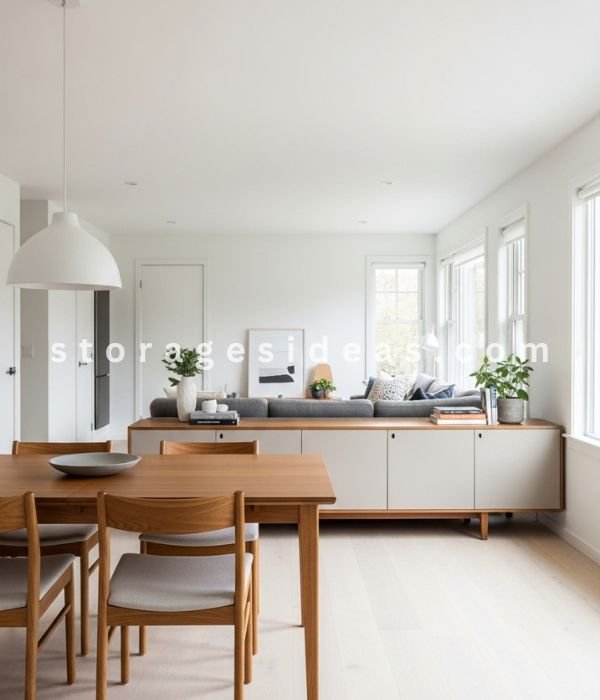
The most powerful piece of furniture in an open-plan dining room isn’t the table, it’s the sideboard. And in an open plan layout, specifically, a sideboard placed with intention does something that no other piece of furniture can: it acts as a room divider.
A well-positioned sideboard placed with its back to the living area or kitchen creates a soft visual boundary between zones. It tells the eye where the dining area begins and ends. It anchors the space without enclosing it. And simultaneously, quietly, without any fuss, it provides generous, closed storage for everything the dining area needs.
Positioning options that work:
- Perpendicular to the main wall, acting as a low partition between the dining area and the living space
- Against the boundary wall between the kitchen and dining, accessible from the dining side for table accessories and from the kitchen side for serving dishes
- Behind the dining chairs on the far side of the table, providing a visual backdrop that anchors the eating zone
What to store inside: Table linen, placemats, candles, condiments, serving dishes, paperwork that accumulates on the table, hosting accessories, and anything that belongs in the dining zone but shouldn’t be on display.
A sideboard with closed doors is the most versatile and impactful of all open-plan dining room storage ideas. It earns every inch of floor space it occupies.
2. Open Shelving Units as Zone Dividers
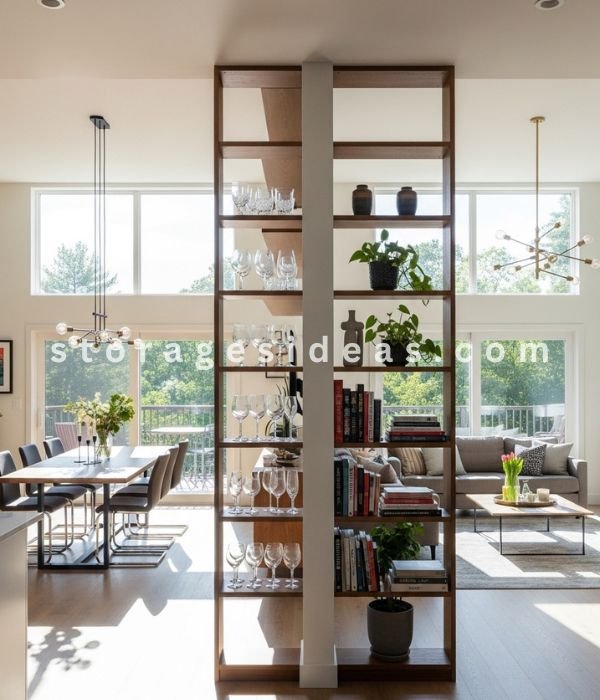
Where a sideboard creates a low, subtle boundary, a taller open shelving unit creates something more deliberate, a permeable visual divider that defines the dining zone clearly while keeping the open plan feeling of the space intact.
An open shelving unit positioned between the dining area and the living space lets light pass through, a concept similar to living room partitions with storage that define zones without closing them off. At the same time, it clearly marks the edge of the dining zone, a piece of furniture the eye reads as a boundary even though it isn’t a wall.
What to display on a dining zone shelf divider:
- A curated mix of glassware, wine bottles, decanters, and dining accessories on the dining-facing side
- Books, plants, and decorative objects on the living room-facing side
- Trailing plants that soften the visual edge and blur the boundary attractively
- A combination of closed baskets on lower shelves and open display on upper ones is practical at the bottom, beautiful at the top.
The key to making it work: Edit carefully. An open shelving divider in a visible, central position in an open plan space needs to look intentional from every angle. It’s not the place for overflow clutter; it’s a display and storage piece that works as a piece of interior design in its own right.
3. The Buffet Table, Elegant Open Plan Dining Room Storage
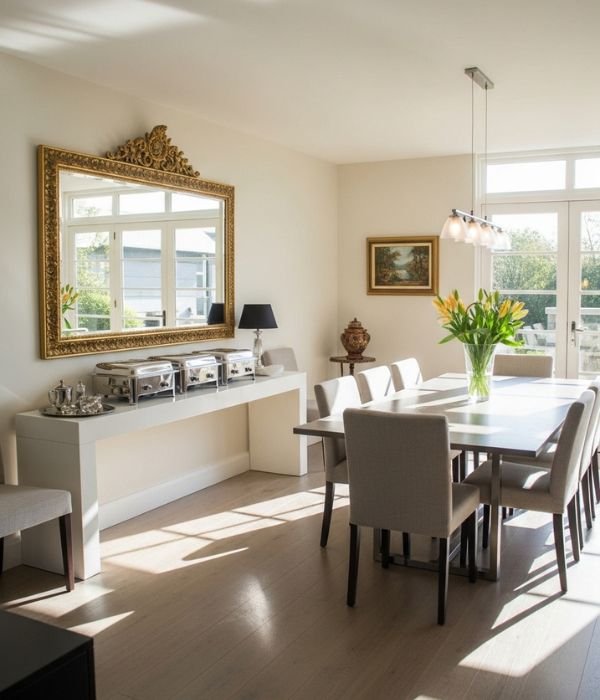
A buffet table, sometimes called a console or server, is a slimmer, longer alternative to a sideboard that works particularly well in open plan layouts where depth is limited but wall length is generous.
Where a sideboard is typically 40–50cm deep, a buffet table can be as shallow as 30–35cm, making it significantly less intrusive in a space where floor flow and visual openness matter. The reduced depth doesn’t compromise storage capacity as much as you’d expect. A long, slim buffet with a drawer section and a closed cabinet below holds a substantial amount while barely touching the sightlines of the room.
Why it works especially well in open plan spaces:
- The slim profile keeps the visual weight low and the space feeling open
- The long surface provides generous staging space for serving during meals and display between them
- Positioned along a wall or behind the dining chairs, it doesn’t interrupt the flow between zones
- The lower visual profile keeps the room feeling airy, with no bulky furniture mass in an already complex floor plan
Pair a buffet table with a mirror or a run of wall art above it to complete the look. In an open-plan dining area, this combination buffet plus artwork or mirror creates a proper focal point that anchors the space without overwhelming it.
4. Built-In Cabinetry: The Most Efficient Open Plan Storage Solution
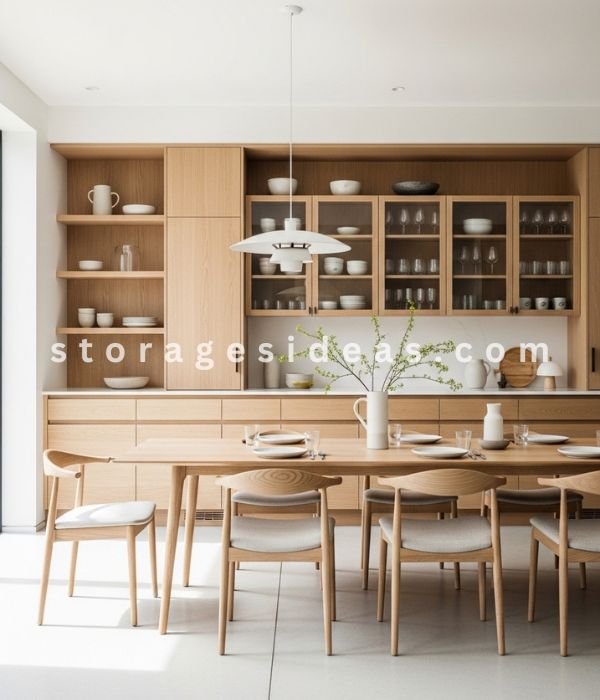
In an open plan space that’s going to be a permanent arrangement in a home you own, a layout you’re committed to, built-in cabinetry along one wall of the dining zone is the most efficient storage solution available. Nothing else comes close for sheer capacity per square metre.
Built-in dining cabinetry typically runs floor-to-ceiling along one full wall, combining closed lower cabinets for hidden storage with open upper shelving or glass-fronted units for display. The result is an entire wall that holds everything the dining area and often the adjacent kitchen or living space needs, while presenting a clean, coherent face to the rest of the open plan layout.
What makes built-in cabinetry work especially well in open plan spaces:
- The seamless, fitted look reads as architecture rather than furniture. It doesn’t look like storage that’s been added; it looks like it was always meant to be there
- Floor-to-ceiling height maximizes capacity without increasing footprint
- Closed lower cabinets hide everyday clutter; open upper shelves allow display and visual lightness
- A consistent finish painted to match the wall, or in a color that anchors the dining zone, ties the space together visually.
The investment is higher than freestanding furniture, but in an open-plan home where every decision is visible from multiple angles, built-in cabinetry pays back in liveability and visual coherence for years.
5. Smart Open Plan Dining Room Storage Ideas: The Bar or Drinks Station
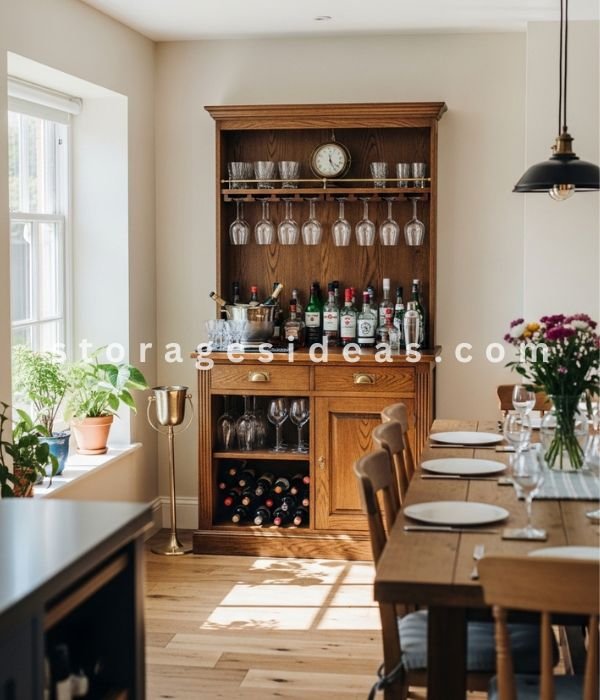
An open plan dining area that’s used for hosting and in an open plan home, the dining area almost always becomes the center of social life, and benefits enormously from a dedicated drinks station or bar area. Not just for the practical reason that hosting supplies need a home, but for a deeper, spatial reason: a bar or drinks station creates a destination within the dining zone.
A destination gives the dining area purpose and identity within the broader open plan space. It says: ” This isn’t just where the table happens to be. This is a considered, equipped place for eating and entertaining. That sense of intentionality transforms how the space feels and how people use it.
Bar storage options for open plan dining areas:
- A freestanding bar cabinet with closed doors closed up between uses, it looks like a piece of furniture; opened, it reveals a fully equipped drinks station
- A dedicated section of the sideboard or buffet allocated to drinks, glasses, and a small ice bucket
- A bar cart on castors has the flexibility to move it to wherever the party is, and tuck it away when not needed
- A wall-mounted wine rack above a narrow console, an idea often seen in wine storage ideas, with glass storage hanging below on a dedicated rail.
In an open plan space where the dining area needs to hold its own as a destination, the drinks station is one of the most effective anchoring ideas available.
6. Rugs and Storage Together Defining the Zone From the Ground Up
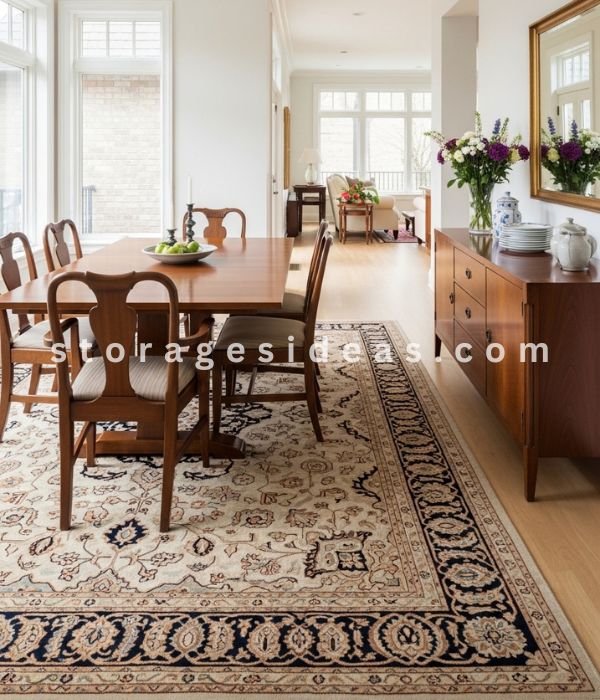
This idea pairs a physical storage strategy with a spatial one because, in an open plan layout, defining the dining zone is as important as organizing it, and the two work best when they work together.
A well-chosen rug placed under the dining table defines the dining zone from the ground up. It creates a clear visual boundary, the dining area is part of the room on the rug and adds warmth and texture that contrasts with the hard flooring typically found in open-plan kitchens and dining spaces.
Storage furniture placed at the edges of the rug, a sideboard along one side, a shelving unit or bar cart at another, reinforces the boundary and completes the enclosure of the zone. The result is a dining area that feels self-contained and deliberate, even though there are no walls defining it.
Rug guidelines for open plan dining areas:
- Size matters enormously. The rug should be large enough that all four chair legs sit on it when chairs are pulled out from the table, not just the table legs.
- Natural fibers like wool, jute, or sisal work well in dining areas, are durable, attractive, and forgiving of the inevitable dropped crumbs.
- A flat weave or low pile is easier to maintain in a heavily used dining zone.
- Choose a rug color and pattern that relates to both the dining zone and the adjacent living and kitchen areas. It needs to bridge the spaces rather than clash with them.
The rug doesn’t store anything. But paired with the right storage furniture at its edges, it completes the spatial logic of the dining zone in a way that no single storage piece can achieve alone.
7. Overhead Storage and Pendant Lighting Drawing the Eye Up
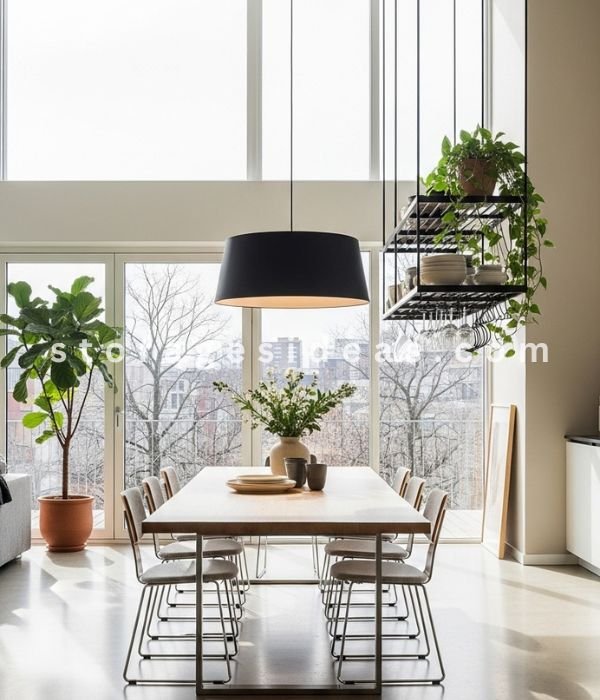
One of the most underused dimensions in an open-plan dining area is the vertical one. While floor-level and wall-level storage get most of the attention, the space above the dining table, above the pendant lights, up toward the ceiling, offers a genuine storage opportunity that most open plan layouts never exploit.
A ceiling-hung pot rack or overhead rail above or adjacent to the dining area, if the layout connects to an open kitchen, provides visible, accessible storage for cookware, utensils, and even wine glasses hanging from hooks. In a fully open plan kitchen-dining space, this kind of overhead storage blurs the boundary between kitchen and dining in an intentional, designed way. Everything needed for the meal is visible and within reach of both spaces.
But even without a pot rack, the vertical dimension above the dining table serves an important spatial function. A pendant light or a cluster of pendants hung low over the table does something crucial: it defines the dining area from above.
The cone of light cast by a well-positioned pendant creates a visual envelope around the table. Combined with the rug below, the result is a dining area enclosed on two planes, floor and ceiling, even in the absence of any walls.
Overhead storage and lighting ideas for open plan dining:
- A ceiling-hung wine glass rack above the table is practical, attractive, and a genuine conversation piece
- A pendant light cluster hung at the right height to define the zone without impeding sightlines
- Open shelving installed high on the wall, accessible by a slim library ladder if needed, stores infrequently needed items well out of the daily visual field.
- A pot rail bridging the kitchen and dining zones in a fully open plan layout
8. The Storage Bench and Window Seat Tucked-Away Organization
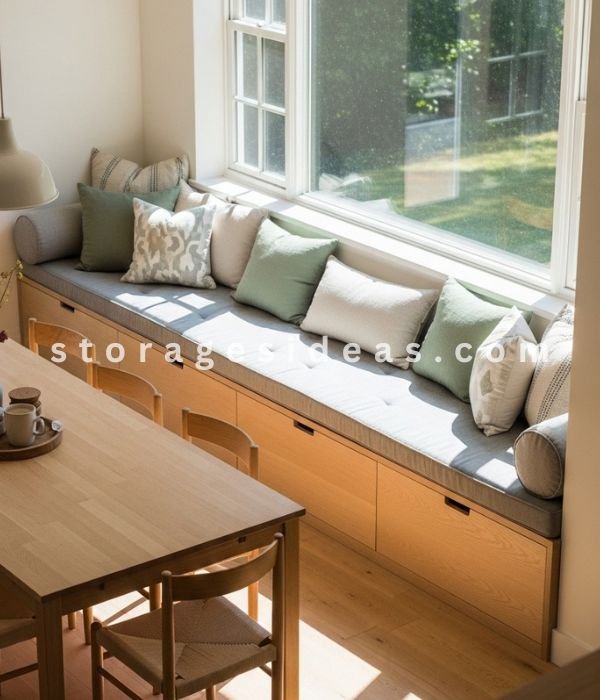
If the open plan dining area sits near a window, as many do in contemporary open plan homes, a built-in or freestanding storage bench beneath the window is one of the most space-efficient and characterful storage ideas available.
A window seat with storage inside the base combines seating, storage, and a connection to the view in a single compact piece of furniture. It defines one edge of the dining zone clearly, adds warmth and personality to the space, and provides a surprising amount of hidden storage for table linen, seasonal pieces, and children’s activity supplies inside the base, accessible via a hinged top or drawer below.
Why it works particularly well in open plan spaces:
- It creates a defined, enclosed feeling on one side of the dining zone without a wall
- The seating it provides is flexible, used at the table for meals, and used independently as a reading or resting spot between them.
- The storage inside is generous and completely hidden, with no visual clutter, regardless of what’s inside.
- The human scale and warmth of a window seat add a domestic, personal quality to an open plan space that can sometimes feel too large and impersonal.
Dress the window seat with cushions and a few throw pillows in fabrics that tie into the broader room palette. Add a plant or two on the sill above. The result is a corner of the open plan space that feels genuinely cozy, a quality that open plan layouts often struggle to achieve.
9. Consistent Styling and Closed Storage Making It All Cohesive
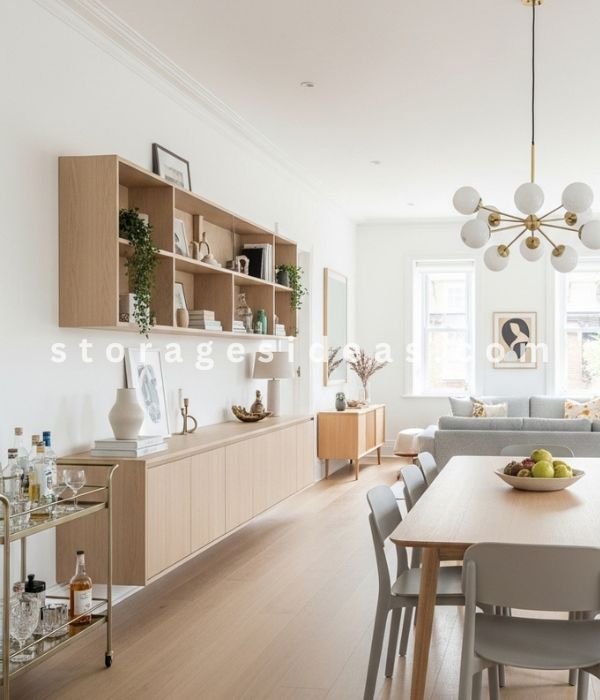
The final idea isn’t about a single piece of furniture; it’s about the principle that ties all the other open-plan dining room storage ideas together. In an open plan space, where the dining area is visible from everywhere and from every angle, the visual coherence of the storage is as important as its practical function.
This comes down to two things: consistency and enclosure.
Consistency means choosing storage pieces that relate to each other visually, in terms of similar tones, materials, and proportions. A sideboard in natural oak, open shelving in a matching timber, and a bar cart in brushed brass create a coherent palette that reads as intentional from across the room.
A sideboard in dark walnut, next to a white laminate shelf unit, next to a chrome trolley, reads as a collection of mismatched furniture that happened to end up in the same space. In a closed room, this matters less. In an open-plan dining area, it matters enormously.
Enclosure means defaulting to closed storage wherever possible. In a space with no walls to contain the visual noise, every open shelf, every visible surface, every uncovered storage unit adds to the visual complexity the eye has to process from a distance. Closed cabinets, lidded baskets, doors with clean lines, a principle also central to clutter-free living room ideas, calm the visual field of an open plan space in a way that open storage never can.
Practical steps toward cohesion:
- Choose a consistent material palette for all storage furniture, two or three materials maximum
- Use matching baskets or boxes inside any open shelving to contain visual clutter within the unit
- Keep the surfaces of storage pieces edited and styled, not piled with items in transit
- Treat the storage as part of the room’s design, not as an addition to it
A well-styled, visually coherent set of storage pieces in an open-plan dining area doesn’t just organize the space, it elevates the entire open-plan layout, making every zone look more considered and more deliberate.
Conclusion
The open plan dining area is one of the most rewarding spaces in a home to get right and one of the most frustrating to live with when it isn’t working. The problem is rarely the floor plan itself. It’s the lack of storage and definition that allows the dining zone to dissolve into the surrounding space and accumulate the clutter of every other area nearby.
The open plan dining room storage ideas in this guide all work toward the same outcome: a dining area that knows what it is. A space with clear edges, practical organization, and the visual coherence to hold its own within a larger, more complex floor plan.
Whether you start with a room-dividing sideboard, a built-in wall of cabinetry, or something as simple as a well-placed rug with a bar cart at its edge, the principle is the same. Define the space. Organize it. Make it a destination.
Because a dining area that feels like its own place rather than just a table in the middle of everything is a dining area that people actually want to sit down in.
Creating a well-defined open-plan dining space often comes down to smart zoning and intentional furniture placement, as highlighted in open-plan living ideas and layouts from IKEA
Frequently Asked Questions (FAQ)
How do I create a defined dining area in an open plan space?
The most effective way to define a dining area in an open plan layout is to combine a rug under the table with storage furniture placed at the zone’s edges, a sideboard behind the chairs, a shelving unit or bar cabinet at the side. Add a pendant light hung low over the table to create definition from above, and the dining zone feels enclosed on three planes without a single wall.
What is the best storage furniture for an open-plan dining room?
A sideboard with closed doors is the most versatile and impactful piece. It provides generous hidden storage, creates a visual backdrop for the dining area, and can act as a subtle room divider between the dining zone and adjacent living space. For homes where hosting is a priority, pairing the sideboard with a dedicated bar cabinet or drinks station adds both practical capacity and a sense of occasion to the dining area.
How do I stop an open-plan dining area from looking cluttered?
The single most effective strategy is to default to closed storage wherever possible. In an open plan space, where the dining area is visible from multiple angles and distances, visual clutter is far more impactful than in a closed room. Sideboards with doors, buffets with drawers, and baskets with lids all hide the everyday mess behind clean, calm surfaces. Style any open shelving carefully and edit it regularly.
Can storage furniture act as a room divider in an open plan space?
Yes, and this is one of the most useful things it can do. A sideboard positioned perpendicular to the main wall, or placed with its back to the adjacent living zone, creates a soft visual boundary that defines the dining area without enclosing it. A taller open shelving unit used as a divider maintains sightlines and light flow while clearly marking the edge of the dining zone.
How do I choose storage furniture that works in an open plan layout?
Prioritize visual consistency over individual pieces. In an open plan space, all the storage furniture in the dining area is visible simultaneously, so pieces that relate to each other in material, tone, and proportion read as a considered, cohesive whole. Choose two or three materials maximum and stick to them. Keep the scale appropriate to the space; oversized furniture in an open plan dining area blocks sightlines and disrupts the flow between zones.
Enjoyed this guide? Browse our other articles on open plan living ideas, dining room organization, and smart home storage solutions for every space.