Introduction
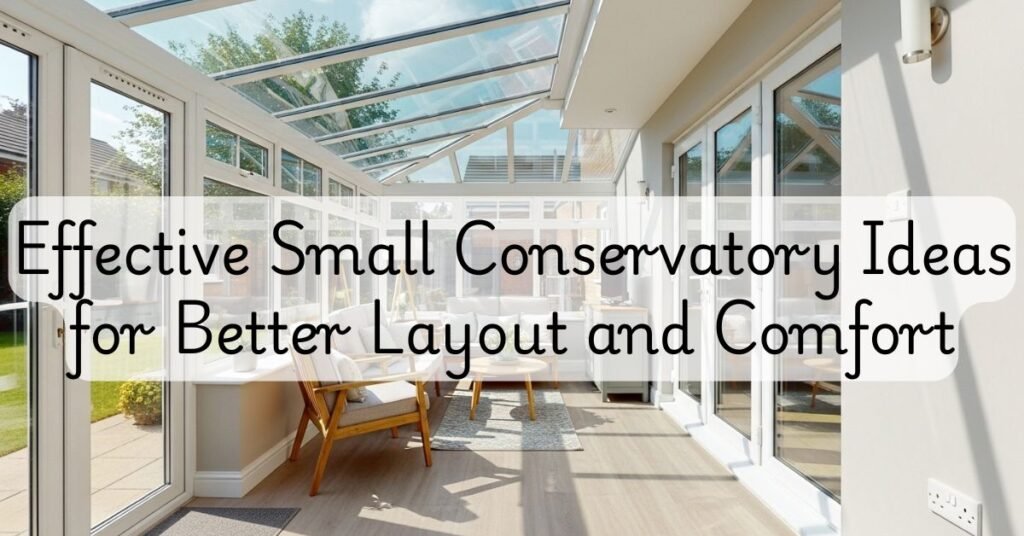
A conservatory is one of the most desirable additions you can make to a home. That flood of natural light, the connection to the garden, the feeling of being indoors and outdoors at the same time, it’s genuinely special. But what happens when the conservatory you have, or the one you’re planning, is on the smaller side?
The good news is that size really doesn’t have to limit what your conservatory can do. With the right small conservatory ideas, even the most compact glass extension can be transformed into a comfortable, functional, and beautifully designed space that you actually use every single day, not just on warm summer afternoons.
The key lies in being intentional about every decision you make. From furniture choices and color palettes to flooring, lighting, and how you manage temperature, each element either works for or against the comfort and usability of a small conservatory. Get these things right, and a compact space can feel surprisingly generous, inviting, and full of character. The same thinking applies when choosing sunroom furniture, where scale matters just as much.
In this guide, we’re sharing 10 effective small conservatory ideas that focus on two things above all else: better layout and year-round comfort. Whether you’re starting from scratch or looking to breathe new life into an existing space, there’s something here to inspire you.
This is the same thinking behind small space transformation ideas, where underused areas are redesigned to become functional parts of the home.
Why Getting the Layout Right Matters Most in a Small Conservatory
In a large conservatory, a few layout mistakes are easy to absorb; there’s enough space to rearrange, add, or remove elements without the whole room suffering. In a small conservatory, every decision has a direct and noticeable impact on how the space feels and functions.
A poorly planned layout in a compact conservatory can make it feel cluttered, dark, and uncomfortable, the kind of room you walk through rather than spend time in. A well-planned layout, on the other hand, can make even the most modest footprint feel open, considered, and genuinely livable.
Before implementing any of the small conservatory ideas in this guide, it’s worth taking a step back and thinking about how you actually want to use the space. Is it primarily a reading and relaxation room? A casual dining spot? A home office with a garden view? A plant-filled sunroom? Knowing the primary function of your conservatory shapes every subsequent design decision, from furniture scale to flooring material to the kind of blinds you choose.
1. Choose the Right Furniture Scale for the Space
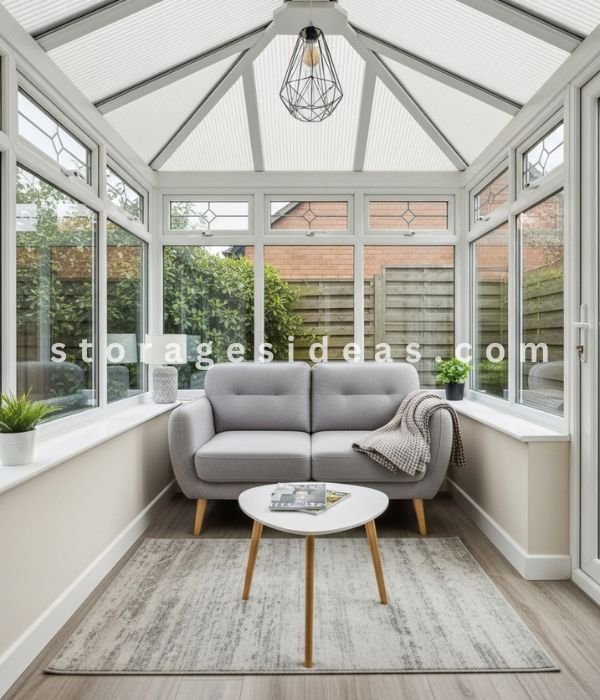
Furniture is the single biggest determining factor in how spacious or cramped a small conservatory feels, and the most common mistake homeowners make is choosing pieces that are simply too large for the space.
In a small conservatory, scale is everything. A large, deep sofa that looks beautiful in a showroom can eat up half the floor area of a compact conservatory and leave no room to move, let alone relax. The goal is to find furniture that fits the space proportionately, pieces that are comfortable and functional without dominating the room.
Smart furniture choices for small conservatories:
- A loveseat or two-seater sofa, instead of a large three-seater it provides comfortable seating for two without overwhelming the space
- A pair of occasional armchairs offers flexibility; they can be pulled together for conversation or moved to different corners of the room as needed.
- A small bistro table and two chairs work beautifully as a casual dining or coffee spot without the footprint of a full dining set.
- Slim-profile furniture with visible legs creates the impression of more floor space by allowing you to see the floor beneath the furniture. This is one of the most effective visual tricks for making small spaces feel larger.
Multi-functional pieces: In a small conservatory, every piece of furniture should ideally earn its place by doing more than one job. A storage ottoman serves as a coffee table, extra seating, and a place to stash throws and cushions. A daybed provides a comfortable lounging space by day and an occasional guest bed by night. A folding or extending table can expand for dining and collapse when not in use.
2. Use Light Colors to Make the Space Feel Larger
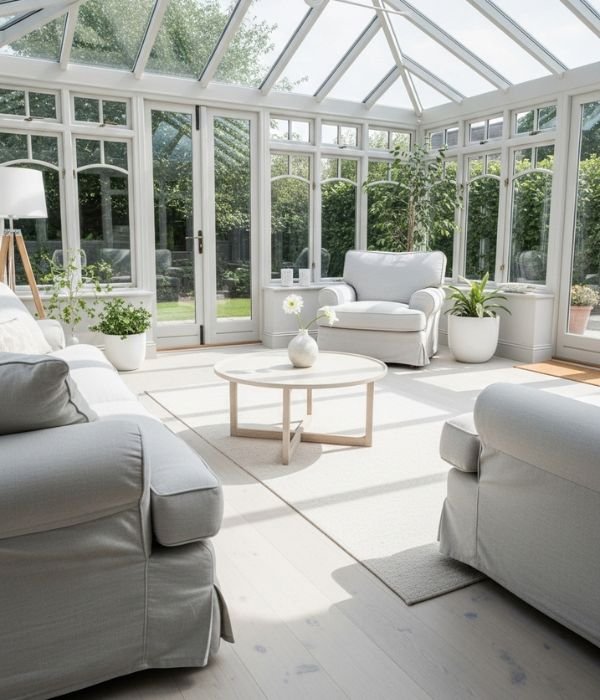
Color has a profound effect on how large or small a room feels, and in a conservatory, where a significant proportion of the walls are already glass, your color choices for the remaining solid surfaces carry even more weight than they would in a standard room.
Light, airy colors are the most effective choice for a small conservatory. Pale whites, soft creams, warm grays, and delicate sage or seafoam greens all help to reflect natural light around the room and create a sense of openness that darker shades simply can’t achieve.
Color strategy for small conservatories:
- Paint solid walls in a pale, light-reflective shade that connects visually with the garden outside. Soft greens, warm whites, and neutral sandy tones all work particularly well.
- Choose furniture upholstery in lighter tones, cream, oatmeal, pale blue, or soft gray, to keep the visual weight of the space low
- Use the same flooring material as the adjacent room, where possible. A continuous floor surface blurs the boundary between spaces and makes both rooms feel larger
- Introduce color through accessories, cushions, throws, plant pots, and artwork rather than through large pieces of furniture or solid walls. This gives you the flexibility to refresh the look without repainting or reupholstering
A similar approach can be seen in small living room furniture and decor hacks, where comfort and layout are balanced in compact spaces.
3. A Lean-To Design One of the Best Small Conservatory Ideas for Compact Homes
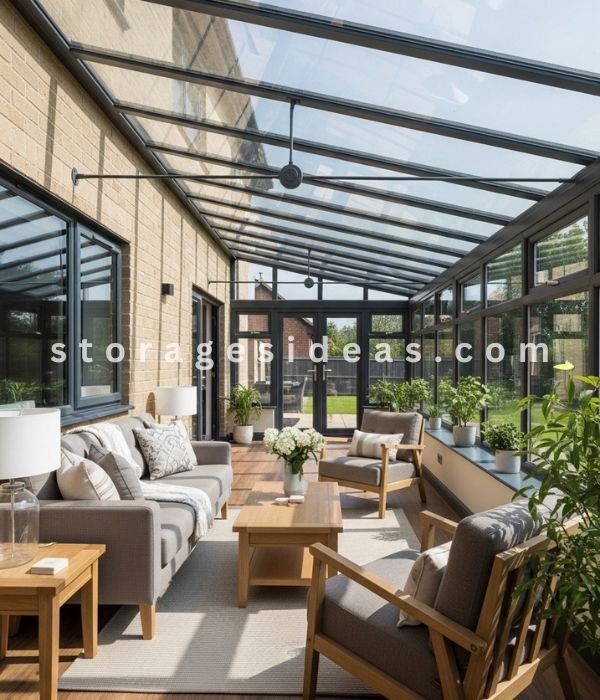
If you’re in the planning stages of adding a conservatory to a smaller home, the lean-to design is worth serious consideration. The lean-to, sometimes called a Mediterranean or Sun Room conservatory, features a simple, single-pitched roof that slopes away from the house wall, making it one of the most space-efficient and cost-effective conservatory styles available.
Why lean-to conservatories work so well for smaller homes:
- The simple rectangular footprint makes furniture layout straightforward, with no awkward angles to work around
- The pitched roof allows natural light in from above while keeping the structure compact and low-profile
- They’re well-suited to homes with limited garden depth, as they don’t require a large footprint to function effectively
- The clean, uncluttered aesthetic works beautifully with modern and contemporary home styles
Making the most of the lean-to layout: Because the lean-to conservatory is typically rectangular and relatively narrow, the layout tends to work best when furniture is arranged along the length of the room, a sofa or pair of chairs along one side, with the garden-facing wall kept as open as possible to maximize the sense of space and connection to the outdoors.
Natural light and greenery are known to improve mood and comfort, making them essential elements in small living spaces.
4. Invest in Temperature Control for Year-Round Comfort
One of the most common complaints about conservatories, particularly smaller ones, is that they’re too hot in summer and too cold in winter. This issue is particularly pronounced in compact conservatories because there’s less volume of air to regulate, meaning temperature swings happen faster and more dramatically.
Addressing this issue is arguably the most important practical step you can take, because a conservatory that’s uncomfortable to use for half the year defeats its own purpose entirely.
Effective temperature control solutions:
Roof glazing: The type of roof glazing you choose has the most significant impact on temperature regulation. Modern self-cleaning, thermally efficient glazing significantly reduces solar heat gain in summer while retaining warmth in winter, a major upgrade over older polycarbonate roofing that tends to extremes in both directions.
Solid or tiled roof: If temperature extremes are a serious problem in your existing conservatory, replacing the glazed roof with a solid or partially solid insulated roof is the most dramatic improvement you can make. It transforms the conservatory from a seasonal room into a genuinely comfortable, year-round living space.
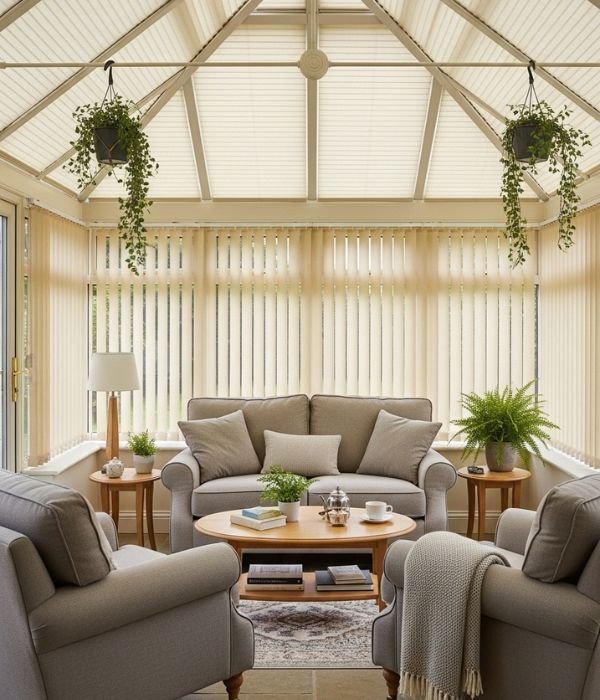
Blinds: Quality conservatory blinds are essential for managing solar heat gain. Pleated or cellular blinds for the roof are particularly effective; they trap air and provide insulation while reducing glare and preventing overheating. Fitted blinds on the side glazing provide privacy and additional temperature control.
Underfloor heating: In a small conservatory, underfloor heating is one of the most space-efficient and effective ways to add warmth in the colder months. It keeps the floor surface comfortable underfoot without requiring wall-mounted radiators that take up precious wall space.
5. Get Creative with Flooring to Define and Enhance the Space
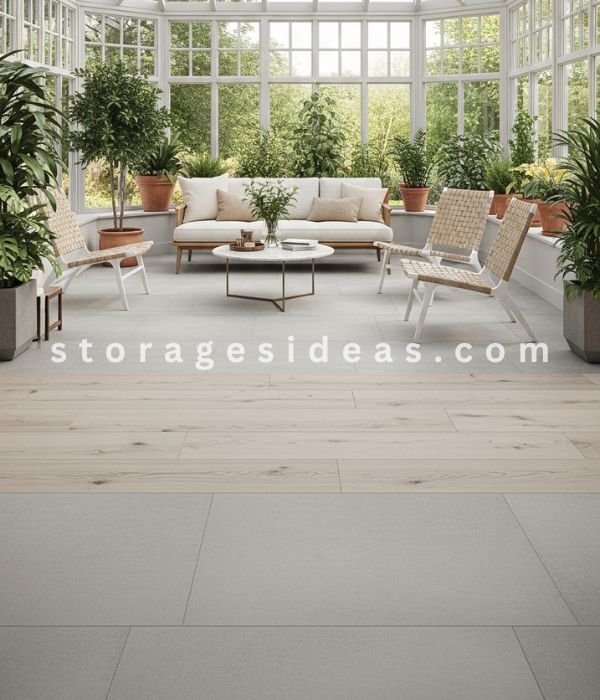
Flooring in a conservatory has to work harder than flooring in most other rooms. It needs to handle direct sunlight without fading or warping, cope with temperature changes, withstand tracked-in moisture and garden dirt, and still look attractive as part of your overall interior scheme.
In a small conservatory, the right flooring choice can also significantly influence how large the space feels.
Best flooring options for small conservatories:
Porcelain or ceramic tiles: Durable, waterproof, and available in a huge range of styles and sizes. Large-format tiles 60cm x 60cm or larger create a sense of space by reducing the number of grout lines visible. Wood-effect porcelain combines the warmth of a timber look with the practicality of tile.
Luxury vinyl tile (LVT): Increasingly popular for conservatories due to its waterproof properties, comfortable underfoot feel, and wide range of realistic wood and stone effects. LVT is also warmer underfoot than real tile, which matters in a space that can get cold in winter.
Continuous flooring: One of the most effective small conservatory ideas for making the space feel larger is to use the same flooring as the adjacent room. If your kitchen or living room has wood-effect LVT, extending it into the conservatory removes the visual break between spaces and makes both rooms feel more generous.
Area rugs: Adding a well-chosen area rug on top of hard flooring brings warmth, comfort, and a cozy domestic feel to the conservatory, particularly important in winter when you want the space to feel inviting rather than cold and glassy.
This works especially well when combined with hidden storage ideas, helping you keep the space clean without adding visual clutter.
6. Make Natural Light Your Greatest Asset
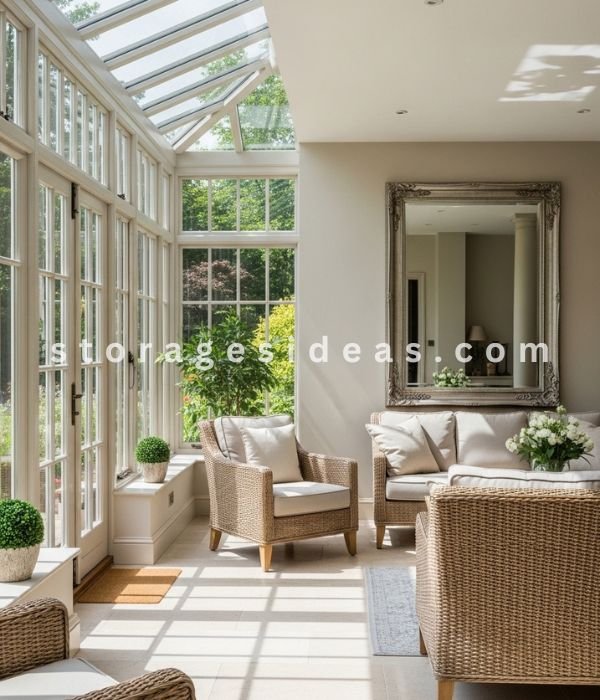
A conservatory’s greatest advantage over any other room in the home is its access to natural light, and in a small conservatory, maximizing and managing that light is one of the most impactful design decisions you can make.
Maximizing light:
- Keep window sills and glazing bars as clear as possible. Clutter on window sills blocks light and makes the room feel smaller
- Choose light, reflective surfaces for walls, floors, and furniture to bounce light around the room
- If your conservatory is fitted between two external walls with limited side glazing, consider a roof dome or lantern to bring additional light in from above
- Mirrors placed strategically, particularly on a solid wall opposite the main glazing, reflect the garden view and the light, effectively doubling the visual depth of the space
Managing light:
- Roof blinds are essential for preventing overheating and glare in summer without blocking the view entirely when closed
- Adjustable or slatted blinds give you fine control over the amount of light entering the space throughout the day
- Frosted or reeded glass on the lower portion of side glazing provides privacy without sacrificing light, a particularly useful detail if the conservatory faces a neighbor’s property
7. Bring the Garden In with Plants and Biophilic Design
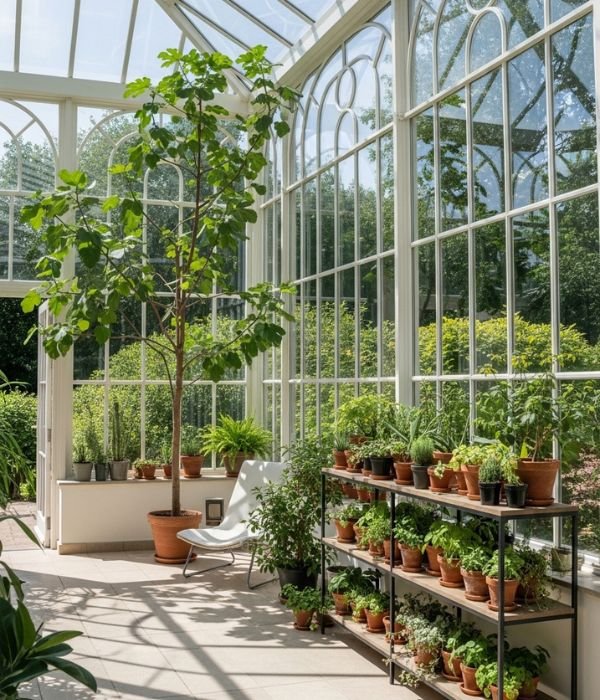
One of the most natural and effective small conservatory ideas for improving comfort and atmosphere is to embrace biophilic design, the deliberate incorporation of natural elements, particularly plants, into the interior of the space. A conservatory is uniquely suited to this approach because the natural light levels are typically far higher than in the rest of the house.
Why plants transform a conservatory: Plants soften the hard edges of glass and structural framing, add color and texture, improve air quality, and create a genuinely calming and restorative atmosphere. In a conservatory specifically, they reinforce the sense of being connected to nature, which is much of the reason you wanted a conservatory in the first place.
Plant ideas for small conservatories:
- Climbing plants trained up a trellis or along the roof structure create a lush, green canopy effect without taking up floor space
- Tall statement plants, such as fiddle leaf figs, large-leafed tropical plants, or olive trees, draw the eye upward and give a sense of vertical height to the space.
- A collection of smaller potted plants grouped together on shelves or windowsills creates a mini indoor garden effect without dominating the floor area.
- Hanging planters suspended from the roof structure use the vertical space of the conservatory efficiently and add a beautiful, trailing quality to the planting scheme.
8. Design a Multi-Purpose Layout That Earns Every Inch
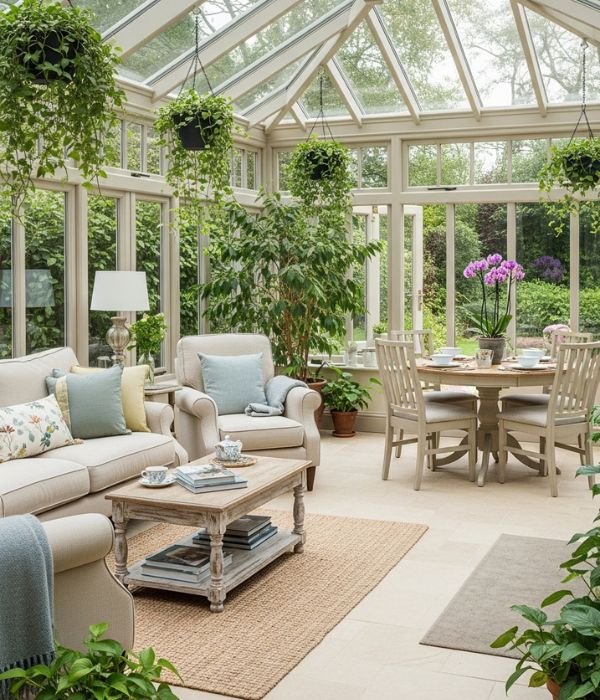
In a small conservatory, a single-purpose layout is often a missed opportunity. A room that works as a relaxation space and nothing else sits unused for large portions of the day. A thoughtfully designed multi-purpose layout, on the other hand, means the conservatory serves your household from morning coffee to evening unwinding and everything in between.
Zone the space cleverly: Even a compact conservatory can be loosely divided into two functional zones, a seating area for relaxing and a smaller table-based area for dining, working, or crafting. This doesn’t require a physical divider; a simple shift in furniture arrangement and a strategically placed rug is enough to create two distinct zones within one small space.
Ideas for multi-purpose conservatory layouts:
- A compact sofa paired with a small extendable dining table creates a space that works equally well for morning coffee, lunch, afternoon reading, and evening dining
- A built-in window seat with storage underneath provides seating, storage, and a defined reading or relaxation zone all in one compact footprint
- A small desk positioned to face the garden creates an inspiring home office zone in a conservatory that primarily functions as a relaxation space; the two uses rarely conflict with each other in practice
9. Layer Your Lighting for Atmosphere and Function
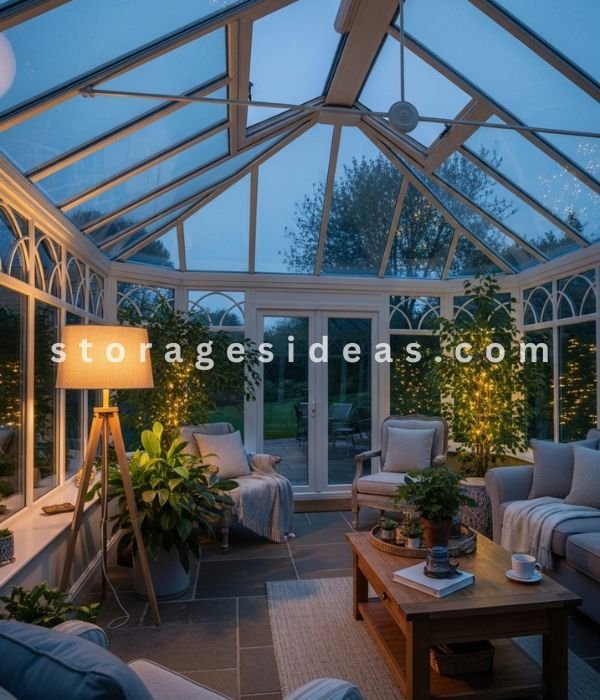
Natural light is abundant in a conservatory during the day, but what happens when the sun goes down? Many conservatories become cold, dark, and uninviting after dark because insufficient thought has been given to artificial lighting. Getting your lighting right is one of the small conservatory ideas that makes the biggest difference to how much the space actually gets used.
A layered lighting approach: The most comfortable and atmospheric conservatories use multiple layers of light working together, rather than relying on a single overhead fitting.
- Ambient lighting: Recessed ceiling spotlights or a central pendant provide general illumination and make the space usable after dark. In a conservatory with a glass or polycarbonate roof, surface-mounted ceiling fittings or pendant lights hung from the structural frame are the most practical options
- Task lighting: A floor lamp or table lamp next to a reading chair provides focused light for reading or close work without flooding the whole room
- Accent lighting: String lights or LED strip lighting threaded along the roof structure, around a window seat, or among plants creates a warm, magical atmosphere in the evening, the kind of lighting that makes you want to spend time in a space
Warm vs cool light: For a relaxation-focused conservatory, always opt for warm white bulbs (2700–3000K) rather than cool white. Warm light feels cozy and welcoming; cool light feels clinical and flat, the opposite of what you want in a space designed for comfort and enjoyment.
10. Add Soft Furnishings to Create Warmth and Comfort
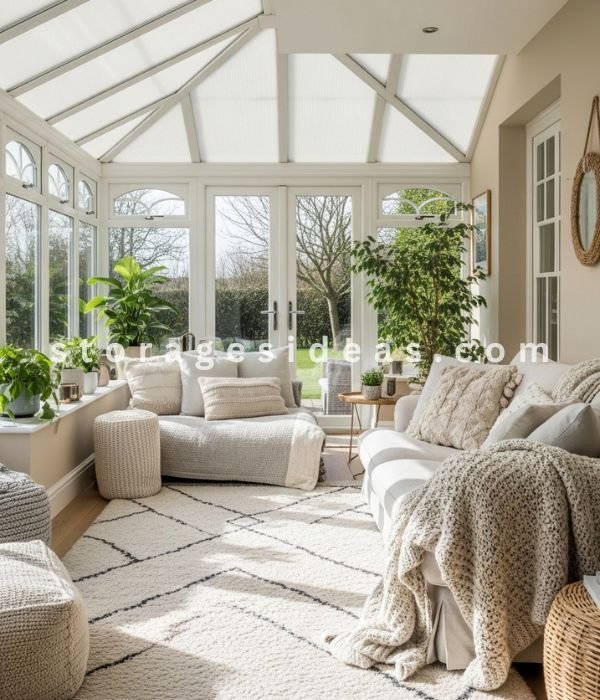
Perhaps the simplest and most immediately impactful of all small conservatory ideas is also one of the most overlooked: adding generous, high-quality soft furnishings to the space. Conservatories can feel hard, glassy, and cold both visually and physically without the layering of soft textiles that makes a room feel genuinely comfortable and lived-in.
Essential soft furnishings for a conservatory:
Rugs: A well-chosen area rug is transformative in a conservatory. It defines the seating zone, adds warmth underfoot, introduces color and pattern, and instantly makes the space feel more like a proper room and less like a glass box. Choose natural fibers like cotton, jute, or wool for a warm, organic feel.
Cushions and throws: Generous cushions on sofas and chairs, combined with a soft throw draped casually over the arm of a seat, create a layered, inviting atmosphere that encourages you to sink in and stay. Choose fabrics that are UV-resistant if your conservatory receives strong direct sunlight, as this prevents fading and extends the life of your soft furnishings.
Window treatments: Quality blinds or curtains serve both a practical function (temperature and light control) and a decorative one. Roman blinds in a linen or cotton fabric add warmth and softness to the glazing, while still maintaining a clean, tailored appearance. Sheer curtains in a floor-to-ceiling drop soften the transition from ceiling to floor and give the space a more finished, designed feel.
Layering is the key: The most comfortable and welcoming conservatories are those where soft furnishings are thoughtfully layered on the floor, cushions on the seats, a throw on the sofa, blinds on the windows, and perhaps a tablecloth or runner on the dining table. Each layer adds warmth, comfort, and personality, turning a functional glass structure into a genuine room you love to spend time in.
Conclusion
A small conservatory is never a limitation; it’s simply a design challenge that rewards thoughtful, intentional planning. With the right approach to furniture scale, color, temperature control, lighting, and soft furnishings, even the most compact glass extension can be a genuinely beautiful, comfortable, and hardworking space that enhances your home and your daily life.
The best small conservatory ideas are those that make the space work specifically for you, your lifestyle, your household’s needs, and the way you actually want to use the room. Start with one or two of the ideas in this guide, build from there, and enjoy the process of transforming what might feel like a challenging space into one of the most loved rooms in your home.
Frequently Asked Questions (FAQ)
How do I make a small conservatory feel bigger?
The most effective strategies are using light colors on solid walls and furniture, choosing slim-profile furniture with visible legs, installing large-format floor tiles that reduce visual grout lines, using mirrors to reflect the garden and natural light, and keeping window sills and glazing bars clear of clutter. A continuous flooring material shared with the adjacent room also helps blur the boundary between spaces and makes both feel larger.
What is the best furniture for a small conservatory?
Choose furniture that is proportionate to the space, a loveseat or pair of armchairs rather than a large sofa, and a small bistro or extending table rather than a full dining set. Prioritize multi-functional pieces like storage ottomans and daybeds. Always check the dimensions carefully before purchasing, and leave adequate room for movement around every piece.
How can I make my small conservatory usable in winter?
The most impactful changes are upgrading to thermally efficient roof glazing or a solid insulated roof, installing quality fitted blinds, adding underfloor heating, and layering the space with warm soft furnishings, rugs, cushions, and throws. A small electric heater or wall-mounted panel heater is a budget-friendly supplementary option.
What plants work best in a small conservatory?
Choose plants that thrive in bright, indirect light. Fiddle leaf figs, rubber plants, Boston ferns, pothos, and peace lilies are all excellent choices. For direct sunlight positions, succulents, cacti, citrus trees, and olive trees do well. Trailing plants in hanging planters make excellent use of vertical space without taking up floor area.
Do I need planning permission for a small conservatory?
In the US, requirements vary by state, county, and municipality. You should always check with your local planning or building department before beginning construction. In many cases, small conservatories that don’t exceed certain size thresholds and don’t alter the front elevation of a property can be built without full planning permission, but this is never guaranteed and should always be verified locally.
Looking for more home improvement and interior design inspiration? Browse our other articles on storage solutions, space-saving furniture, and creative home décor ideas!