If you’ve ever stepped on a LEGO at midnight or opened your child’s bedroom door only to be greeted by an avalanche of stuffed animals, you’re not alone. Keeping a child’s room tidy can feel like an uphill battle, one that restarts every single day. But here’s the good news: with the right child’s room organization ideas in place, managing the mess becomes so much easier.
The secret isn’t about having a perfectly spotless room at all times. It’s about creating smart, practical systems that work with your child’s natural habits rather than against them.
This is the same principle used in small apartment storage tricks, where systems are designed to fit everyday behavior instead of forcing structure.
When everything has a designated place, and that place is easy for your child to access, tidying up stops being a dreaded chore and starts becoming second nature.
In this guide, we’re sharing 11 creative and realistic child’s room organization ideas that parents across the US swear by. Whether you’re working with a tiny bedroom, a shared space, or just a whole lot of toys, there’s something here for every family. These tips are budget-friendly, kid-approved, and most importantly, they actually work.
Let’s dive in!
11 Creative Child’s Room Organization Ideas:
1. Use Labeled Bins & Baskets for Toy Storage
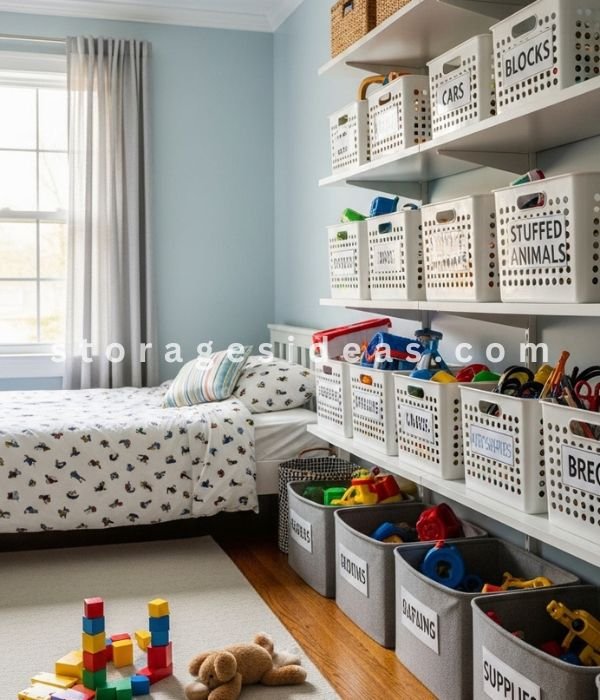
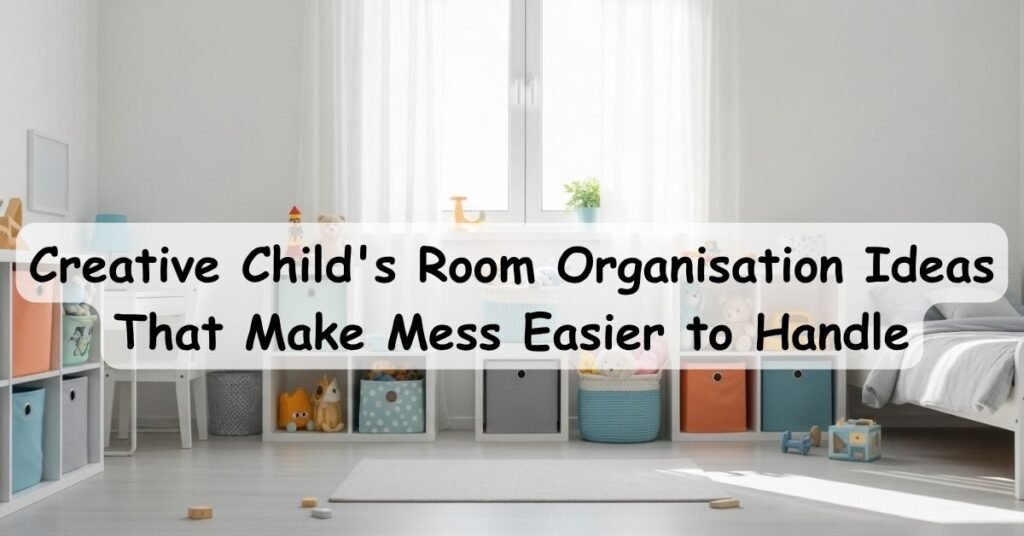
One of the simplest yet most effective child’s room organization ideas is using labeled bins and baskets for toy storage. The concept is straightforward: when your child knows exactly where each type of toy lives, they’re far more likely to put it back in the right place.
Why labeling works for kids: Labeling taps into a child’s natural desire for order and ownership. Even toddlers who can’t read yet respond well to picture labels — attach a photo of LEGOs on the LEGO bin, a small plush animal on the stuffed toy basket, and so on. For older kids, text labels work perfectly.
Best bin types to use:
- Open-top bins are easy for kids to toss items in quickly without fussing with lids
- Colorful stackable bins are great for categorizing by color-coded category
- Fabric storage cubes are soft, lightweight, and easy to pull in and out of shelving units
- Clear plastic bins. Kids can see exactly what’s inside without digging through everything.
Placement tips: Keep bins low and within easy reach of your child. Place the most frequently used toy bins at floor level and lesser-used items higher up. This simple change dramatically reduces the excuse of “I can’t reach it” when clean-up time comes around.
Pro tip: Involve your child in the labeling process. Let them draw pictures for the labels or choose the bin colors. When they feel a sense of ownership, they’re more motivated to maintain the system.
2. Go Vertical with Wall Shelves & Pegboards
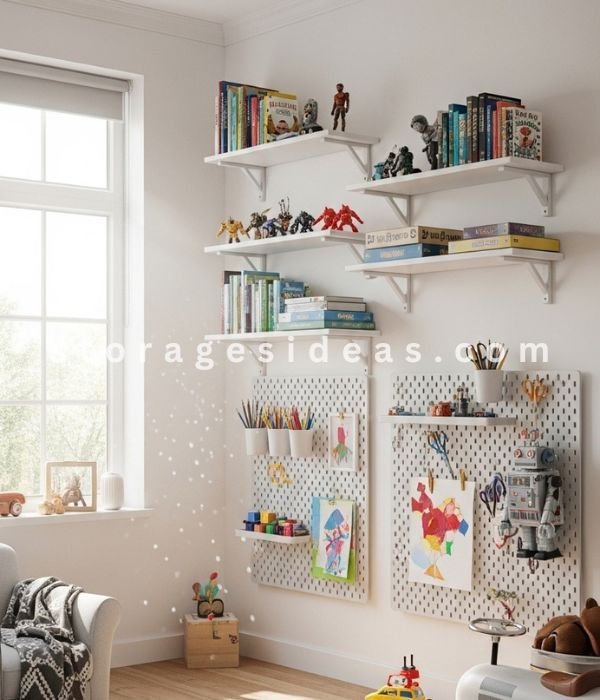
Floor space in a child’s bedroom is precious, especially when it needs to double as a play area. One of the smartest child’s room organization ideas is to think vertically and use your walls as valuable storage real estate.
You’ll see a similar approach in narrow wall storage ideas, where vertical space is used to reduce floor clutter without adding bulk.
Wall shelves: Floating shelves are a game-changer in kids’ rooms. Mount them at various heights to store books, small toys, trophies, and decorative items. Built-in floor-to-ceiling shelving is an even more powerful option; it gives you an enormous amount of storage without taking up any floor space, and you can use the lower shelves for items your child accesses daily while keeping higher shelves for things you want less accessible.
Pegboards: Pegboards are one of the most underrated organization tools for children’s rooms. A pegboard mounted on the wall can hold small shelves, hooks, bins, and baskets, and the best part is that you can reconfigure the layout any time your storage needs change. Pegboards are ideal for:
- Art supplies (markers, paintbrushes, scissors)
- Small toys and action figures
- Homework and craft supplies
- Hats, bags, and accessories
Paint the pegboard in your child’s favorite color to make it a fun, decorative feature of the room rather than just a utility piece.
Macramé hammocks and hanging baskets: For stuffed animals in particular, a macramé hammock or hanging net basket mounted in a corner of the room is both adorable and incredibly practical. It keeps plush toys off the floor and bed, and kids love the novelty of it.
3. Make the Most of Under-Bed Storage
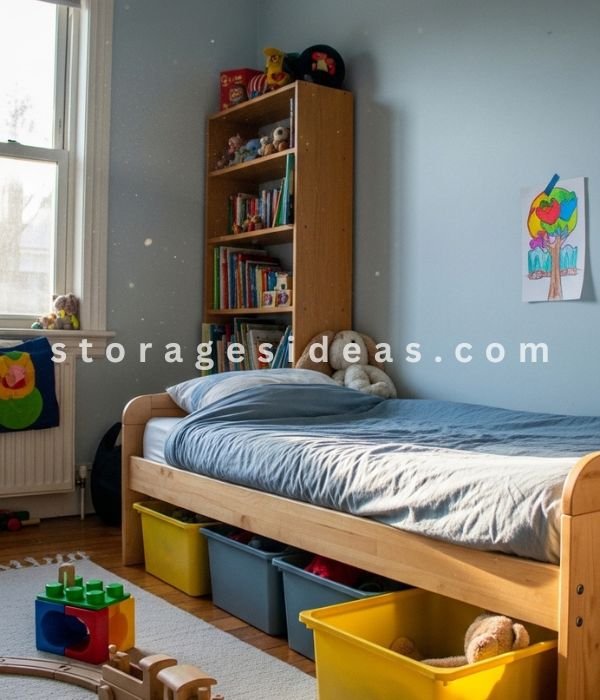
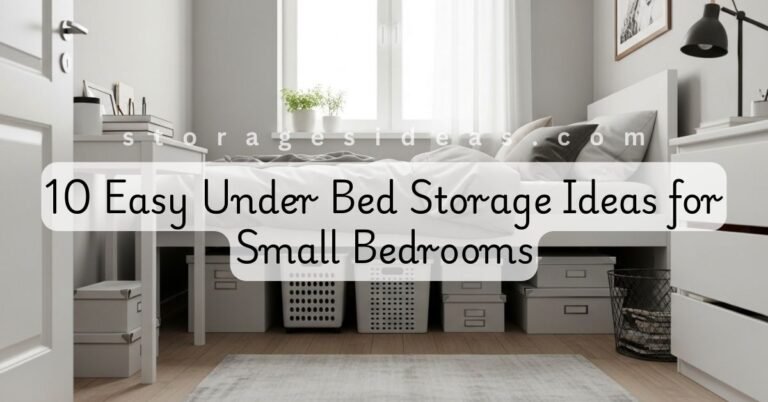
The space under the bed is one of the most underutilized areas in any child’s bedroom. It’s one of the most effective under-bed storage ideas, especially in smaller rooms where every inch matters.
With the right approach, it can become a surprisingly spacious storage zone that keeps clutter completely out of sight.
Rolling storage bins: Low-profile rolling bins that slide easily under the bed are perfect for kids. They can pull them out themselves, grab what they need, and push them back in, no adult assistance required. Look for bins with handles to make this even easier.
What to store under the bed:
- Out-of-season clothing
- Extra bedding and pillows
- Board games and puzzles
- Toys that are used less frequently
- Shoe storage
Storage beds: If you’re in the market for new furniture, consider investing in a storage bed. These come with built-in drawers underneath the mattress and are one of the most efficient furniture choices for a small child’s room. They eliminate the need for a separate dresser in some cases, freeing up significant floor space.
Vacuum storage bags: For bulky items like winter comforters or extra pillows, vacuum storage bags are a brilliant solution. They compress the items to a fraction of their original size, making under-bed storage go even further.
4. Create a Dedicated Reading Nook with Built-In Storage
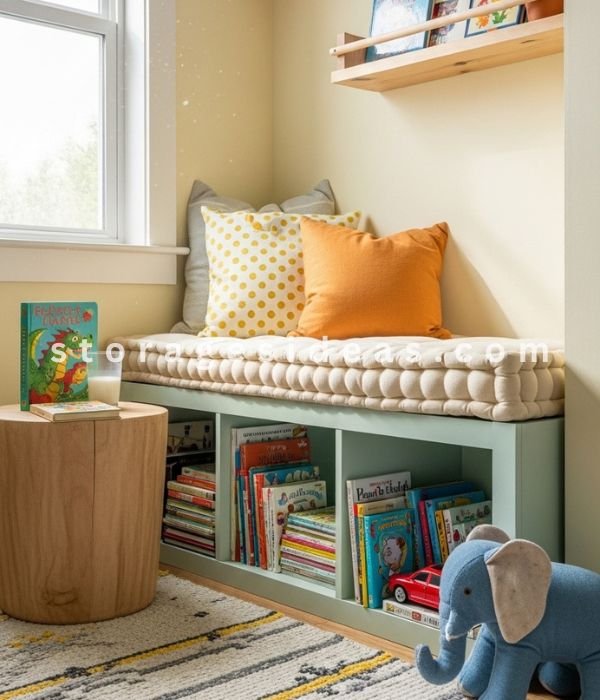
A dedicated reading nook serves double duty; it gives your child a cozy, inspiring place to read and learn, while also providing built-in storage for books and supplies. It’s one of those child’s room organization ideas that genuinely enhances the whole feel of the room.
Bookshelf ideas at child’s height: Mount low bookshelves or use forward-facing book rails so your child can easily see the covers and choose what they want to read. This is much more appealing than spines facing outward in a tall shelf that requires a step stool. Keep books at eye level and within arm’s reach to encourage independent reading.
Corner reading nooks with storage benches: A built-in window seat or corner bench with storage inside is a beautiful and functional addition to a child’s room. The bench doubles as seating for the reading nook, and the hollow interior stores books, puzzles, art supplies, or anything else that tends to pile up. Add some cushions and fairy lights, and you’ve created a space your child will actually want to spend time in.
Wooden crates as bookshelves: For a budget-friendly DIY alternative, stack painted wooden crates on their side and secure them to the wall. They make charming, rustic bookshelves that your child can easily access. Paint them to match the room’s color scheme for a polished, intentional look.
5. Set Up a Study Zone with Smart Desk Organization
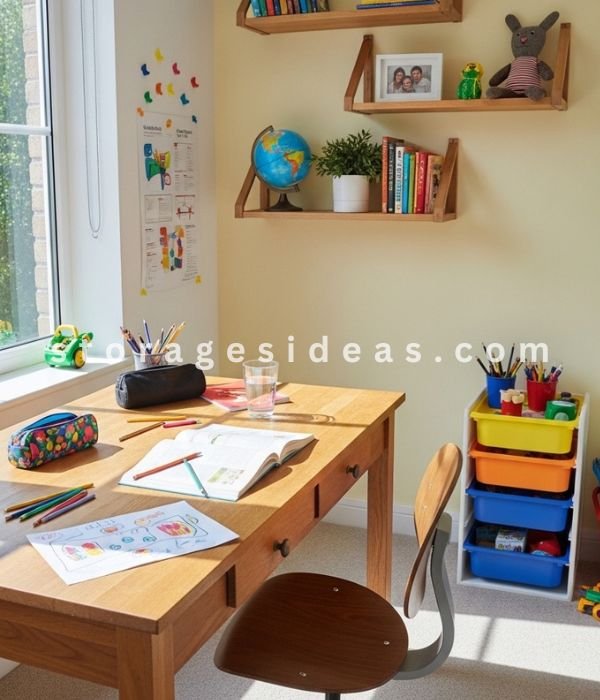
As children grow, their need for a dedicated study and homework space becomes increasingly important. A well-organized desk area doesn’t just reduce mess; it also helps your child focus better and develop good study habits.
Creating a structured environment like this is often linked to improved focus and independence in children, as supported by child development research.
Homework station essentials: Every child’s study zone should have a designated spot for the following:
- Pens, pencils, and markers (in a desk caddy or cup organizer)
- Notebooks and loose paper (in a small filing tray or folder organizer)
- Scissors, ruler, and other supplies (in a small drawer organizer)
- A calendar or whiteboard for tracking assignments and deadlines
Desk organizers and supply caddies: A rotating desk caddy is fantastic for kids because it holds lots of supplies in one compact space and spins around for easy access. Pair it with a small set of desktop drawers for things like erasers, sticky notes, and paper clips.
Cable and device management: If your child uses a tablet or laptop for school, add a small charging station or cable organizer to the desk setup. This prevents the tangle of chargers from taking over the desk surface and keeps devices safely stored when not in use.
Wall-mounted homework board: A small chalkboard or whiteboard mounted above the desk is a great way to help kids track their to-do lists, upcoming tests, and important reminders. It keeps papers from piling up on the desk and gives your child a sense of control over their own schedule.
6. Optimize the Closet for Kids
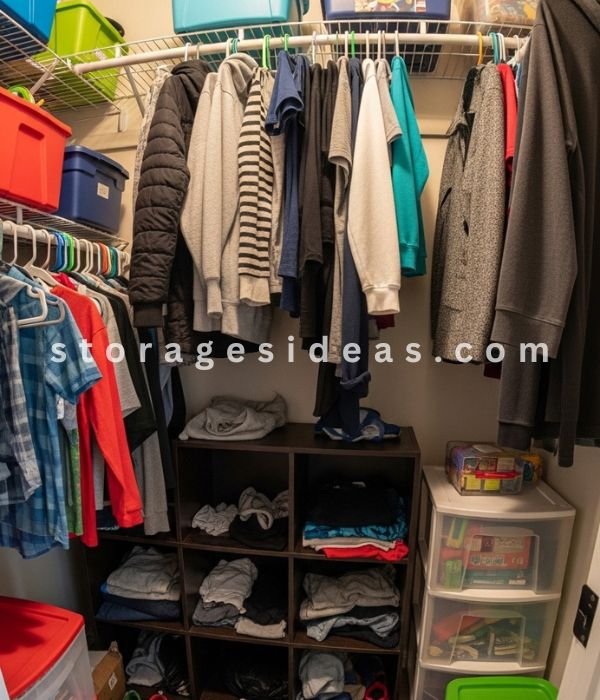
The bedroom closet has enormous untapped potential in most children’s rooms. With a few smart adjustments, you can transform a cluttered, inefficient closet into a well-organized system your child can actually use independently.
Lower the clothing rod: One of the simplest and most impactful changes you can make is lowering the main clothing rod to a height your child can reach. When kids can hang up and retrieve their own clothes without asking for help, they’re much more likely to stay organized. Add a second rod above for adult-hung items or out-of-season clothing.
Cubby units and shoe racks: Place a cubby unit or small dresser at the base of the closet to hold folded items, accessories, and shoes. Label each cubby so your child knows exactly what goes where. A simple shoe rack at the bottom keeps footwear paired up and prevents it from piling up on the floor.
Hanging closet organizers: Over-the-door and hanging closet organizers are incredibly versatile. Use them for:
- Scarves, hats, and small accessories
- Socks and underwear (instead of a drawer)
- Small toys or art supplies
- Shoes or slippers
Seasonal clothing rotation: Store only the current season’s clothes in the closet and pack away off-season items in labeled bins on the top shelf or under the bed. This reduces closet overcrowding significantly and makes it much easier for your child to find what they’re looking for.
7. Use Hooks for Bags, Jackets & Accessories
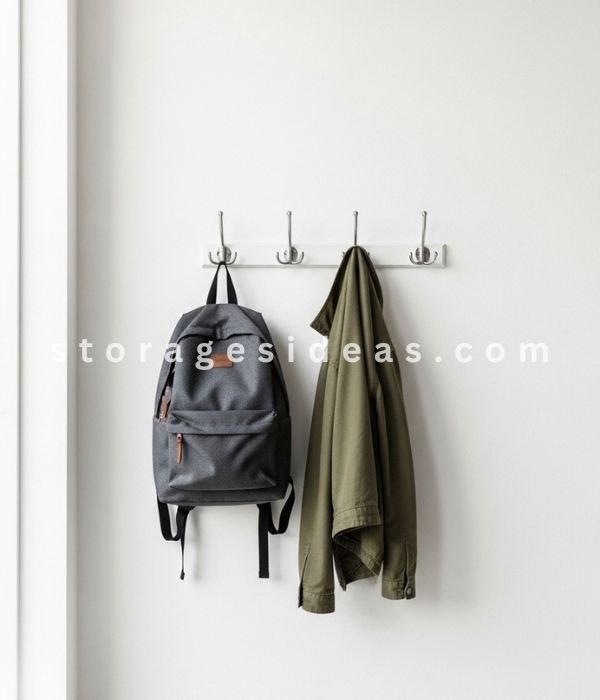
Hooks are one of the most powerful and most underused organizational tools in a child’s room. They’re inexpensive, easy to install, and create instant homes for items that would otherwise end up dumped on the floor or bed.
Backpack hooks near the door: Mount a row of sturdy hooks near the bedroom door or in the entryway at your child’s height. Designate one hook for their school backpack, one for their jacket, and one for any sports bags or extracurricular gear. This creates a natural drop zone that stops bags from migrating to the floor the second your child walks in.
The same concept is used in drop zone storage ideas, where items are designed to land in one place instead of spreading.
Hooks for hats, scarves, and jackets: A simple row of wall hooks or a decorative hook rack inside the closet door is perfect for seasonal accessories. Hats, scarves, and jackets are items that tend to pile up in the most random places. Hooks give them a dedicated home that’s easy to use.
Personalized hooks: For younger children, especially, personalized hooks with their name or a fun character make organization feel exciting rather than boring. When a child feels proud of their space, they take better care of it.
8. Rotate Toys to Reduce Clutter
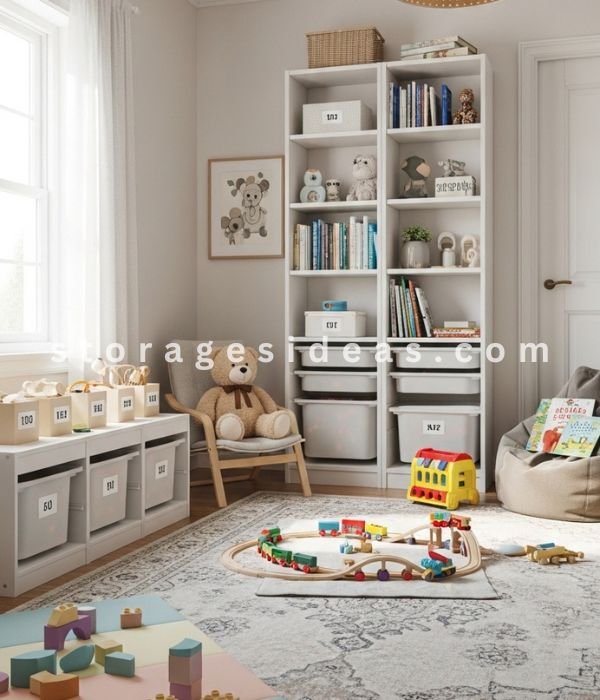
If your child’s room feels perpetually overwhelmed by toys, no matter how many storage solutions you add, toy rotation might be the most transformative child’s room organization idea you’ll discover.
What is toy rotation? Toy rotation is the practice of keeping only a portion of your child’s toys accessible at any given time, while storing the rest out of sight. Every few weeks, you swap out some of the accessible toys for ones from storage, and like magic, your child rediscovers “old” toys with fresh excitement.
Why it works:
- Significantly reduces visible clutter
- Keeps kids more engaged with fewer toys (less overwhelm = more creative play)
- Makes tidying up faster and easier when there are fewer items to put away
- Extends the life of toys because they don’t all get used and damaged at once
How to set it up: Sort all toys into categories and divide them into three or four rotation groups. Store the inactive groups in labeled bins in a closet or storage area. Set a rotation schedule every two to three weeks that works well for most families, and involve your child in the swap if they’re old enough. It quickly becomes something they look forward to.
9. DIY Storage Solutions on a Budget
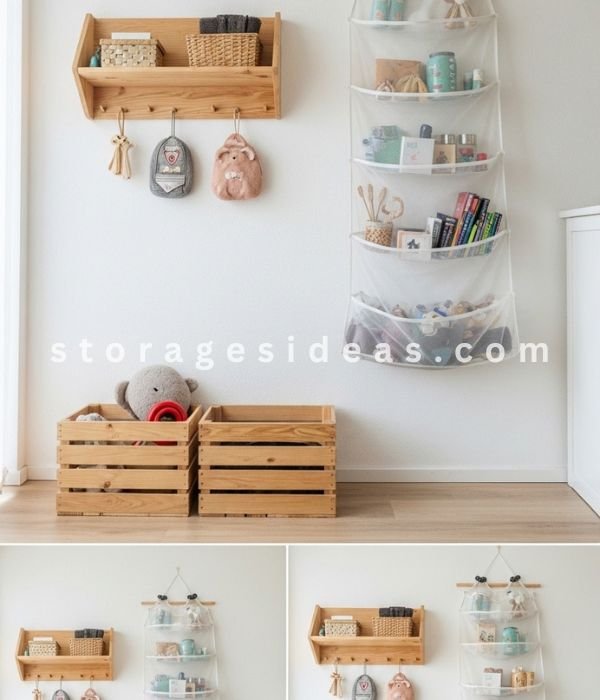
You don’t need to spend a fortune to create a beautifully organized child’s room. Some of the most effective organization solutions are also the most affordable, and many can be made with materials you already have at home.
Wooden crates: Stack and paint wooden crates to create custom shelving units, toy bins, or bedside tables. Secure them to the wall for safety, and let your child help choose the paint colors for a personal touch.
Repurposed shoe organizers: An over-the-door shoe organizer has a surprising number of uses beyond shoes. In a child’s room, use the pockets to store:
- Small toys and action figures
- Art supplies
- Hair accessories
- Books and notepads
Mason jars and clear containers: Mount mason jars on a piece of wood to create a wall-mounted supply organizer for art supplies like crayons, markers, and scissors. Clear containers of any kind are great because your child can see what’s inside without opening everything.
Tension rods: Install tension rods inside cabinet doors or deep drawers to create dividers for storing spray bottles, rolls of wrapping paper, or even small toys. They’re inexpensive, damage-free, and incredibly versatile.
10. Use a Chore Chart & Tidy-Up Routine
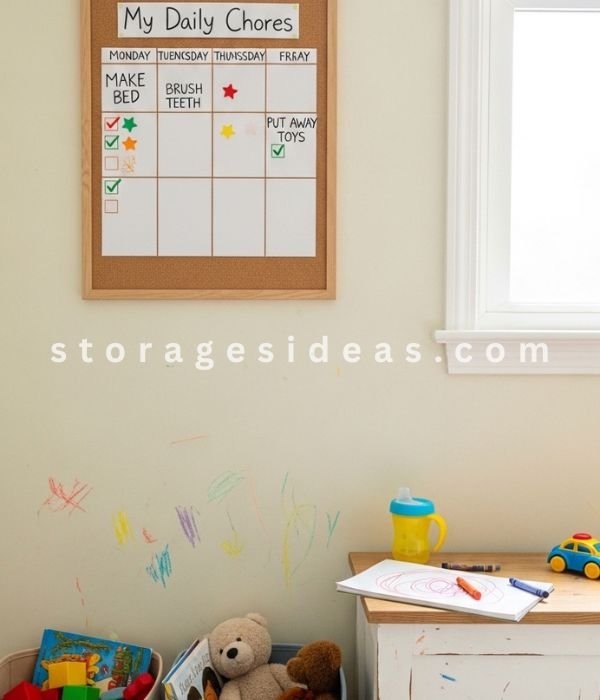
Even the most perfectly organized room will descend into chaos without consistent habits. Pairing your organization’s systems with a simple tidy-up routine and a visual chore chart is the secret ingredient that makes everything else sustainable long-term.
Getting kids involved: Children are far more likely to maintain organization systems they helped create. Sit down with your child and talk about the room layout, where things should go, and what a “tidy room” looks like to them. Give them age-appropriate responsibilities and acknowledge their efforts consistently.
Fun ways to make clean-up a habit:
- The 10-minute tidy: Set a timer for 10 minutes each evening and make it a family clean-up routine. With good systems in place, 10 minutes is genuinely enough to restore order.
- Clean-up playlist: Let your child pick a fun playlist that plays during tidy-up time. When the music stops, clean-up is done.
- Reward charts: Use a simple sticker chart to reward consistent tidying. Small rewards, extra screen time, choosing dinner, and a fun outing go a long way in building lasting habits.
Visual chore charts: A laminated chore chart on the wall or a magnetic responsibility board gives your child a clear, visual reminder of what’s expected each day. Break tasks into small, manageable steps: “Put toys in bins,” “Put dirty clothes in hamper,” “Clear desk.” Checking off tasks gives kids a satisfying sense of accomplishment.
11. Choose Multi-Functional Furniture
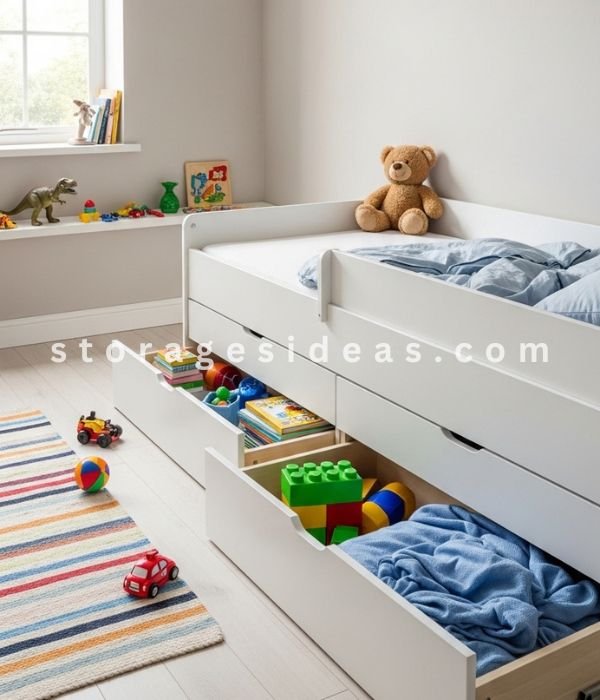
When every piece of furniture in a child’s room serves more than one purpose, you maximize every square inch of space and dramatically reduce the need for additional storage solutions. Multi-functional furniture is a smart investment, especially for smaller bedrooms.
Storage beds: A bed with built-in storage drawers underneath is one of the best investments you can make for a child’s room. It provides an enormous amount of hidden storage while taking up zero extra floor space. Use the drawers for clothing, bedding, or toys.
Ottoman with storage: A storage ottoman at the foot of the bed or in a play area serves as seating, a footrest, a surface for play, and a storage compartment all in one. It’s perfect for storing items like extra blankets, dress-up clothes, or board games.
Modular shelving systems: Modular shelving units like the IKEA KALLAX or TROFAST systems are incredibly popular for kids’ rooms because they’re flexible and grow with your child. Use them with bins and baskets when kids are young, then repurpose the same shelving unit for books and display items as they get older.
Loft beds: For older children, especially, a loft bed frees up the entire floor space beneath the bed for a desk, reading nook, or play area. This is one of the most dramatic space-saving moves you can make in a small child’s bedroom.
Conclusion
Organizing a child’s room doesn’t have to mean an expensive renovation or a Pinterest-perfect makeover. It simply means creating smart, practical systems that suit your child’s age, habits, and the size of your space. Start with one or two of these child’s room organization ideas, perhaps labeled bins and a simple hook system, and build from there.
The key is consistency. Involve your child in the process, keep systems simple enough for them to maintain independently, and celebrate the small wins along the way. Over time, these habits will stick, and both you and your child will enjoy a calmer, more functional bedroom.
Which of these ideas are you most excited to try? Start small, stay consistent, and watch the transformation happen!
Frequently Asked Questions (FAQ)
How do I keep my child’s room organized long-term?
The key to long-term organization is simplicity. Create systems that are easy for your child to use independently, labeled bins, accessible hooks, and low shelving. Pair these systems with a consistent daily tidy-up routine, and do a seasonal declutter every few months to prevent the buildup of toys and clutter.
What is the best storage solution for a small kid’s room?
In a small room, vertical storage is your best friend. Use wall shelves, pegboards, and hanging organizers to keep the floor clear. Under-bed storage and multi-functional furniture like storage beds and ottomans also make a huge difference in maximizing limited space.
How do I get my child to keep their room clean?
Make organization as easy and intuitive as possible when things have a clear, accessible home, kids are more likely to use it. Involve your child in creating the system, use visual cues like labeled bins and chore charts, and establish a fun daily clean-up routine like a tidy-up playlist or a 10-minute family tidy.
At what age can kids start organizing their own room?
Even toddlers as young as 2–3 years old can begin to participate in simple clean-up tasks like putting toys in a bin. By ages 5–6, children can follow a basic organizational system with picture labels. By ages 8–10, most children can manage their own room organization with minimal parental guidance, especially if good habits have been built from an early age.
Are DIY organization solutions as effective as store-bought ones?
Absolutely! DIY solutions like painted wooden crates, repurposed shoe organizers, and mason jar supply holders can be just as effective and often more personalized than store-bought alternatives. The most important factor is whether the system works for your child’s specific needs and habits, not how much it costs.
Looking for more home organization tips? Explore our other articles on storage solutions, DIY home projects, and smart home decor ideas!