
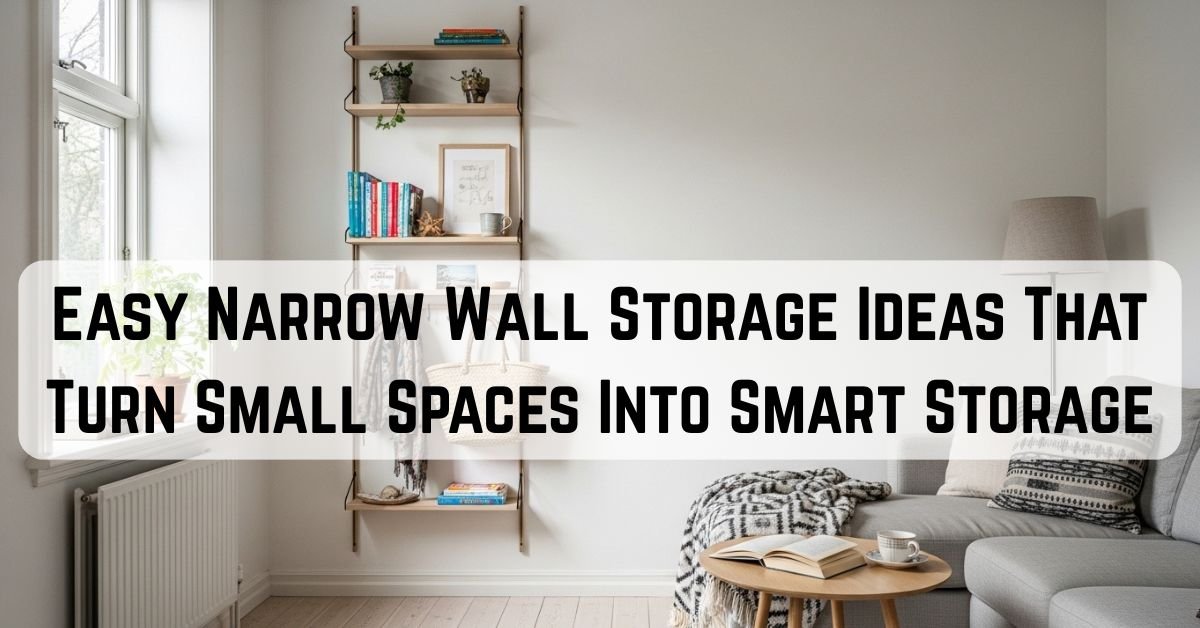
I used to ignore narrow walls completely.
They felt too small to matter. Too awkward to use. Just empty strips between furniture, beside doors, or along corners that didn’t seem worth thinking about.
So I focused on bigger areas instead of shelves, cabinets, and storage units. Meanwhile, clutter kept building in the spaces I actually used every day.
At some point, I noticed something simple.
The problem wasn’t a lack of storage. It was that I was overlooking the easiest storage opportunities right in front of me.
Once I started using those narrow wall spaces intentionally, everything shifted. The room didn’t just feel more organized; it felt lighter, more balanced, and easier to manage without adding bulky furniture.
That’s where these narrow wall storage ideas started to make a real difference.
Why Narrow Walls Are the Most Wasted Storage Opportunity
Most of us don’t think of narrow walls as usable space.
They don’t look functional at first. They’re too slim for traditional furniture, and they often sit in awkward spots between two larger elements, near a doorway, or tucked into a corner.
So they get ignored.
But that’s exactly what makes them valuable.
These spaces don’t compete with your main layout. They don’t interrupt movement. And when used properly, they add storage without making the room feel heavier.
The shift for me was simple.
Instead of asking, “What can I fit here?”
I started asking, “What small function can this space support?”
That’s when these areas stopped feeling useless and started becoming part of the system.
1. Slim Vertical Shelves That Fit Where Nothing Else Can
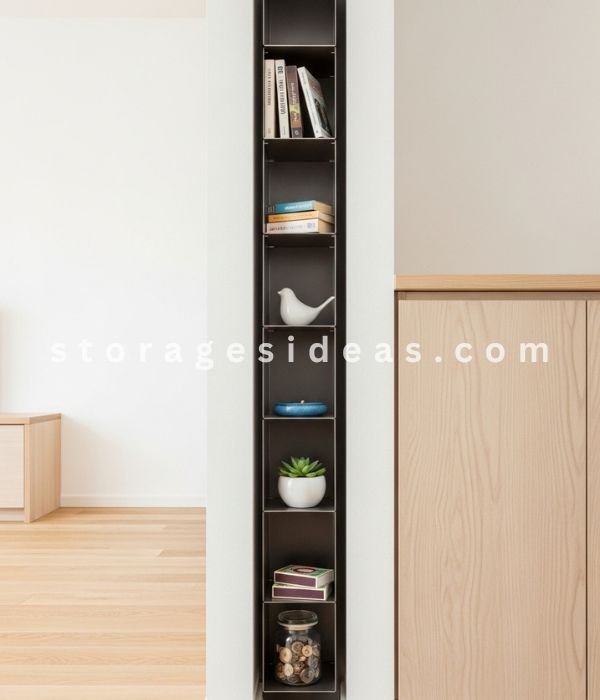
The first narrow wall I actually used wasn’t planned.
It was a small gap beside a cabinet that had always been there, but never felt usable. Too narrow for furniture, too visible to ignore, and too awkward to figure out.
For a long time, I treated it like dead space.
What changed wasn’t the space; it was how I looked at it. Instead of asking what could fit, I started thinking about what that space could support. And that shift made everything clearer.
A slim vertical shelf didn’t try to solve everything. It just gave that wall a simple purpose. A place for a few frequently used items. A place that didn’t interrupt anything else.
What surprised me most was how natural it felt once it was there.
Because it didn’t compete with the room. It didn’t add visual weight. It just quietly absorbed a bit of the clutter that used to spread elsewhere.
That’s the strength of using narrow walls properly. You’re not adding storage, you’re redistributing pressure from the rest of the room.
This works in a similar way to wall storage living room ideas, where vertical space supports the room without adding bulk.
2. Behind-the-Door Storage That Stays Out of Sight
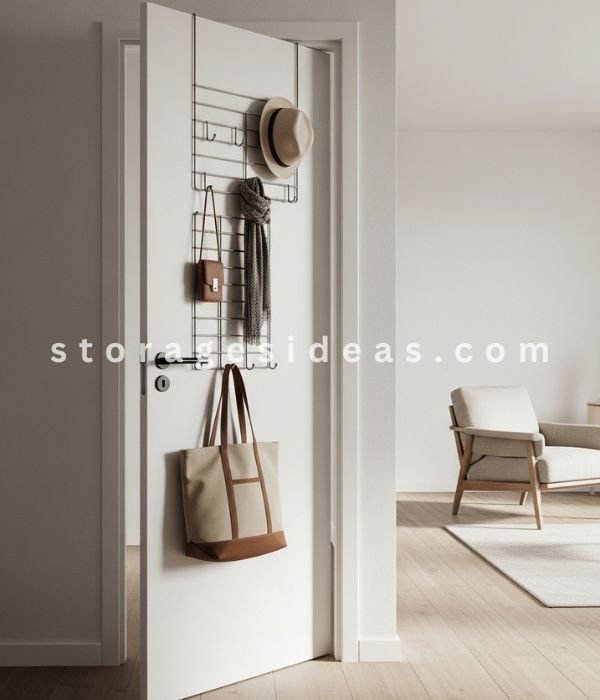
There are parts of a room that exist in plain sight but never really get used.
The space behind a door is one of them.
I used to think of it as unavailable, not because it couldn’t be used, but because I never considered it part of the room. It felt separate, almost invisible.
But that invisibility is exactly what makes it valuable.
Once I started using that surface, it became one of the easiest places to store things without affecting the overall look of the space. It holds what I need, but disappears when the door is open.
The key difference here is restraint.
It’s tempting to use every inch of that space, but overloading it brings the clutter back just in a different form. Keeping it light and intentional makes it work without drawing attention.
It’s not about maximizing storage. It’s about using hidden space without creating new problems.
3. Floating Shelves That Don’t Crowd the Space
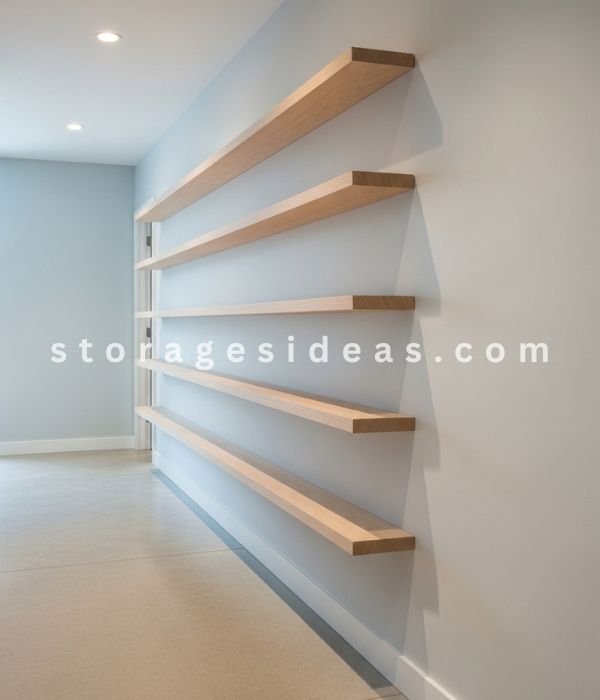
At first, I thought adding shelves would solve everything.
But on narrow walls, traditional shelves can do more harm than good. If they’re too deep, they start to push into the room. They interrupt movement. They make the space feel tighter than it actually is.
That’s where I had to adjust my thinking.
Floating shelves with minimal depth changed how the wall felt. They didn’t try to hold everything. They just held what made sense for that space.
And that limitation is what made them effective.
Because once a shelf has too much capacity, it invites clutter. But when it has just enough, it encourages better decisions about what belongs there.
Understanding how shelves are used in small spaces also helps you choose designs that support storage without making the wall feel heavier.
This is where narrow wall storage ideas become less about adding and more about editing.
You’re not filling space, you’re shaping it.
4. Narrow Cabinets That Hide Everyday Clutter
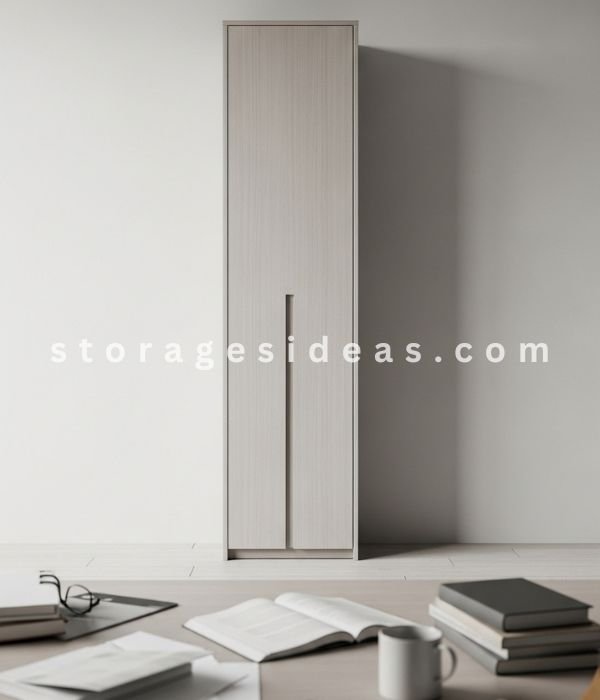
There’s always a category of items that don’t belong out in the open.
Not because they’re messy, but because they create visual noise when they’re constantly visible.
For a while, I tried to organize those items neatly on open shelves. It worked for a moment, but over time, it always slipped. Things shifted, stacked, and eventually looked cluttered again.
That’s when I understood the role of hidden storage.
A narrow cabinet doesn’t change what you store; it changes how it feels. It removes the constant visual reminder of everything inside it. And that creates a sense of calm that open storage can’t always provide.
What matters here isn’t just hiding things, it’s choosing what deserves to be hidden.
Once that boundary is clear, the rest of the space feels more intentional.
5. Vertical Hooks That Turn Empty Walls Into Functional Space
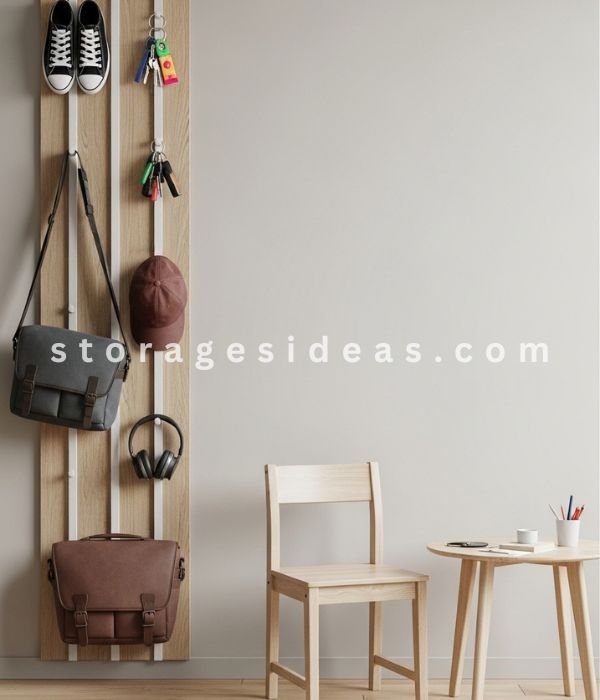
Some of the most useful storage isn’t about containers or shelves at all.
It’s about giving everyday items a place to land.
Before this, things like bags, headphones, or small accessories didn’t have a fixed spot. They moved around constantly, sometimes on a chair, sometimes on a table, sometimes somewhere I couldn’t even remember.
That constant movement is what creates clutter.
When I added vertical hooks to a narrow wall, I didn’t gain storage; I gained consistency.
Now those items don’t float between spaces. They return to the same place every time. And because that place is easy to access, it doesn’t require effort to maintain.
That’s what makes it work.
If you prefer systems that stay easy over time, these lazy organization ideas follow the same low-effort approach.
It’s not about organizing perfectly. It’s about making the correct action the easiest one.
6. Corner Wall Strips That Use Awkward Gaps
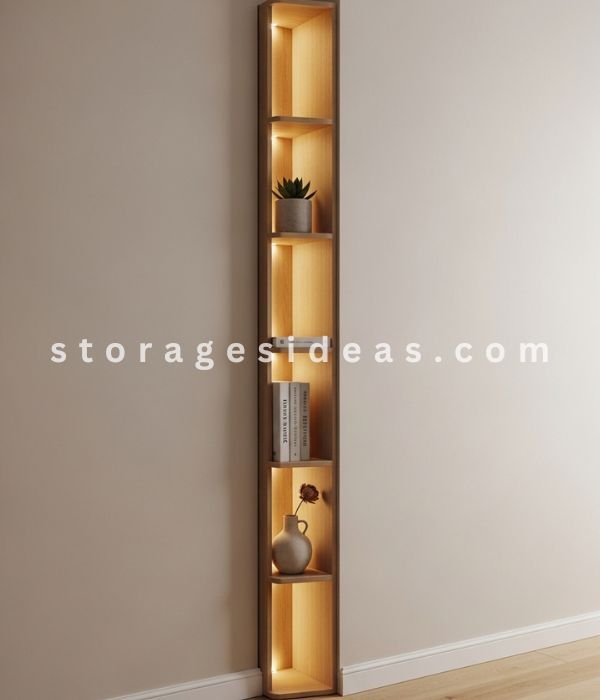
Corners always felt like spaces that didn’t belong to anything.
Not quite part of one wall, not fully usable like another. They sat in between, visible but rarely functional. And because they didn’t clearly “fit” into the layout, I kept ignoring them.
But ignoring them didn’t make them disappear. It just meant I was leaving usable space untouched while trying to solve storage problems elsewhere.
The shift came when I stopped expecting corners to hold big solutions.
They don’t need to.
Even a narrow vertical strip, something small and intentional, can turn that awkward gap into something useful. It doesn’t need to store a lot. It just needs to serve a purpose.
Once that purpose is there, the space stops feeling awkward. It becomes part of the room instead of something that sits outside of it.
That’s what makes these narrow wall storage ideas effective; they don’t force the space to change. They work with what’s already there.
7. Ladder-Style Storage That Feels Light and Flexible
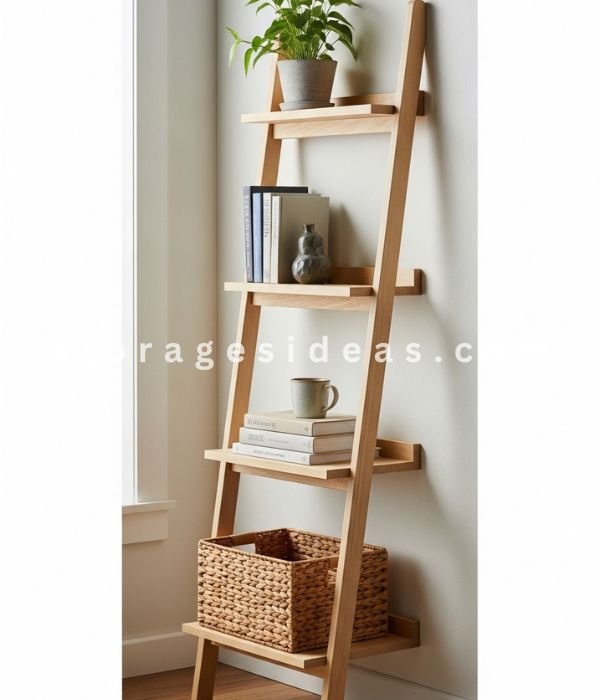
One thing I noticed early on was how easily storage can make a space feel heavier.
Even when it’s useful, it can start to feel fixed, rigid, and difficult to adjust. And once something feels permanent, it becomes harder to maintain because it doesn’t adapt to your needs.
That’s where ladder-style storage made a difference.
It doesn’t feel like it’s taking over the wall. It leans into the space instead of occupying it. That small difference changes how the room feels.
But what really made it work was flexibility.
I could move it. Shift how I use each level. Change what it holds without rethinking the entire setup. That made it easier to live with, not just install.
Because storage that can adjust with you is far more sustainable than something that locks you into one system.
8. Wall-Mounted Baskets for Everyday Drop Zones
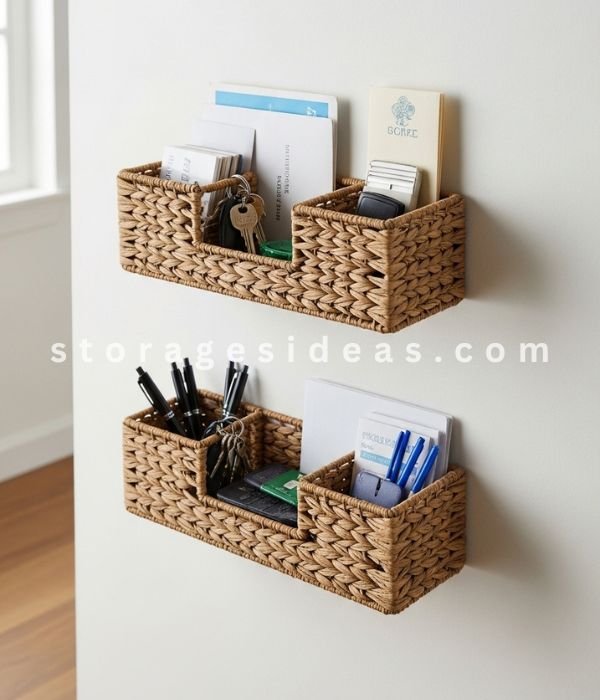
Some clutter doesn’t come from having too many things.
It comes from having no easy place to put them.
There are always items that don’t need careful placement. You just need somewhere quick and accessible to drop them without thinking too much about it.
Before, those items would land wherever it was convenient in the moment, and that convenience would slowly spread clutter across the room.
Wall-mounted baskets changed that pattern.
They created a space where things could go without needing precision. I didn’t have to organize perfectly. I just had to use the same spot consistently.
And that consistency is what made the difference.
Because the easier it is to put something away, the more likely you are to actually do it.
9. Narrow Units Between Furniture Pieces
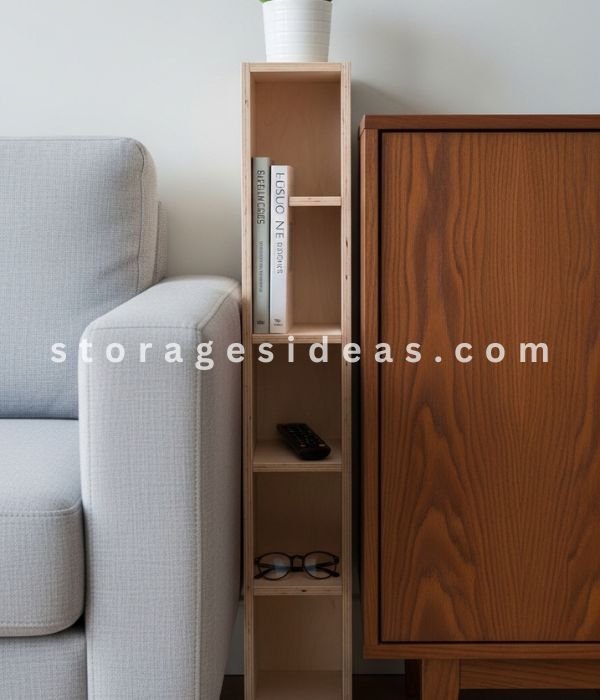
There are small gaps in every room that don’t feel intentional.
Between a sofa and a wall. Between a cabinet and a corner. Besides large appliances. They’re too small for furniture, but too noticeable to ignore.
For a long time, I treated those spaces as limitations.
But once I started looking at them differently, they became some of the most efficient storage areas in the room.
What makes them powerful is that they don’t interfere with anything.
They don’t block movement. They don’t change the layout. They simply use space that was already there, without demanding attention.
And because they’re so specific in size, they naturally limit what you store there, which keeps them from becoming cluttered.
It’s a quiet kind of storage, but one that adds a lot of value over time.
10. High Wall Storage That Uses Vertical Space Fully
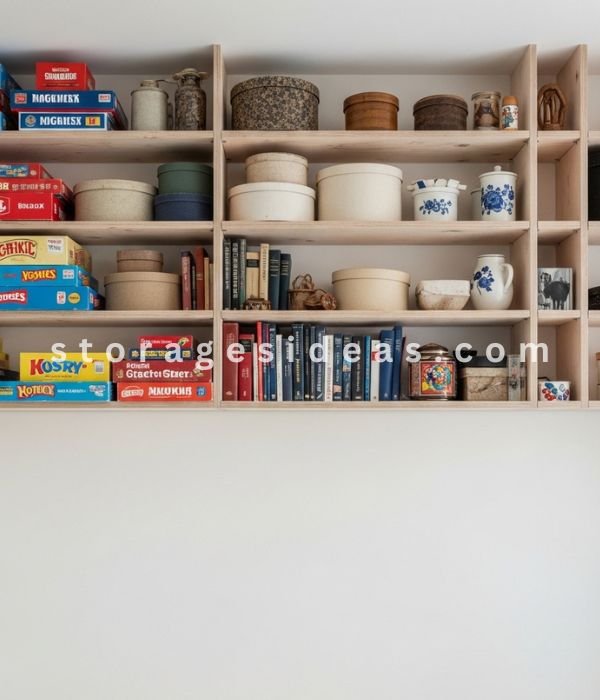
There’s one area most people avoid using.
Anything above eye level.
It feels inconvenient, slightly out of reach, and easy to forget about. So it stays empty, while the more accessible areas become overcrowded.
I used to do the same.
But once I started using that upper space intentionally, the balance of the room changed.
Items that I didn’t need every day moved up. Not out of reach but out of the way. That freed up the areas I use constantly, making them easier to manage.
The key here isn’t to store everything up high.
It’s to move the right things.
When you separate what you use daily from what you don’t, the entire system becomes clearer. And once that clarity is there, maintaining the space becomes much easier.
What Actually Makes Narrow Wall Storage Ideas Work
What took me the longest to understand wasn’t how to use narrow walls; it was why most attempts don’t last.
At first, everything feels like it works. You add a shelf, hang a few items, maybe place a unit in a tight space. It looks better immediately. But after a few days or weeks, things start to shift. Items move, clutter creeps back in, and the system quietly breaks down.
Not because the idea was wrong, but because it didn’t match how the space was actually being used.
That’s the part most people overlook.
Storage doesn’t fail because it lacks structure. It fails because it adds friction.
If something is slightly harder to reach, you stop using it consistently. If it requires too much precision, you avoid maintaining it. If it doesn’t align with your natural movement, it slowly gets ignored.
And once it’s ignored, it stops being part of your system.
What made the difference for me was paying attention to those small moments.
Where I naturally drop things.
Where my hand goes first.
What I avoid using even when it’s available.
Those patterns revealed what the space actually needed.
Instead of trying to maximize every narrow wall, I started assigning simple roles to them. One wall supports quick access. Another holds items I don’t need often. Another exists just to absorb small, everyday clutter before it spreads.
That clarity removed pressure from the rest of the room.
And that’s when these narrow wall storage ideas started to work in a way that lasted—not because they added more storage, but because they made the existing space easier to live with.
Final Thoughts
I used to think narrow walls were the least important part of a room.
They didn’t feel useful. They didn’t seem worth planning around. And because of that, I kept focusing on bigger storage solutions while smaller problems kept building up around me.
What I didn’t realize is that those small, ignored spaces were part of the problem.
Clutter doesn’t always come from having too many things. Sometimes it comes from not having the right places for them to go.
Once I started using narrow walls with intention, everything else became easier. Surfaces stayed clearer. Movement felt smoother. The room didn’t feel like it was constantly being adjusted.
It felt stable.
If you want to take this further, these small space transformation ideas show how small changes can improve your entire space.
That’s the real difference.
These narrow wall storage ideas don’t change your space by adding something new. They change it by using what was already there, just in a way that finally makes sense.
If your home still feels slightly cluttered even after organizing, look at the spaces you’ve been ignoring.
Start with one narrow wall.
Not to fill it but to give it a purpose.
Because once even the smallest spaces begin to work with you, the rest of the room starts to follow.
Start with one wall. One gap. One simple change.
Because sometimes, the smallest spaces are the ones that make the biggest difference.