
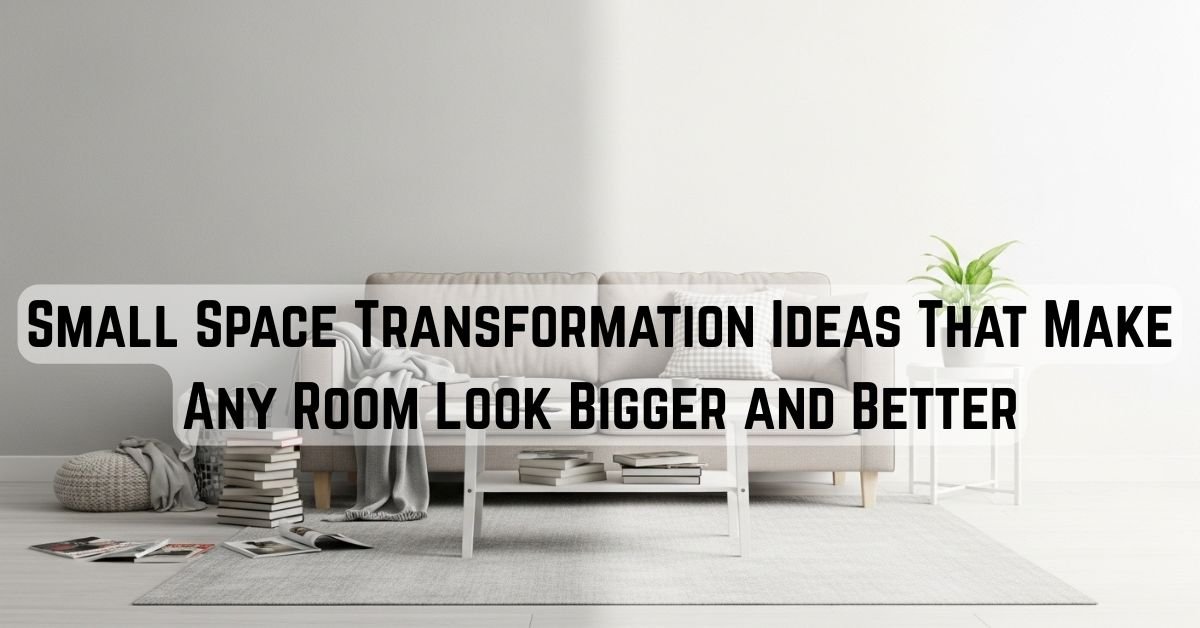
At one point, I thought my space was just… small.
No matter how much I cleaned or rearranged things, it still felt tight. Furniture seemed too close, surfaces filled up quickly, and even empty areas didn’t feel open.
So I tried what most people do.
I added decor, changed colors, and moved things around randomly. It looked better for a while, but it didn’t last. The space kept slipping back into that same cramped feeling.
That’s when I started noticing something different.
It wasn’t the size that was the problem.
It was how the space was behaving.
Once I began testing a few small space transformation ideas, I realized that even small changes in placement and structure could completely shift how a room felt without adding anything new.
Why Most Small Rooms Feel Tight Even When They’re Not
A room can have enough space and still feel limited.
That usually happens when everything competes within the same area.
Furniture placed without considering movement, storage spread across visible surfaces, and zones that overlap without definition, all of this creates tension in the space.
It’s not always obvious at first.
But over time, you start adjusting how you move. Walking paths become slightly awkward, certain areas feel heavier than others, and the room never fully relaxes.
What I found is that transformation doesn’t come from adding more.
It comes from removing that friction.
10 Small Space Transformation Ideas That Actually Change How a Room Works
1. Turning Unused Corners Into Defined Functional Zones
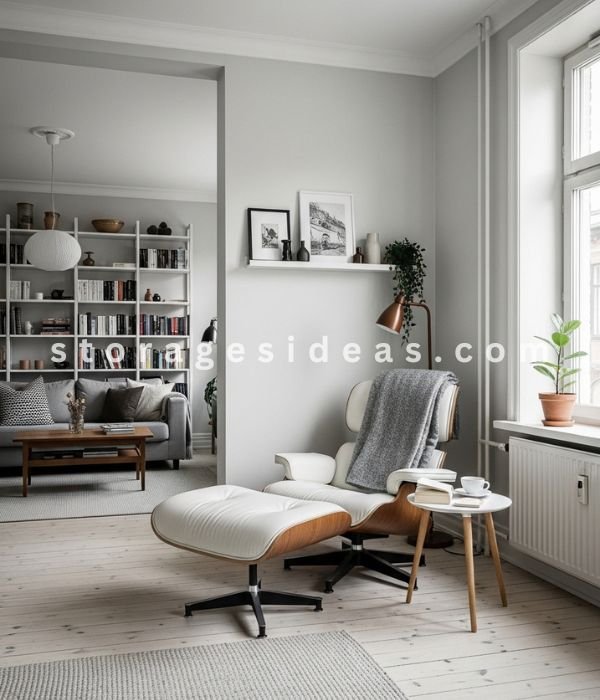
Corners often feel like they don’t belong to anything.
They’re not large enough to anchor furniture, but too visible to ignore completely. So they end up holding temporary items, things placed there without intention, which slowly turn the space into background clutter.
What changed for me wasn’t filling the corner, but defining it.
Once that area had a single, clear purpose, it stopped competing with the rest of the room. Instead of blending into everything else, it became a contained zone with its own role.
That shift has a ripple effect.
When one undefined area becomes intentional, the rest of the layout feels more stable. There’s less visual tension, fewer random placements, and the room starts to feel more structured overall.
I’ve seen a similar shift in setups like these corner storage ideas, where giving a small area a clear role changes how the entire room feels.
In smaller spaces, that kind of clarity matters more than adding anything new.
2. Repositioning Furniture Based on Movement, Not Walls
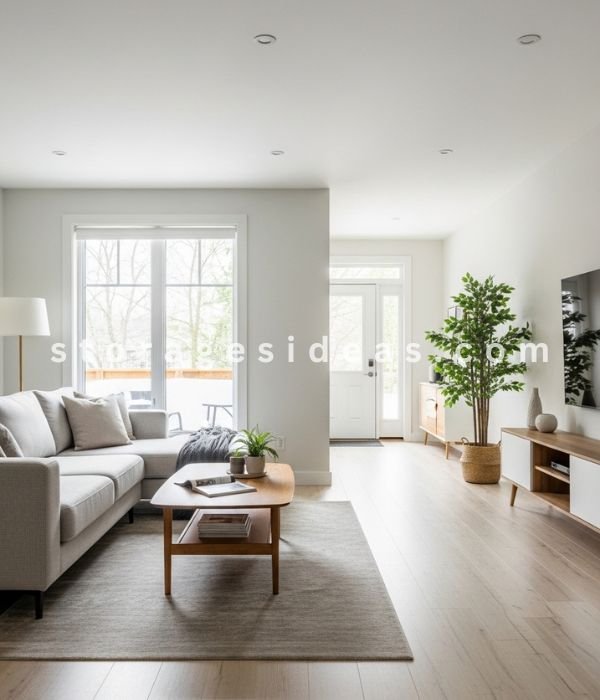
Most layouts are built by default.
Furniture goes against the walls, leaving the center open. It feels logical, but in smaller rooms, it often creates indirect movement paths that aren’t immediately obvious.
You start adjusting how you walk.
Small turns, slight detours, subtle shifts in direction. Individually, they don’t feel like much, but together, they create friction that makes the room feel tighter than it is.
When I repositioned furniture based on how I actually move through the space, everything became more direct.
Paths opened up. Movement felt smoother. The room stopped resisting use.
And that’s where the transformation happens, not in how the room looks, but in how easily you move through it.
3. Lifting Storage Vertically Instead of Expanding Outward
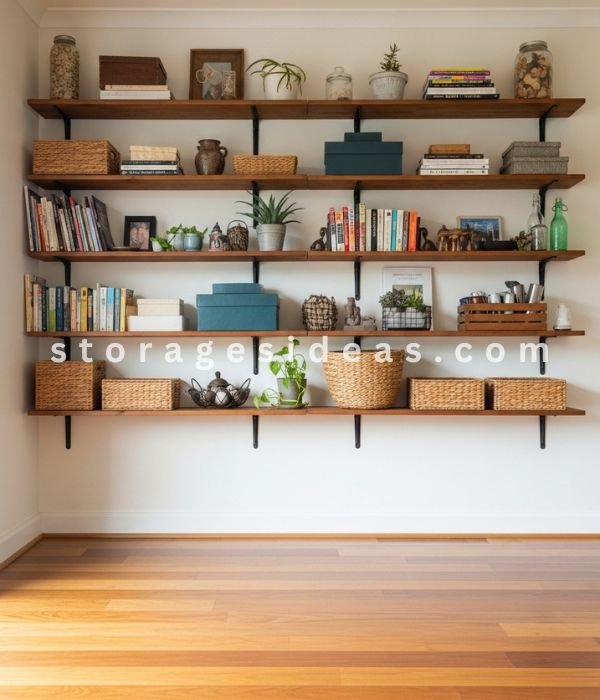
At first, solving storage meant using more floor space.
Adding units along walls, placing things side by side, expanding outward wherever there was room. It worked temporarily, but over time, it made the room feel compressed.
The lower half of the room became dense.
Once I shifted the storage upward, the balance changed.
Keeping more of the floor visible created a sense of openness that wasn’t there before. The room didn’t gain space, but it felt like it did.
This became even clearer when I explored a few wall storage living room ideas, where using height instead of floor space made everything feel more open.
What stood out here is how strongly perception is tied to the lower half of a room.
When that area stays clear, everything above it feels lighter, even if nothing is actually removed.
4. Combining Functions Instead of Separating Them
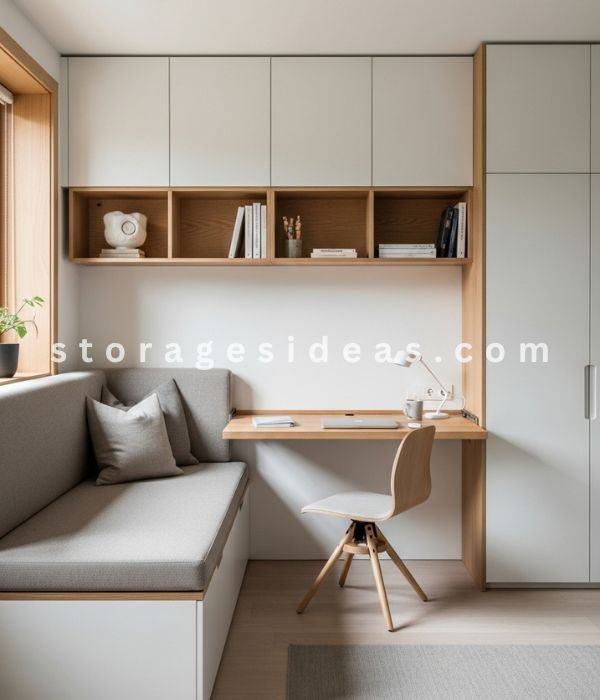
Trying to assign a separate space for every activity works in larger homes.
In smaller ones, it creates fragmentation.
Each new function demands its own area, and those areas start to overlap in ways that make the room feel crowded. Nothing feels fully complete because everything is competing for space.
What worked better was combining those functions.
Instead of adding new zones, I adjusted existing ones to handle more than one role. That reduced the number of separate areas the room needed to support.
The result wasn’t just more efficient use of space; it was a calmer layout.
Fewer divisions, fewer boundaries, and a stronger sense that everything belonged together.
5. Clearing the Center to Reset the Entire Room
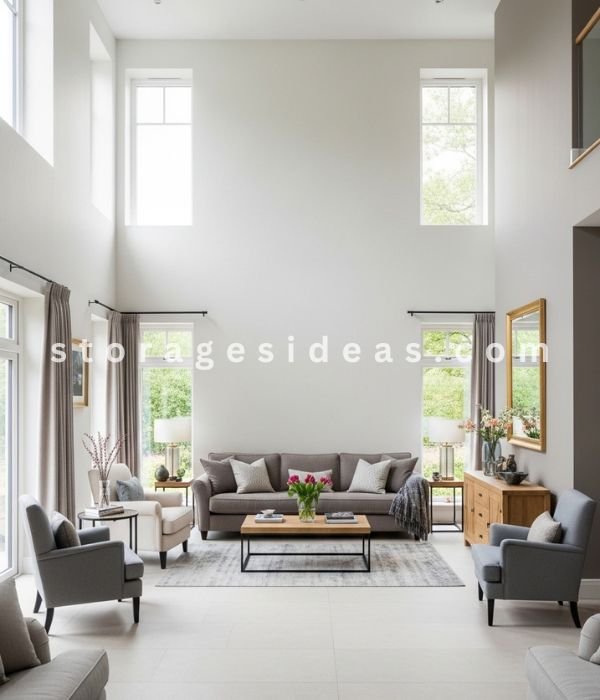
The center of a room quietly controls how the entire space is perceived.
Even small objects placed there can shift the balance. Because it’s the most visible area, anything in the center becomes part of how the room is read at a glance.
At one point, I didn’t notice how much had gathered there.
Nothing excessive, just enough to break the openness. Once I cleared it, the change felt immediate, even though nothing major was removed.
What really happened was redistribution.
Items moved outward, surfaces opened up, and the room regained a sense of breathing space.
This is one of the few changes where the impact is immediate.
Because when the center clears, everything around it feels more defined, and the room as a whole starts to feel bigger without actually changing size.
6. Replacing Heavy Furniture With Lighter, Integrated Pieces
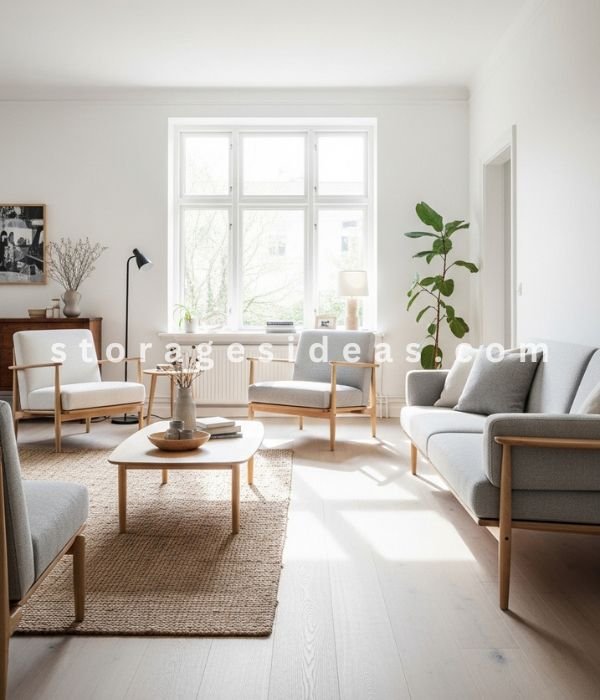
Not all furniture takes up space in the same way.
Some pieces feel heavier than others, not because of their size, but because of how they sit in the room. Solid bases, closed sides, and bulky forms tend to block visual flow, even if they’re not physically large.
I didn’t notice this at first.
The room looked fine, everything fit, but something still felt compressed. Once I started replacing a few of those heavier pieces with lighter, more integrated ones, the difference wasn’t dramatic; it was gradual, but noticeable.
The space started to feel more open without actually gaining any extra room.
What changed was how easily the eye could move through the space. Less visual blockage meant less pressure, which made everything feel more breathable.
I noticed a similar effect in a few small living room furniture and decor hacks, where reducing visual weight changes how spacious a room feels.
In smaller rooms, that shift matters more than reducing the number of items.
7. Creating Invisible Boundaries Instead of Physical Divisions
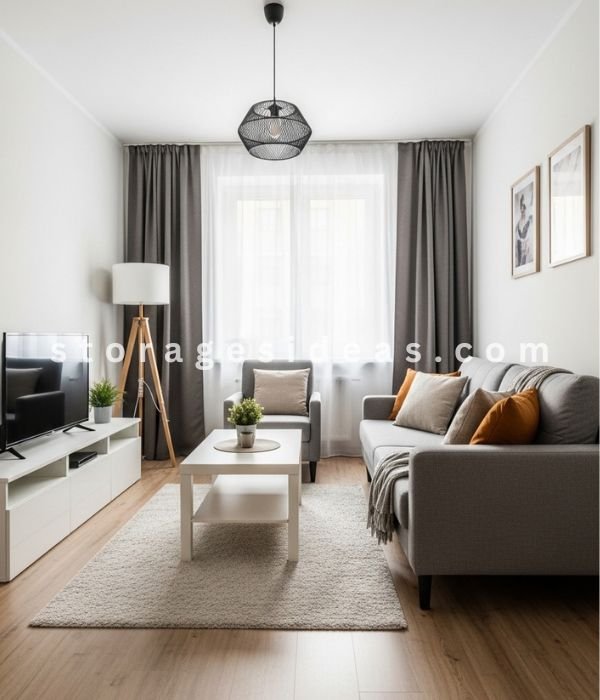
At one point, I thought the only way to define different areas was to separate them.
But adding physical dividers, screens, shelves, and partitions only made the room feel tighter. The space became segmented in a way that interrupted both movement and visibility.
What worked better was defining boundaries without closing anything off.
Subtle alignment, consistent spacing, and intentional placement created structure without adding barriers. Areas started to feel distinct, even though nothing physically separated them.
The room remained open, but it no longer felt undefined.
This kind of transformation is easy to overlook because nothing “new” is added. But over time, it makes the space feel more organized without making it feel smaller.
8. Using Light Direction Instead of Just Adding More Light
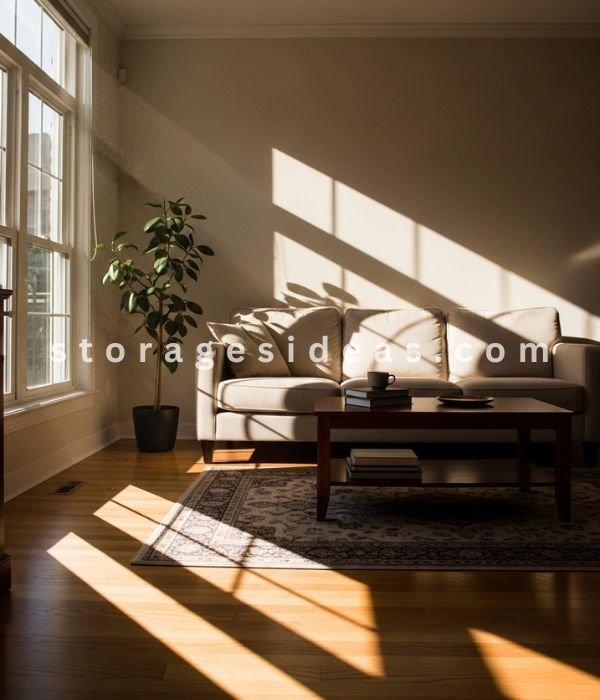
I used to think that brighter automatically meant better.
More light, stronger light, additional fixtures, it all seemed like the solution. But even with more light, the room didn’t necessarily feel bigger.
What changed things was direction.
When light started moving across the room instead of concentrating in one spot, the space began to feel deeper. Surfaces became more defined, shadows softened, and edges felt less abrupt.
The room didn’t just look brighter, it felt more dimensional.
I later realized this has a lot to do with how light shapes depth and perception, and this explanation of how lighting affects how we experience a space helped me understand why that shift made such a difference.
That shift is subtle, but it changes how the space is perceived. Instead of everything being evenly lit and flat, the room gains depth, which makes it feel less confined.
9. Turning Transitional Spaces Into Functional Extensions
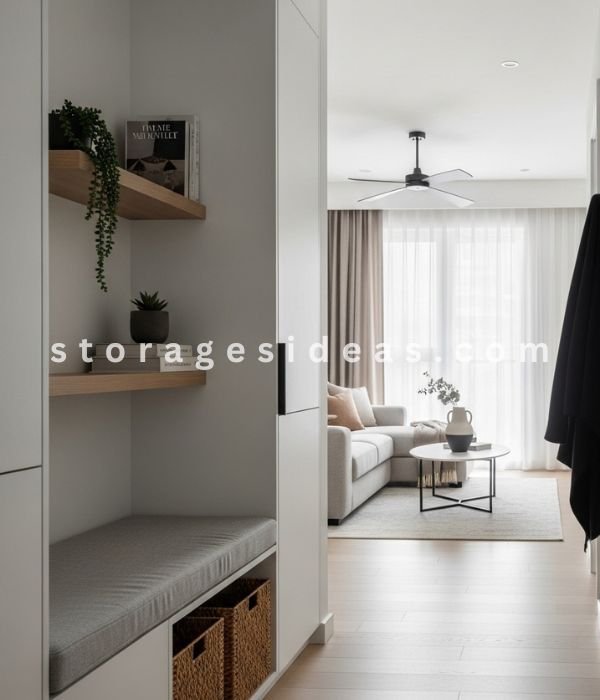
Spaces like hallways, edges, or small in-between areas are often treated as purely functional for movement.
You pass through them, but you don’t use them.
Because of that, they’re often ignored when thinking about layout or storage. But once I started looking at those areas differently, they became some of the easiest places to transform.
They don’t compete with the main room.
They don’t interrupt existing functions.
They simply extend what the space can do.
What stood out here is that using these areas doesn’t make the room feel fuller; it actually makes it feel more efficient. The main space becomes less pressured because it doesn’t have to carry everything on its own.
This kind of extension works especially well in tighter layouts, and these alcove storage ideas show how in-between spaces can quietly add function without crowding the room.
10. Reducing Visible Items to Calm the Entire Space
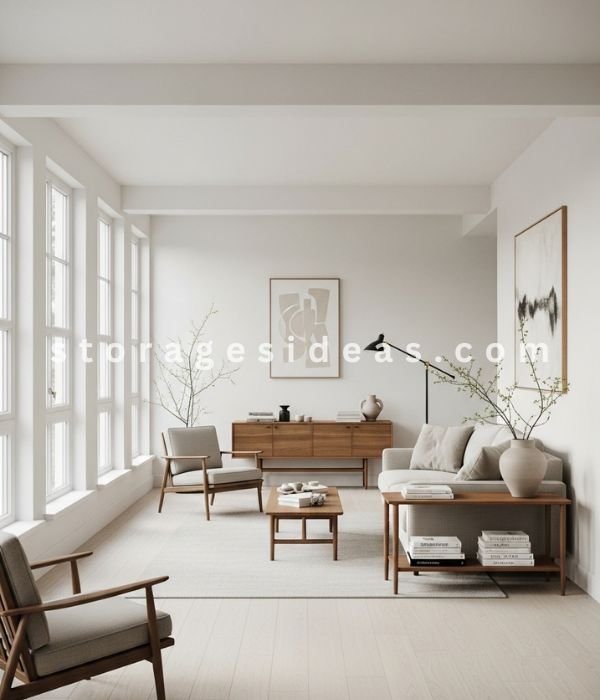
At some point, I realized that the issue wasn’t how much I had, but how much I could see at once.
Even when things were organized, constant visibility created noise. Surfaces stayed busy, and the room never felt fully settled.
When I reduced what stayed in sight, the effect was immediate.
Nothing was removed permanently. Items were simply placed where they didn’t need to be seen all the time.
That change didn’t just affect how the room looked; it changed how it felt to be in it.
The space became calmer, easier to focus on, and noticeably more open.
Among all the small space transformation ideas, this one has the most consistent impact because it directly reduces the visual load the room carries.
What Actually Creates a Real Transformation in Small Spaces
What surprised me most was how small the changes were.
Nothing dramatic. No major redesign. Just adjustments in placement, structure, and visibility.
But those small changes removed friction.
And once that friction was gone, the space started to feel easier to use and naturally more open.
Final Thoughts
What stood out to me after making these changes wasn’t how much space I created, it was how differently the same space started to feel.
Nothing expanded. The walls didn’t move. The room didn’t suddenly become larger.
But the way it functioned shifted.
Once movement became easier, surfaces felt lighter, and each area had a clearer role, the space stopped feeling tight. It didn’t require constant adjustment anymore. It just worked.
That’s what makes these small space transformation ideas effective.
They don’t rely on adding more or changing everything at once. They work by removing friction, small points of tension that quietly make a room feel smaller than it is.
And once that friction is gone, the difference isn’t just visual.
The space feels calmer, easier to use, and noticeably more open without actually becoming bigger.
