
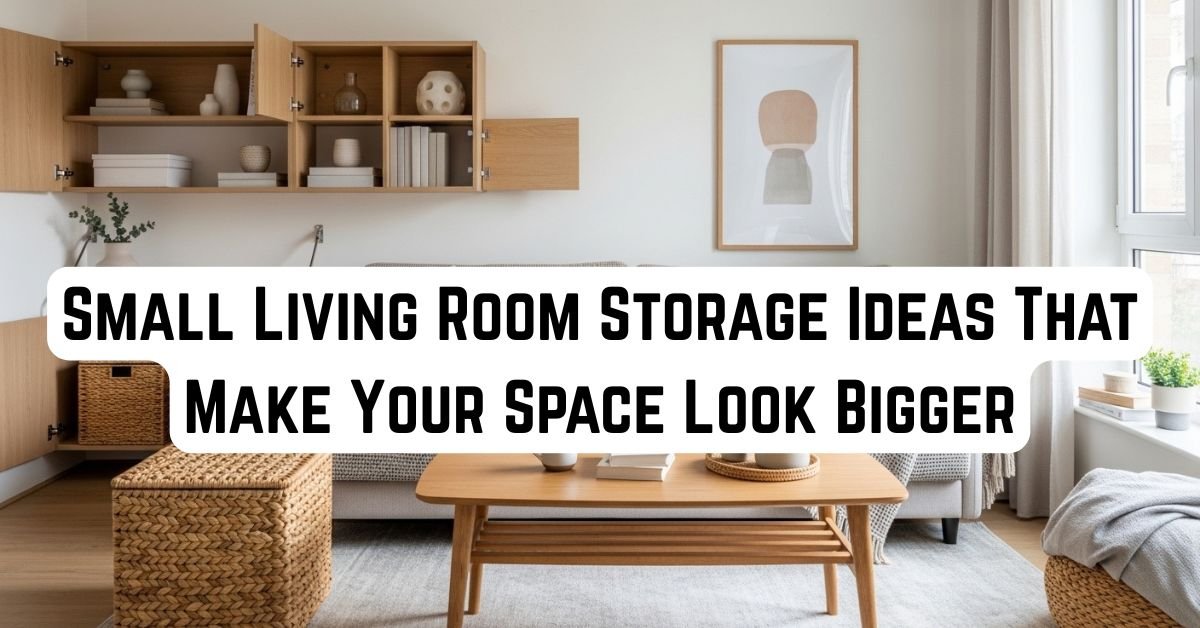
I used to feel like my living room was shrinking.
Not physically, but every week, it felt tighter. The more I tried to organize it, the more clutter showed up in new places. The coffee table filled up. Corners felt wasted. And somehow, the room never looked clean for long.
At one point, I thought I needed less furniture.
But that wasn’t the real issue.
The problem was how I was storing things.
Once I started trying a few small living room storage ideas that actually fit how I use the space, something changed. The same room began to feel more open, easier to manage, and surprisingly… bigger.
Not because I removed everything, but because I stored things differently.
I had already seen a similar shift when I tested a few under bed storage ideas, and it made me realize how much unused space I had been ignoring.
Why Your Living Room Feels Smaller Than It Should
I didn’t realize this at first, but storage affects more than just organization.
It affects how a room feels.
When items are spread across surfaces, even a large room can feel crowded. But when storage is controlled and intentional, even a small space can feel open.
I noticed this clearly in my own living room.
When things didn’t have a proper place, clutter kept returning. But once I started organizing based on how I actually use the space, everything felt lighter even though I still owned the same things.
That’s the key idea.
Storage isn’t just about putting things away. It’s about controlling what you see.
And what you see determines how big your space feels.
10 Small Living Room Storage Ideas That Make Your Space Look Bigger
1. Use Furniture With Hidden Storage to Reduce Visual Clutter
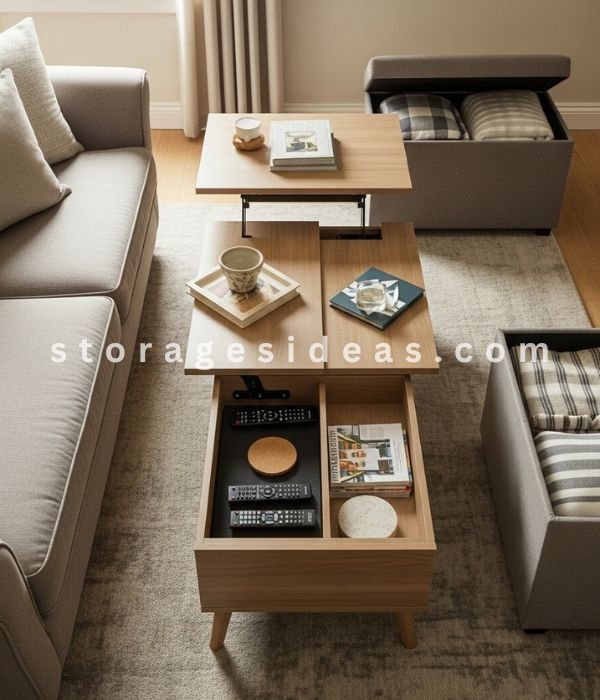
I didn’t realize how much visual clutter was affecting my living room until I removed it.
At one point, I had blankets on the couch, remotes on the table, and small items sitting everywhere. Even when things were “organized,” the room still felt busy.
Switching to hidden storage fixed that.
I started with one simple change: a storage ottoman. It gave me a place to quickly store blankets and random items without thinking too much about it. Then I added a coffee table with a lift-top compartment.
Now, instead of leaving things out, I just drop them inside.
How I made this work consistently:
- I only store daily-use items inside (so I actually open it)
- I keep sections inside the storage (small boxes or dividers)
- I avoid stuffing everything in one place
Mistake I made early:
I bought a storage bench that was hard to open. I stopped using it within a week.
If storage isn’t easy, it won’t stay organized.
2. Go Vertical With Wall Storage Instead of Floor Units
My biggest mistake was relying too much on floor storage.
Cabinets, side tables, and extra units all added function, but they also made the room feel smaller.
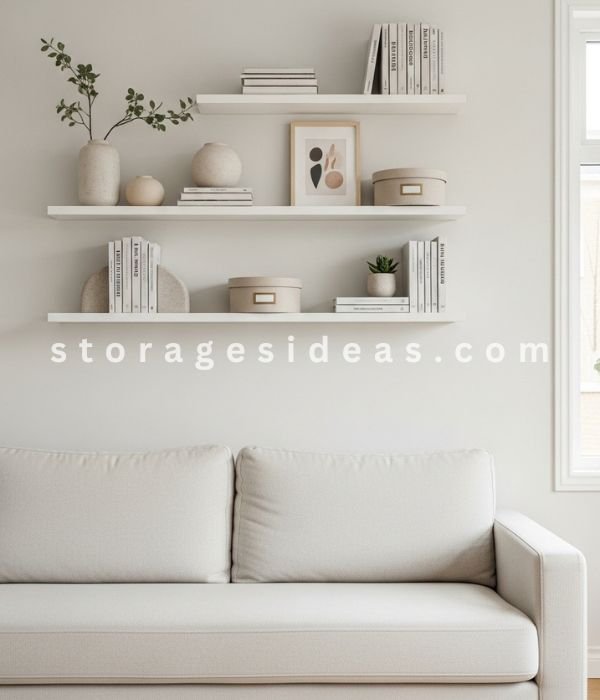
So I removed one bulky unit and replaced it with floating shelves.
The difference was immediate.
The room felt more open, not because I had less stuff, but because I freed up floor space.
What actually worked for me:
- I installed shelves at eye level for daily items
- Higher shelves for rarely used items
- I kept spacing between shelves instead of stacking them tightly
How I keep it from looking cluttered:
- I follow a loose “3-item rule” per section
- I mix storage (boxes) with open items
- I remove items if they start feeling crowded
Vertical storage works only if it feels light, not packed.
I applied this same idea in other areas too, and these wall storage ideas for the living room show how using vertical space properly can completely change how a small space functions.
3. Use Light-Colored Storage to Keep the Room Feeling Open
I underestimated how much color affects space.
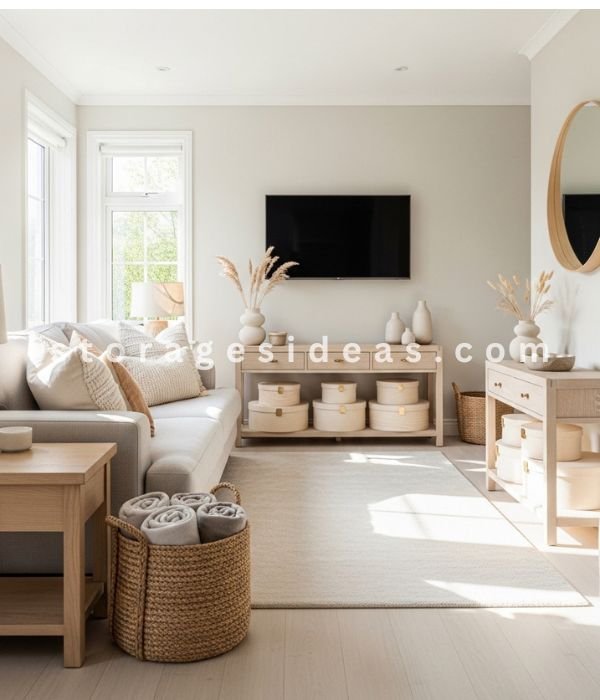
I used to have dark brown storage furniture. Even when clean, it made the room feel heavy.
Switching to lighter tones made a bigger difference than expected.
I didn’t replace everything at once. I started small.
- Light-colored storage boxes
- Neutral baskets
- Soft wood finishes
Over time, the room started to feel brighter.
I later found that this isn’t just visual preference; there’s a reason lighter tones make spaces feel more open, and this explanation of how color and light affect room perception helped me understand why even small storage changes can shift how a room feels.
Why this works practically:
Light colors reflect light, while dark colors absorb it. That alone changes how open a space feels.
What I adjusted over time:
- I stopped mixing too many colors
- I kept storage tones consistent
- I avoided overly glossy finishes (they show clutter easily)
You don’t need all-white; just keep tones light and cohesive.
4. Add Storage Behind the Sofa for Hidden Space
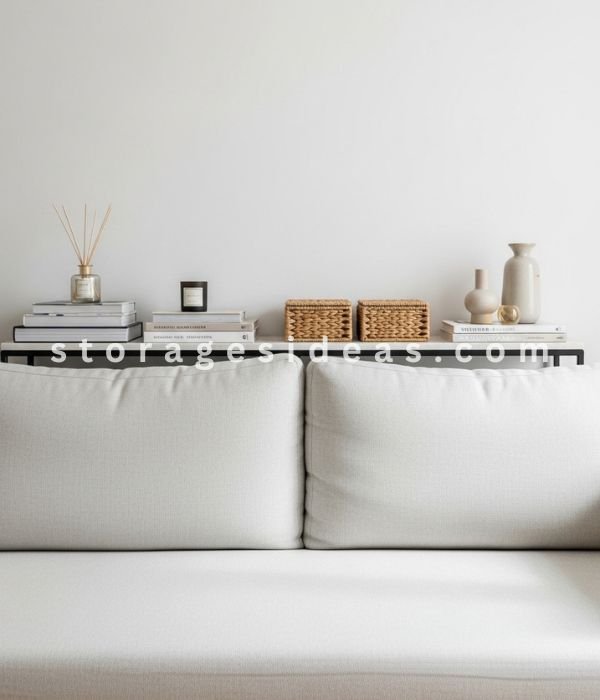
The space behind my sofa was completely unused.
At first, I thought nothing would fit there. Then I measured it.
Even a 6–8 inch depth was enough.
I added a slim console table, and it instantly became one of my most useful storage spots.
Now I use it for:
- Books I’m currently reading
- Small baskets for everyday items
- Chargers and small electronics
What made this setup work:
- Keeping the depth minimal (so it doesn’t push the sofa forward)
- Using baskets instead of loose items
- Avoiding tall items that block the visual flow
Mistake I avoided later:
Adding too many items. That space works best when it stays minimal.
It’s hidden storage, but it still affects how the room feels.
I found similar setups in these behind sofa storage ideas, and it made me realize how much space sits unused in most living rooms.
5. Choose Multi-Functional Furniture to Reduce Item Count
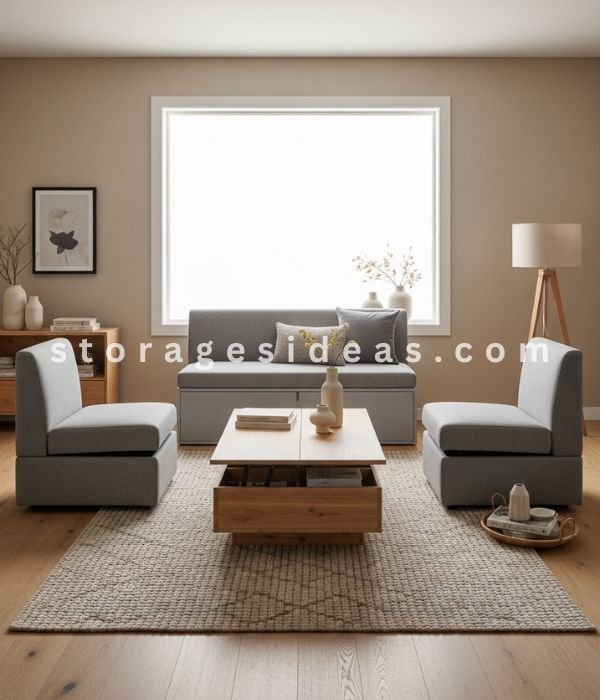
At one point, I had too many separate pieces.
A table, a storage box, and extra seating each added clutter.
So I started replacing instead of adding.
Now, each item serves more than one purpose.
- Storage bench instead of a separate box
- Coffee table with compartments
- Seating that doubles as storage
What changed:
Fewer items in the room, but the same functionality.
How I decide what to keep:
I ask one question:
“Does this item solve more than one problem?”
If not, I reconsider it.
Mistake I made before:
Buying “smart” furniture that was annoying to use.
Function matters more than design here.
6. Use Baskets to Organize Without Making It Look Messy
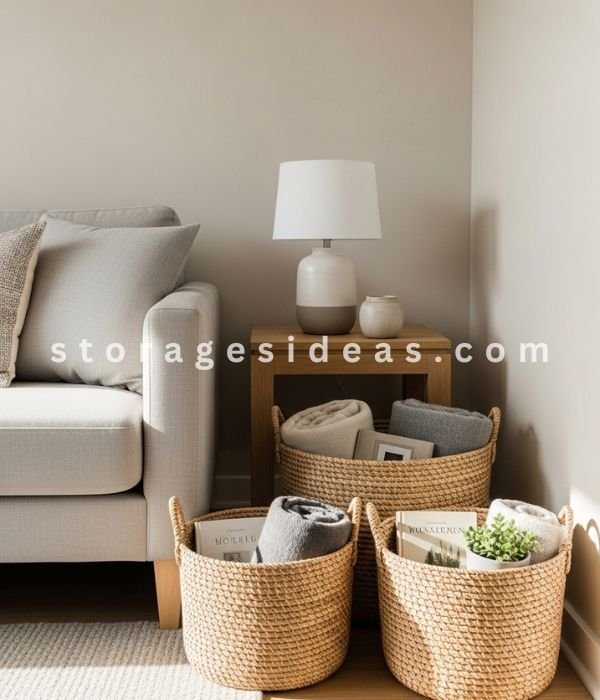
I used to think baskets would make things look cluttered.
The problem wasn’t baskets, it was how I used them.
Before, I had too many, placed randomly.
Now I use them intentionally.
- One basket for blankets
- One for small daily items
- One for overflow items
What made this work:
Each basket has a clear purpose.
How I keep it clean-looking:
- I stick to similar colors or materials
- I don’t overfill them
- I limit the number (2–3 max in one area)
Baskets should simplify storage, not multiply it.
7. Keep Floor Space Visible With Floating Storage
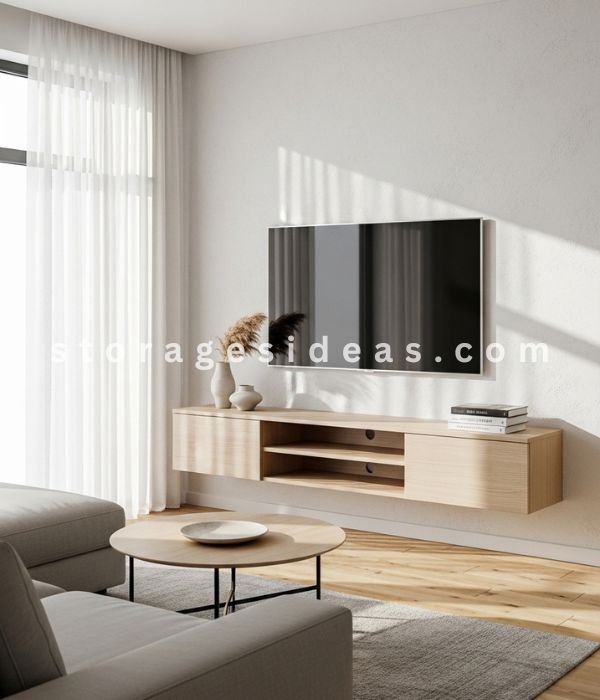
This was one of the biggest visual changes.
I switched from floor-based units to wall-mounted storage.
A floating TV unit replaced my old cabinet. I also removed one side table.
The result?
More visible floor space.
And that made the room feel bigger instantly.
Why this works practically:
Your eyes read open floor as “more space.”
What I learned:
Even a few extra inches of visible floor makes a difference.
Mistake to avoid:
Placing floating units too low defeats the purpose.
The higher the clearance, the better the visual effect.
8. Use Mirrors With Storage to Expand Visual Space
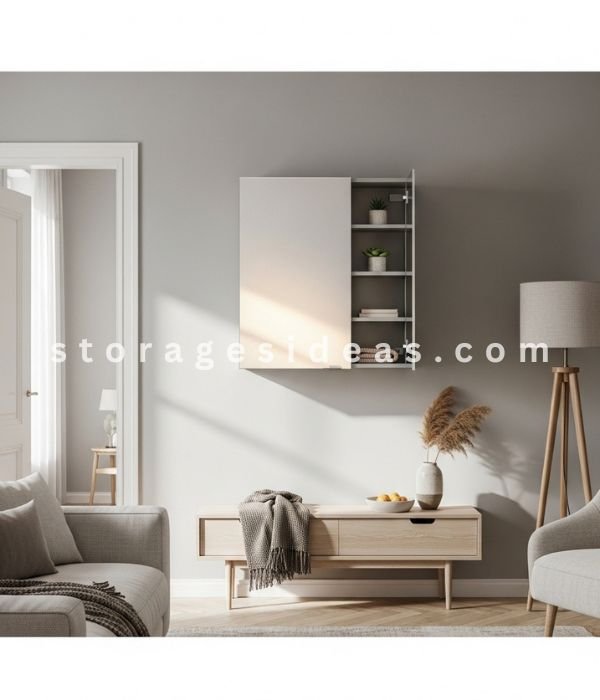
I added a mirror mainly for storage.
But what surprised me was how it changed the feel of the room.
It reflected light and created depth.
I used a mirror cabinet to store small items, keeping surfaces clean.
What made this effective:
- Placing it where it reflects light
- Keeping the surrounding area uncluttered
Big mistake to avoid:
Don’t place mirrors where they reflect clutter.
That doubles the mess visually.
9. Create a Dedicated Storage Zone Instead of Spreading Items
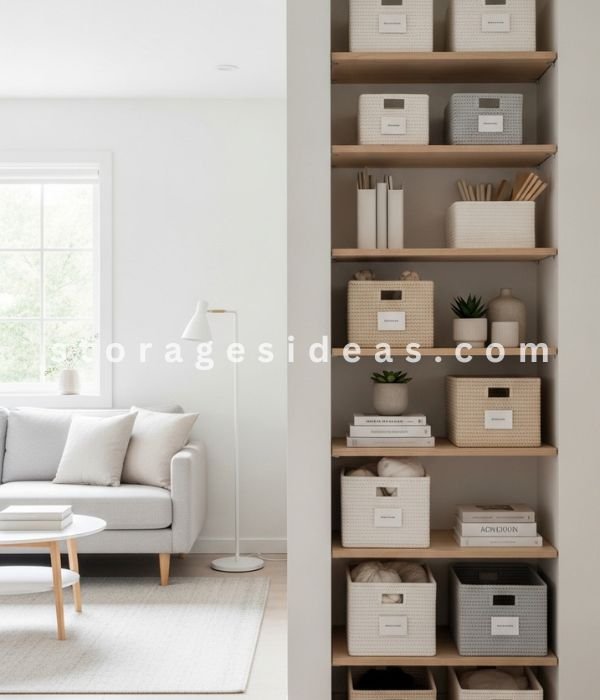
I used to store things everywhere.
A little on the table. Some on shelves. Some in corners.
It made the room feel scattered.
Now I concentrate storage in one main area.
For example:
- One corner with shelves + baskets
- One unit that holds most items
What changed:
The room feels more organized instantly.
Why this works:
Your brain sees one organized zone instead of multiple messy spots.
Containment reduces visual chaos.
10. Declutter Before Adding Any Storage Solution
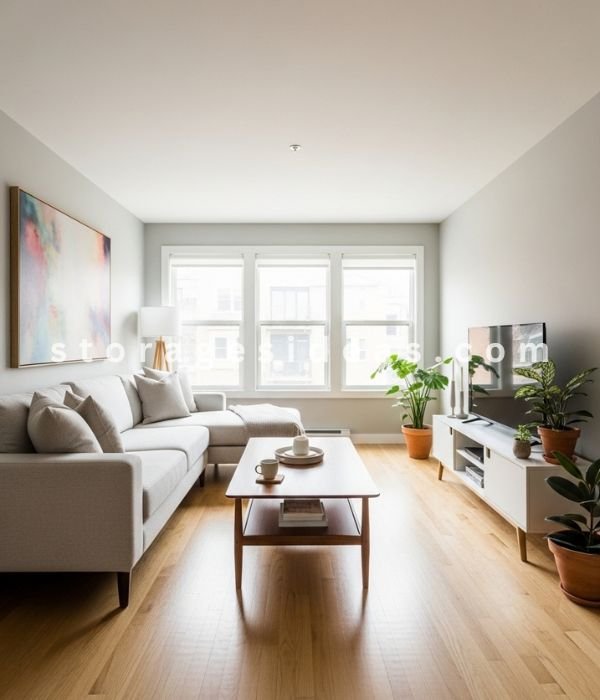
This was the step I avoided the longest.
I kept adding storage without removing anything.
It didn’t work.
Eventually, I started removing items I didn’t use.
Not everything just what didn’t add value.
What happened next:
Every storage idea started working better.
How I approach this now:
- If I haven’t used it in months, I question it
- If it doesn’t fit my current routine, I remove it
Storage helps, but decluttering makes it sustainable.
What Actually Made the Biggest Difference
After trying all these ideas, a few things stood out clearly.
- Keeping items out of sight
- Using vertical and floating storage
- Reducing unnecessary items
But more than anything, I noticed this:
The room felt bigger when I controlled what was visible.
Not when I added more storage.
Final Thoughts
The right small living room storage ideas don’t just help you organize your space—they change how it feels to live in it.
Once I focused on visibility instead of just storage, everything improved.
The room felt cleaner, more open, and easier to manage.
And I didn’t need more space.
I just needed to use the space I already had better.
