
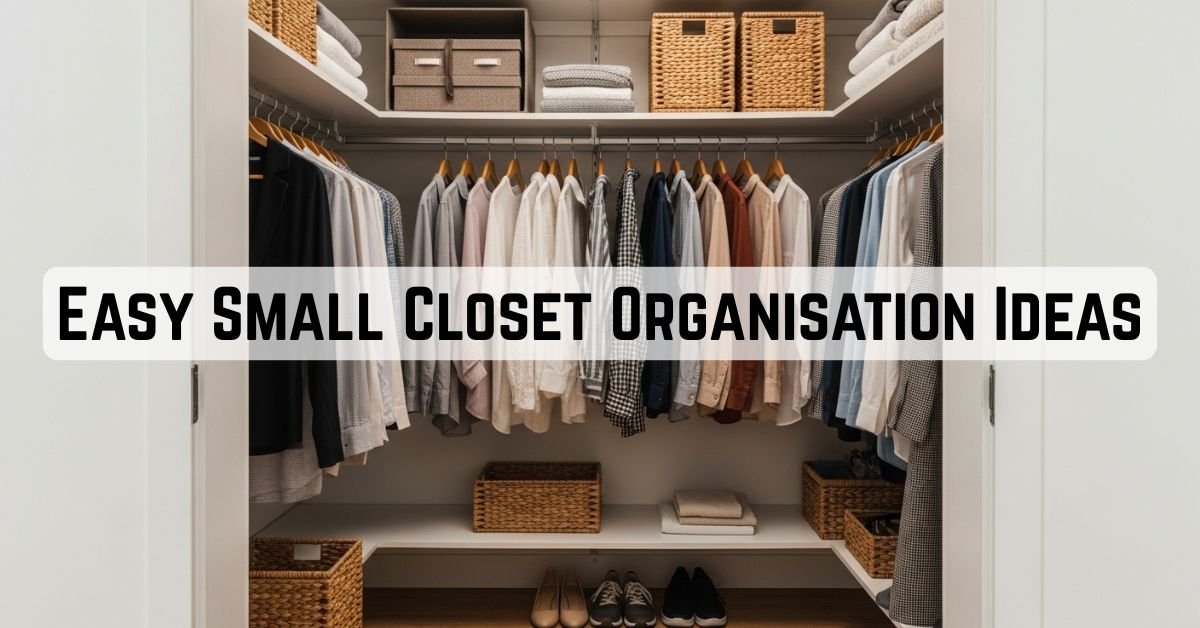
At one point, I thought my closet was just too small.
No matter how much I folded, rearranged, or tried to “organise,” it always felt full. Items overlapped, things got buried, and every time I needed something, I had to move something else first.
It didn’t feel like a storage problem.
It felt like the space just wasn’t working.
That’s when I stopped focusing on adding more and started looking at how everything was placed. Once I tried a few small closet organisation ideas, the difference became clear.
The closet didn’t get bigger.
But it started working like it had more space.
Why Small Closets Feel More Cluttered Than They Actually Are
A small closet rarely feels crowded because of how much it holds.
It feels crowded because everything competes in the same area.
Items stack on top of each other, overlap visually, and sit in places that don’t match how often they’re used. Even when things are technically “organised,” they still feel chaotic.
There’s also no natural separation.
Daily items, occasional pieces, and rarely used things all exist side by side. That lack of structure creates friction every time you reach for something.
What I noticed is that the problem isn’t storage capacity.
Its placement.
10 Small Closet Organisation Ideas That Actually Work in Real Life
1. Dividing the Closet Into Top, Middle, and Bottom Zones
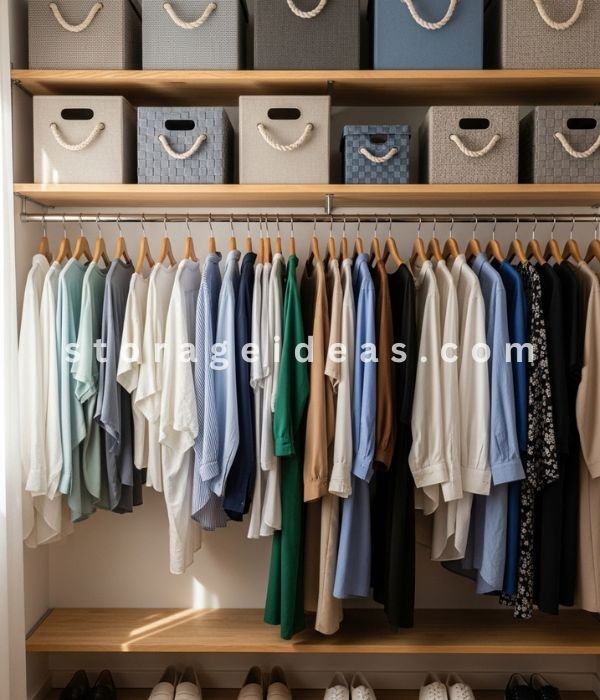
At first, the closet feels like one continuous space.
Everything shares the same area, which makes it harder to understand where anything truly belongs. Over time, that lack of separation turns into overlapping items that stack over each other, and the space starts feeling tighter than it actually is.
What changed for me was recognising that each part of the closet naturally behaves differently.
The top isn’t meant for frequent use. The middle is where your hands go first. The bottom is where the weight settles.
Once I aligned storage with those natural behaviours, the space stopped feeling random.
Items I rarely touched moved upward, where they didn’t interfere with daily use. The middle became stable because it only held what I actually needed regularly. And the bottom stopped acting like a dumping zone because it finally had a defined role.
This wasn’t about dividing space physically.
It was about assigning purpose, and that alone reduced a lot of unnecessary overlap.
I’ve seen a similar structure work in these small bedroom storage ideas, where dividing space into clear sections makes everything easier to manage.
2. Keeping Daily-Use Items at Eye and Hand Level
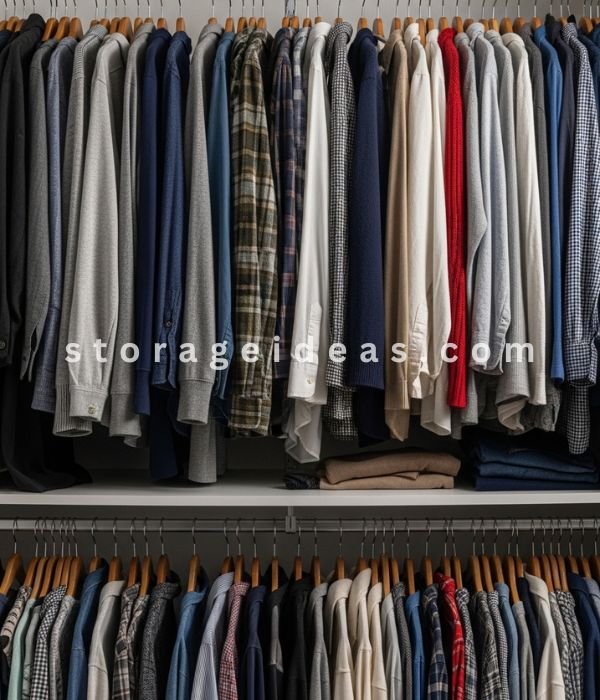
There’s a small window in the closet where everything feels effortless to reach.
You don’t stretch. You don’t bend. You just grab what you need.
Before, I wasn’t using that space properly.
Sometimes items I used once a week sat right in front, while daily pieces were slightly out of reach. It didn’t seem like a big issue, but over time, it created small interruptions.
Each reach, each adjustment, each extra movement added friction.
When I aligned daily-use items with that natural reach zone, the difference was immediate.
Getting ready became smoother. Nothing needed to be moved out of the way. And most importantly, that central area stopped getting disrupted.
Because once your most-used items stay in the most accessible place, everything else has less reason to shift around.
I later realised this is closely tied to how accessibility shapes organisation, and this guide on how to organise your home more effectively helped explain why keeping frequently used items within reach makes such a difference.
3. Using Vertical Layers Instead of Horizontal Piles
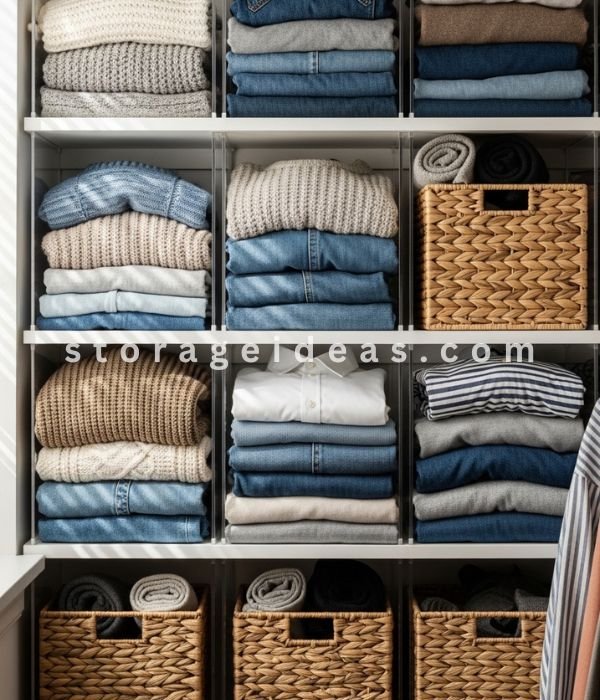
At first, it feels easier to organise things side by side.
Everything is visible, everything has its place, but that order doesn’t last long. Horizontal arrangements slowly expand, and once they do, items begin overlapping in ways that are harder to control.
What worked better was stacking with intention.
Not piling randomly, but building upward in controlled layers.
This keeps everything contained within a smaller footprint. Instead of spreading across the shelf, items stay within a defined vertical boundary.
What stood out is how this reduces disturbance.
You don’t have to move multiple things just to reach one. Each layer stays relatively independent, which keeps the system intact over time.
And because the footprint stays compact, the closet doesn’t feel like it’s filling up as quickly.
This approach becomes even clearer in a few vertical storage ideas for small spaces, where building upward instead of outward keeps everything more contained.
4. Turning the Closet Door Into Functional Storage
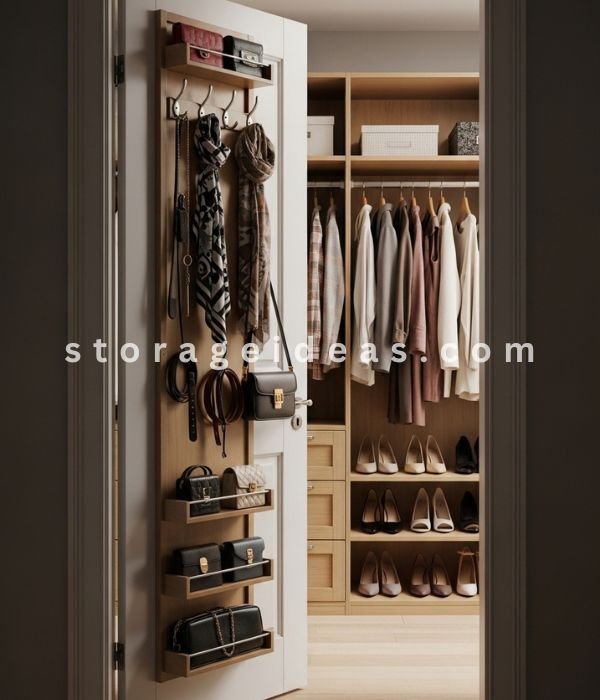
The closet door is easy to ignore because it doesn’t feel like part of the system.
It opens and closes, but it doesn’t “hold” anything, so it gets overlooked.
But once I started using that surface, it felt like unlocking space that was always there.
What makes it different from the rest of the closet is its position.
It sits outside the main storage zones, which means it doesn’t compete with hanging or shelving areas. It simply adds another layer without interfering.
But what really matters here is how it’s used.
This space works best for items that need quick access but don’t belong in the main sections. Things you reach for often, but don’t want mixed in with everything else.
Because it stays slightly separate, it reduces pressure on the main storage areas—and keeps them more stable.
I’ve seen the same concept used in these hidden storage ideas, where using overlooked surfaces adds function without crowding the main space.
5. Using Matching Hangers to Reduce Visual Clutter
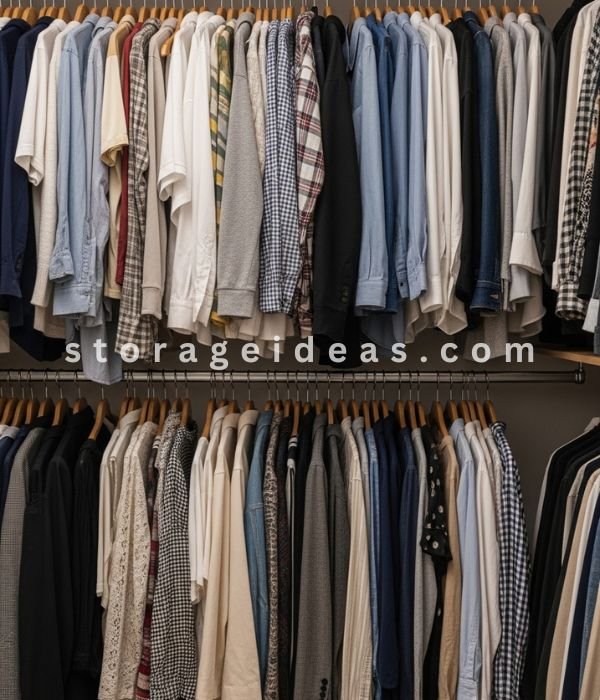
At one point, everything in the closet was technically organised, but it didn’t feel that way.
The shapes were uneven. The spacing looked inconsistent. Even though nothing was out of place, the overall view felt busy.
That’s when I realised that organisation isn’t just physical, it’s visual.
Different hanger types create small variations in height, spacing, and alignment. Individually, they don’t seem like much. But together, they break the visual flow.
Once I switched to matching hangers, the entire section aligned.
Clothes sat at the same level, spacing became consistent, and the closet instantly felt calmer.
What’s interesting is that nothing changed in terms of storage.
But visually, the space became easier to process, and that alone made it feel more organised.
6. Storing Off-Season Items Out of Immediate Reach
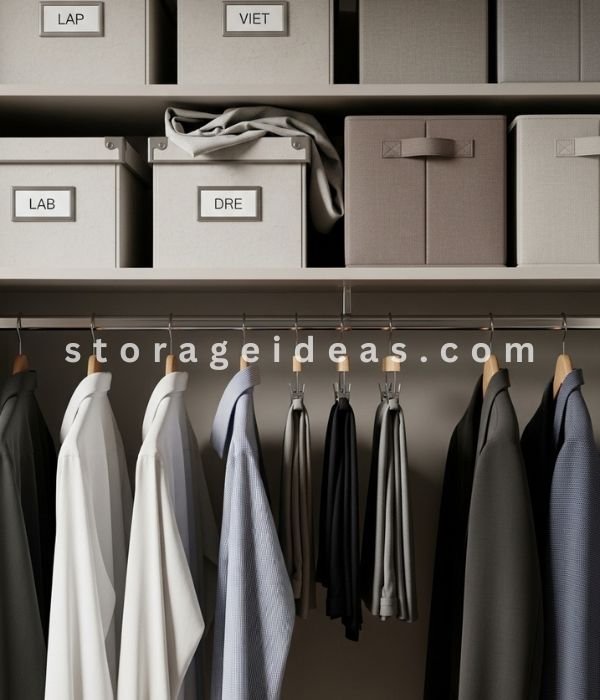
At one point, everything I owned sat in the same zone.
Winter clothes next to summer pieces, rarely used items mixed with daily ones. It didn’t seem like a problem until I noticed how often I had to move things just to reach what I actually needed.
That’s where the friction starts.
The more items share the same space, the more they compete for access.
What changed was separating by timing, not type.
Items I wasn’t using regularly moved out of immediate reach, higher shelves, deeper sections, places that don’t interrupt daily use. They were still accessible, just not in the way.
What stood out is how quickly the closet felt lighter.
Not because there were fewer вещей, but because fewer of them were part of my daily interaction. And that reduced pressure made everything easier to manage.
7. Keeping the Floor Clear to Open Up the Space
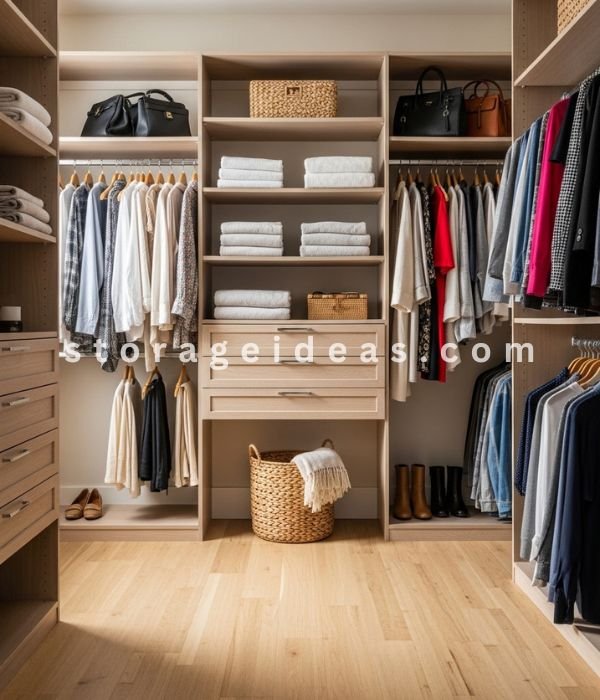
The floor of the closet has a tendency to become a fallback zone.
Anything that doesn’t fit elsewhere ends up there. Shoes, boxes, extra items, it builds slowly, and before you notice, the entire bottom section feels crowded.
Even when it’s organised, a full floor changes how the closet feels.
It visually closes the space.
When I cleared most of that area, the difference wasn’t just visual; it affected how I used the closet.
There was less hesitation when stepping in, less need to navigate around things. The space felt more accessible.
What I realised is that the lower part of a closet carries more visual weight than expected.
Keeping it open creates a sense of structure above it, even if nothing else changes.
That shift is similar to what happens in these under-bed storage ideas, where clearing the lower area makes the entire room feel lighter.
8. Grouping Items by Use Instead of Type
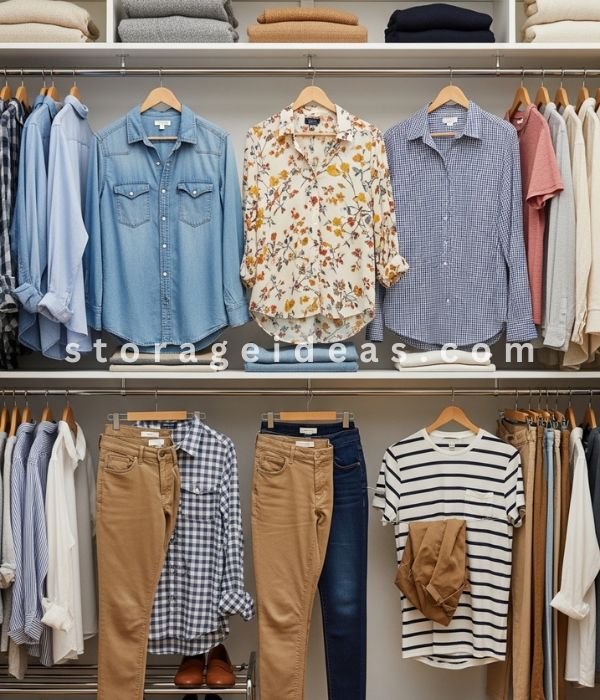
At first, grouping by category felt like the right approach.
All shirts together, all pants together, everything arranged by type. It looked organised, but it didn’t always work in practice.
Because that’s not how I used the closet.
Items I wore together were placed in different sections, which meant I had to move around more just to get ready. That movement added small interruptions that built up over time.
What worked better was grouping based on use.
Outfits, combinations, or frequently paired items stayed closer together. This reduced how much I had to think or move while using the space.
The closet didn’t just look organised, it started functioning more smoothly.
And that’s what made the difference.
9. Using Small Containers Only Where They Add Clarity
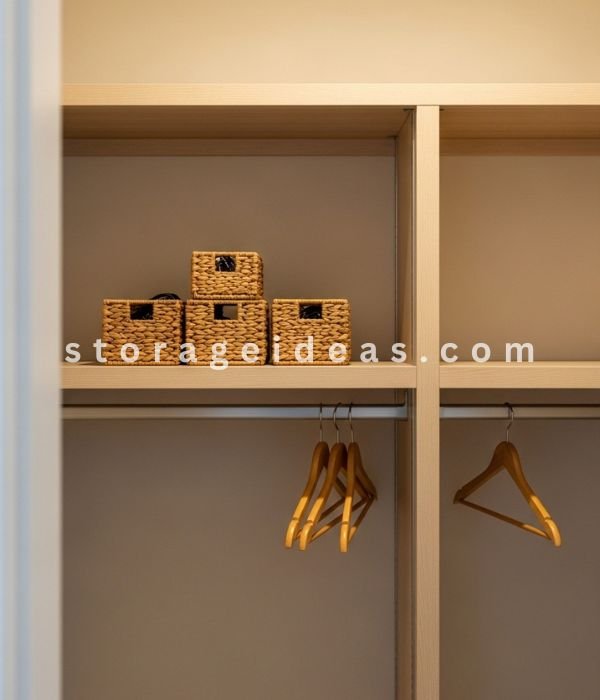
At one point, I tried organising everything into separate containers.
It felt structured at first, but over time, it became harder to manage. Too many compartments meant too many decisions, and small items still ended up mixing.
What changed was using containers selectively.
Only in areas where items would otherwise overlap or become unclear. Instead of dividing everything, they supported specific sections that needed structure.
This made the system simpler.
Fewer containers meant less complexity, and the ones that remained actually served a purpose.
What stood out is that the organisation works better when it reduces decisions, not when it adds more.
10. Creating a System That’s Easy to Maintain Daily
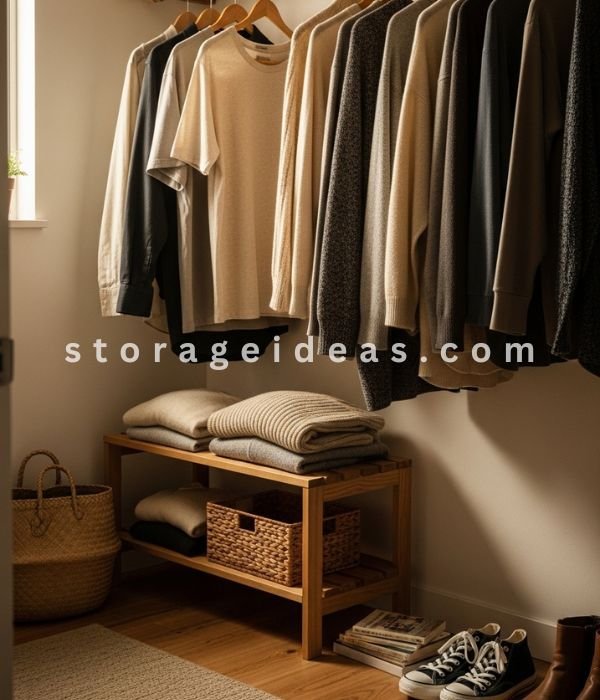
The biggest difference didn’t come from how I set up the closet.
It came from how easily I could keep it that way.
At first, I created a system that looked organised, but it required effort to maintain. Folding a certain way, placing items precisely, keeping everything aligned.
It worked… until it didn’t.
Because over time, anything that requires extra effort starts to break down.
What changed was simplifying everything.
Each item had a clear place, but it didn’t require precision to return it there. No extra steps, no complicated rules.
And that’s what made it stick.
Because once a system matches how you naturally use the space, it maintains itself without constant adjustment.
That’s where these small closet organisation ideas actually become practical, not just ideal.
What Actually Makes a Small Closet Feel Bigger and Easier to Use
What stood out to me is that nothing I did added more space.
But everything I changed reduced friction.
Fewer overlaps, better placement, and clearer structure made the closet feel easier to use.
And that ease is what creates the feeling of more space.
Final Thoughts
What stood out to me after all these changes wasn’t how much more I could fit into the closet; it was how much easier it became to use.
Nothing about the space itself changed. The size stayed the same. The shelves didn’t expand. But the way everything was placed started to work with me instead of against me.
Items stopped overlapping. Daily pieces stayed within reach. And the closet no longer felt like something I had to manage every time I opened it.
That’s what makes these small closet organisation ideas effective.
They don’t try to create more space.
They make better use of the space that already exists by aligning it with how you actually use it.
And once that alignment is in place, the difference isn’t just visual.
The closet becomes easier to move through, easier to maintain, and noticeably calmer every time you open it.
