
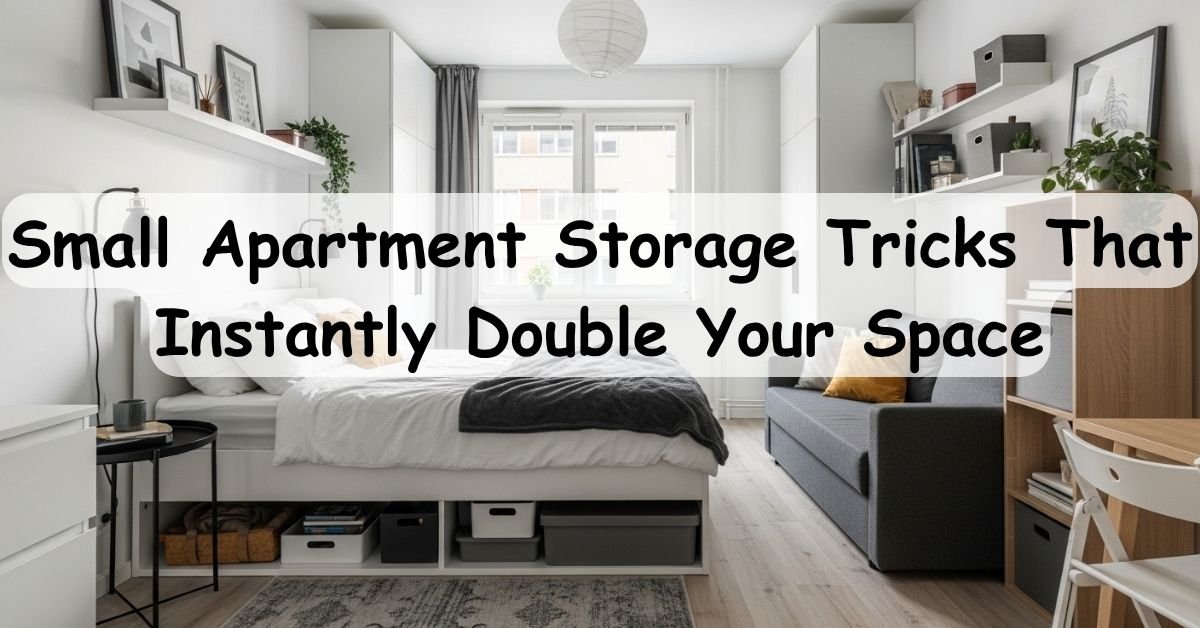
I used to feel like my apartment had a limit I kept hitting.
No matter how much I cleaned, things slowly crept back onto surfaces. A chair turned into a clothes rack. The kitchen counter became storage. And somehow, I still couldn’t find what I needed when I needed it.
At one point, I seriously thought I just needed a bigger place.
But after trying a few practical changes, I realized something else.
The real difference came from using small apartment storage tricks that actually fit my daily habits, not just ideas that look good in photos.
Once I focused on that, my apartment didn’t change in size.
But it completely changed in how it felt.
I started applying the same thinking to other areas of my home too, and some of these under bed storage ideas helped me create space in places I used to ignore completely.
Why Small Apartment Storage Tricks Matter
I didn’t think storage mattered that much at first.
I assumed clutter was just part of living in a smaller space. But over time, I noticed something: no matter how often I cleaned, the mess kept coming back.
That’s when it clicked.
In a small apartment, storage isn’t optional. It directly affects how the space feels and how smoothly daily life runs.
When things don’t have a proper place, surfaces fill up fast. Simple tasks take longer. And even a clean space can start to feel crowded.
But once I started using a few small apartment storage tricks, everything changed.
The space felt easier to manage. Cleaning became quicker. And I stopped constantly dealing with the same clutter.
That’s the real value.
Good storage doesn’t just create space; it makes everyday living simpler and more efficient.
1. Small Apartment Storage Trick: Turn Under-Bed Space Into a Controlled Storage Zone
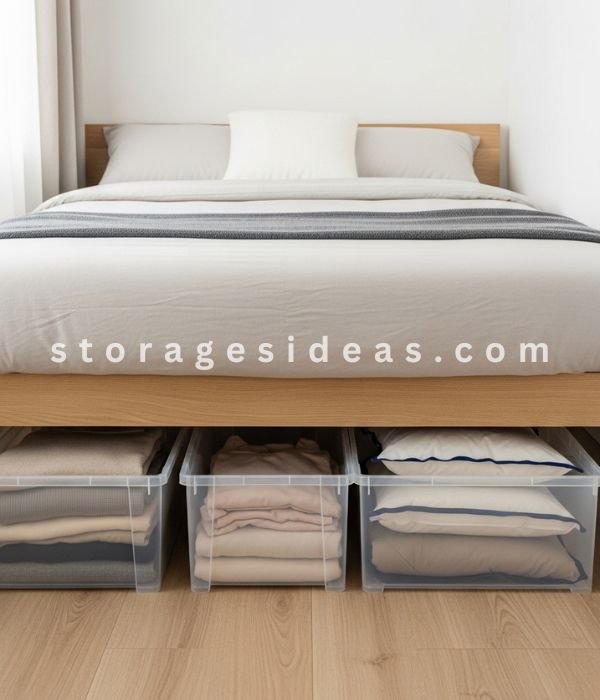
For a long time, I avoided checking under my bed.
I knew what was there: random bags, old clothes, things I didn’t want to deal with. It looked clean from the outside, but underneath was a mess I kept ignoring.
That changed when I treated it like a real storage area instead of a hiding place.
I bought low-profile bins that slide out easily. That one decision made a huge difference. If storage is hard to access, it doesn’t get used properly.
Then I created simple categories.
Seasonal clothes went into one bin. Extra bedsheets into another. Items I rarely use stayed in the back.
Vacuum storage bags helped reduce bulk. Jackets and blankets suddenly took up half the space.
What actually made this work:
I stopped storing “maybe useful later” items here. Everything under the bed now has a clear purpose.
Mistake to avoid:
Don’t keep frequently used items under the bed. You’ll get frustrated and stop using the system.
2. Vertical Storage Trick for Small Apartments That Doesn’t Feel Overwhelming
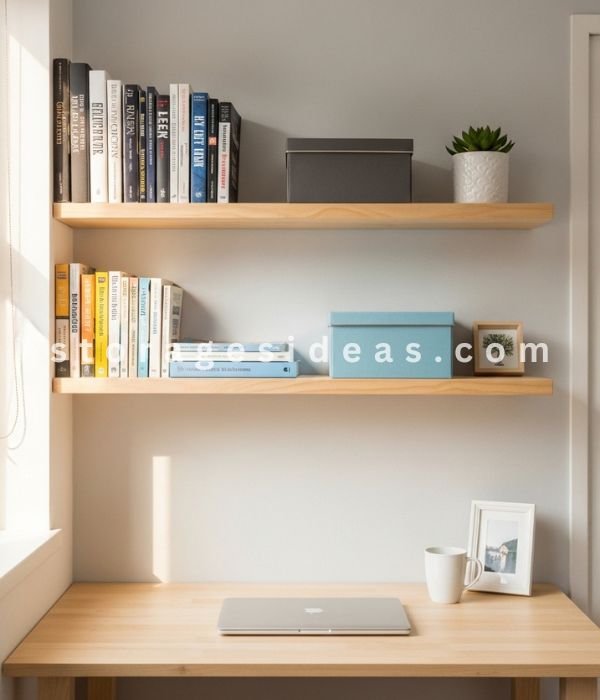
When I first tried wall storage, I went too far.
I added shelves everywhere, thinking more storage equals better results. Instead, the room felt tighter and visually heavy.
So I scaled back.
Now I use vertical space in a more controlled way.
I placed shelves only where they support my routine above my desk, near my bed, and in one section of the living area.
Instead of filling them, I leave gaps. That space is what makes everything feel lighter.
I also mix storage with a few intentional items, so it doesn’t look like pure storage.
What I noticed:
The room started to feel taller, not crowded.
Practical tip:
If a shelf starts looking messy, remove one or two items instead of reorganizing everything.
I applied this same approach in other rooms as well, and these wall storage ideas for the living room show how using vertical space properly can completely change how a small space functions.
3. Small Apartment Storage Trick: Use Door Space Without Making It Messy
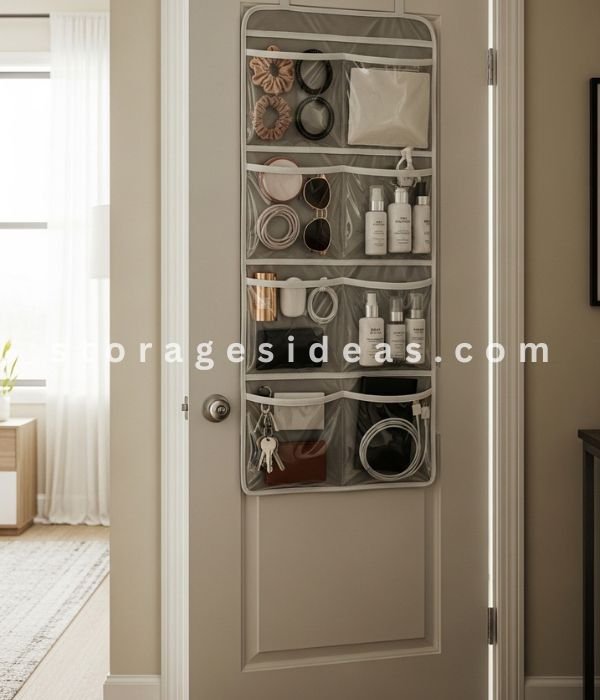
I used to think doors were too small to matter.
Now I see them as hidden storage panels.
I added over-the-door organizers, but I didn’t use the same type everywhere.
In the bathroom, I chose deeper pockets for bottles and cleaning supplies.
In the bedroom, slimmer ones for smaller items like accessories.
In the kitchen, I kept it light to avoid overload.
At first, I made a mistake by stuffing too much into one organizer.
It became hard to use.
Once I reduced the load and grouped items properly, everything became easier to access.
Why this works:
It adds storage without touching your main space.
4. Furniture Storage Trick That Replaces the Need for Extra Storage Units
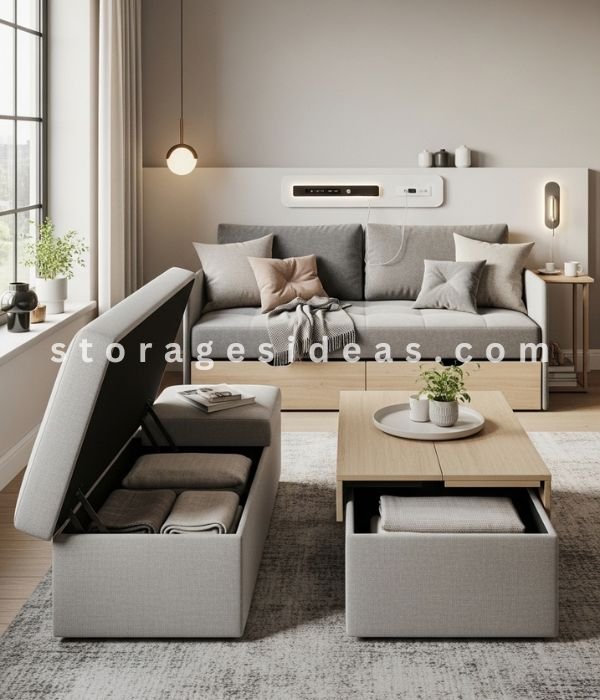
I used to think I needed more storage furniture.
Turns out, I needed smarter furniture.
I replaced a few items with pieces that have built-in storage.
My ottoman now holds blankets.
My bed has drawers underneath.
My coffee table hides everyday items.
But I learned something important along the way.
Some multi-functional furniture looks smart but feels inconvenient.
If opening it takes effort, I won’t use it daily.
Rule I follow now:
If storage isn’t easy to access, it won’t stay organized.
That rule helped me choose better pieces.
I started looking at furniture differently after that, and these benches and ottomans for the living room show how one piece can handle both storage and function without adding extra clutter.
5. Small Apartment Storage Trick: Build a Container System That’s Easy to Maintain
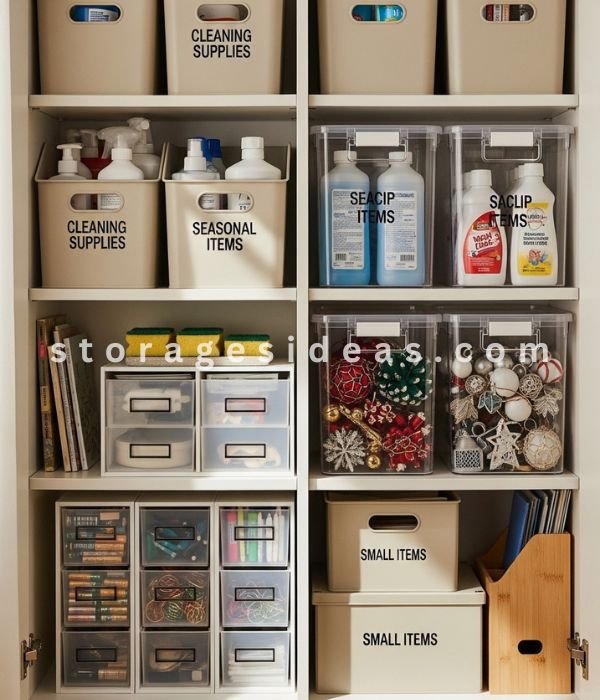
I used to think containers would solve everything.
They didn’t until I fixed how I used them.
At first, I mixed different items in the same bin. That created confusion instead of organization.
Now I follow a simple system.
Each container holds one category only.
Cleaning supplies stay together. Seasonal items stay separate. Small items go into smaller boxes inside larger ones.
I also avoid overfilling containers.
If something is packed too tightly, I won’t want to deal with it later.
What improved:
I stopped wasting time searching.
Small adjustment that helped a lot:
I keep frequently used containers at eye level.
6. Corner Storage Trick That Turns Awkward Space Into Something Useful
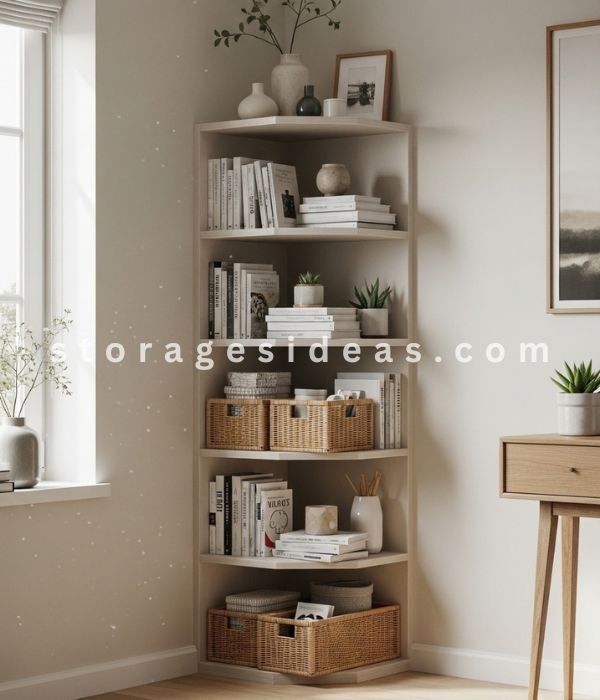
Corners used to be dead space in my apartment.
I didn’t know what to put there, so I left them empty.
Then I tried a tall corner shelf.
At first, I was worried it might feel bulky, but choosing a slim design made all the difference.
Now that the corner holds books, small baskets, and a few daily items.
It doesn’t interrupt movement, which is why it works so well.
What changed:
I gained storage without losing space.
Mistake to avoid:
Avoid deep or bulky furniture in corners. It quickly feels intrusive.
7. Hook Storage Trick Based on Real Daily Habits
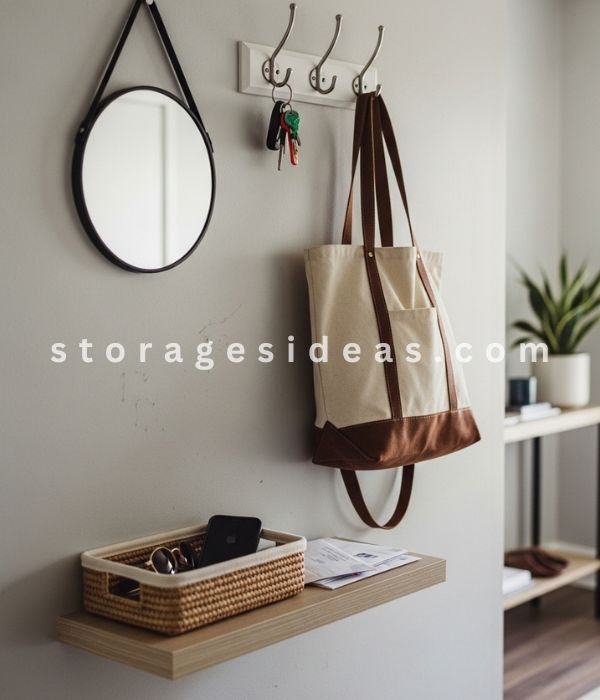
Hooks didn’t work for me at first.
Not because hooks are bad, but because I placed them in the wrong spots.
Now I observe my habits first.
Where do I drop my bag?
Where do I leave my keys?
That’s where hooks go.
Near the entrance for bags and keys.
Near the kitchen for towels.
Near the bathroom sink for daily items.
Result:
Clutter is reduced without effort.
Because I didn’t change my behavior, I supported it.
8. Small Apartment Closet Storage Trick That Doubles Space Without Renovation
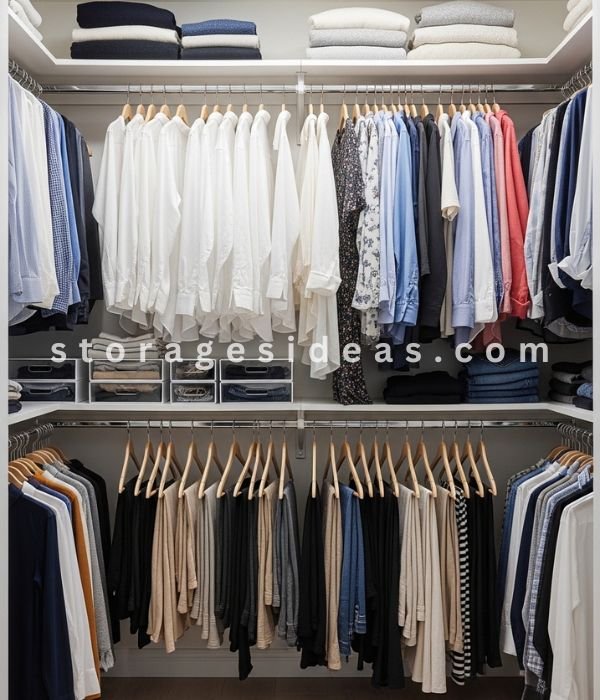
My closet always felt full, but it wasn’t efficient.
Adding a second hanging rod changed everything.
Now I use the top and bottom sections for shorter clothing items.
I also added shelf dividers to keep stacks from collapsing and switched to slim hangers.
Another important change:
I stopped using the closet as a storage space for random items.
Now it’s only for clothing and related items.
What improved:
Everything became easier to find and maintain.
9. Hidden Storage Trick That Reduces Visual Overload
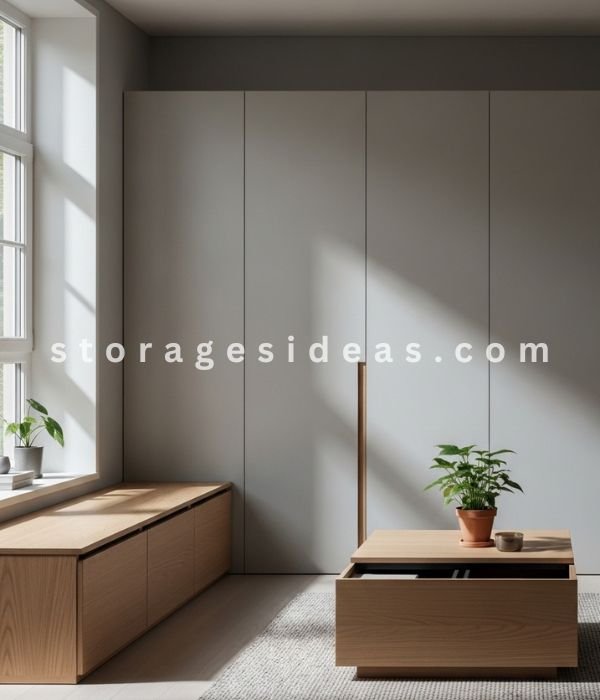
Even when things are organized, too much visibility creates stress.
I didn’t realize this until I reduced what I could see.
I started using storage that stays hidden.
A bench that opens.
A coffee table with a compartment.
Closed cabinets instead of open ones.
What changed:
The apartment felt calmer.
Not because I had less stuff but because I saw less of it.
10. Entryway Storage Trick That Stops Clutter From Spreading
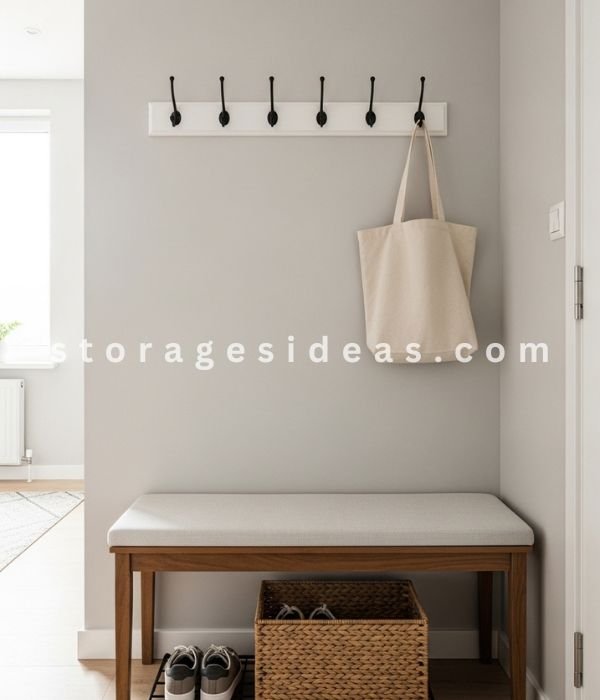
I didn’t have an entryway, which caused a daily mess.
Shoes, bags, and keys ended up everywhere.
So I created a small setup near the door.
A compact bench, a few hooks, and a basket.
At first, it felt too simple.
But it worked immediately.
Now everything I bring in has a fixed place.
Why this matters:
Clutter stays contained instead of spreading.
11. High Storage Trick for Items You Don’t Use Often
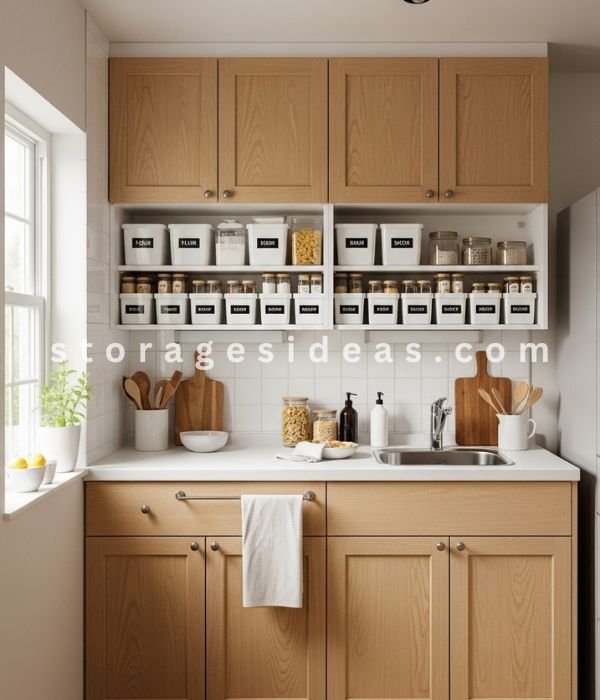
I used to ignore the space above my kitchen cabinets.
It felt too high to bother with, so it just collected dust. Meanwhile, my lower cabinets were packed with things I didn’t even use daily.
That didn’t make sense once I thought about it.
So I flipped the logic.
Items I use every day have been moved to easy-to-reach areas. Everything else went up top.
I started storing bulk groceries, backup supplies, and rarely used kitchen tools above the cabinets. To keep it from looking messy, I used simple matching bins.
That small detail matters more than expected. Without bins, it quickly looks like clutter. With bins, it looks intentional.
What made this work long-term:
I stopped putting random items up there. Only low-frequency items go in that space.
Mistake I made at first:
I stored things I needed weekly. That became annoying fast.
Now it works as overflow storage without getting in the way of daily use.
I later realized this is a common pattern in small homes: people keep everyday items in the hardest-to-reach spots, and this breakdown of how to use vertical and overlooked space effectively explains why shifting low-use items upward makes everything easier to manage.
12. Rolling Storage Trick That Adapts to Real Life
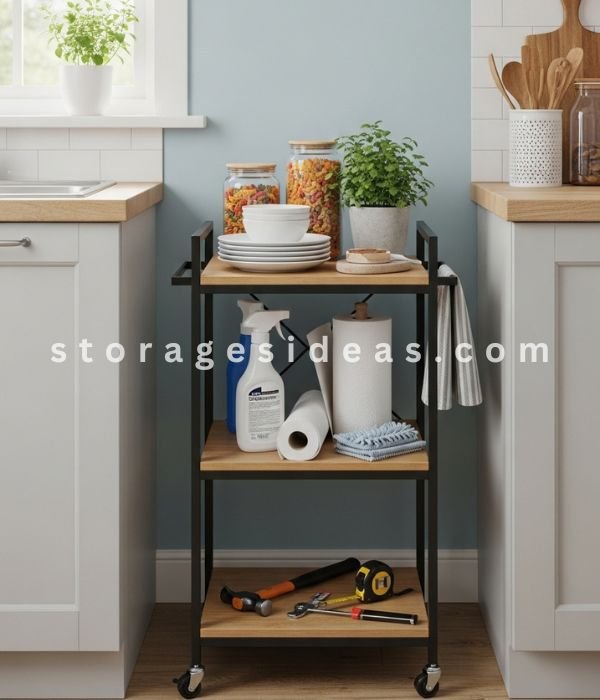
I didn’t expect rolling carts to be this useful.
At first, I thought they were just for kitchens or aesthetic setups. But once I started using one, I realized how flexible they are.
I use a rolling cart for items that don’t have a fixed “home.”
Things like:
- Extra kitchen supplies
- Cleaning products
- Small tools
The biggest advantage is movement.
When I’m cooking, I pull it closer. When I’m done, I move it out of the way. If I need more space, I shift it to another corner.
Why this works better than fixed storage:
My needs change throughout the day. Static storage doesn’t adapt, but rolling storage does.
One mistake to avoid:
Don’t overload it. Keep it light and category-based, or it becomes messy quickly.
13. Foldable Furniture Trick That Gives You Back Space Daily
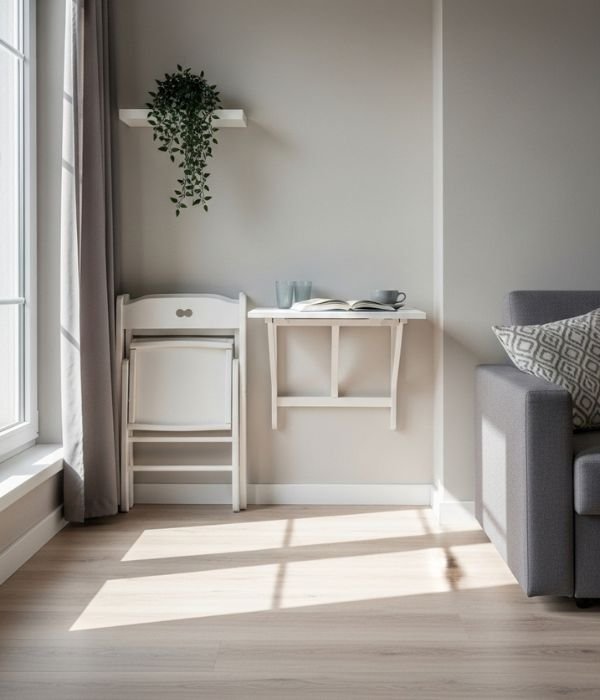
I didn’t realize how much space fixed furniture was quietly taking.
Chairs I didn’t use daily. A table that stayed open all the time. It made the apartment feel smaller than it actually was.
So I switched a few items to foldable versions.
Now I use foldable chairs for guests and a compact table when needed. The rest of the time, they stay tucked away.
At first, I thought this might feel inconvenient.
But it actually made things easier.
What changed immediately:
More open floor space during everyday life.
What I learned:
Not everything needs to be accessible 24/7.
Some things only need to exist when you’re actually using them.
That mindset shift helped me control how my space feels throughout the day.
14. Under-Sink Storage Trick That Fixes a Difficult Space
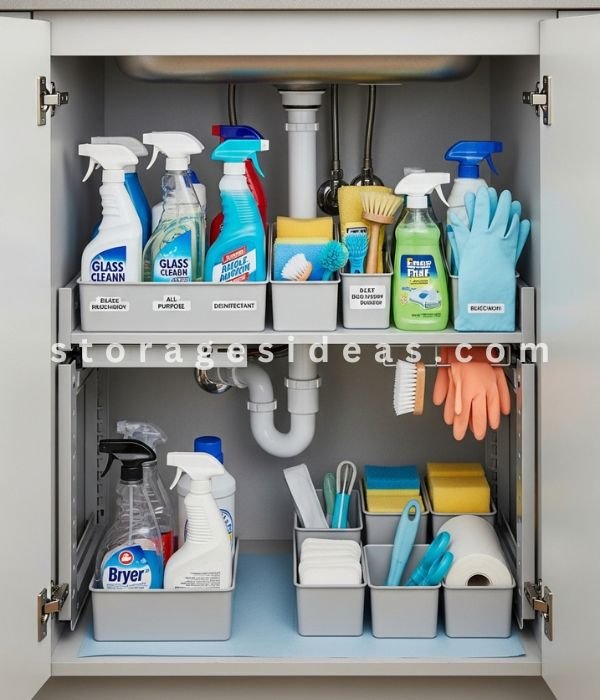
Under the sink used to be one of the most frustrating areas in my apartment.
The pipes made everything awkward. Items would get pushed to the back and forgotten. Cleaning supplies would pile up with no structure.
I tried organizing it multiple times, but nothing stuck until I added structure.
I used a two-tier organizer that works around the pipes. Then I added small bins to separate categories.
Now I store:
- Cleaning sprays together
- Sponges and tools in one bin
- Backup supplies in another
What made this system work:
Everything has a defined spot.
Mistake I made before:
Stacking items randomly. That always turns into clutter again.
Now I can see everything at a glance, and nothing gets buried.
Once I figured this out, I realized the same problem existed in other tight areas too, and these under sink storage ideas show more ways to make those difficult spaces actually usable.
15. Labeling Storage Trick That Reduces Daily Friction
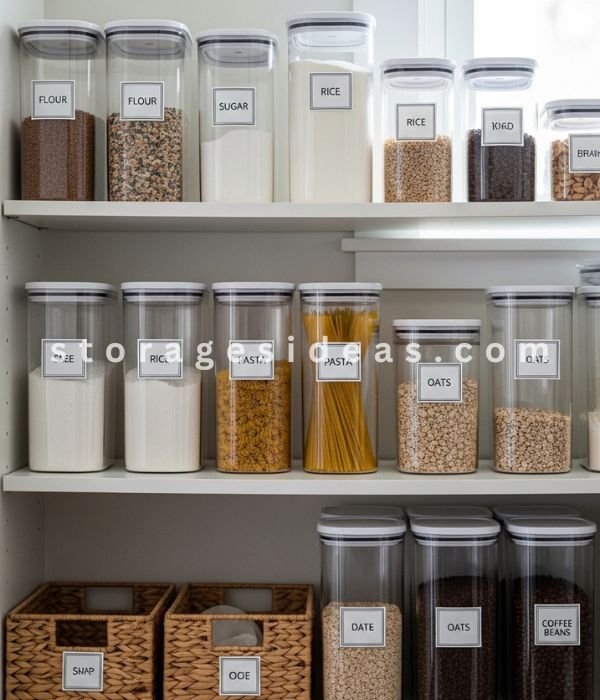
I used to skip labeling because it felt unnecessary.
I thought I’d remember where things go.
I didn’t.
Over time, items started drifting into the wrong places. That’s when clutter slowly builds back up.
So I added simple labels.
Nothing fancy, just clear, readable tags.
At first, it felt like a small change. But it had a bigger effect than expected.
What improved:
I stopped thinking about where things belong.
Why that matters:
Less decision-making = more consistency.
And consistency is what keeps a space organized long-term.
16. Mirror Storage Trick That Combines Function and Space Illusion
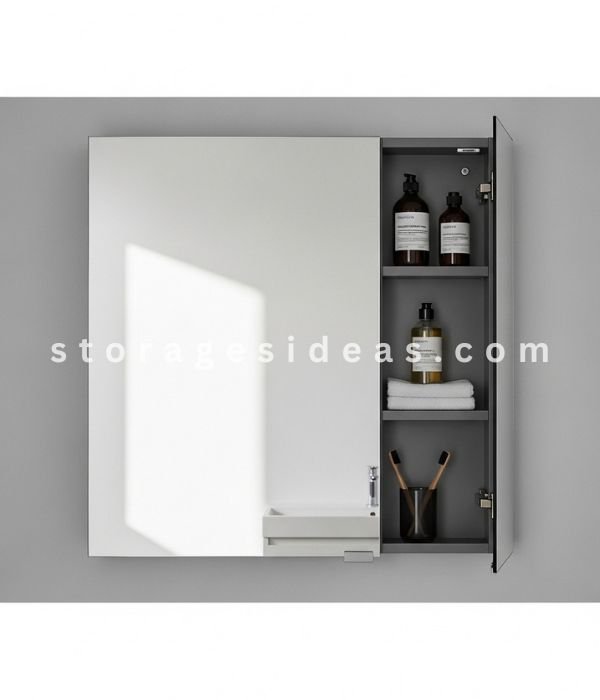
I added a mirror cabinet mainly for storage.
But I didn’t expect how much it would change how the space feels.
It holds daily essentials like toiletries, which keeps my sink area clear. But it also reflects light and makes the room feel larger.
That combination is powerful in a small apartment.
What makes this effective:
It solves two problems at once: storage and visual space.
Mistake to avoid:
Overfilling it. If it becomes cluttered inside, it defeats the purpose.
Keeping it minimal keeps both the function and the visual benefit.
17. Decluttering Trick That Makes Every Storage System Work Better
I tried organizing everything before reducing anything.
That didn’t work.
No matter how many storage ideas I used, it still felt like too much.
So I changed my approach.
Instead of asking, “Where can I store this?”
I started asking, “Do I actually need this?”
That question made a big difference.
I didn’t remove everything. I just focused on what I actually use.
What changed:
Every storage system started working better.
Why this matters:
Storage solves space problems, but decluttering solves pressure.
Without it, even the best systems start to fail.
I’ve seen this same issue show up in different parts of a home, and these 12 mistakes that make your home look cheap highlight how clutter and overcrowding can quietly affect the entire space.
What Actually Made the Biggest Difference
After trying all these ideas, a few stood out clearly.
Not because they were trendy, but because they worked consistently.
The biggest improvements came from three shifts:
1. Using vertical space intentionally
Once I moved items off the floor and onto the walls in a controlled way, everything felt more open.
2. Choosing furniture that reduces storage needs
Instead of adding more storage units, I made existing furniture do more.
3. Reducing unnecessary items
This had the biggest impact. Less stuff made every other system easier to maintain.
But there’s one thing that connects all of these.
They match real daily behavior.
That’s why they work.
Not because they’re clever but because they’re practical.
Final Thoughts
Finding the right small apartment storage tricks isn’t about copying ideas—it’s about choosing systems that actually fit how you live day to day.
I’ve tried quick fixes that looked good but didn’t last. The ideas that worked were the ones that made daily routines easier, not more complicated.
When storage feels natural, it sticks. When it feels forced, it fails.
That’s why simple changes like using vertical space properly, choosing furniture that stores items, and keeping only what I actually use made the biggest difference for me.
If you’re starting, don’t try to fix everything at once.
Pick one area that feels the most frustrating right now. Improve that. Then move to the next. Over time, these small apartment storage tricks start to add up.
And before you realize it, your space feels more open, more organized, and much easier to manage without needing anything bigger.
