
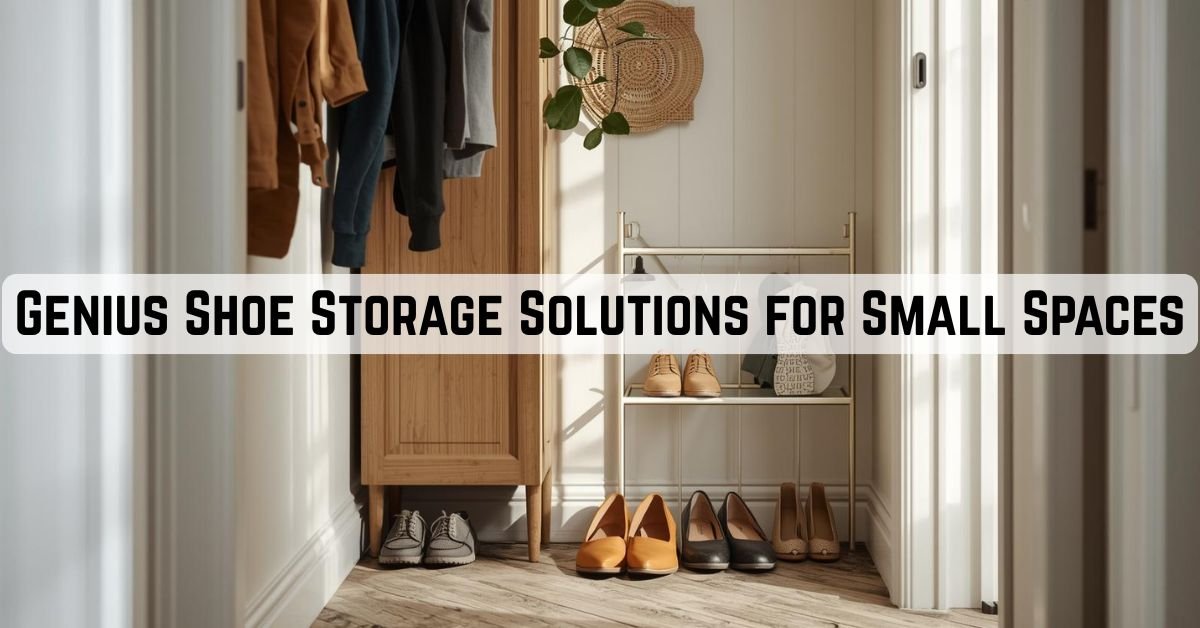
Living in a small home taught me very quickly how much shoes can affect the way a space feels. Before I found reliable shoe storage solutions for small spaces, my entryway always looked crowded, my closet felt disorganized, and random pairs somehow ended up in places they didn’t belong. The problem wasn’t the number of shoes I owned. It was the lack of clear, practical storage that matched how I actually live.
Most shoe storage ideas look great online, but don’t hold up in real life. They assume extra space, oversized closets, or perfectly consistent habits. In a small home, those assumptions fall apart fast. I needed storage ideas that worked on busy days, not just after a full weekend of organizing.
This guide brings together the shoe storage ideas and solutions that actually helped me regain control of my space. Everything here is practical, realistic, and designed to work in apartments, small homes, and rooms where every inch matters.
Why Shoe Storage Is Harder in Small Homes
In a small home, clutter shows up quickly. When shoe storage doesn’t work, shoes end up near the door, under furniture, or in corners that were never meant for storage. Walking paths shrink, and even a tidy room starts feeling tight.
What I’ve noticed is that shoe clutter usually isn’t about carelessness. It’s about convenience. If storage feels awkward or hard to reach, shoes won’t go back. They’ll stay where they land. Good storage makes putting shoes away feel effortless.
Once I started focusing on ease instead of appearance, everything changed.
How I Decide Which Shoes Deserve Easy Access
Before choosing any storage, I decide which shoes actually need to be within reach. This step makes every storage solution work better.
I mentally separate shoes into three simple groups:
- The shoes I wear every week
- Shoes I wear occasionally
- Shoes I wear only during certain seasons or events
Only the first group gets prime storage space. These are the shoes I grab without thinking. Everything else moves to secondary storage. This keeps everyday areas from getting overcrowded and prevents storage from failing too quickly.
Shoes I no longer wear don’t stay in my home. I either donate them or dispose of them responsibly, using guidelines from the U.S. Environmental Protection Agency.
Vertical Shoe Racks That Save Floor Space

Vertical shoe racks are one of the easiest ways to organize shoes without taking up valuable floor space. Instead of spreading shoes across the room, these racks stack pairs upward, which works well in narrow rooms and tight layouts.
I usually place vertical racks against unused walls or corners, especially in homes where smart corner storage ideas. Help reclaim wasted space inside closets, or in corners where furniture doesn’t fit. Slim designs work best because they keep walkways clear while still holding several pairs.
These racks are ideal for everyday shoes like sneakers, flats, and casual footwear. I avoid using them for bulky boots since those take up more room and can make the rack unstable.
Helpful tip: Choose racks with open shelves so air can circulate and shoes stay fresh.
Under-Bed Shoe Storage for Seasonal and Extra Pairs
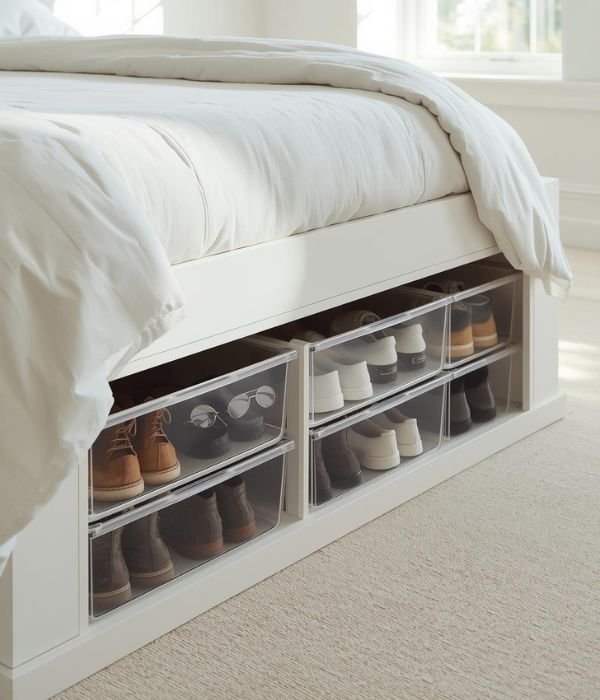
Under-bed storage is a great solution when closet space is limited. It uses space that often goes unused and keeps shoes out of sight.
I reserve under-bed storage for shoes I don’t wear daily, such as seasonal footwear, dress shoes, or backup pairs. Low-profile containers work best because they slide in and out easily.
Clear containers or labeled bins are important. If I can’t tell what’s inside quickly, I forget about the shoes and end up buying replacements.
Helpful tip: Look for containers with ventilation to prevent odors, especially in small bedrooms.
Entryway Shoe Storage That Keeps Small Spaces Clear
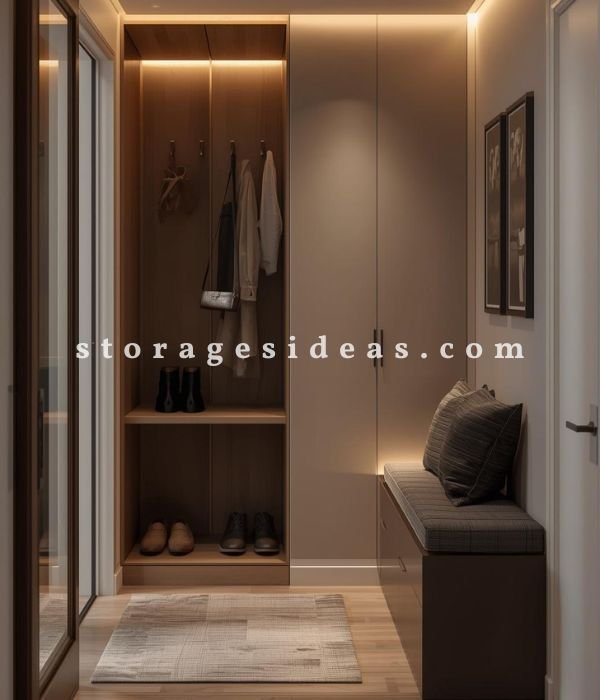
Entryways are usually the smallest and busiest areas in a home, so shoe storage here needs to stay compact and organized.
Narrow shoe cabinets are one of my favorite options. They store shoes vertically and sit close to the wall, which keeps the entryway looking clean and open. Even slim cabinets can hold more shoes than expected.
Storage benches are another practical option. They provide a place to sit while putting on shoes and offer hidden storage underneath. I prefer benches with lift-up lids because they hide clutter better than open cubbies.
Helpful tip: Limit entryway storage to shoes you wear most often to avoid crowding the space.
Over-the-Door Shoe Storage for Tight Layouts
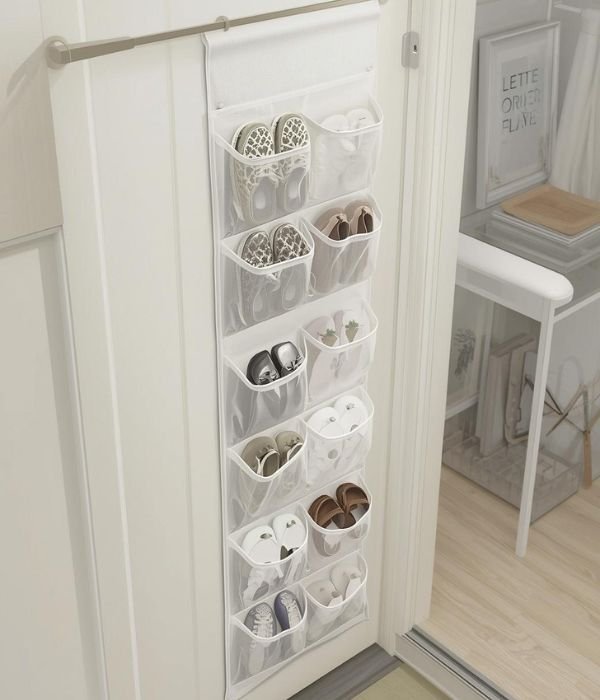
Over-the-door shoe organizers are a smart choice when floor and closet space are limited. They make use of space that’s often overlooked while keeping shoes visible and easy to grab.
I prefer using these organizers on closet doors instead of main room doors to reduce visual clutter. They work best for flats, sandals, and lightweight sneakers.
Heavy shoes can cause the organizer to sag, so I avoid placing boots here. Leaving a few pockets empty also helps the organizer stay neat.
Helpful tip: Make sure the organizer doesn’t rub against the door frame to prevent damage.
Shoe Storage Inside Small Closets
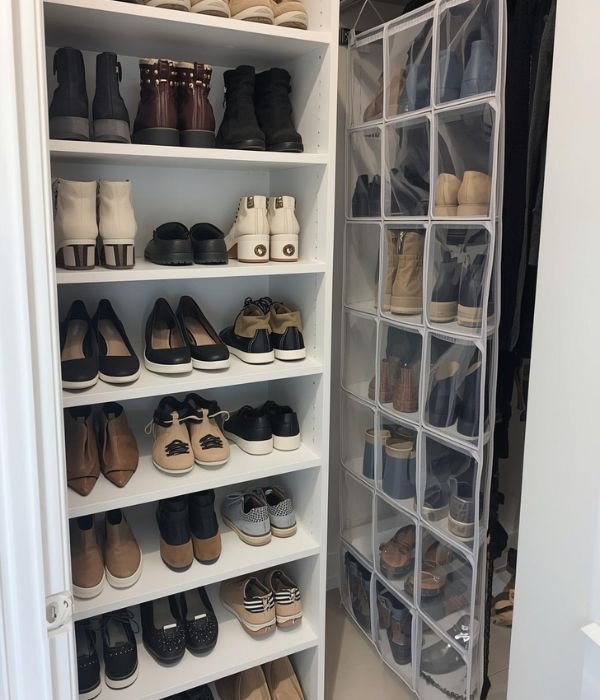
Small closets need structure. Without it, shoes quickly pile up and become hard to manage.
I keep everyday shoes at eye level so they’re easy to reach. Shoes I wear less often go on higher shelves or in hanging organizers. This simple separation prevents clutter from building at the bottom of the closet.
Shelf dividers help keep shoes from sliding into piles, and hanging organizers work well as long as they aren’t overloaded.
Helpful tip: Avoid stacking shoes directly on top of each other. Stacks fall apart quickly and create a mess.
Read More about Storage Ideas for Small Items
Hidden Shoe Storage That Keeps Rooms Looking Clean
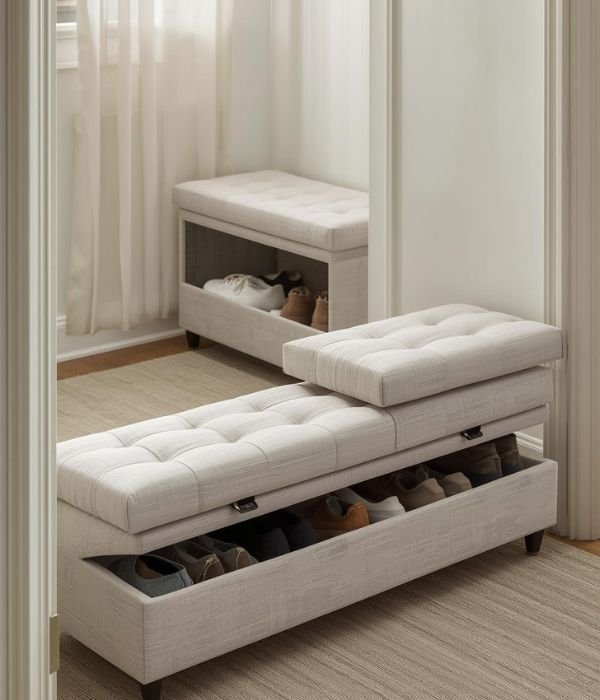
Hidden shoe storage is perfect when you want your space to feel calm and uncluttered. It works especially well in small homes where visual clutter builds fast.
Storage ottomans, benches with compartments, and beds with drawers are all useful options. I use these for shoes I don’t wear daily, but still want access to.
These pieces blend into the room instead of looking like storage, which helps small spaces feel more intentional.
Helpful tip: Keep daily shoes in an easy-to-reach spot so hidden storage doesn’t become inconvenient.
DIY Shoe Storage for Small Spaces
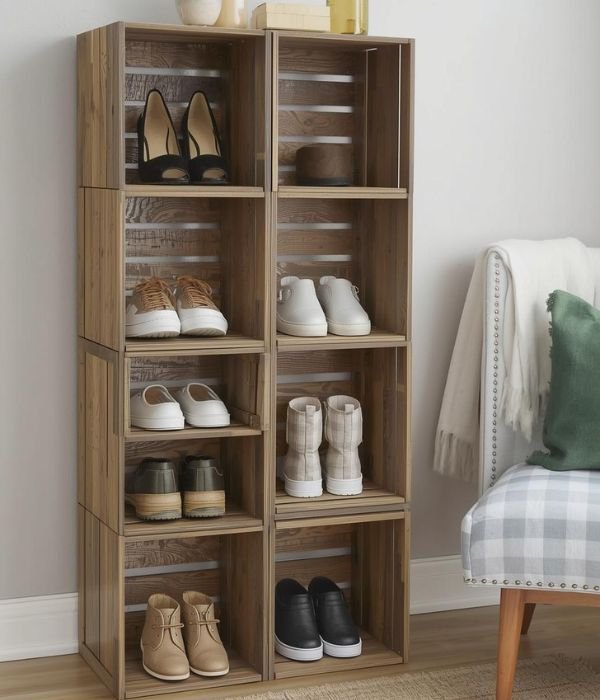
DIY shoe storage can be a good option if you’re on a budget or dealing with an unusual layout. The key is keeping designs simple and practical.
Stackable crates, modular cubes, and repurposed shelves work well when they’re sized correctly. I avoid deep storage where shoes get buried and forgotten.
DIY setups work best for lighter, casual shoes. Heavier footwear usually needs sturdier storage.
Helpful tip: Measure your space carefully before building to avoid bulky results.
Shoe Storage Ideas for Apartments and Renters
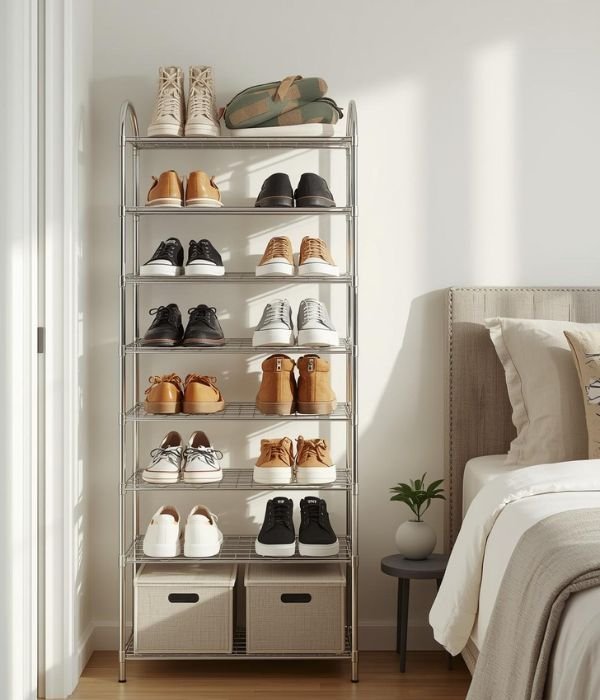
Renters often need storage solutions that don’t involve drilling or permanent changes. Fortunately, there are plenty of flexible options.
Freestanding racks, under-bed containers, and over-the-door organizers are easy to move and won’t damage walls. These solutions adapt well when you change apartments or rearrange furniture.
I focus on storage that can move with me, so I don’t have to start over every time.
Helpful tip: Avoid adhesive hooks for heavy shoes, as they tend to fail.
How I Keep Shoe Storage From Getting Messy Again
Even good storage needs light maintenance. I keep my routine simple so it never feels like a chore.
About once a month, I:
- Put shoes back in their designated spots
- Remove pairs I no longer wear
- Rotate seasonal shoes
- Wipe down shelves and bins.
This quick reset keeps clutter from slowly returning.
Common Shoe Storage Mistakes to Avoid
Over time, I’ve noticed a few mistakes that undo good shoe storage quickly:
- Keeping too many shoes near the door
- Using deep bins that hide everything
- Mixing daily and seasonal footwear
- Ignoring airflow
Avoiding these mistakes helps any shoe storage setup last longer.
Final Thoughts: Making Shoe Storage Work in Small Spaces
Good shoe storage isn’t about squeezing in as many pairs as possible. It’s about creating clear, simple systems that fit your space and your habits.
Once I focused on practical shoe storage solutions for small spaces, my home felt easier to maintain. Floors stayed clear, shoes stopped wandering, and daily routines felt smoother.
The best shoe storage is the kind you actually use. When every pair has a clear place, clutter stops being a constant problem even in the smallest homes.
