
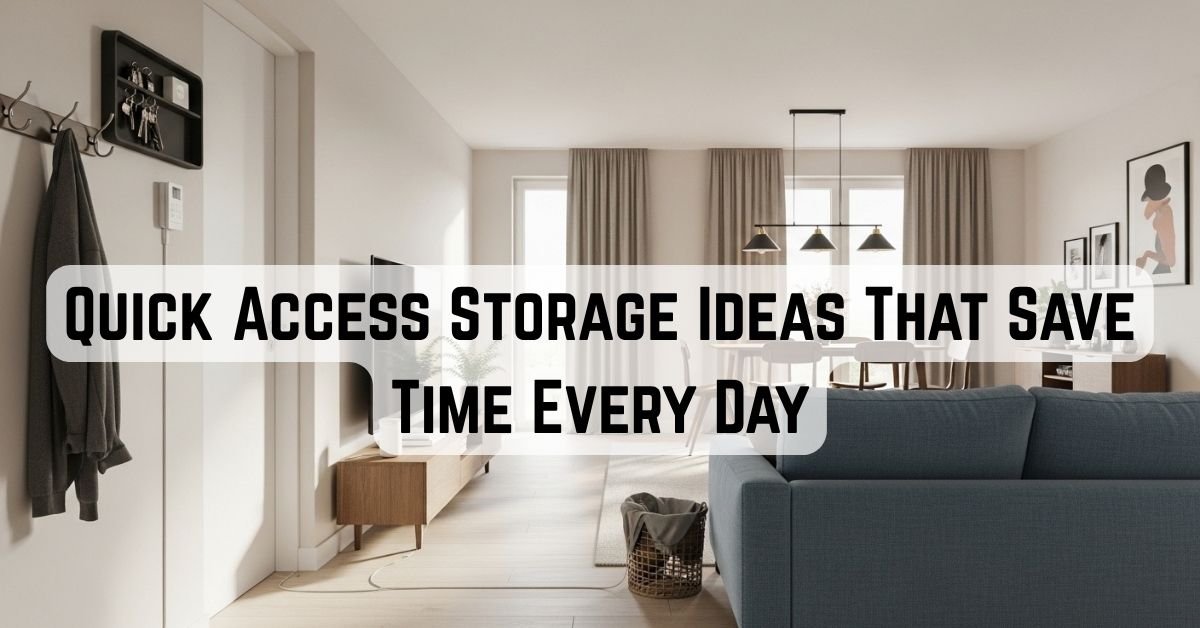
There was a point where I felt like I was always looking for something.
Nothing major. Just small things.
Keys that weren’t where I thought they were. A charger that had moved. Something I needed “just for a second” that took longer to find than it should have.
Individually, those moments didn’t seem like a problem.
But over time, they added up.
What made it more frustrating was that my space wasn’t messy. Everything had a place. It just didn’t have the right place.
That’s when I stopped thinking about storage as something that holds items and started thinking about how quickly I could reach them.
Once I made that shift and tried a few quick access storage ideas, the difference wasn’t visual.
It was how the space felt to use.
I noticed a similar shift while working through a few small apartment storage tricks, where small placement changes made everyday routines feel easier without adding more.
Why We Lose Time Looking for Everyday Items
What I noticed is that time isn’t usually lost in big tasks.
It’s lost in small pauses.
You stop for a second to look for something. Then another second to check a different spot. Then you adjust something that’s in the way.
And before you realize it, that “quick” moment isn’t quick anymore.
The pattern started to feel familiar.
Items weren’t missing. They were just not where I needed them to be.
Some were stored too far away. Others were mixed with things I didn’t use often. And a few didn’t really have a consistent place at all.
Once I paid attention to that, it became clear that the issue wasn’t organization.
It was access.
I later realized this is closely connected to how clutter builds up through small daily habits, and this explanation of how clutter affects everyday organization helped me understand why even small inefficiencies can add up over time.
9 Quick Access Storage Ideas That Actually Save Time
1. Keeping Everyday Items Exactly Where I Use Them
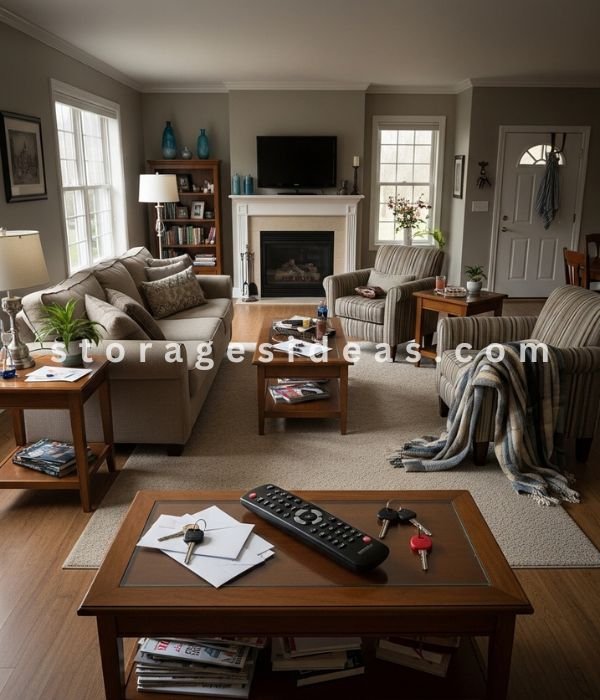
For a long time, I kept things where they “belonged.”
Not where I used them, but where they made sense in the room.
It looked organized at a glance.
But when I paid attention to how I actually moved through the space, something felt slightly off. I would use something in one spot, then hesitate for a moment before deciding where to put it back.
That hesitation was small, but it showed up often.
Sometimes I’d place the item nearby instead of returning it to its original spot. Other times, I’d carry it halfway and leave it somewhere in between.
Those small pauses added up.
What changed was noticing where I naturally reached for things and letting that become their place.
Once items stayed closer to where they were used, that hesitation disappeared. I didn’t have to think about where to return them.
And without that extra step, things stopped drifting as much.
2. Creating One Consistent Spot for High-Frequency Items
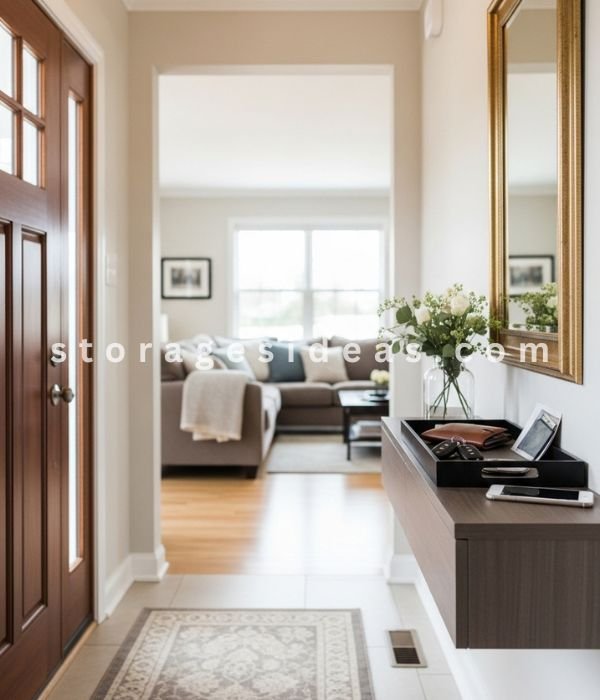
Some items seemed to move more than others.
Keys, wallet, phone, things I use every day, never stay in the same place for long. They were always nearby, but never exactly where I expected them to be.
At first, I didn’t see it as a problem.
But I noticed how often I paused for a second, looking around before finding them. That small delay became part of my routine without me realizing it.
The issue wasn’t that they didn’t have a place.
It was that they had too many.
What helped was narrowing that down.
One spot. No alternatives.
It didn’t need to be perfect or styled. It just needed to stay the same.
Once that place became consistent, those small pauses disappeared. I stopped scanning surfaces or checking different corners.
The items didn’t just stay organized; they stayed predictable.
That consistency reminded me of a few entryway storage ideas for small spaces, where keeping things in one place reduces daily searching.
3. Separating Daily-Use Items From Occasional Ones
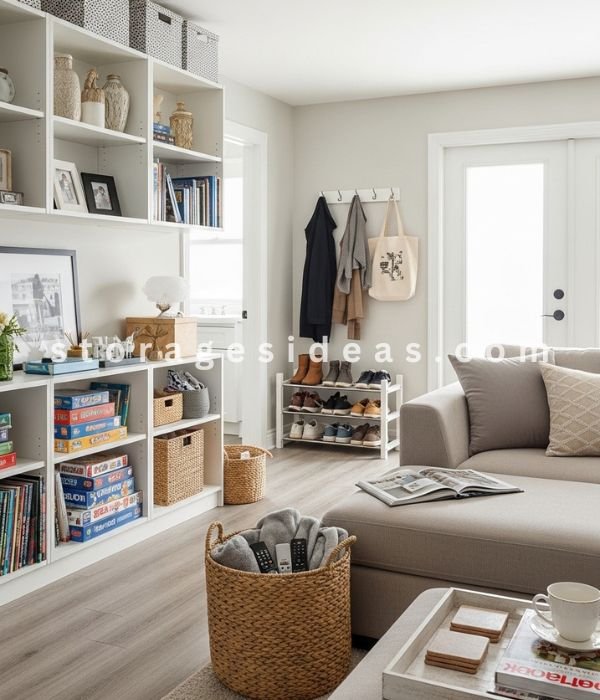
At one point, everything shared the same space.
Items I used every day sat next to things I only touched once in a while. It looked tidy, but it didn’t feel smooth to use.
Every time I reached for something, I had to move past items that weren’t part of that moment.
That created a kind of quiet friction.
Not enough to feel frustrating, but enough to slow things down slightly.
Over time, I started noticing how often I shifted things just to reach what I needed.
What changed was creating a bit of separation.
Daily items stayed closer, easier to reach, and slightly more exposed.
Less-used items moved just a little further away.
Not hidden completely, just out of the immediate path.
And once that separation was in place, I didn’t have to move things around as much. The space felt more direct.
4. Using Open Storage for Things I Reach for Constantly
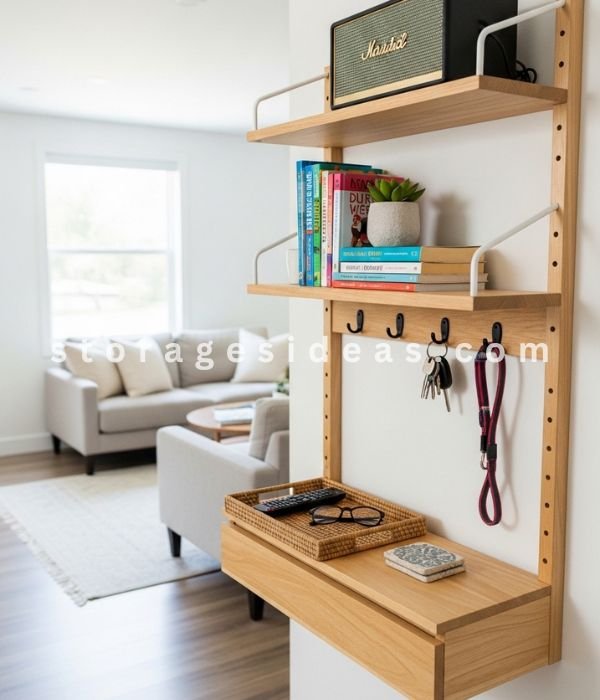
I used to prefer keeping things tucked away.
Drawers, cabinets, and anything that keeps surfaces clear.
And while that worked for some items, it didn’t work for everything.
The things I reached for most often were the ones that slowed me down when they were hidden.
Opening something, taking it out, closing it again, it only took a moment.
But that moment repeated throughout the day.
And those small actions started to feel noticeable.
What changed was letting some of those items stay in the open.
Not everything, just the ones I used constantly.
This didn’t make the space feel messier.
If anything, it made it feel more functional.
Because instead of interacting with storage, I was interacting directly with what I needed.
5. Keeping “In-Between” Storage Near Transition Areas
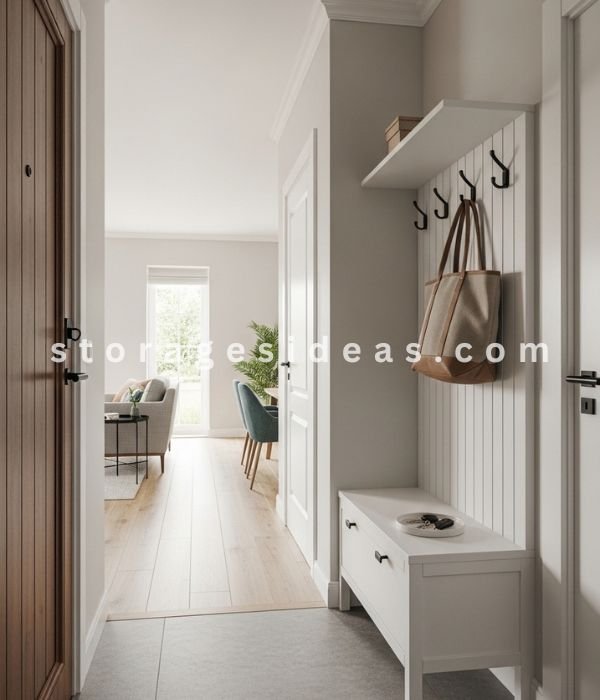
Some items never seemed to belong to just one place.
They moved with me.
From one room to another, from one task to the next.
Before, I tried to assign them a fixed location.
But I kept finding them somewhere in between on a counter, near a doorway, or at the edge of a surface.
At first, it felt like an inconsistency.
But after noticing it a few times, it started to feel more like a pattern.
These items weren’t meant to stay in one room.
They belonged to the movement itself.
What helped was placing storage in those in-between areas.
Not fully inside one space, but along the path between them.
Once I did that, those items stopped drifting.
They stayed where I naturally reached for them without needing to be put away somewhere else.
6. Limiting How Many Places One Item Can Live
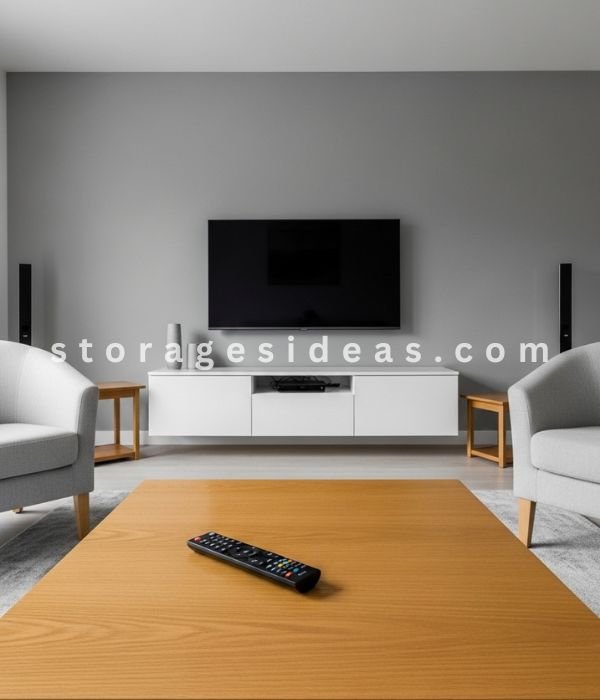
One thing I didn’t notice at first was how many “possible spots” some items had.
A remote could be on the table, the shelf, or the sofa. A charger could be in one of several drawers. Nothing was technically misplaced, but nothing felt fixed either.
At first, that flexibility seemed helpful.
It meant I could leave things wherever they felt convenient.
But over time, I started noticing the small pauses it created.
Every time I needed something, I had to think for a second. Then check one place. Then another.
That extra step became part of the routine.
What changed was quietly reducing those options.
Not in a strict way, but in a consistent one.
Each item had one main place, and maybe one secondary spot, but nothing beyond that.
Once those choices became limited, finding things became faster without any extra effort.
Not because I organized more.
But because I stopped giving things too many places to go.
7. Keeping Storage at the Most Comfortable Reach Level
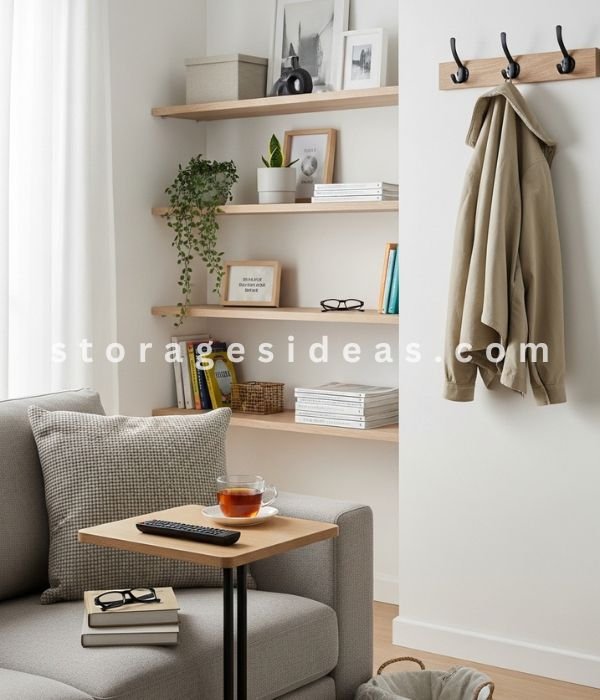
There’s a certain range where everything feels easiest to use.
It’s not something I thought about at first.
But I started noticing it in small moments how naturally my hand moved toward certain areas without effort, and how other spots required just a little adjustment.
That adjustment didn’t seem like much.
But it showed up repeatedly.
A slight reach upward. A small bend downward. Just enough to make returning something feel less immediate.
And when something feels slightly inconvenient, it’s easier to place it nearby instead of putting it back properly.
What changed was paying attention to that natural reach zone.
The items I used most often moved into that space.
Everything else shifted slightly out of it.
The layout didn’t change dramatically.
But the way I interacted with it did.
And once things felt easier to grab and return, they started staying in place more consistently.
8. Creating Small Contained Zones for Fast-Grab Items
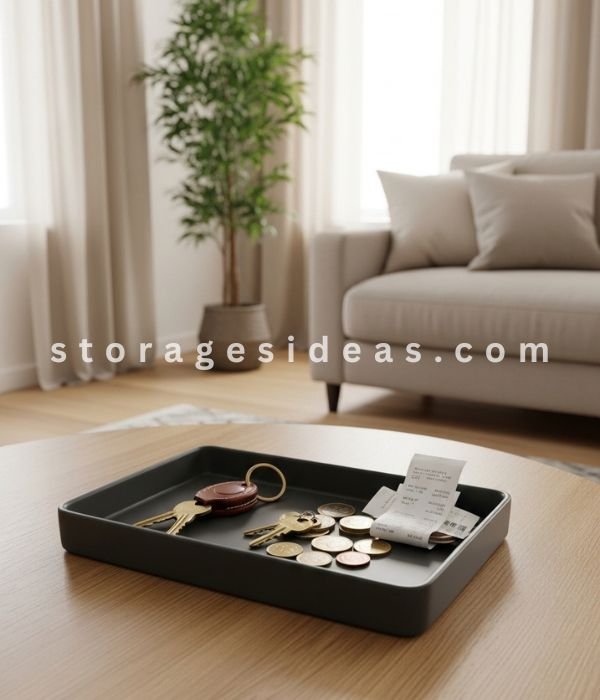
Small items tend to behave differently.
They don’t take up much space, so they rarely feel like a priority.
But they also don’t stay still.
A key placed near the edge of a surface moves slightly the next time. A receipt gets added. Then something else joins it.
Over time, those small shifts turn into scattered clusters.
It doesn’t happen all at once.
It builds gradually.
What helped was giving those items a boundary.
Not a complicated system, just a defined space where they belong.
A tray, a container, or even a specific section of a surface.
Once that boundary existed, those items stopped spreading outward.
They didn’t need to be perfectly arranged.
They just needed a place where they could stay contained.
And that alone made them easier to find.
This approach works similarly to a few table storage ideas for the living room, where small boundaries prevent items from spreading across surfaces.
9. Setting Up Storage That Doesn’t Require Adjustment
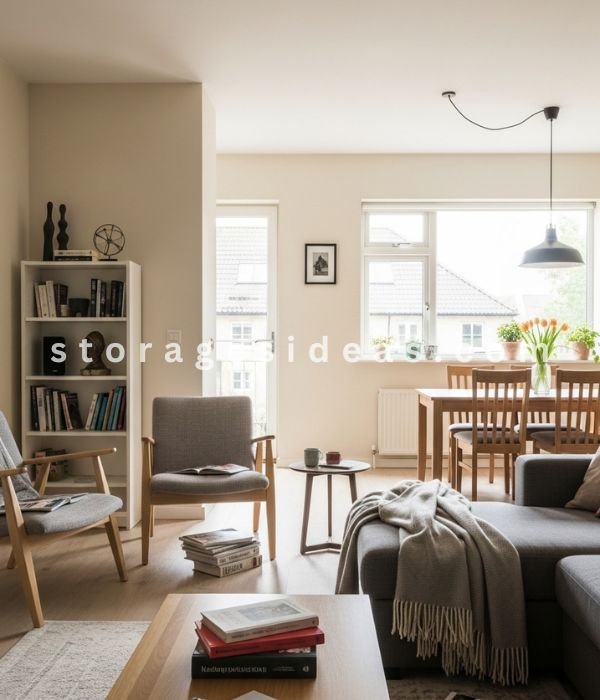
I’ve tried setups that looked organized but didn’t last.
They worked at the beginning.
Everything had a place. Everything looked neat.
But over time, I noticed how much effort it took to keep them that way.
Items had to be placed carefully. Adjusted often. Realigned to look right.
And slowly, that effort started to fade.
What changed was simplifying how things returned to their place.
Instead of requiring precision, the system allowed for small variations.
An item could be placed back without needing to be exact.
There was enough structure to guide it, but not so much that it demanded attention.
And that made a difference.
Because once the system didn’t rely on effort, it started maintaining itself.
Things stayed in place not because I was careful, but because it felt easy to keep them there.
What Actually Makes Storage Feel Fast to Use
What stood out to me after making these changes is that nothing I did made the space feel dramatically different at first.
There wasn’t a moment when everything suddenly looked new or perfectly organized.
But the way I moved through it started to feel different.
I wasn’t pausing as often. I wasn’t checking multiple spots. I wasn’t adjusting things just to reach something else.
Those small interruptions started to disappear.
What changed wasn’t how things were stored.
It was how easily I could reach them without thinking.
Items stayed closer to where I needed them. They stopped shifting between multiple places. And the space itself felt more predictable.
That predictability is what made everything feel faster.
Not because I was moving quicker, but because I wasn’t slowing down as much.
Final Thoughts
Looking back, I wasn’t really trying to organize better.
I was trying to make everyday moments feel easier.
At first, I thought that meant adding better storage or finding smarter solutions. But most of the change came from paying attention to how I was already using the space.
Where I paused.
Where I reached.
Where things ended up without thinking.
Once I started adjusting to those small patterns, everything began to feel more natural.
Things didn’t stop moving completely.
But they stopped drifting in the same way.
They stayed closer to where I expected them to be, and that made the entire space feel easier to use without much effort.
That’s where these quick access storage ideas made the biggest difference.
They didn’t change what I had.
They changed how smoothly everything worked around me. I saw the same effect while exploring small space transformation ideas, where small structural shifts made everyday spaces feel easier to use.
