
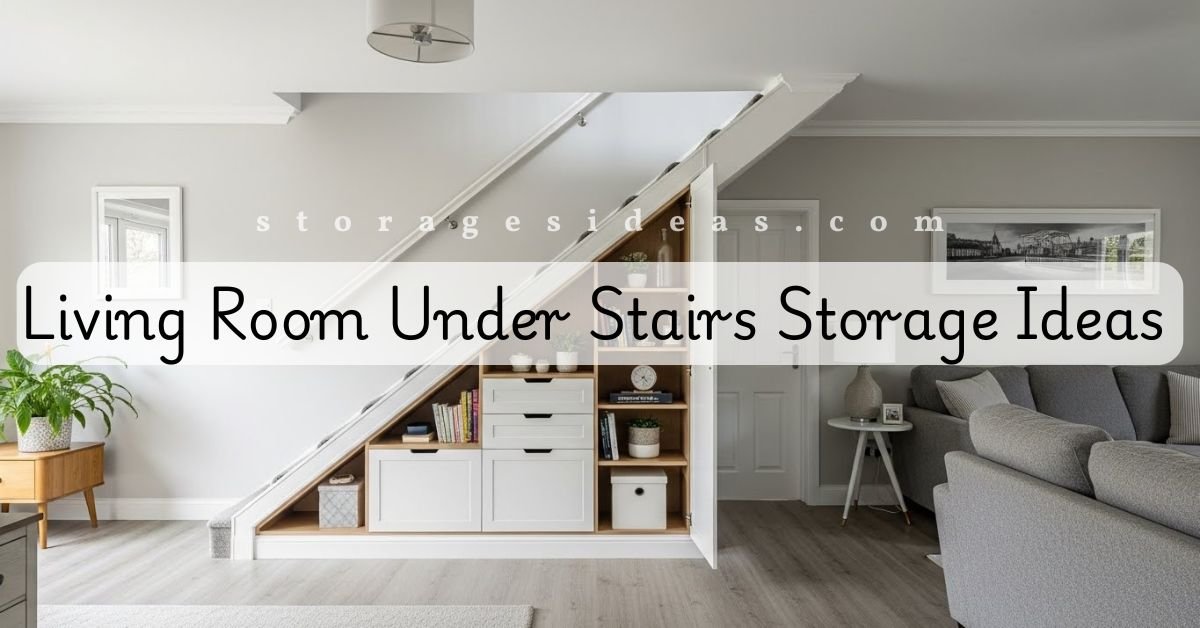
Under-stairs space in a living room is one of those areas that feels both promising and frustrating. I’ve seen it ignored completely, stuffed with random items, or turned into storage that technically works but never quite looks right. The problem isn’t a lack of ideas. It’s that under-stairs areas are awkward by nature. Sloped ceilings, uneven depths, and strange corners make standard furniture feel out of place.
Once I stopped treating the under-stairs space like a leftover corner and started thinking of it as part of the living room’s structure, everything changed. Storage worked better. The room felt more balanced. And most importantly, the space stopped feeling wasted.
This guide breaks down living room under stairs storage ideas that actually work in real homes. These aren’t showroom concepts. They’re practical approaches that respect how living rooms function while utilizing one of the trickiest spaces in the house.
Why Under-Stairs Space Feels So Difficult to Use
Under-stairs areas challenge almost every design instinct.
The ceiling slopes. The depth changes from one end to the other. Full-height furniture rarely fits cleanly. And because this space often sits near main walkways, anything bulky immediately feels intrusive.
Another issue is psychology. Under-stairs space often feels like “extra” space rather than intentional space. That mindset leads to dumping behavior. Shoes, boxes, seasonal items, and things without a home slowly migrate there, just like what often happens with poorly planned corner storage ideas in living rooms.
Once I recognized that the awkwardness wasn’t a design flaw but a structural feature, planning storage became much easier.
Understanding the Shape Before Planning Storage
Every under-stairs area is different, and ignoring that is where most storage fails.
Before choosing any solution, I map the space mentally. Where does the height drop off? Where is full standing height available? Which areas are deep but short, and which are tall but shallow?
I also consider access. Storage that looks good but requires crawling or bending every time quickly becomes frustrating. Many of these decisions follow basic home organization fundamentals, especially the idea that storage should support daily habits instead of fighting them.
This upfront understanding prevents forcing storage where it doesn’t belong.
Open vs Closed Under-Stairs Storage in Living Rooms
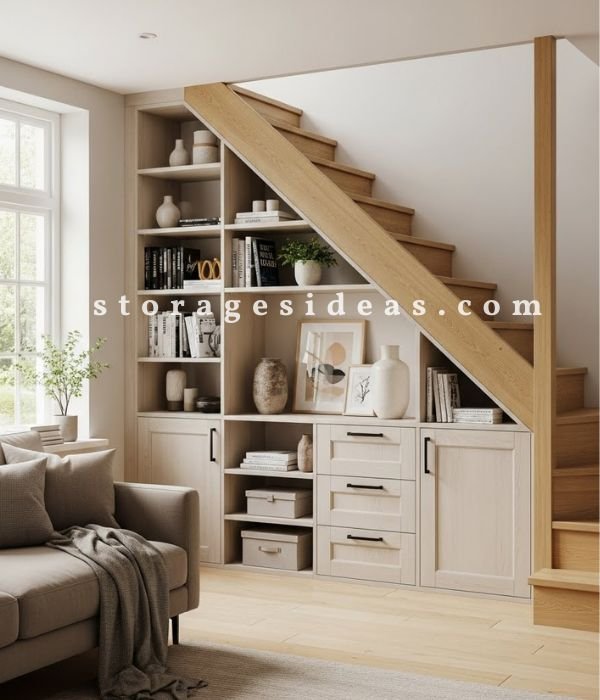
One of the biggest decisions is whether under-stairs storage should be open, closed, or mixed.
Open storage works well when the contents are visually calm. Books, styled shelves, or curated decor can make the space feel intentional, similar to how thoughtfully planned creative book storage ideas work in shared spaces.
Closed storage offers flexibility. Cabinets and drawers hide mess, protect items, and reduce visual noise. In living rooms, closed storage often feels more forgiving, especially for everyday items.
The best solutions usually combine both. Open elements soften the space, while closed sections handle the mess.
Built-In Under-Stairs Storage That Feels Seamless
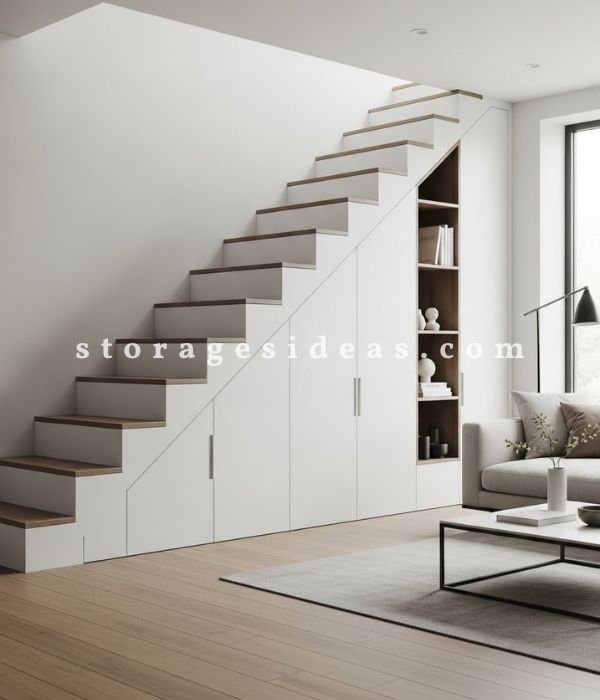
Built-in storage is often the cleanest solution for under-stairs areas.
Custom cabinetry can follow the stair line perfectly, eliminating awkward gaps. Flush panels help the storage blend into the wall rather than stand out as furniture.
Handle-less designs or slim pulls work especially well here. They keep the storage visually quiet and prevent the area from feeling busy.
Handle-less designs or slim pulls keep the area visually quiet. These ideas overlap with many DIY living room storage cabinet ideas, where the goal is to make storage feel architectural instead of added on.
Built-ins shine when you want under-stairs storage to disappear into the room rather than become a focal point.
Using Under-Stairs Space for Everyday Living Room Needs
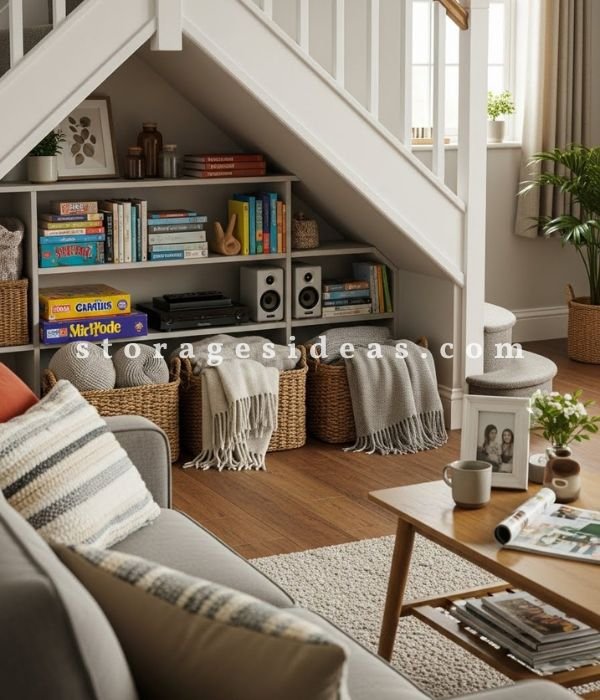
The most successful under-stairs storage supports how the living room is actually used.
Books, media accessories, board games, throws, and small electronics all belong here when planned properly. Storing items used daily makes the space feel purposeful rather than forced.
I avoid using under-stairs storage for rarely used items unless access is easy. If something requires effort to reach, it will eventually end up elsewhere.
When storage aligns with daily habits, it stays organized longer.
Under-Stairs Shelving That Doesn’t Look Awkward
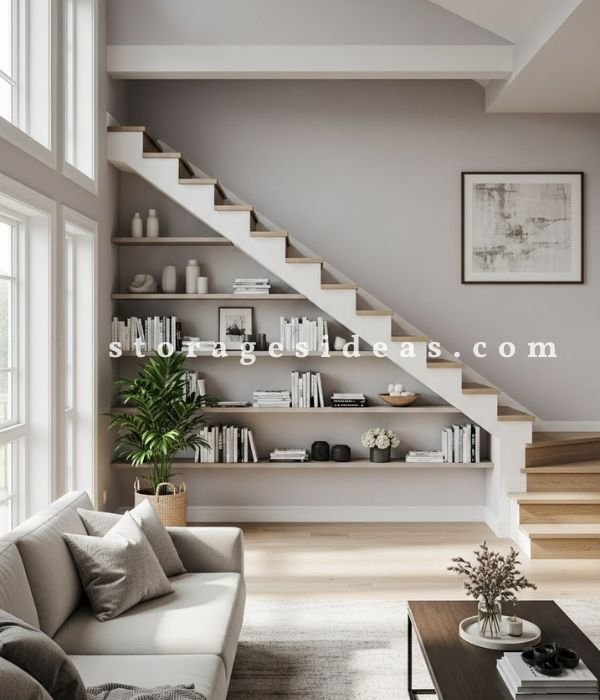
Shelving under stairs can work beautifully or look completely wrong.
The key is respecting the stair angle. Shelves that follow the slope visually feel intentional. Shelves that ignore it often feel hacked together.
Depth matters too. Shallow shelves prevent overcrowding and keep the space feeling light. Deep shelves invite clutter, especially in tight areas.
I also leave breathing room. Fully packing under-stairs shelves makes the space feel heavy, no matter how neat it is.
Under-Stairs Cabinets for Hidden Living Room Storage
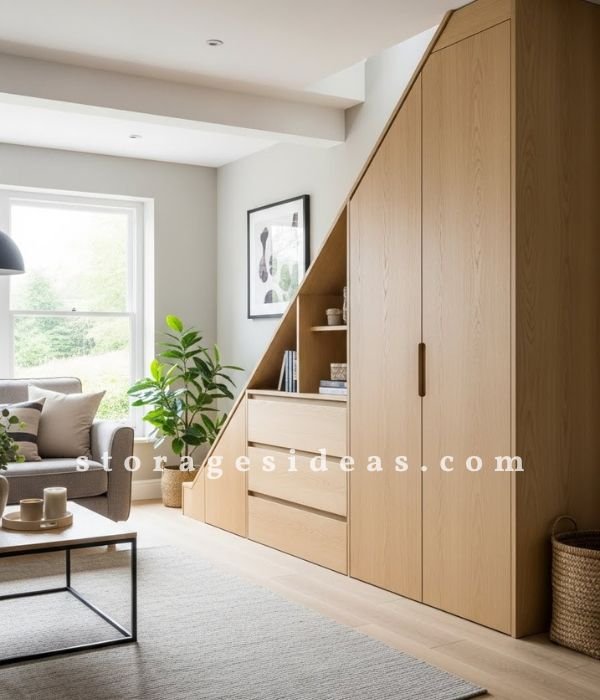
Cabinet storage under stairs offers the most flexibility.
Drawer systems work especially well in low-height areas. Pull-out drawers make deep corners accessible without crawling. Door-based cabinets work better in taller sections.
I assign storage depth intentionally. Shallow cabinets handle small items. Deeper cabinets store bulkier things without overwhelming the room.
Hidden storage works best when it’s planned around use, not capacity.
Turning Under-Stairs Space Into a Display Feature
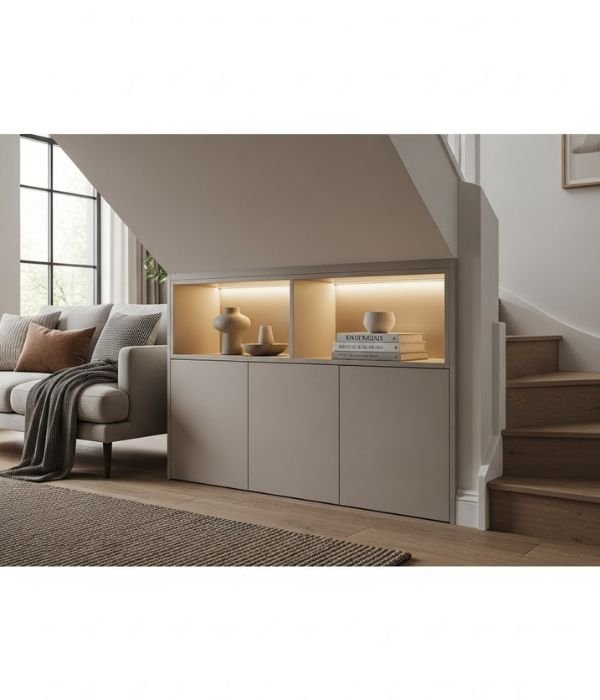
Under-stairs storage doesn’t have to disappear completely.
When done carefully, it can become a subtle feature. Display shelves mixed with closed storage create balance. Soft lighting highlights decor without drawing too much attention.
The mistake I avoid is over-displaying. Too many objects turn the area into visual clutter fast. One or two focal pieces per section are enough.
Display should enhance the living room, not compete with it.
Living Room Under-Stairs Storage for Small Homes
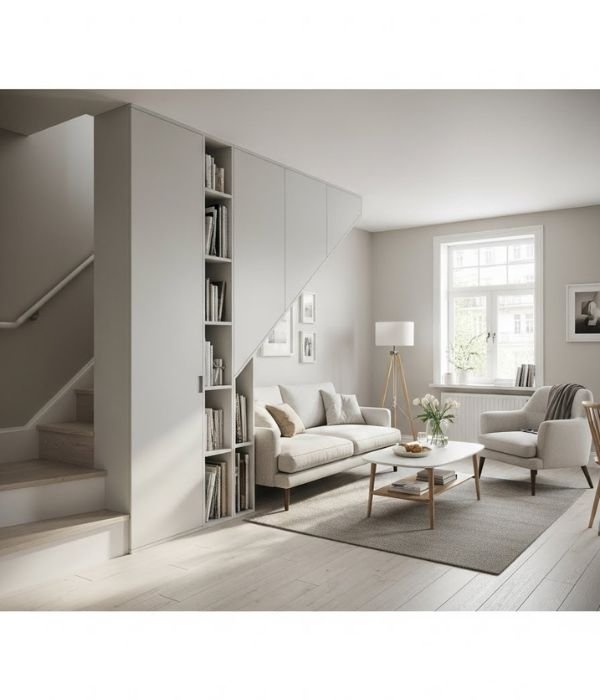
In small homes, under-stairs storage carries more responsibility.
Slim, vertical solutions work better than bulky cabinets. Using the full height near the tallest section maximizes storage without spreading into the room.
Light finishes help. Dark, heavy cabinetry can make small spaces feel boxed in. Reflective or lighter surfaces keep the area visually open.
In very tight layouts, less storage done well beats more storage done poorly.
Multi-Functional Under-Stairs Storage Ideas
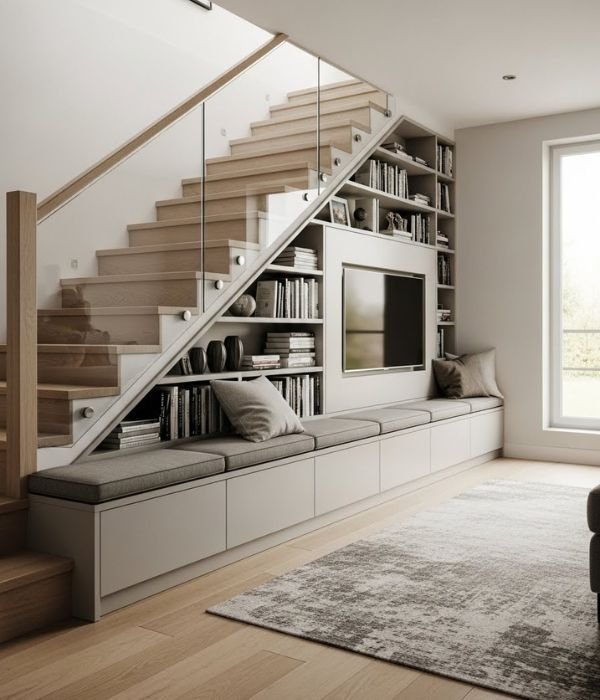
Multi-use designs can be powerful when done thoughtfully.
Storage combined with seating works well in family spaces. Media storage under stairs can replace bulky consoles. Reading nooks with hidden storage turn awkward corners into usable zones.
The key is restraint. When under-stairs storage tries to do too many things, it loses clarity. Each function should feel intentional, not forced.
DIY-Friendly Under-Stairs Storage Ideas
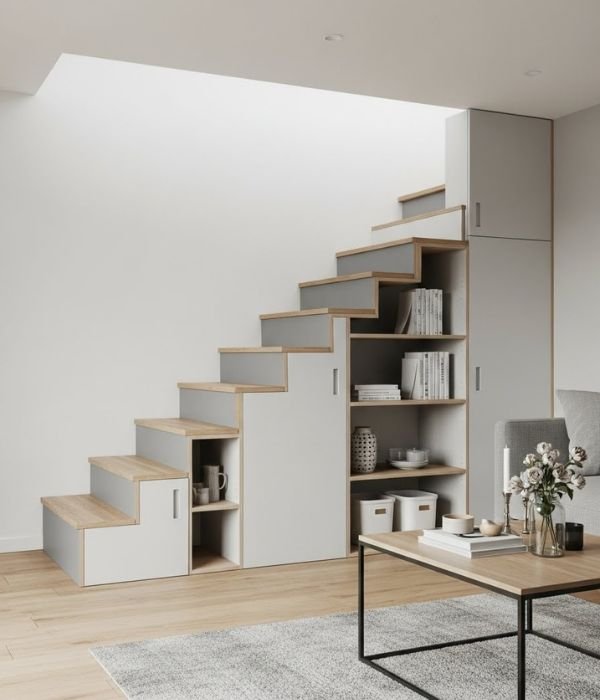
Not all under-stairs storage needs to be custom-built.
Modular cabinets, shelving systems, and furniture can work when sized carefully. DIY solutions are best for simpler layouts and lighter storage needs.
I avoid unsafe structural modifications. Under-stairs space supports weight differently, and cutting corners here causes problems later.
Budget-friendly doesn’t mean careless. Planning still matters.
Styling Under-Stairs Storage So It Feels Intentional
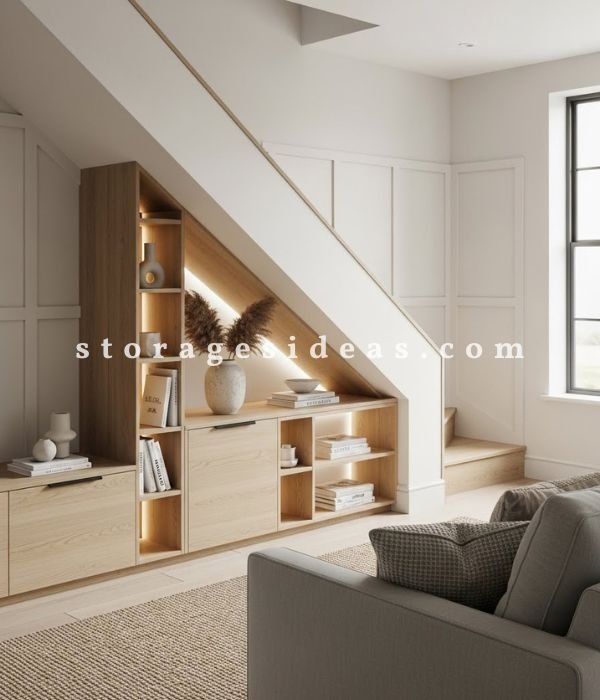
Styling under-stairs storage is about blending, not showcasing.
Matching finishes with nearby furniture helps the storage feel integrated. Repeating materials already present in the room keeps the space cohesive.
I avoid bold contrasts in under-stairs areas. Because the shape is already complex, calm styling works best.
If the storage quietly supports the room, it’s doing its job.
Common Under-Stairs Storage Mistakes in Living Rooms
The biggest mistake is treating the under-stairs space as a dumping zone.
Another issue is blocking movement or sightlines. Storage should never interrupt how people move through the room.
Ignoring lighting is also common. Poorly lit under-stairs storage feels heavy and unfinished.
Finally, overfilling the space ruins even the best designs. Under-stairs storage needs breathing room to stay functional.
Maintenance and Long-Term Use Considerations
Good under-stairs storage adapts over time.
I plan for cleaning access and easy reorganization. Storage needs change, and rigid systems age poorly.
I also revisit the space periodically. Removing unused items keeps the area from reverting to clutter.
Storage that evolves stays useful.
FAQs
Is under-stairs storage practical in a living room?
Yes, when planned around daily use and access.
Should under-stairs storage be open or closed?
A mix usually works best for balance.
Can under-stairs storage increase home value?
Thoughtful built-ins often do.
What shouldn’t be stored under the stairs?
Items that need frequent access if clearance is low.
How do I keep under-stairs storage from looking cluttered?
Limit contents and avoid filling every inch.
Final Thoughts
Under-stairs space doesn’t need to be perfect to be useful. It just needs intention. When treated as part of the living room rather than leftover space, it becomes one of the most valuable storage zones in the home.
The best living room under stairs storage ideas don’t try to force solutions. They respect shape, flow, and daily habits. When storage works with the room instead of against it, the awkward space disappears, and what’s left feels natural, balanced, and genuinely useful.
