
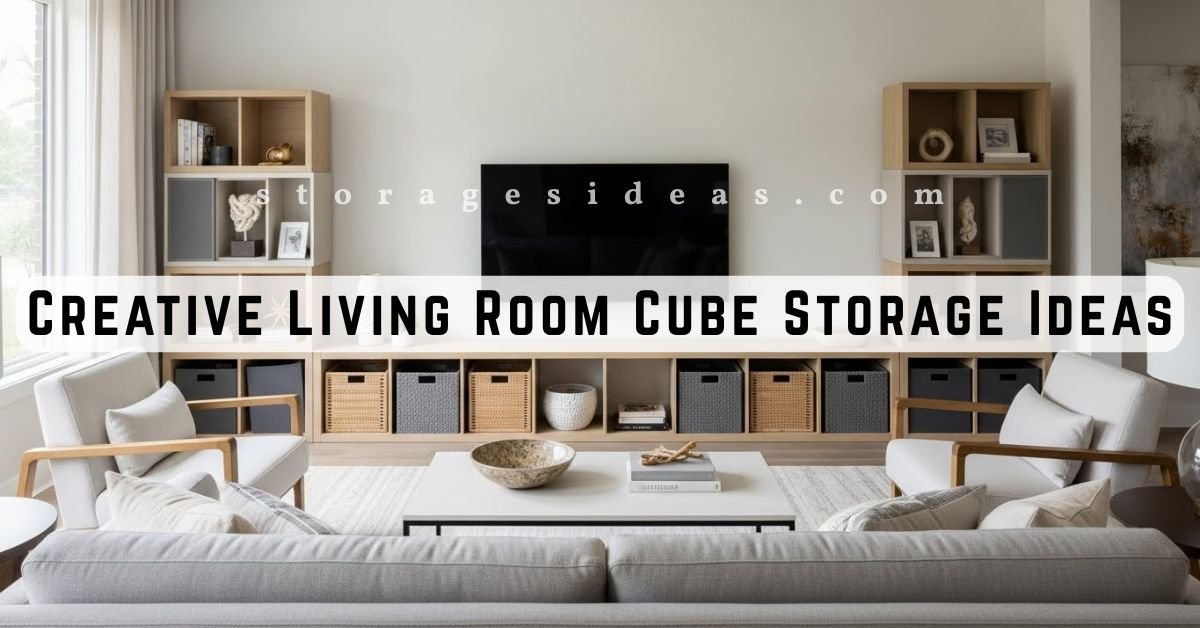
Cube storage always looks simple in theory. Clean squares. Easy organization. Endless flexibility. That’s what drew me to it at first. I thought a cube unit would instantly solve my living room clutter. And for a short while, it did. But as time passed, the cubes started filling themselves. Every square became a dumping zone. The unit looked heavier. The room felt tighter.
What I learned is that cube storage isn’t a shortcut. It’s a tool. When used intentionally, it can bring order without overwhelming a living room. When used without rules, it becomes a visual wall of stuff.
This guide breaks down the living room cube storage ideas I now rely on to keep things functional, balanced, and calm. These aren’t Pinterest-perfect setups. They’re real systems that work long after the room is lived in.
What Makes Cube Storage Different From Other Living Room Storage
Cube storage behaves differently from shelves, cabinets, or baskets.
Cubes impose structure. Their grid layout forces visual repetition, which can be calming or suffocating depending on how it’s handled. Unlike open shelves, cubes demand attention because each square is clearly defined. When every cube is full, the unit feels heavy, no matter how neat it is.
Another difference is flexibility. Cube systems invite mixing storage types, open cubes, bins, boxes, and decor. That flexibility is powerful, but it also invites overuse. Without restraint, cube storage quickly turns into a checkerboard of clutter.
Understanding this difference changed how I approached cubes entirely.
How I Decide If Cube Storage Belongs in a Living Room
Before adding cube storage, I looked at the room honestly.
Room size matters first. Cube units take up visual space quickly, especially floor-standing ones. In small or already busy living rooms, cubes need to stay low or be wall-mounted to avoid closing off the space.
Many of the same principles apply when choosing pieces from broader small living room furniture and decor hacks that prioritize openness over volume.
Next, I think about function. Cube storage works best when it replaces something else, like a media unit, sideboard, or console. When cubes are added in addition to existing furniture, they often feel unnecessary.
Finally, I ask whether the room needs structure or softness. Cube storage adds structure. If a living room already feels rigid, cubes can push it too far.
Open Cube Storage: When It Works and When It Fails
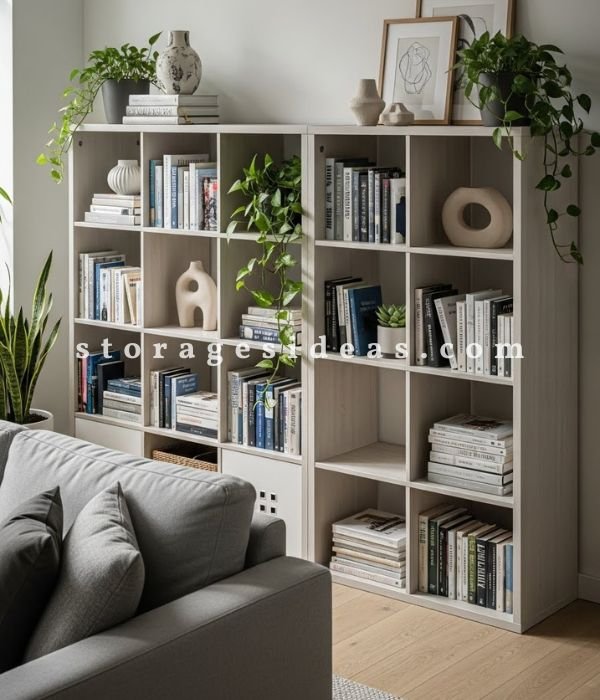
Open cubes are the most common and the easiest to misuse.
They work best when not every cube is filled. Empty cubes are not wasted space. They’re visual breathing room. I treat open cubes like design elements as much as storage.
Open cubes are ideal for items that look good on display: books, plants, a few baskets, and sculptural decor. They fail when they’re used to store loose clutter with no containment.
One rule I follow is never placing more than one loose category in an open cube. If something can’t stand neatly on its own, it needs a container or a closed cube.
Using Bins, Boxes, and Inserts Inside Cubes
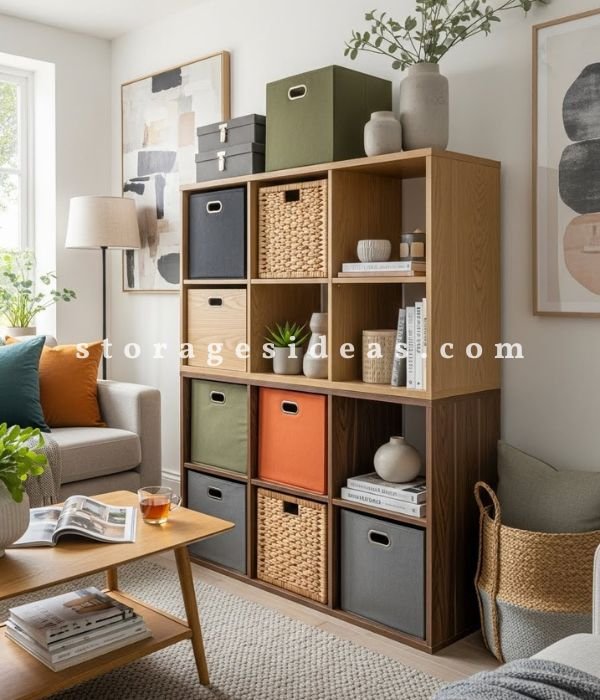
The moment I started using inserts intentionally, cube storage finally worked.
Fabric bins soften the grid and work well for flexible items. Woven baskets add texture but need size discipline to avoid bulging. Solid boxes bring visual calm and work best for items I don’t access daily.
The key is variation. I mix open cubes with contained cubes. A unit where every cube has the same bin looks uniform but boring. A unit with no containers looks chaotic.
I also avoid filling every cube with storage. At least one or two cubes stay decor-only to prevent overload.
Cube Storage as Living Room Furniture
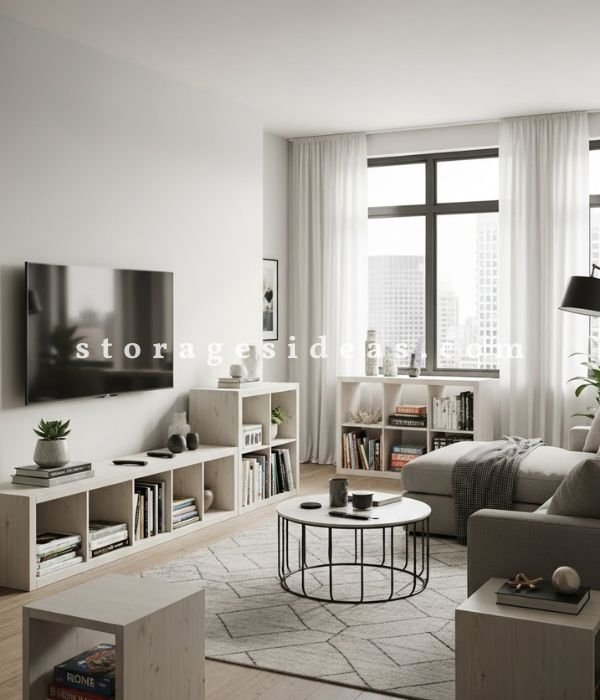
Cube units don’t have to look like storage furniture.
Low cube units make excellent media consoles when styled carefully. I keep the top surface minimal and avoid stacking decor too high. Tall cube units can work as room dividers, but only when they allow light through and aren’t fully packed.
Some cube units double as bench seating when placed under windows or along walls. In those cases, structural stability matters more than storage capacity.
Many of these setups overlap with DIY living room storage cabinet ideas, where function and furniture design blend.
When cube storage replaces furniture instead of adding to it, the room feels intentional.
Wall-Mounted Cube Storage for a Lighter Look
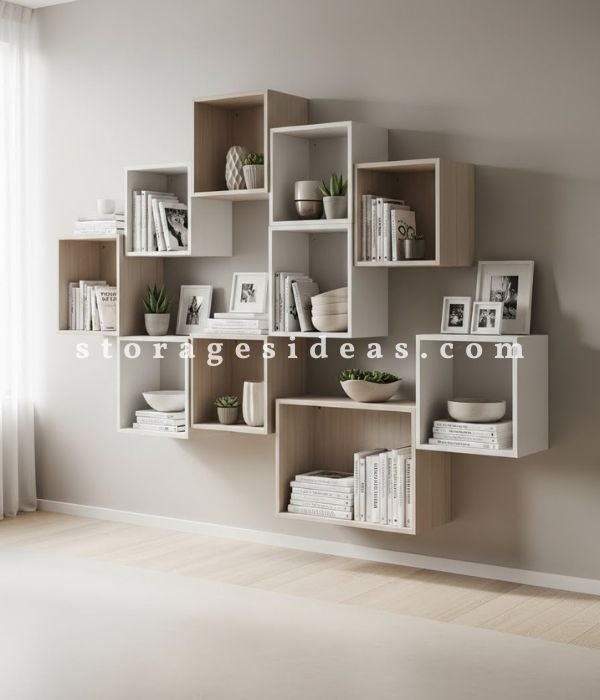
Wall-mounted cubes changed my perception of cube storage.
Floating cubes feel less bulky because they don’t anchor visually to the floor. Staggered layouts work better than perfect grids in living rooms because they feel more relaxed.
I keep wall cubes lightly filled. Heavy items go low or stay in floor units. Wall-mounted cubes shine when used for decor, books, or lightweight storage.
These setups work especially well alongside other wall storage ideas for the living room that prioritize vertical space without crowding the floor.
Placement matters too. Cubes mounted too high feel disconnected. Cubes mounted too low feel awkward. Aligning them with furniture lines keeps things grounded.
Living Room Cube Storage Ideas for Small Spaces
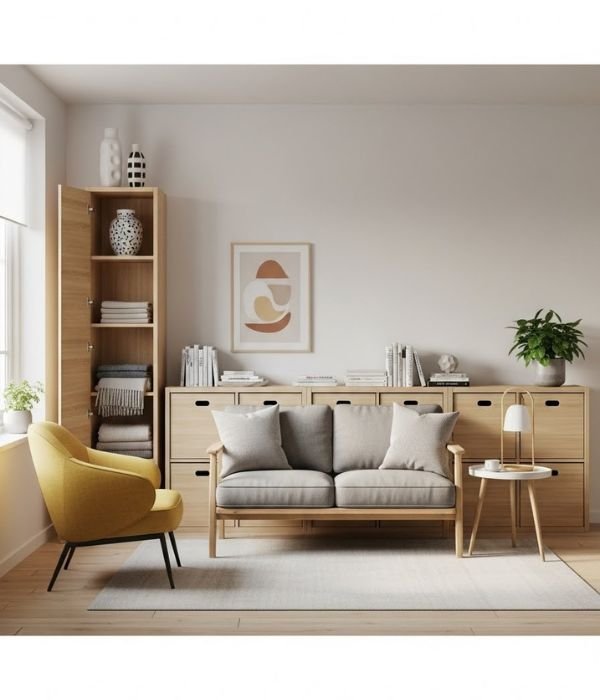
Small living rooms demand restraint with cube storage.
I choose horizontal cube units over tall ones to avoid vertical bulk. Low-profile cubes work well under TVs or along blank walls. Vertical cube towers only work when they’re narrow and partially open.
Corners can handle cube storage, but only when cubes don’t block circulation. Corner units should feel tucked in, not imposed.
In very tight rooms, cube storage sometimes isn’t the answer at all. Recognizing when not to use cubes is just as important as styling them.
Styling Cube Storage So It Looks Intentional
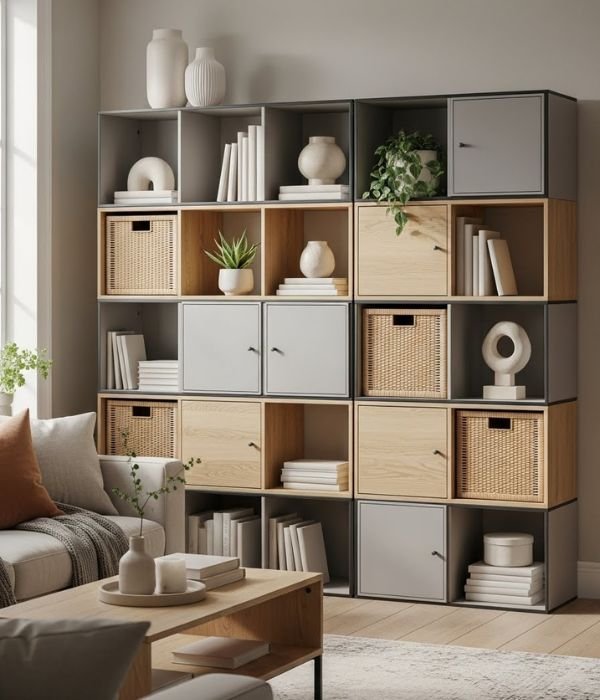
Styling cube storage is less about decorating and more about editing.
I treat each cube as a visual frame, not a box that needs to be filled. That mindset alone changes everything. When I stop asking, “What can I put here?” and start asking, “What actually belongs here?” the unit instantly feels calmer.
I usually work with a limited palette. Repeating one or two materials across cubes—wood tones, neutral bins, or matte finishes creates cohesion. When every cube introduces a new color or texture, the grid becomes noisy.
Balance matters too. I avoid styling every cube the same way. One cube might hold stacked books, another a single object, another nothing at all. That variation keeps the eye moving without feeling chaotic.
Most importantly, I resist the urge to over-style. Cube storage doesn’t need to perform. When styling feels quiet and slightly restrained, the unit blends into the room instead of demanding attention.
Where Cube Storage Actually Works Best in a Living Room
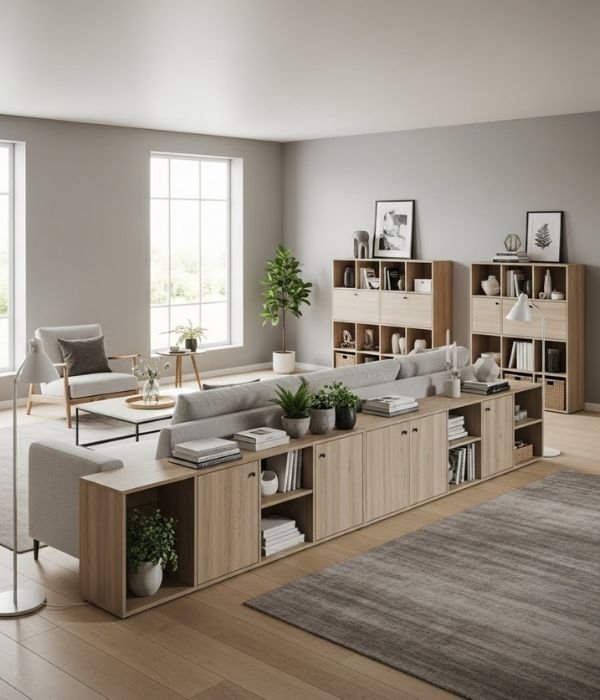
Cube storage works best where furniture already makes sense.
Along blank walls, cubes feel anchored and intentional. Beneath TVs, low cube units naturally replace bulky media consoles. Behind sofas, cube storage can act as a subtle divider while still serving a purpose.
I’ve also found cube storage works well in transitional zones, areas that aren’t quite seating but still part of the living room. These spots often need structure, and cubes provide that without requiring custom furniture.
Where cubes struggle is in tight circulation paths or next to soft seating, where visual softness is key. Placing cubes too close to walkways creates friction. Placing them beside plush furniture can make the space feel unbalanced.
When cube storage supports the room’s layout instead of interrupting it, it feels like it belongs.
Keeping Cube Storage From Looking Like a Storage Unit
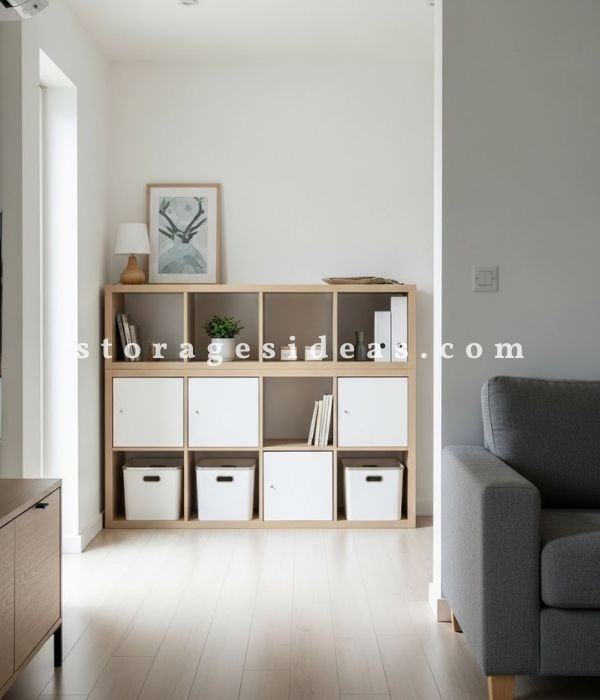
The fastest way cube storage starts to resemble a storage room is when it’s treated like one.
I prevent that by editing regularly. Living room cubes should never hold “someday” items. If something hasn’t been used or enjoyed in months, it doesn’t deserve a prime cube spot.
I also rotate content seasonally. A cube unit that never changes starts to feel stale and heavy. Small shifts, removing a bin, swapping decor, and clearing a cube entirely reset the visual weight.
Another key rule I follow is stopping before the unit is full. Storage capacity isn’t a goal. Comfort is. When cubes are filled to the edge, the room loses breathing space even if everything is neatly organized.
Many of the decisions I make around cube placement follow basic home organization fundamentals, especially the idea that storage should support daily habits instead of fighting them.
A cube unit that looks slightly underfilled almost always feels better than one packed to capacity.
Common Cube Storage Mistakes I See All the Time
The most common mistake is assuming every cube needs to serve a purpose. Empty cubes are not wasted space; they’re visual relief.
Another mistake is using cube storage as a dumping ground for mixed items. When one cube holds cables, papers, and random objects together, the entire unit feels disorganized, even if the other cubes look fine.
I also see people stacking cube units too high without considering scale. Tall cube towers can dominate a living room quickly, especially in homes with standard ceiling heights.
Finally, choosing cubes that are too deep causes problems long-term. Deep cubes encourage overfilling and make rooms feel tighter than they actually are. Shallow units often provide enough storage without the bulk.
FAQs
Are cube storage units still a good choice for living rooms?
Yes, when used intentionally. They work best when they replace furniture rather than add to it.
Is it better to leave some cubes empty?
Absolutely. Empty cubes create visual balance and prevent the unit from feeling overwhelming.
Should cube storage be symmetrical?
Not always. Perfect symmetry can feel rigid. Slight variation often feels more relaxed in living rooms.
Can cube storage work in a minimalist living room?
Yes, but only with restraint. Fewer cubes, more space, and a limited color palette are essential.
How often should cube storage be edited or reorganized?
A quick check every couple of months is usually enough. Living room storage should evolve with how the space is used.
Final Thoughts
Cube storage isn’t a magic solution. It’s a framework. When used thoughtfully, it brings order without overwhelming a space. The best living room cube storage ideas work because they balance structure with restraint.
When cubes support how a living room is actually used, rather than trying to store everything, they fade into the background and let the room breathe. And that’s when storage stops being the focus and starts doing its job quietly.
