
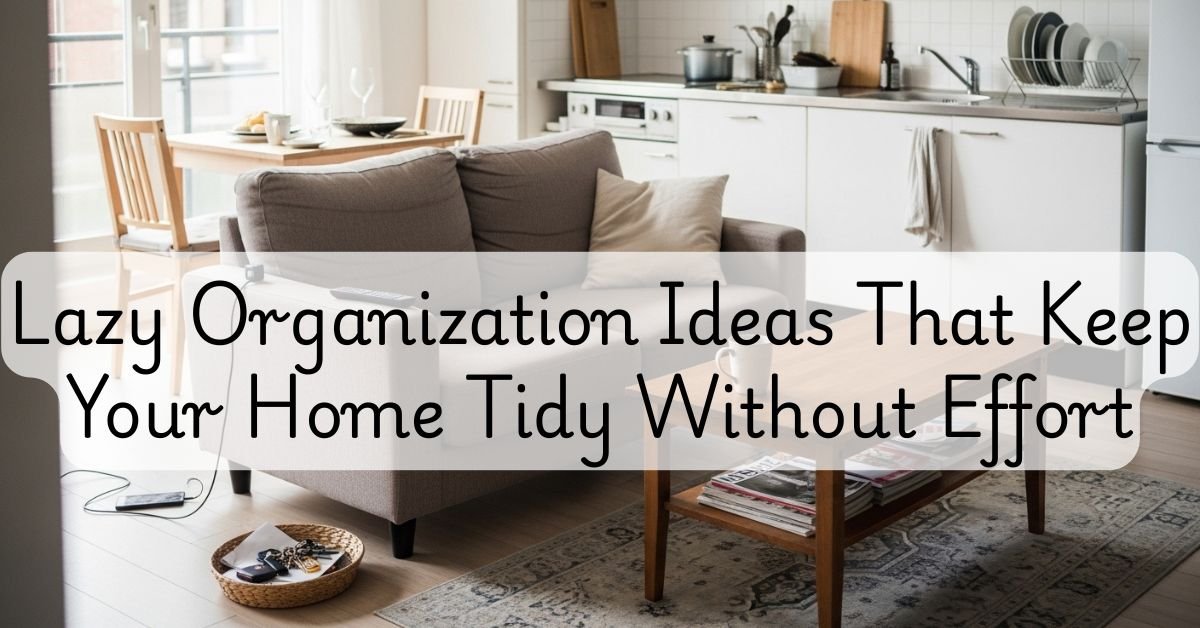
I used to think staying organized meant trying harder.
Putting things back immediately. Keeping everything in its place. Resetting the room at the end of the day.
It worked for a while.
But the moment I got busy or tired, everything started slipping. Small things first. Then the larger ones. And before I realized it, the space felt messy again.
It wasn’t because I didn’t know how to organize.
It was because the system depended on effort.
And effort isn’t something that stays consistent every day.
That’s when I started paying attention to what I actually do when I’m not trying to be organized.
Where I drop things.
Where I hesitate.
What I ignore completely.
Once I adjusted a few things using simple lazy organization ideas, the space didn’t become perfect.
But it stopped falling apart so easily.
I noticed a similar shift while trying a few small apartment storage tricks, where small changes made everyday spaces easier to manage without adding more.
Why Most Organization Systems Don’t Last
What I noticed is that most systems are built for your best days.
Days when you have time. Energy. Focus.
But real life doesn’t stay there.
There are days when you walk in and drop everything without thinking. Days when you don’t want to adjust, sort, or put things back properly.
And that’s where most systems break.
Not because they’re wrong but because they expect too much.
Too many steps. Too much precision. Too much consistency.
I later realized this connects to how everyday clutter builds up over time, and this explanation of how clutter forms in living spaces helped me understand why small inefficiencies tend to repeat if the system isn’t simple.
What stood out to me is that if a system needs effort to survive, it eventually stops working.
That’s when I started looking for something different.
Not a better organization.
Just easier.
12 Lazy Organization Ideas That Actually Work
1. Keeping Things Where I Naturally Drop Them
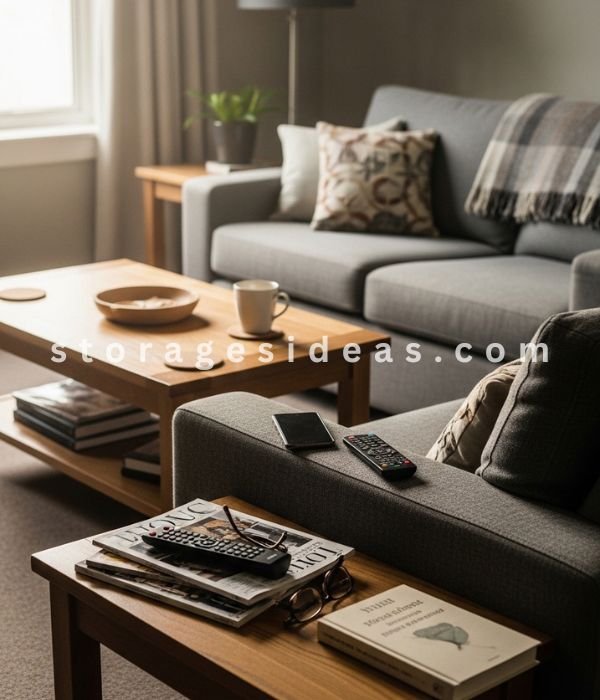
For a long time, I treated certain spots as “wrong.”
If I dropped something there, I would move it to where it was supposed to go.
But I started noticing how often I was repeating the same movement.
I would pick something up, place it properly, and then the next day, without thinking, I would bring it back to that same original spot.
At first, it felt like an inconsistency.
But after seeing it happen again and again, it didn’t feel random anymore.
It felt like a pattern.
That spot wasn’t accidental. It was part of how I moved through the space.
What changed was letting that spot exist instead of correcting it.
Once I allowed it to function as a real place for things to land, items stopped spreading into other areas.
They didn’t need to be “fixed” anymore.
They just needed a place that matched what I was already doing.
I saw a similar pattern in these behind sofa storage ideas, where natural drop areas become more useful when they’re supported instead of corrected.
2. Reducing the Number of Steps to Put Things Away
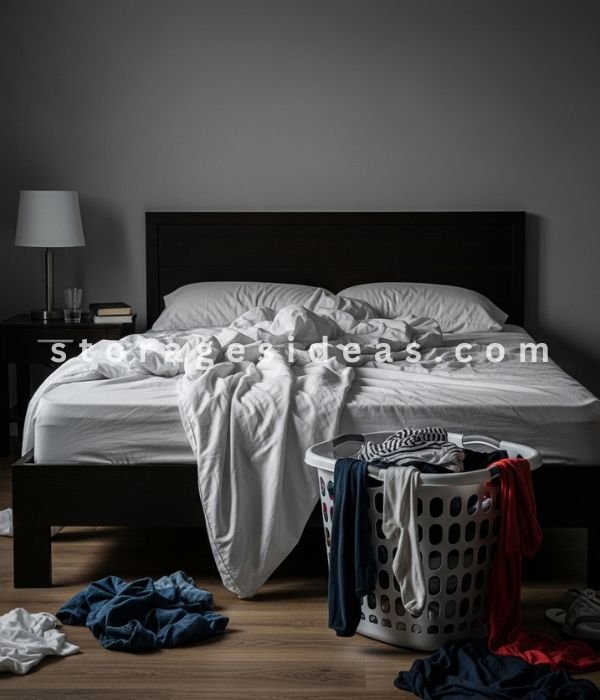
Some setups looked simple, but they weren’t.
There was always one extra step.
Open something. Adjust something. Close it again.
Individually, those steps didn’t feel like much.
But I started noticing when I skipped them.
Usually, when I was in a hurry. Or distracted. Or just not paying attention.
That’s when things didn’t go back properly.
They stayed nearby instead.
What stood out to me is that it wasn’t about effort; it was about interruption.
Every extra step created a small pause.
And that pause made it easier to leave things halfway.
What changed was removing that interruption.
Once putting something away became a single, quick movement, I stopped avoiding it.
And without realizing it, things started returning to their place more consistently.
3. Using Open Storage for Everyday Items
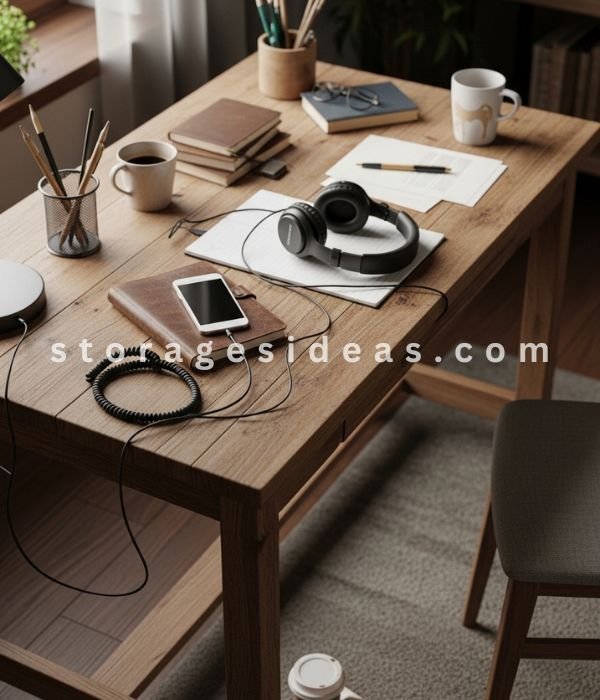
I used to prefer everything hidden.
It made the space look cleaner, more controlled.
But over time, I started noticing how often I interacted with those hidden spaces.
Opening, taking something out, closing again.
It became part of the routine.
Not difficult but repetitive.
And in certain moments, I would skip it.
Leave something out instead of putting it back properly.
That’s when I realized that visibility wasn’t the problem.
Friction was.
What changed was letting a few everyday items stay out in the open.
Not everything, just the ones I reached for constantly.
This didn’t make the space feel cluttered.
If anything, it made it feel easier to use.
Because instead of interacting with storage, I was interacting directly with the item.
4. Keeping Storage Slightly Bigger Than Needed
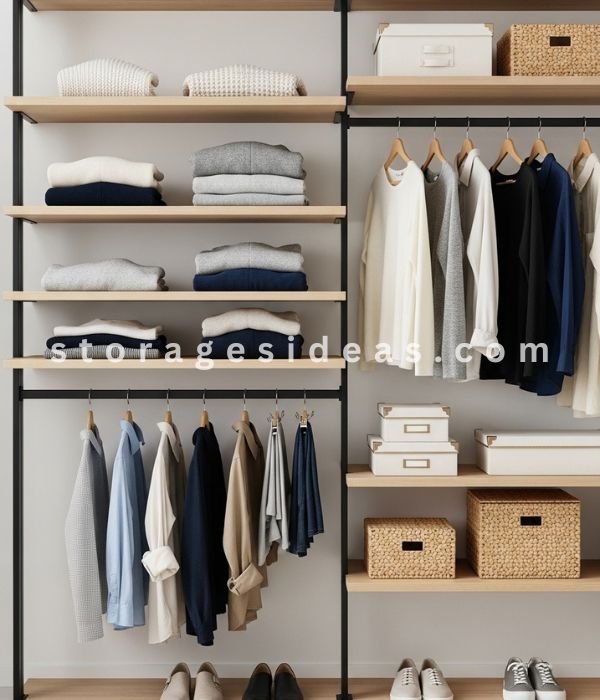
At first, I liked things to fit exactly.
Everything had its place, and everything filled that place neatly.
But that only worked when nothing changed.
As soon as something new came in or something shifted slightly, the space felt tight.
And once it felt tight, I had to adjust everything again.
That adjustment didn’t always happen right away.
Which meant things started sitting outside their place.
What helped was allowing a little extra space.
Not enough to feel empty, but enough to absorb small changes.
That flexibility made the system feel less fragile.
It didn’t break the moment something changed.
And because of that, it held together longer without needing attention.
5. Creating “Dump Zones” That Still Feel Controlled
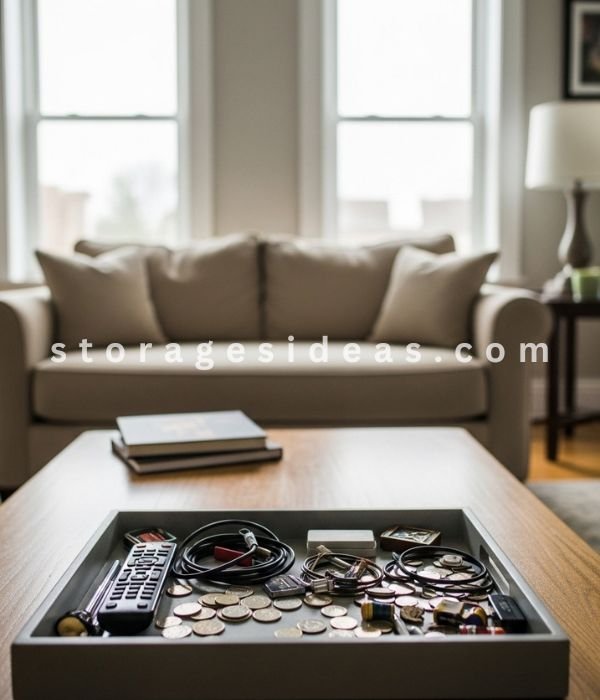
There are always moments when I don’t want to organize anything.
I just want to put something down and move on.
Before, that created scattered clutter.
Items would land in different spots depending on where I was standing, and over time, those spots would expand.
It didn’t feel messy right away.
But it slowly took over surfaces.
What helped was giving that behavior a place.
A specific area where things could land without spreading outward.
It wasn’t about keeping it perfectly clean.
It was about keeping it contained.
Once everything had a place to “pause,” it stopped turning into something larger.
And that made it easier to reset later without much effort.
This approach works a lot like these basket storage ideas for the living room, where keeping things contained matters more than keeping them perfectly arranged.
6. Storing Items Based on Use, Not Category
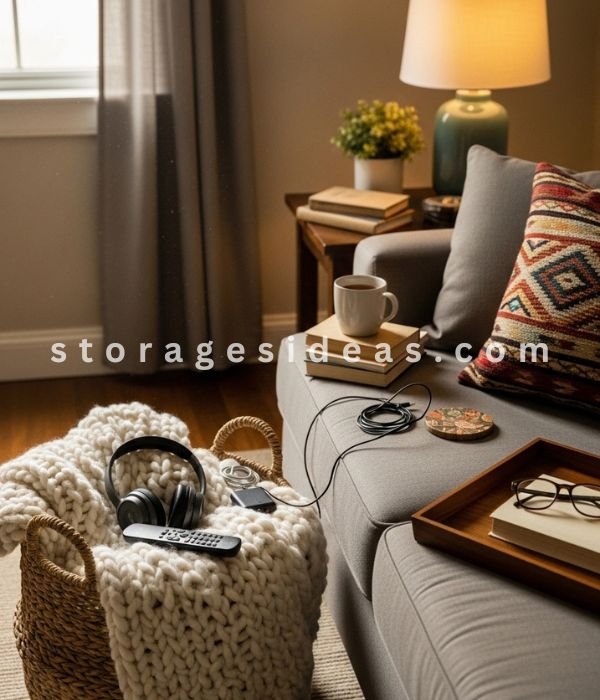
Grouping things by type felt organized.
But it didn’t always feel practical.
I started noticing how often I reached for one item, then had to move somewhere else for another.
Even though they were part of the same task.
That small back-and-forth didn’t seem like much at first.
But it showed up repeatedly.
And in those moments, things didn’t always go back where they started.
They stayed where I last used them.
What changed was paying attention to how items were used together.
Not what they were, but when and where I needed them.
Once I grouped things based on that, movement reduced.
And when movement was reduced, so were the chances of things being left out of place.
I noticed the same effect while exploring small living room storage ideas, where reducing movement helps spaces stay organized longer.
7. Keeping Frequently Used Items Within Easy Reach
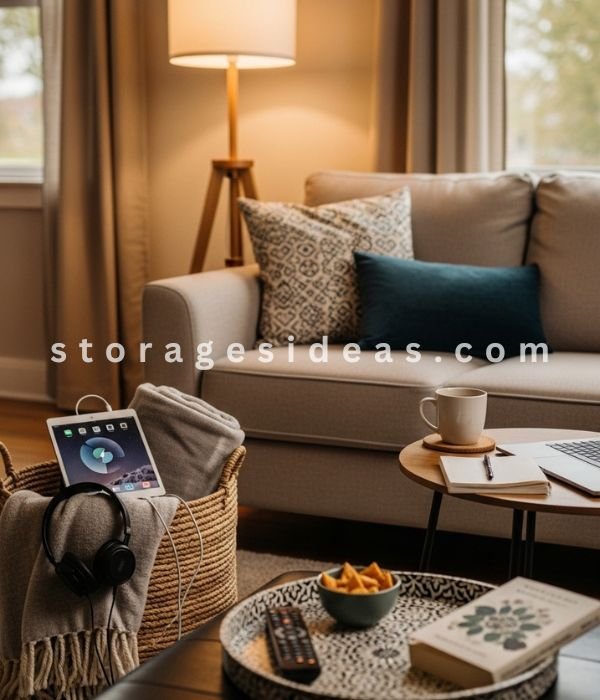
There’s a certain range in any space that feels easier to use than the rest.
I didn’t think much about it at first.
But I started noticing small moments in which my hand naturally moved toward certain areas without effort, and how other spots required just a little adjustment.
That adjustment wasn’t obvious.
Just a slight reach. A small bend. Nothing difficult.
But it showed up again and again.
And over time, I noticed a pattern.
The items that were slightly harder to reach were also the ones I didn’t return properly.
They would end up nearby instead.
What changed was paying attention to that natural reach zone.
The items I used most often moved into that space.
Everything else shifted just slightly out of it.
The setup didn’t change much visually.
But the way I interacted with it became easier, and that made things stay in place more consistently.
8. Letting Some Areas Stay Imperfect on Purpose
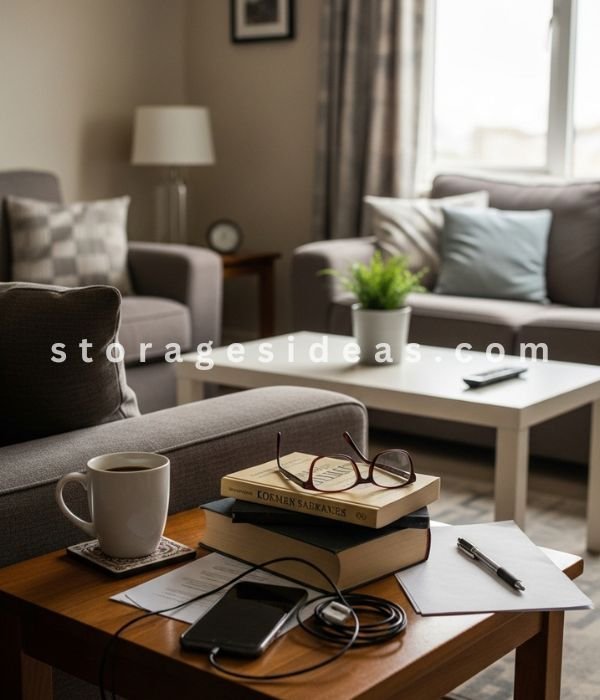
At one point, I tried to keep everything looking right.
Clear surfaces. Clean lines. Nothing out of place.
It worked for a short time.
But it required constant attention.
Every small shift had to be corrected. Every item had to go back exactly where it belonged.
And over time, that started to feel heavy.
What I noticed is that the more precise the system was, the less likely it was to last.
What changed was allowing certain areas to stay slightly imperfect.
Not messy but not strict either.
A place where things didn’t have to be adjusted immediately.
That reduced pressure.
And once everything didn’t need to be perfect all the time, the rest of the space became easier to maintain.
9. Using Fewer Storage Locations Per Item
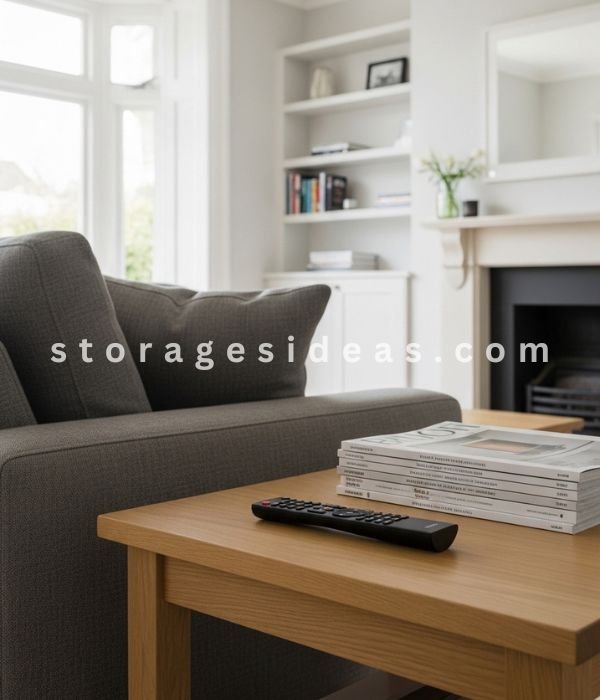
Some items had too many possible places.
Not because I planned it that way, but because over time, they ended up fitting in more than one spot.
A remote could be on the table, the shelf, or the sofa. A charger could live in different drawers.
At first, that flexibility felt convenient.
But I started noticing how often I paused to think about where something might be.
That pause didn’t feel like a problem on its own.
But it happened often.
What changed was quietly reducing those options.
Each item had one main place, and maybe one backup, but nothing beyond that.
Once that became consistent, I stopped checking multiple spots.
Things became easier to find not because they were perfectly organized, but because there were fewer places for them to go.
10. Avoiding Over-Organizing Small Items
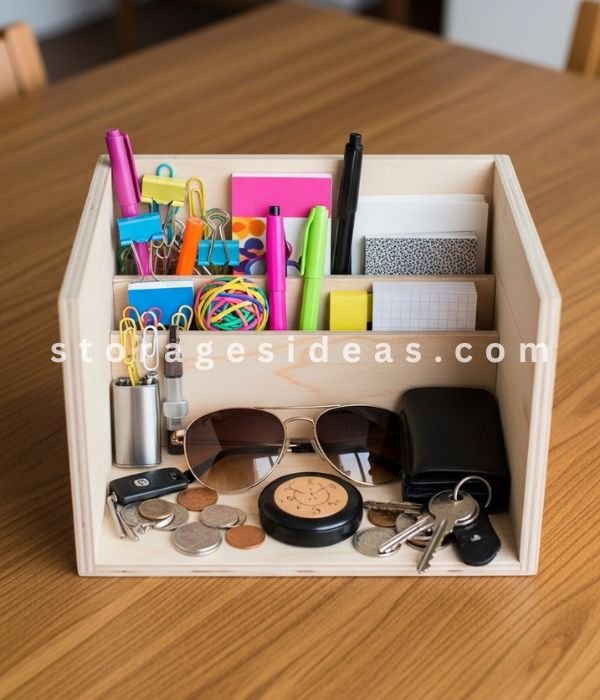
Small items are easy to over-manage.
Dividers, compartments, labels, they can all look very neat at first.
But I started noticing how quickly those systems became difficult to maintain.
Each item had to go back in a very specific way.
And if it didn’t, the system started to break.
That precision required attention.
And over time, that attention faded.
What worked better was stepping back from that level of detail.
Instead of organizing everything perfectly, I gave small items just enough structure to stay together.
One container. One space.
Not perfect, but functional.
And once the system didn’t require precision, it lasted much longer.
11. Making Resetting Fast and Effortless
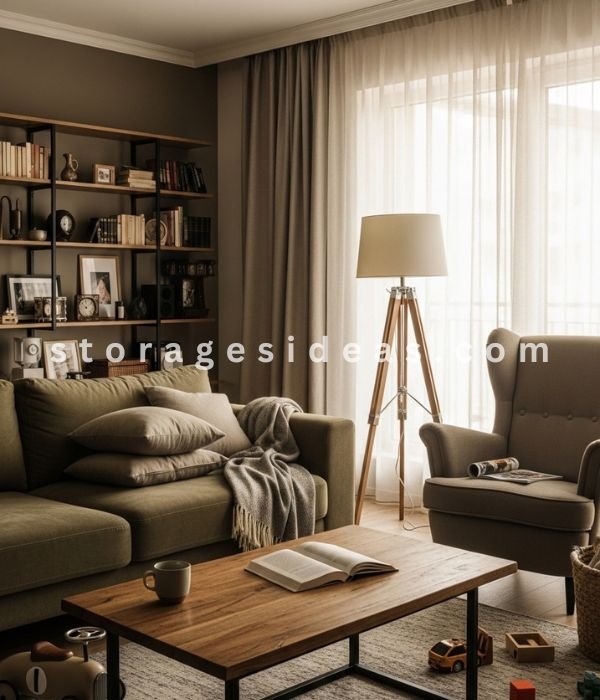
I used to think resetting a space meant doing everything at once.
Putting everything back. Adjusting every detail.
But that made it feel like something I had to set time aside for.
Which meant I didn’t do it as often.
What I started noticing is that small resets worked better.
A quick adjustment here. Moving a few things back into place.
Nothing complete, just enough to keep things from building up.
Because when something takes only a moment, it’s easier to do without thinking about it.
And those small moments add up.
Over time, the space stays more consistent—not because it’s perfectly maintained, but because it never gets too far off.
12. Building Systems That Work Even When I’m Tired
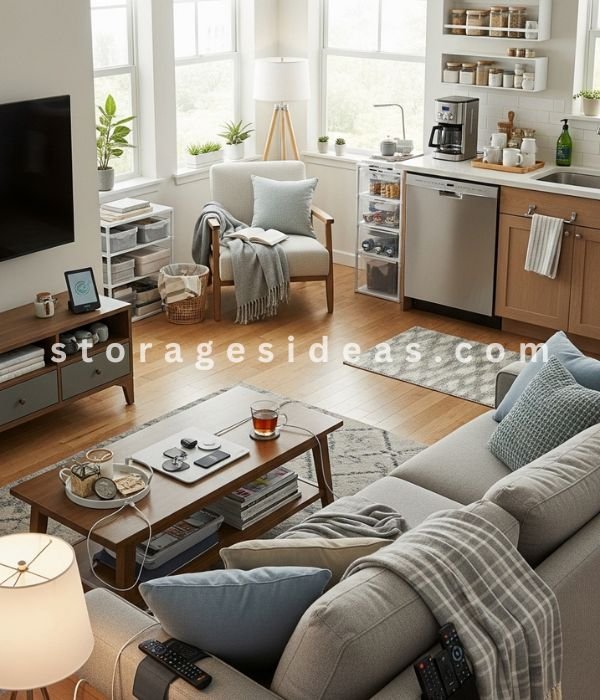
This became the point where everything started to make sense.
I realized that most systems worked when I had energy.
But they didn’t hold up when I didn’t.
And that’s when they mattered most.
So I started looking at everything differently.
Not how it worked on a good day—but how it worked on a tired one.
Would I still use it?
Would I still follow it without thinking?
If the answer was no, something needed to change.
What worked best were the setups that didn’t ask much.
No extra steps. No precise placement. No effort to maintain.
And once the system matched that level of ease, it started holding together on its own.
What Actually Makes Organisation Feel Effortless
What stood out to me after all these changes is that nothing really felt dramatic at first.
The space didn’t suddenly look different. It didn’t feel like I had “fixed” anything in a noticeable way.
But something shifted in how I moved through it.
I wasn’t pausing as often.
I wasn’t adjusting things just to reach something else.
I wasn’t thinking about where things might be.
Those small moments started to disappear.
And that’s when I realized it wasn’t about organizing better.
It was about removing the small points where things slowed down.
Once items stayed closer to where I needed them, and once they stopped shifting between different spots, the space became more predictable.
And that predictability made everything feel easier.
Not because I was doing more.
But because I had less to think about.
Final Thoughts
Looking back, I wasn’t really trying to become more organized.
I was trying to make everyday moments feel less interrupted.
At first, I thought that meant better storage or more structured systems.
But most of the change came from paying attention to what was already happening.
Where things naturally landed.
Where I paused without realizing it.
Where small decisions started to repeat.
Once I adjusted to those patterns, everything became quieter.
Things didn’t stop moving completely.
But they stopped drifting in ways that made the space harder to use.
They stayed closer to where I expected them to be.
And that made everything feel smoother without requiring much effort.
That’s where these lazy organization ideas made the biggest difference.
They didn’t create a perfect system.
They created one that continues to work even when I’m not paying attention. That shift felt similar to what I saw in these small space transformation ideas, where small structural changes made a lasting difference.
