
One summer morning, I opened my trash can and froze. Writhing, squirming, white maggots stared back at me. Dozens of them. It was horrifying, and honestly, a little humiliating—how could I let this happen in my own home?
After a mix of panic, gagging, and research, I learned everything I needed to fix it—and more importantly, how to prevent it from ever happening again. Here’s my complete guide so you won’t have to waste time searching multiple articles. Every question you could have about maggots in your trash can is answered here.
In This Guide, I’ll Cover
ToggleWhy Maggots Showed Up in My Bin
Maggots are fly larvae. Flies are attracted to food waste, especially meat, dairy, and sugary scraps. A single female fly can lay hundreds of eggs, and in warm weather, those eggs hatch in just 24 hours.
My mistake? I left food scraps slightly open, didn’t double-bag, and sometimes skipped rinsing containers. This combination created a perfect breeding ground.
Other contributing factors include:
- Temperature: Maggots develop faster in heat. Summer bins are high-risk.
- Moisture: Wet waste accelerates egg hatching.
- Bin damage: Cracks or unsealed lids allow flies easy access.
Lesson: maggots aren’t magic—they’re opportunistic. Control the environment, and you control them.
Step 1: Immediate Action—Kill the Live Maggots
Killing live maggots quickly is crucial to prevent them from spreading or pupating into flies. I took multiple approaches at once to be thorough:
- Boiling water: I poured it slowly but thoroughly over every corner. It instantly kills the maggots, but beware of splashes—they can burn skin. Wearing gloves and long sleeves is essential.
- Bleach solution: I mixed 1 part bleach with 9 parts water in a spray bottle and doused any remaining larvae. This disinfects while killing the maggots.
- Vinegar or lemon juice: A natural alternative for sensitive areas or if you want less chemical use. Spraying undiluted vinegar or lemon juice can help kill small larvae while deodorizing.
- Salt, garden lime, or diatomaceous earth: These dry out maggots, causing rapid dehydration. I sprinkled a thick layer at the bottom before adding waste to prevent the survivors from lingering.
- Commercial insect sprays: Reserved for extreme infestations; always follow label instructions.
- Physical removal: Sometimes, I used a disposable scoop to remove clusters and flush them down the toilet.
Extra tips:
- Work systematically, from the top layer to the bottom.
- Use disposable tools or disinfect afterward.
- Avoid splashing water onto floors or surfaces that might be contaminated.
- For extremely stubborn infestations, combine methods (e.g., boiling water + salt) to ensure total kill.
- Wear protective gear: gloves, long sleeves, and even eye protection if spraying solutions.
This multi-pronged approach ensures almost no maggot survives and sets the stage for deep cleaning.
Step 2: Clean-Up Routine
Once the larvae are gone, the bin itself needs a deep clean. Here’s what I do:
- Empty completely: Remove all trash and rinse the bin thoroughly. Check corners, hinges, and the lid for stuck debris.
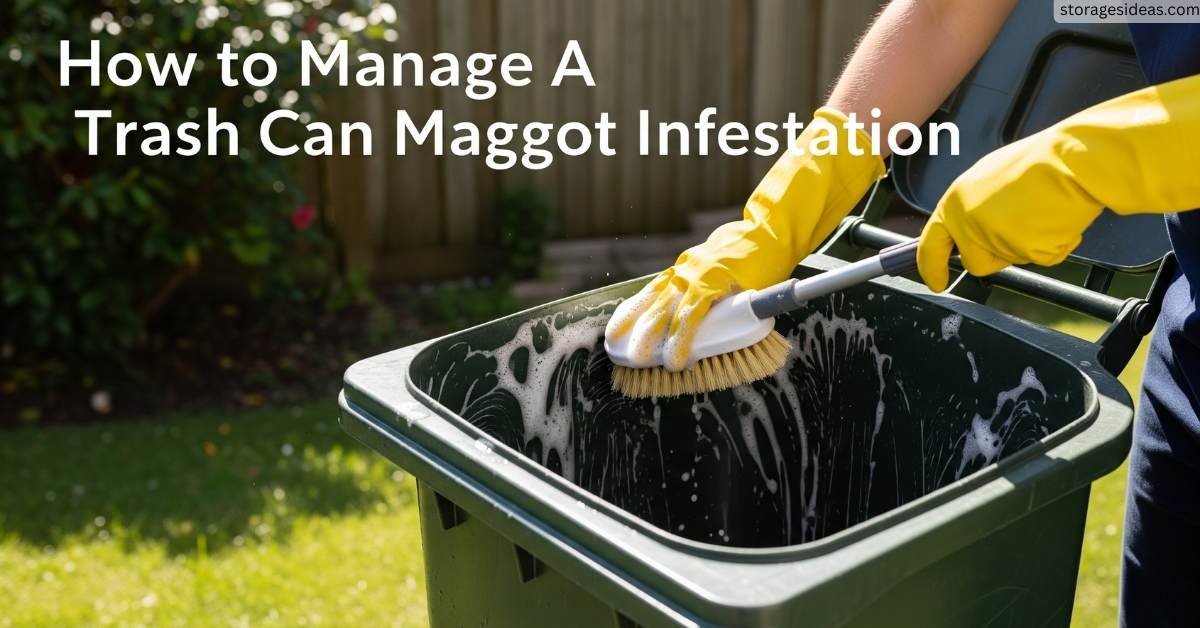
- Scrubbing: Use a long-handled brush and a mix of dish soap + warm water. Corners, lids, and rims get extra attention. Sprinkle baking soda for stubborn grime. Pay special attention to sticky residues from fruit juices or leftover meat.
- Disinfecting: Apply bleach-water (1:9) or vinegar solution. Let it sit 10–15 minutes. This kills bacteria and any eggs I may have missed.
- Rinsing: Flush with clean water until all soap and disinfectant residues are gone. Avoid splashing onto other surfaces.
- Drying: Air dry or wipe completely. Moisture attracts maggots and encourages bacterial growth.
- Optional deodorizing: Sprinkle coffee grounds, baking soda, or a mix of both at the bottom to absorb odors and prevent flies.
- Inspect the lid and seams: Even a small crack can allow flies inside. Clean with a small brush or cotton swab.
- Post-cleaning layer: Optional newspaper or compostable liner to make future cleaning easier and prevent moisture buildup.
Pro tips:
- For indoor bins, line with newspaper or liners.
- For outdoor bins, check after rain to ensure water hasn’t pooled in corners.
- Keep gloves and disposable scrubbers handy for quick future maintenance.
- Repeat cleaning if odor or small fly activity persists, even after initial cleanup.
A thorough clean after killing maggots prevents re-infestation and sets a foundation for prevention strategies.
Step 3: Smart Prevention Habits
Prevention is the real game-changer. Over the years, I developed habits that drastically reduced fly and maggot activity:
- Seal food tightly: I make it a rule to double-bag meat, fish, dairy, and other wet waste. Even soft fruit peels go into smaller ziplock bags.
- Separate wet and dry waste: Keeping moist scraps separate from dry trash slows down decomposition and reduces smell.
- Bin liners or newspaper layers: Adding absorbent layers at the bottom prevents residue buildup and moisture pooling, which maggots love.
- Clean containers before disposal: Rinsing leftover food containers and bottles reduces residue that attracts flies.
- Weekly rinse: Even a quick hose or water spray prevents small food particles from turning into an infestation.
- Monthly deep clean: A scrub with soap and disinfectant ensures bacteria or eggs don’t survive.
- Use fly-proof lids: For outdoor bins, I add a weight or a bungee cord. For indoor bins, ensure lids click tightly.
- Monitor for early fly activity: Tiny flies hovering around the bin are a warning. Addressing them early prevents eggs from hatching.
- Schedule waste pickup appropriately: I avoid letting food waste sit in the bin for more than 24–48 hours, especially in warm months.
- Sprinkle a thin layer of baking soda or salt at the bottom after cleaning—it absorbs moisture and deters early-stage eggs.
Step 4: DIY Hacks to Stay Ahead
I tested multiple hacks to keep maggots away without relying solely on chemicals:
- Vinegar-soaked bread slices: Place a slice near the bin lid. Flies avoid it, and it’s a simple natural repellent.
- Borax or baking soda at the bottom: This dries up moisture and kills stray larvae.
- Essential oils: Peppermint, eucalyptus, citronella, or clove oils sprayed inside the bin repel flies. I dilute 10–15 drops in water and spray weekly.
- Freezing small waste bags: If you cannot dispose of waste immediately, freezing it for a few hours kills any eggs or larvae.
- Layer dry material: Newspaper, shredded cardboard, or sawdust at the bottom absorbs moisture and reduces egg survival.
- DIY fly traps near the bin: A jar with sugar water and a few drops of dish soap attracts adult flies, keeping them away from your bin.
- Citrus peels or coffee grounds: Adding them to the bin reduces odor and fly interest naturally.
I found combining multiple methods—like liners + baking soda + essential oils—worked best for long-term prevention.
If you want to know more, you can check How To Kill Maggots.
Outdoor Bin Placement & Weather Issues
The environment around your bin can make or break prevention efforts:
- Sunlight: Direct sunlight accelerates decomposition and attracts flies. I place bins in shaded areas whenever possible.
- Rainwater: Keep lids tightly closed; even slight standing water becomes a breeding ground. Tilting bins or adding drainage holes prevents pooling.
- Elevation: Lifting bins slightly off the ground using bricks or a stand improves airflow and prevents small pests like ants or rodents.
- Wind: Strong gusts can scatter lids and trash. Secure the lid with weights, straps, or clips.
- Seasonal adjustments: In summer, bins need more frequent rinsing; in winter, freezing overnight may kill early-stage eggs.
- Bin proximity to house: Keep bins at least a few meters from doors and windows to prevent flies from entering living spaces.
Extra tip: Consider a small bin shelter or cover to reduce sun exposure, rain pooling, and accidental tipping.
How Often I Really Need to Deep-Clean
Consistency is more effective than occasional cleaning. Here’s my schedule:
- Weekly rinse: Removes loose debris, juice, and residue. Quick but highly effective.
- Monthly deep scrub: I scrub the entire bin with dish soap and disinfectant, paying attention to cracks, corners, and the lid.
- Seasonal inspections: Check for cracks, weak hinges, or rust (metal bins), which can allow flies inside.
- Adjust frequency for temperature:
- Summer: 2–3 times per week for hot or humid climates.
- Winter: Once every 2–3 weeks, unless food waste sits longer.
- Summer: 2–3 times per week for hot or humid climates.
- Signs for extra cleaning: Odor, small fly activity, or visible slime are all triggers for immediate attention.
Tip: Dry thoroughly after washing, as moisture is the main factor in attracting maggots.
Real Tips from Others—Keeping It Real
- Reddit users: Recommend sprinkling salt or borax at the bottom of bins weekly—prevents larvae.
- TikTok and blogs: Vinegar-soaked bread or essential oil sprays are popular but may not be enough alone.
- DIY liners: Reusable silicone liners are easy to clean and reduce residue sticking.
- Observation: Combining multiple prevention techniques is far more effective than relying on one method.
- Community advice: Always check bin lids and cracks after storms, as wet surfaces attract flies.
Extra tip: Sharing your routine with neighbors helps prevent a neighborhood-wide fly problem, especially for outdoor bins.
What to Avoid (Mistakes I Made at First)
- Leaving food scraps loose: Flies can smell food from meters away.
- Skipping lids: Small gaps invite flies immediately.
- Delaying cleaning: What seems small can grow into a full infestation in a week.
- Ignoring bin damage: Cracks, dents, or worn liners allow flies to hide and lay eggs.
- Over-relying on chemicals: Sprays kill adults but won’t prevent eggs unless combined with cleaning.
- Incorrect placement: Full sun or standing water increases risk.
FAQs About Trash Can Maggot Infestations
Q: Why do maggots return even after cleaning?
A: Residual food particles, moisture, or cracks in the bin allow flies to lay eggs. Regular, thorough cleaning prevents this.
Q: Can freezing kill maggots?
A: Yes, but it’s practical only for small, bagged waste. For large bins, boiling water or disinfecting is better.
Q: Are natural cleaners effective?
A: Vinegar, lemon juice, essential oils, and baking soda work well for prevention but should be combined with cleaning and sealing waste.
Q: How do I know if my bin is safe?
A: Absence of flies, odor, slime, or visible eggs means the bin is under control.
Q: Seasonal tips?
A: Summer: frequent cleaning and preventive layers; Winter: inspect occasionally for hidden eggs; adjust based on local climate.
Long-Term Strategies for Maggot-Free Bins
- Consistent Cleaning Schedule: Weekly rinse, monthly deep scrub, and seasonal inspections prevent buildup and eggs.
- Fly-Proof Lids & Proper Bin Placement: Tight lids, elevated bins, and shaded, dry locations reduce fly access.
- Layering & Absorbent Materials: Newspaper, cardboard, sawdust, or baking soda at the bottom absorbs moisture and slows maggot development.
- Use of Natural Repellents: Essential oils, citrus peels, coffee grounds, or vinegar to repel flies naturally.
- Commercial Enzyme Sprays or Waste Treatments: Break down organic residues; effective for high-traffic bins.
- Early Monitoring & Intervention: Tiny flies, sticky residue, or slimy surfaces trigger immediate action.
- Neighborhood & Household Coordination: Shared bins require consistent upkeep to prevent cross-contamination.
- Preventive Waste Handling: Double-bag wet waste, freeze it if pickup is delayed, and avoid leaving scraps overnight.
- Emergency Backup Tactics: Keep baking soda, vinegar, essential oils, gloves, and disinfectants handy.
- Long-Term Mindset: Combining cleaning, repellents, proper placement, and monitoring creates a robust, low-maintenance system.
Extra Tip: Maintain a small log or reminder on your phone for bin cleaning schedules, particularly in warmer months.
Final Thoughts—I’ve Won This Battle
After months of trial and error, I can open my trash can without flinching. The maggots are gone, and my bin smells… well, like a bin. The victory came from quick action, consistent cleaning, smart placement, and preventive habits.
Follow these steps, and you won’t just manage maggot infestations—you’ll prevent them. When you lift a clean, dry, maggot-free lid, you’ll feel like a household hero.
