
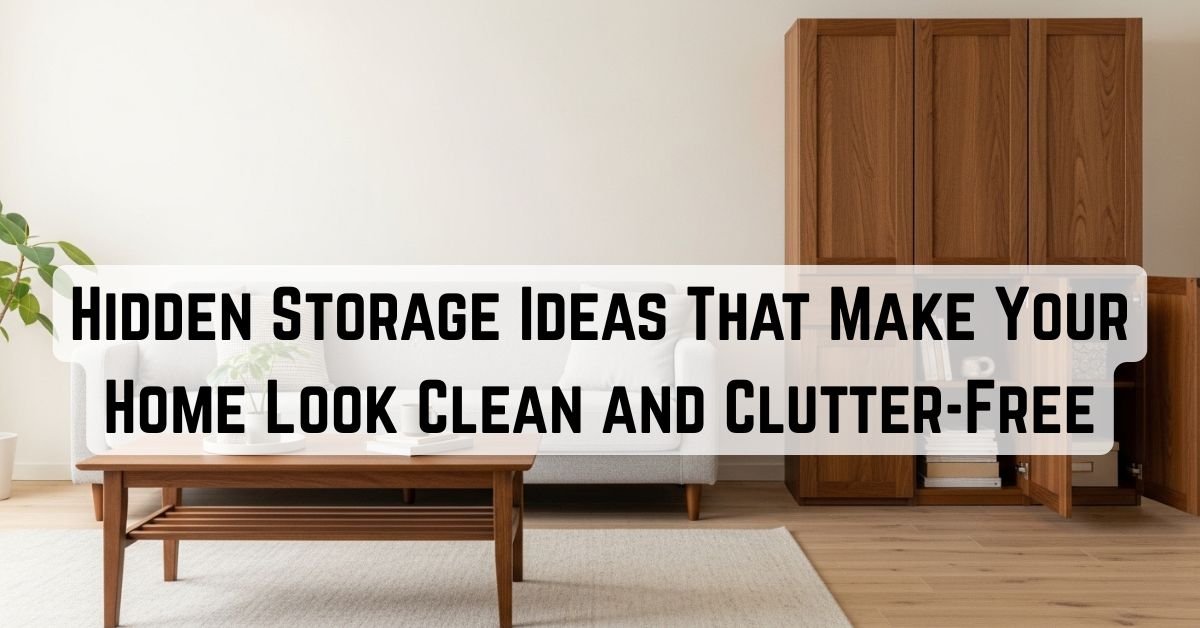
At one point, I thought clutter meant having too many things.
So I tried reducing.
Less decor, fewer items on surfaces, keeping only what felt necessary. It worked a little, but something still felt off. The space looked cleaner, but it didn’t feel calm.
That’s when I noticed something I hadn’t paid attention to before.
It wasn’t the number of things.
It was how visible everything was.
Even organized items, when constantly in sight, start to feel like noise. Surfaces get busy, corners feel heavier, and the room slowly loses that sense of ease.
Once I started looking at it that way, the solution shifted.
Instead of removing things, I focused on where they could stay without being seen. A few hidden storage ideas changed how the same space felt without actually changing how much I owned.
Why Visible Storage Quietly Makes Your Home Feel Messy
There’s a difference between clutter and visual clutter.
You can have everything arranged neatly and still feel like the room is crowded. That usually happens when too many things compete for attention at once.
Open shelves, exposed baskets, and stacked surfaces, they all add layers to what your eyes process.
And in smaller homes, that effect builds quickly.
What I started noticing is that the more surfaces I could “quiet down,” the more the room felt open, even when nothing was removed.
Hidden storage doesn’t reduce what you have.
It reduces what you see.
And that shift alone changes how the entire space feels.
12 Hidden Storage Ideas That Work Naturally in Everyday Spaces
1. Inside the Bed Base Where Space Is Already Available
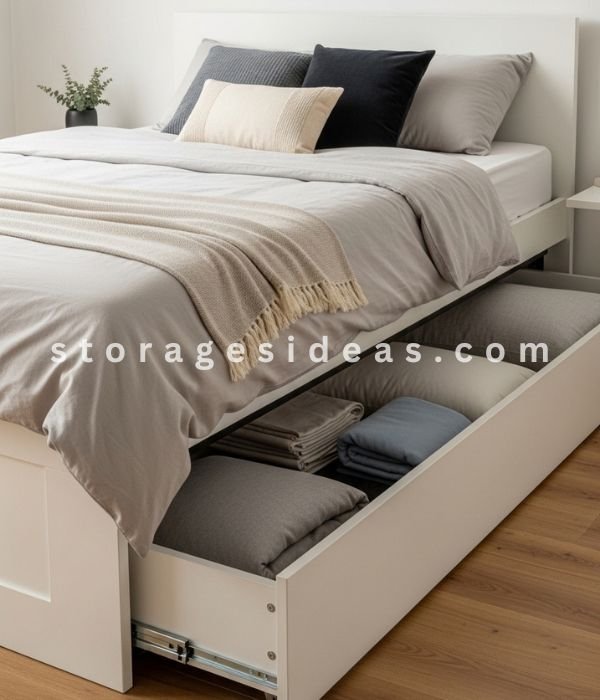
The space under the bed is usually treated as a backup zone.
Things go there when they don’t have a proper place: extra bedding, off-season items, things you don’t want to see but don’t want to deal with either. Because of that, it rarely feels organized, even when it’s being used.
What changed for me was treating that space as part of the room’s main storage, not separate from it.
Once it was divided properly and kept accessible from one side, not buried from all directions, it stopped feeling like a place to hide clutter and started working like a controlled system. The difference wasn’t about adding containers, but about reducing friction. I didn’t have to pull everything out just to reach one thing.
And because all of it stays completely out of sight, it removes one of the largest sources of visual weight in the room without changing anything above it.
I had seen a similar shift before while trying different under-bed storage ideas, where using that hidden depth properly made the entire room feel lighter without changing anything on the surface.
In smaller bedrooms, that kind of hidden depth often matters more than adding another visible unit.
2. Behind Living Room Cabinet Doors That Look Decorative
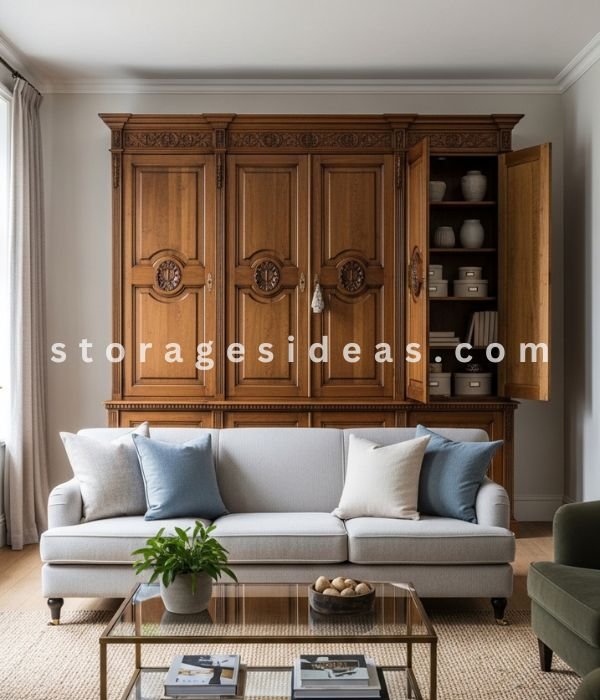
Cabinets in the living room often exist for balance, not function.
They look right in the layout, but inside, they tend to collect a mix of things that don’t really belong together. Over time, that turns into quite a clutter out of sight, but not actually organized.
What made the difference here wasn’t adding more storage, but deciding what deserved to stay visible and what didn’t.
When everyday items moved behind those doors, the room changed immediately. Surfaces cleared up, visual distractions dropped, and the layout started to feel more intentional.
But the real shift happened inside the cabinet.
Once items were grouped by use, things I reach for often were kept closer, and others were pushed slightly back; the space became easier to maintain. It wasn’t just hidden anymore. It was structured.
That balance between concealment and access is what keeps this kind of setup working over time.
3. Inside Window Seats or Benches That Double as Storage
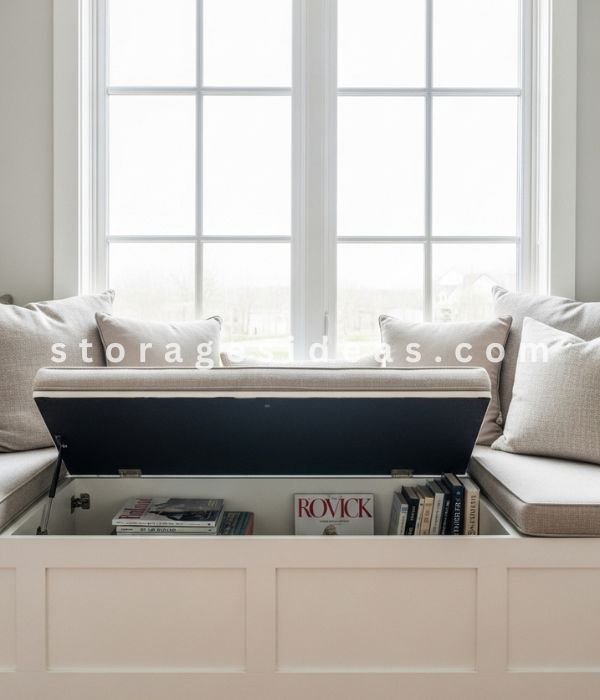
A window seat often feels like a comfort feature more than a functional one.
It’s where you sit for a moment, maybe look outside, but it rarely carries any real purpose beyond that.
Once I started using the space inside it, the role of that area changed completely.
Because the seating already defines the space, adding storage doesn’t compete with anything. It simply adds a second layer of function within the same footprint.
What stood out most was how naturally it blended in.
Nothing looked added. The room didn’t feel more crowded. But suddenly, there was a place to store items that didn’t need to stay visible.
And because it sits near a window, it often becomes a place you return to, making it one of the few storage areas that stays both hidden and regularly used.
4. Behind the Sofa Where Nothing Is Usually Used
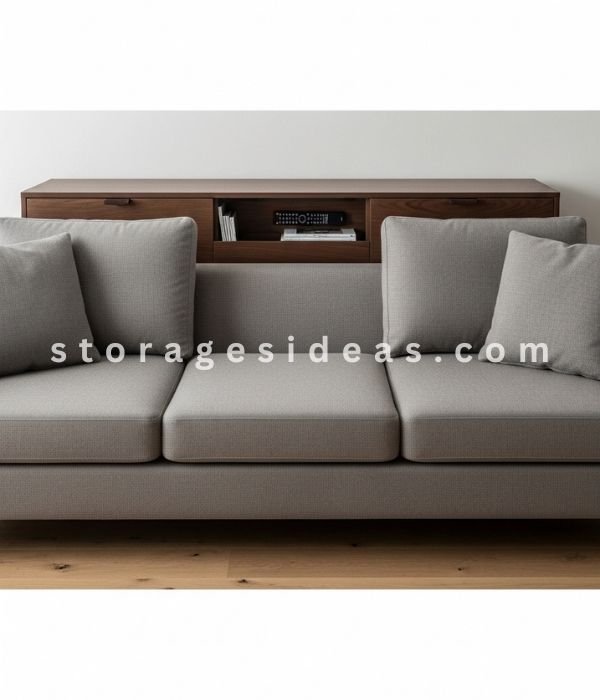
The space behind a sofa sits in an unusual position.
It’s part of the room, but not part of the activity. It’s visible from certain angles, but mostly ignored in daily use.
That’s what makes it effective for hidden storage.
When a slim surface is placed along that line, it doesn’t interrupt anything. It doesn’t affect how you sit, move, or use the room. From the front, the space remains clean and uninterrupted.
But behind it, there’s a layer of storage that quietly holds what would otherwise end up on visible surfaces.
What I noticed here is that this kind of placement doesn’t just hide items, it redistributes them.
Instead of spreading across tables and shelves, they stay contained in a space that doesn’t compete with the rest of the room.
This kind of placement becomes even clearer in setups like these behind sofa storage ideas, where space that usually gets ignored starts working quietly in the background.
5. Inside Coffee Tables That Already Sit at the Center
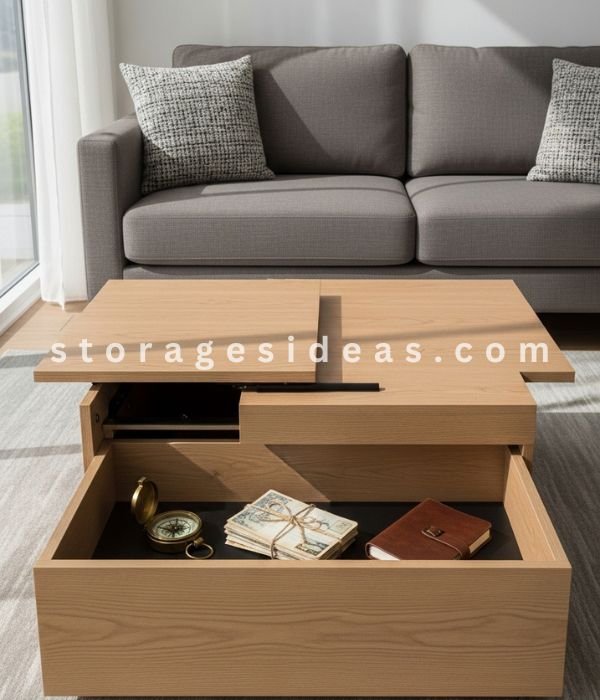
The center of a room tends to collect the most attention.
And because of that, anything placed there becomes part of the visual load almost immediately.
Coffee tables are especially prone to this. Even when organized, they gather items, remotes, books, and small objects that slowly build up over time.
Moving those items inside the table instead of on top of it changes how the entire room feels.
What stood out to me wasn’t just the cleaner surface, but the shift in focus. The room felt calmer because the central area was no longer competing for attention.
I noticed the same effect in a few table storage ideas for the living room, where clearing the center surface instantly changes how the space feels.
At the same time, nothing became harder to reach.
Everything stayed within the same area, just out of sight until needed. That balance accessible but invisible is what makes this one of the most effective hidden storage ideas for living spaces.
6. Under the Stairs Where Clutter Naturally Builds Up
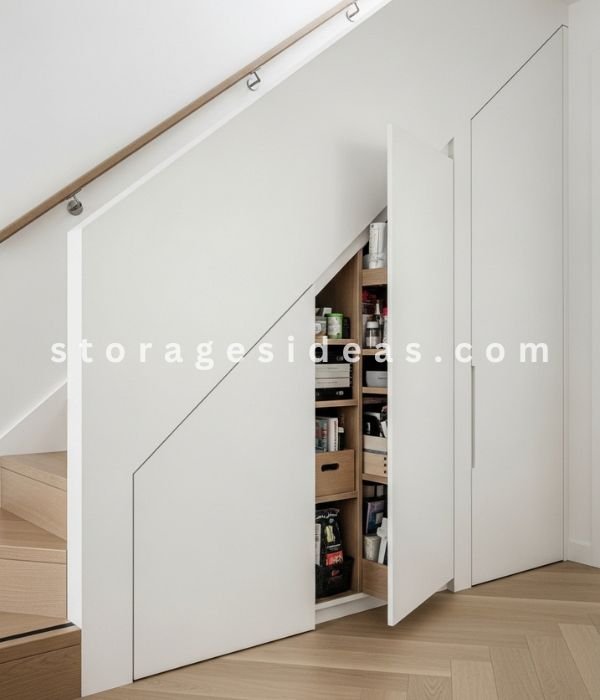
Under-stair areas tend to collect things without intention.
They become a place where items are stored temporarily, but that temporary use slowly becomes permanent. And because the space is slightly tucked away, it’s easy to ignore how disorganized it gets.
What changed here was treating the space as a defined zone instead of leftover storage.
Once everything inside had a specific place, the area stopped feeling like an overflow. It started to function like part of the home.
The shape of the space plays a role, too.
Because it’s partially enclosed, it can hold more without affecting how the rest of the room feels. But that only works when the inside is structured. Otherwise, it just hides clutter instead of solving it.
When used properly, this becomes one of the few areas where a large amount of storage can exist without adding any visible weight to the space.
7. Behind Wall Panels or False Walls That Add Depth
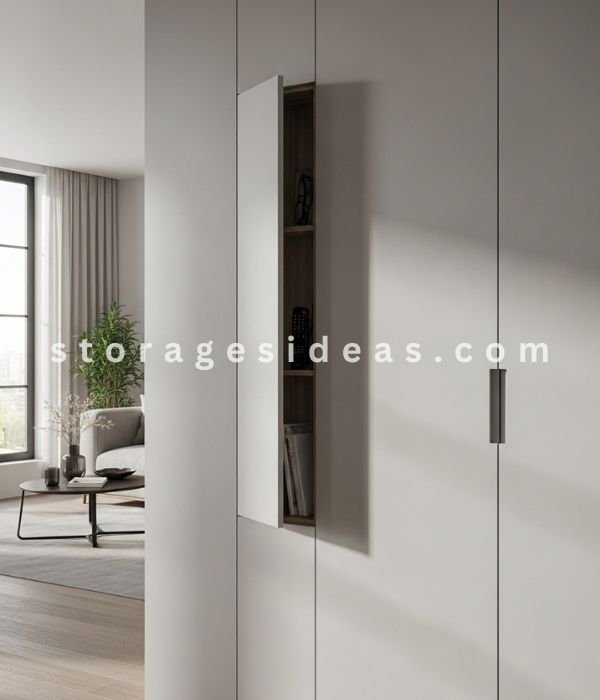
Some walls look complete, but don’t actually do anything.
They take up space visually, but they don’t contribute functionally. In smaller homes, that becomes noticeable over time because every surface starts to matter.
What changed for me was seeing those walls not as fixed boundaries, but as layers.
When a shallow depth is added behind them, even slightly, the wall stops being just a surface. It becomes a space that can hold things without showing them.
What makes this work is how little it affects the room.
From the outside, nothing looks different. The wall still reads the same way. But functionally, it starts carrying part of the storage load that would otherwise sit out in the open.
This kind of setup doesn’t rely on adding furniture. It shifts storage into the structure of the room itself, which is why it feels so clean.
8. Behind Mirrors or Wall Decor That Already Exist
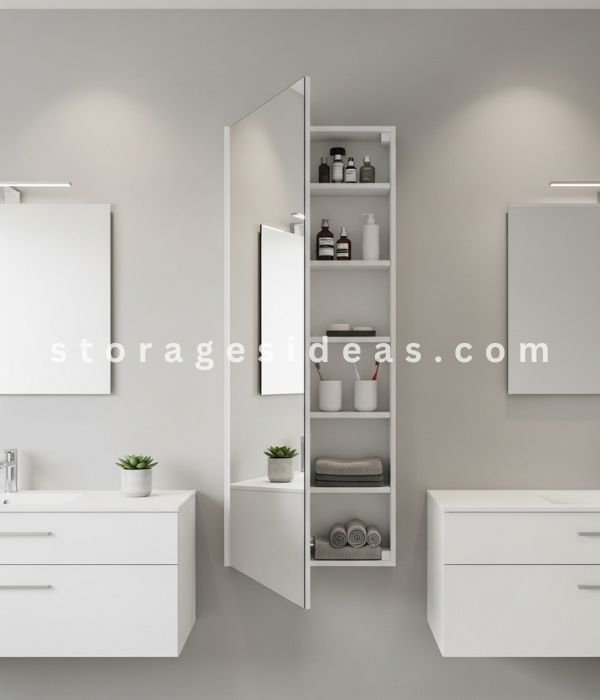
Most wall elements are treated as purely visual.
Mirrors, artwork, decorative panels, they’re placed to complete the space, not to serve a purpose beyond that.
But once they start holding storage behind them, their role changes without changing their appearance.
What stood out to me here is how seamless it feels.
Because those elements already belong on the wall, nothing feels added. The room looks exactly the same, but it functions differently.
This works especially well in areas where adding visible storage would feel too heavy. Instead of introducing something new, it reuses what’s already there.
And that’s what keeps the space from feeling crowded.
9. Inside Kitchen Toe-Kick Areas That Stay Unused
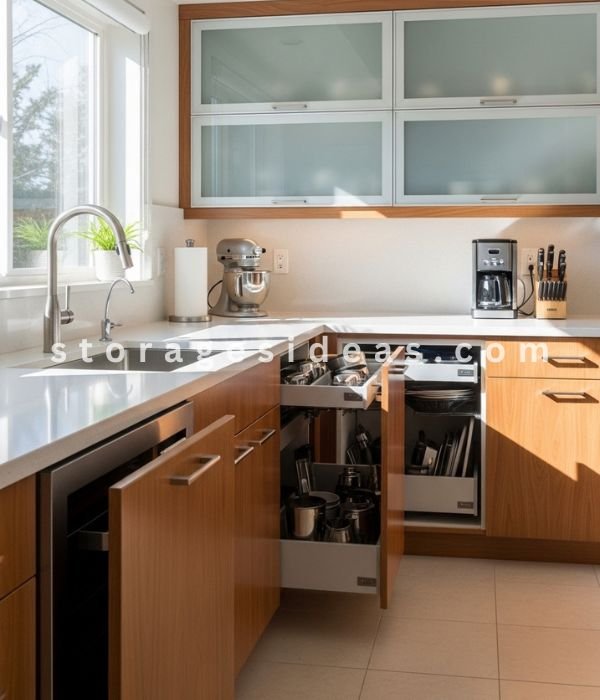
The lowest part of kitchen cabinets is almost always ignored.
It’s too low to notice, and because it doesn’t interrupt anything, it gets overlooked completely.
But once that space is used, it changes how the rest of the kitchen works.
Because it sits below everything else, it doesn’t compete with counters, cabinets, or movement. It simply adds a layer of storage where nothing existed before.
What makes this effective isn’t just that it’s hidden, it’s that it’s separate.
It doesn’t overlap with your main working area, so it doesn’t create friction. And because of that, it can hold items that would otherwise take up more visible space above.
This kind of hidden efficiency shows up in other layouts too, and these kitchen cabinet organization ideas explain how using overlooked areas can reduce what stays visible on counters.
10. Inside Closet Side Panels or Doors
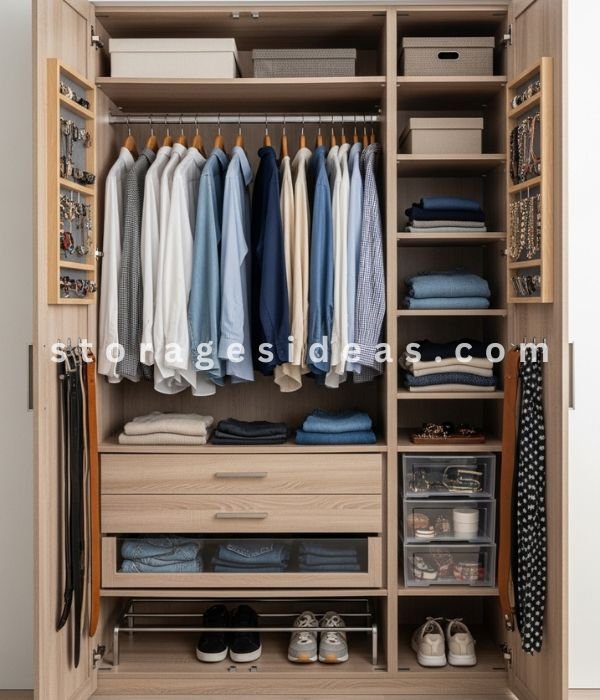
Closets often feel full even when they’re not.
That’s usually because everything is concentrated in one central area, while the edges go unused.
The sides, the inside of doors, the vertical strips, those spaces exist, but they’re rarely used intentionally.
Once I started using those sections, the entire closet changed.
It wasn’t about adding more storage. It was about spreading it out.
Items that used to pile up in one place could now be distributed more evenly. And because those areas are slightly out of direct view, they don’t add to the visual clutter inside the closet.
What changed wasn’t the size of the space.
It was how balanced it felt.
11. Inside Bathroom Cabinets That Are Reworked Internally
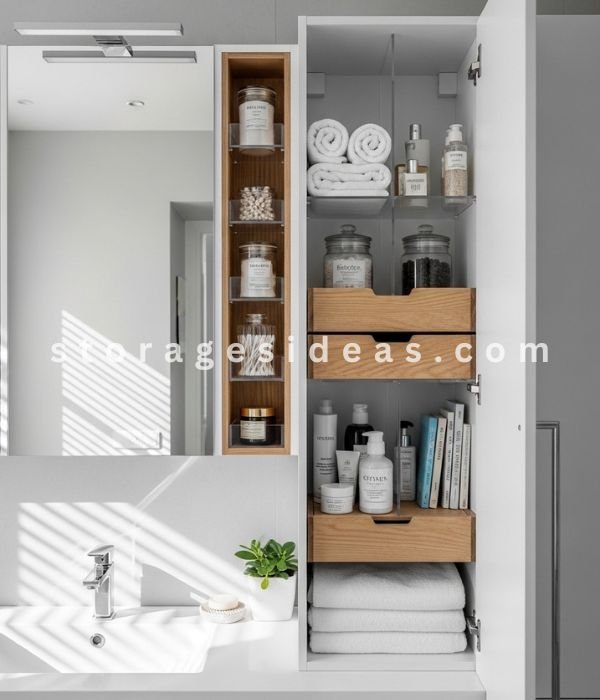
Bathroom cabinets often seem limited, even when they’re not.
The issue usually isn’t space; it’s how that space is used.
When everything is placed without structure, items stack, overlap, and become harder to access. And once that happens, things start moving back to visible surfaces.
What made the difference here was reworking the inside, not expanding it.
Grouping items by use, leaving enough space between them, and making sure everything could be reached without shifting multiple layers.
Once that happened, the cabinet started holding more without feeling full.
I later realized this comes down to how items are grouped and spaced, and this guide on organizing your home more effectively helped explain why that change made such a difference.
And because everything stayed hidden, the bathroom itself felt cleaner without needing to remove anything.
12. Inside Tight Furniture Gaps That Are Closed Off Properly
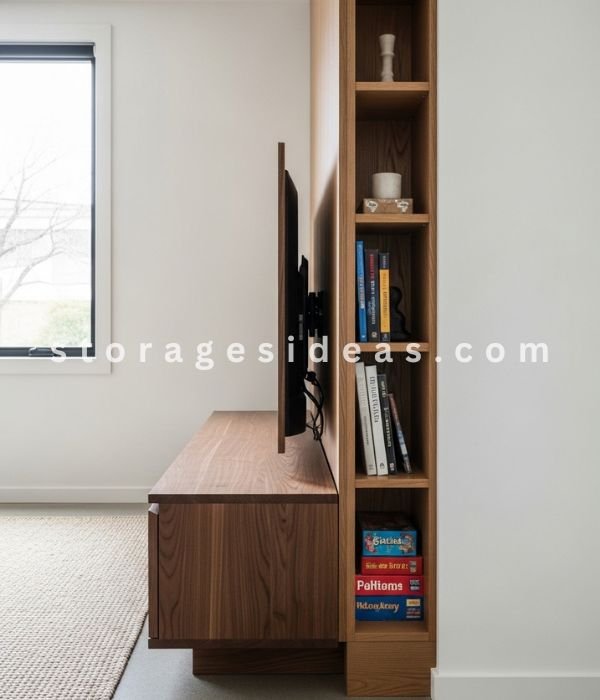
Small gaps between furniture often feel too insignificant to matter.
They’re narrow, awkward, and easy to ignore. So they stay open, collecting dust or staying unused.
But those gaps behave differently from larger spaces.
They’re already defined. Surrounded by furniture, they don’t need to establish their own presence. They just need to be used.
When those spaces are closed off and structured, they become hidden storage that doesn’t affect the layout at all.
What stood out to me is how quietly effective this is.
Nothing changes visually. The room doesn’t feel different at first glance. But functionally, it starts holding more without showing it.
And in smaller homes, those small shifts add up quickly.
What Actually Makes Hidden Storage Work (Without Becoming Inconvenient)
What I noticed over time is that hiding things only works if they stay easy to use.
If storage becomes difficult to access, it stops being used properly. And once that happens, clutter comes back in a different form.
The setups that worked best were the ones that stayed simple.
Easy to reach, easy to maintain, and placed where they made sense.
Hidden storage isn’t about removing things completely.
It’s about controlling when they’re visible.
Final Thoughts
What stood out to me after trying all of this wasn’t how much extra space I could create, it was how much space already existed without being used properly.
None of these setups required changing the layout in a major way. The rooms stayed the same. The furniture stayed the same. Even the number of things I owned didn’t really change.
What changed was visibility.
Once fewer things were constantly in sight, the space started to feel quieter. Surfaces felt lighter, corners felt more defined, and the room as a whole stopped competing for attention.
That’s what makes these hidden storage ideas effective.
They don’t rely on adding more. They rely on shifting where things live, and when they’re seen.
And once that balance feels right, the difference isn’t just visual.
The space becomes easier to use, easier to maintain, and noticeably calmer without actually removing much at all.
