
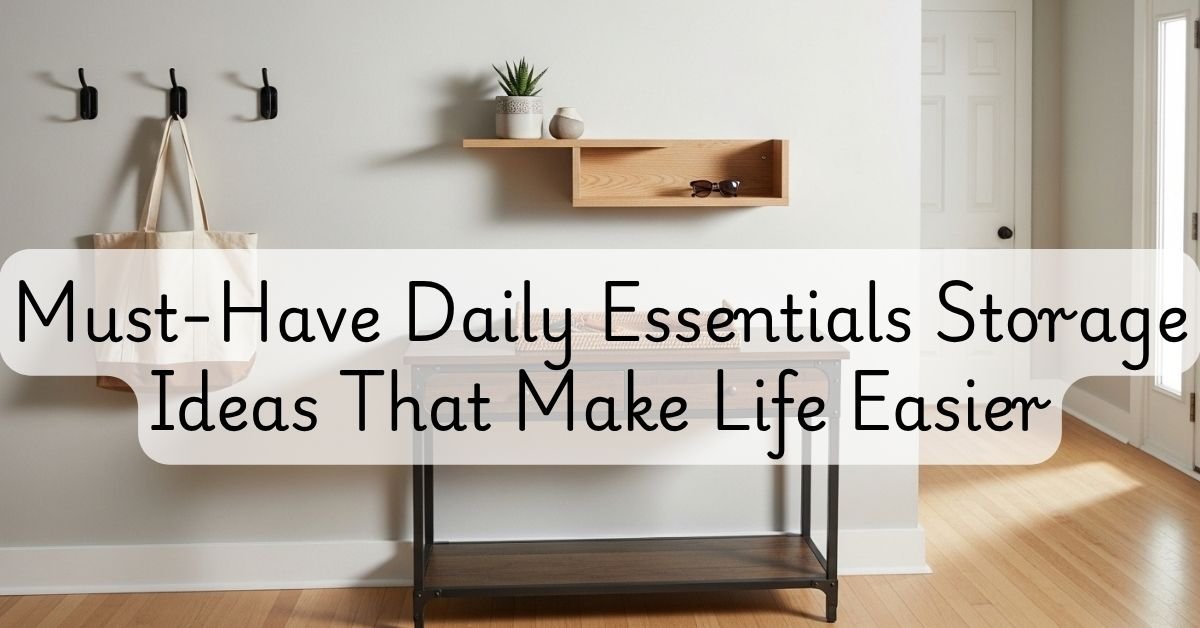
My daily items were never the problem.
It was how often they moved.
Keys didn’t stay in one place. My wallet ended up wherever I last used it. Chargers shifted between rooms. Small things kept drifting, not because there were too many of them, but because nothing was really holding them.
At first, I thought I just needed to be more organized.
So I tried putting things back properly and keeping surfaces clear. Being more mindful about where I place things. It worked for a while.
Then everything slowly started spreading again.
Not all at once. Just enough to bring back that same feeling of low-level clutter.
That’s when I realized something simple.
The issue wasn’t effort.
It was that my setup didn’t support how I actually used those items.
Once I changed that, these daily essentials storage ideas started working without needing constant attention.
I had seen the same pattern before in setups like small apartment storage tricks, where things only stay organized when the system supports daily use.
Why Daily Items Are the Hardest to Control
Daily items don’t stay still.
They move throughout the day. Between rooms, across surfaces, in and out of use. They don’t follow a fixed pattern, which makes them harder to manage using traditional organization methods.
For a long time, I treated them like everything else.
Give each item a place. Put it back when done.
But that approach depends on consistency.
And daily routines are rarely consistent.
Some days are rushed. Some days are slower. Sometimes things get dropped quickly and picked up later.
That’s where most systems fail.
They expect precision in a space that’s constantly in motion.
What worked better for me was building a setup that could handle that movement without falling apart.
1. Entry Drop Zone That Stops Items From Spreading
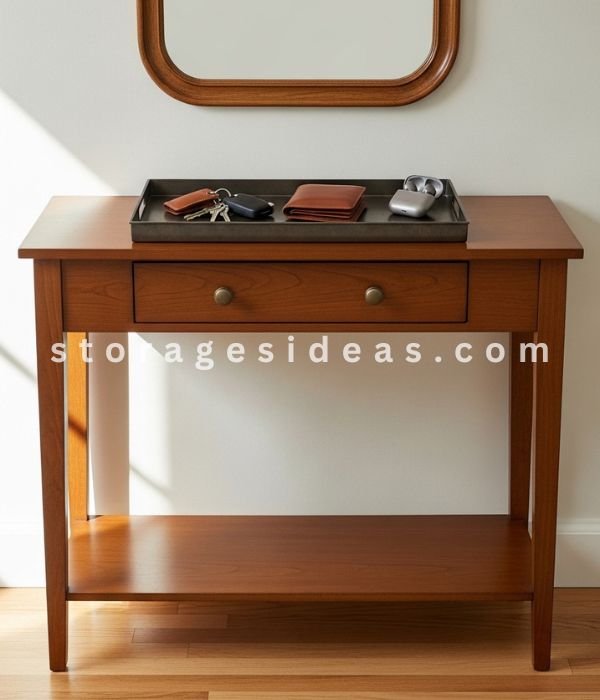
The first pattern I noticed wasn’t about storage. It was about where things landed. Keys, wallet, and small daily items always ended up somewhere near the entrance, but never in the same exact spot.
At first, I tried keeping that area clean. I cleared it often, rearranged it, and tried to stop things from building up there. But it didn’t hold. The same items kept returning, just in slightly different positions.
Because nothing was actually catching them.
Once I gave those items a fixed landing point, the pattern changed. I didn’t have to think about where to put things anymore. They just went to the same place by default.
It works the same way as a drop zone storage setup, where everything has a consistent place to land without thinking.
And once that decision was removed, the clutter stopped spreading beyond that area.
2. Open Access Storage That Removes the Need to Search
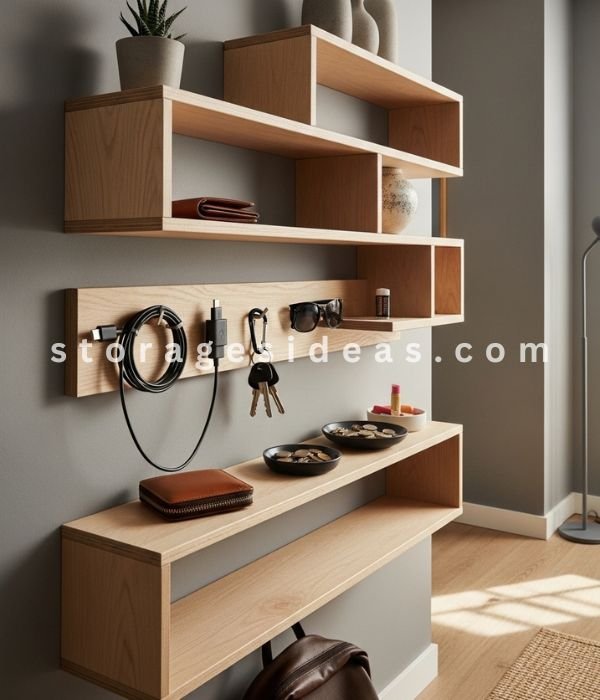
After that, I started noticing how often I searched for things. Not in a big way, just small pauses, checking one place, then another, trying to remember where I left something.
At first, I assumed hiding things would make the space feel cleaner. So I used drawers and closed storage. But that added friction. Every time I needed something, I had to open, check, and sometimes search again.
That small effort changed my behavior.
I became less consistent about putting things back, because returning them felt slower than leaving them out.
Once I kept frequently used items visible and easy to access, that hesitation disappeared. I didn’t have to think about it, and that’s what made the system hold.
Because when something is easy to return, it actually gets returned.
3. Vertical Storage That Keeps Surfaces From Becoming Drop Zones
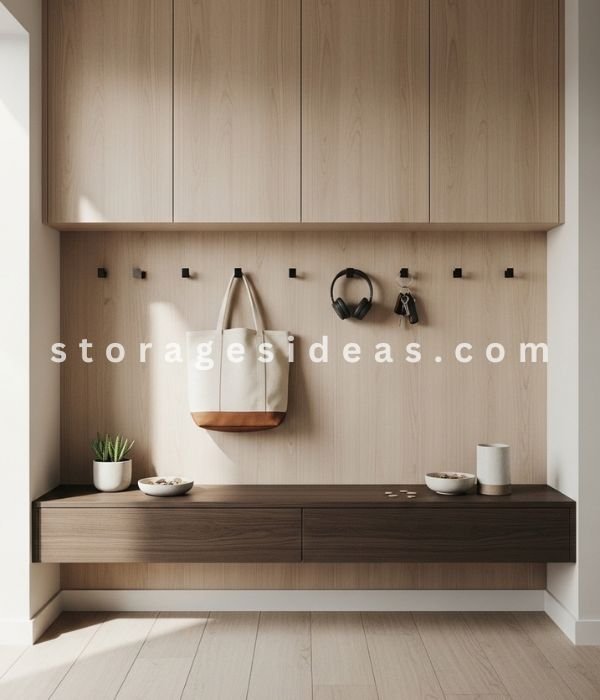
Even after that, surfaces kept pulling things back. Tables, counters, and shelves were still the easiest places to put things down.
I tried keeping them clean by resetting them often. Clearing them, organizing them, trying to maintain that empty look. But it didn’t last.
Because I was still using them the same way.
Once I moved frequently used items slightly upward, off the main surface and onto the wall, something shifted. The surface stopped being the most convenient option.
I noticed a similar shift when using wall storage ideas in the living room, where moving items upward naturally reduces surface clutter.
And when convenience changed, behavior followed.
The surface stayed clearer, not because I forced it, but because I stopped relying on it.
4. Grouped Storage That Reduces Movement Instead of Controlling It
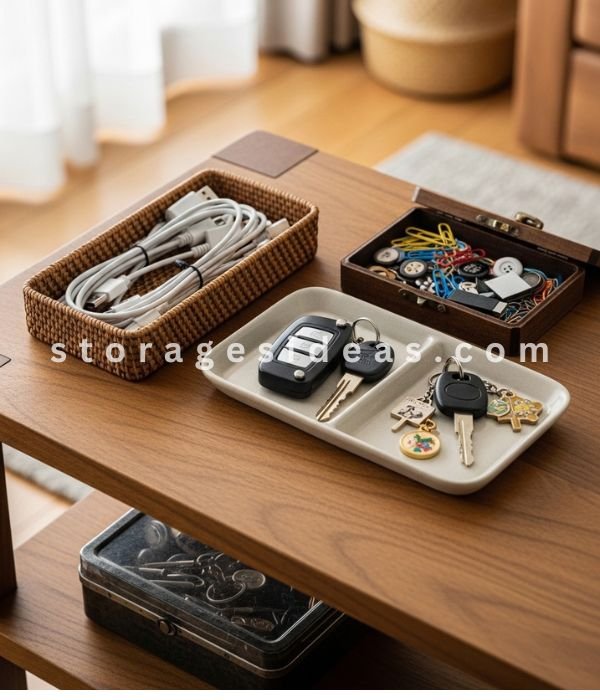
At that point, clutter wasn’t coming from large items anymore. It was the smaller ones. Things without a fixed place kept moving, slowly spreading across different areas.
At first, I tried organizing them individually. Assigning each item its own spot, trying to keep everything precise.
But that required too much effort to maintain.
Once I grouped those items instead, the movement slowed down. They didn’t need exact placement anymore, just a shared space to return to.
That reduced the pressure to be precise.
And when precision isn’t required, consistency becomes easier.
5. Surface Zones That Prevent Daily Build-Up

Even with grouping, some surfaces still felt slightly crowded. Not overloaded, but just enough to make the space feel busy.
I tried clearing those surfaces again, thinking they needed to stay empty. But that didn’t work, because I was still using them without structure.
Once I defined small zones on those surfaces, the behavior changed. Items didn’t spread across the entire area anymore.
They stayed within a limited space.
That boundary didn’t remove clutter completely, but it contained it. And when clutter stays contained, it stops affecting the whole room.
This is why many small-space layouts focus on defining clear zones instead of keeping everything open, especially in areas used multiple times a day.
6. Pocket Storage That Handles Small, High-Movement Items
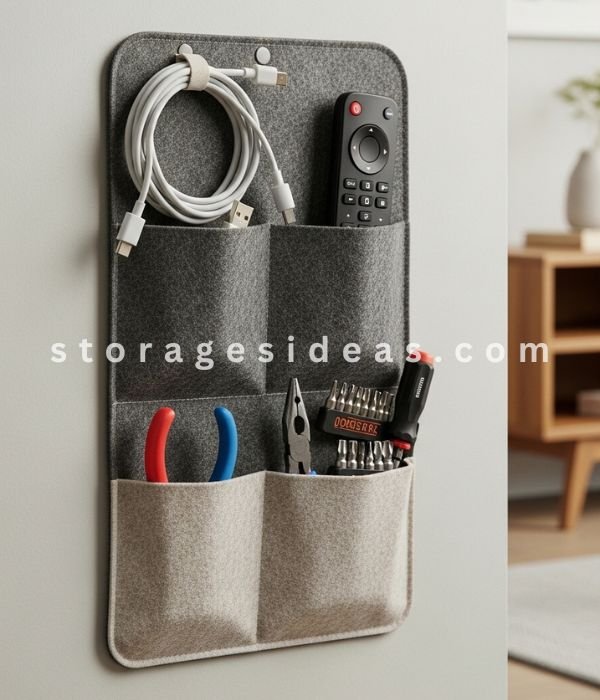
There were still a few items that didn’t settle into the system. Small things like cables, remotes, and everyday tools moved more than anything else.
They didn’t stay where I put them. They shifted between surfaces, got tucked into random spots, and slowly built up in places I didn’t intend.
At first, I tried storing them in drawers. It seemed like the obvious solution. But that didn’t work either. They got mixed together, harder to find, and easier to leave out the next time I used them.
Because drawers removed visibility, but didn’t create control.
Once I gave those items small, dedicated pockets instead of general storage, the pattern changed. They didn’t need to be organized perfectly. They just needed a space that belonged to them.
And once that space existed, they stopped floating across everything else.
7. Rotation-Based Storage That Matches Real Usage
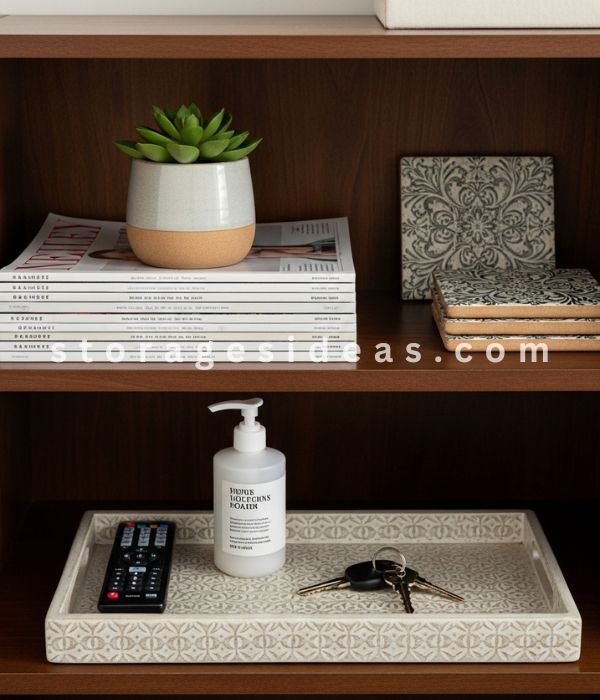
One thing I didn’t notice at first was how differently I used certain items. Some were part of my daily routine, while others only came out occasionally.
But I was storing them the same way.
That created a subtle kind of friction. Daily items had to compete with things I barely used, which made access slower and return even less consistent.
At first, I tried reorganizing everything within the same structure. Moving things around, adjusting positions.
It didn’t help.
Because the issue wasn’t addressed, it was a priority.
Once I started placing frequently used items closer and moving everything else slightly back, the system became easier to use. I didn’t have to think about it. The most relevant items were always within reach.
And when access becomes effortless, consistency follows.
8. Separate Storage for Backup Items That Reduces Overload
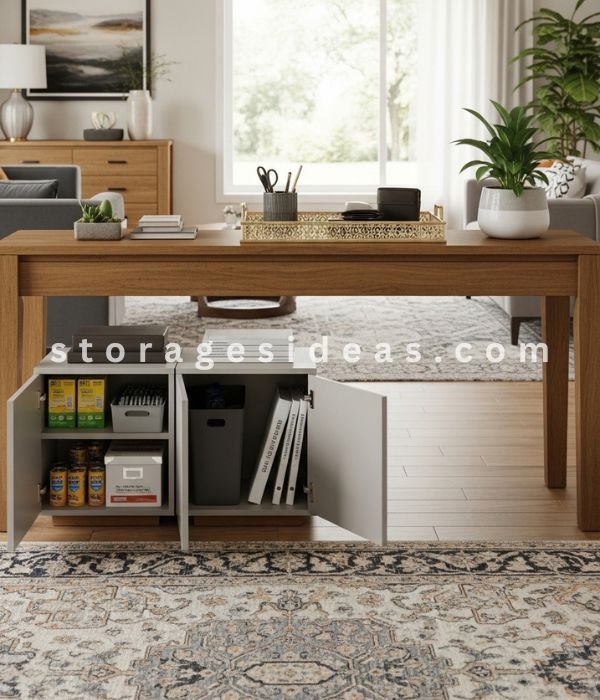
At some point, I realized I was keeping too many extra items in my main setup. Backup versions, duplicates, things I didn’t use daily but kept nearby “just in case.”
It felt practical.
But it was adding pressure to the space.
At first, I tried organizing those items better within the same area. Stacking them neatly, grouping them, trying to make them fit.
But that only made the space feel heavier.
Because everything was still competing for the same attention.
Once I separated those backup items from what I actually used every day, the difference was immediate. The main area felt lighter, easier to move through, and easier to maintain.
That’s the same principle behind using hidden storage ideas, where less visible items reduce pressure on everyday spaces.
That separation created clarity.
And once that clarity was there, the system stopped feeling crowded.
9. Low-Effort Systems That Work Without Thinking
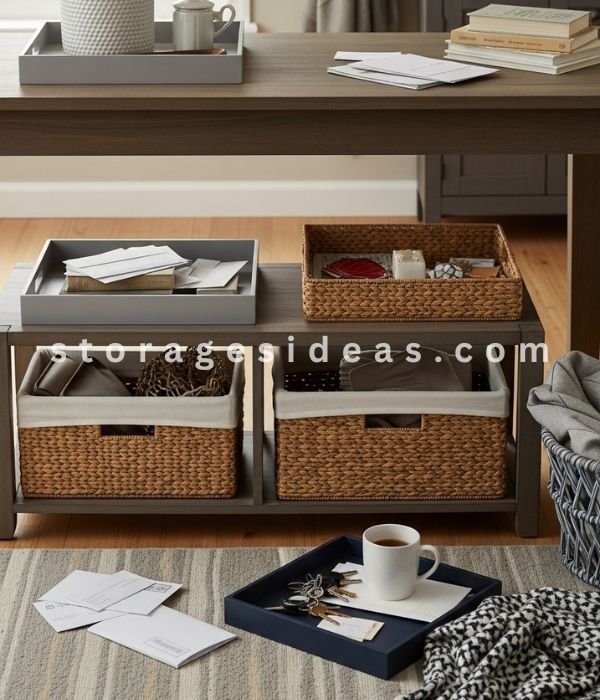
After all these changes, the biggest shift wasn’t visual.
It was behavioral.
Before, every system I tried depended on effort. Remembering where things go. Taking time to put them back properly. Trying to stay consistent every day.
That’s what kept failing.
Because anything that requires effort eventually gets skipped.
At first, I thought I just needed better habits. More discipline. More consistency.
But the real change came when I removed that requirement completely.
Now, the system works without needing attention. Things return to where they belong because it’s easier to do that than not to.
And that’s what finally made everything hold.
Not effort.
But alignment with how I actually use the space.
What Actually Makes Daily Essentials Storage Ideas Work
What took me time to understand wasn’t how to organize the space. It was why nothing stayed organized.
At first, every setup worked. I would clean, arrange everything, and give each item a place. For a few days, it held. Then small shifts started happening. Something didn’t go back exactly where it belonged. Something got placed “for now.” Something new entered without a clear spot.
Nothing failed at once.
But the system slowly loosened.
I thought the problem was consistency. I just needed to be more disciplined. But that didn’t last, because the system depended on effort every time I used it.
That’s where it broke.
Once I focused on friction, the pattern became clear. If something takes effort, it gets delayed. If it gets delayed, it gets skipped. And once that repeats, the system stops holding.
What worked instead was removing that effort.
When things are easy to use and easy to return, they stay in place without attention.
That’s what makes these daily essentials storage ideas work.
Final Thoughts
I used to think I needed better organization.
More structure. More discipline.
So I tried to manage things better. Cleaning more often, rearranging, and trying to stay consistent.
But it didn’t last.
Because the problem wasn’t effort.
It was that the system didn’t match how I actually used the space.
Once that changed, everything else followed.
The space didn’t stay perfect.
But it stayed stable.
It didn’t need constant fixing. It didn’t rely on attention. It simply held, even on days I didn’t think about it.
That’s the difference.
If your everyday items keep drifting, the answer isn’t to try harder.
It’s to adjust the system so it works with you.
Start small.
Because once one part holds, the rest follows.
