
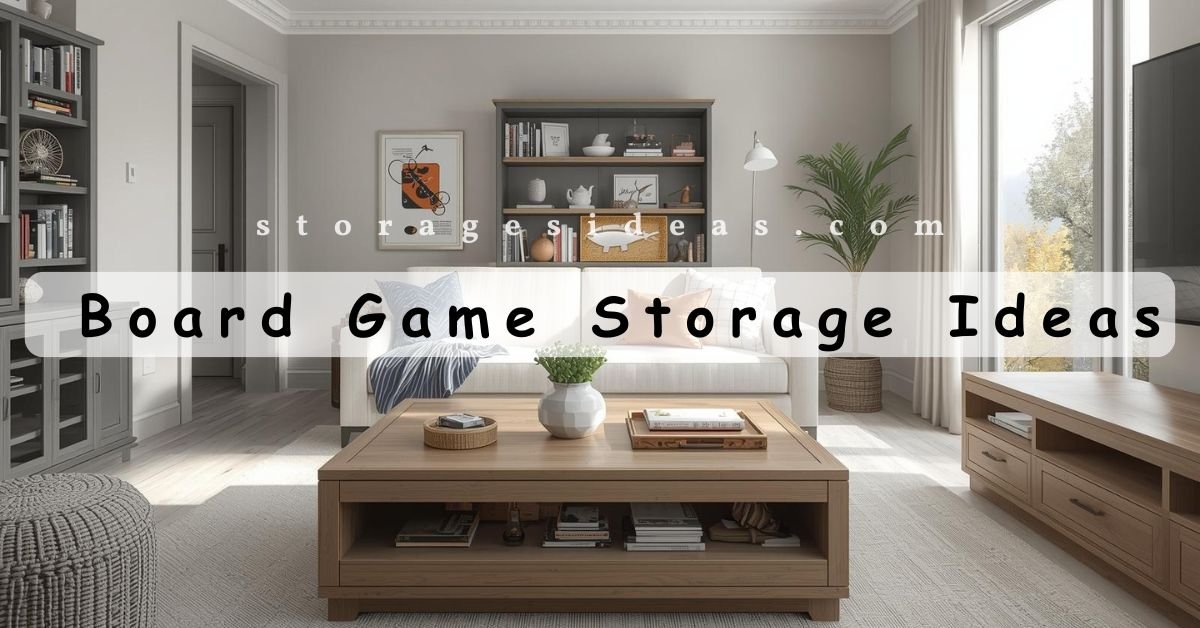
Board games are meant to bring people together, but storing them in a living room can slowly do the opposite. I’ve watched it happen in my own space. A few boxes were stacked neatly at first. Then one more added “temporarily.” Then a leaning pile beside the sofa that never quite made it back to the shelf. Before long, the living room felt busy even when everything else was clean.
What I eventually realized was that the problem wasn’t the number of games I owned. It was the lack of a system that respected how a living room actually functions. Games aren’t books. They aren’t toys either. They’re shared items that get used, moved, opened, and closed again and again.
Once I started designing storage around that reality, the room stopped fighting back. This guide breaks down the board game storage ideas and systems I now rely on to keep games accessible without letting them dominate the space.
Why Board Games Are So Difficult to Store in Living Rooms
Board games are awkward by nature. Boxes vary wildly in size, weight, and shape. Some are shallow and wide. Others are tall and heavy. Many don’t stack cleanly, especially after repeated use.
Living rooms add another layer of complexity. They’re flexible spaces meant for relaxing, hosting, watching TV, and sometimes working. Storage that works in a dedicated game room often fails here because it doesn’t account for visual calm, seating flow, or everyday movement.
Another challenge is frequency. Some games get played weekly. Others only come out during holidays or gatherings. Treating all games the same leads to clutter because their storage needs aren’t equal. I learned that shelves alone don’t solve this. Without rules and placement logic, shelves become piles with better posture.
How I Decide Which Games Deserve Living Room Space
Before I touch furniture, I decide which games actually belong in the living room.
The first filter is frequency. Games we play often stay close to the seating. Games played occasionally rotate in when needed. Rarely used games leave the living room entirely.
The second filter is the audience. Adult strategy games and kids’ games don’t mix well in shared storage. Kids need easy, forgiving access. Adult games benefit from controlled handling and better protection.
The third filter is set up for friction. Games with long setup times don’t need to live within arm’s reach. Quick-play games do. This decision process alone reduces storage pressure and prevents overcrowding before it starts.
Using Existing Living Room Furniture to Store Board Games Intentionally
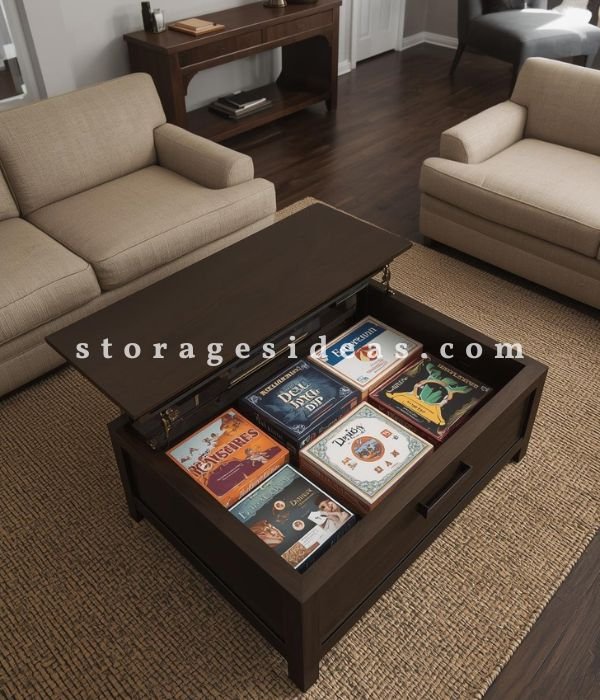
The biggest shift for me came when I stopped looking for furniture labeled as “game storage” and started evaluating the furniture already living in my space. The key wasn’t adding more pieces; it was assigning clearer roles to the ones I had.
Coffee tables with internal storage work best for games that are played often and set up quickly. Lift-top designs keep games close to seating while leaving the surface usable. Drawer-based tables are better for flatter boxes that need protection from stacking pressure.
Console tables solve a different problem. They’re ideal for medium-sized games that don’t need instant access but still belong in the living room. Behind-the-sofa consoles are especially effective because they keep games within reach while preserving visual calm.
This approach aligns closely with how multi-functional living room furniture ideas can reduce clutter while serving more than one purpose.
Storage benches and ottomans work best for family and kid-friendly games. They allow fast cleanup after game night and double as seating. The rule I follow here is restraint. Once these pieces are overfilled, boxes get damaged, and access becomes frustrating.
When furniture already serves multiple purposes, game storage feels intentional instead of intrusive.
Shelving That Supports Games Without Creating Visual Noise
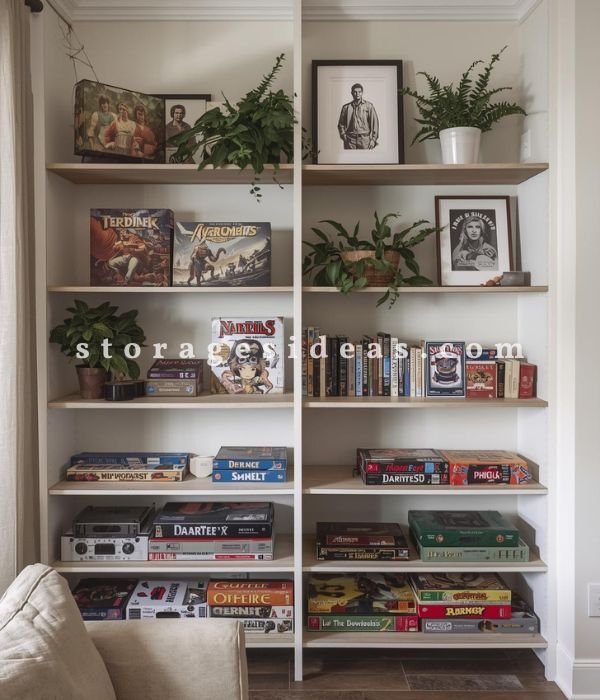
Shelves can work, but only when used with restraint.
I store heavy games flat to prevent box damage. Lighter games can stand vertically if they’re supported tightly. Leaving breathing room between stacks matters more than most people realize. Tight shelving leads to crushed corners and constant reshuffling.
Mixing games with decor makes a noticeable difference. A plant, framed photo, or sculptural object breaks up rows of boxes and keeps shelves from feeling overloaded. This is the same principle used in smart wall storage solutions for the living room, where visual balance matters just as much as capacity.
If visual calm matters more than display, closed cabinets consistently outperform open shelving in living rooms.
Hidden Storage for a Cleaner, More Flexible Living Room
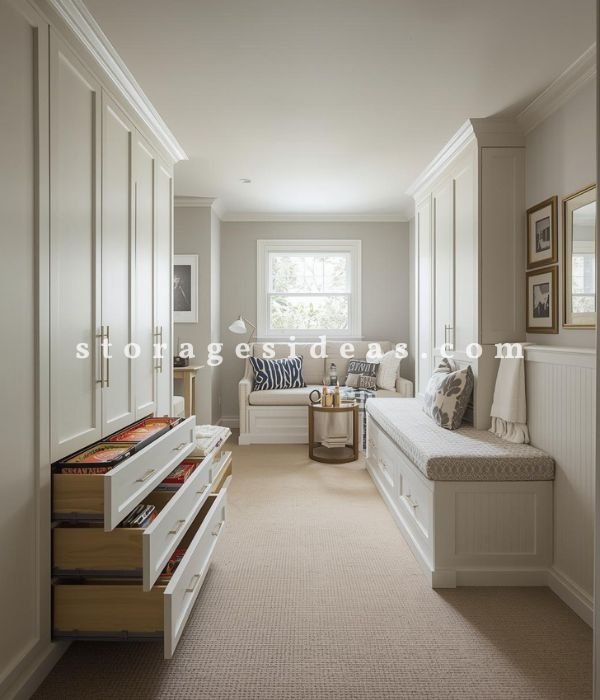
I prefer hidden storage for most of my collection because it keeps the room adaptable.
Closed cabinets, drawer systems, and storage benches allow the living room to shift quickly between everyday use, hosting, and game nights. There’s no scrambling to hide stacks when guests arrive.
Hidden storage also protects boxes from sunlight, dust, and spills. In homes with kids or pets, that protection significantly extends the life of games. This approach prioritizes flexibility over display, which works better in shared spaces.
Board Game Storage Strategies That Actually Work in Small Living Rooms
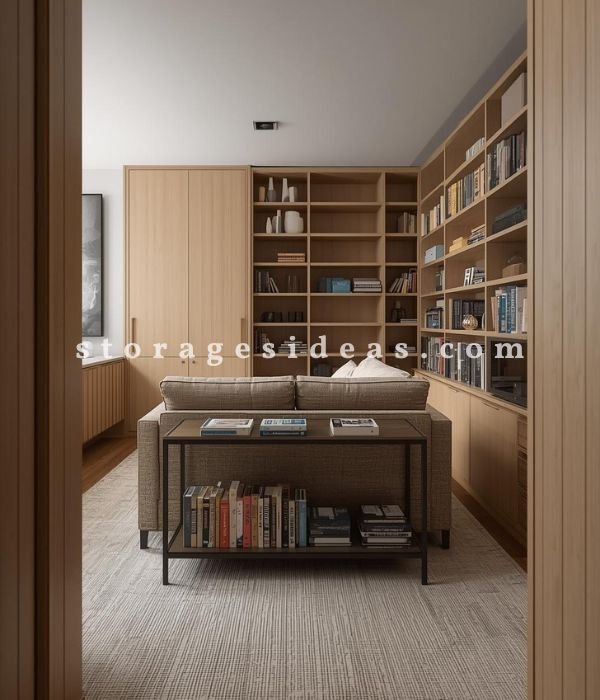
In small living rooms, storage fails when it competes with movement.
Vertical space becomes essential, but not all vertical solutions work the same way. Tall shelving units should store heavier games lower and lighter games higher. Upper cabinets are better for rarely played titles.
Behind-the-sofa storage is one of the most overlooked solutions. Slim consoles or low cabinets fit naturally here and stay out of walking paths. This placement keeps games close to seating without sacrificing floor space.
Under-sofa storage can work for flat boxes, but only when games are protected and easy to slide out. If retrieving a game requires moving furniture, the system won’t last.
What I avoid completely in small rooms are cube shelves and open floor bins. They block movement, encourage overfilling, and make spaces feel cramped quickly.
Kid-Friendly Storage Without Letting Games Take Over
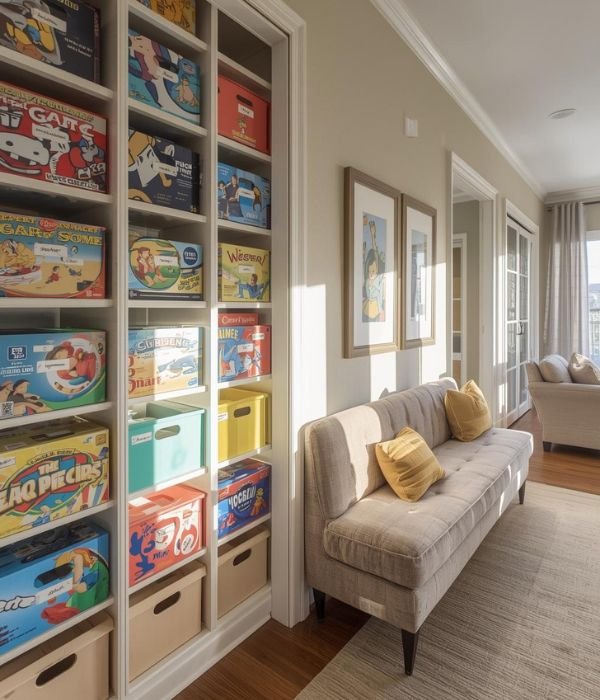
Kids’ board games need a different approach.
Lower shelves, bins, or storage benches make cleanup realistic. Expecting kids to handle tall shelves or delicate boxes leads to damage and frustration.
I keep kids’ games separate from adult games and limit how many stay in the living room at once. Rotation helps here. Fewer visible games reduce clutter and increase appreciation for what’s available.
This same zoning logic works well with organized toy storage for shared living spaces, where accessibility and boundaries matter just as much as storage itself.
Clear zones also make it easier for kids to participate in cleanup, which keeps the system sustainable.
Protecting Game Boxes So Storage Stays Manageable
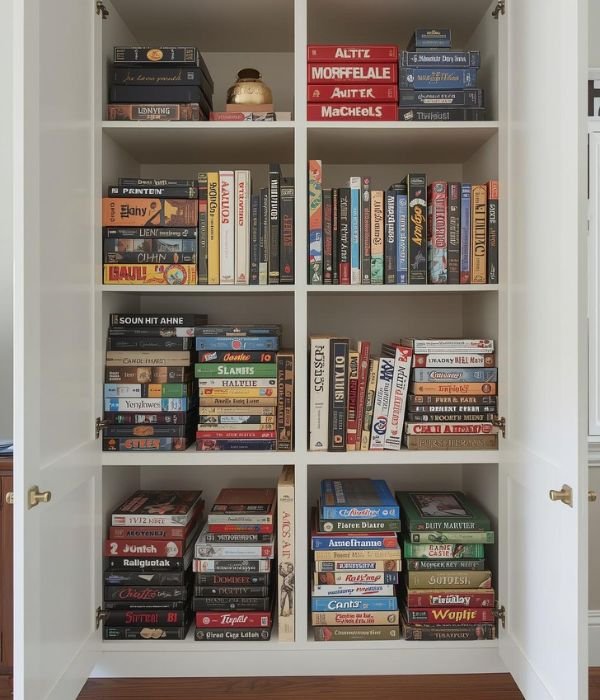
Damaged boxes create storage problems. Once boxes lose shape, they don’t stack well and create chaos.
I use zip pouches or organizers inside boxes to contain pieces and prevent lid bulging. Rubber bands are something I avoid completely because they warp boxes over time.
Heavier games always live on lower shelves. I also label box edges lightly so games can be identified without pulling stacks apart. Protecting boxes isn’t just about appearance; it directly affects how well storage works long-term.
Many of these habits align with broader general home organization principles, where prevention always beats constant reorganization.
Rotating Games Instead of Forcing Everything Into One Space
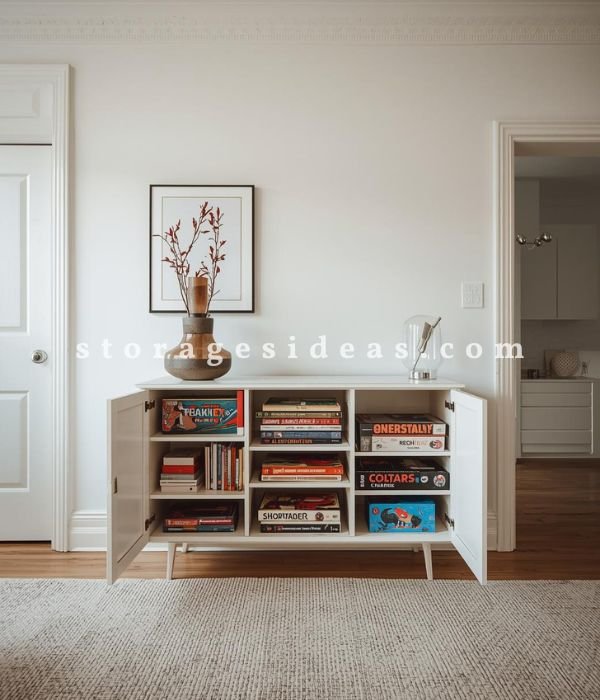
Rotation was one of the most effective changes I made.
Instead of keeping every game in the living room, I rotate based on season, interest, or upcoming gatherings. Favorites stay accessible. Others move out temporarily.
Rotation keeps storage lighter, makes game nights feel fresh, and prevents clutter from rebuilding quietly.
Habits That Keep Board Game Storage Working Long-Term
Even the best storage setup will fail if it doesn’t match real behavior. What finally made my system last wasn’t better furniture, it was changing how I interacted with the storage itself.
The most important habit I follow is closing the loop immediately after play. Game pieces go back into their internal pouches before the box ever leaves the table. This prevents loose components from spreading across the room and keeps boxes from bulging over time.
I also assign each storage zone a clear purpose. Games stored in drawers are ones we play often. Games stored higher or behind doors are occasional picks. This mental separation prevents random reshuffling and keeps frequently played games from drifting into hard-to-reach spots.
Once a month, I do a short reset, but it’s not a general tidy. I specifically look for:
- Boxes that are starting to bow
- Games that migrated from their original zones
- Titles that haven’t been touched in months
Those games either rotate out or move to a less accessible spot. The rule that matters most is simple: no overflow zones. If a new game doesn’t fit into an existing category, something else leaves.
Board Game Storage Mistakes I Stopped Making (And Why)
Most of my storage mistakes came from choosing solutions that looked fine but failed in daily use.
Open floor bins were one of the biggest problems. They encouraged careless stacking, damaged box corners quickly, and made games effectively invisible. Invisible games don’t get played, and damaged boxes don’t stack well.
I also used to stack games too high on shelves. The problem wasn’t just box damage; it was access. Every time I wanted a lower game, the entire stack shifted. That friction slowed cleanup and made storage feel annoying instead of helpful.
Another mistake was buying furniture only for games. Dedicated game furniture often looks out of place in a living room and adds visual weight. Storage should blend into the room’s primary purpose, not compete with it.
The rule I now follow is simple: if storing games makes the living room harder to use, it’s the wrong solution.
FAQs
Is it better to store board games flat or upright in a living room?
It depends on the game. Heavy or component-dense games should be stored flat to prevent box warping and lid separation. Lighter games can stand upright if they’re tightly supported, so pieces don’t shift inside the box.
How do I stop board game boxes from bending or splitting over time?
The biggest cause of damage is internal movement. Using zip pouches or organizers inside the box keeps components from pushing against the lid. Avoid rubber bands and over-tight stacking, especially in warm rooms.
Can board games stay in the living room without making it look cluttered?
Yes, but visibility matters. Games stored behind doors, inside drawers, or in storage benches keep the room visually calm. If games are on open shelves, spacing and mixing with décor is essential.
How many board games should realistically stay in the living room?
Only the games you play regularly. A good rule is to keep favorites accessible and rotate others in as needed. If a game hasn’t been played in months, it probably doesn’t need prime living room space.
What’s the best storage option for oversized or deluxe board games?
Large or heavy games work best in cabinets, storage benches, or low shelving. Storing them upright on open shelves often leads to damaged boxes and awkward handling.
Are baskets or fabric bins ever a good idea for board games?
They can work for small, durable, or kid-friendly games, but they offer little protection. Bins encourage piling, which often leads to crushed corners and missing pieces.
Final Thoughts
Board games belong in living rooms because they create connections. The challenge is storing them without letting them take over the space. Once I stopped forcing games into shelves and started building systems around real behavior, the room felt calmer almost immediately.
Good board game storage ideas aren’t about hiding everything or displaying everything. They’re about thoughtful placement, protected boxes, and habits that match daily life. When storage supports how people actually use the room, games feel like part of the living space again, not the reason it feels cluttered.
