
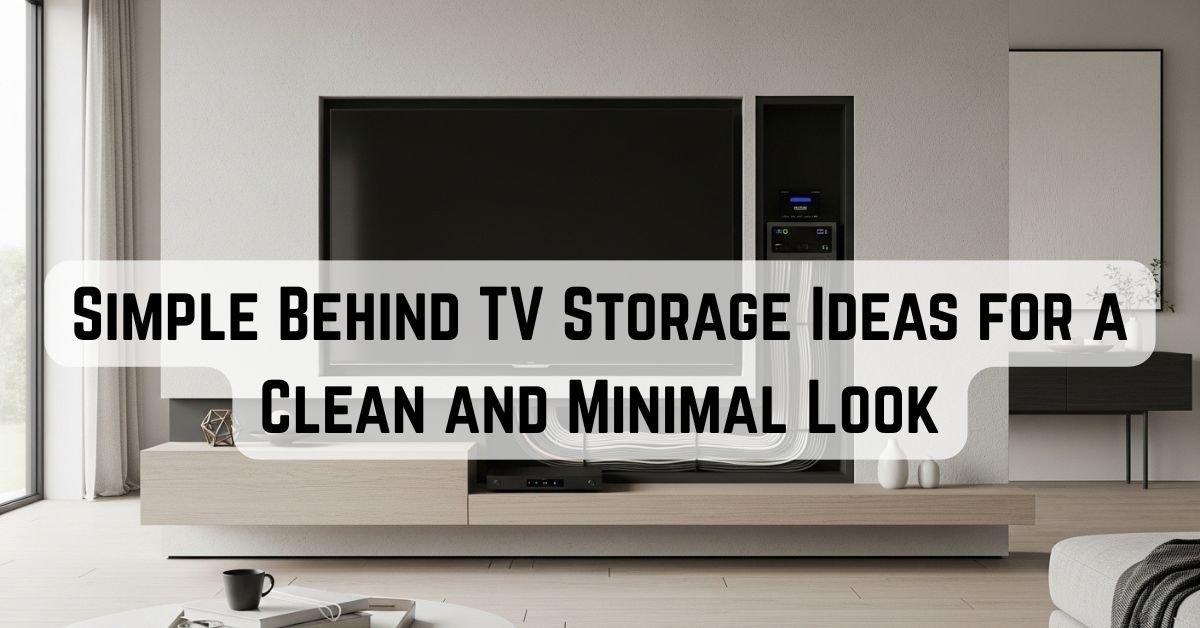
For a long time, I focused only on what I could see.
The front of the living room looked fine. The TV area felt clean enough. Nothing seemed out of place.
But every time I had to reach behind the TV for a cable, a plug, or a device, I noticed how different that space felt.
Wires overlapping. Small devices stacked without intention. Things were pushed slightly out of the way, but never really placed.
It wasn’t something I saw every day.
But it quietly affected how the whole area felt.
That’s when I stopped thinking about it as a hidden space and started treating it like part of the room.
Once I made a few changes using simple behind TV storage ideas, the difference wasn’t just behind the screen.
The entire setup started to feel calmer.
I noticed a similar shift while trying a few TV and media storage ideas, where small changes made the whole setup feel more controlled.
Why Clutter Builds Up Behind the TV
What makes this area tricky is how easy it is to ignore.
It sits just out of sight.
Anything that doesn’t have a clear place ends up there: wires, adapters, small devices, sometimes even things that don’t belong to the setup at all.
At first, it doesn’t look like a problem.
But over time, things start to overlap.
Cables cross each other. Devices get stacked. And because everything is slightly hidden, nothing feels urgent enough to fix.
What stood out to me is that even though I couldn’t see it all the time, I could feel it.
I later realized this is closely tied to how visual clutter affects how we experience a space, and this explanation of how clutter influences perception and organization helped me understand why even hidden areas can change how a room feels.
The setup felt heavier. Less clear. Slightly harder to use.
Once I paid attention to that, it became easier to change.
8 Clever Behind TV Storage Ideas That Actually Keep Things Minimal
1. Creating One Controlled Zone Behind the TV
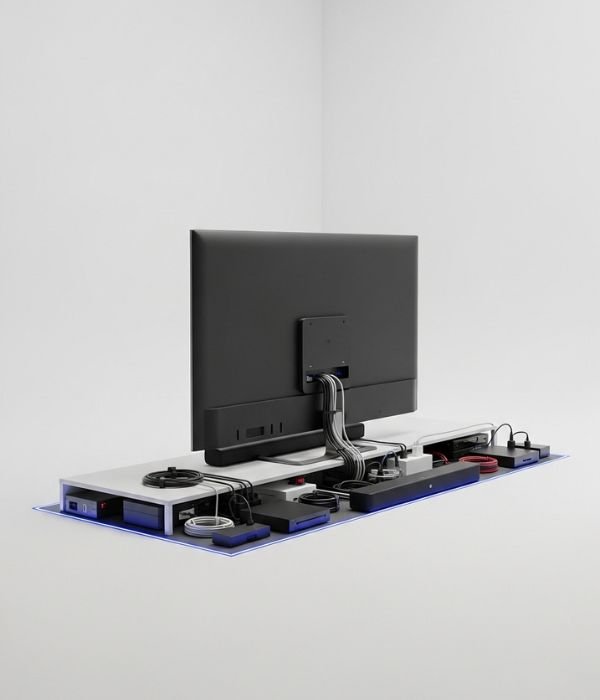
Before I changed anything, this area didn’t really feel like a defined space.
It was just… behind the TV.
Anything that didn’t have a clear place ended up there. And because it wasn’t fully visible, I didn’t question it much.
But over time, I started noticing how things were spreading.
Not in an obvious way, but slowly.
A device placed slightly to the side. A cable pushed a bit further back. Something new fitting into whatever space was left.
There wasn’t a clear edge to where things should stop.
And because of that, everything kept adjusting around everything else.
What changed was creating a boundary.
Not a physical wall, just a clear understanding of where things belong and where they don’t.
Once that space had a limit, items stopped drifting outward.
They didn’t need to find a place anymore.
They already had one.
2. Lifting Everything Off the Floor
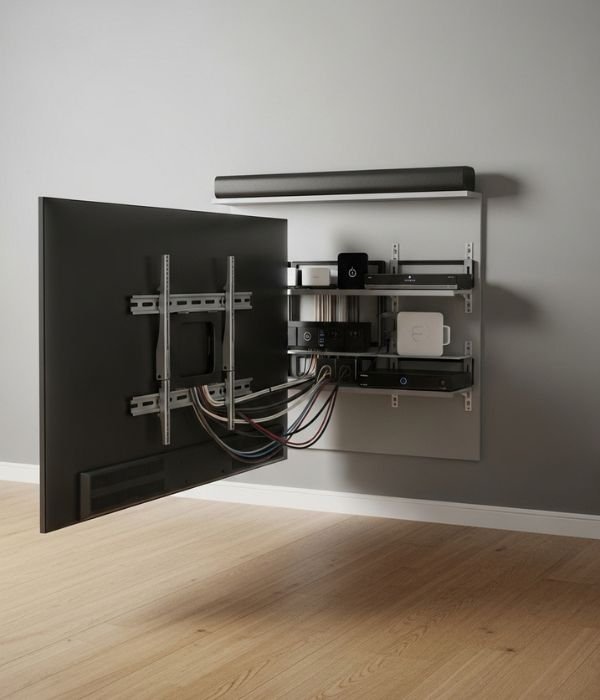
The floor behind the TV became a quiet storage layer.
At first, it didn’t seem like much.
A cable resting there. A small device is placed down for convenience.
But once something touches the floor, it tends to stay there.
And once one thing stays, others follow.
It doesn’t feel like clutter immediately.
But it starts to build a kind of weight at the base of the setup.
What I noticed is that this lower layer changed how the entire space felt.
Even if I couldn’t see it directly, I could feel that everything was settling downward.
What helped was shifting that weight upward.
Not dramatically, just enough to break that pattern.
Once fewer things depended on the floor, it became easier to keep it clear.
And when that base felt open, the entire setup felt lighter and more stable.
I’ve seen the same effect in these wall storage living room ideas, where lifting items upward reduces visual weight.
3. Keeping Only What Needs to Stay There
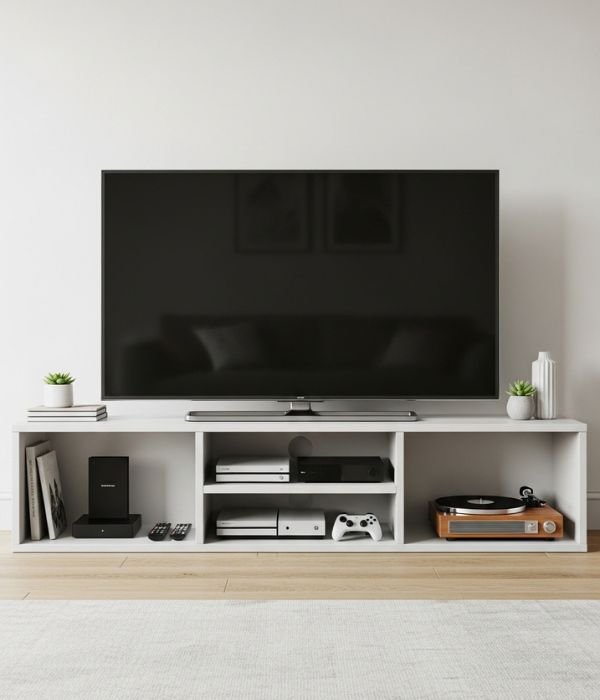
Because this area isn’t always visible, it became a place where things stayed longer than they should.
Not intentionally.
Just quietly.
An extra cable that might be useful later. A device I wasn’t using right now. Something I moved there “temporarily.”
None of it felt urgent to remove.
But over time, it reduced the space I actually needed.
What I noticed is that the more items stayed there, the harder it became to use the space properly.
Things started overlapping. Adjusting around each other. Losing their place.
What changed was being more selective about what stays.
Not in a strict way, but in a practical one.
If something wasn’t part of the setup I was actively using, it didn’t need to stay there.
Once that shift happened, the space opened up.
And when there was room again, everything else became easier to manage.
That shift reminded me of a few hidden storage ideas, where removing excess makes spaces feel easier to use.
4. Grouping Devices Based on How They’re Used
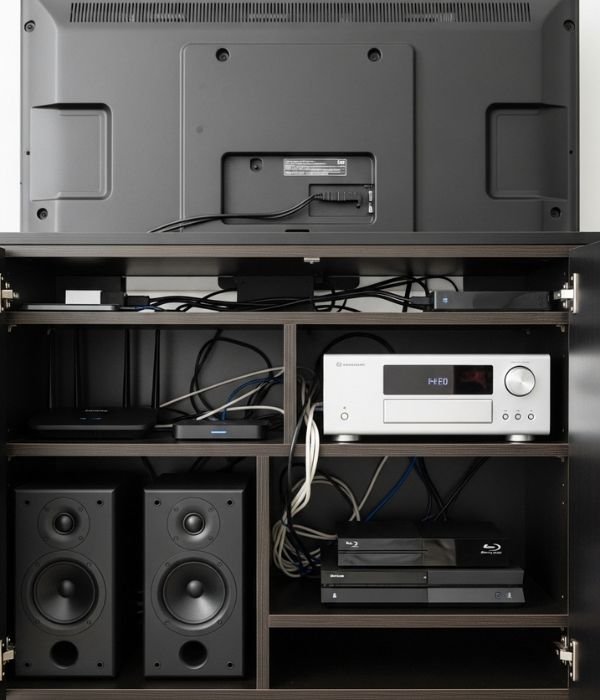
At first, devices were placed based on where they fit.
Where there was space. Where cables could reach.
It worked, but it didn’t feel clear.
What I started noticing is how disconnected everything felt.
Items that worked together weren’t placed together.
Which meant cables had to stretch, cross, and adjust.
That movement created a kind of visual tension even in a space that wasn’t fully visible.
What changed was grouping devices based on how I actually used them.
Streaming devices near each other. Audio components are closer together.
Not because it looked better, but because it reduced how much things had to stretch.
And once that stretch was reduced, everything felt more settled.
The setup didn’t just work; it made more sense.
5. Using Closed Storage to Reduce Visual Noise
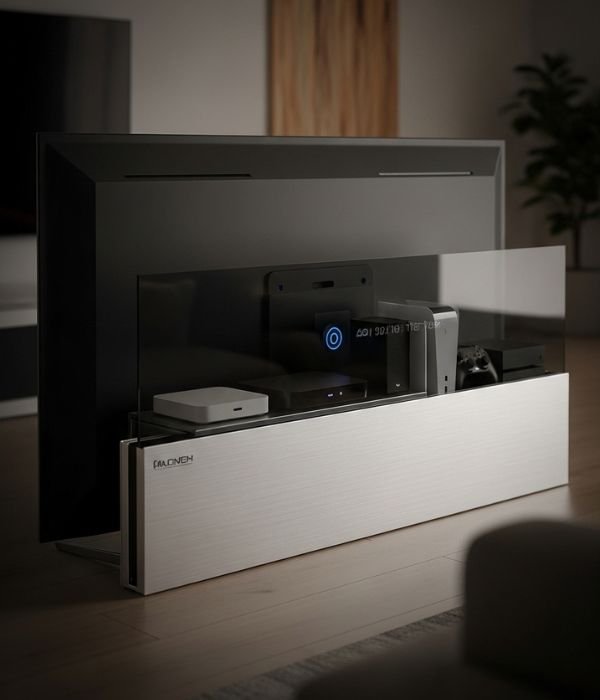
Even though this space is partially hidden, it still affects what you see.
Not directly, but in small ways.
Edges of devices. Glimpses of cables. Slight visual interruptions behind the screen.
At first, I didn’t think it mattered much.
But I noticed how those small details made the setup feel busier than it actually was.
What changed was reducing how much of that stayed visible.
Not everything needed to be exposed.
Some things just needed to exist without being seen.
Once parts of the setup were covered or contained, the space felt quieter.
Not empty but less interrupted.
And that made the entire area feel more minimal without removing anything important.
This works similarly to these small living room storage ideas, where reducing visible elements makes a space feel calmer.
6. Treating Cables as One System, Not Separate Lines
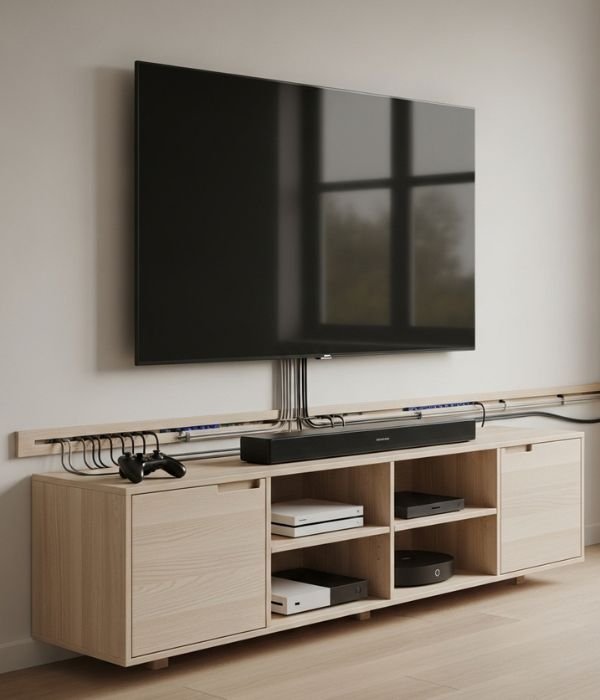
Cables were the one thing I kept trying to fix individually.
I would adjust one, then another. Straighten a line here, separate something there.
For a moment, it looked better.
But it never stayed that way.
Over time, they started crossing again. Slight shifts, small movements, just enough to undo what I had arranged before.
What I noticed is that cables don’t really stay in place on their own.
They move with everything else.
So managing them one by one didn’t work.
What changed was looking at them as a group instead of separate pieces.
Not perfectly aligned, but moving in the same direction.
Once they followed a shared path instead of competing with each other, they stopped crossing as much.
And when they stopped crossing, they stopped needing constant adjustment.
7. Keeping Access Easy Without Making Everything Visible
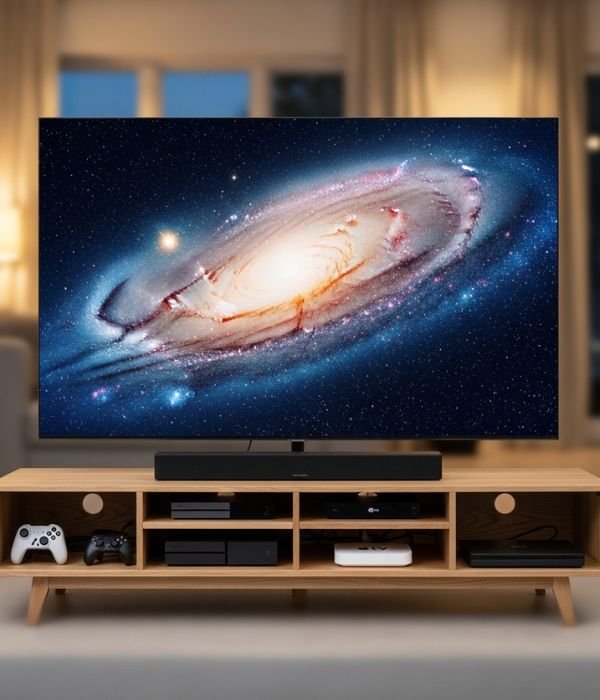
At one point, I tried to hide everything completely.
No visible cables. No exposed devices. Just a clean surface with nothing behind it.
It looked good from the outside.
But using it felt different.
Every time I needed to reach something, I had to move things around, adjust the setup, or reach further than I expected.
That created small interruptions.
And those interruptions made me less likely to maintain it.
What I noticed is that hiding everything came at the cost of ease.
So I shifted the balance.
Things stayed mostly hidden but not sealed away.
There was enough space to reach what I needed without disturbing everything else.
And once access felt easier, I stopped disrupting the setup as often.
Which meant it stayed in place longer without effort.
8. Using Slim Storage That Doesn’t Add Bulk
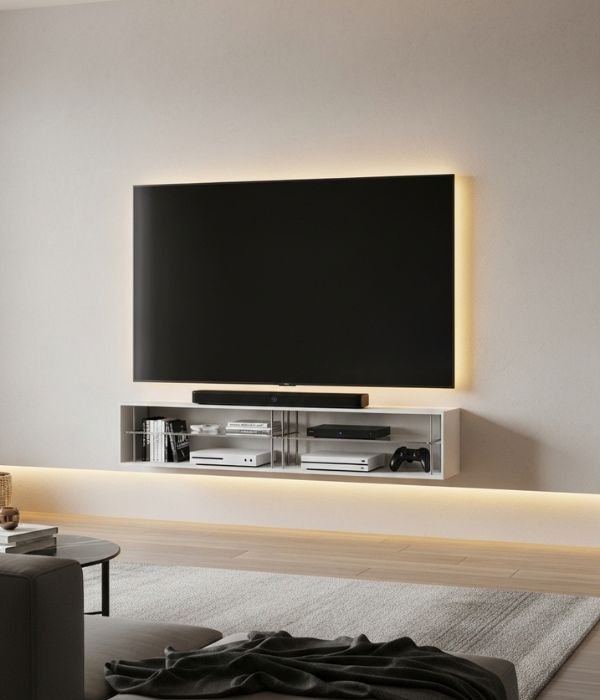
The space behind the TV doesn’t give much room to work with.
At first, I tried using storage that felt slightly too large for that area.
It worked in terms of holding items.
But it changed how everything fit together.
Things felt tighter. More compressed. Slightly harder to adjust.
Even though it was behind the screen, that extra bulk affected the balance of the setup.
What I noticed is that the space didn’t need more storage.
It needed lighter support.
Something that could hold items without taking over the area.
Once I switched to slimmer options, everything felt more aligned.
There was still structure, but without the sense of crowding.
And when the space felt less crowded, it became easier to maintain without constant adjustments.
What Actually Makes a Setup Feel Minimal
What stood out to me after making these changes is that nothing here was about removing everything.
The setup still had the same components. The same devices. The same cables.
But the way they existed together started to feel different.
There was less overlap.
Less crossing.
Less need to adjust one thing just to reach another.
And that’s what made the space feel minimal.
Not because there was less in it, but because everything interfered less.
Before, even small interactions felt slightly disrupted.
A cable is in the way. A device placed just a bit off. Something that needed to be moved before I could reach what I actually wanted.
Those small interruptions added up.
Once they were reduced, the space didn’t just look cleaner.
It felt easier to move through without thinking.
And that ease is what made it feel minimal in a way that actually lasted.
Final Thoughts
I didn’t expect this hidden area to affect the room as much as it did.
For a long time, it felt separate, almost like it didn’t matter as long as it wasn’t visible.
But once I started paying attention to how it behaved, it became clear that it was part of the system the whole time.
Things that happened behind the TV didn’t stay there.
They influenced how the setup felt, how easy it was to use, and how often I had to adjust things.
Once that space became more stable, everything else followed.
I wasn’t fixing small issues anymore.
I wasn’t adjusting things as often.
I wasn’t thinking about the setup at all.
And that’s where these behind TV storage ideas made the biggest difference.
They didn’t just organize what was hidden.
They made the entire space feel more settled without needing constant attention.
I noticed a similar pattern in these small space transformation ideas, where small structural changes create long-term stability.
