

Living room alcoves often get ignored. They’re either left empty, filled with random decor, or treated like awkward corners no one really knows what to do with. Before I explored proper alcove storage ideas for the living room, my own alcoves felt unfinished and wasted, even when the rest of the space looked put together.
The reality is, alcoves are one of the most useful features a living room can have. They naturally create space for storage without pushing furniture further into the room. When planned well, they can hide clutter, organize everyday items, and bring balance to the entire layout.
In this guide, I’m sharing practical alcove storage ideas that work in real homes. These aren’t just for styled photos; they’re solutions that make living rooms easier to live in every day.
What Is an Alcove and Why Does It Matter in a Living Room
An alcove is a recessed section built into a wall, most commonly found on either side of a fireplace or along a main wall. In older homes, alcoves were often part of the original architecture. In newer homes, they’re sometimes added intentionally to create visual interest.
What makes alcoves special is that they sit slightly back from the main wall. That recessed position makes them perfect for storage because they don’t interrupt walkways or furniture placement.
In a living room, alcoves can:
- Hold storage without taking up floor space
- Create natural zones for books, media, or decor
- Add structure and symmetry to the room
- Help reduce visible clutter
The biggest mistake I see is treating alcoves as purely decorative. When used intentionally, they can become some of the most functional areas in the living room.
Built-In Alcove Shelving That Feels Balanced
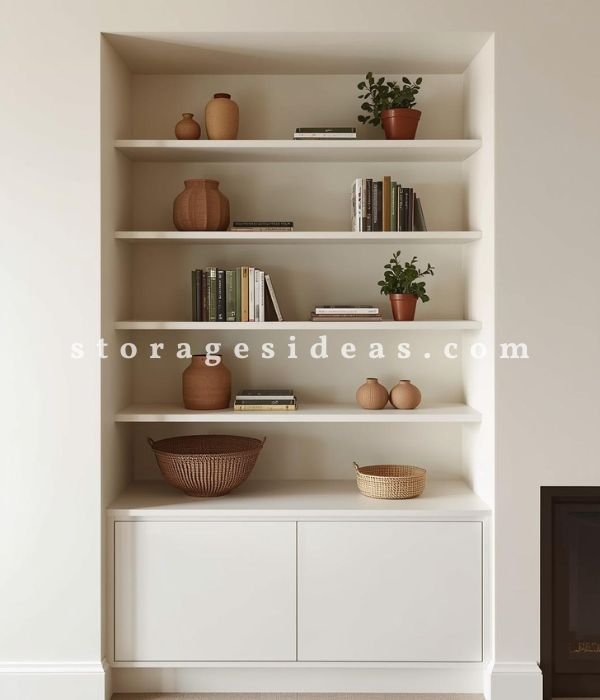
Open shelving is one of the most popular ways to use alcoves, and for good reason. Shelves make the space feel intentional while allowing storage and display to work together.
I prefer shelving that fits the full width of the alcove because it feels more balanced and built-in. Alcoves already behave like recessed corners, which is why many of the same corner storage ideas apply when planning shelf layouts here.
To keep shelves from feeling cluttered, I follow a few simple guidelines:
- I avoid shelves that are too deep, which can make the alcove feel heavy
- I leave breathing room between items instead of filling every shelf
- I mix books with baskets and a few decorative pieces
Shelving works best for items I use or see often, like books, small storage bins, plants, or personal items. When shelves are balanced, alcoves feel like part of the room rather than extra storage tacked on.
Alcove Cabinets for Hidden Living Room Storage
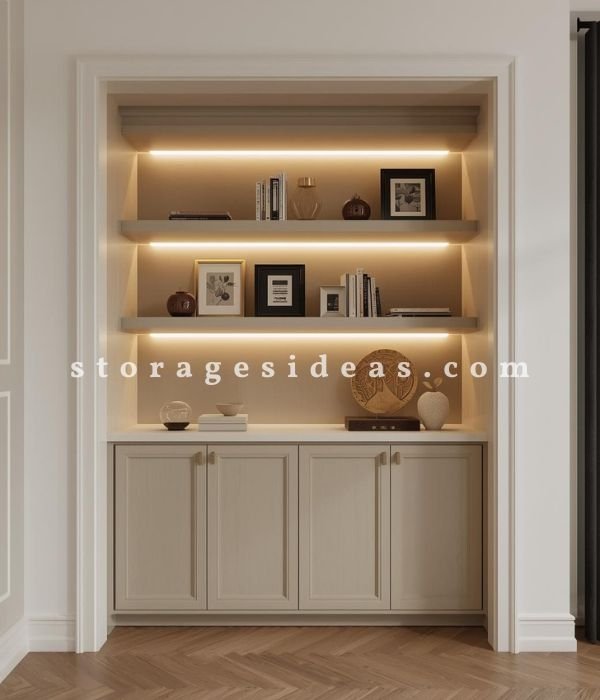
Not everything belongs on display, which is why alcove cabinets are such a useful option. Cabinets provide hidden storage while keeping the living room calm and visually clean.
I use alcove cabinets for things like board games, extra cushions, paperwork, remote controls, and tech accessories. These are everyday items that create clutter quickly if left out.
Low cabinets tend to work best because they:
- Keep visual weight near the floor
- Leave room above for shelves or artwork
- Make the alcove feel grounded rather than boxed in
For smaller living rooms, I stick to simple cabinet designs with clean lines. Flat-panel or shaker-style doors, especially in light or wall-matching colors, help cabinets blend in instead of standing out.
Alcove Storage for Small Living Rooms
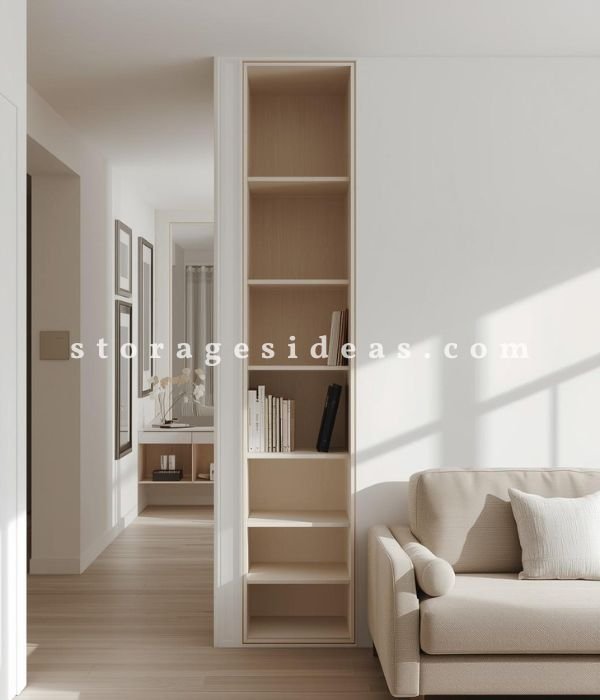
In small living rooms, alcoves are especially valuable. They provide storage space without stealing square footage from the main seating area.
When alcoves are narrow or shallow, I focus on:
- Slim shelving instead of deep units
- Vertical storage that draws the eye upward
- Avoiding bulky furniture inside the alcove
I also pay close attention to how the alcove interacts with nearby seating. Storage should never block movement or make the room feel tight. Keeping the center of the living room open matters more than filling every inch of the alcove.
Used thoughtfully, alcove storage can actually make a small living room feel larger by reducing clutter elsewhere.
Alcove Storage Around Fireplaces
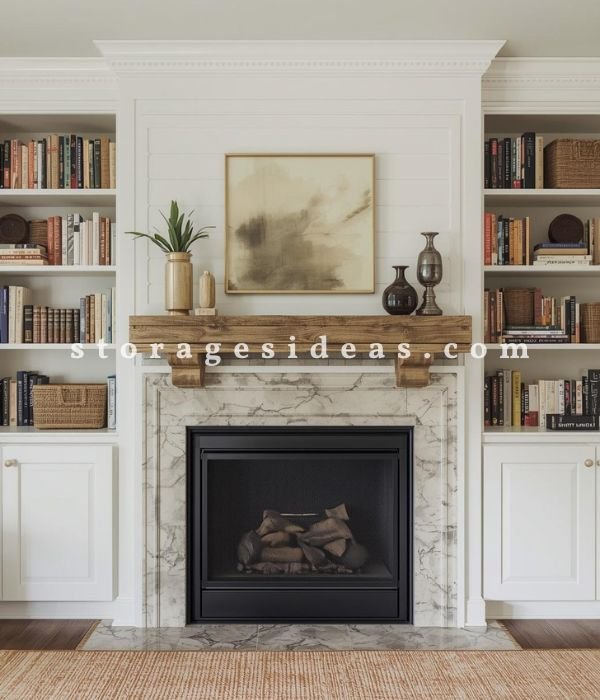
Fireplaces often come with alcoves on either side, and these are some of the most visually important spots in a living room. How they’re used can shape the entire space.
I like to keep fireplace alcoves balanced, but not overly identical. Perfect symmetry looks polished, but flexibility works better for real storage needs.
These alcoves work well for:
- Books are arranged both vertically and horizontally
- Baskets for small items
- A mix of storage and simple decor
When planning alcove storage around fireplaces, I always keep safety in mind and follow basic clearance guidance from the National Fire Chiefs Council.
I’m careful about what goes near the fireplace. Heat-sensitive items like electronics or candles should be kept at a safe distance.
When planned well, fireplace alcoves frame the room beautifully while adding real function.
Alcove Storage Ideas for Families
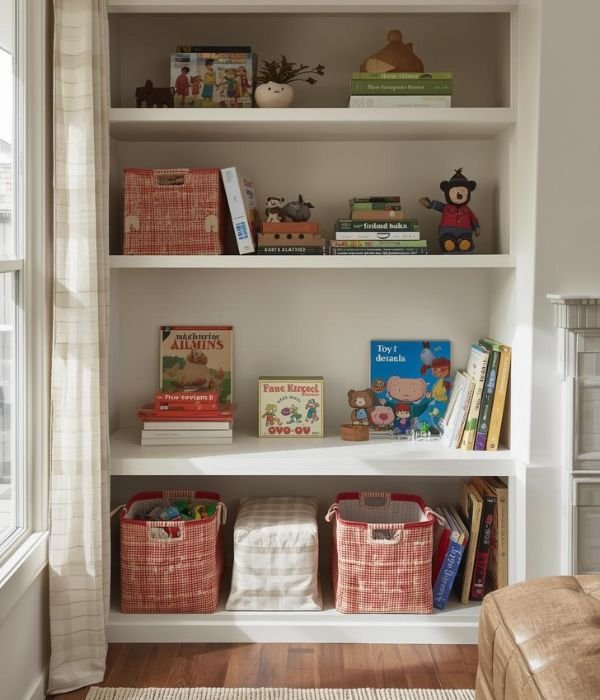
For families, alcove storage needs to be practical and easy to maintain. Living rooms are shared spaces, so storage has to handle daily use without constant effort.
I’ve found alcoves work especially well for:
- Toy baskets
- Board games and puzzles
- Children’s books
Lower shelves make it easier for kids to grab and return items on their own. Higher shelves can hold items meant for adults or shared family use.
Baskets and bins work even better when paired with practical storage ideas for small items that help prevent clutter from spreading.
Renter-Friendly Alcove Storage Solutions
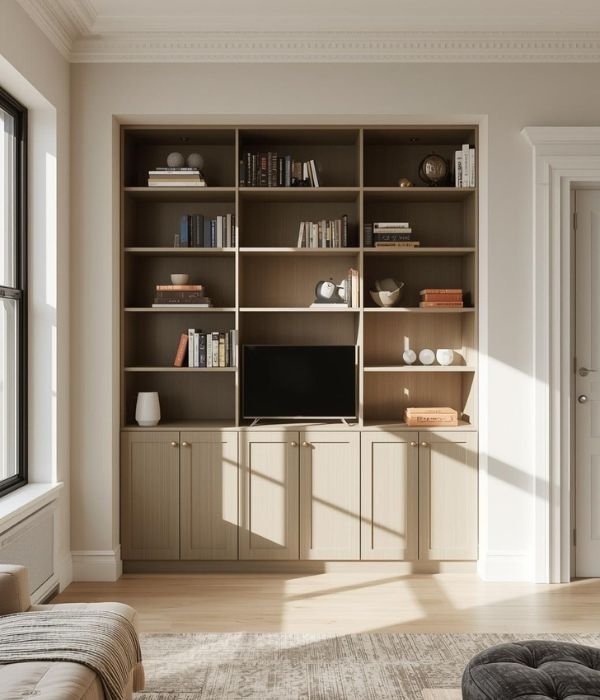
Renters often assume alcoves can’t be customized, but there are plenty of flexible options that don’t require drilling or permanent changes.
Some renter-friendly solutions I rely on include:
- Freestanding bookcases sized to fit the alcove
- Modular shelving units
- Slim cabinets that sit flush against the wall
These options give the appearance of built-in storage while remaining easy to remove or reuse in a new home. For renters, flexibility is just as important as storage capacity.
Mixing Open and Closed Alcove Storage
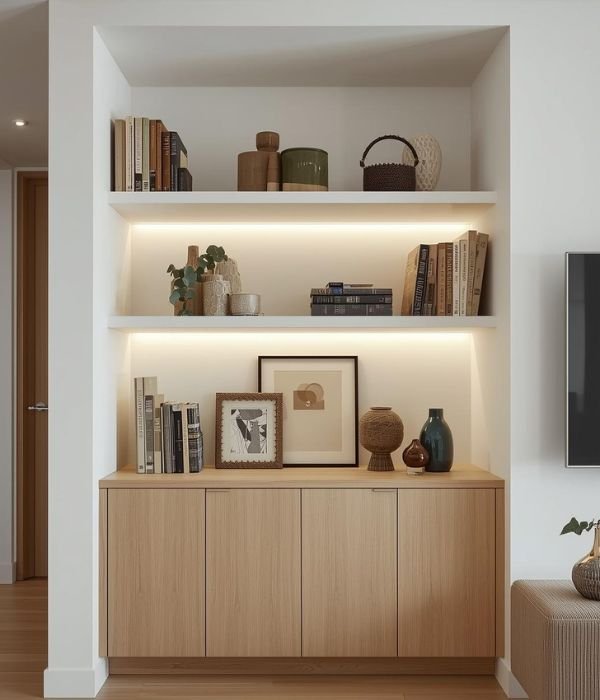
Using only open shelves often leads to visual clutter, while fully closed storage can feel heavy. Mixing both creates balance.
I usually combine:
- Closed cabinets or drawers at the bottom
- Open shelves above for lighter items
This setup lets me hide everyday mess while still displaying a few personal or decorative pieces. It also makes alcoves easier to maintain because not everything needs to look perfect all the time.
Alcove storage works best when it complements other smart living room storage solutions already in the space.
DIY Alcove Storage Ideas
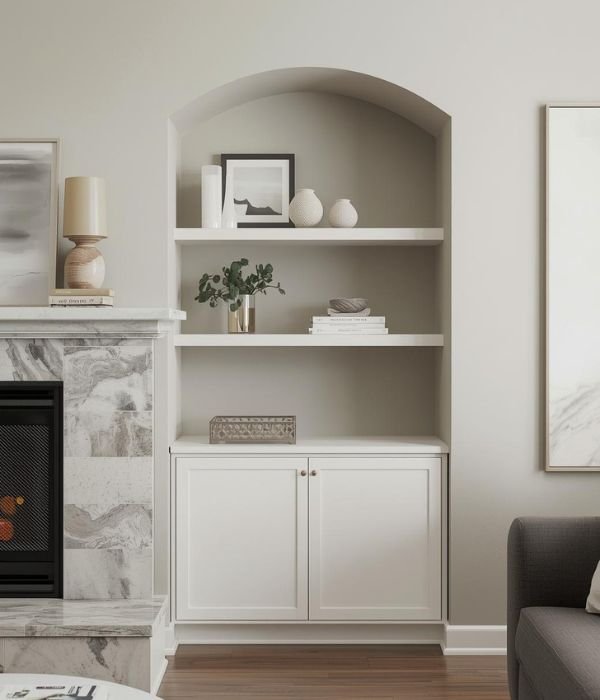
DIY alcove storage can work well when you’re on a budget or dealing with an unusual alcove size. Simple projects tend to look cleaner and last longer.
Some easy DIY ideas include:
- Adding custom-fit shelves
- Painting the alcove a subtle contrasting color
- Using off-the-shelf units and adjusting them to fit
I avoid overly complex builds. The goal is to improve function, not turn the alcove into a long renovation project.
Simple projects work best, such as adding shelves or adapting ready-made units. If you enjoy small builds, a DIY living room storage cabinet can be adjusted to fit neatly inside an alcove.
How I Keep Alcove Storage Looking Good Long-Term
Even the best alcove storage needs occasional attention. I keep things under control with a simple routine.
Every few months, I:
- Remove items that no longer belong in the living room
- Reorganize shelves and baskets
- Rotate seasonal items
I also try not to add new items without removing something else. Alcoves fill up quickly if there’s no limit.
FAQs About Alcove Storage in the Living Room
What can I store in living room alcoves?
Books, baskets, toys, games, media items, decor, and everyday living room essentials all work well.
Are alcoves good for storage?
Yes. Their recessed design makes them ideal for storage that doesn’t interrupt movement.
How deep should alcove shelves be?
Shallow shelves usually work best, especially in smaller living rooms.
Can renters use alcove storage?
Yes. Freestanding and modular units are renter-friendly and easy to remove.
Should alcove storage be open or closed?
A mix of both usually provides the best balance.
Final Thoughts: Making Alcove Storage Work in the Living Room
Alcoves don’t need to be awkward or unused. When planned with intention, they become some of the most functional storage areas in a living room.
Once I started using proper alcove storage for the living room solutions, my space felt calmer and easier to manage. Storage stopped spilling into other areas, and the room felt more balanced overall.
The best alcove storage ideas are simple, practical, and easy to live with. When storage fits the space naturally, clutter stops being a constant problem—and the living room finally works the way it should.
