
Introduction
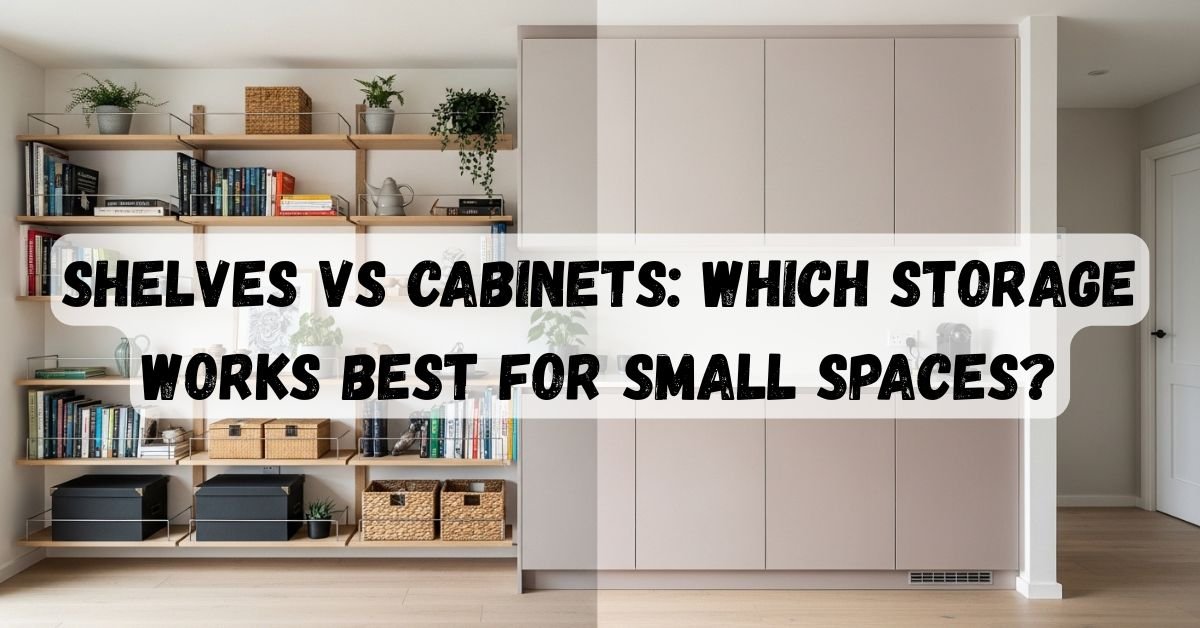
Every small space eventually reaches the same moment. The clutter is creeping in, the floor space is gone, and you’re standing in the middle of the room wondering: Do I need more shelves, or do I need cabinets?
It sounds like a simple question. In practice, it’s one of the most consequential storage decisions you’ll make because the wrong choice doesn’t just waste money. It makes the room feel smaller, messier, or more stressful than it did before.
Open shelving looks light and airy in design blogs. Closed cabinets promise to hide the chaos behind clean, smooth fronts. But neither is universally better, and in a small space, where every decision is magnified, the nuance really matters.
This guide is a proper, honest breakdown of shelves vs cabinets for small spaces. We’ll cover how each one performs in different rooms, what each one does well (and what it doesn’t), and how to decide which is right for your specific situation without tearing your hair out in the process.
This is a common challenge in compact homes, where small space transformation ideas help improve both storage and overall layout.
Why the Shelves vs Cabinets Decision Matters More in Small Spaces
In a large home, a storage mistake is inconvenient. In a small space, it’s suffocating.
When square footage is limited, every piece of furniture affects the visual weight of the room, the flow of natural light, the sense of openness, and the ease of daily life. A wall of closed cabinets in the wrong room can make a small space feel like a corridor. A run of open shelves filled with mismatched clutter can make it feel chaotic and unfinished.
That’s why the shelves vs cabinets question deserves more thought than most people give it. It’s not really a question about storage at all; it’s a question about how you want your space to look and feel, what kind of maintenance you’re willing to commit to, and which problems you’re actually trying to solve.
Get it right, and your small space feels organised, calm, and surprisingly generous. Get it wrong, and the room works against you every single day.
The way storage is structured in small spaces has a direct impact on how open or confined a room feels.
What Open Shelves Do Really Well
Before picking a side, it’s worth understanding what each option genuinely excels at because both have real, compelling strengths.
Open shelving has a few qualities that cabinets simply can’t replicate.
Visual lightness. Shelves don’t block light or create visual barriers the way solid cabinet doors do. In a small space, this matters enormously. A floating shelf on a wall takes up almost no visual room it adds storage without adding bulk. A full-height cabinet in the same spot can make the ceiling feel lower, and the walls feel closer.
Accessibility. Everything on a shelf is visible and reachable at a glance. No opening doors, no rummaging through the back of a cupboard, no forgetting that a particular item even exists. For things you use constantly, such as mugs, spices, books, and folded towels, shelves are genuinely more practical than cabinets.
Cost. Open shelving is almost always cheaper than equivalent cabinet storage. Floating shelves in particular are among the most affordable storage solutions available, which matters when you’re furnishing a small space on a budget.
Display opportunity. Shelves let your belongings become part of the decor. A well-styled shelf of books, plants, and a few decorative objects can be one of the most attractive features in a room. Cabinets, by design, hide everything. If you have things worth displaying, shelves give them a home.
What Cabinets Do Really Well
Cabinets have their own compelling case, and in small spaces especially, some of their strengths are hard to argue with.
Visual calm. This is the big one. Closed cabinet doors create a smooth, uniform surface that reads as clean and calm, even if the inside is a complete jumble. In a small space where visual noise is the enemy, this matters more than almost anything else. One wall of well-chosen cabinets can make a compact room feel serene and deliberate.
Hiding imperfection. Not all storage looks good on display. Cleaning products, medicine, paperwork, mismatched Tupperware, cables, these things exist in every home, and cabinets give them somewhere to live that isn’t on public view. Shelves demand that everything stored on them is presentable. Cabinets have no such requirement.
Protection. Shelves collect dust; everything on them collects dust. In a kitchen or bathroom, particularly, open shelving means regular cleaning of every item on display. Cabinets protect their contents, cutting maintenance significantly.
Better for renters and families. If you have children, pets, or you’re renting a space you’ll eventually hand back, cabinets offer safety (things can’t be knocked off), privacy (guests don’t see into your storage), and a tidiness that doesn’t depend on everything being perfectly arranged at all times.
Shelves vs Cabinets in the Kitchen: A Room-by-Room Verdict
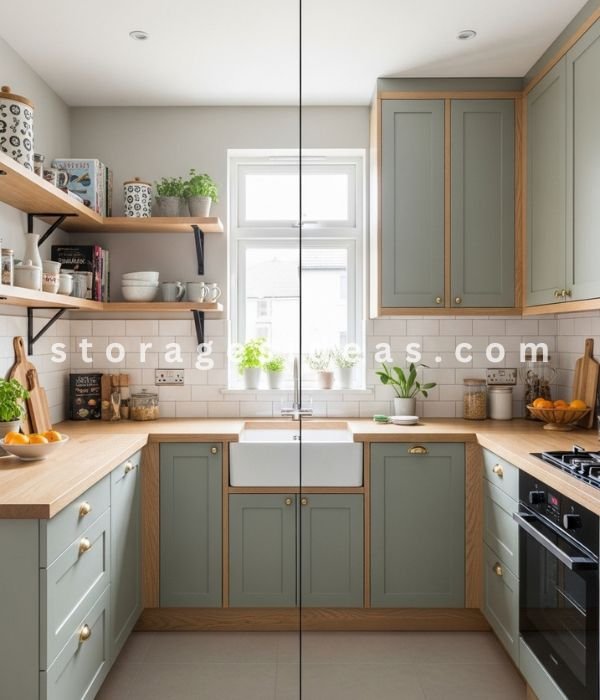
The kitchen is where the shelves vs cabinets debate gets most heated and most personal.
Open kitchen shelving has had a prolonged moment in interior design. Airy, accessible, and undeniably attractive when done well, open shelves can make a small kitchen feel bigger and brighter. They’re particularly effective above worktops, where a row of floating shelves replaces heavy upper cabinets and opens the room up significantly.
But here’s the truth: open kitchen shelves require commitment. Everything on them is always on display, which means dishes need to be attractive, storage needs to be curated, and surfaces need to be cleaned regularly. Grease and steam from cooking settle on the shelves and everything on them. In a busy family kitchen, this maintenance burden is real.
The verdict for small kitchens: A hybrid approach works best. Use open shelves for the items you use every day and are happy to display a few mugs, glasses, a plant, a cookbook or two. Use closed cabinets for everything else: food stores, cleaning supplies, pots and pans, and the contents of your junk drawer. This gives you the visual lightness of shelving without the maintenance demands of going fully open.
A similar balance can be seen in kitchen cabinet organization ideas, where both accessibility and hidden storage play an important role.
Shelves vs Cabinets in the Living Room: What Actually Works
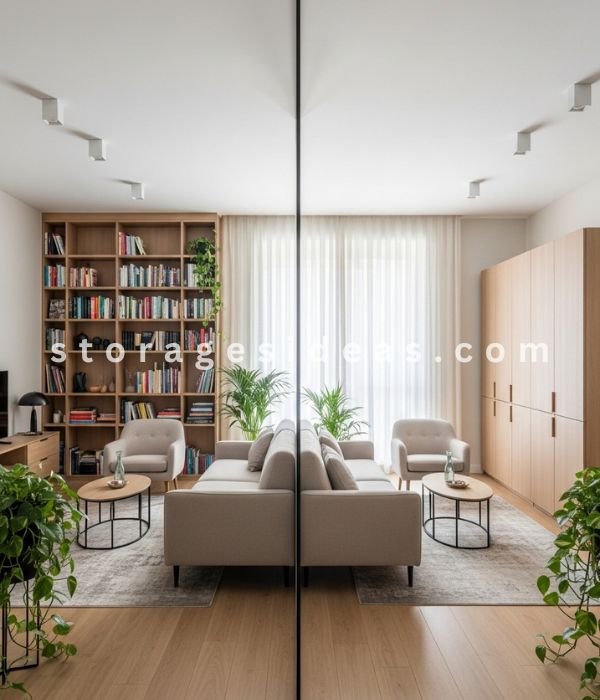
In a living room, the decision shifts. Function matters, but so does atmosphere, and living rooms are spaces where you want to feel comfortable and at ease, not like you’re surrounded by storage.
Open shelving in a living room, a full wall of bookshelves, a set of floating shelves around a TV, and a set of cube units can be one of the most characterful features in a room. Books, plants, art, and personal objects on open shelves give a living room warmth and personality that closed cabinets rarely achieve.
The challenge, again, is maintenance. A styled shelf looks beautiful. A shelf that’s accumulated six months of random items, remote controls, and unpaired candles looks worse than no shelf at all.
Cabinets in the living room, a media unit with doors, a sideboard, and a storage ottoman solve this problem quietly. Everything messy disappears. The room looks clean with almost no effort.
The verdict for small living rooms: If you love styling and are happy to curate your shelves every few weeks, open shelving adds enormous warmth and character to a small living room. If you just want the room to look tidy with minimal effort, closed cabinet storage is the more reliable choice. A TV unit with closed doors at the bottom and open shelving above is a classic compromise that works well in most small living rooms.
Shelves vs Cabinets in the Bedroom: The Case for Going Closed
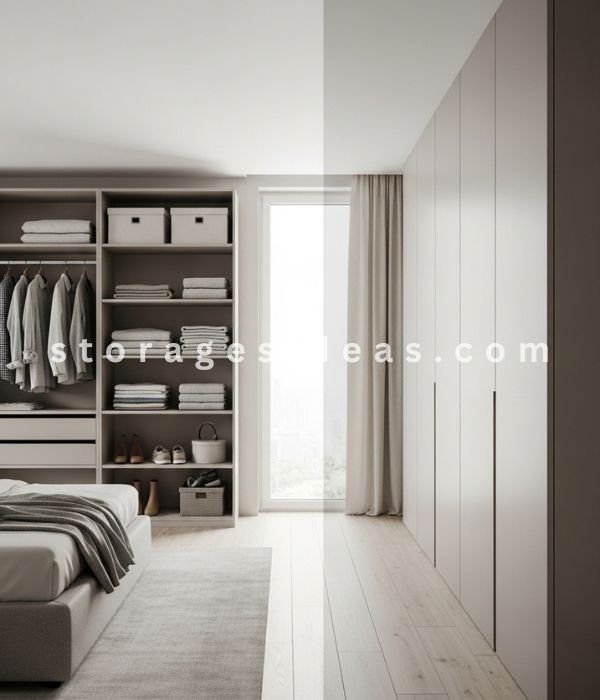
The bedroom is where the case for cabinets becomes strongest and where the limitations of open shelving are most obvious.
Bedrooms are personal, private spaces. They’re where we get dressed in the morning, where we decompress at night, and where we store some of the most visually chaotic items in the house: clothing, accessories, shoes, and personal care products. Open shelving in a bedroom puts all of that on permanent display. Even beautifully organised open wardrobe shelves require daily maintenance to look good. The moment laundry gets piled on them, or items get put back in the wrong spot, the room looks untidy.
Closed wardrobes, drawers, and bedside cabinets contain the chaos completely. The bedroom can look calm and restful regardless of what’s happening inside the storage.
The exception is bedside shelving. A small floating shelf above or beside the bed for a lamp, a book, or a glass of water works beautifully and takes up none of the visual weight that a bedside cabinet would. This is one case where a shelf beats a cabinet clearly.
The verdict for small bedrooms: Go closed for clothing and personal storage. Use shelves sparingly, a floating shelf here, a small open bookcase there, for things you actively want on display.
Shelves vs Cabinets in the Bathroom: Where Closed Storage Wins
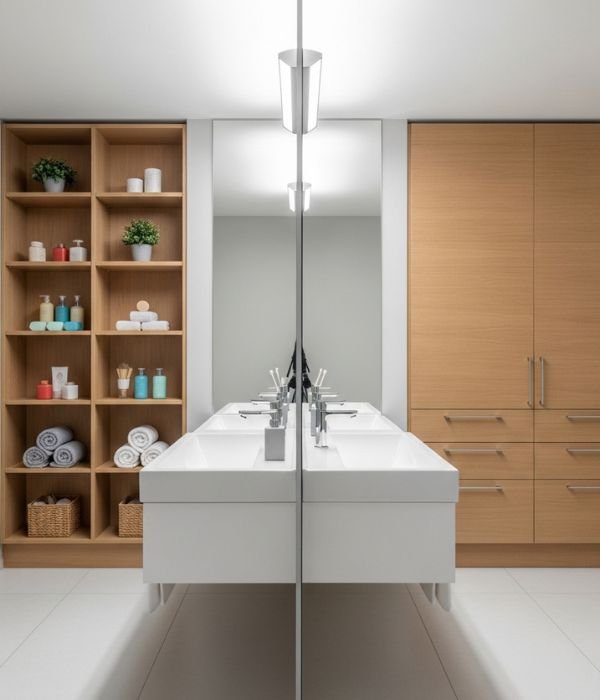
In most small bathrooms, closed cabinet storage is the right choice and not just for aesthetic reasons.
Bathrooms are humid. Steam, condensation, and splashing water are facts of life, and open shelves expose everything on them to that environment. Towels, toilet rolls, and products stored on open shelves in a bathroom get damp, dusty, and grubby faster than anywhere else in the home. A mirrored bathroom cabinet, an under-sink vanity unit, or a slim storage tower with doors keeps products clean, contained, and tidy.
The one area where bathroom shelving works genuinely well is inside the shower. A recessed niche shelf or a tiered caddy is practical, drip-dry, and out of the way.
The verdict for small bathrooms: Default to closed cabinet storage for almost everything. Use a recessed shelf in the shower and perhaps one small floating shelf for a plant or a candle if there’s wall space, but keep the rest behind doors.
When to Mix Both: The Hybrid Approach That Works in Every Room
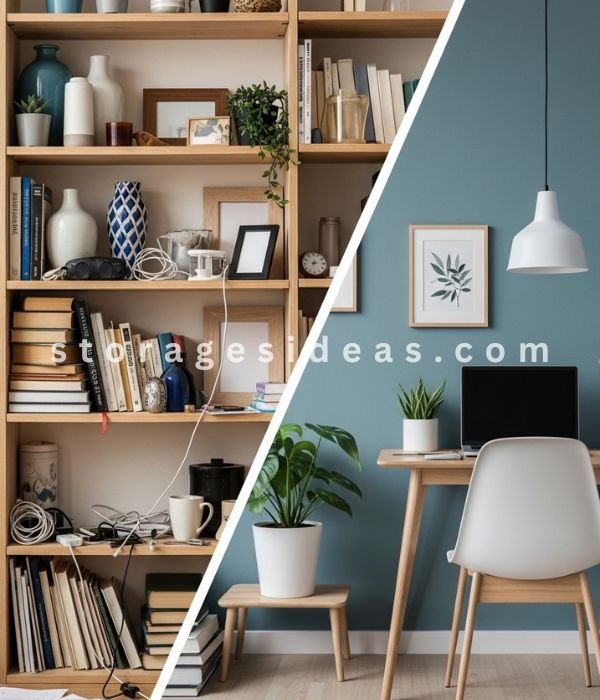
For most small spaces, the best answer to the shelves vs cabinets question isn’t one or the other, it’s a thoughtful combination of both.
The principle is simple: use open shelving for the things you use constantly, enjoy looking at, and are willing to keep tidy. Use closed cabinets for everything else.
Hybrid combinations that work well:
- Kitchen upper cabinets replaced with open shelves on one wall only, a lighter look without full open-shelf commitment
- A TV media unit with closed doors below and a few floating shelves above for books and plants
- A wardrobe with a mix of closed hanging space, drawers, and one open shelf section for folded items
- A bathroom vanity unit with closed doors below and a single open shelf above for daily-use items
- A home office desk with closed drawer units below and open shelving above for reference books and decorative objects
The hybrid approach lets you capture the visual lightness and accessibility of shelves where it matters most, while relying on the calm and low-maintenance quality of cabinets everywhere else.
The Honest Checklist: How to Decide What’s Right for Your Space
Still not sure which way to go? Work through these questions honestly; they’ll point you in the right direction.
Choose open shelves if:
- The items you’re storing are attractive, and you’re happy to display them
- You use the items frequently and want them immediately accessible
- The room needs visual lightness, and you don’t want to add bulk
- You’re willing to tidy and dust regularly
- Budget is a consideration, and you want maximum storage for minimum spend
Choose cabinets if:
- The items you’re storing are messy, mismatched, or just not display-worthy
- You want the room to look tidy with minimal daily effort
- You have children, pets, or a busy household where things rarely get put back perfectly
- The room is already visually busy and needs calm, clean surfaces
- Dust and maintenance are concerns, particularly in kitchens and bathrooms
Choose both if:
- You want the warmth and accessibility of open shelving without the maintenance burden of going fully open
- The room serves multiple purposes and needs both display and hidden storage
- You have a mix of beautiful items worth showing and everyday clutter worth hiding
Common Mistakes to Avoid Whichever You Choose
Whether you go with shelves, cabinets, or a mix of both, a few mistakes will undermine your storage and your small space quickly.
Overloading open shelves. The most common mistake with open shelving is treating it like a closed cabinet, filling every inch with everything that needs a home. Open shelves only work when they have some breathing room. Edit ruthlessly and resist the urge to fill every gap.
Buying cabinets that are too deep. Deep cabinets in small spaces create black holes; things get pushed to the back and disappear. Shallower cabinets (30cm rather than 60cm) that you can see into fully are often more practical in compact rooms.
Ignoring vertical space. In small spaces, the wall above eye level is chronically underused. Whether you’re using shelves or cabinets, go tall. Floor-to-ceiling storage of either kind dramatically increases capacity without increasing footprint.
Choosing style over practicality. Open shelving that you’re not prepared to maintain will make your space look worse, not better. Cabinets that don’t suit your daily habits will go unused. Choose what works with your actual life, not your ideal life.
Many of these issues are also addressed in clutter-free living room ideas, where reducing visual noise plays a key role in making small spaces feel better.
Conclusion
The shelves vs cabinets debate doesn’t have a universal winner, and anyone who tells you otherwise is oversimplifying. The right answer depends on the room, the contents, your lifestyle, and how much maintenance you’re honestly willing to commit to.
What small spaces need most is storage that makes the room feel bigger, calmer, and easier to live in, not storage that creates more to manage. Open shelves, used well, do this brilliantly. Closed cabinets, in the right rooms, do it even better. And in most homes, the smartest solution of all is a combination of both, each one doing the job it’s actually suited for.
Start with your biggest daily frustration. Is the problem that you can’t find things quickly? Shelves. Is the problem that the room always looks messy, no matter how often you tidy? Cabinets. Is it both? Then the answer, as it usually is, is somewhere in between.
Frequently Asked Questions (FAQ)
Q: Are shelves or cabinets better for a small room?
A: It depends on what you’re storing and how much maintenance you’re willing to do. Shelves are better for visual lightness and accessibility; they make a small room feel more open. Cabinets are better for keeping a small room looking tidy with minimal effort. For most small rooms, a combination of both works better than choosing just one.
Q: Do open shelves make a small room look bigger or smaller?
A: When used well, open shelves can make a small room feel bigger. They’re visually lighter than closed cabinets and don’t block light or create visual barriers. However, overfilled or cluttered shelves have the opposite effect. The key is to leave some breathing room and edit what’s on display regularly.
Q: Which is more budget-friendly, shelves or cabinets?
A: Open shelves are almost always cheaper. Floating shelves, in particular, are one of the most cost-effective storage solutions available. Custom or fitted cabinets are among the most expensive storage options. Freestanding cabinet units sit somewhere in between, depending on quality and size.
Q: Can I mix open shelves and cabinets in the same room?
A: Absolutely, and for most small spaces, this is the best approach. Use open shelves for items you use constantly and are happy to display, and closed cabinets for everything else. A TV unit with closed doors below and open shelves above is a classic and practical example of this combination.
Q: What should I never store on open shelves?
A: Anything you’re not happy looking at every day. Cleaning products, medicines, paperwork, mismatched containers, and overstuffed items all belong behind closed doors. Open shelves are for curated, attractive, frequently used items, not for everything that needs a home.
Enjoyed this guide? Browse our other articles on small space storage solutions, home organisation tips, and smart furniture ideas for every room in the house.
