
Introduction
A sunroom often looks like one of the most inviting spaces in a home.
It’s filled with natural light, positioned near windows, and usually designed with good intentions. But in many homes, it ends up being used far less than expected.
The problem isn’t the space itself. It’s how the space is set up.
Too much sunlight makes it uncomfortable to sit for long. Furniture looks good, but doesn’t support real use. The layout feels scattered, so nothing naturally pulls you into the space. Over time, the sunroom becomes somewhere you pass through, not somewhere you stay.
That’s where practical sunroom ideas make the difference.
Instead of treating the space as decorative, the goal is to make it usable. A place where you can sit, relax, read, or even work without adjusting everything around you every time.
When comfort, layout, and purpose come together, the sunroom stops being an occasional space and starts becoming part of your daily routine.
This is the same approach used in small space transformation ideas, where underused areas are redesigned to become functional parts of the home.
9 Practical Sunroom Ideas:
1. Start with Seating That Supports Long Use
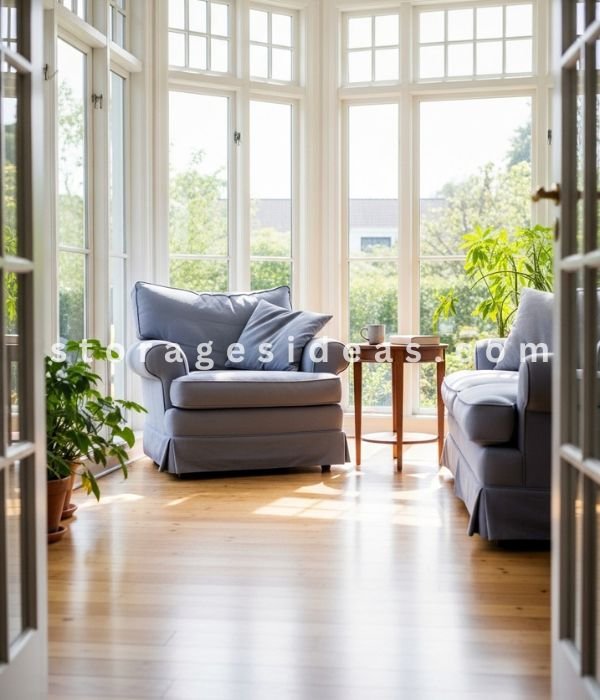
The biggest reason a sunroom goes unused isn’t layout or lighting. It’s discomfort.
A space can look perfectly arranged, but if sitting there feels slightly off, too firm, too upright, or too low, you won’t stay. And when you don’t stay, the room slowly becomes something you pass through instead of using.
That’s why practical sunroom ideas always begin with seating that supports real time, not just short moments. For specific pieces, see these sunroom furniture ideas.
Comfort in this context isn’t about oversized furniture. It’s about support. The angle of the backrest, the depth of the seat, and how naturally your body settles into it all matter more than the style itself. If you find yourself adjusting your position within a few minutes, the seating is working against the space.
A well-chosen chair or sofa should feel effortless. You sit down, and there’s nothing to fix.
Another detail that often gets overlooked is how seating interacts with sunlight. Materials that trap heat or surfaces that become uncomfortable under direct light can quietly reduce how usable the space feels during the day. Choosing breathable fabrics and lighter finishes helps maintain comfort without constant adjustment.
When seating is right, everything else becomes easier. You don’t think about using the sunroom. You just do.
A similar approach can be seen in small living room furniture and decor hacks, where comfort and layout are balanced in compact spaces.
2. Define a Clear Sitting Zone Instead of Scattering Furniture
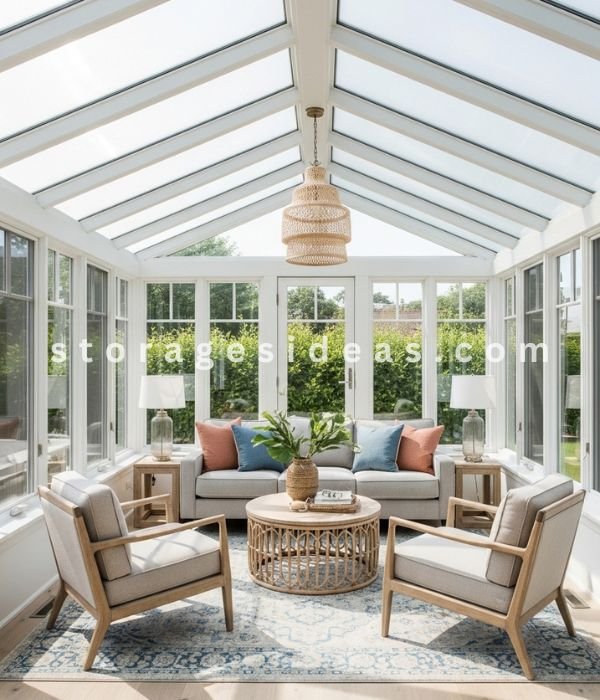
A sunroom can feel incomplete even when all the right pieces are there.
The issue usually isn’t what’s in the space, but how those pieces relate to each other. When furniture is pushed to the edges or placed without a clear center, the room feels more like a collection of items than a usable area.
One of the most effective sunroom ideas is simply creating a defined sitting zone.
This doesn’t require adding more furniture. It’s about repositioning what already exists. Pulling seating slightly inward, allowing pieces to face each other, and creating a natural focal point change how the space functions. It gives the room direction.
Instead of moving around the furniture, you move into the space.
That shift is subtle, but important. It makes the sunroom feel intentional rather than leftover. Even in smaller spaces, a clearly defined zone creates a sense of purpose that scattered layouts can’t achieve. If your glass room is on the smaller side, these small conservatory ideas focus on layout and comfort in a tight footprint.
Once the layout starts working as a single unit, the room becomes easier to use without needing constant adjustment.
3. Control Light to Make the Room Usable All Day
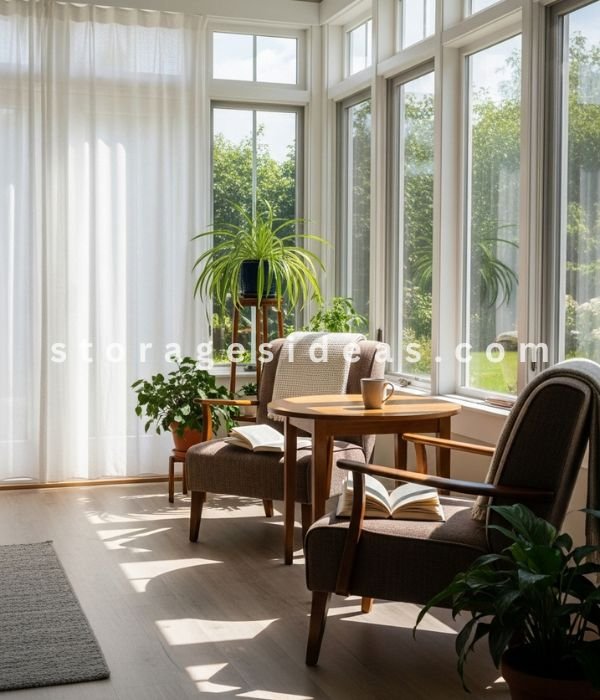
Natural light is the defining feature of a sunroom, but it’s also the main reason many of them are uncomfortable to use.
There’s a point where light stops feeling pleasant and starts becoming disruptive. Glare makes it difficult to read or look at screens. Heat builds up faster than expected. Certain spots become unusable depending on the time of day.
That’s why practical sunroom ideas don’t aim to increase light; they aim to control it.
The goal is balance. Enough light to keep the space bright, but not so much that it limits how you use it. This is where simple solutions make a significant difference. Light-filtering curtains soften intensity without darkening the room. Adjustable blinds allow you to respond to changes throughout the day rather than being stuck with one condition.
Another important detail is direction. Understanding how sunlight moves through the room helps you position both seating and light control elements more effectively. Instead of reacting to discomfort, you prevent it.
Once light is managed properly, the space becomes consistent. You can use it in the morning, afternoon, or evening without needing to adjust everything each time.
4. Use Materials That Handle Heat and Sun Exposure
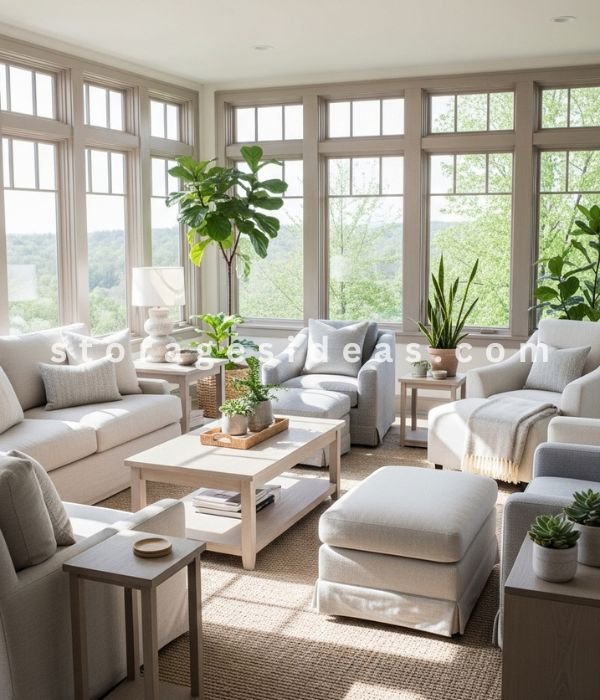
A sunroom operates under different conditions than the rest of the home.
Constant exposure to sunlight changes how materials behave over time. Fabrics fade, surfaces heat up, and certain finishes start to wear faster than expected. What works well in a living room doesn’t always hold up in a sunroom.
That’s why choosing the right materials is one of the most practical sunroom ideas.
It’s less about appearance and more about performance. Materials that resist fading, stay comfortable under light, and require minimal maintenance make the space easier to live with long-term. When surfaces don’t overheat, and fabrics remain consistent, the room stays usable without constant adjustment.
There’s also a comfort layer that comes with the right materials. Breathable textures prevent the space from feeling heavy, while lighter tones reflect heat instead of absorbing it. These small details reduce the subtle discomfort that often builds up over time.
When materials are chosen with the environment in mind, the sunroom stops being something you manage and becomes something you use.
5. Add Simple Storage to Prevent Daily Clutter
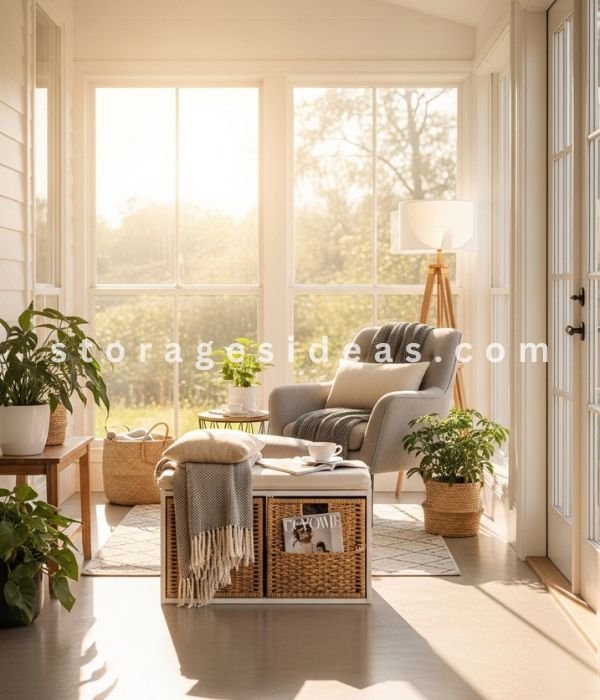
Clutter doesn’t appear all at once in a sunroom. It builds slowly.
A book left on the chair, a blanket that doesn’t have a place, small items that get set down “just for now.” None of it feels like a problem in the moment, but over time, it changes how the space feels and how easy it is to use.
That’s why practical sunroom ideas always include some form of simple storage.
Not large cabinets or heavy units, but small, accessible solutions that remove friction. A place where items can go without thinking. When storage requires effort, it gets delayed. When it’s easy, it becomes part of the routine.
The goal isn’t to store more things. It’s to prevent things from staying out.
Storage works best when it blends into the space rather than standing out. A bench that holds items underneath, a basket placed where you naturally reach, or a small cabinet that doesn’t interrupt movement can quietly keep the space under control.
When clutter is managed at a small scale, it never becomes a larger problem.
This works especially well when combined with hidden storage ideas, helping you keep the space clean without adding visual clutter.
6. Create a Functional Purpose for the Space
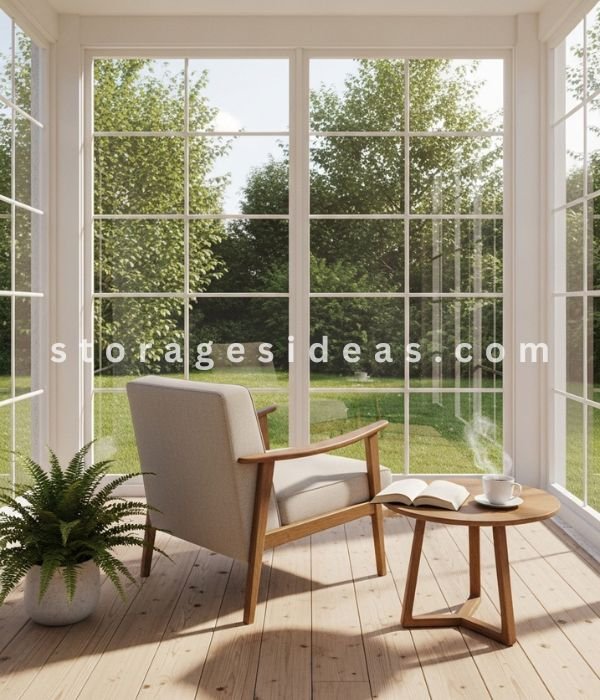
A sunroom without a clear role tends to drift.
It might look complete, but without a defined use, there’s no reason to return to it consistently. It becomes a space you notice, not a space you rely on.
That’s why one of the most important sunroom ideas is giving the space a function that fits your daily life.
The purpose doesn’t need to be complicated. In fact, simpler works better. A place to sit with coffee in the morning. A quiet corner to read. A secondary spot to work when you need a change of environment. What matters is that the space supports something you already do.
Once that purpose is clear, everything else starts aligning naturally. Seating is chosen based on how long you sit. Lighting is adjusted based on how you use the space. Even small details begin to feel more intentional.
A defined purpose removes hesitation. You don’t think about whether to use the space. You already know what it’s for.
7. Use Rugs to Anchor and Soften the Space
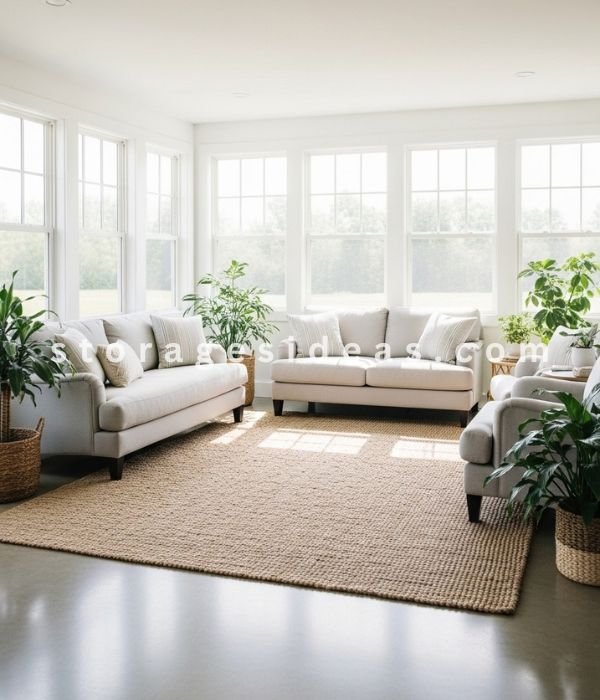
There’s a certain openness in sunrooms that can make them feel slightly unfinished.
Even when furniture is in place, the space can lack a sense of grounding. Sound carries differently, surfaces feel harder, and the room doesn’t fully settle into itself.
This is where rugs quietly change the experience.
Among practical sunroom ideas, adding a rug isn’t about decoration. It’s about balance. It defines where the seating area begins and ends, giving the layout a sense of structure without adding physical barriers.
At the same time, it softens the room in ways that aren’t immediately obvious. It reduces echo, adds warmth underfoot, and makes the space feel more comfortable to spend time in.
The key is choosing a size that supports the layout rather than sitting under one piece of furniture. When the rug connects the elements of the space, everything feels more cohesive.
It’s a subtle change, but one that affects how the room feels every time you step into it.
8. Keep Furniture Flexible and Easy to Move
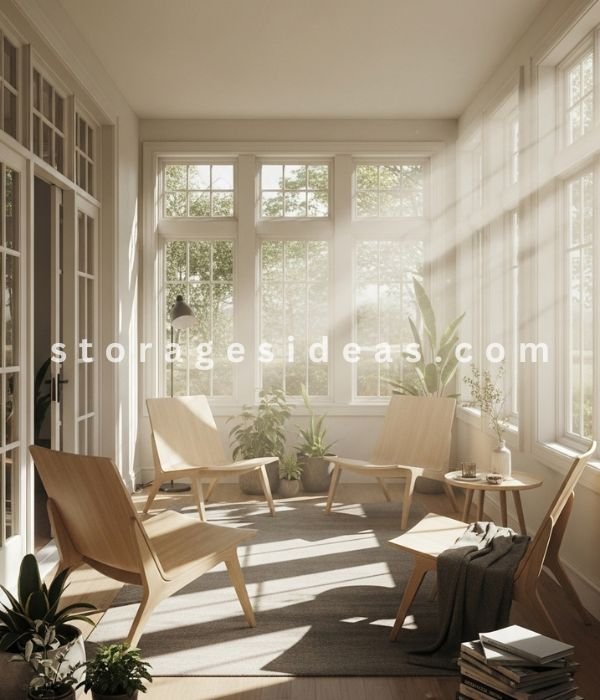
A sunroom is one of the few spaces in a home that naturally changes throughout the day.
Light shifts, temperature changes, and the way you use the space aren’t always the same from morning to evening. A fixed layout can make the room feel rigid, even when it doesn’t need to be.
That’s why flexibility is a key part of practical sunroom ideas.
Furniture that’s easy to move allows the space to adapt instead of forcing you to adjust around it. You can reposition seating to avoid direct sunlight, create more space when needed, or shift the layout depending on how you’re using the room.
This doesn’t mean the space should feel temporary or unstable. It means it should respond easily.
Lightweight pieces, simple arrangements, and layouts that don’t depend on perfect positioning make the room easier to live with. You’re not locked into one setup.
When the space can adjust with you, it becomes more usable without needing to be redesigned.
9. Adjust the Space for Seasonal Comfort
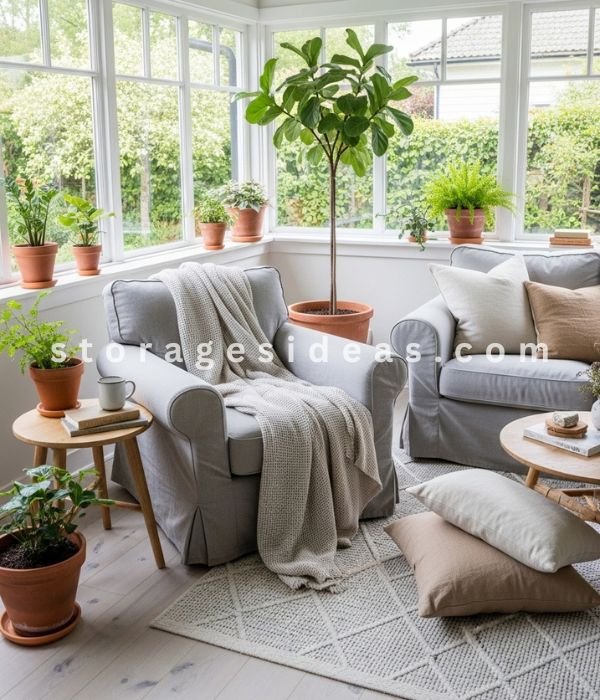
Most sunrooms are designed for how they look, not how they perform across the year.
They feel comfortable in one season, then gradually become less usable as conditions change. Too much heat in summer, not enough warmth in winter, and the space slowly falls out of use.
That’s why practical sunroom ideas always include some level of seasonal adjustment.
This doesn’t require major changes. Small shifts make a significant difference. Lighter fabrics and better airflow in warmer months help keep the space from feeling heavy. In colder months, adding layers, throws, and slightly denser materials helps retain warmth.
The key is responsiveness.
Instead of expecting the space to work the same way year-round, you allow it to adapt. That keeps the room aligned with how it’s actually being used.
When seasonal comfort is considered, the sunroom stops being limited to certain times of the year and becomes consistently usable.
Adjusting indoor spaces for seasonal comfort helps maintain usability throughout the year, especially in areas exposed to direct sunlight.
What Actually Makes Sunroom Ideas Work
What makes sunroom ideas effective isn’t how visually appealing they are.
It’s how easy the space is to use.
A sunroom that looks good but feels uncomfortable will always be underused. On the other hand, a space that supports real sitting, natural movement, and simple daily activities becomes part of everyday life.
Comfort, layout, and flexibility matter more than decoration.
When each element supports how you actually use the space, the sunroom naturally becomes one of the most used areas in the home.
Conclusion
A sunroom doesn’t need a complete redesign to become more useful.
It needs small, practical adjustments that make it easier to sit, move, and spend time there without effort.
Better seating, a clearer layout, controlled light, and a defined purpose all work together to turn the space into something you actually use every day.
Start with one change.
Then build from there.
Over time, those small improvements turn the sunroom into a space that feels comfortable, functional, and worth using.
If you’re improving multiple areas of your home, these small apartment storage tricks can help you apply the same ideas more effectively across different spaces.
Frequently Asked Questions (FAQ)
How can I make my sunroom usable all year?
Focus on light control, seasonal adjustments, and materials that handle temperature changes. Small changes can significantly improve comfort.
What furniture works best in a sunroom?
Comfortable, lightweight, and durable furniture works best. It should support long use and adapt easily.
How do I reduce heat in a sunroom?
Use curtains, blinds, and breathable materials to control sunlight and improve airflow.
Can a sunroom be used as a workspace?
Yes, if seating is comfortable and light is controlled, it can work well as a temporary or part-time workspace.