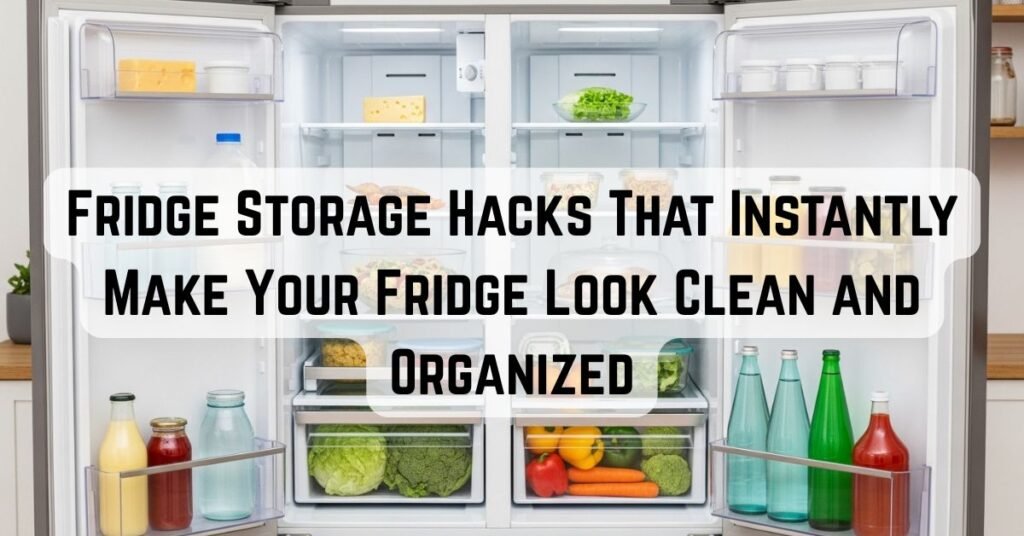
My fridge used to look clean for a very short time.
Right after grocery shopping, everything felt under control. The shelves were wiped, items were lined up, and I had that brief moment where I thought this time it would stay like this. But within a few days, things started shifting again. A bottle would move slightly forward, leftovers would get pushed behind newer items, and fresh groceries would quietly take over the space.
Nothing looked completely messy, but it never felt organized either.
What I eventually realized is that the problem wasn’t effort. I wasn’t ignoring it. I was just working without a system that matched how I actually use my fridge every day.
Once I started applying a few practical fridge storage hacks, the difference wasn’t just visual. The fridge became easier to use, easier to reset, and far less frustrating to manage.
If you’re already improving your kitchen with small kitchen decor and storage hacks, organizing your fridge is one of the simplest ways to extend that same clean feeling.
Why My Fridge Never Stayed Organized Until I Changed the Way I Used It
For a long time, I treated fridge organization like a one-time task.
Clean it. Arrange it. Done.
But a fridge doesn’t work that way. It changes constantly. Groceries come in, leftovers get added, things get used and replaced. Without a structure that supports that flow, everything slowly falls apart.
I used to place things based on available space instead of purpose. Over time, that created layers of new items in front, older ones hidden behind, and things I completely forgot were there.
The shift happened when I stopped focusing on neatness and started paying attention to behavior. I noticed where I naturally look first, what I reach for most often, and which areas I tend to ignore. From there, the solutions became clearer and much easier to maintain.
1. Create Simple Fridge Zones
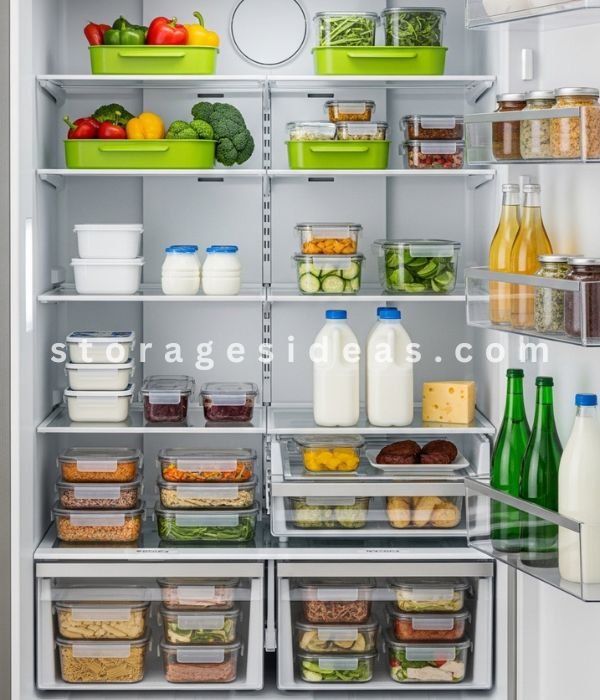
The first real change I made was giving the fridge a sense of structure instead of treating it like open space.
Before that, I wasn’t organizing; I was just placing things wherever they fit. And that small habit created a chain reaction. Every time I added something new, it disrupted whatever order was already there. Over time, the fridge didn’t become messy all at once. It slowly lost its logic.
Once I introduced simple zones, that started to change.
I didn’t overcomplicate it. I just gave broad categories a consistent place: dairy in one area, snacks in another, leftovers somewhere I couldn’t miss. The goal wasn’t perfection. It was predictability.
What made this work wasn’t the categories themselves, but the consistency they created. I stopped thinking about placement. I stopped adjusting things constantly. The fridge began to reset itself naturally because everything had a “default position.”
That’s when I realized that good fridge storage hacks don’t rely on effort; they rely on removing small decisions from your day.
2. Make Everything Visible Without Digging
I used to assume that if something was inside the fridge, I would remember it.
That turned out to be completely wrong.
Anything that wasn’t immediately visible slowly disappeared from my awareness. It didn’t matter if it was still fresh or something I had planned to use. If it wasn’t in front of me, it simply didn’t exist in my routine.
That’s where most of my waste came from.
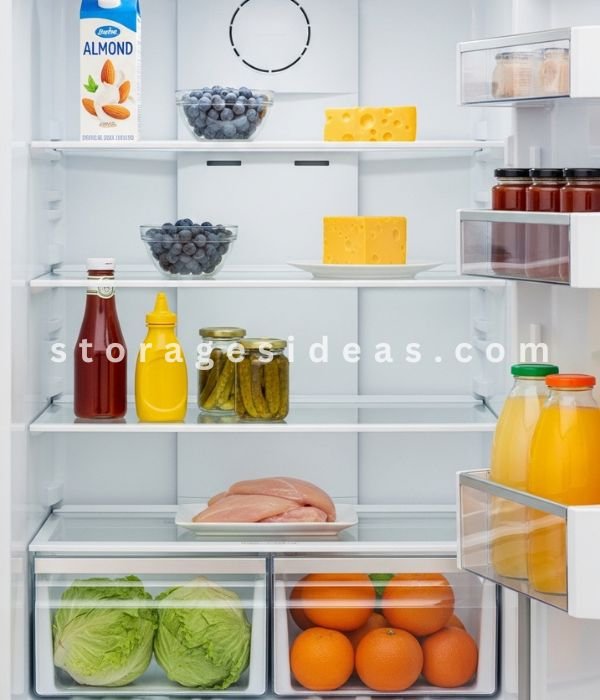
When I changed the setup to make everything more visible, the effect was immediate. I didn’t need to search anymore. I didn’t need to move items around just to check what was behind them. One quick glance was enough.
But the real shift was mental.
I became more aware of what I already had. I stopped overbuying. I stopped letting things expire quietly in the background.
Visibility isn’t just about organization; it’s about awareness. And once that awareness is there, everything else becomes easier to manage.
3. Align Storage with How You Naturally Reach
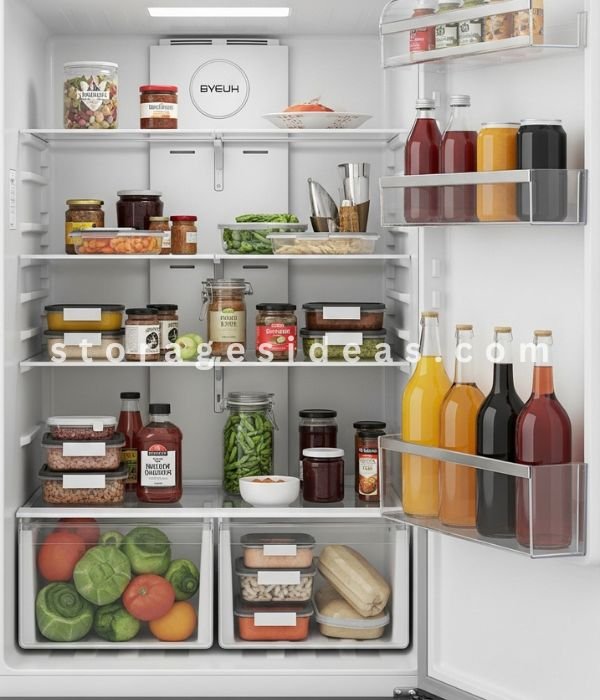
For a long time, I organized my fridge based on how it looked, not how it was used.
Everything was arranged in a way that felt visually balanced, but it didn’t match my daily habits. I was constantly reaching past things, moving items out of the way, and unintentionally disrupting the layout.
That’s what slowly broke the system every time.
Once I started paying attention to how I actually move, things changed. I noticed which items I reach for first, which areas I ignore, and how often I open certain sections.
From there, the adjustment was simple.
The most-used items moved to eye level. Things I rarely touched went lower or further back. I didn’t redesign the fridge; I just aligned it with my behavior.
This reduced friction more than anything else. I wasn’t fighting the layout anymore. The layout was working with me.
And that’s what makes a system sustainable.
4. Fix the Back-of-Fridge Blind Spot
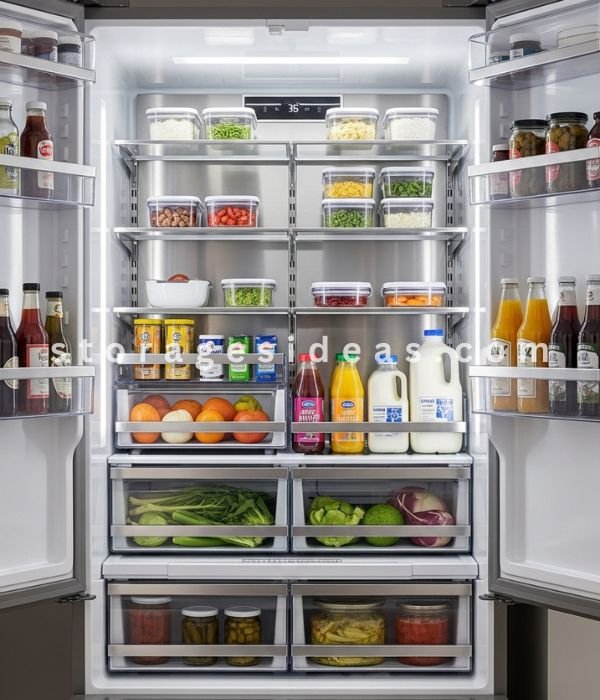
There’s always a part of the fridge that feels slightly disconnected from everything else.
For me, it was the back corner. It wasn’t messy in an obvious way; it was just ignored. Things would get pushed there temporarily and then quietly stay there far longer than intended.
That space became a pattern of forgetting.
What I learned is that ignored spaces create invisible clutter. You don’t notice them daily, but they slowly build problems in the background.
Instead of trying to remember what was back there, I changed how that area worked.
I made sure it was easier to access and harder to neglect. Once that section became part of my normal reach, it stopped acting like a storage “dead zone.”
This is one of those subtle shifts that doesn’t feel dramatic, but it removes a hidden problem that keeps repeating itself.
5. Keep a Grab-and-Go Section Near the Front
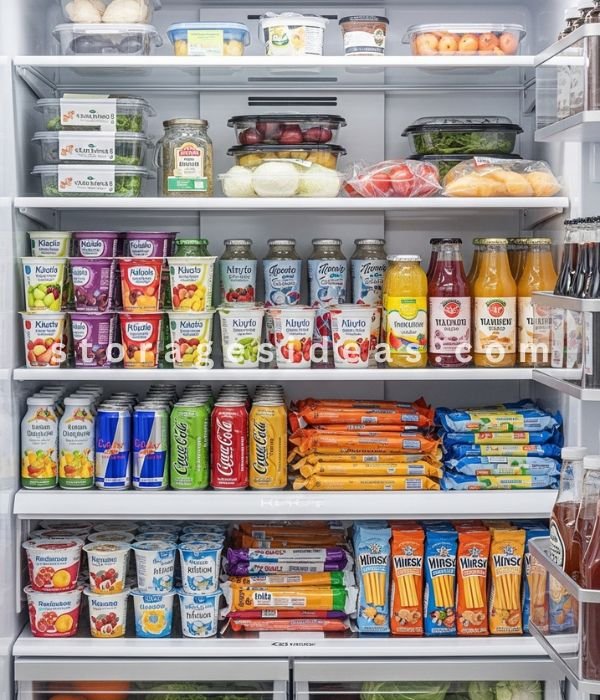
I didn’t realize how much unnecessary movement was happening every time I opened the fridge.
I would scan, move something aside, check another section, and then finally find what I needed. Each of those small actions felt insignificant, but together they disrupted the entire layout over time.
That’s what slowly created clutter.
Creating a small grab-and-go section near the front simplified that experience.
Now the items I use most often are always within immediate reach. I don’t need to disturb other areas just to grab something simple. The rest of the fridge stays more stable because I’m not constantly shifting things around.
If you prefer setups that are easy to use every day, these quick-access storage ideas follow the same principle.
There’s also a behavioral shift here.
When something is easy to access, you use it more consistently. When it’s slightly harder to reach, you avoid it or replace it with something else.
So this small section doesn’t just organize the fridge, it shapes how the fridge is used.
6. Assign a Purpose to Each Shelf
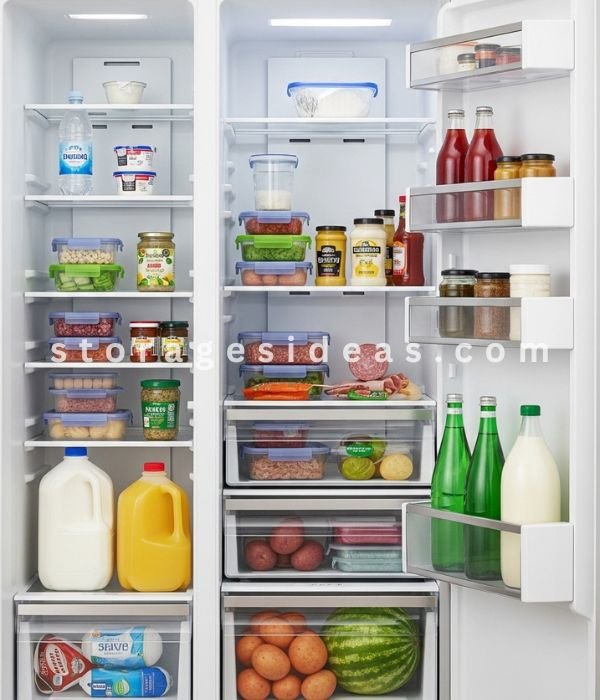
One mistake I repeated for a long time was treating every shelf the same.
I assumed that organization meant evenly distributing items across the fridge. But that created a system with no hierarchy, no logic, and no real structure.
Everything felt interchangeable, and that made everything harder to maintain.
Once I started assigning purpose to each shelf, things became clearer.
Some areas became high-visibility zones for frequently used items. Others were better suited for storage that didn’t need constant access. Some shelves naturally supported grouping, while others worked better for separation.
This added a quiet structure to the fridge.
Instead of reacting to space, I started using space intentionally. And once that intention was in place, the fridge stopped feeling random.
It started feeling controlled without requiring constant attention.
7. Group Similar Items to Avoid Duplicates
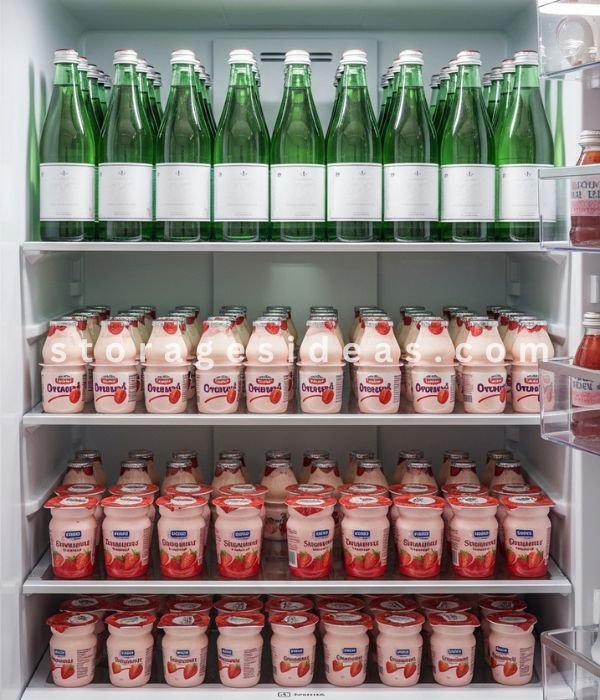
For a long time, I didn’t realize how often I was buying the same thing twice.
It wasn’t because I needed more; it was because I couldn’t clearly see what I already had. Items were scattered across different shelves, placed wherever there was space at the moment. So even if something was technically “there,” it wasn’t mentally accounted for.
That’s what led to duplicates.
Once I started grouping similar items together, the fridge began to feel more predictable. All the sauces stayed in one place. Dairy stayed together. Drinks had their own section. Nothing was spread out anymore.
What changed wasn’t just the layout; it was awareness.
I could open the fridge and immediately understand what I had and what I didn’t. That reduced unnecessary buying without needing to think about it consciously.
It also made the fridge easier to maintain, because grouping naturally limits how far things can spread.
8. Use Vertical Space Without Overcrowding
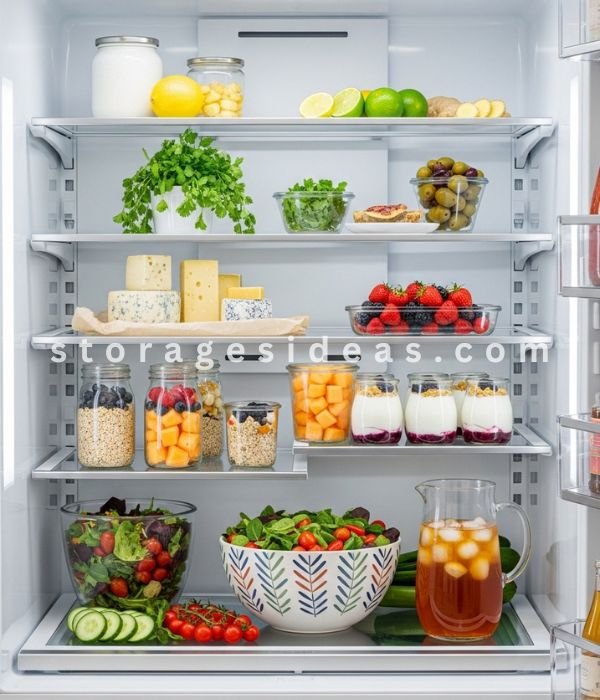
I used to think I was using my fridge efficiently.
But what I was actually doing was spreading everything across surfaces and ignoring the space above it. That created a layout that looked full but wasn’t structured.
When I started using vertical space more intentionally, the fridge became more organized—but only after I learned where to stop.
At first, I made the mistake of stacking too much. That made things harder to access and brought the clutter back in a different form. So I adjusted.
Now I use stacking to support visibility, not replace it.
Items are layered in a way that still allows me to reach everything without effort. Nothing is buried. Nothing feels locked behind something else.
That balance made the difference.
Because using space well isn’t about fitting more, it’s about making everything easier to use.
9. Create a “Use First” Section That Stays Visible
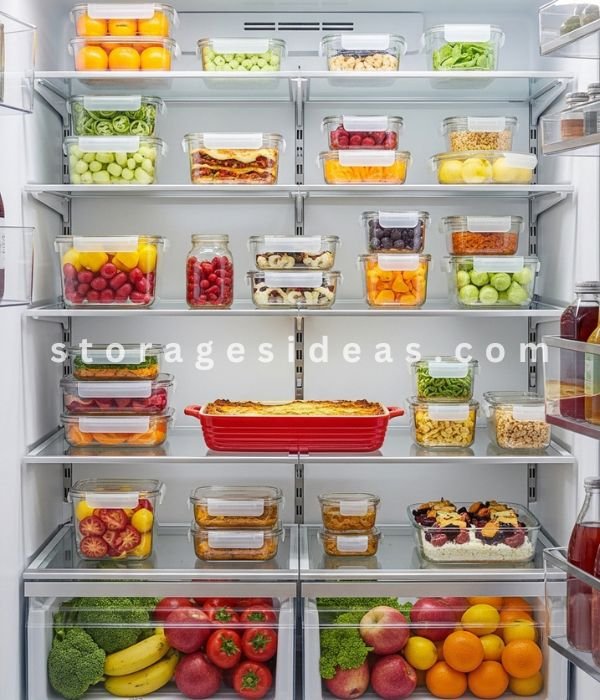
Food waste didn’t come from buying too much. It came from forgetting what needed attention first.
I used to place leftovers and near-expiry items wherever there was space. At the moment, it felt fine. But over time, those items would get pushed behind newer groceries and quietly disappear from my routine.
That’s when I realized something simple:
If something isn’t visible, it doesn’t get used.
Instead of trying to remember what to prioritize, I created a small section that’s always in my line of sight. Anything that needs to be used soon goes there.
This removed the need to think about it.
I didn’t have to check dates or scan the fridge carefully. The decision was already made for me because the most important items were right in front of me.
This is one of those fridge storage hacks that works silently, but once it’s in place, you notice how much smoother everything becomes.
10. Leave Space So the Fridge Can Breathe
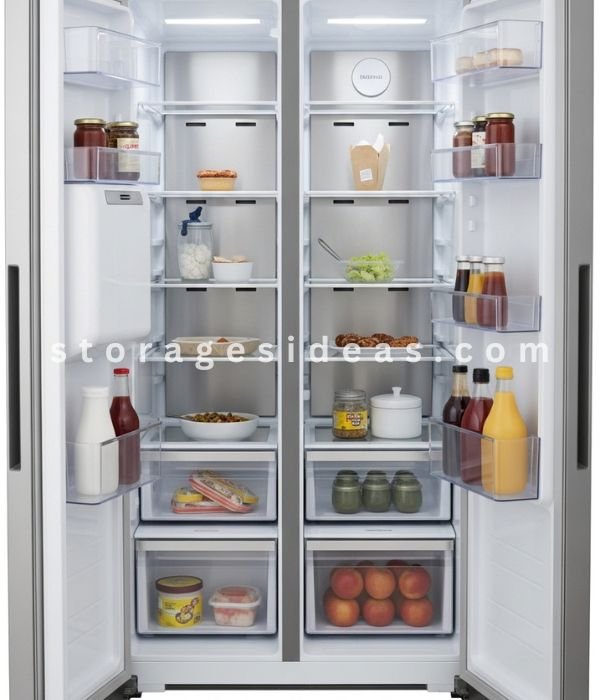
I used to fill every available gap after grocery shopping.
It felt efficient at the time. A full fridge looked productive, like I was using the space properly. But in reality, it created more problems than it solved.
When everything is packed tightly, items overlap. Things get hidden. The fridge becomes harder to navigate, even if it’s technically “organized.”
Once I started leaving space intentionally, the entire experience changed.
I could see everything more clearly. I didn’t need to move items just to reach something else. And the fridge felt calmer, even though it still held the same essentials.
There’s also a physical side to this that matters. Proper airflow helps keep food fresh, and overcrowding disrupts that.
But more than that, space creates clarity. And clarity is what makes a system feel easy instead of overwhelming.
Understanding how a refrigerator maintains airflow and cooling efficiency also explains why overcrowding makes everything harder to manage.
11. Keep Only What You Actually Use Inside
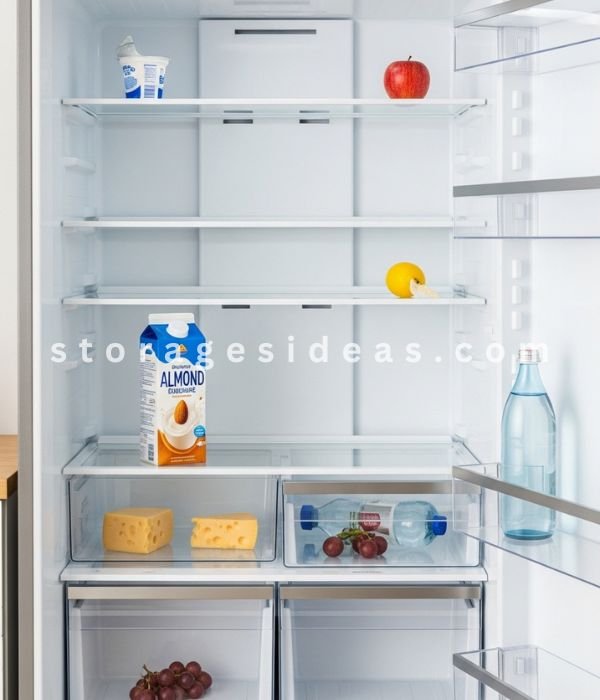
At some point, my fridge stopped being a place for daily use and became a place for storage.
Extra items, backup supplies, bulk purchases, things I didn’t need immediately but kept inside anyway. It didn’t feel like a problem at first, but over time, it made everything harder to manage.
The more unnecessary items I kept, the more effort it took to navigate the fridge.
So I made a simple shift.
If I’m not using something regularly, it doesn’t stay in the fridge.
Extras go somewhere else. Only what supports my daily routine stays inside.
This reduced visual clutter, but more importantly, it reduced mental clutter. I wasn’t scanning through things I didn’t need anymore. I was only dealing with what actually mattered.
That made the entire system lighter and easier to maintain.
12. Maintain It with Quick, Light Resets
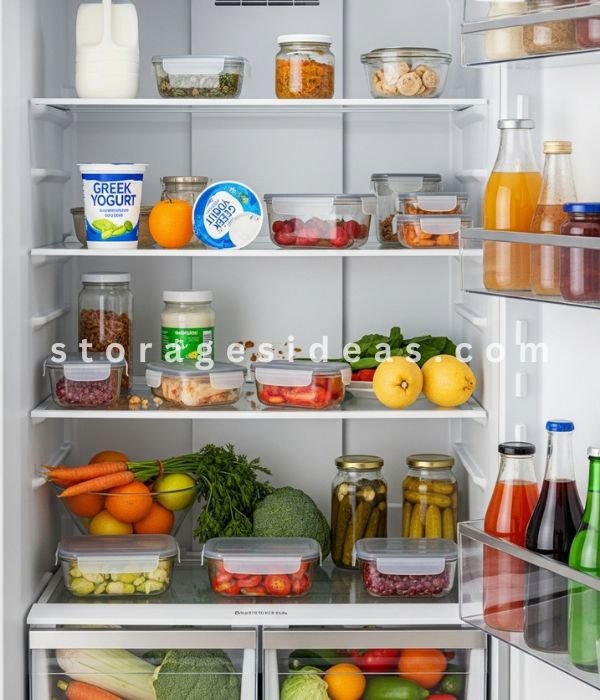
I used to rely on full cleanups to fix everything.
I would take everything out, reorganize it, wipe every surface, and reset the entire fridge. It worked, but only for a short time. And because it felt like a big task, I didn’t do it often enough.
So the mess would slowly build again.
What works better for me now is something much simpler.
Instead of waiting for things to get bad, I reset small things regularly. A quick adjustment here, a small correction there. I move items back to their place before they drift too far.
It doesn’t take much time, but it prevents the system from breaking down.
That’s the difference.
Because maintenance doesn’t need to be intense, it just needs to be consistent.
What Actually Makes These Fridge Storage Hacks Work
What surprised me most wasn’t how effective these changes were, but how simple they felt once they were in place.
Before this, I thought organization meant effort. More cleaning, more adjusting, more discipline. But none of that lasted, because the system itself didn’t support how I actually use the fridge.
What finally worked was shifting my focus from “how it looks” to “how it functions.”
I stopped trying to create a perfectly arranged fridge and started paying attention to patterns. Where do I start? What I ignore. What I forgot. Those small behaviors turned out to matter more than any container or layout.
Once I built the system around those patterns, everything became easier.
I didn’t need to remind myself to stay organized. I didn’t need to fix things constantly. The structure held itself because it made sense in daily use.
Another thing that made a difference was reducing friction.
If something takes even a little extra effort, moving items, opening multiple containers, or digging through layers, it slowly gets avoided. And once something gets avoided, it starts creating clutter again.
So I made everything easier.
Easy to see. Easy to reach. Easy to put back.
That’s what made these fridge storage hacks actually work long-term, not because they looked good, but because they removed the small barriers that usually break organization over time.
Frequently Asked Questions
How should I organize my fridge?
Divide it into simple zones and give each shelf a purpose. Keep similar foods together and put the things you reach for most at the front, where you can see them.
How do I stop food getting lost at the back of the fridge?
Use clear bins or a turntable so items at the back can be pulled forward, and avoid stacking things in front of each other. If you can see it, you are far more likely to use it.
What is a “use first” section?
It is a visible spot in the fridge for food that needs eating soon, such as leftovers or items close to their date. Checking it first when you cook helps cut food waste.
How often should I reorganize my fridge?
A quick, light reset each week is usually enough. Wiping a shelf and returning items to their zones before a grocery shop keeps the fridge in order without a full clear-out.
Final Thoughts
I used to think a messy fridge meant I needed to clean more often.
But that wasn’t the real issue.
The problem was that the fridge didn’t support how I was using it. Every time I added something new, the system broke a little more. And no amount of cleaning could fix that permanently.
Once I changed the way the fridge worked, everything else followed.
It started to feel calmer. Not because it was perfectly arranged, but because it made sense. I could open it and immediately know where things were. I didn’t have to search, adjust, or rethink anything.
That’s the difference a working system makes.
These fridge storage hacks aren’t about making your fridge look perfect for a moment. They’re about making it easier to live every day.
If your fridge keeps slipping back into clutter, it’s probably not about effort. It’s about alignment.
Start small. Change one section. Adjust one habit.
If you want to carry this feeling into other spaces, these clutter-free living room ideas can help you extend it beyond the kitchen.
Because once the system starts working, you won’t need to fix it over and over again, it will start holding itself together.