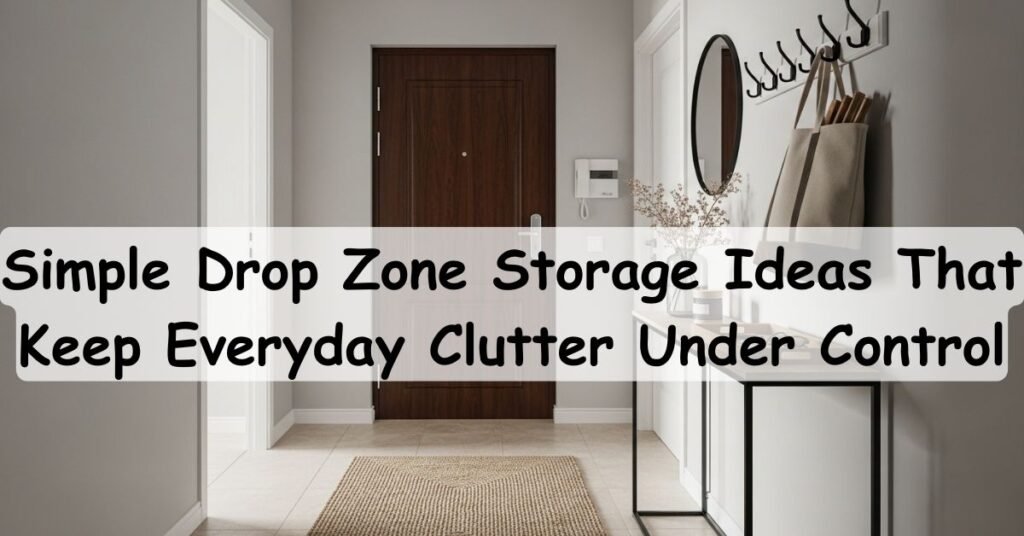
My entryway has always been the place where everything lands without much thought.
I walk in, take off my shoes, drop my bag somewhere nearby, and set my keys down wherever my hand stops. In the moment, it feels quick and harmless.
But over time, those small actions start to build up.
Shoes shift slightly out of place. Bags don’t return to the same spot. Keys end up in a different corner each day. And even though nothing looks dramatically messy, the space begins to feel unsettled.
At first, I thought I just needed better storage.
But the more I paid attention, the more I realized it wasn’t about how much storage I had. It was about how things were landing.
Once I adjusted that by using a few drop zone storage ideas, the entryway didn’t just look better, it started feeling easier to use every day.
I noticed a similar shift while working through a few small apartment storage tricks, where small structural changes made everyday spaces easier to manage.
Why Drop Zones Get Messy So Quickly
Clutter in the entryway doesn’t build slowly the way it does in other rooms.
It happens in a matter of seconds.
Everything arrives at once. Shoes, bags, keys, sometimes mail or small items. And because you’re usually in a hurry, everything gets placed wherever it feels easiest in that moment.
Not where it belongs.
That’s what makes this space different.
It’s shaped by habit, not intention.
I later realized this is closely connected to how habits form around everyday actions, and this guide on how habits are built in daily routines helped me understand why small, repeated behaviors shape how spaces are used over time.
Once I started noticing that pattern, it became clear that organizing this area wasn’t about adding more storage. It was about matching that natural behavior with something that could support it.
10 Drop Zone Storage Ideas That Actually Work Daily
1. Creating a Clear First Landing Spot
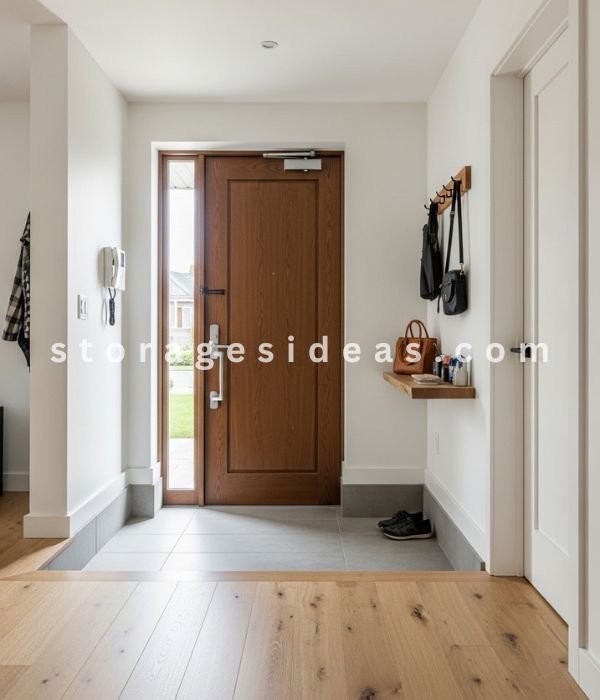
Before I changed anything, I had to notice where things were actually landing.
At first, it felt random. Some days it was the console table. Other days, it was the arm of a chair or the edge of a surface that wasn’t even meant for storage.
But after a few days of paying attention, I realized it wasn’t completely random.
There was always a “first stop.”
The problem was that it kept shifting.
And because that first placement wasn’t consistent, everything that followed became inconsistent too. Items adjusted around wherever that first thing landed, which is how small piles started forming in different places.
What helped wasn’t adding something new right away.
It was choosing one spot and letting it stay predictable.
Once that first landing point stopped moving, the rest of the space became easier to read. Things didn’t drift as much because they weren’t reacting to changing positions anymore.
They were starting from the same place every time.
2. Assigning Storage Based on Arrival Sequence
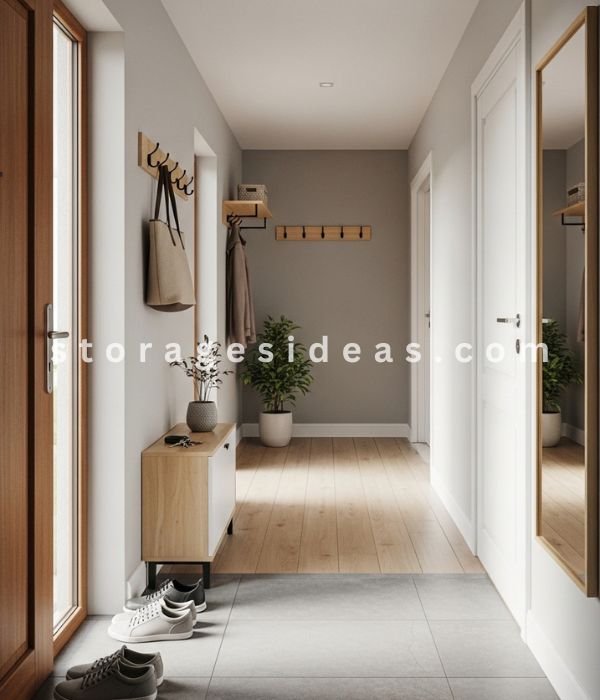
It took me a while to notice that the way I enter the house rarely changes.
There’s a quiet order to it.
Shoes come off first. Then I drop my bag. Then, smaller things like keys or my phone follow. It happens almost automatically, but I had never thought about organizing around it.
Before, my setup looked organized, but it didn’t match that flow.
I had to take something off in one spot, then move somewhere else to store it properly. That extra step didn’t feel like much, but it created small interruptions.
And those interruptions turned into shortcuts.
Things would get placed “just for now,” and then stay there longer than intended.
Once I rearranged things to match that natural sequence, everything started to feel smoother.
Each item had a place right where I needed it, without having to think about it.
And once that friction was gone, I stopped leaving things behind.
3. Keeping Frequently Used Items at Hand Level
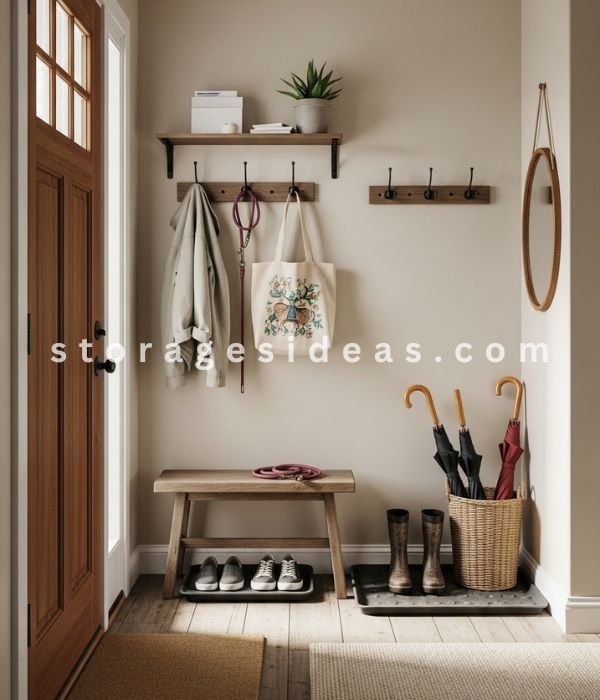
There’s a certain height in any space that just feels right.
It’s where your hands naturally go without effort.
I didn’t realize how much that mattered until I noticed how I was using the space. The items I reached for every day weren’t always in that easy range, while less-used things sometimes took up the most convenient spots.
It didn’t seem like a big issue at first.
But over time, I started noticing a pattern.
If something required even a small adjustment, reaching slightly higher or bending a little, it was more likely to be placed back casually instead of properly.
Those small moments added up.
What changed was simple.
I gave that comfortable, easy-to-reach space to the items I used daily.
Everything else moved slightly out of the way.
It didn’t change the setup visually in a dramatic way, but it changed how the space behaved.
Returning things became almost automatic.
4. Using Vertical Space to Reduce Floor Pressure
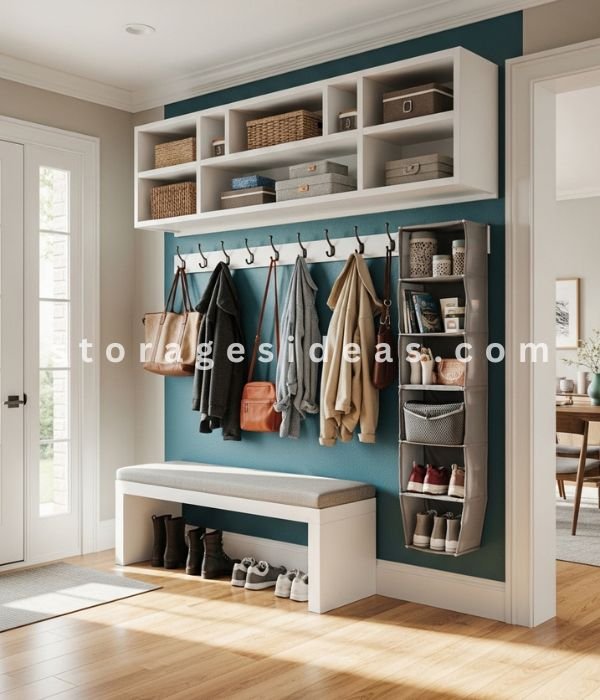
The floor slowly became a holding area without me noticing.
At first, it was just shoes. Then a bag here and there. Then anything that didn’t have a clear place started settling there.
It didn’t feel messy right away.
But it made the entryway feel heavier.
I tried organizing the floor itself, lining things up, adjusting positions, but that didn’t really solve the problem.
Because the issue wasn’t the arrangement.
It was reliance.
Too many things depended on that one surface.
What made the difference was shifting some of that upward.
Hooks, shelves, or even a small vertical setup gave items another place to go. And once the floor wasn’t carrying everything, it became easier to keep it open.
That change affected more than just the lower area.
The whole entryway started to feel lighter and easier to move through.
I’ve seen the same effect in these entryway storage ideas for small spaces, where using vertical space reduces how much pressure builds at the base.
5. Creating a Contained Zone for Small Essentials
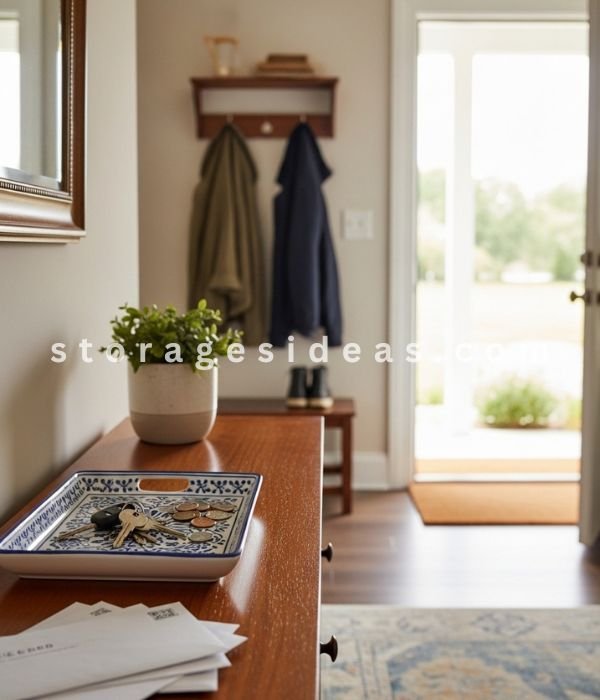
Small items were the easiest to ignore.
Keys, coins, receipts, they didn’t take up much space individually, so they never felt urgent to organize.
But they didn’t stay still either.
They moved slightly every day.
A key placed near the edge one day ends up in a different spot the next. A receipt gets added. Then something else joins it. And over time, that small movement turns into a scattered cluster.
What helped was giving those items a place that didn’t change.
Not a large system, just a defined boundary.
A tray, a bowl, or even a small section of a surface.
Once that boundary existed, those items stopped spreading.
They didn’t need to be perfectly arranged. They just needed a place where they could stay contained.
And that alone made the space feel more controlled.
This approach is similar to a fewtable storage ideas for the living room, where small boundaries help prevent items from spreading across surfaces.
6. Using Closed Storage for Overflow Items
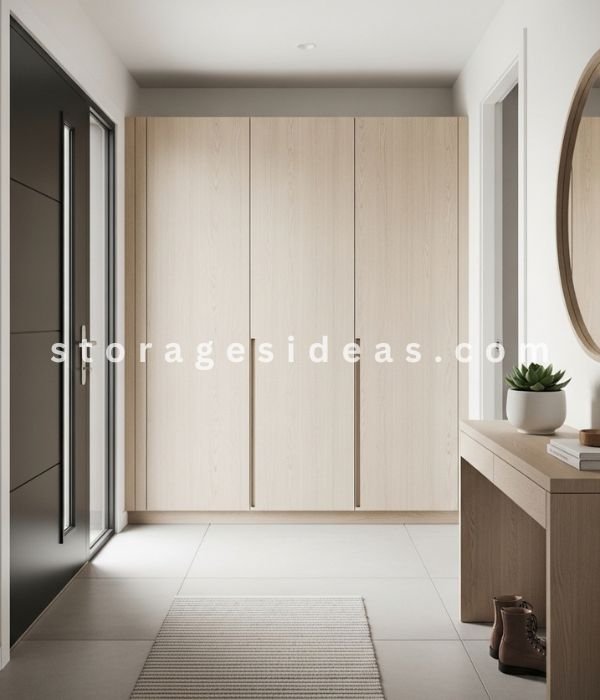
At one point, I tried keeping everything visible.
It felt like the easiest way to stay organized. If I could see everything, I wouldn’t forget about it.
But over time, I noticed something different.
Even when things were in place, the entryway still felt busy. There was always something pulling my attention, a bag here, a stack there, small items sitting in plain view.
Nothing was technically out of place.
But the space didn’t feel settled.
What changed was letting some things move out of sight.
Not everything needed to be part of the visual space. Some items just needed to be nearby, not visible.
A drawer, a closed cabinet, even a simple box made that shift possible.
Once fewer things were in view, the space started to feel quieter. Not empty, just easier to look at and easier to move through.
7. Keeping the Floor Area Mostly Clear
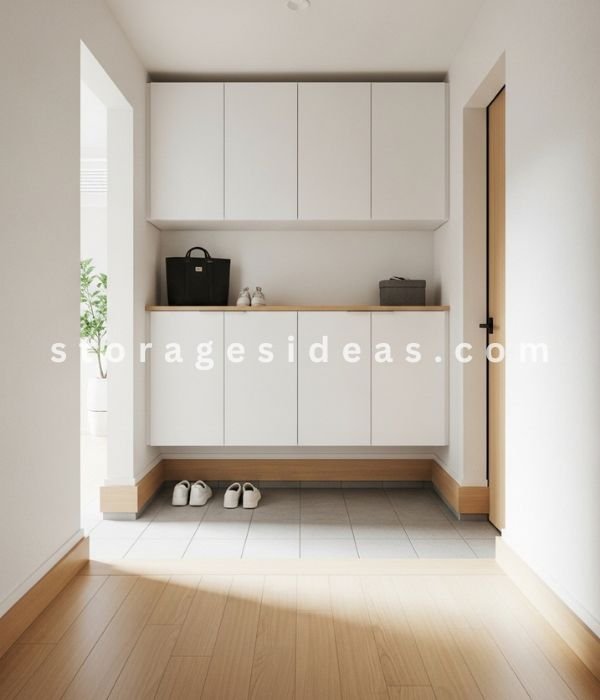
I used to think the floor needed to be completely empty to feel organized.
But what I started noticing was something more subtle.
When one or two things stayed on the floor, more slowly followed. It didn’t happen all at once. It built up quietly.
A pair of shoes is left slightly out of place. Then another pair joins. Then a bag gets set down “just for a second.”
And suddenly, the floor starts carrying more than it should.
What worked better wasn’t perfection.
It was consistency.
When the floor stayed mostly clear, it continued to stay that way. The moment it started holding extra items, that pattern shifted.
So instead of trying to keep it spotless, I focused on keeping it stable.
And once that lower layer felt controlled, the entire entryway started to feel more grounded.
8. Grouping Items by Daily Use, Not Type
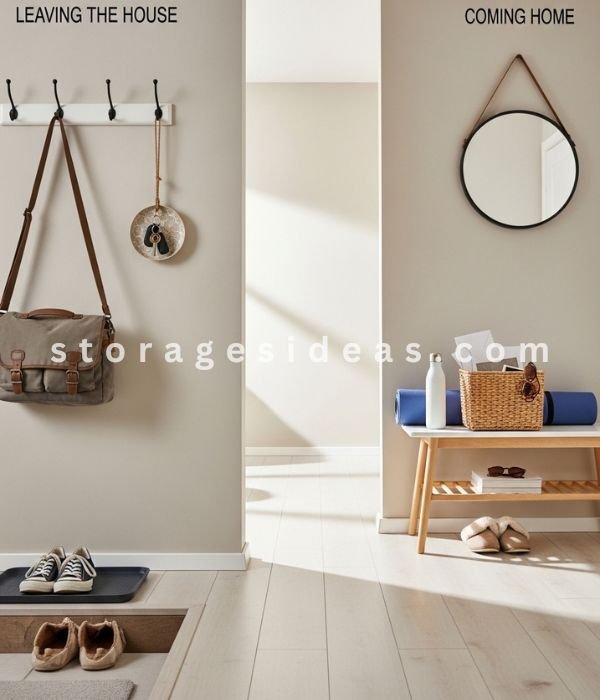
At first, grouping things by type felt like the right approach.
Shoes in one place. Bags in another. Accessories somewhere else.
It looked organized, but it didn’t match how I actually used the space.
Items I needed together were stored apart. And that meant I was always moving between spots, picking things up, setting things down, and sometimes leaving them halfway.
Those small interruptions added up.
What changed was paying attention to how things were used together.
Instead of grouping by what they were, I started grouping by when and how I used them.
Items that belonged to the same routine stayed close.
This reduced movement.
And once I wasn’t moving things around as much, they stopped being left in random places.
9. Limiting What Stays in the Drop Zone
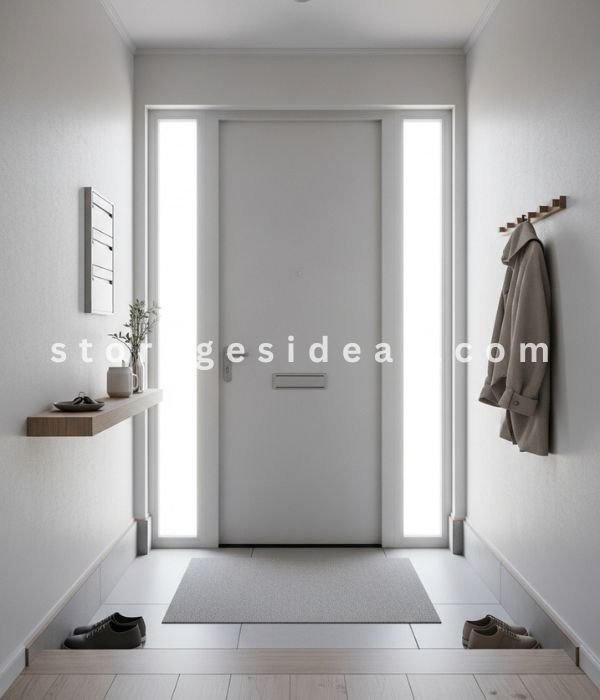
Over time, the entryway started holding more than it should.
Things that were meant to stay temporarily ended up staying longer. A bag that should have moved inside stayed by the door. Shoes that weren’t part of the day’s routine stayed nearby.
It didn’t feel like clutter at first.
But it slowly reduced how much space I had to work with.
And once that space became tight, everything else started overlapping.
What helped was setting a quiet limit.
Not in a strict way, but in a practical one.
Only the items I used daily stayed in that area. Everything else moved further inside the house.
That shift created breathing room.
And once the entryway had space again, it became easier to keep things where they belonged.
10. Creating a System That Resets Naturally
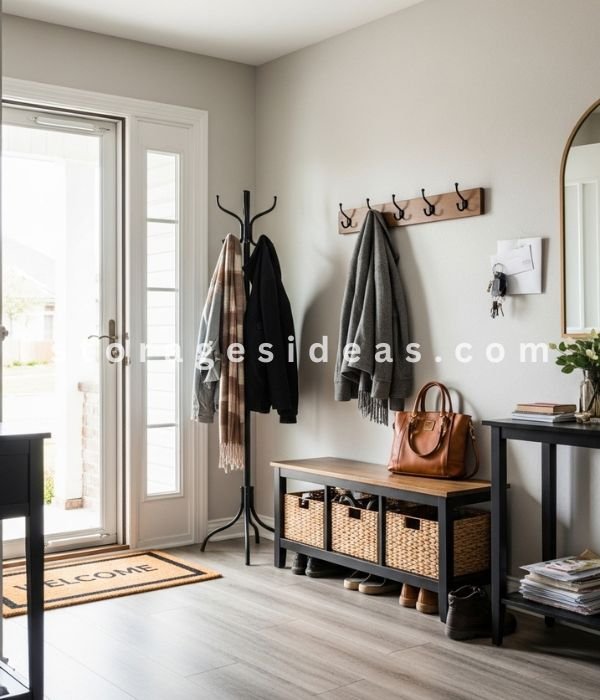
I had organized this space before.
It always looked good in the beginning. Clean, structured, everything in place.
But it never lasted.
Because the system depended on effort.
Things had to be placed carefully. Adjusted often. Maintained with attention.
And over time, that kind of system slowly breaks down.
What changed was simplifying how things returned to their place.
Each item still had a general spot, but it didn’t need to be exact.
There was enough structure to guide placement, but not so much that it required precision.
And that made a difference.
Because once returning things became easy, the space stopped needing constant correction.
It started holding itself together in a way that felt natural.
What Actually Makes a Drop Zone Feel Organized
What stood out to me after making these changes is that nothing I added created more space.
The entryway didn’t get bigger. The number of items didn’t change much either.
But the way everything interacted started to feel different.
Items stopped overlapping.
Things landed closer to where they were used.
And small movements that used to create clutter became less frequent.
What changed wasn’t the amount of storage.
It was how clearly each part of the space handled what arrived there.
Once that became consistent, the entryway stopped feeling like something I had to fix every day.
It just stayed more stable on its own.
Frequently Asked Questions
What is a drop zone?
A drop zone is a set spot near the entrance where keys, bags, shoes, mail and coats go as soon as you walk in. It stops those items from spreading through the rest of the home.
What should a drop zone include?
At a minimum, hooks for bags and coats, a tray or small container for keys and other small items, and a place for shoes. Closed storage is useful for overflow.
How do I set up a drop zone in a small entryway?
Use the wall. Hooks, a narrow shelf and a wall-mounted organizer keep things off the floor, and a slim bench or shoe rack below adds storage without blocking the door.
How do I keep a drop zone from getting messy?
Limit what is allowed to stay there to the items you use daily, and move everything else on. A zone that holds only a few things is much easier to reset.
Final Thoughts
Figuring out how to handle this space changed more than I expected.
At first, I was trying to control what showed up in the entryway. I thought if I added the right storage, things would stay in place on their own.
But what I needed to understand was how things were arriving in the first place.
Once I paid attention to that, the changes felt smaller but more effective.
Things didn’t stop coming in. Shoes, bags, keys, all of that stayed the same. But they stopped spreading in the same way. They landed closer to where they belonged, and they stayed there without much effort.
What stood out to me is that the entryway didn’t need more space.
It needed more clarity.
That shift felt similar to what I saw in these small space transformation ideas, where small changes in structure made a bigger difference than adding more storage.
Once each part of it had a purpose that matched how I used it, the area stopped feeling like something I had to manage constantly.
That’s where these drop zone storage ideas made the biggest difference.
They didn’t remove the everyday clutter.
They changed how it settled.