At one point, I thought my living room just needed to be cleaned more often.
I would reset everything. Put items back. Clear surfaces. And for a moment, it worked.
But that feeling didn’t last.
Within a day or two, things slowly returned. A book was left on the table. A throw is placed slightly off. Small items appeared where they didn’t belong.
It didn’t feel like a clutter problem.
It felt like the space couldn’t hold its structure.
That’s when I stopped focusing on cleaning and started looking at how things were placed.
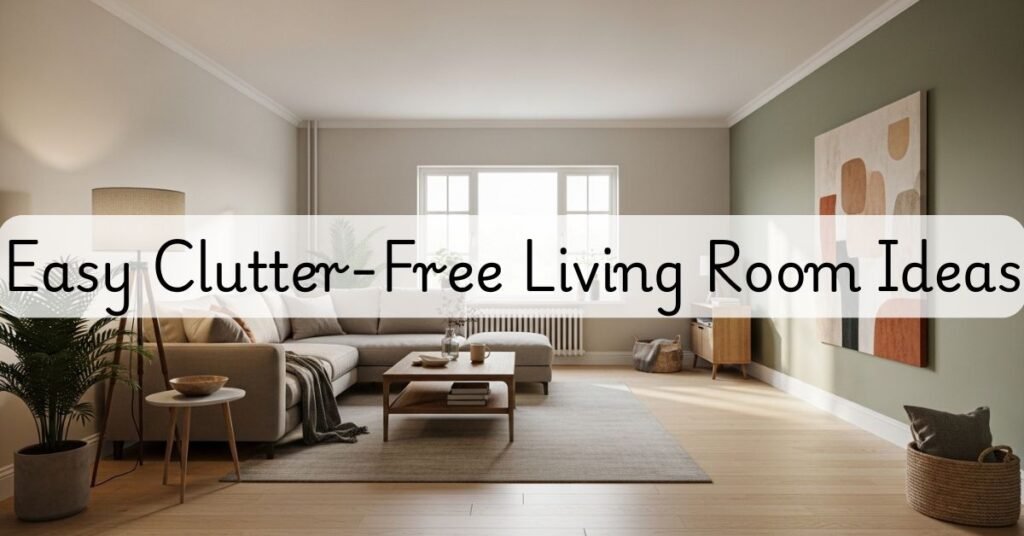
Once I applied a few clutter-free living room ideas, the difference became noticeable.
The room didn’t become empty.
But it started feeling calmer.
I noticed a similar shift while working through a few small living room storage ideas, where reducing overlap made the space easier to manage without adding more.
Why Living Rooms Rarely Stay Clutter-Free
A living room rarely feels cluttered because of how much it holds.
It feels cluttered because everything exists in the same open space.
Seating, storage, decor, and movement all overlap.
There’s no clear separation between what belongs where. Items don’t have fixed positions, so they shift slightly over time.
That shift is small at first.
But it builds.
And even when things are technically “organized,” the space still feels unsettled.
What stood out to me is that clutter isn’t just physical.
I later realized this is closely connected to how visual clutter affects how we experience a space, and this guide on how to declutter your home helped explain why reducing visible overlap can make a room feel calmer without removing everything.
It’s the result of too many things competing in the same area.
That’s where clutter-free living room ideas start to work, not by removing everything, but by reducing that competition.
8 Clutter-Free Living Room Ideas That Actually Reduce Visual Noise
1. Assigning Clear Roles to Different Areas
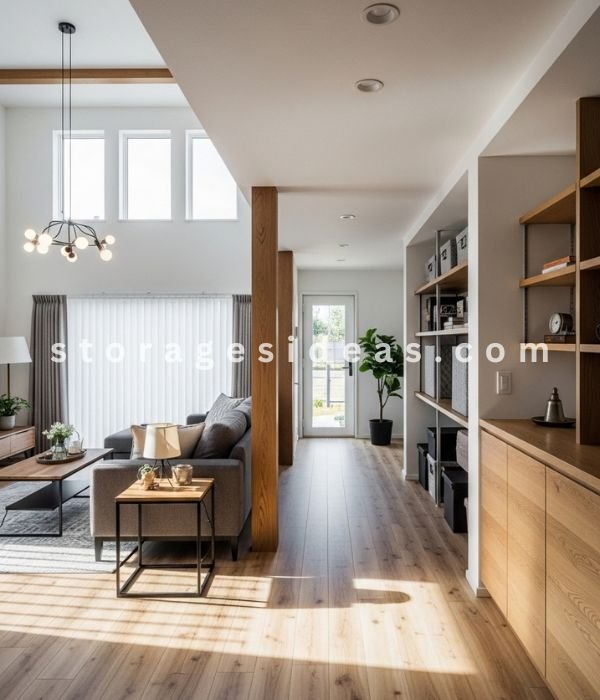
At first, the living room feels like a shared surface.
Everything exists within the same open area, so nothing feels anchored. Items don’t belong to a specific part of the room; they belong to the room as a whole.
That’s where the instability starts.
A book doesn’t return to a fixed place. A remote shift depends on where it was last used. Small items move each day slightly, and over time, that movement creates overlap.
What changed for me was assigning roles, not positions.
Instead of deciding where things go, I focused on what each area is meant to handle.
One section became strictly for seating.
Another handled storage.
Another stayed clear for movement.
This created invisible boundaries.
Items started returning to the same general area because their function was tied to that space. Not perfectly, but consistently enough to reduce drift.
And once drift slowed down, the room stopped needing constant correction.
2. Reducing What Stays Visible at All Times
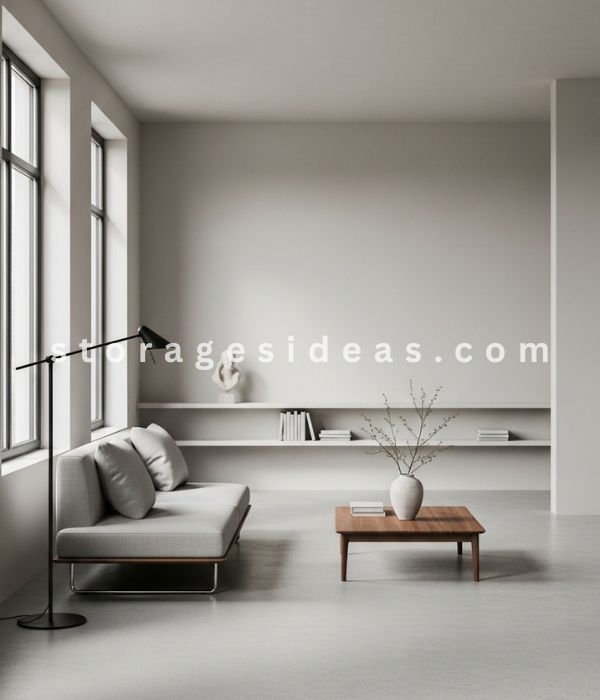
At one point, I assumed visibility meant control.
If I could see everything, I could manage everything.
But what actually happened was the opposite.
Too many visible items created a kind of visual pressure.
Even when nothing was out of place, the room felt active, almost noisy. The eye had too many points to process at once.
What stood out is that visibility increases interaction.
The more you see, the more you’re reminded of it. And the more likely it is to be moved, adjusted, or used slightly out of place.
What changed was reducing what stayed in view.
Not removing items entirely, but shifting some of them just out of the main visual field.
This reduced how much the space demanded attention.
And once fewer things were competing visually, the room started to feel quieter, even though the total number of items barely changed.
This is closely related to a few hidden storage ideas, where reducing visibility makes a space feel more controlled without removing functionality.
3. Keeping Surfaces Partially Empty on Purpose
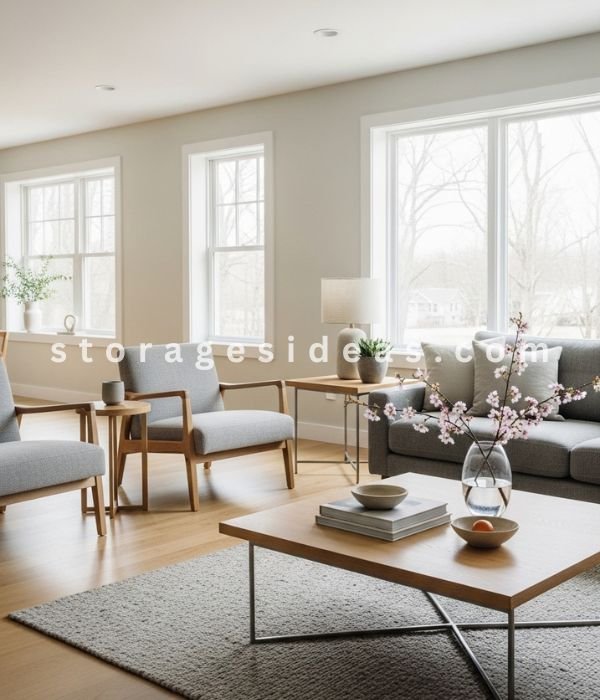
There’s a natural tendency to complete surfaces.
An empty table feels unfinished. A shelf with gaps feels like it needs filling.
So items get added not because they’re needed, but because the space feels like it should hold something.
Over time, this creates constant density.
Every surface becomes active. Every area carries visual weight.
What changed for me was treating space as part of the structure.
Not as something missing but as something intentional.
When a surface is only partially used, it creates separation between objects.
That separation matters.
Because once items aren’t touching or overlapping visually, they’re easier to process. The space feels more ordered without changing what’s actually there.
It also reduces maintenance.
Fewer items on a surface means fewer things to adjust, which helps the system hold longer without effort.
4. Grouping Items Based on Use, Not Type
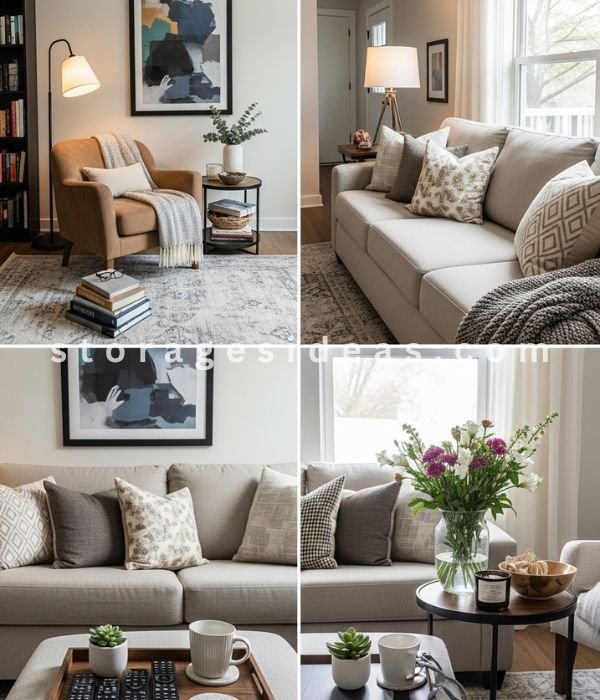
Grouping by category feels logical at first.
All books together. All remotes together. Decor arranged by type.
But that logic doesn’t always match real behavior.
Items that are used together often end up stored apart.
That creates small interruptions.
You reach for one thing, then move to another part of the room for the next. That movement increases the chance of items being left out or placed temporarily.
And those temporary placements tend to stay.
What worked better was grouping based on use.
Items that function together stayed together even if they weren’t the same type.
This reduced movement.
It also reduced decision-making.
Because instead of thinking about where each item belongs individually, the group acts as a single unit.
And once items move as a group, they’re less likely to scatter across the room.
5. Using Boundaries to Prevent Item Spread
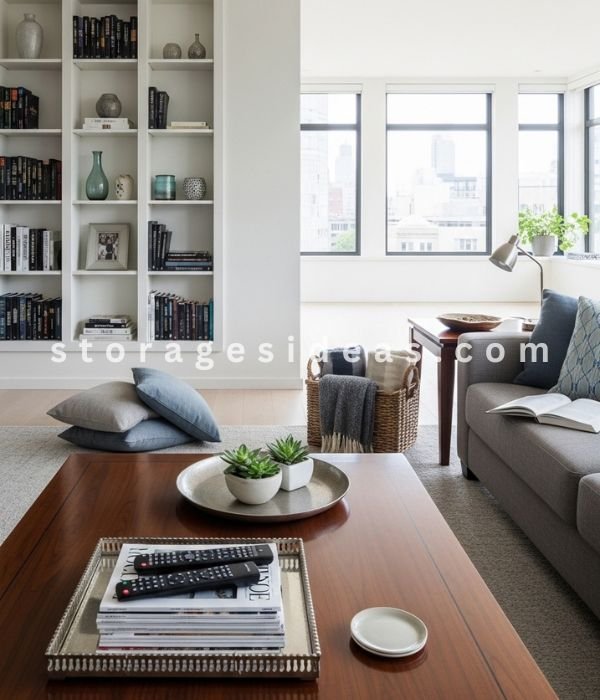
Clutter rarely appears all at once.
It expands.
A few items placed close together slowly begin to spread outward. The space between them disappears. And what started as a contained group becomes loosely scattered.
What stood out to me is that this expansion happens without a clear moment.
There’s no point where it feels like “too much.” It just gradually loses structure.
What changed was introducing visible limits.
Not strict rules, but physical or visual boundaries.
A tray. A defined section. Even consistent placement within a specific area.
These boundaries create resistance.
Items stop expanding freely because there’s a clear edge. Once that edge is reached, any addition feels noticeable.
And that awareness is what keeps the system from quietly breaking down.
6. Keeping the Floor as Clear as Possible
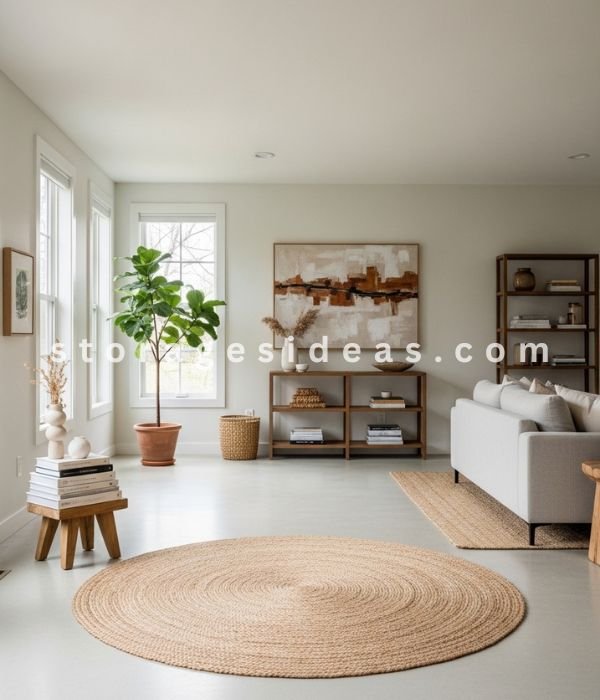
The floor carries more influence than it seems.
Even small items placed on it change how the room feels.
A basket, a stack, a few objects, they don’t take up much space physically, but they add visual weight.
What I noticed is that the floor acts as a base layer.
When it’s crowded, everything above it feels heavier. The entire room reads as more compact.
What changed was treating the floor as a controlled zone.
Not empty, but intentionally limited.
Items that didn’t need to be there moved upward or out of sight.
This created openness at the lowest level.
And once that layer felt clear, the rest of the room appeared more stable even without major changes elsewhere.
This shift is similar to what happens in the shoe storage solutions for small spaces, where clearing the lower area makes the entire space feel more open.
7. Using Closed Storage to Reduce Visual Noise
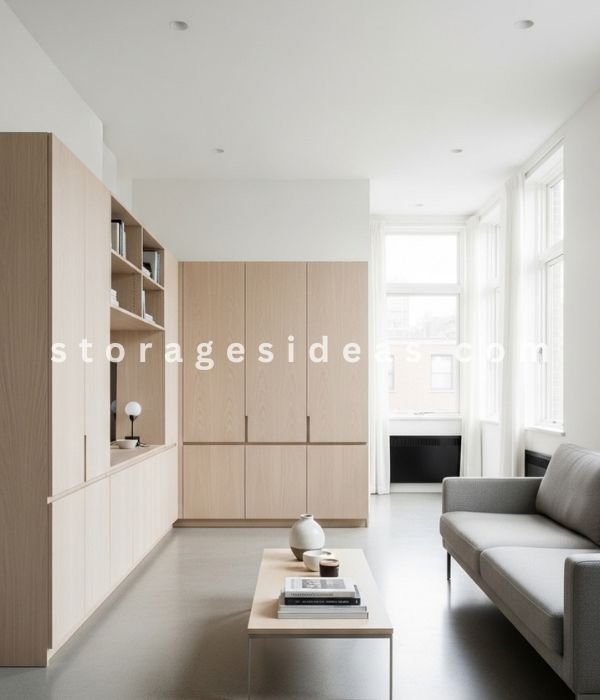
Visibility doesn’t always equal clarity.
In many cases, it does the opposite.
When too many items remain visible, even if they’re organized, they compete for attention. The room starts to feel active instead of calm.
What stood out to me is that the brain processes each visible item separately.
More items mean more visual input.
What changed was reducing that input.
Closed storage removes multiple objects from view and replaces them with a single surface.
That simplification matters.
Because instead of reading many small elements, the eye reads one continuous form.
And that shift reduces visual noise without changing how much the space actually holds.
8. Creating a System That’s Easy to Maintain Daily
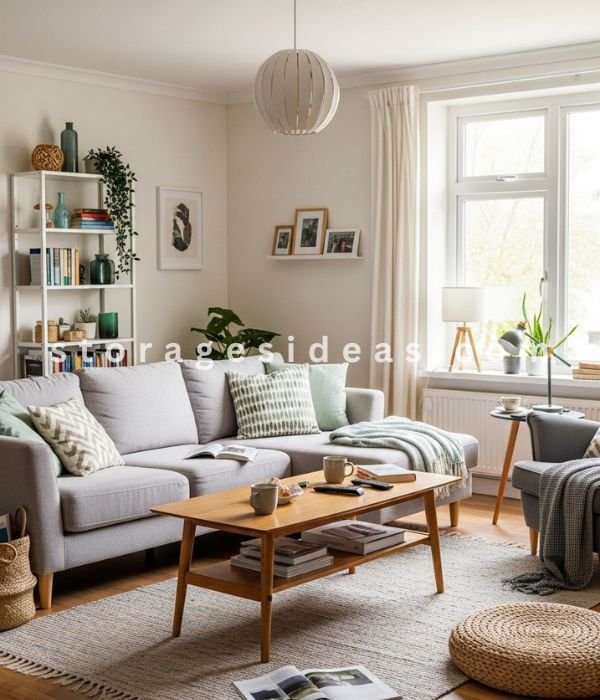
At one point, the room looked organized, but it depended on effort.
Items had to be placed carefully. Positions had to stay consistent. The system worked, but only when I actively maintained it.
Over time, that kind of structure starts to break.
Not because it’s ineffective, but because it asks too much.
What changed was simplifying how things return to place.
Each item still had a general position, but it didn’t require precision.
No exact alignment. No extra steps.
What stood out is that maintenance became almost automatic.
Because once the system matches how you naturally move and place things, it stops relying on discipline.
It holds itself together without constant attention.
What Actually Makes a Living Room Feel Calm
What stood out to me is that none of these changes removes everything from the room.
They reduce overlap.
Fewer items compete in the same space.
Functions stay within their own areas.
Movement becomes more direct.
And that reduction in friction is what creates a sense of calm.
Frequently Asked Questions
How do I keep my living room clutter-free?
Give each area a clear role, reduce how much stays on show, and use closed storage for the rest. A setup that is easy to reset each day matters more than a big one-off tidy.
Why does my living room look cluttered even when it is tidy?
It is often visual noise rather than mess. Too many visible items, full surfaces and things on the floor make a room feel busy even when everything is technically in its place.
Should surfaces in a living room be left empty?
Partly empty works best. Leaving some open space on tables and shelves gives the eye somewhere to rest and makes the items you do display stand out.
What is the easiest way to control everyday items like remotes and chargers?
Group them by how they are used and give them a boundary, such as a tray or a small basket. Contained items stay put instead of drifting across the room.
Final Thoughts
What changed for me wasn’t how much I removed from the living room.
It was how the space started to behave.
Before, everything shared the same area. Items moved slightly, overlapped, and required constant adjustment. Even when things were put back, the structure didn’t hold.
After these changes, that movement slowed down.
Items stayed closer to where they were used. Surfaces didn’t fill up as quickly. And the room no longer needed to be reset every time I used it.
What stood out is that nothing here dramatically reduces the number of things.
It reduces how much they interfere with each other.
That shift is what creates calm.
Because once items stop competing for the same space, the room becomes easier to read, easier to move through, and easier to maintain without effort.
That’s where these clutter-free living room ideas make the biggest difference.
They don’t try to empty the room.
They change how the space holds what’s already there, and once that changes, the sense of order starts to stay on its own.