At one point, I thought my kitchen counter just needed to be cleaned more often.
No matter how many times I wiped it down, rearranged things, or tried to “organize,” it always felt full again within a day or two. Items slowly returned. Small things spread. And the surface never stayed as clear as I expected.
It didn’t feel like I had too much.
It felt like everything was competing for the same space.
That’s when I stopped focusing on removing items and started looking at how the counter was being used.
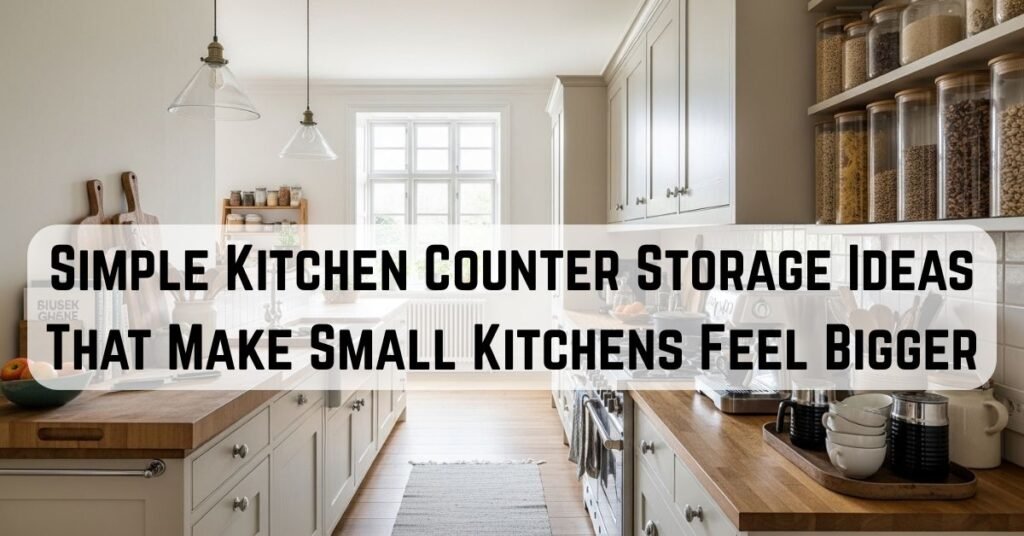
Once I changed a few small things using a few kitchen counter storage ideas, the difference became noticeable.
The counter didn’t get bigger.
But it started feeling easier to use.
Why Small Kitchen Counters Feel Smaller Than They Actually Are
A kitchen counter rarely feels crowded because of how many items are on it.
It feels crowded because everything exists in one continuous line.
There’s no separation between tasks.
Prep happens in the same area where items are stored.
Daily-use tools sit next to things that are rarely touched.
This creates overlap.
Not just visually, but functionally.
You move things to make space. You shift items to reach others. And over time, even a small number of objects starts to feel like too much.
What stood out to me is that the issue isn’t always the number of items.
I later realized this is closely connected to how visual clutter affects how we experience a space, and this guide on how to reduce visual clutter in your home helped explain why too many visible items can make even organized spaces feel harder to use.
It’s how they are placed in relation to each other.
10 Simple Kitchen Counter Storage Ideas That Actually Change How the Space Works
1. Dividing the Counter Into Clear Functional Zones
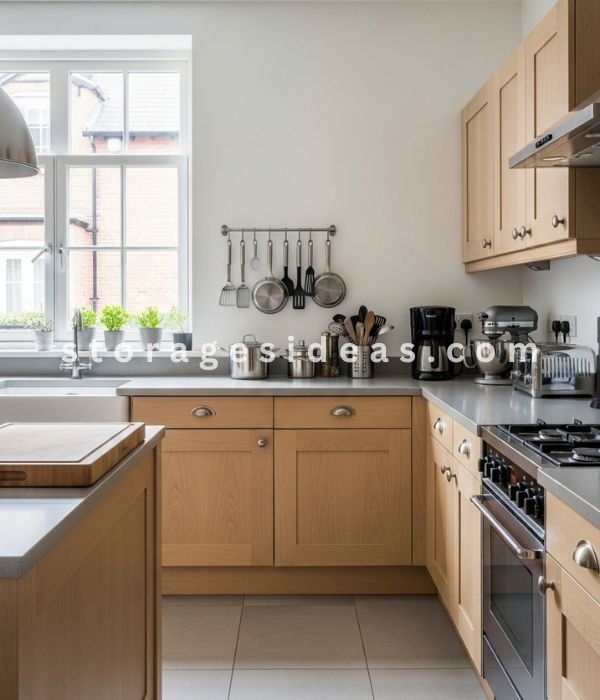
At first, the counter feels like one uninterrupted surface.
Everything shares the same area, which makes placement feel flexible, but that flexibility is what creates inconsistency.
Items don’t have a fixed relationship to the space.
A mug might sit near the stove one day and near the sink the next. Small tools move depending on convenience. And over time, that movement turns into overlap.
What changed for me was assigning each section a role.
Not physically dividing the counter, but mentally separating it.
One area became for prep.
One for daily-use items.
One for smaller, contained storage.
This changed how items behaved.
Instead of drifting across the entire surface, they stayed closer to their function. Movement reduced. Adjustments became less frequent.
The space didn’t just look more organized.
It became more predictable to use.
2. Keeping Only Daily-Use Items Within Reach
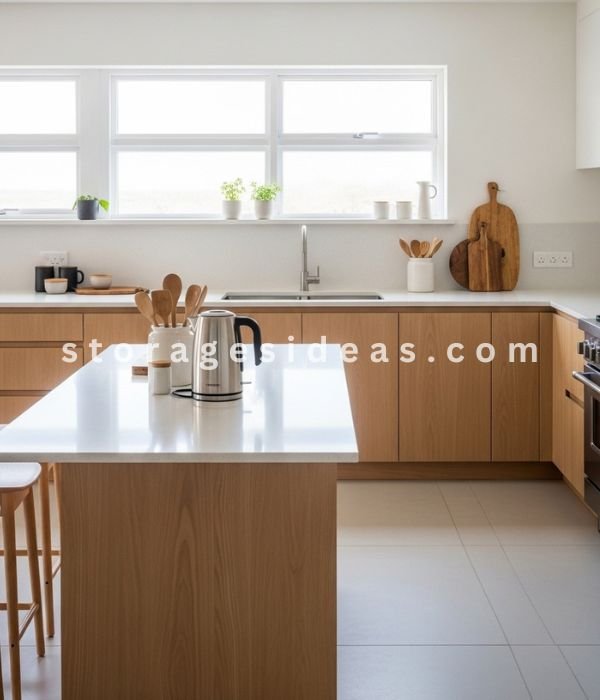
At one point, the counter held almost everything I used in the kitchen.
It felt practical. Everything was visible. Nothing required extra steps.
But over time, that convenience created friction.
Items I used once a week sat in the same space as things I used every day. And because they shared the same level of access, they competed for attention and space.
What changed was separating by frequency, not type.
Daily-use items stayed within immediate reach.
Everything else moved slightly out of that zone still accessible, but no longer part of my constant interaction.
This reduced the interruption.
I didn’t have to move past less-used items to reach what I needed. The central space stayed more stable because it was used consistently.
And once that stability formed, the counter stopped shifting as much throughout the day.
3. Moving Storage Up Instead of Out
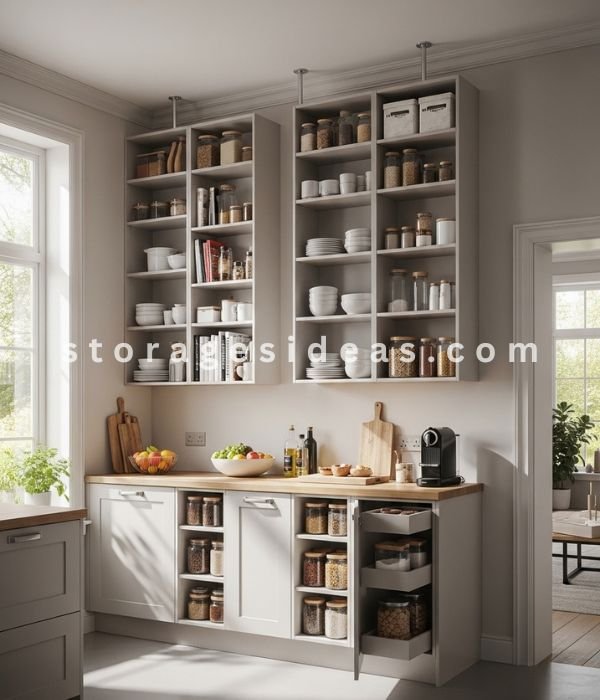
The natural tendency is to organize things side by side.
It feels clearer at first. Everything is visible. Everything has space.
But horizontal layouts expand.
Items slowly push outward. Gaps get filled. And what started as a clean line becomes a crowded surface.
What worked better was building upward in controlled layers.
Not stacking randomly, but creating vertical boundaries.
This changed how much space each item occupied.
Instead of spreading across the counter, items stayed within a defined vertical footprint. The surface remained partially open, even when storage increased.
What stood out was how this reduced the disturbance.
Accessing one item didn’t require shifting multiple others. Each layer stayed more independent, which helped maintain the system over time.
I’ve seen a similar approach work in these wall storage living room ideas, where vertical layers reduce surface pressure instead of expanding outward.
4. Using Wall Space to Reduce Counter Pressure
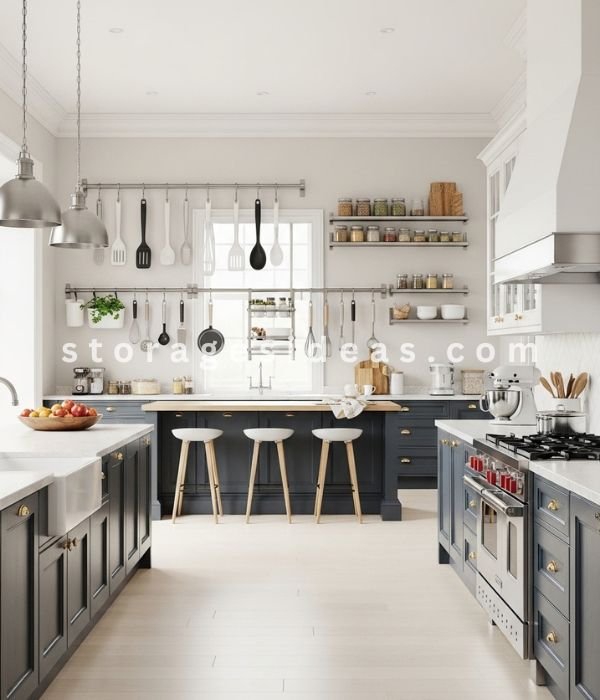
Before, the counter carried everything.
Storage, tools, small appliances, everything depended on that one surface.
That concentration created pressure.
Even when things were organized, the counter felt overloaded because it was responsible for too many functions.
What changed was shifting part of that responsibility upward.
Wall-mounted storage introduced a separate layer.
What makes this different is that it doesn’t compete with the counter; it supports it.
Items that need quick access can stay visible, but they no longer take up working space. The counter becomes more focused on use rather than storage.
This separation reduces conflict.
Storage and activity stop interfering with each other.
This shift is similar to what happens in these kitchen cabinet organization ideas, where moving items off the main surface makes daily use smoother
5. Creating a Contained Coffee or Tea Station
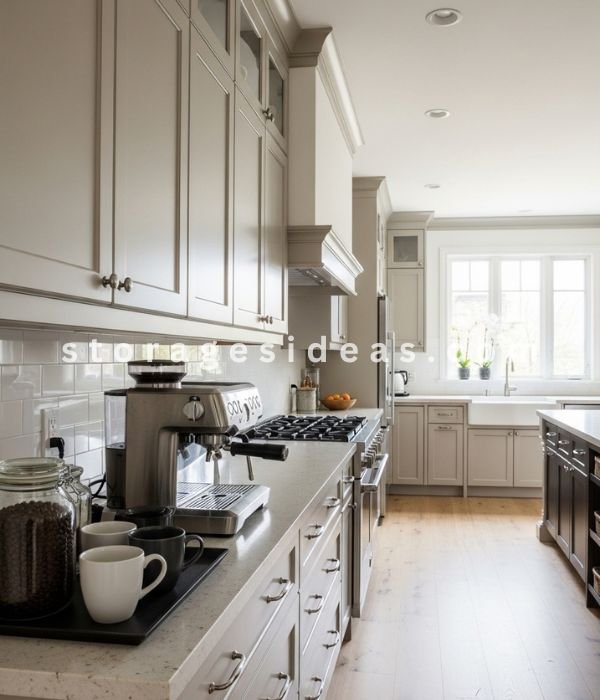
Small, routine-based items tend to spread the most.
A mug here. A jar there. A spoon is placed wherever there’s space.
Individually, they don’t seem like much. But together, they create scattered clusters across the counter.
What changed was grouping them based on use.
Instead of placing each item separately, I treated them as part of one function.
Everything related to coffee or tea stayed within a defined area.
This created a boundary.
Items stopped drifting because they now belonged to a specific zone. Movement was reduced, and the space became easier to reset.
What stood out is that the number of items didn’t change.
But the way they were contained made the counter feel significantly more controlled.
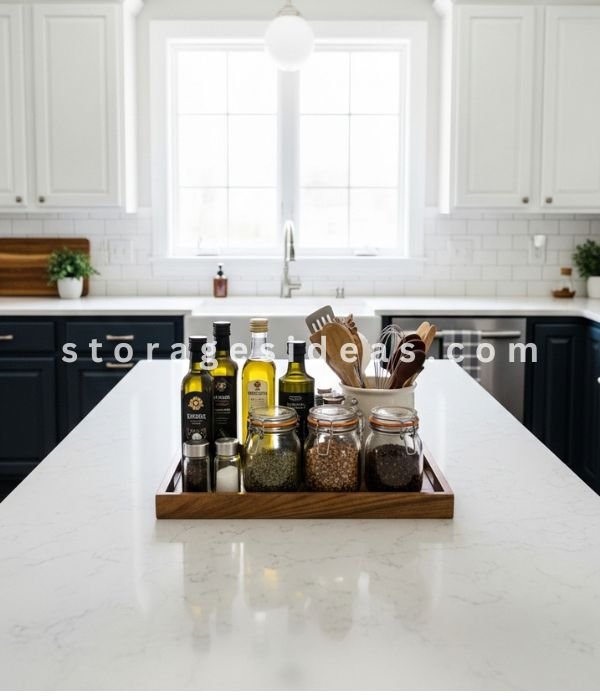
6. Using Trays to Control Item Boundaries
Without clear limits, items don’t stay in place.
They expand slowly.
At first, it’s just one extra item placed next to another. Then spacing becomes less defined. And over time, a small cluster turns into a scattered section.
What stood out to me is that this expansion happens quietly.
You don’t notice it until the area already feels crowded.
A tray interrupts that pattern.
It creates a fixed boundary.
Items placed within it stop spreading outward because the edge defines where they belong. That visible limit changes how you place things.
You become more selective.
And once that boundary is reached, the system naturally pushes back against adding more.
7. Removing What Doesn’t Need to Stay Out
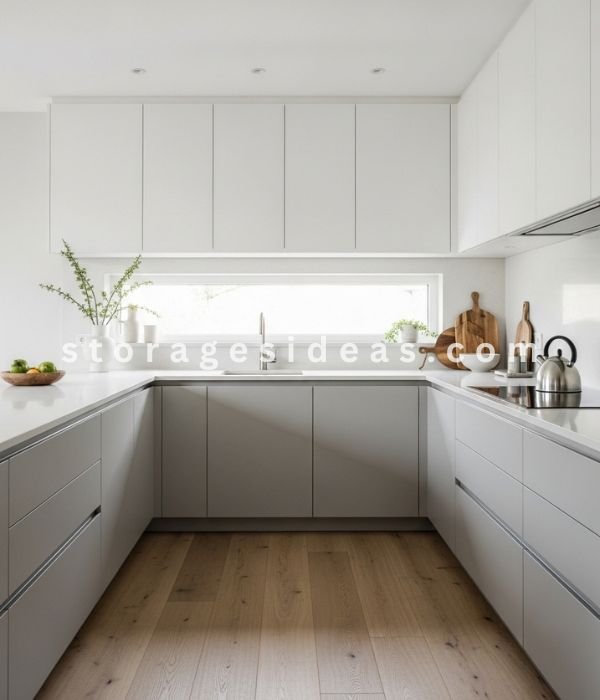
Some items remain on the counter out of habit.
They’ve been there long enough that they start to feel necessary, even if they’re not used often.
This creates a subtle kind of pressure.
The space feels full, but it’s not immediately clear why.
What changed for me was questioning presence, not quantity.
Instead of asking how to organize everything, I asked whether everything needed to be there in the first place.
A few items moved away.
Not far, just out of immediate sight.
What stood out is how this reduced visual competition.
The counter didn’t just look clearer. It felt calmer because fewer things were competing for attention at the same time.
8. Using Corners That Usually Go Unused
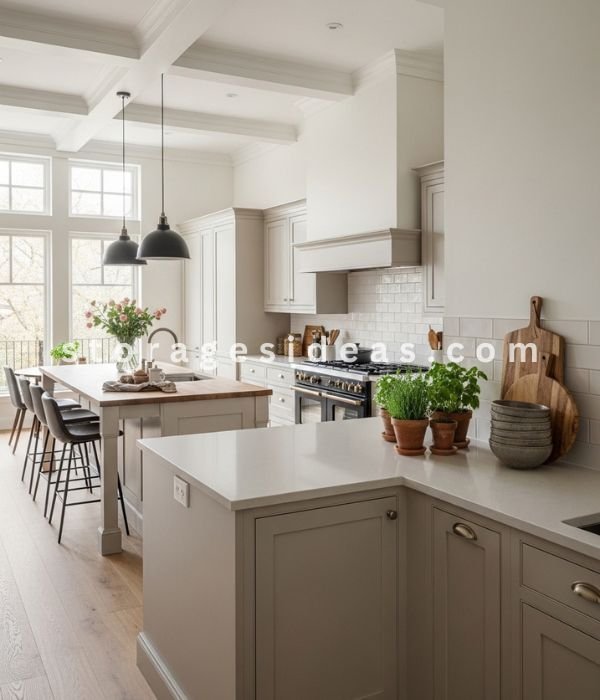
Corners often exist without a defined role.
They’re either left empty or used inconsistently, which turns them into passive clutter zones.
What I noticed is that when a space doesn’t have a clear function, it attracts randomness.
Items get placed there temporarily and then stay longer than intended.
What changed was assigning that area a purpose.
Instead of letting it remain undefined, I used it for controlled storage.
This shifted pressure away from the central counter.
Items that would normally sit in active zones moved into the corner, where they didn’t interfere with daily movement.
The center became easier to use because it had less to manage.
This is closely related to how corner storage ideas work, where underused areas help reduce pressure on main surfaces.
9. Keeping the Main Prep Area Completely Clear
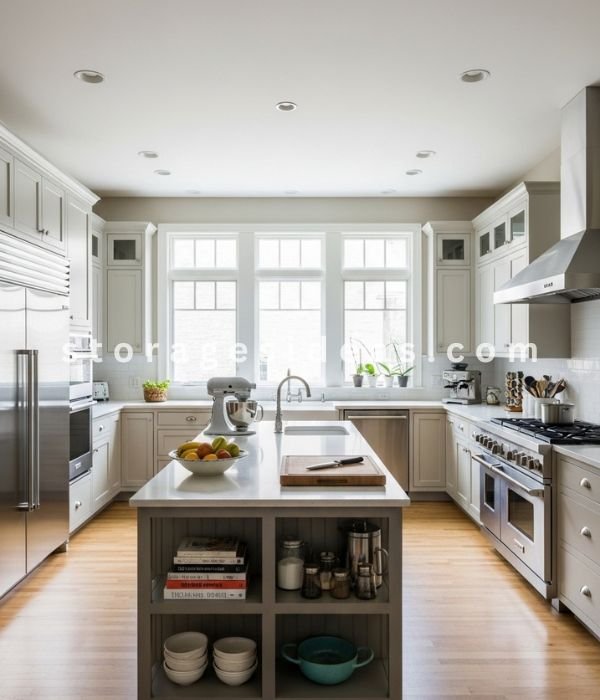
The prep area carries the most activity.
But it’s also the easiest place for items to accumulate.
Even small objects create an interruption.
You move them slightly. Then again. And over time, that space loses its reliability.
What changed was treating that section as non-negotiable.
Not partially clear. Fully clear.
This created consistency.
I no longer had to prepare the space before using it. It was already ready.
What stood out was how this reduced effort.
Because when a space doesn’t require adjustment before use, the entire workflow becomes smoother.
10. Creating a System That Resets Easily Every Day
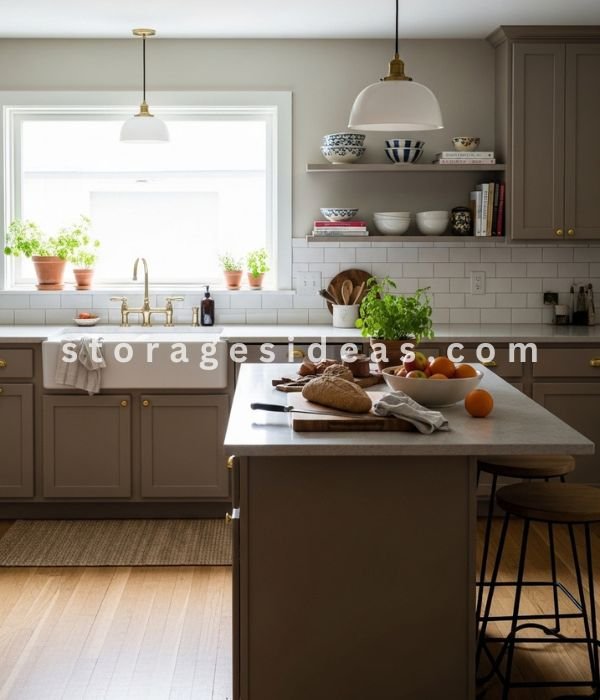
At one point, the setup looked organized, but it depended on effort.
Items had to be placed in a certain way. Sections needed to stay aligned. It worked, but only when I paid attention.
Over time, that kind of system breaks down.
Not because it’s wrong, but because it asks too much.
What changed was simplifying the return process.
Each item still had a place, but it didn’t require precision to get it back there.
No exact positioning. No extra steps.
What stood out is that maintenance became automatic.
Because once a system matches how you naturally move and place things, it stops relying on discipline.
It sustains itself.
I noticed the same pattern while applying a few small living room storage ideas, where simpler systems are easier to maintain daily.
What Actually Makes a Small Kitchen Feel Bigger
What stood out to me is that nothing here increases the size of the counter.
But everything reduces overlap.
Fewer items compete for the same space.
Functions stay within their own areas.
Movement becomes more direct.
And that reduction in friction is what creates the feeling of more space.
Frequently Asked Questions
How do I make a small kitchen counter feel bigger?
Keep only daily-use items out, move storage up onto the wall or shelves, and leave the main prep area completely clear. Fewer items on the counter makes the same surface feel larger.
What should be kept on kitchen counters?
Only the things you use every day, such as a kettle or coffee maker. Anything used weekly or less is better stored in a cupboard, on a shelf or on the wall.
How do I organize a coffee or tea station without cluttering the counter?
Group everything on a single tray or in one corner so it has a clear boundary. Mugs, jars and spoons stay together and the rest of the counter remains free.
How do I use the corners of a kitchen counter?
Corners suit items that need a permanent spot but are not moved much, such as a utensil holder, a small appliance or a tiered stand. Giving the corner a job stops it becoming a dumping ground.
Final Thoughts
What changed for me wasn’t how much I could fit on the counter.
It was how clearly the space started to function.
Once each section had a role, things stopped drifting. Items stayed closer to where they were used. And the counter no longer felt like something I had to manage constantly.
That’s what makes these kitchen counter storage ideas effective.
They don’t try to create more space.
They make better use of the space that already exists by aligning it with how you actually use it.
And once that alignment is in place, the difference isn’t just visual.
The kitchen becomes easier to move through, easier to maintain, and noticeably calmer every time you use it.