The entryway is where everything begins and where things start to pile up the fastest.
You walk in, drop your keys, leave your shoes wherever there’s space, and maybe place a bag on the nearest surface. None of it feels like a problem in the moment.
But over time, it builds.
What makes it worse in a small space is how quickly everything becomes visible. A few items are enough to make the entire area feel crowded, even when the rest of the home is clean.
At first, I thought the solution was simple: just add more storage.
But most of what I tried only made things tighter. Extra furniture, open racks, visible organizers… they held things, but they also made the entry feel heavier.
That’s when I realized the problem wasn’t a lack of storage.
It was how and where that storage was placed.
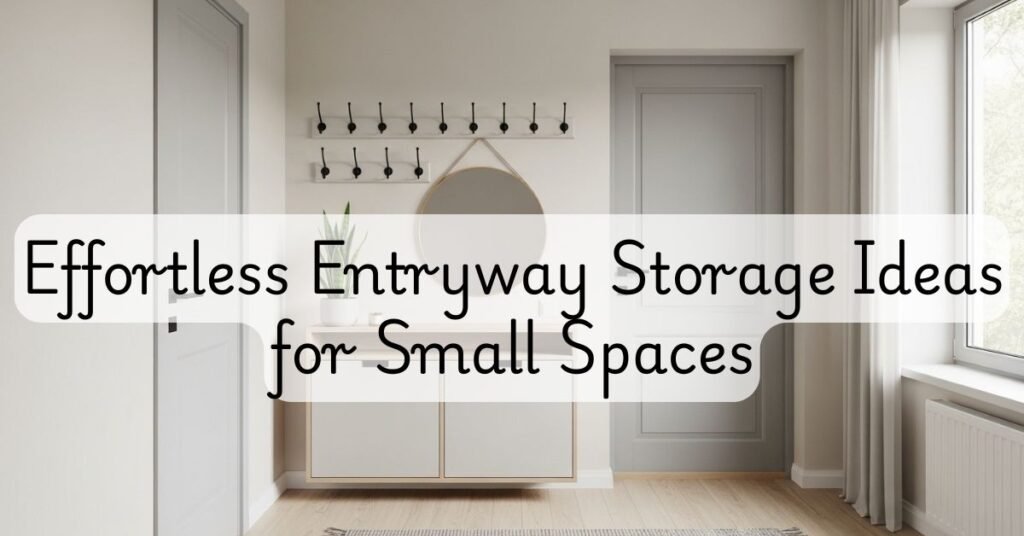
Once I started testing a few entryway storage ideas for small spaces, the difference became clear. The setups that worked didn’t just store things; they prevented the space from feeling crowded in the first place.
Why Most Entryway Storage Ideas Make Small Spaces Feel Worse
A lot of entryway solutions focus on adding.
Add a bench. Add hooks. Add shelves. Add baskets.
Individually, they all make sense.
But when they’re placed without considering movement, they start to compete with the space itself.
The entryway isn’t just a storage area; it’s a transition point.
You move through it quickly, often without thinking. And when that movement is blocked or slowed down, the space immediately feels tighter.
There’s also the issue of visibility.
Even when things are organized, too many visible items create noise. Shoes, bags, keys, when everything is in sight, the area never feels fully settled.
That’s why some entryways feel cluttered even when nothing is technically out of place.
What I found is that good storage in small entryways doesn’t add presence.
It reduces it.
8 Entryway Storage Ideas for Small Spaces That Keep Things Organized Without Crowding
1. A Slim Drop Zone Right Beside the Door
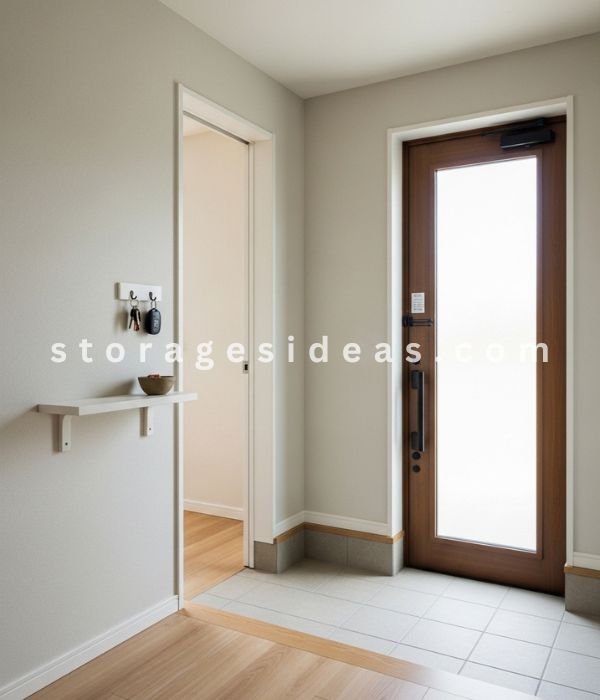
The first few seconds after entering your home decide where everything ends up.
You don’t think about it, you just place things wherever your hand naturally reaches. And if there’s no defined spot right there, those items don’t stay near the door. They move further inside, landing on whatever surface comes next.
That’s how entryway clutter spreads without you noticing.
What changed for me was placing a very small, controlled drop zone exactly where that motion happens, right beside the door, within arm’s reach as soon as I step in.
Not a full table, not something that stands out. Just a narrow surface that catches the essentials before they travel any further.
The size matters more than it seems.
If it’s too wide, it starts collecting things that don’t belong there. If it’s too small, it becomes inconvenient and gets ignored. The balance is in keeping it just large enough for daily items, but limited enough to prevent overflow.
Once that spot existed, everything stopped spreading.
I noticed a similar pattern while testing a few small home organization ideas, where placing things right at the point of use prevents clutter from building up elsewhere.
And because the placement matches the natural movement of entering, it works without needing any effort to maintain it.
2. Vertical Wall Storage That Keeps the Floor Clear
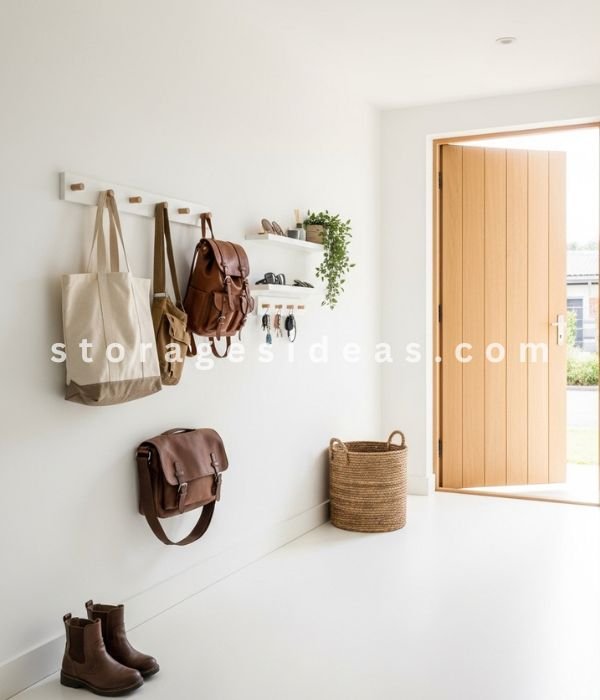
In a small entryway, the floor does more than hold things; it defines how the space feels.
Even a few items placed there can interrupt movement and make the entire area feel tighter. Shoes, baskets, small stands, individually they don’t seem like much, but together they reduce how freely you can move.
What made the difference was shifting storage away from the floor completely.
Using vertical wall space didn’t just free up physical room; it changed how the space was perceived. The ground stayed open, which made the entry feel lighter and easier to pass through.
But what I noticed is that vertical storage only works when it’s spaced correctly.
If everything is clustered too closely, it still creates visual pressure. When there’s breathing room between elements, the wall holds storage without feeling crowded.
The goal isn’t to fill the wall.
It’s to use just enough of it to remove pressure from the floor.
I later realized this approach is closely tied to how space is used efficiently, and this guide on how to organize your home more effectively helped explain why shifting storage away from the floor makes such a noticeable difference.
3. Behind-the-Door Storage That Stays Invisible
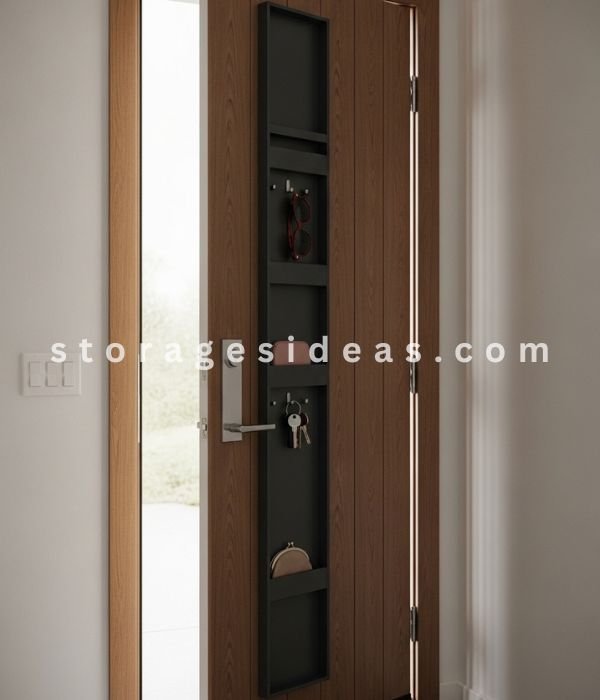
The back of the door is one of the few places in an entryway that exists without affecting anything else.
It doesn’t interrupt movement, it doesn’t take up visible space, and it’s always within reach. But because it’s hidden most of the time, it often gets overlooked.
What stood out to me when I started using it was how “invisible” storage can actually be.
From the main view of the entryway, nothing changes. The space looks exactly the same. But functionally, there’s now a layer of storage that wasn’t there before.
This works especially well for items that are used daily but don’t need to stay in sight.
What matters here is accessibility.
If reaching behind the door feels natural and quick, the setup gets used consistently. If it feels awkward, it gets ignored.
Once it’s placed correctly, this becomes one of the few areas that adds storage without adding any visual weight to the room.
4. A Narrow Console That Follows the Wall Line
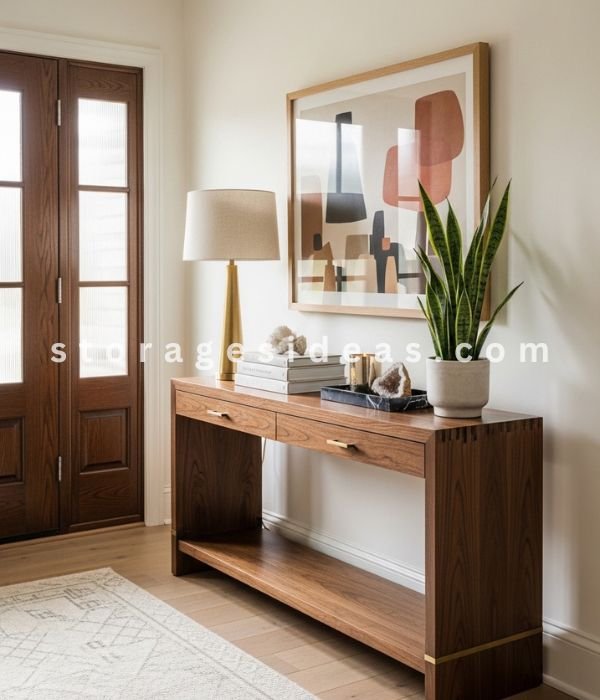
Furniture in a small entryway isn’t just about fitting; it’s about how it affects movement.
A console table might technically fit against a wall, but if it extends too far into the walkway, it creates a subtle restriction. You might not notice it consciously, but your body adjusts to it every time you pass by.
That’s what creates that slightly “tight” feeling.
When I switched to a narrower piece that stayed closely aligned with the wall, the difference wasn’t dramatic, but it was immediate.
Movement became smoother. The entry felt less compressed.
What I realized is that depth matters more than width in these spaces.
A longer, narrower surface works better than a shorter, deeper one because it follows the natural line of the wall instead of pushing into the path.
It also keeps the visual edge clean.
Instead of breaking the flow of the space, the furniture blends into it, holding what you need without announcing itself.
5. A Storage Bench That Replaces Multiple Pieces
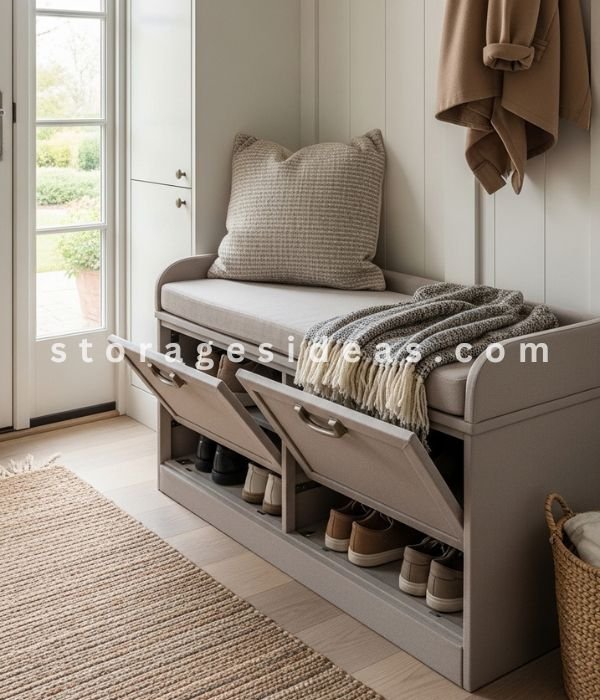
In a small entryway, every additional item has a bigger impact than it should.
A separate chair, a shoe rack, maybe a small storage box. Each one solves a problem on its own, but together they start to crowd the space.
That’s where things begin to feel layered in the wrong way.
What changed for me was replacing those separate pieces with a single element that handled more than one function.
A storage bench doesn’t just give you a place to sit; it absorbs multiple roles into one footprint. Shoes, small items, and even temporary storage all move into the same contained space. If the only free spot is a corner, these corner mudroom ideas show how to fit a bench and hooks into it.
What makes this work isn’t just convenience, it’s reduction.
Fewer objects in the entryway means fewer edges, fewer visual breaks, and less competition within a limited area.
And because the bench naturally sits along the wall, it doesn’t interrupt movement the way multiple scattered pieces do.
This kind of multi-function setup also shows up in these hidden storage ideas, where combining roles into one piece keeps the space from feeling crowded.
6. Shoe Storage That Stays Low, Closed, and Contained
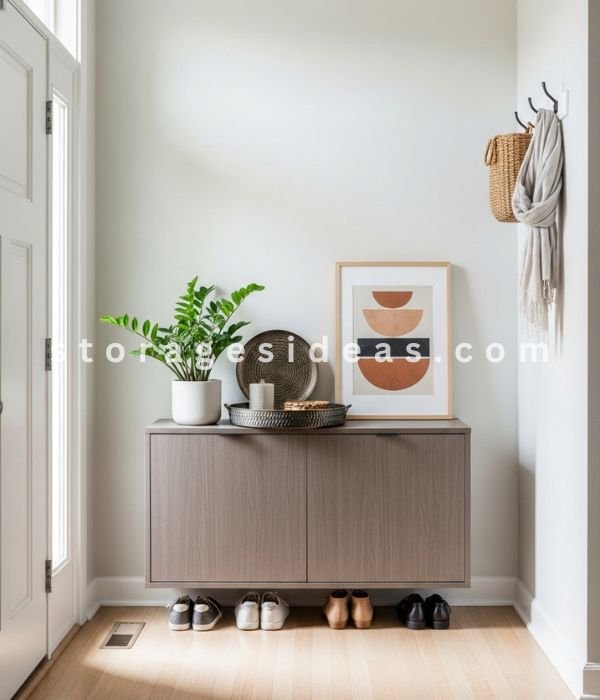
Shoes have a way of spreading without intention.
You take them off near the door, but they don’t stay there neatly. Over time, they shift slightly, one pair here, another there, until the entire entryway starts to feel cluttered.
Even when arranged, open shoe racks keep everything visible, which adds to the visual weight of the space.
What made the difference was containing them completely.
Keeping the shoe storage low keeps the upper part of the entry visually clear. Keeping it closed removes that constant layer of visual noise.
But placement matters just as much as design.
If the storage isn’t right where shoes naturally come off, it won’t be used consistently. It has to sit within that immediate drop point close enough that it feels easier to use than leaving shoes out.
Once that alignment is right, the spread stops.
And with it, one of the biggest sources of entryway clutter disappears from view.
I’ve noticed a similar effect when working on shoe storage ideas, where keeping everyday items contained instead of visible makes the entire space feel more organized.
7. Closed Storage That Reduces Visual Noise
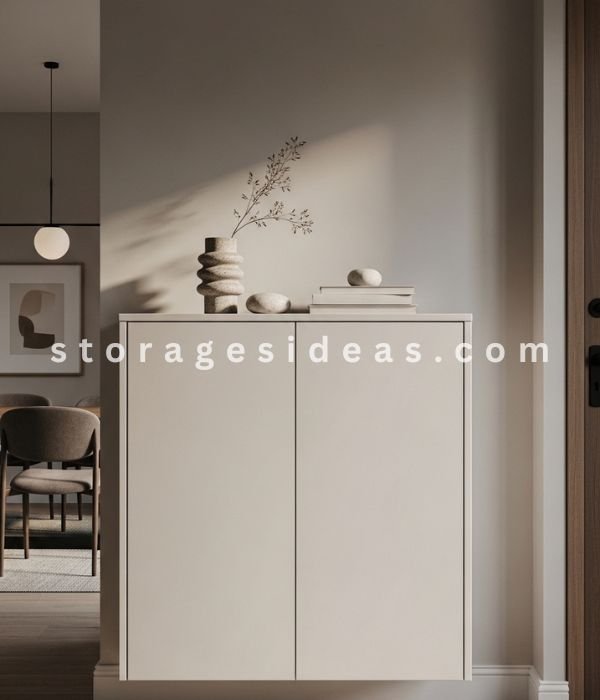
At some point, I realized that even organized spaces can feel overwhelming.
Not because they’re messy, but because everything is always visible.
In an entryway, this effect builds quickly. Bags, keys, small items, all of them stay in sight, adding layers to what your eyes process the moment you walk in.
Closed storage changes that dynamic completely.
It doesn’t remove items it controls when they’re seen.
What stood out to me is how immediate the effect is. As soon as fewer things are visible, the space feels calmer. Surfaces look cleaner, and the entry stops feeling like a collection of items.
But this only works when accessibility is maintained.
If opening and closing storage becomes inconvenient, items will start staying out again. The setup has to match how quickly you move through the space.
When it does, the balance between function and calm becomes effortless.
8. A Defined Entry Zone That Stops Clutter From Spreading
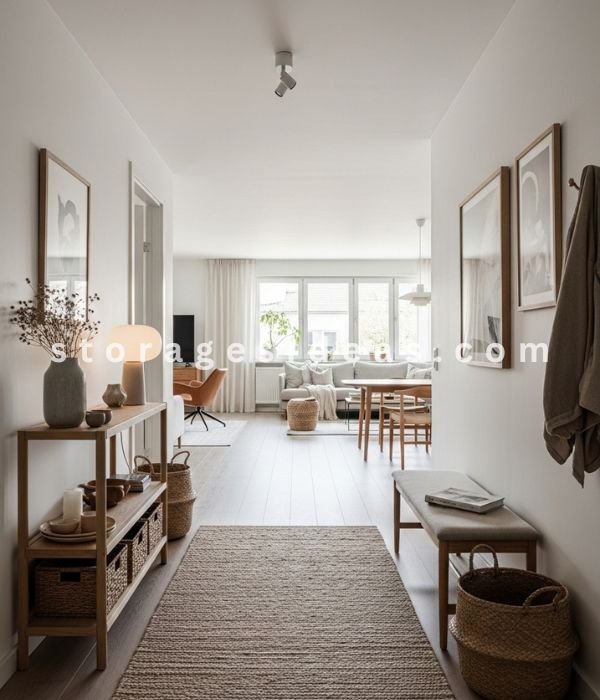
In many small homes, the entryway doesn’t have a clear boundary.
It blends directly into the living space, which makes it easy for clutter to move beyond it. What starts near the door slowly spreads inward, affecting areas that should stay separate.
What helped was treating the entryway as a contained zone, even without physical separation.
Not by adding walls or dividers, but by defining its role.
Everything related to entering and leaving stayed within that space. Keys, shoes, and bags are all handled there, without spilling into the rest of the home.
What I noticed is that once that boundary became consistent, the rest of the space stayed cleaner without extra effort.
The entryway stopped being just a passage.
It became a control point.
And when that point works properly, the rest of the home doesn’t have to absorb the overflow.
What Actually Keeps an Entryway From Feeling Crowded
What stood out to me is that the best setups didn’t add more.
They removed pressure.
Less visible clutter, clearer walking paths, and storage placed exactly where it’s needed, that combination changes how the space feels.
It’s not about how much you can fit.
It’s about how easily you can move through it.
Frequently Asked Questions
How do I add storage to a small entryway without crowding it?
Choose slim pieces and use the wall. Hooks, a narrow shelf or console and behind-the-door storage hold everyday items while keeping the floor and the walkway clear.
What furniture works best in a narrow entryway?
A narrow console that follows the wall line or a storage bench that does several jobs at once. One multi-purpose piece is usually better than several small ones.
How should I store shoes in a small entryway?
Keep them low, contained and ideally behind a door. A closed shoe cabinet or a bench with storage underneath stops shoes spreading across the floor.
How can I create an entryway when the front door opens straight into the living room?
Define a small zone beside the door with a mat, a few hooks and a slim shelf or console. A clear boundary tells everyone where things go and stops clutter moving further in.
Final Thoughts
What stood out to me after making these changes wasn’t how much more storage I added, but how much less the space had to handle.
The entryway didn’t get bigger. Nothing expanded. But the way things moved through it changed.
Items stopped spreading. Surfaces stopped collecting. And the space no longer felt like it had to absorb everything coming in and out of the home.
That’s what makes these entryway storage ideas for small spaces work.
They don’t rely on adding more pieces or filling every gap. They work by placing things exactly where they’re needed right at the moment they’re used.
And once that placement feels natural, the difference isn’t just visual.
The entryway becomes easier to move through, easier to maintain, and noticeably calmer from the moment you walk in.