
I didn’t think I had space for a library.
Not because I didn’t have books, but because every part of my home already felt used. The living room had its layout, the bedroom had its own function, and whatever was left didn’t feel like enough to build anything meaningful.
So books stayed scattered.
A few near the sofa, some by the bed, others placed wherever there was space. It didn’t feel messy, but it also didn’t feel intentional. And over time, I noticed something simple.
When books don’t belong anywhere, reading doesn’t either.
That’s something I had run into before while trying different book storage ideas, where the issue wasn’t really the number of books, but the lack of a clear place for them to stay.
That’s when I stopped thinking about adding a library and started paying attention to where one could naturally exist inside the space I already had. Once I approached it that way, a few mini library ideas for small homes started to make sense, not as additions, but as placements.
Why Small Homes Actually Have More Library Space Than You Think
At first, it feels like there’s no room for something like this.
But that’s usually because we look for empty space instead of usable space.
In smaller homes, very little is truly empty. But a lot of it is underused. Corners that don’t serve a clear purpose. Walls that exist but don’t contribute. Gaps that feel too small to matter.
The shift happens when you stop asking, “Where can I fit a library?” and start asking, “Where is space already underperforming?”
That’s where these setups begin to work.
10 Mini Library Ideas for Small Homes That Turn Any Room Into a Reading Spot
1. In the Living Room Corner Next to the Sofa
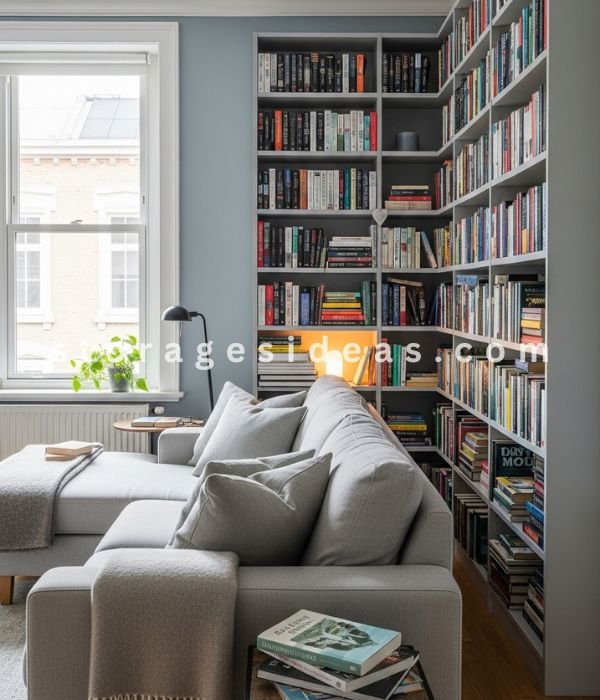
There’s almost always a corner near the main seating area that feels slightly unresolved.
It’s not empty, but it doesn’t really belong to anything either. Sometimes there’s a small table, sometimes just a bit of leftover space that ends up holding things temporarily.
That’s exactly why it works.
When I cleared that corner, what stood out wasn’t how it looked but how usable it suddenly became. The space stopped being passive. It started to feel like it could actually serve a purpose.
Instead of filling it back up randomly, I rebuilt it around one idea reading. A small base for books placed low enough to reach without shifting position, and a light that didn’t need to be adjusted every time I sat down.
What made this different from other setups was how naturally it fit into the existing routine.
I didn’t have to move to use it. I didn’t have to prepare anything. It simply became part of the way I already used the sofa.
And that’s what makes this location work so well in smaller homes.
It doesn’t compete with the layout; it completes it.
2. Behind the Sofa as a Slim Library Strip
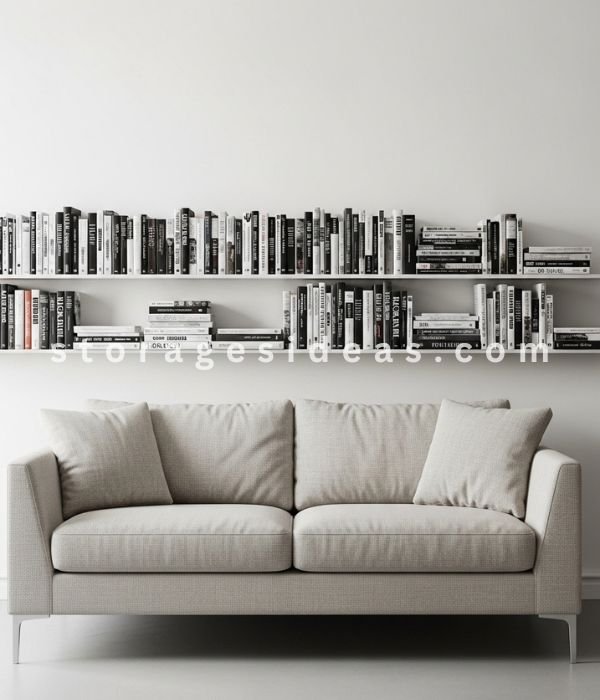
The space behind a sofa is one of those areas that feels useful but rarely is.
It sits between the wall and the seating, but it’s usually too narrow for most furniture and too hidden for decoration to matter.
That in-between quality is what makes it effective.
Instead of treating it as empty space, I treated it as a layer. A slim surface running along the back, just enough depth to hold books without pushing into the room.
What I noticed here is that this kind of setup changes how the room works without changing how it looks.
From the front, nothing feels different. The seating area stays clean. But from behind or from the side, there’s a quiet functional strip that holds everything within reach.
It also solves a small but important problem.
Books don’t have to compete with coffee tables or side tables anymore. They have their own place, slightly outside the main activity area, but still connected to it.
That kind of placement becomes even clearer in setups like these behind sofa storage ideas, where space that usually gets ignored starts working quietly in the background.
That separation keeps the space feeling balanced.
3. Under the Window as a Reading + Storage Spot
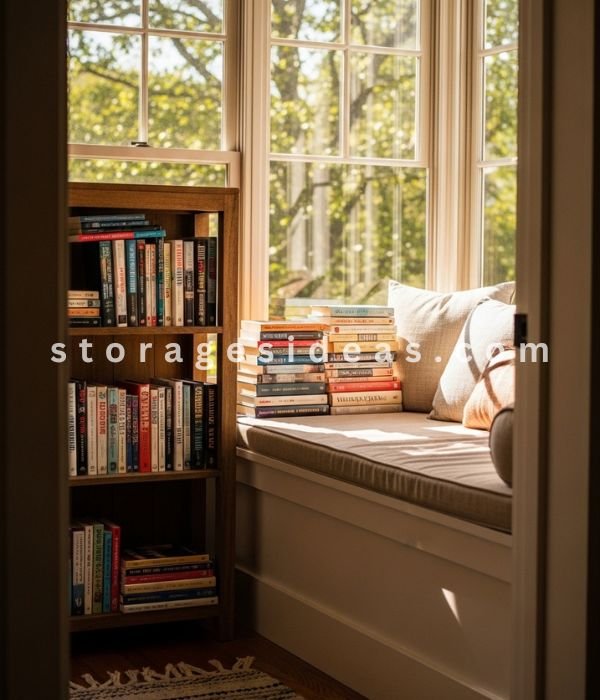
Some spaces already feel like they’re meant to be used, you just don’t assign anything to them.
The area under a window often falls into that category.
It gets good light, it feels calmer than the rest of the room, but it’s often left empty or used inconsistently.
When I started sitting there more often, I realized it didn’t need much to become functional.
A place to sit, even something simple, and a small group of books placed nearby, not stored away, but visible enough to invite use.
What made this setup different wasn’t structure; it was consistency.
Because the environment already supported reading, I didn’t need to build much around it. I just had to stop ignoring it.
I later realized this wasn’t just about preference; lighting plays a direct role in how comfortable reading feels, and this explanation of why proper lighting matters when reading helped me understand why that spot worked so consistently.
Over time, that spot became one of the most reliable places to read, not because it was designed that way, but because it already had the right conditions.
4. Along a Hallway Wall That’s Usually Empty
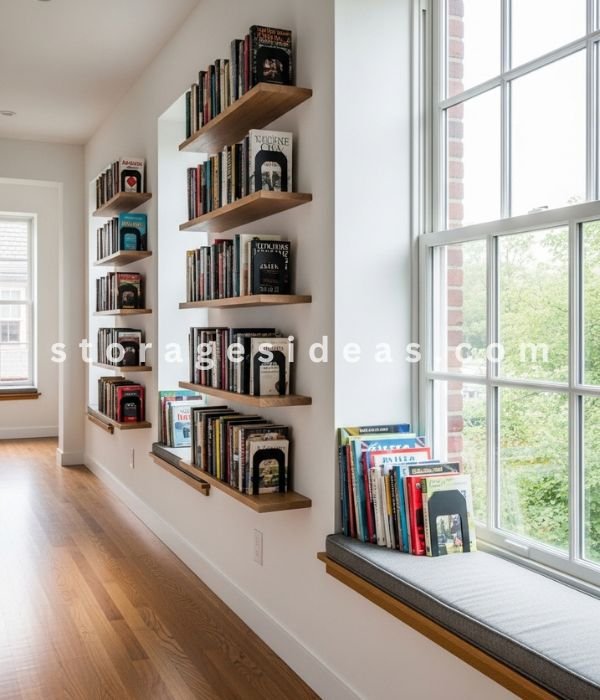
Hallways are easy to overlook because they’re not meant to hold anything.
They’re meant to connect spaces, not become one.
But that’s also what makes them useful.
A hallway wall doesn’t carry the same visual weight as a main wall in a living room or bedroom. It doesn’t need to balance furniture or anchor the space. So anything added there doesn’t have to compete.
When I placed a slim shelf along one side, the key wasn’t what I added; it was how little it affected everything else.
Movement stayed the same. The space didn’t feel tighter. But suddenly, something that had no function started holding one.
There’s also a subtle behavioral shift here.
Because you pass through the hallway regularly, books placed there become part of your movement. You notice them more often, which makes picking one up feel less like a decision and more like a natural pause.
5. Beside the Bed as a Night Reading Zone
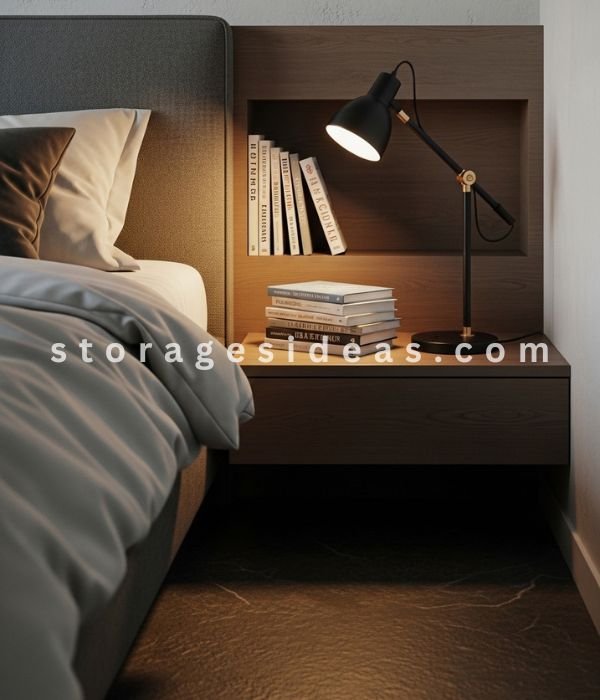
The space next to the bed is usually treated as fixed.
A nightstand, a lamp, maybe a few essentials, and that’s it.
But that setup is often more flexible than it seems.
What I changed wasn’t the structure, but the capacity. Instead of keeping it limited to a single surface, I allowed it to hold a small, rotating set of books.
Not too many, just enough to choose from without thinking.
What made this work was timing.
Night reading happens when energy is low, which means any extra effort becomes a barrier. If the book isn’t already there, it probably won’t get picked up.
By keeping everything within reach, the setup removes that barrier completely.
And because it builds on something that already exists, it doesn’t feel like an addition; it feels like an extension of the space.
That same idea shows up in these nightstand storage ideas, where keeping things within reach changes how often you actually use them.
6. Under the Stairs as a Hidden Mini Library
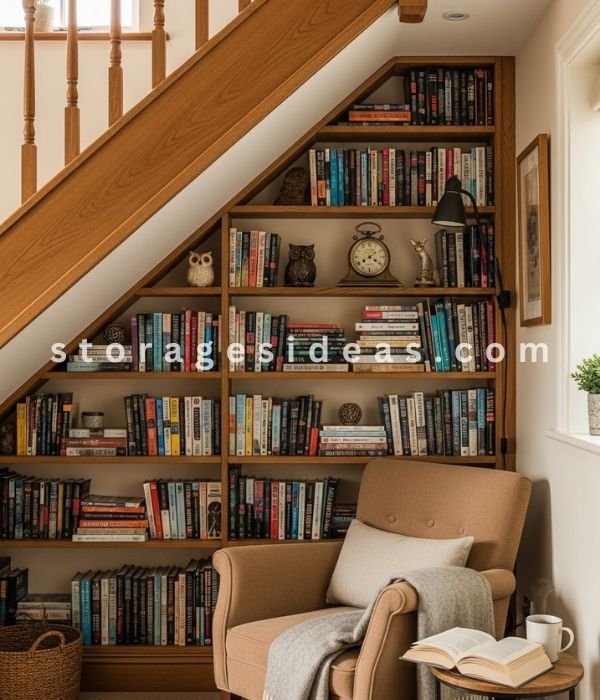
The space under the stairs is one of those areas that always exists but rarely feels intentional.
It usually becomes storage by default. Things get placed there because they don’t fit anywhere else, not because the space is designed for anything specific.
That’s what makes it difficult to use consistently.
When I started looking at it differently, the first change wasn’t adding shelves—it was clearing the randomness. Once that space stopped holding unrelated items, its shape became easier to understand.
And that shape matters.
Unlike open areas, this space has a natural boundary. It’s slightly enclosed, which means it can hold more without affecting how the rest of the room feels. At the same time, it’s still connected enough that it doesn’t feel isolated.
What worked here was treating it as its own zone, not just an extension of the room.
Books placed here didn’t interfere with the main layout. They stayed accessible, but visually contained. And because the space already felt separate, it didn’t need much structure to feel complete.
7. Inside a Living Room Cabinet That Stays Accessible
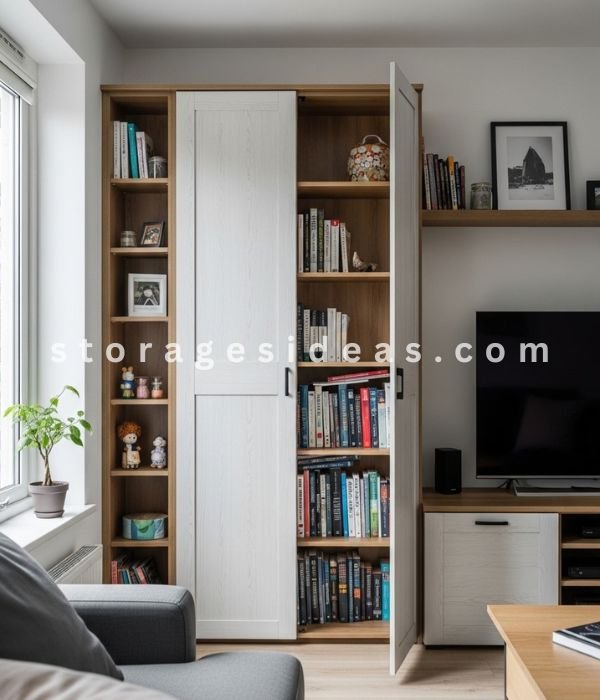
There are times when having everything visible starts to feel like too much.
Not clutter in the usual sense, just too many elements competing for attention in a space that’s already doing a lot.
That’s where closed storage begins to work differently.
I tried moving part of the setup into a cabinet, not to hide it completely, but to reduce how much of it stayed in view at once. What made the difference wasn’t the cabinet itself—it was how the inside was arranged.
Instead of stacking books tightly, I left enough space to reach them without shifting everything around. The most-used ones stayed near the front, while the rest stayed slightly behind.
That balance changed how the room felt.
The visual surface stayed clean, but the function didn’t disappear. The setup remained easy to use, even though it wasn’t always visible.
In smaller homes, that kind of control over visibility becomes just as important as the storage itself.
8. Between Furniture Pieces Where Space Feels Too Small
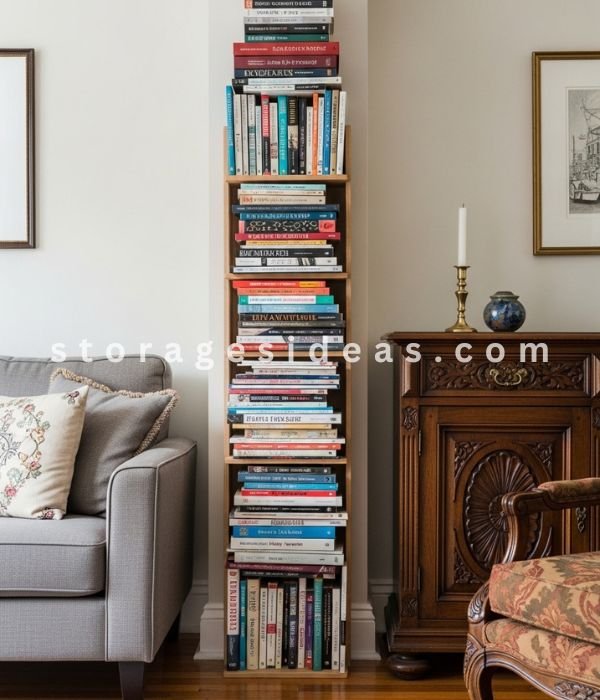
Some of the most overlooked areas in a room are the narrow gaps between larger pieces of furniture.
They often feel too small to matter, so they stay unused.
But those spaces behave differently from open areas.
They’re already defined by what surrounds them. Which means anything placed there doesn’t have to establish its own presence; it just has to fit.
When I used one of these gaps for a slim vertical shelf, what stood out wasn’t just that it worked; it was how quietly it worked.
It didn’t change the layout. It didn’t draw attention. It simply added function to a space that wasn’t being used.
And because the surrounding furniture already framed it, the setup felt contained without needing extra structure.
In many ways, these smaller spaces are easier to build into than larger ones, because they don’t require balancing anything else.
9. On a Feature Wall That Needs Structure
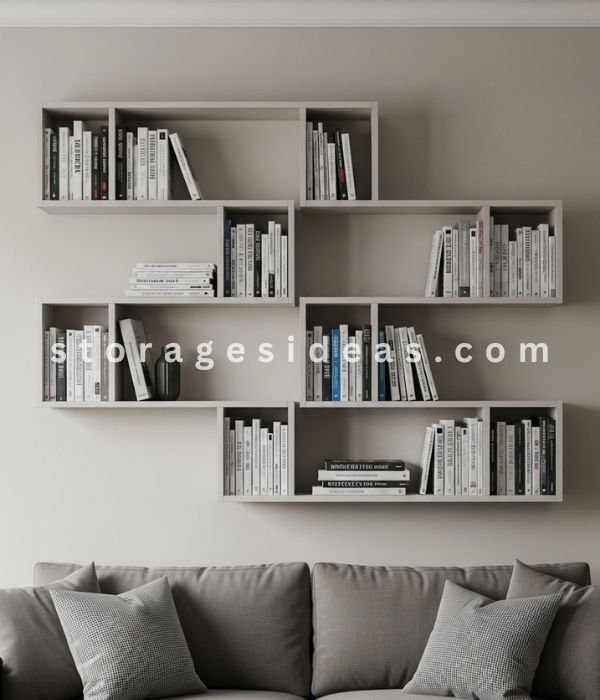
Some walls don’t feel empty, but they don’t feel complete either.
They exist in the room, but they don’t contribute much to how the space works or feels.
At first, I tried filling that kind of wall with decor. But it didn’t solve the problem; it just added more elements without giving the space a clear role.
Using books changed that.
Not as a full wall of storage, but as a controlled arrangement that gave the wall structure. A few sections, spaced carefully, enough to create depth without turning the wall into a solid block.
What made this work was restraint.
Too much, and it starts to dominate the room. Too little, and it doesn’t shift anything. The balance sits somewhere in between, where the wall starts to feel intentional without becoming heavy.
This kind of setup doesn’t just store books; it stabilizes the visual rhythm of the room.
10. Inside Multi-Functional Furniture That Already Exists
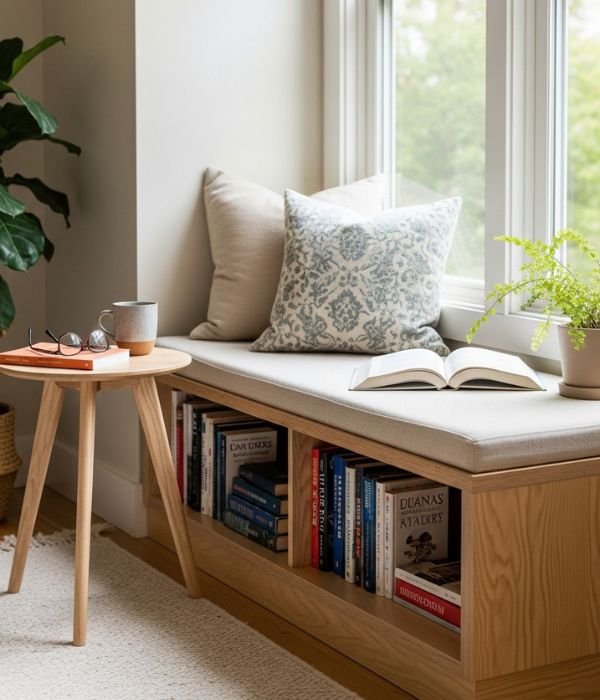
At some point, I realized that the issue wasn’t a lack of space; it was how many separate things were trying to exist within it.
Adding more furniture to solve storage problems only made the space feel tighter.
So instead of adding, I started looking at what was already there.
Benches, tables, and seating pieces that were already part of the room. When those began to hold books as well, the setup stopped feeling like something extra.
It became integrated.
What changed wasn’t just the number of items, but how the space functioned overall. Fewer separate elements meant less visual noise and fewer adjustments throughout the day.
And because everything stayed within reach of where it was used, the setup remained practical without needing attention.
In smaller homes, this kind of integration often works better than adding something new.
What Actually Makes a Mini Library Work in a Small Home
After trying these placements, the pattern became clear.
It wasn’t about how much space I had.
It was about how well the setup fit into the space.
The ones that worked didn’t interrupt movement, didn’t require effort to use, and didn’t feel separate from the room.
They felt like they belonged there.
Frequently Asked Questions
How do I create a mini library in a small home?
Pick one underused spot, such as a corner beside the sofa, a hallway wall or the space under a window, and add shelving that suits it. A comfortable seat and a light nearby turn it into a reading spot.
Where is the best place for books in a small home?
Corners, hallway walls, the space behind or beside the sofa, beside the bed and under the stairs all work well. These areas are usually empty and do not interrupt the main layout.
How many books do I need for a home library?
There is no minimum. A single shelf or a small stack arranged with intention counts. A mini library is about having a defined place for reading, not about the size of the collection.
How do I store books without making the room feel cluttered?
Leave some space on each shelf, mix upright and stacked books, and keep shelving slim. A cabinet with doors is a good option if you prefer books out of sight.
Final Thoughts
What surprised me most wasn’t how many places I could fit books; it was how many of those places were already there.
Nothing I used felt like “extra space.” It was the same rooms, the same layout, the same corners that had always existed. The difference was in how they were being used.
Once a space had a clear role, it stopped feeling random.
A corner became a reading spot. A gap became storage. A window area became somewhere you actually sit with a book instead of just passing by it. And none of it required changing the structure of the home, only paying closer attention to it.
That’s what makes these mini library ideas for small homes work.
They don’t depend on creating something new. They depend on recognizing where something already fits.
And once that placement feels natural, reading stops feeling like something you have to make time for and starts becoming something the space quietly allows.