I used to think my kitchen cabinets were already organized.
Everything had a place. The shelves looked fine. Nothing was obviously messy.
But cooking still felt slow.
Every time I started preparing a meal, I had to open multiple cabinets, move things around, and search for what I needed. Sometimes I would forget where I placed something just a day earlier.
At one point, I spent more time looking for ingredients than actually cooking.
That’s when I realized something simple.
Kitchen cabinet organization isn’t about how it looks. It’s about how easily you can cook. The same goes for the fridge; see these fridge storage hacks.
Once I started organizing based on how I actually use my kitchen, everything changed. I moved less, searched less, and cooking became much smoother.
I’ve also applied similar ideas in other parts of my kitchen, and some of these small kitchen decor and storage hacks helped me make better use of limited cabinet space.
In this guide, I’m sharing kitchen cabinet organization ideas that made my everyday cooking routine easier, faster, and less frustrating.
Why Kitchen Cabinets Feel Hard to Manage During Cooking
Before I fixed anything, I needed to understand what was going wrong.
The biggest issue was placement.
I had items grouped by type instead of usage. Oils were in one place, spices in another, and tools somewhere else. That meant I was constantly moving around while cooking.
Then there was stacking.
To save space, I stacked items on top of each other. But that made everything harder to reach. Every time I needed something, I had to move other items first.
Visibility was another problem.
When items aren’t visible, they’re easy to forget, and this is closely related to how clutter affects daily organization and decision-making in small spaces.
If I couldn’t see something, I forgot about it. That led to duplicate purchases and wasted food.
And finally, I had no system based on my routine.
I organized once and expected it to stay that way.
It didn’t.
So I stopped organizing for appearance and started organizing for how I actually cook.
That made all the difference.
13 Smart Kitchen Cabinet Organization Ideas That Make Cooking Easier
1. The “Cooking Zone” Cabinet Setup
This was the first change that made a real difference.
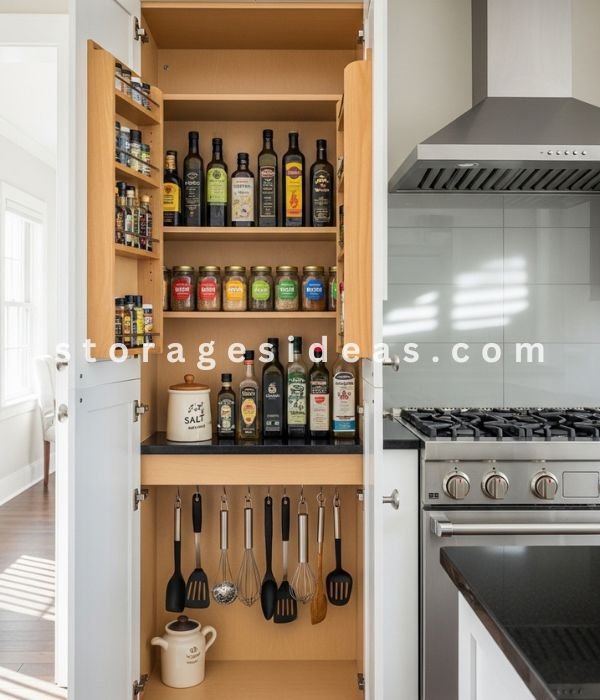
I created a cabinet just for cooking essentials. Everything I use while standing at the stove stays in this zone.
Items like oils, spices, salt, and frequently used tools all go here.
I placed this cabinet as close to the stove as possible.
Now, when I cook, I don’t need to move around the kitchen. Everything is within reach.
At first, I made the mistake of putting too many items here. It quickly became crowded again.
So I reduced it.
Now I only keep items I use almost every day.
This keeps the space simple, and more importantly, it keeps cooking smooth and uninterrupted.
2. The “Prep Zone” That Speeds Up Everything
Before organizing this, prep work always felt scattered.
I had cutting boards in one place, bowls in another, and knives somewhere else.
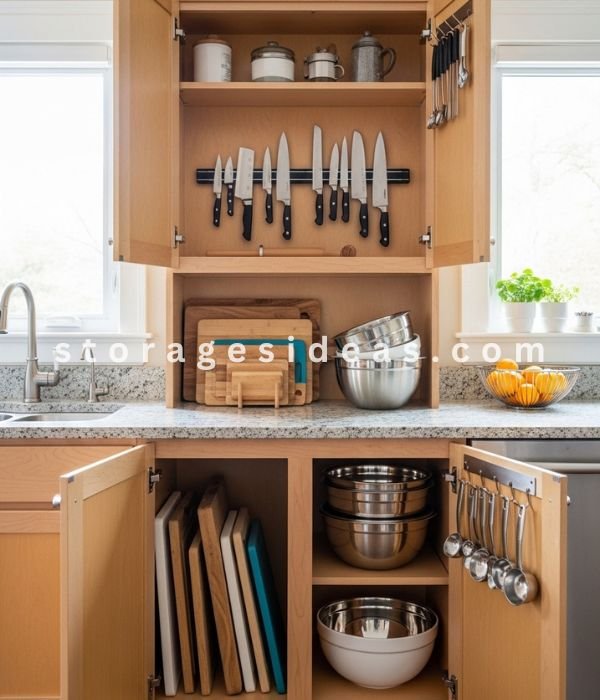
Now I keep all prep-related items together.
Cutting boards, mixing bowls, measuring tools, and knives all stay in one cabinet.
When I start preparing a meal, everything I need is already there.
This removes unnecessary movement and makes the process feel more structured.
It also creates a clear flow: prep first, then cook.
That small separation makes cooking feel less chaotic.
3. Organizing Based on Frequency Instead of Categories
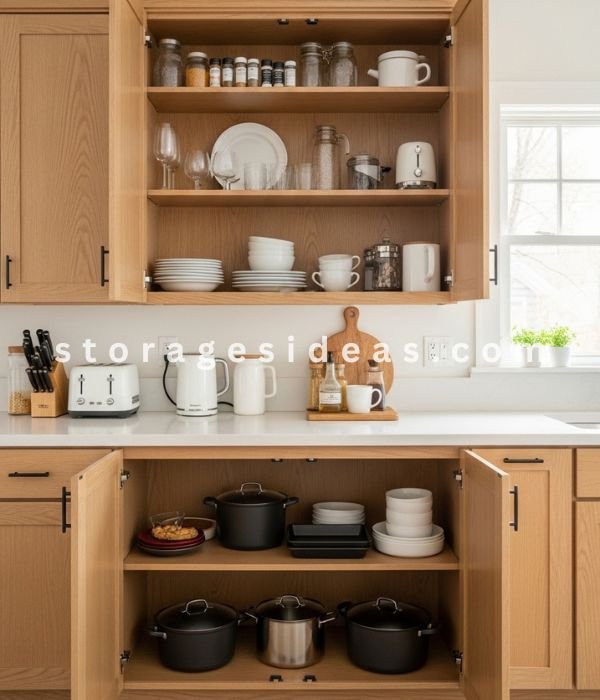
This was a big mindset shift for me.
I used to organize everything by category. It looked neat, but didn’t match how I actually used things.
Now I organize based on frequency.
Items I use daily stay at eye level.
Items I use occasionally go higher or lower.
Rarely used items are stored further away.
This reduces unnecessary movement.
I don’t have to bend down or reach up constantly.
It also makes the system easier to maintain because frequently used items naturally stay in place.
4. The One-Layer Rule That Changed Everything
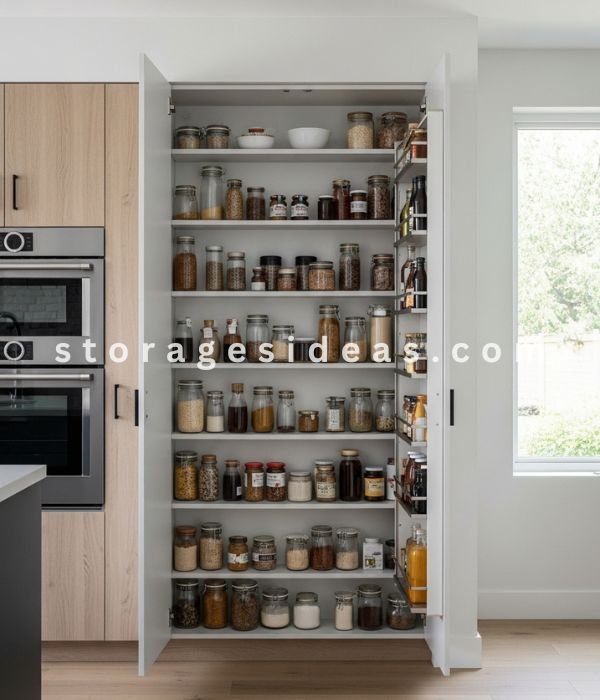
Stacking items deeply was one of my biggest mistakes.
I used to stack things behind each other or in multiple layers.
That made it hard to access anything quickly.
Now I follow a simple rule.
If I can’t see it, I don’t stack it behind something else.
Everything should be visible in one layer whenever possible.
This doesn’t mean wasting space. It means using space more intelligently.
Once I stopped stacking blindly, everything became easier to find and use.
5. Vertical Storage for Flat and Awkward Items
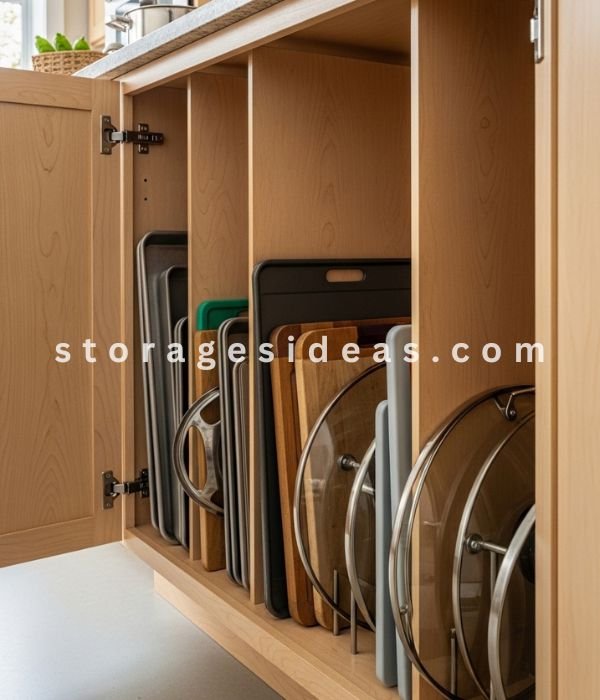
Flat items are used to create a constant mess in my cabinets.
Baking trays, cutting boards, and lids were always stacked unevenly.
Every time I needed one, I had to move the others.
Now I store them vertically.
Like books on a shelf.
This makes each item easy to grab without disturbing the rest.
It also keeps the cabinet looking clean and organized.
More importantly, it saves time during cooking.
6. Clear Containers That Remove Guesswork
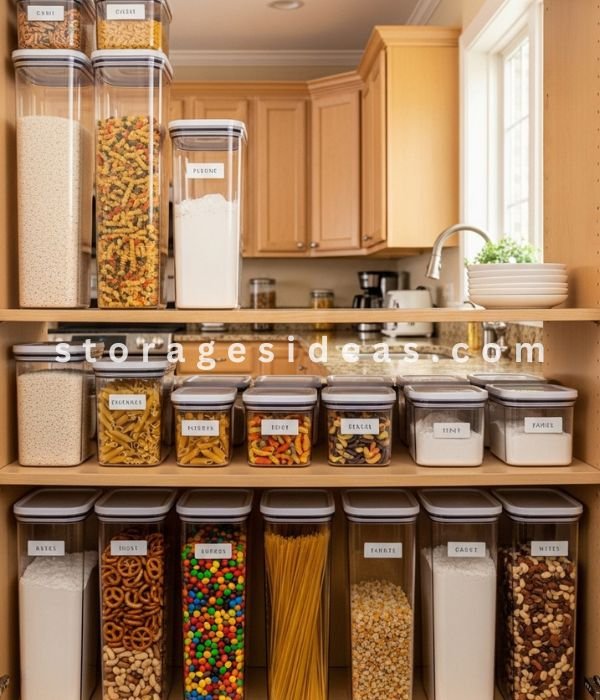
Switching to clear containers was one of the most practical changes I made.
I use them for rice, pasta, flour, and snacks.
Now I can see everything at a glance.
I don’t have to open multiple containers or guess what’s inside.
It also helps me track what I have.
If something is running low, I notice it immediately.
Another benefit is consistency.
Uniform containers make the cabinet look less cluttered and easier to manage.
I’ve used the same approach for other items in my home, and these electronics organization ideas also show how visibility can make everyday things easier to manage.
7. Shelf Risers That Double Usable Space
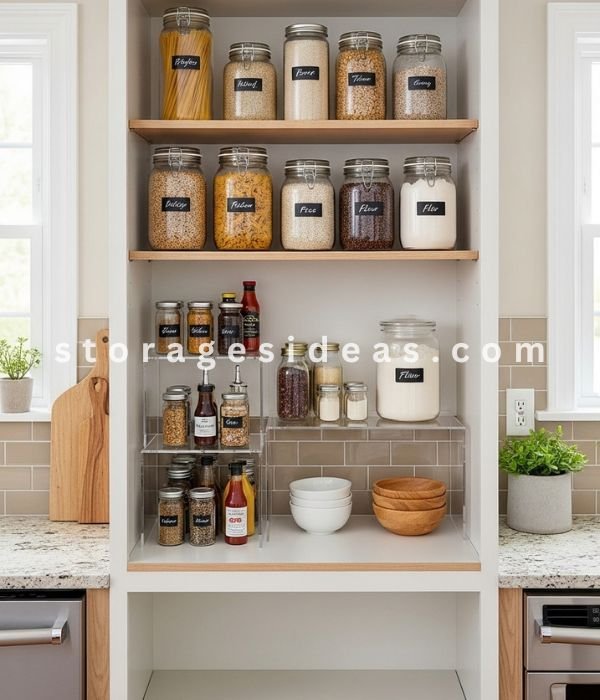
Before using shelf risers, I used to stack items directly on top of each other.
That made everything harder to reach.
Now I create layers using risers.
For example, jars go on top, and smaller items go underneath.
This makes better use of vertical space without adding new shelves.
It also keeps everything visible.
I don’t have to move items around just to grab one thing.
Making better use of small areas reminded me of how I use tight spots elsewhere, and these corner storage ideas show how overlooked spaces can become useful storage.
8. Pull-Out Storage That Makes Deep Cabinets Useful
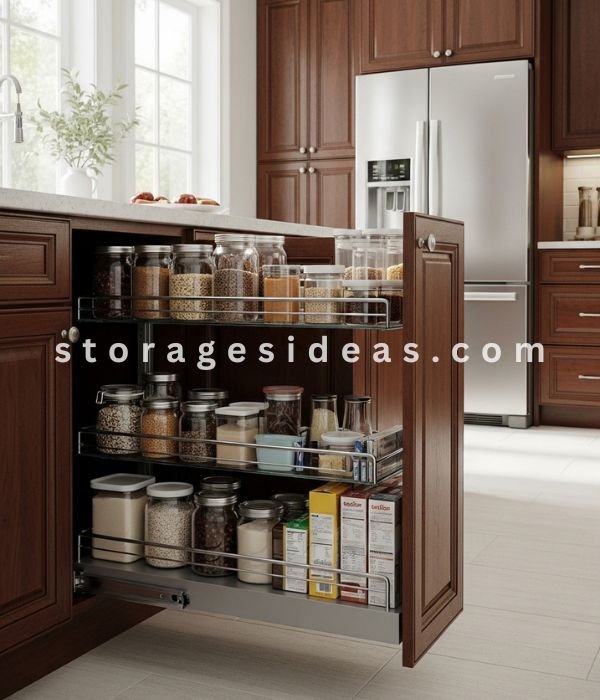
Deep cabinets can be frustrating.
Items at the back often get forgotten.
Pull-out storage changed that.
Now I can slide the shelf out and see everything.
No reaching blindly.
No forgotten items.
It turns unused space into something practical.
9. Using Cabinet Doors for Hidden Storage
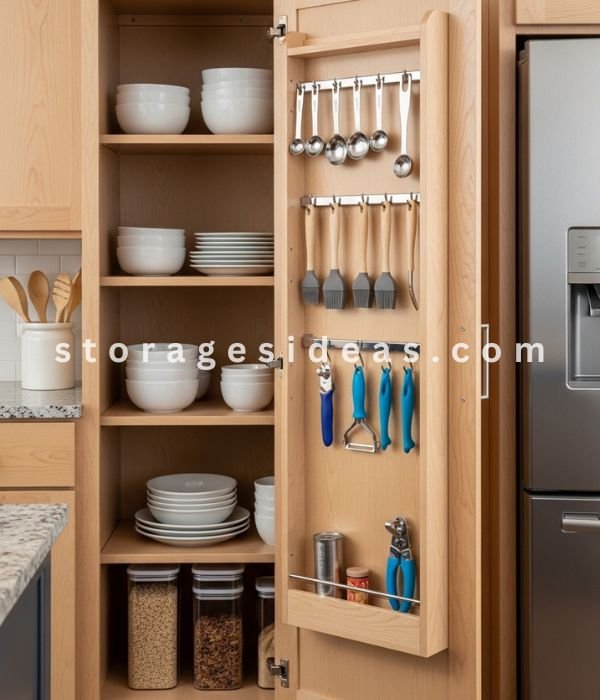
Cabinet doors used to be wasted space.
Now I use them for small items.
Things like measuring spoons, brushes, or small tools.
This keeps frequently used items within easy reach.
It also frees up space inside the cabinet.
Even small changes like this can make a noticeable difference.
10. Drawer-Style Bins That Replace Digging
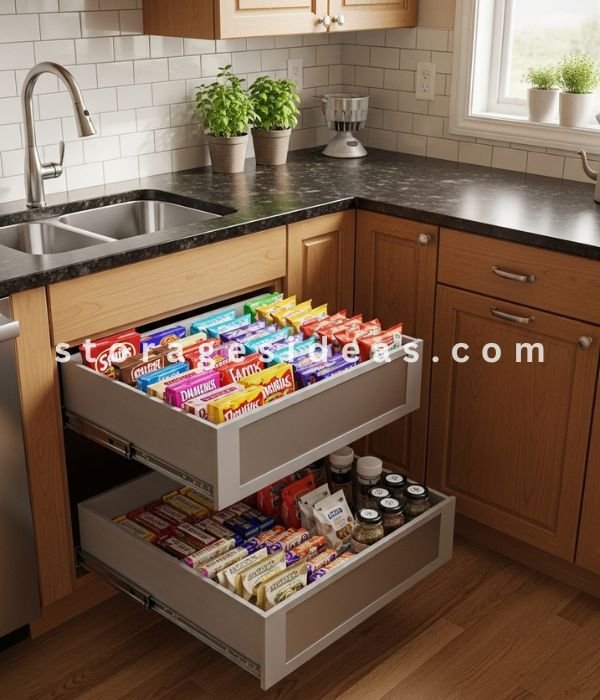
Instead of digging through shelves, I now use bins that slide.
These are perfect for small items like snacks or packets.
I can pull the bin out and see everything at once.
This removes the need to search blindly.
It also keeps items grouped together, which makes the system easier to maintain.
11. Labeling That Saves Time Every Day
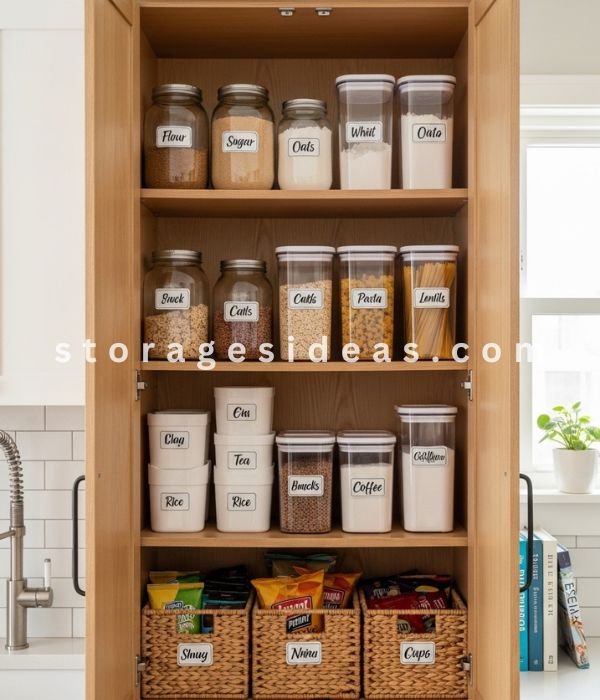
I didn’t think labeling was important at first.
But once I started, I realized how much time it saves.
Labels remove guesswork.
I don’t have to open containers or check multiple places.
Everything is clearly marked.
It also helps everyone in the house follow the same system.
12. A Daily-Use Basket That Simplifies Everything
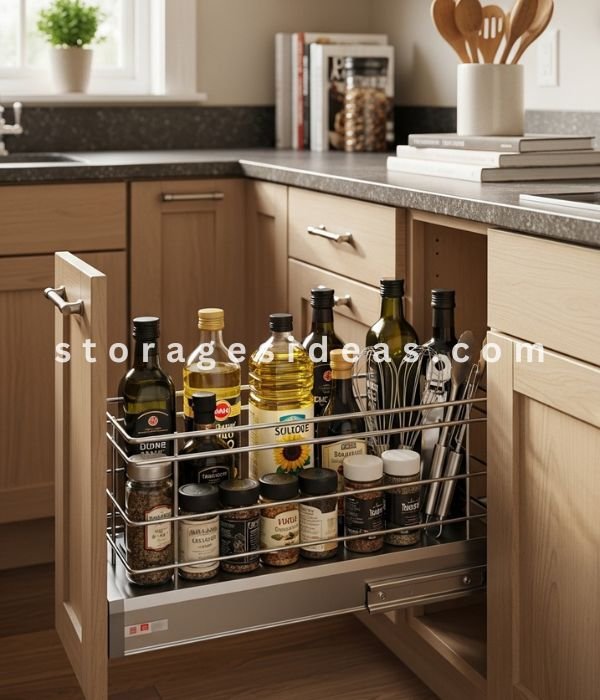
This is one of the simplest ideas, but it works very well.
I keep a small basket with items I use every day.
Instead of reaching for multiple items, I just pull out the basket.
This makes the process faster and more organized.
It also makes cleanup easier because everything goes back in one place.
13. The 5-Minute Reset That Keeps Everything Working
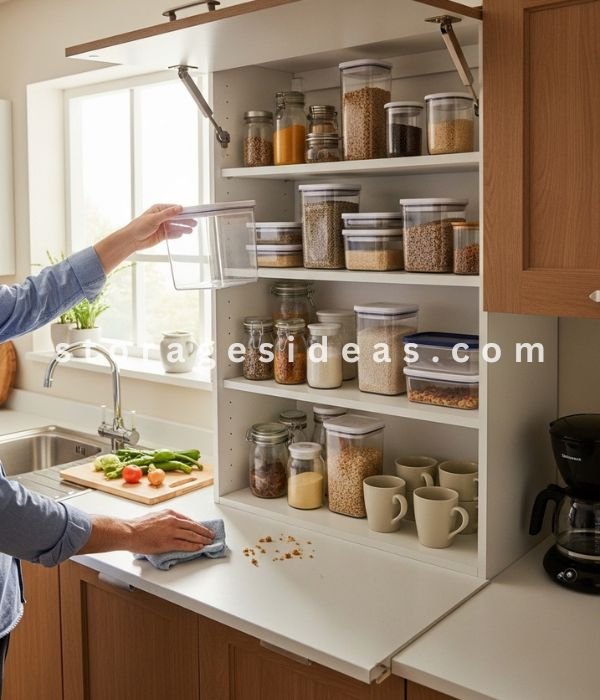
This habit keeps everything from falling apart.
At the end of the day, I spend a few minutes resetting the cabinets.
I put items back, remove clutter, and fix anything out of place.
It takes very little time.
But without it, even the best setup won’t last.
Small Changes That Made the Biggest Difference
Some changes had a bigger impact than others.
Creating zones reduced unnecessary movement.
Using clear containers removed confusion.
And the daily reset kept everything under control.
None of these changes was complicated.
But together, they made cooking faster and less stressful.
Mistakes That Slowed Me Down Before
Overfilling Cabinets
I used to think more storage meant better organization.
So I filled every space.
But that made everything harder to access.
Now I focus on usability instead of capacity.
Organizing for Looks Instead of Use
I tried to make everything look neat.
But it didn’t match how I actually used the space.
Now I prioritize function over appearance.
Poor Placement of Everyday Items
Items weren’t where I needed them.
That slowed everything down.
Now I place items based on usage.
Ignoring Workflow
This was the biggest mistake.
Once I organized based on how I cook, everything improved.
Frequently Asked Questions
What is the best way to organize kitchen cabinets?
Organize by how you cook. Create zones for cooking and prep near where those jobs happen, and store the things you use most at the front and at an easy height.
How do I organize deep kitchen cabinets?
Use pull-out shelves or bins that slide like drawers so you can reach the back without unloading the front. Avoid stacking items several layers deep.
How should I store baking trays and cutting boards?
Stand them upright in a vertical divider or rack. Each one can then be pulled out on its own instead of lifting a whole stack.
How do I keep kitchen cabinets organized long-term?
Avoid overfilling them, label containers and spend a few minutes at the end of the day returning things to their zones. Small, regular resets prevent a big reorganization later.
Final Thoughts
For a long time, I thought my kitchen cabinets were the problem.
Now I know the real issue was how I was using them.
Once I changed my approach, everything became easier.
Cooking feels smoother, faster, and less frustrating.
These kitchen cabinet organization ideas don’t require a big overhaul.
Small changes can make a big difference.
If your kitchen feels slow or cluttered, start with one small adjustment.
That one change might be enough to improve your entire routine.