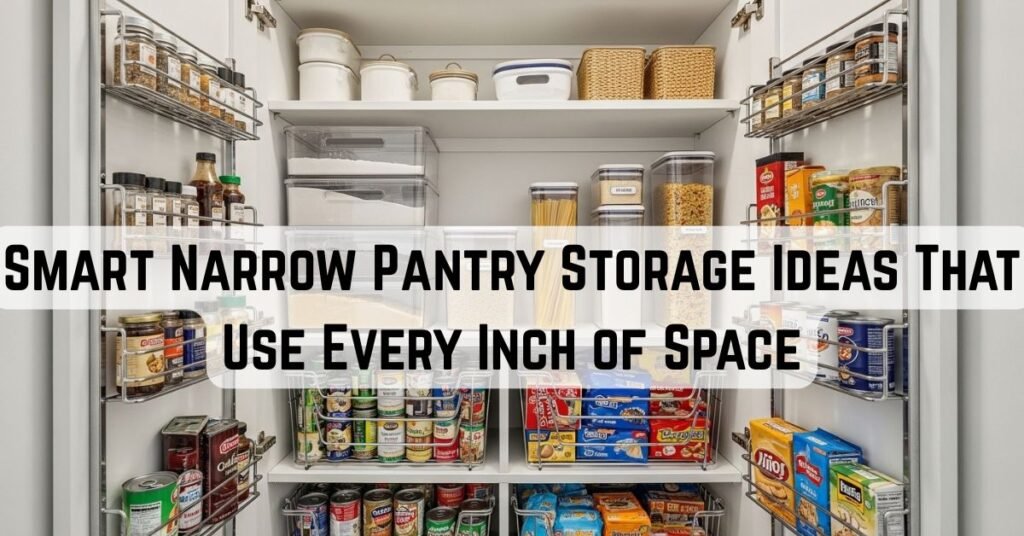
I used to think my narrow pantry was just poorly designed.
It felt too tight to organize properly. Every shelf looked full, but somehow I still couldn’t find what I needed. Items got pushed to the back and forgotten. Snacks expired before I even remembered buying them.
At one point, I had three open pasta packets because I couldn’t see the first two.
That’s when I realized something simple. The problem wasn’t the size of the pantry. It was how I was using the space.
Narrow pantries don’t give much width, but they often have more height and depth than we actually use. Once I started organizing things vertically and making items easier to access, everything changed.
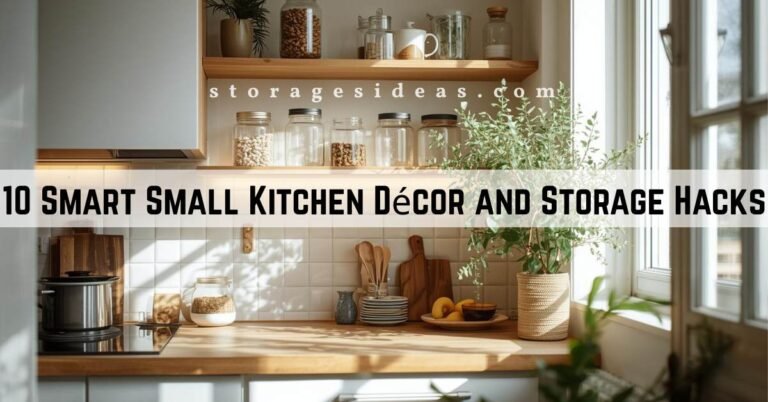
I’ve also shared several small kitchen decor and storage hacks that helped me make better use of tight kitchen spaces.
I could see what I had. I stopped overbuying. And cooking became faster because I wasn’t searching for ingredients anymore.
In this guide, I’m sharing 12 smart narrow pantry storage ideas that helped me turn a tight, frustrating space into something that actually works.
You don’t need a full makeover. Most of these are small changes that make a big difference.
12 Smart Narrow Pantry Storage Ideas That Use Every Inch of Space
1. Slim Pull-Out Shelves
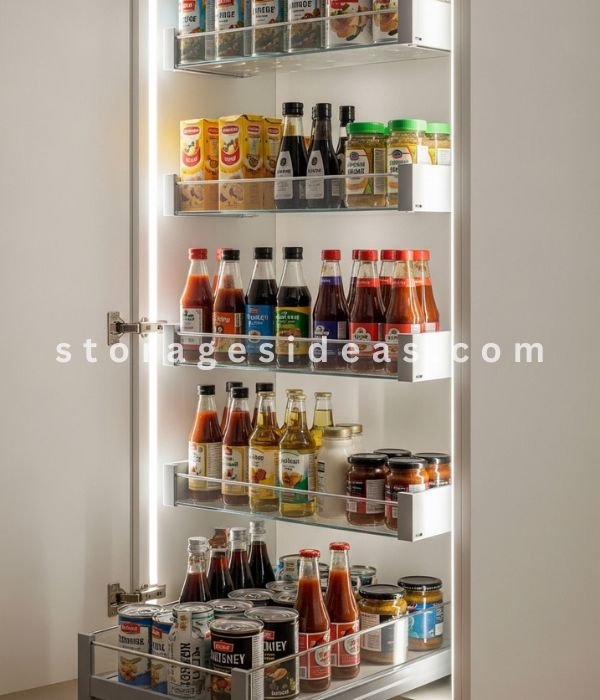
This was one of the biggest upgrades I made.
Before using pull-out shelves, I had to reach into the back of the pantry and move things around just to grab one item. It was annoying, and honestly, I avoided using that space.
Now I simply pull the shelf out.
Everything is visible at once.
I use these shelves for:
• Canned food
• Sauces and oils
• Jars and condiments
One thing I noticed right away is that I stopped wasting food. Items don’t get lost in the back anymore.
I also group items by type. One shelf for canned goods. One for cooking sauces. One for ready-to-eat items.
That small structure makes everything easier to manage.
2. Door-Mounted Storage Racks
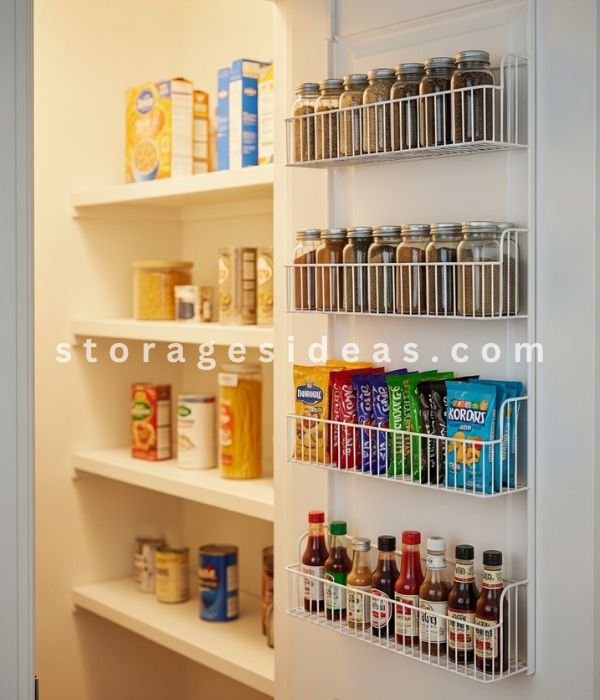
The back of my pantry door used to be completely empty.
Now it’s one of the most useful parts of the pantry.
I installed a simple door rack, and it instantly gave me extra storage without taking up shelf space.
I keep frequently used items there:
• Spices
• Snack packets
• Small bottles
These are things I grab often, so having them right in front saves time.
It also keeps my main shelves less crowded.
3. Stackable Storage Bins
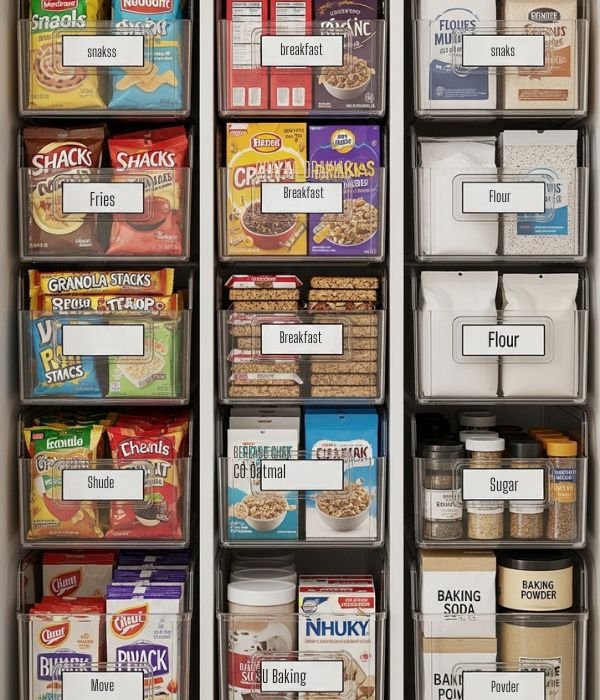
At one point, I realized I was only using half the vertical space on each shelf.
Stackable bins fixed that.
Now I build upward instead of spreading things out.
I group items into categories:
• Snacks
• Breakfast items
• Baking supplies
Then I stack the bins neatly.
I also label them. That part matters more than I expected.
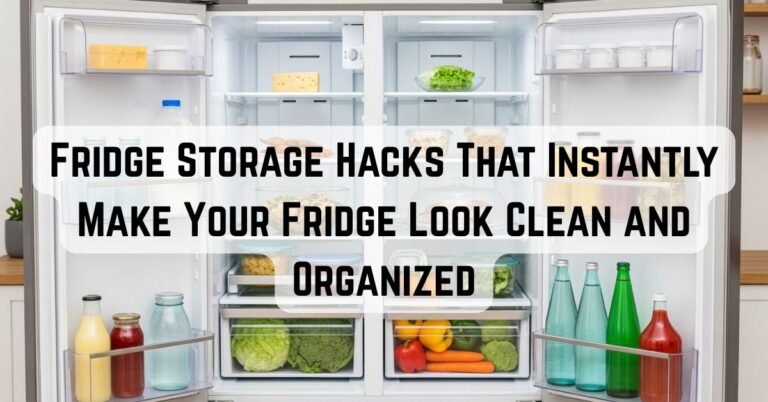
Instead of searching through everything, I go straight to the right bin. These fridge storage hacks apply the same idea to chilled food.
Another small habit I follow is placing heavier items at the bottom and lighter ones on top. This keeps everything stable.
If you’re trying to organize different categories like snacks and dry goods, these basket storage ideas for the living room also show simple ways to group items and keep everything easy to find.
4. Lazy Susan Turntables
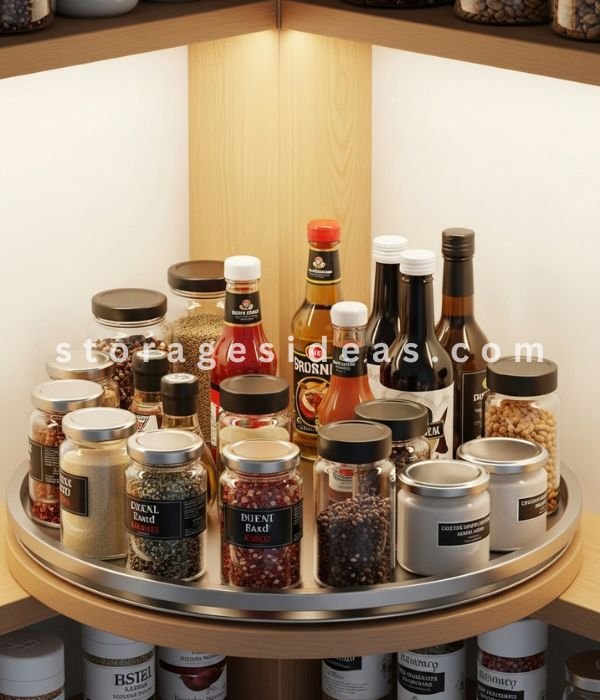
Corners in a narrow pantry can be frustrating.
Items get pushed to the back and forgotten.
A Lazy Susan solved that problem for me.
I use it for:
• Spices
• Small jars
• Condiments
With a quick spin, everything becomes visible.
No more digging. No more guessing where things are.
It’s simple, but I use it every day.
5. Narrow Rolling Pantry Cart
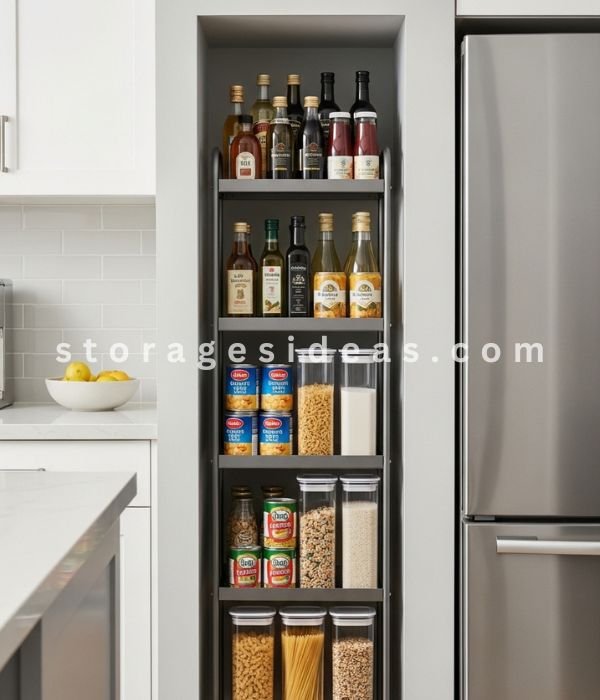
I once noticed a small gap between my fridge and the wall.
It didn’t look useful at first, but I decided to try a narrow rolling cart.
It turned into one of the most practical storage spots in my kitchen.
I store things like:
• Bottles
• Canned goods
• Extra dry items
I also use it as a backup space.
When I buy groceries in bulk, I place extra items in the cart instead of forcing everything into the pantry.
This prevents overcrowding.
Later, as the pantry empties, I move items back.
6. Shelf Risers
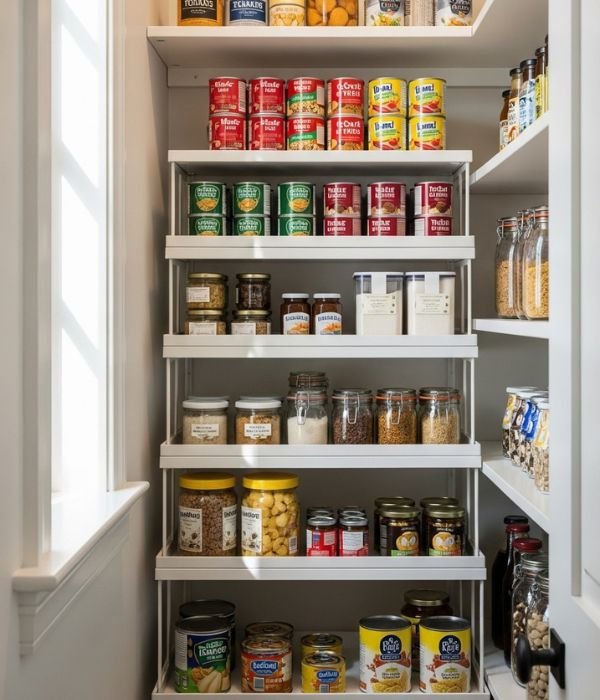
Before using shelf risers, I used to stack items directly on top of each other.
That made everything hard to reach.
Now I use risers to create layers.
This works well for:
• Cans
• Small containers
• Jars
Instead of stacking items, I can place them side by side on different levels.
Everything stays visible.
And I don’t have to move things around just to grab one item.
7. Clear Storage Containers
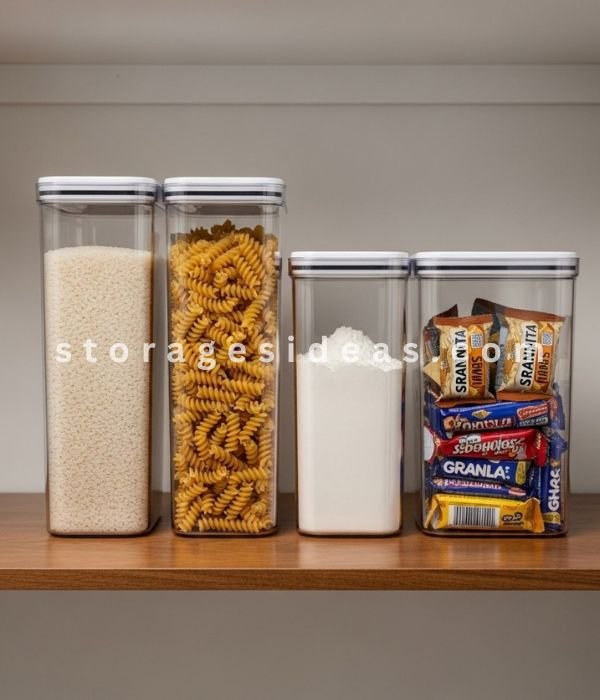
Switching to clear containers made a big difference.
At first, I thought it was just for looks.
But it actually improved how I use the pantry.
I store things like:
• Rice
• Pasta
• Flour
• Snacks
Now I can see exactly how much I have left.
I also noticed that uniform containers make the pantry look less messy. Different packaging sizes can make shelves feel cluttered, even when they’re organized.
Another habit I follow is refilling containers before they become completely empty.
This way, I don’t run out of essentials unexpectedly.
8. Vertical Dividers
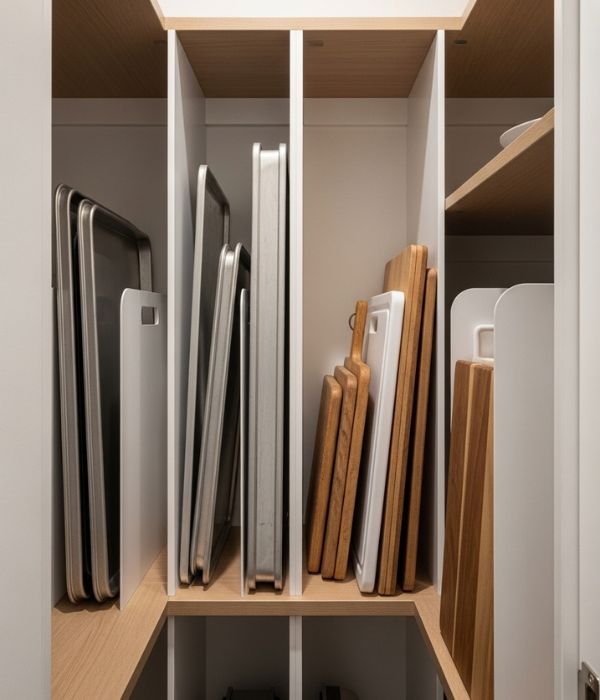
Flat items used to be a problem for me.
Things like baking trays and cutting boards ended up stacked in messy piles.
Vertical dividers fixed that.
Now I store them upright, like books.
I can pull one out easily without disturbing the rest.
It’s a small change, but it made that section of my pantry much more functional.
9. Hanging Baskets Under Shelves
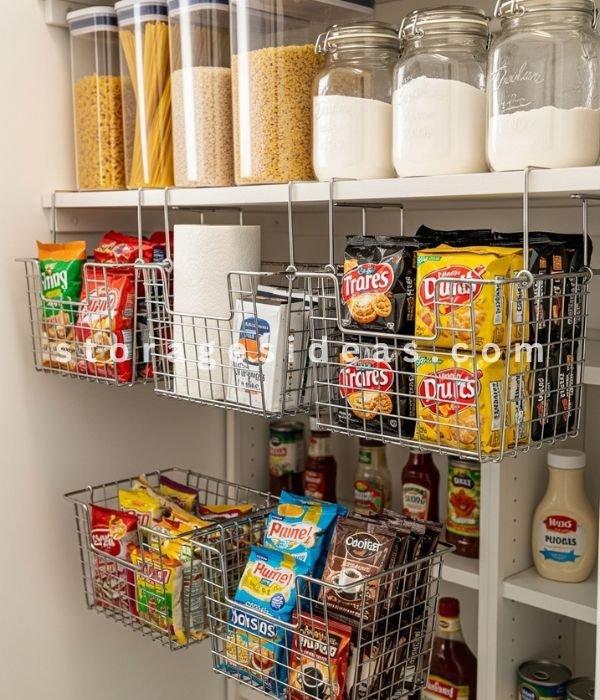
This is one of my favorite small upgrades.
Under-shelf baskets create extra storage without needing more space.
I use them for:
• Snack packets
• Seasoning sachets
• Instant drink mixes
These items used to get lost behind bigger containers.
Now they stay in one place and are easy to grab.
10. Simple Labeling System
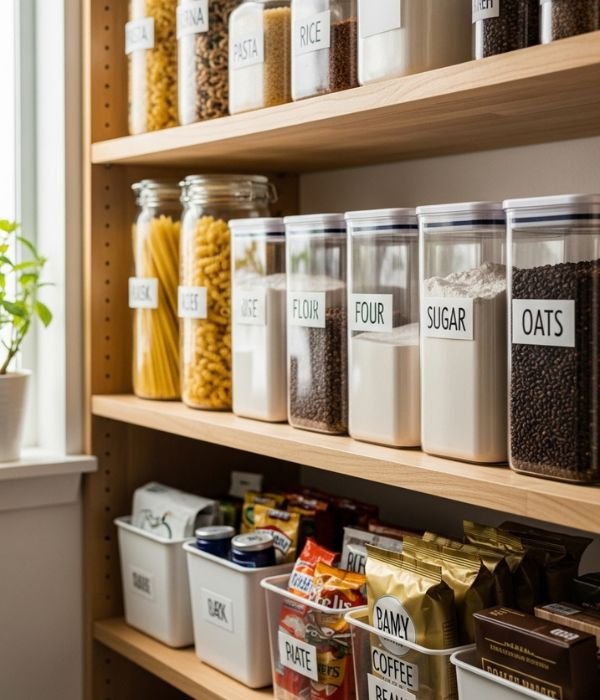
I used to skip labeling.
Now I don’t.
Labels make everything easier.
I don’t have to open containers or move things around to figure out what’s inside.
I keep it simple.
Sometimes I use printed labels. Sometimes just a marker.
The goal isn’t perfection. It’s clarity.
11. Adjustable Shelving
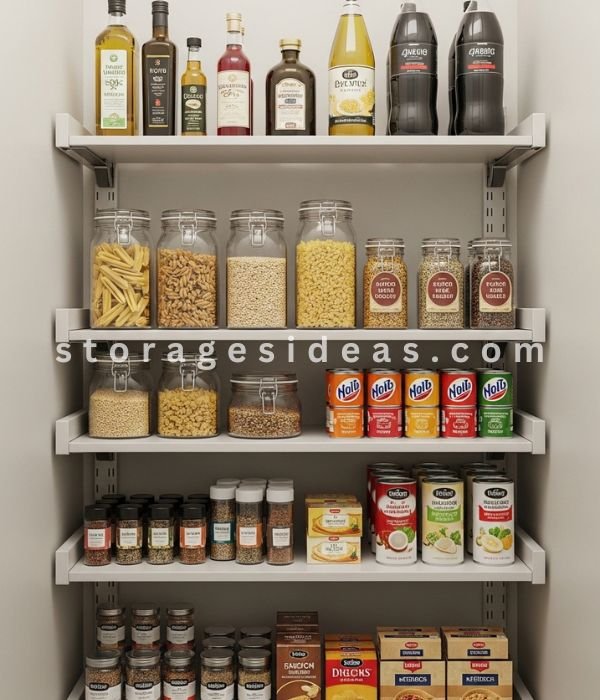
Fixed shelves can waste space.
Some items are tall. Others are short.
Adjustable shelves let me change the layout whenever needed.
This helps me fit different items without leaving unused gaps.
It also makes the pantry more flexible over time.
12. Wall-Mounted Narrow Shelves
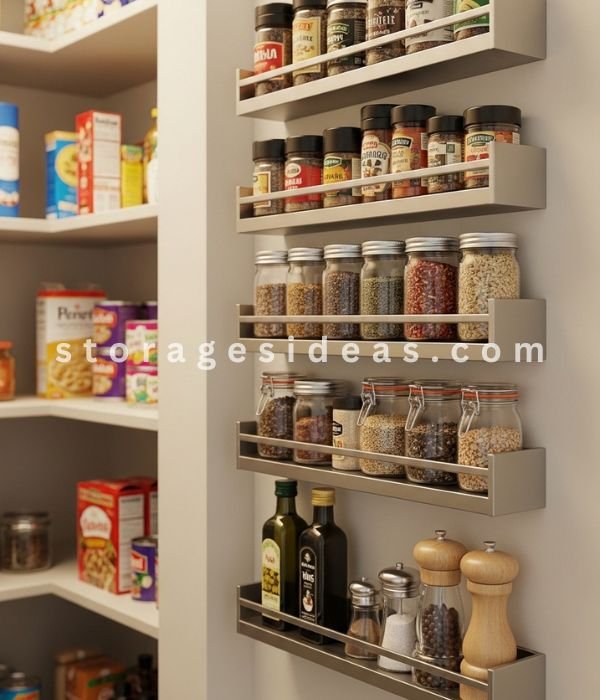
Side walls often go unused.
I added a few narrow shelves to mine, and it created extra storage instantly.
I use them for:
• Spices
• Small jars
• Frequently used items
This keeps my main shelves less crowded and easier to organize.
Extra Ideas I Sometimes Use
Not every pantry setup is the same, so I adjust based on what I need.
Use Shallow Bins Instead of Deep Ones
Deep bins seem helpful, but they often hide items at the bottom.
I switched to shallow bins, and it made everything easier to see.
Nothing gets buried anymore.
Create Pantry Zones
I divide my pantry into zones.
For example:
• Cooking ingredients
• Snacks
• Baking supplies
This makes everything easier to find.
Store Heavy Items Lower
Heavy items go on lower shelves.
It’s safer and easier to access.
Keep Everyday Items at Eye Level
Items I use daily stay within easy reach.
Less-used items go higher or lower.
Tips I Use to Keep My Narrow Pantry Organized
Over time, I realized that organizing a narrow pantry isn’t just about buying containers. It’s mostly about small habits that I follow every week.
These habits keep the space from slowly turning messy again.
I Keep Similar Items Together
This is one of the simplest changes I made, but it had the biggest impact.
Before, my pantry was mixed.
Snacks were next to spices. Baking items were scattered across shelves. I had to check multiple places just to find one thing.
Now I group everything into clear categories.
For example:
• Cooking ingredients in one section
• Snacks in another
• Breakfast items together
• Baking supplies in one dedicated spot
This makes the pantry easier to scan.
When I need something, I already know where it should be. I don’t have to think or search.
Another small thing I do is keep frequently used categories closer to eye level. That way, I don’t have to bend down or reach too high every time.
I Avoid Pushing Items to the Back
Anything that goes to the back of a narrow pantry tends to disappear.
I’ve lost count of how many times I found expired items hiding behind newer ones.
Now I try to keep everything visible.
If something has to go deeper inside, I make sure it’s in a system that still allows access. For example:
• Pull-out shelves
• Rotating trays
• Shallow bins
I also avoid stacking items in front of each other unless I can still see both.
If I can’t see it, I’ll probably forget it exists.
I Restock With Intention
Earlier, I used to restock without thinking.
I would just place new items wherever there was space. That quickly created clutter and confusion.
Now I follow a simple system.
When I bring new groceries:
• Older items come to the front
• New items go behind
This keeps everything in rotation.
I also check what I already have before buying more. This small habit helped me avoid buying duplicates.
For example, I used to end up with multiple packs of the same thing just because I couldn’t see the one I already had.
Now that rarely happens.
I Do a Quick Weekly Reset
This is something I didn’t do before, and it made a big difference.
Once a week, I spend about 5–10 minutes checking the pantry.
I don’t deep clean. I just did a quick reset.
I:
• Put items back in their correct place
• Throw away empty or nearly empty packaging
• Wipe small spills if needed
• Check if anything is about to expire
This keeps things from getting out of control.
Without this habit, even a well-organized pantry slowly becomes messy again.
Common Mistakes I Avoid
I’ve made plenty of mistakes while organizing my pantry.
Most of them seemed small at the time, but they made the space harder to use.
Here are the ones I avoid now.
Ignoring Vertical Space
At first, I only focused on shelf surfaces.
I didn’t think much about the space above items.
That left a lot of unused room.
Now I always look at height.
I use:
• Stackable bins
• Shelf risers
• Vertical dividers
This allows me to use the full height of each shelf instead of just the bottom layer.
In a narrow pantry, vertical space is just as important as width.
Using Deep Containers
Deep containers seem useful at first.
They can hold a lot, which sounds great.
But in a narrow pantry, they often create problems.
Items at the bottom get buried. Small things disappear. I forgot what’s inside.
Now I prefer shallow or medium-depth containers.
This keeps everything visible.
If I do use a deeper container, I only store large items in it, things that won’t get lost easily.
Not Labeling
I used to think I could remember where everything was.
That didn’t last long.
As soon as the pantry started filling up, I had to open multiple containers just to find one item.
Now I label almost everything.
It doesn’t have to look perfect.
Sometimes I use printed labels. Sometimes I just write with a marker.
The point is to make things easy to find.
Labels also help other people in the house know where things belong, which keeps the system working.
Overcrowding Shelves
This is probably the mistake I made the most.
I tried to use every inch of space.
I packed shelves as tightly as possible.
But that made everything harder to access.
Items got stuck. Things fell over. And I had to move multiple items just to grab one.
Now I leave a little breathing room.
Not empty space, but enough space to move things easily.
That small change made the pantry much more practical.
I noticed the same issue in other areas of my home, and these table storage ideas for the living room also focus on keeping surfaces functional without overcrowding them.
Frequently Asked Questions
How do I organize a narrow pantry?
Use the full height of each shelf with risers and stackable bins, add racks to the door and group food into zones. Keep everyday items at eye level and heavy items low.
How do I stop food getting lost at the back of a narrow pantry?
Use pull-out shelves, turntables and shallow bins so nothing sits out of sight. Clear containers and labels also make it obvious what you already have.
Are clear containers worth using in a pantry?
They are useful for staples you buy regularly because you can see how much is left at a glance. They also stack neatly, which matters when shelf space is tight.
How often should I tidy my pantry?
A quick weekly reset is enough for most households. Returning items to their zones and checking what needs using up keeps the pantry from sliding back into disorder.
Final Thoughts
For a long time, I thought my pantry was too small to organize properly.
Now I see it differently.
The space didn’t need to be bigger. It just needed to be used better.
With a few simple changes, I turned a narrow pantry into a space that feels easy to use and easy to maintain.
I don’t lose items anymore. I don’t buy duplicates. And I don’t waste time searching.
If your pantry feels frustrating, start with one idea.
Keeping a space organized also depends on simple daily habits, and understanding how clutter builds up can help you stay consistent. This overview on decluttering and organization explains the basics behind maintaining an organized space.
That small change might be enough to make the whole space feel different.