

For a long time, I treated benches and ottomans as optional pieces. Nice to look at, sure. Useful? I wasn’t convinced. In my mind, they were either decorative extras or furniture that took up space without offering much in return. That changed once I started paying attention to how my living room actually worked day to day.
Once I began using benches and ottomans intentionally, they stopped feeling like fillers and started solving real problems. They added seating without crowding the room. They softened awkward layouts. Some even helped control clutter. The key wasn’t buying trendy pieces; it was choosing ones that truly earned their place in the room.
This guide breaks down how I use benches and ottomans for the living room in ways that feel practical, flexible, and worth the space they take up.
Why Benches and Ottomans Matter More Than Extra Chairs
Chairs are great, but they’re not always the best solution. They’re bulky, fixed in place, and often demand more visual attention than they deserve. Benches and ottomans, on the other hand, tend to feel lighter. They don’t block sightlines as much, and they’re easier to move when the layout needs to change.
This matters even more in compact spaces. Many principles from small living room furniture ideas apply here; choosing flexible pieces helps the room stay open and functional.
I also noticed that benches and ottomans encourage more casual use. People perch on them, rest their feet, drop a bag for a moment, or pull them closer when needed. They adapt to how the room is being used instead of forcing the room to work around them.
The mistake I used to make was choosing pieces based on looks alone. Once I started thinking about flow, scale, and daily habits, these pieces became far more useful.
How I Decide Between a Bench and an Ottoman
I don’t treat benches and ottomans as interchangeable. Each one serves a different purpose, and choosing the right one depends on how I want the living room to function.
When I need structured seating or want to anchor a wall or window area, I lean toward a bench. Benches feel more stable and intentional. They’re great for spots where people might sit briefly or where I want to visually balance a large sofa.
Ottomans work better when flexibility matters. I use them when I want something that can shift roles throughout the day. One minute it’s a footrest. Next, it’s extra seating or even a surface with a tray on top. If I expect the piece to move often, an ottoman usually wins.
Room size also plays a role. In smaller spaces, ottomans tend to fit better because they’re compact and easier to reposition. In larger living rooms, benches help fill space without adding visual clutter.
Best Places to Use Benches in a Living Room
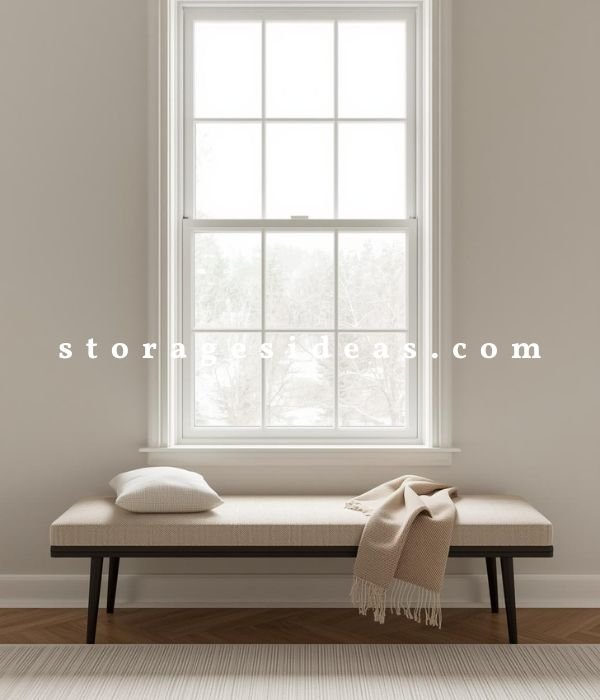
Benches shine when they’re placed with intention. One of my favorite spots is under a window. It turns an otherwise unused area into functional seating and creates a natural pause in the room. A cushion or throw makes it feel inviting without needing extra furniture.
Behind a sofa is another place where benches work surprisingly well. A slim bench can anchor the back of the seating area while providing a spot to sit, stack books, or rest a tray. It defines the layout without closing it off.
I’ve also used benches along long, empty walls. Instead of filling the space with large furniture, a bench keeps the room open while still serving a purpose. In open-plan spaces, placement ideas borrowed from corner storage ideas can help identify unused areas where benches fit naturally.
At the end of a sectional sofa, a bench can balance the layout and give guests somewhere to sit without pulling chairs from other rooms.
Where Ottomans Work Better Than Benches
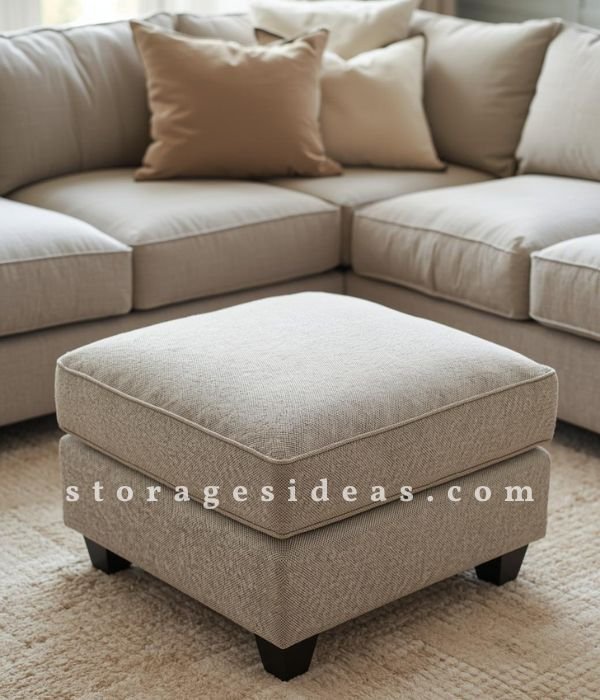
Ottomans really shine in front of sofas. They create a relaxed seating zone that invites people to put their feet up or pull closer when needed. I like how they soften the space compared to hard-edged coffee tables.
In small living rooms, ottomans are often the smarter choice. They take up less visual space and can be moved aside easily. When guests come over, an ottoman becomes instant seating without disrupting the layout.
Ottomans are also ideal in rooms where furniture shifts often. If I rearrange seating for movie nights or gatherings, an ottoman adapts quickly. Benches tend to stay put, but ottomans are happy to move.
Storage Benches and Ottomans That Reduce Visible Clutter
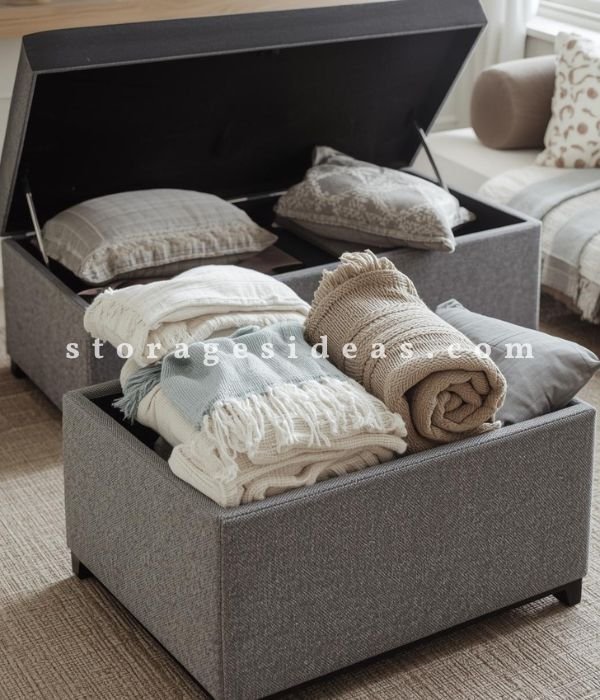
Once I discovered storage benches and ottomans, my living room became much easier to manage. These pieces quietly hide the things I don’t want on display but still need nearby.
I use them to store throw blankets, extra pillows, board games, and sometimes even books. The key is not overstuffing them. When storage seating is packed too tightly, it loses its usefulness and starts looking bulky.
I also avoid using storage benches for items I access constantly. If I’m opening and closing the lid all day, it becomes annoying fast. Storage seating works best for items I need occasionally, not every hour.
When chosen well, these pieces replace multiple storage solutions and keep the room looking calm.
Benches and Ottomans in Small Living Rooms
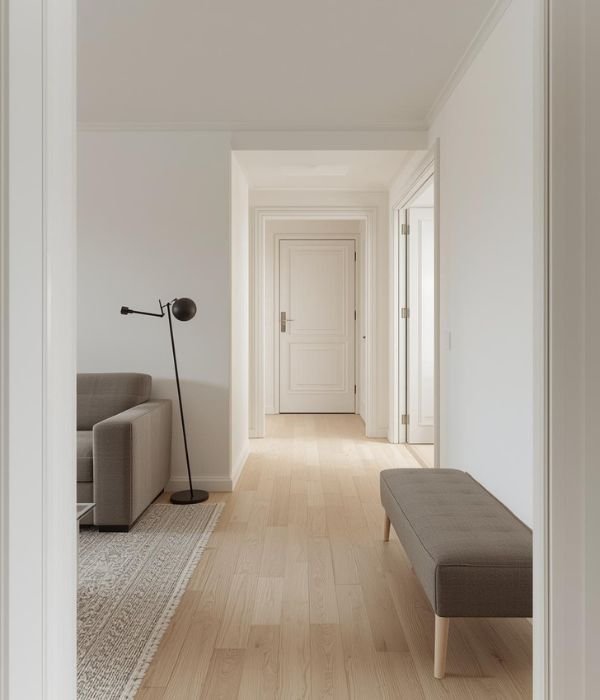
Small living rooms demand furniture that pulls its weight. I pay close attention to scale when choosing benches or ottomans for compact spaces. Anything too deep or too tall can disrupt movement.
Leg style matters more than people realize. Pieces with visible legs tend to feel lighter and less bulky. Solid bases can make a small room feel cramped. I also prefer rounded ottomans in tight layouts because they’re easier to navigate around.
In small spaces, lift-top ottomans often work better than hinged lids. They’re easier to open without moving the piece. Soft-top ottomans also double as comfortable seating, which adds value without adding more furniture.
Using Benches and Ottomans to Balance Furniture Layout
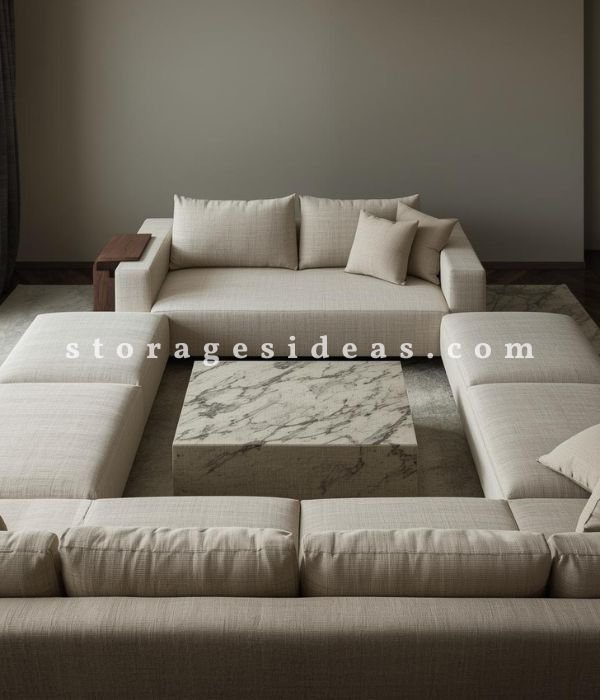
One of the most overlooked benefits of benches and ottomans is how well they balance furniture layouts. Large sofas can dominate a room if they’re not balanced properly. A bench or ottoman placed thoughtfully helps ground the space.
I often use these pieces to fill awkward gaps where nothing else seems to fit. Instead of forcing in another chair, a bench keeps the layout open. Ottomans help soften sharp furniture arrangements and make the room feel more approachable.
In asymmetrical rooms, these pieces act as visual anchors. They give the eye something to land on without competing with major furniture.
Multi-Use Setups I’ve Found Most Useful
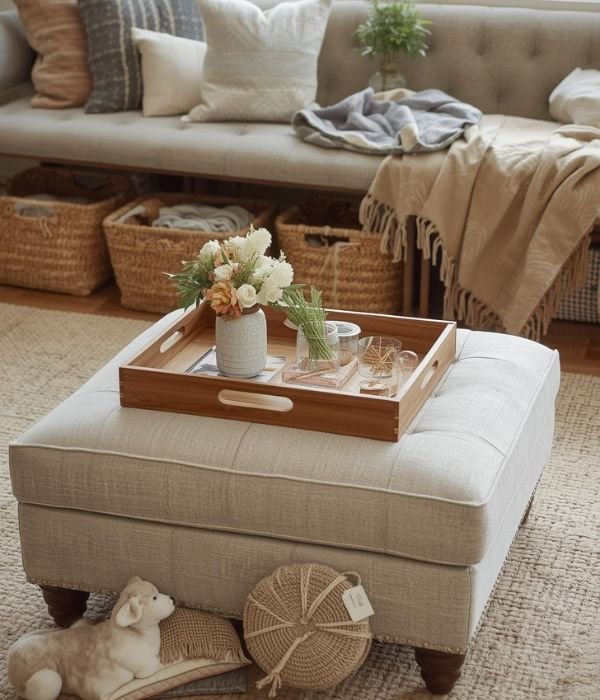
Some of my favorite living room setups involve benches and ottomans doing more than one job. An ottoman with a sturdy tray becomes a coffee table when needed. When the tray comes off, it’s a footrest again.
I’ve used benches as extra dining overflow during gatherings. They slide out of the living room and pull up to the table with ease. In quieter moments, they hold baskets or folded throws.
Ottomans sometimes replace side tables in my space. A small round ottoman next to a chair works just as well for resting a book or a cup, and it feels softer than a hard table.
Fabric, Shape, and Height Choices That Actually Matter
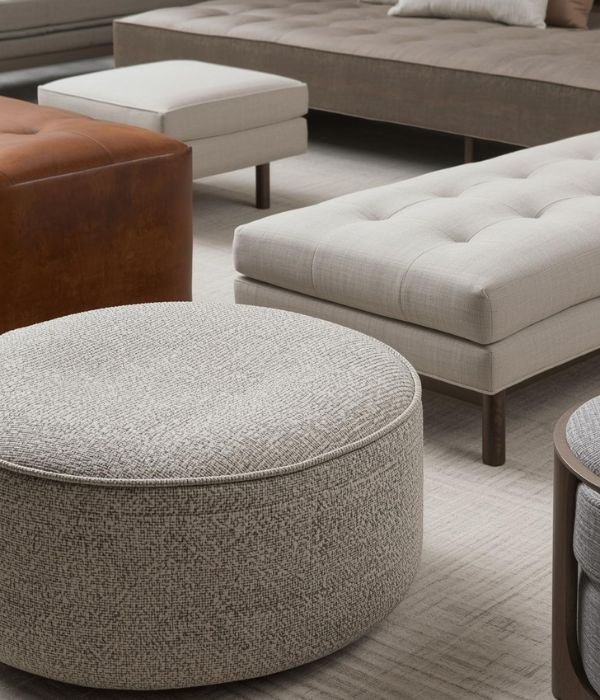
Comfort comes down to details. Height is one of the first things I check. Ottomans should be close in height to the sofa seat for comfortable foot support. Benches work best when they’re slightly lower than chair seats.
Shape changes how the room feels. Square ottomans feel structured and grounded. Round ones soften the space and work better in tight layouts. Long benches stretch a room visually, while compact benches feel cozy.
Fabric choice matters too. Upholstered pieces feel warmer and more inviting. Leather ottomans are durable and easy to clean, but they can feel firmer. Texture adds interest without needing bold patterns.
What I Avoid When Buying Benches and Ottomans
I’ve made mistakes, and I’ve learned from them. I now avoid pieces that are oversized for the room. Even if they look great online, they can overwhelm the space quickly.
I also stay away from sharp corners in high-traffic areas. They’re uncomfortable and easy to bump into. Trend-heavy designs are another thing I skip. If a piece feels dated too quickly, it won’t earn its spot for long.
Storage that’s difficult to access is another red flag. If using it feels like work, I won’t use it consistently.
When placing benches or ottomans near walkways or sofas, I also keep basic stability and safety guidelines in mind, especially those shared by the Consumer Product Safety Commission.
How I Keep Benches and Ottomans From Becoming Clutter Magnets
Any flat surface invites clutter. Benches and ottomans are no exception. I keep them clear by setting simple rules. If it’s not meant to be stored there, it doesn’t stay.
I limit what goes inside storage pieces and reset them monthly. That quick check prevents the buildup of forgotten items. When a bench or ottoman starts collecting random objects, I know it’s time for a reset.
Keeping these pieces intentional ensures they stay useful instead of becoming dumping grounds.
FAQs
Are benches or ottomans better for small living rooms?
Ottomans usually work better because they’re easier to move and take up less visual space.
Can an ottoman replace a coffee table?
Yes. With a tray, an ottoman can function as a coffee table while remaining flexible.
Are storage ottomans worth it?
They are, as long as they’re easy to open and not overstuffed.
How much space should be around them?
I aim for at least 14–18 inches of walking space to keep movement comfortable.z
Final Thoughts
Once I stopped treating benches and ottomans as decorative extras, my living room started working better. These pieces don’t need to shout to be useful. When chosen thoughtfully, benches and ottomans for the living room quietly solve seating, layout, and storage problems at the same time.
If a piece earns its place by making the room easier to live in, it’s worth having. And when used well, benches and ottomans do exactly that.
