

Blankets are one of the few living room items that feel essential year-round. A throw on the sofa during movie night. An extra layer for guests. Something warm to grab during early mornings or late evenings. But they also have a habit of piling up fast. One becomes two. Two become a stack. Before long, the cozy corner turns into a cluttered one.
I ran into this exact problem in my own living room. Blankets were everywhere, folded, draped, half-used, and never quite put away. What finally changed things wasn’t buying more baskets or storage furniture. It was understanding how blankets are actually used in a living room and designing storage around that behavior.
This guide breaks down living room blanket storage ideas that keep comfort front and center without letting blankets take over the space. These are practical systems, not styling tricks that fall apart after a week.
Why Blanket Storage Is Tricky in Living Rooms
Blankets don’t behave like most household items. They’re soft, flexible, and irregular. Some are thick and heavy. Others are light and decorative. They’re also used frequently and casually, which means they rarely return to storage immediately.
Living rooms add another layer of complexity. This space needs to feel open, inviting, and calm. Storage that works in closets or bedrooms often feels bulky or out of place here. At the same time, hiding every blanket makes the room less comfortable and less functional.
Another challenge is seasonality. Blankets tend to multiply during colder months and linger when the weather warms up. Without a plan, they become visual noise instead of intentional comfort.
How I Decide Which Blankets Stay in the Living Room
Before choosing storage, I always start with selection. Not every blanket belongs in the living room full-time.
I separate blankets into three categories. The first group includes daily-use throws — the ones we actually grab while sitting. These deserve easy access. The second group includes guest blankets or extras. These can live in nearby but less visible storage. The third group includes seasonal or decorative blankets that rotate in and out.
Fabric matters too. Heavier knits and wool blankets hold structure better and can be stored folded. Lightweight throws wrinkle easily and often look better draped or rolled. Keeping too many blankets in the room makes any storage system fail, no matter how well-designed it looks.
Open Blanket Storage That Looks Intentional
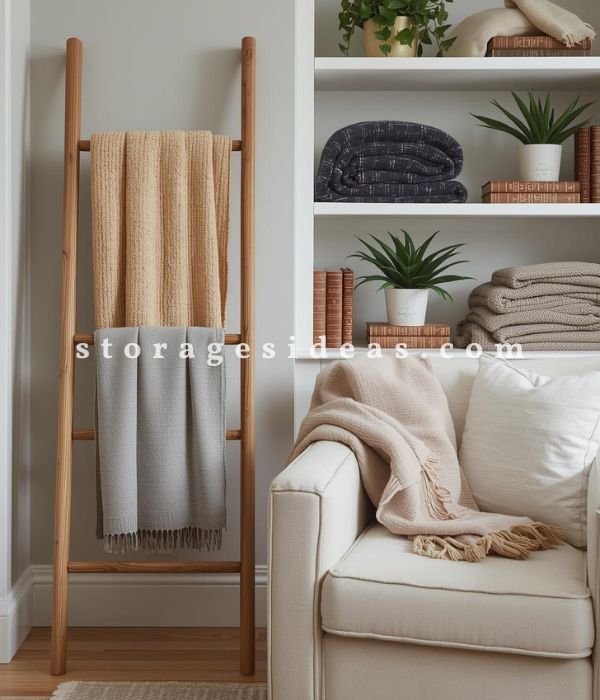
Open storage works best when blankets are meant to be part of the room’s look.
Blanket ladders are one of the simplest solutions, but only when used sparingly. A ladder holding two or three throws looks styled. One holding six looks cluttered. I treat ladders as display storage, not bulk storage.
Open shelving works when blankets are folded uniformly and mixed with decor. Plants, books, or small objects break up visual weight. This same balance applies to wall-based storage in living rooms, where spacing matters just as much as capacity.
Draping can work too, but it needs boundaries. One blanket casually placed over an armchair feels intentional. Multiple blankets draped in different spots feel messy fast. Open storage succeeds when restraint leads the design.
Hidden Blanket Storage for a Cleaner Living Room
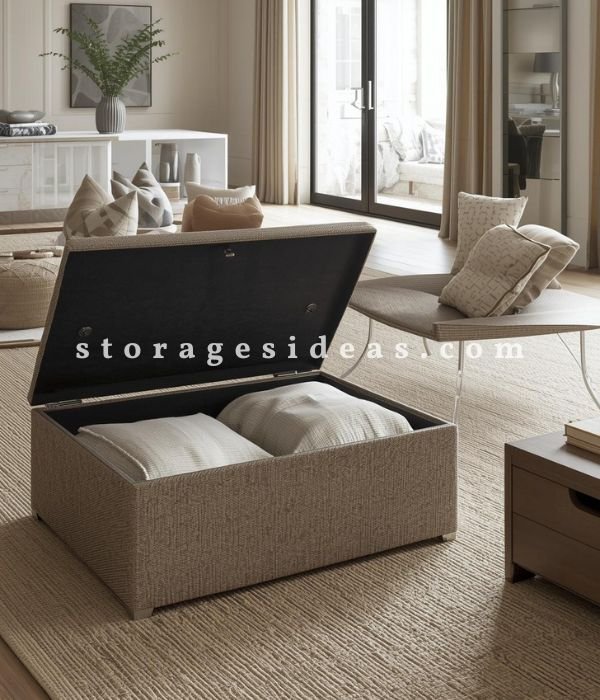
Hidden storage is where blanket clutter really disappears.
Storage ottomans and benches are some of the most practical options. They keep blankets close to seating while hiding them completely when not in use. The key is airflow and access. Overstuffed storage makes blankets hard to grab and encourages wrinkling.
Coffee tables with compartments are another strong option. They work especially well for lightweight throws used during TV time. Drawers keep blankets dust-free while staying easy to reach.
Closed cabinets are ideal for guest or backup blankets. When blankets don’t need to be visible, cabinets preserve visual calm and reduce daily clutter.
If your living room already balances storage and furniture, these same principles apply to multi-functional furniture setups, where pieces serve more than one role without adding clutter.
Furniture-Based Blanket Storage That Does Double Duty
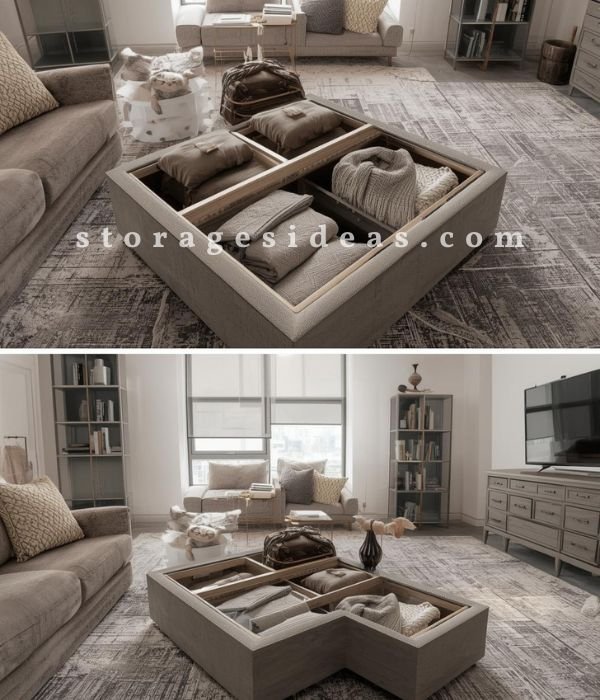
Blanket storage works best when it’s integrated into furniture you already have.
Sofas with built-in storage are excellent for everyday throws. The storage stays invisible, and blankets remain close to where they’re used. Window seats or banquettes offer similar benefits, especially in reading corners.
Console tables with drawers work well for folded blankets, especially in larger living rooms. They add surface space while quietly handling storage duties.
Multi-use furniture keeps the room from feeling storage-heavy and prevents blankets from becoming a design problem.
Blanket Storage Ideas for Small Living Rooms
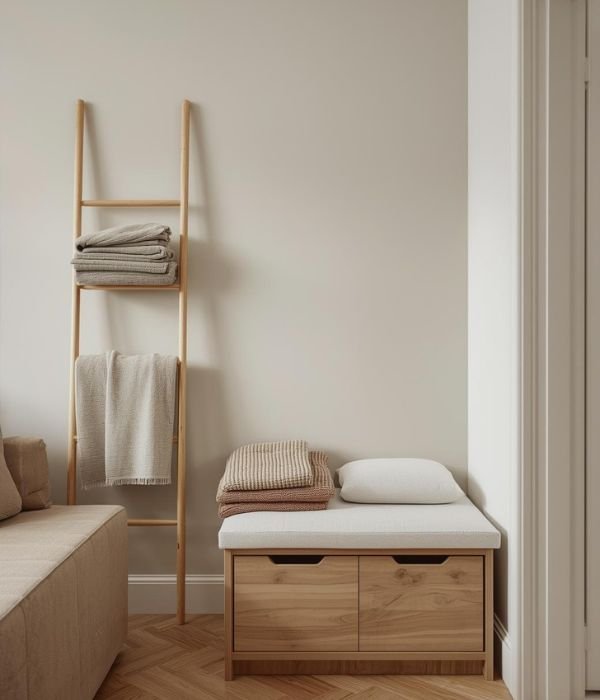
In small living rooms, blanket storage must respect movement.
Vertical storage helps, but only when it’s visually light. Slim ladders, narrow shelving, or tall cabinets with doors keep blankets accessible without crowding the floor.
Behind-the-sofa zones are often overlooked. A low bench or narrow console here can store blankets without interfering with walkways. Behind-the-sofa storage is one of the most overlooked solutions. A low bench or narrow console here keeps blankets close without blocking walkways. This approach mirrors how TV and media storage in living rooms work best when tucked into overlooked zones.
What I avoid in small spaces are oversized baskets and floor piles. They interrupt traffic flow and make rooms feel tighter almost immediately.
Stylish Blanket Storage That Adds to the Decor
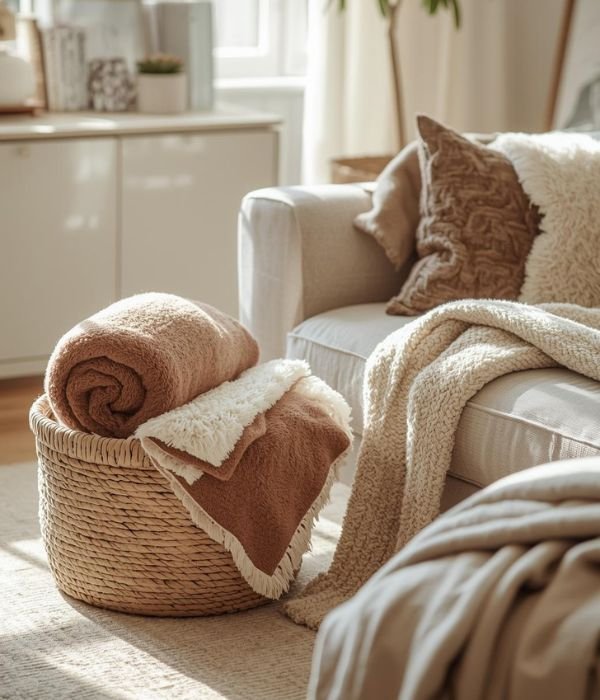
Blankets can enhance a living room when stored thoughtfully.
Color coordination matters. Neutral blankets blend easily into most spaces, while bold throws should be limited to one or two statement pieces. Texture adds interest without visual weight. Knits, weaves, and soft fabrics soften hard furniture lines.
Matching storage style to the room’s aesthetic helps too. A woven basket suits relaxed interiors. A structured fabric bin fits modern spaces. Storage that aligns with decor feels intentional instead of improvised.
Seasonal Blanket Rotation (The System That Actually Works)
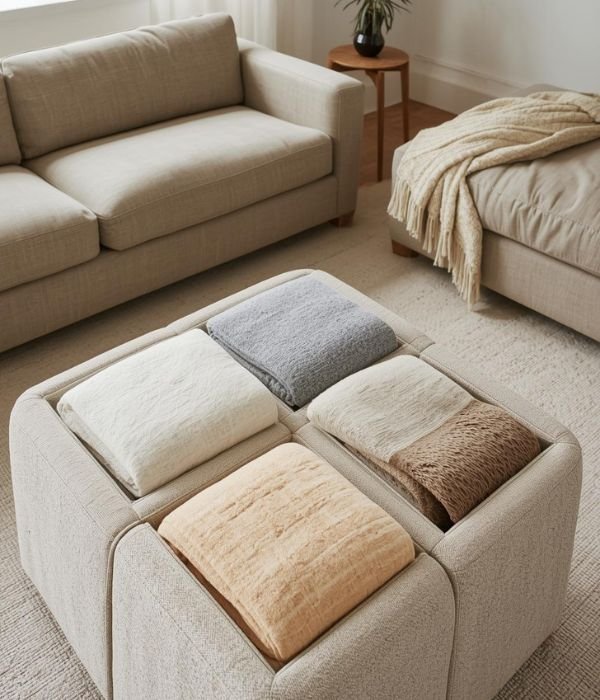
Rotation is the simplest way to prevent blanket overload.
I keep everyday blankets accessible during cooler months and store extras elsewhere. When seasons change, heavy blankets move out, and lighter throws rotate in. This keeps storage manageable and the room feeling fresh.
Rotation also prevents over-buying. When storage has limits, new blankets must replace old ones instead of adding to clutter.
Where Blankets Actually End Up During the Day (And How I Store Them There)
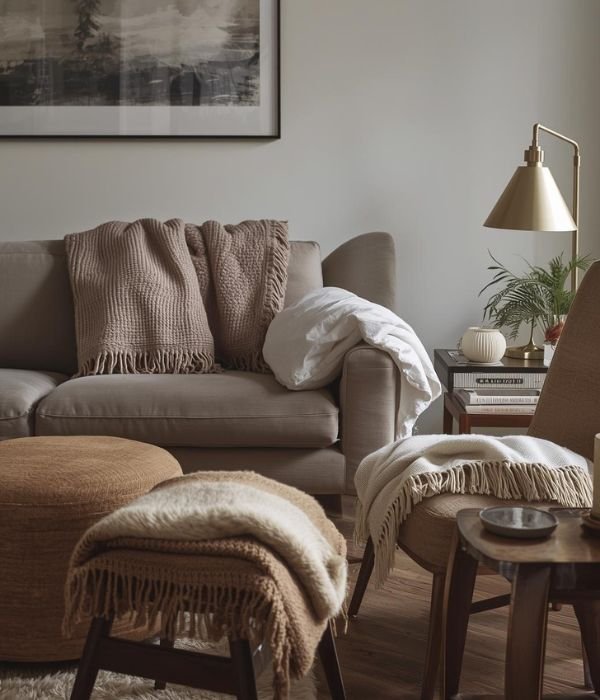
This is the part most storage advice ignores.
Blankets don’t return to baskets or shelves immediately. They end up on sofa arms, chair backs, or folded beside cushions. Instead of fighting this habit, I design storage around it.
I allow one “resting spot” per seating area, a folded blanket on the sofa back, or a nearby bench. Anything beyond that returns to hidden storage. This prevents piles while keeping comfort close.
Designing storage around natural drop zones makes systems last. When storage matches behavior, clutter stops forming on its own.
Protecting Blankets From Damage While Stored
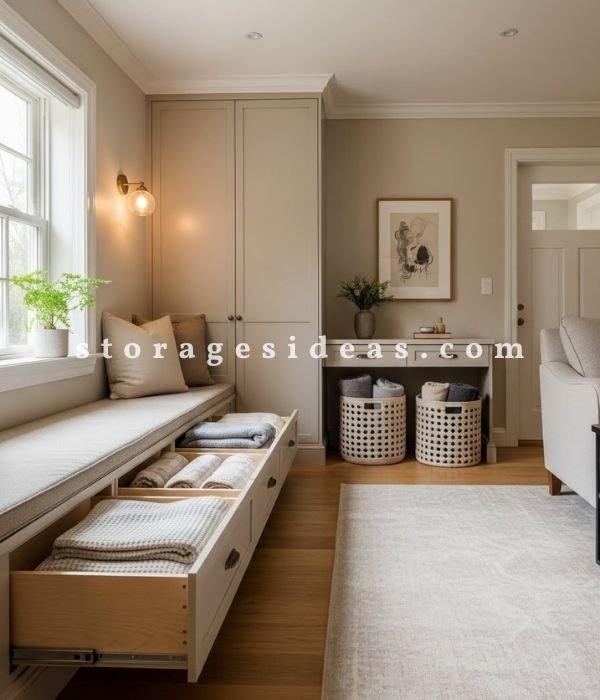
Blankets can stretch, sag, or lose shape if stored poorly.
Folding works best for heavier fabrics, while rolling suits lighter throws. Avoid compressing blankets too tightly, as this damages fibers over time. Airflow matters, especially for natural materials.
I also separate clean blankets from recently used ones. Mixing them leads to odors and unnecessary washing, which shortens fabric life.
Many of these habits align with broader home organization best practices that focus on prevention rather than constant cleanup.
Common Blanket Storage Mistakes I No Longer Make
I’ve made plenty of mistakes along the way.
Overstuffed baskets were the biggest issue. They looked fine at first, but became unusable quickly. Floor piles, “for convenience,” never stayed temporary. Mixing decorative and utility blankets caused constant reshuffling.
I’ve learned that storage must feel easy. If it requires effort, it won’t be used consistently.
FAQs
Should blankets be folded or rolled?
Heavier blankets fold better. Lightweight throws roll easily and resist creasing.
How many blankets should stay in the living room?
Only what you actually use. Extra blankets belong in secondary storage.
Are baskets better than cabinets?
Baskets work for casual access. Cabinets work for visual calm and long-term storage.
How do I stop blankets from looking messy?
Limit visible blankets and give them defined storage spots.
Where should guest blankets be stored?
Close enough to access easily, but hidden until needed.
Final Thoughts
Blankets bring comfort, but they shouldn’t bring clutter with them. The best living room blanket storage ideas work because they support real habits, not ideal ones. When storage aligns with how blankets are used, draped, grabbed, and set aside, the living room stays cozy without feeling crowded.
A calm space doesn’t come from hiding everything. It comes from storing things where they belong naturally. When that balance is right, comfort and order coexist without effort.
